 |
Books Should Be Free Loyal Books Free Public Domain Audiobooks & eBook Downloads |
|
|
|
Books Should Be Free Loyal Books Free Public Domain Audiobooks & eBook Downloads |
|
Top Authors |
|---|
|
Book type:
Sort by:
|
By: Margaret Penrose | |
|---|---|
 The Campfire Girls of Roselawn Or, a Strange Message from the Air
| |
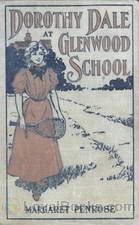 Dorothy Dale At Glenwood School
The second book in the Dorothy Dale series, in which Dorothy and her friends have an unfortunate encounter, which has long-lasting implications. Major Dale inherits some money, which enables him to send his daughter to Glenwood School, where she makes new friends - and enemies. Dorothy Dale: A Girl of Today (1908) Dorothy Dale at Glenwood School (1908) Dorothy Dale's Great Secret (1909) Dorothy Dale and Her Chums (1909) Dorothy Dale’s Queer Holidays (1910) Dorothy Dale’s Camping Days (1911) Dorothy... | |
|
The Motor Girls on the Coast or, The Waif From the Sea
| |
|
The Motor Girls on Cedar Lake Or the Hermit of Fern Island
| |
|
The Motor Girls Through New England or, Held by the Gypsies
| |
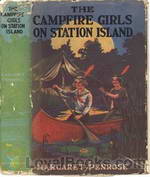 The Campfire Girls on Station Island or, The Wireless from the Steam Yacht
| |
|
The Motor Girls on Waters Blue Or the Strange Cruise of the Tartar
| |
|
The Motor Girls at Camp Surprise The Cave in the Mountains
| |
By: Thomas Paine | |
|---|---|
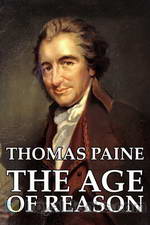 The Age of Reason
A Universalist book, The Age of Reason advocates for the existence of natural religion and challenges the structure of all organized religion. First written and distributed as pamphlets, the book was later published into two parts. Paine puts forward his personal beliefs, debating reason and revelation, while analyzing the Bible and the influence organized religion has on society. Exploring topics including natural religion, criticism of corrupt religious institutions, and distinction between rationality and blind faith in the supernatural, the book presents a guide for the conscious and free spiritual thinkers... | |
 Common Sense
First published anonymously due to its seditious content in 1776, the pamphlet argues for the need of American colonists to pursue complete independence from Great Britain, and not be driven simply by the urge to free themselves from unfair taxation. Paine provides argumentation for his revolutionary ideas, suggesting the unification of colonial forces to achieve this goal. Furthermore, Paine strengthens his case by clearly asserting the advantages that would come out as a result of independence, and further fortifies his argumentation with religious references... | |
|
A Letter Addressed to the Abbe Raynal, on the Affairs of North America, in Which the Mistakes in the Abbe's Account of the Revolution of America Are Corrected and Cleared Up
| |
By: John Stuart Mill (1806-1873) | |
|---|---|
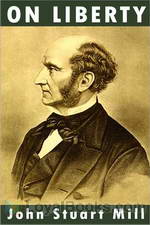 On Liberty
Published in 1859, On Liberty is a libertarian philosophical work by English philosopher John Stuart Mill that endorses his view on the importance of individuality for the constant progression and improvement of society. The work also supports economic and moral freedom, and openly criticizes the influence of social authority that in one way or another imposes a predefined set of acceptable attitudes and opinions. Highlighting issues including the incongruity between authority and liberty, the oppressive... | |
 Essays on Some Unsettled Questions of Political Economy
This is Mill’s first work on economics. It foreshadows his Political Economy which was the standard Anglo-American Economics textbook of the late 19th and early 20th centuries. Mill’s economic theory moved from free market capitalism, to government intervention within the precepts of Utilitarianism, and finally to Socialism. | |
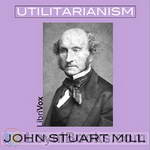 Utilitarianism
John Stuart Mill’s book Utilitarianism is one of the most influential and widely-read philosophical defenses of utilitarianism in ethics. The essay first appeared as a series of three articles published in Fraser’s Magazine in 1861; the articles were collected and reprinted as a single book in 1863. It went through four editions during Mill’s lifetime with minor additions and revisions. Although Mill includes discussions of utilitarian ethical principles in other works such as On Liberty and The Subjection of Women, Utilitarianism contains Mill’s only major discussion of the fundamental grounds for utilitarian ethical theory. | |
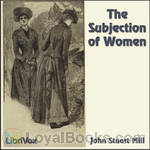 The Subjection of Women
The Subjection of Women is the title of an essay written by John Stuart Mill in 1869, possibly jointly with his wife Harriet Taylor Mill, stating an argument in favor of equality between the sexes. It offers both detailed argumentation and passionate eloquence in opposition to the social and legal inequalities commonly imposed upon women by a patriarchal culture. Just as in “On Liberty,” Mill defends the emancipation of women on utilitarian grounds, convinced that the moral and intellectual advancement of women would result in greater happiness for everybody. | |
 Considerations on Representative Government
Mill's volume was published in 1861 as an argument favoring this form of governance. Mill covers what forms of government work best, including when representative government is applicable and when not. He details appropriate functions of representative bodies and warns of problems to avoid. He distinguishes between true and false democracy. Other areas covered include how voting is carried out, the role of a second chamber in Parliament, and how an executive branch might function. | |
|
Auguste Comte and Positivism
Part 1 lays out the framework for Positivism as originated in France by Auguste Comte in his Cours de Philosophie Positive. Mill examines the tenets of Comte's movement and alerts us to defects. Part 2 concerns all Comte's writings except the Cours de Philosophie Positive. During Comte's later years he gave up reading newspapers and periodicals to keep his mind pure for higher study. He also became enamored of a certain woman who changed his view of life. Comte turned his philosophy into a religion, with morality the supreme guide. Mill finds that Comte learned to despise science and the intellect, instead substituting his frantic need for the regulation of change. | |
|
The Contest in America
| |
|
A System of Logic: Ratiocinative and Inductive 7th Edition, Vol. I
| |
By: Sir John Barrow (1764-1848) | |
|---|---|
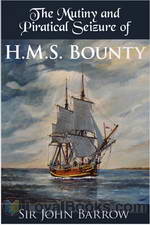 Eventful History of the Mutiny and Piratical Seizure of H.M.S. Bounty
On December 31 1787, the HMS Bounty, a small sailing vessel embarked from Spithead Harbor, England bound for Tahiti. Her mission was sponsored by the Royal Society in London and aimed at picking up breadfruit plants and fruit from Tahiti and conveying them to the West Indies, where it was hoped they would take root and become a commercial crop. The Bounty was an old ship with a young captain and 46 young officers. The captain's cabin was converted into a potting shed for the expected breadfruit cargo... | |
By: Willa Cather (1873-1947) | |
|---|---|
 My Antonia
Two young children arrive in a small frontier settlement on the wild and desolate plains of Nebraska, on the same day and by the same train. Jim Burden is a ten year old orphan from Virginia who has come to live with his grandparents, while Antonia Shimerda who's the same age as Jim, arrives with her large, immigrant family from Eastern Europe to try and eke out a living in the New World. The children find themselves thrown together as they live in adjoining farms. Jim tutors Antonia in English and they become good friends as they grow up... | |
 O Pioneers!
Published in 1913, O Pioneers! is the first novel in Cather’s Great Plains trilogy and follows the life of its young heroine, Alexandra Bergson, as she fulfills her father’s dying wish to take care of his farm, while also ensuring her brothers are well looked after. Entrusted with a great responsibility, Alexandra is determined to fulfill her father’s wish, as she goes on to prove her skills as a thriving farmer even though the task comes with a hefty price on her happiness. In addition, the... | |
 One of Ours
This 1923 Pulitzer Prize winning novel was written by Willa Cather. This work had been inspired by reading her cousin G.P. Cather’s wartime letters home to his mother. He was the first officer from Nebraska killed in World War I. Claude Wheeler, the subject of the novel, is a young man growing up on a Nebraska farm. The son of well to do parents, Claude is troubled by his apparent inability to find purpose with his life. Everything he does seems to turn out wrong, at least in his own mind. Although he is a skilled farmer, Claude believes his destiny lies elsewhere... | |
By: Horatio Alger, Jr. (1832-1899) | |
|---|---|
 Adrift in New York
Set in 19th century New York, this is the story of a wealthy old man who adopts his orphaned nephew and niece after his own four year old son mysteriously disappears. However, under a smooth exterior, the nephew is a conniving and avaricious villain who wants to grab all the old man's wealth for himself. This is also the story of a young boy, who doesn't know he's the sole heir to a fabulous fortune, but grows up homeless in the streets of New York. The villainous nephew proposes marriage to his cousin with a view to grabbing the entire inheritance... | |
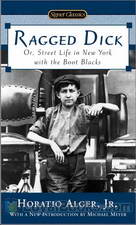 Ragged Dick
A fourteen year old homeless boy, Dick, tries to make an honest living in the streets of 1860s New York as a bootblack. He is determined to stay honorable, though he is tempted many times to easy pickings and a life of crime. When a regular customer is impressed by Dick's integrity and invites him to his mansion, this marks a turning point in the life of the young street-smart teenager. Ragged Dick by Horatio Alger Jr was first published in 1868. It represents a typical coming of age story in which a child attains the maturity of adulthood through circumstances in which important choices are made... | |
 Fame and Fortune
Richard Hunter, in this sequel to Ragged Dick, continues his way in the world through hard work and excellent morals. He, along with his friend Henry, continue their positive outlook as they try to advance their lives. But Dick soon finds envy and jealousy leads others to work against him. How will Dick react as he tries to strive forward while others conspire to hold him down? (Written by Barry Eads) | |
By: William Wordsworth (1770-1850) | |
|---|---|
|
The Prelude
Among monuments of narrative poetry, The Prelude; or, Growth of a Poet's Mind, by William Wordsworth, occupies a unique place. Wordsworth published the first version of the poem in 1798, but continued to work on it for the rest of his life. The final version, which is the subject of this recording, was published posthumously in 1850, by Wordworth’s widow, Mary. The Prelude is the first major narrative poem in European literature which deals solely with the spiritual journey of the author. In this respect the only predecessor to which it can be compared in Dante’s Divine Comedy, which is similarly a journey from personal confusion to certitude, from ignorance to realization... | |
|
The Prose Works of William Wordsworth
| |
|
Selections from Wordsworth and Tennyson
| |
|
Poems in Two Volumes, Volume 1
| |
By: Hermann Hesse (1877-1962) | |
|---|---|
 Siddhartha
Once regarded as a cult book in the 1960s by the Flower Power generation, Siddhartha by Herman Hesse remains even today a simple and fresh tale of a man's spiritual quest. Penned by a deeply spiritual German author, Siddhartha explores multiple themes of enlightenment, thinking beyond set rules, love and humanity. Siddhartha is a young contemporary of the spiritual master Gautam Buddha who lived in India at some time during the 4th century BC. The story has striking parallels to Buddha's own life story in which he abandons his wealth and status as the young prince of Kapilavastu, his wife and young son and his family to embark on a voyage of self discovery... | |
By: Adam Smith (1723-1790) | |
|---|---|
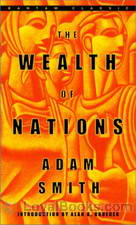 The Wealth of Nations
Adam Smith’s “The Wealth of Nations” gives an in-depth discussion of different economic principles like the productivity, division of labor and free markets. Although written and published more than 200 years ago, it’s still hailed as one of the most original works in the field of economics and is still used as a reference by many modern economists. “An Inquiry Into the Nature and Causes of the Wealth of Nations” is the complete title of this book and it was first published in 1776, the same year that the American colonies declared their independence from Britain... | |