|
Books Should Be Free Loyal Books Free Public Domain Audiobooks & eBook Downloads |
|
|
|
Books Should Be Free Loyal Books Free Public Domain Audiobooks & eBook Downloads |
|
Top Authors |
|---|
|
Book type:
Sort by:
|
By: Charles F. Horne (1870-1942) | |
|---|---|
 Great Men and Famous Women, Vol. 7 A Series of Pen and Pencil Sketches of the Lives of More Than 200 of the Most Prominent Personages in History
| |
By: Howard R. Garis (1873-1962) | |
|---|---|
 Uncle Wiggily's Adventures
Due to Uncle Wiggily's rheumatism being so very bad, Dr. Possum prescribes a journey to help him move around, have a change of air, and a good long bout of traveling to get more exercise. So Uncle Wiggily packs his valise and sets forth! | |
|
Uncle Wiggily in the Woods
Howard Garis, one of the most prolific children's writers of the 20th century, is credited with writing over 1500 Uncle Wiggily stories. In this collection, the loveable old rabbit stays close to home and visits woodland friends. | |
|
Uncle Wiggily and Old Mother Hubbard
Uncle Wiggily Longears, an old bunny gentleman now stricken with rheumatism and getting around with a cane, still is quite active. In these stories, he encounters a string of characters from Mother Goose's tales and has adventures that are not quite in keeping with her books!These gentle tales are 7 - 8 minutes each and quite suited to a nightly reading to a small child. (Intro by Mark F. Smith) | |
|
Uncle Wiggily's Travels
This is the second of 79 Uncle Wiggily books published and contains another selection of bedtime stories from those originally published in the Newark Evening News every day except Saturday for over 40 years. Uncle Wiggily Longears is a loveable rabbit who suffers from rheumatism and has many woodland friends and innocent adventures. | |
|
Lulu, Alice and Jimmie Wibblewobble
The Wibblewobble family of ducks appear in a series of 31 bedtime stories - one for each day of the month - written by Howard R. Garis. Each story is an adventure featuring the ducks and their neighbors, including Uncle Wiggily Longears, the famous old gentleman rabbit with rheumatism. | |
By: Howard Roger Garis (1873-1962) | |
|---|---|
|
Bully and Bawly No-Tail (the Jumping Frogs)
| |
|
The Curlytops and Their Pets or Uncle Toby's Strange Collection
| |
By: Howard R. Garis (1873-1962) | |
|---|---|
|
Daddy Takes Us Skating
Hal and Mabel's Daddy knows everything - how a thermometer works, what makes a car go, why we get warm when we run. It's a cold and icy evening after school and Daddy has a secret but what is it? And what is in the mysterious packages he has for the children? The "Daddy" stories were originally published as part of the 'bedtime stories' of the Newark News. | |
By: Howard R. Garis (1873-1962) | |
|---|---|
|
Curly and Floppy Twistytail (The Funny Piggie Boys)
The adventures of two little pig boys and their mom and dad. "Once upon a time, not so very many years ago, in the days when there were fairies and giants and all things like that, there lived in a little house, on the edge of a wood, a family of pigs. Now these pigs weren't like the pigs, which perhaps you children have seen on most farms. No, indeed! They were just the nicest cleanest, sweetest pigs you ever dreamed of—not that pigs on a farm can't be clean, if they want to, but, somehow or other, no one seems to have time to see that they are clean." | |
By: Howard R. Garis (1873-1962) | |
|---|---|
|
Umboo, The Elephant
Have you ever wondered what it is like to be in a circus? What if, rather than choosing to be in one, you were captured and taken away from the home and family you knew and made to perform in the heat of a big top? Meet Umboo, the elephant, Chako, the monkey, Snarlie, the tiger and their circus friends and learn how life in the jungle was different from life in the circus. | |
By: Howard Roger Garis (1873-1962) | |
|---|---|
 The Curlytops at Uncle Frank's Ranch or Little Folks on Ponyback
| |
By: George Sutherland (1855-1905) | |
|---|---|
 Twentieth Century Inventions: A Forecast
This work from 1901 predicts what technological developments will manifest in the twentieth century. The author, a technical journalist, presents ideas for inventions and new developments in the areas of power, transportation, agriculture, mining, domestic applications, electronic devices, warfare, music, art, and news. Many have come to pass. All of them provide an interesting look into how the next century was imagined and what challenges were anticipated for the progress of society. - | |
|
History of Australia and New Zealand From 1606 to 1890
| |
By: Arthur M. Winfield (1862-1930) | |
|---|---|
 The Rover Boys at School
First of the famous Rover Boys books by future Hardy Boys creator Edward Stratemeyer (under the pseudonym Arthur M Winfield), this is an introduction to the fun-loving teenage Rover Brothers -- Dick, Tom & Sam. Virtual orphans, they are sent by their prudish Uncle Randolph to a military boarding school and their adventures soon begin! | |
By: Nora Archibald Smith (1859-1934) | |
|---|---|
|
The Arabian Nights Their Best-known Tales
| |
|
Tales of Wonder Every Child Should Know
| |
By: John Lothrop Motley (1814-1877) | |
|---|---|
|
The Rise of the Dutch Republic (1555-84)
| |
|
History of the United Netherlands (1584-1609)
| |
By: Nora Archibald Smith (1859-1934) | |
|---|---|
|
The Story Hour
| |
By: John Lothrop Motley (1814-1877) | |
|---|---|
|
Life and Death of John of Barneveld
| |
|
Quotations from John L. Motley Works
| |
By: Philip Stanhope, 4th Earl of Chesterfield | |
|---|---|
 Letters to His Son on the Art of Becoming a Man of the World and a Gentleman
Philip Stanhope, Earl of Chesterfield, was at one time Ambassador to the Hague, negotiated the second Treaty of Vienna, was a founding governor of London’s Foundling Hospital, Lord-Lieutenant of Ireland, and Secretary of State. Having no legitimate children, his heir was his third cousin (another Philip) whom he adopted. Although known as a hard, calculating man, he is most well known for his letters to his natural son (i.e., illegitimate son) (also called Philip). When Philip died in 1768, the letters are addressed to his grandchildren (Philip’s two sons, Charles, and, yes, Philip!)... | |
By: Edwin P. [Editor] Trueblood | |
|---|---|
|
Standard Selections A Collection and Adaptation of Superior Productions From Best Authors For Use in Class Room and on the Platform
| |
By: Fa'iz El-Ghusein (1883-1968) | |
|---|---|
 Martyred Armenia
This is a first hand account of the Armenian Genocide written by a Syrian who had been a Turkish official for three and a half years. His accounts tell of the worst of humanity, and also of the noblest. The noble include families who courageously support each other in the face of death, and Turks who refuse to follow orders to kill, knowing that they shall be executed themselves for their defiance. | |
By: Charles Donagh Maginnis (1867-1955) | |
|---|---|
|
Pen Drawing An Illustrated Treatise
| |
By: Marguerite of Navarre (1492-1549) | |
|---|---|
|
Heptameron of the Tales of Margaret, Queen of Navarre, Vol. 1
THE HEPTAMERON, first published posthumously in 1558, is divided into seven complete days containing 10 stories each, and an eighth day containing only 2 stories. The stories, many of which deal with love and infidelity, resulted in "accusations of looseness" by critics of the day. The author, Margaret of Navarre (also known as Margaret of Angoulême) became an influential woman in the intellectual and cultural circles of the French Renaissance. From an 1892 essay by the translator George Saintsbury: "In so large a number of stories with so great a variety of subjects, it naturally cannot but be the case that there is a considerable diversity of tone... | |
By: Queen Marguerite (1553-1615) | |
|---|---|
|
Memoirs of Marguerite de Valois
| |
|
The Heptameron of Margaret, Queen of Navarre
| |
|
The Tales Of The Heptameron, Vol. II. (of V.)
| |
By: Marguerite of Navarre (1492-1549) | |
|---|---|
|
Heptameron of the Tales of Margaret, Queen of Navarre, Vol. 3
THE HEPTAMERON (here Volume 3 of 5), first published posthumously in 1558, is divided into seven complete days containing 10 stories each, and an eighth day containing only 2 stories. The stories, many of which deal with love and infidelity, resulted in "accusations of looseness" by critics of the day. The author, Margaret of Navarre (also known as Margaret of Angoulême) became an influential woman in the intellectual and cultural circles of the French Renaissance. From an 1892 essay by the translator George Saintsbury: "In so large a number of stories with so great a variety of subjects, it naturally cannot but be the case that there is a considerable diversity of tone... | |
By: Queen Marguerite (1492-1549) | |
|---|---|
|
The Tales Of The Heptameron, Vol. V. (of V.)
| |
By: Marguerite of Navarre (1492-1549) | |
|---|---|
|
Heptameron of the Tales of Margaret, Queen of Navarre, Volume 4
THE HEPTAMERON (here Volume 4 of 5), first published posthumously in 1558, is divided into seven complete days containing 10 stories each, and an eighth day containing only 2 stories. The stories, many of which deal with love and infidelity, resulted in "accusations of looseness" by critics of the day. The author, Margaret of Navarre (also known as Margaret of Angoulême) became an influential woman in the intellectual and cultural circles of the French Renaissance. From an 1892 essay by the translator George Saintsbury: "In so large a number of stories with so great a variety of subjects, it naturally cannot but be the case that there is a considerable diversity of tone... | |
By: Gen. George A. Custer (1839-1876) | |
|---|---|
 My Life on the Plains
George Armstrong Custer (December 5, 1839 – June 25, 1876), one of the most mythologized figures in American history, was an United States Army officer and cavalry commander in the American Civil War and the Indian Wars. He eventually met his fate in the battle of Little Big Horn in one of the most notable defeats of American armed forces.My Life on the Plains is an autobiographical first-hand account of the Indian Wars of 1867-1869, detailing the winter campaign of 1868 in which Custer led the 7th US cavalry against the Cheyenne Indians... | |
By: William Cobbett (1763-1835) | |
|---|---|
|
Cottage Economy
How can you tell when your pig is fat enough? Why should you never buy mustard? What's wrong with eating potatoes? Which is better, beer or tea? And what type of straw makes the best bonnets? William Cobbett is the man to ask. Here is his book of practical advice to the rural labouring 'cottager' (first published as a part-work in 1821-22), the precursor in many ways to the handbooks on self-sufficiency that today entice so many city-dwellers. A champion of the rural working class at a time of huge... | |
By: Joseph Smith, Jr. (1805-1844) | |
|---|---|
|
Book of Mormon
The Book of Mormon is a volume of holy scripture comparable to the Bible, used by Latter Day Saints. It is a record of God’s dealings with the ancient inhabitants of the Americas.The book was written by ancient prophets through the spirit of prophecy and revelation. It gives an account of two great civilizations. One came from Jerusalem in 600 B.C., and afterward separated into two nations, known as the Nephites and the Lamanites. The other came much earlier when the Lord confounded the tongues at the Tower of Babel... | |
By: William Cobbett (1763-1835) | |
|---|---|
|
Advice to Young Men And (Incidentally) to Young Women in the Middle and Higher Ranks of Life
| |
|
Rural Rides
William Cobbett: 1763-1835 English farmer, journalist and politician. His book Rural Rides collects together the articles published in his Political Register between 1822 and 1826, reflecting conditions of farmers and labourers in the English countryside, together with his views on the necessary actions for remedy and the shortcomings of government in this regard. Although this sounds amazingly dry, his forthright personality, original views and conversational tone, as well as the startling relevance of many of his topics to current political and social issues, give Rural Rides the immediacy and liveliness of a 19th century blog. | |
By: William Wetmore Story (1819-1895) | |
|---|---|
|
A Roman Lawyer in Jerusalem : First Century
| |
By: Miriam Michelson (1870-1942) | |
|---|---|
|
In the Bishop's Carriage
Nancy 'Nance' Olden, a young and very pretty woman, is an accomplished liar and thief. Raised in a horrific orphanage, called the Cruelty by its occupants, Nance and her criminal boyfriend, Tom Dorgan, are pulling a con when the book begins. The results of their act propel Nance into a series of events that she could never have imagined. This was Miriam Michelson's first novel and it was considered a 'blockbuster' in its day. Ranked fourth on the list of bestsellers of 1904 by "Publishers Weekly," Michelson's book was a source of controversy due to the dubious ethics and morals of its heroine. | |
|
The Madigans
| |
By: Thomas Bastard (1818-1883) | |
|---|---|
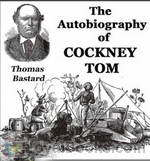 The Autobiography of Cockney Tom
The Autobiography of Cockney Tom, Showing his Struggles through Life, and proving this Truth of the Old Saying "that Honesty is the best Policy". Set in England, South Australia and the goldfields of Victoria Australia in the 1800's. | |
By: Louis Antoine Fauvelet de Bourrienne (1769-1834) | |
|---|---|
|
Memoirs of Napoleon
| |
By: Byron A. Dunn (1842-1926) | |
|---|---|
|
Raiding with Morgan
It is a fictional tale of cavalry actions during the U.S. Civil War, under General John Morgan. | |
By: Richard Henry Savage (1846-1903) | |
|---|---|
 The Midnight Passenger
Randall Clayton was surrounded by enemies. His father’s business partner had looked after him in the years since his father’s death. But Hugh Worthington’s motives were not altruistic – he had a secret to hide and a scheme to bring to fruition that would make him millions at Clayton’s expense. Clayton’s roommate, Arthur Ferris, had his own schemes, including stealing the affections of Worthington’s daughter away from Clayton. Clayton worked for a pittance in New York, where he was watched day and night by Worthington’s spies, and by the ruthless Fritz Braun, who plotted to rob Clayton of the large deposit that he daily carried for his employer... | |
By: John Toland (1670-1722) | |
|---|---|
 Pantheisticon
Pantheisticon: or, the Form Of Celebrating the Socratic-Society. Divided into Three Parts. Which Contain, I. The Morals and Axioms of the Pantheists; or the Brotherhood. II. Their Deity and Philosophy. III. Their Liberty, and a Law, neither deceiving, nor to be deceived. To which is prefix’d a Discourse upon the Antient and Modern Societies of the Learned, as also upon the Infinite and Eternal Universe. And subjoined, a short dissertation upon a Two-fold Philosophy of the Pantheists, that is to be followed; together with an Idea of the best and most accomplished Man... | |
By: Lewis Wallace (1827-1905) | |
|---|---|
|
The Prince of India — Volume 01
| |
|
The Prince of India — Volume 02
| |
By: Cleveland Moffett (1863-1926) | |
|---|---|
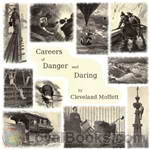 Careers of Danger and Daring
In this volume of adventure the author depicts the lives of certain humble modern heroes whose unconscious courage ordinarily goes unnoticed. Mr. Moffett has chosen unusual and picturesque careers, and has offered dramatic scenes from the lives of the steeple climber, the diver, the balloonist,the pilot, the bridge builder, the fireman, the aerial acrobat, the wild animal trainer, the dynamite worker and lastly the locomotive driver. | |
|
Through the Wall
| |
|
The Conquest of America A Romance of Disaster and Victory: U.S.A., 1921 A.D.
| |
|
Possessed
| |
By: Eva Lecomte | |
|---|---|
|
Paula the Waldensian
Into the home of an interesting but self-centered family in old France comes Paula, a young orphaned cousin, from the little village of Villar, in the Waldensian Valley. Though living very simply, tending cows, goats, sheep and rabbits, Paula has been brought up to know and love the Lord Jesus and read the Scriptures. Her Lord and His Word are the center of her life, and she can no more keep this good news all to herself than she can stop breathing or eating. This causes a good many complications, for her cousins' home was one where "religion" was a forbidden subject, never to be mentioned, and Paula soon found herself forbidden to read her own precious Bible... | |
By: Louis de Rouvroy Saint-Simon (1675-1755) | |
|---|---|
|
Memoirs of Louis XIV and His Court and of the Regency
| |
By: Gustavo Adolfo Becquer (1836-1870) | |
|---|---|
|
Legends, Tales and Poems
| |
By: Flavius Philostratus | |
|---|---|
|
The Life of Apollonius of Tyana
Apollonius of Tyana (ca. 40-120 AD) was a Greek Pythagorean philosopher and teacher. He hailed from the town of Tyana in the Roman province of Cappadocia in Asia Minor. His date of birth is a matter of conjecture as some say he was roughly a contemporary of Jesus.After Apollonius' death his name remained famous among philosophers and occultists. In a "novelistic invention" inserted in the Historia Augusta, Aurelian, at the siege of Tyana in 272, was said to have experienced a visionary dream in which Aurelian claimed to have seen Apollonius speak to him, beseeching him to spare the city of his birth... | |
By: Kate Heintz Watson | |
|---|---|
|
Textiles and Clothing
| |
By: Charles Boutell (1812-1877) | |
|---|---|
|
The Handbook to English Heraldry
| |
By: John M. Synge (1871-1909) | |
|---|---|
|
The Playboy of the Western World
| |
|
Riders to the Sea
| |
|
The Aran Islands
| |
By: Sophie Ségur (1799-1874) | |
|---|---|
 Old French Fairy Tales
| |
By: John M. Synge (1871-1909) | |
|---|---|
|
In Shadow of the Glen
| |
|
In Wicklow and West Kerry
| |