 |
Books Should Be Free Loyal Books Free Public Domain Audiobooks & eBook Downloads |
|
|
|
Books Should Be Free Loyal Books Free Public Domain Audiobooks & eBook Downloads |
|
Adventure Books |
|---|
|
Book type:
Sort by:
View by:
|
By: H. Rider Haggard (1856-1925) | |
|---|---|
 Spirit of Bambatse
A romance, a shipwreck and a hunt for buried Portuguese treasure in the Transvaal. All the ingredients of an imperial adventure that made Haggard one of the best-selling authors of the early years of the twentieth century. Also published as Benita: An African Romance, The Spirit of Bambatse has been reprinted several times, notably as the 22nd volume of the celebrated Newcastle Forgotten Fantasy series in 1979. - Summary by Phil Benson | |
|
Wisdom's Daughter
A strange manuscript in an unknown language is found among the effects of the late Professor Horace Holly. Its translator discovers that while in Central Asia, Holly convinced the immortal Ayesha, also known as She-Who-Must-Be-Obeyed, to write her story - and this is the book they have found. Ayesha, born the daughter of a sheikh in the 4th century BCE, has no interest in the arranged marriage expected of her. She wants power and position of her own. Led by a vision to believe she is the daughter... | |
|
When the World Shook
A fictional memoir of Humphrey Arbuthnot of Devonshire, we are taken on a voyage to the island of Orofena, in the South Seas, together with Bickley, the servant Bastin and the spaniel Tommy. It is a land of adventure and danger, the result of which eventually leads to the author's death. - Summary by Lynne Thompson | |
|
Jess
The setting for this novel is the Boer War in South Africa in 1880. This novel is interesting and exciting on several levels: there are complicated love entanglements, evil Machiavellian treachery, political reflection having to do with the ethics of the colonialism of the day, for one subject for thought, and war in all its lurid and shocking and murderous detail. | |
By: Haggard, H. Rider (1856-1925) | |
|---|---|
 Ayesha, the Return of She
Ayesha, the return of She, is set 16 years after the previous novel She. Horace Holly and Leo Vincey have spent the years travelling the world looking for Ayesha, along the way they experience many adventures, including avalanches, glaciers and even death-hounds before finally arriving in the court of Kaloon. At the court, they hear tell of a woman who Leo suspects to be Ayesha, however things are never simple and conflict soon follows them to Ayesha’s court. (Summarised from Wikipedia) | |
By: Hannah Hudson Moore (1857-1927) | |
|---|---|
|
Deeds of Daring done by Girls
Do not think, dear girls, that because you are girls you may not have as much courage as your brothers. I believe that quite as stout hearts beat beneath muslin frocks as under stuff jackets. When you have finished reading this book about your sisters, perhaps – if you do not already – you will agree with me, and think that it needs only occasion to call out the necessary courage. I have been asked which one of these heroines I think the most daring, but – oh dear – it would never do to have a favourite, would it? So I leave them to you, and that you will enjoy learning of their trials and triumphs is the wish of your friend, the author. - Summary by preface | |
By: Harl Vincent (1893-1968) | |
|---|---|
 Astounding Stories 12, December 1930
This issue includes "Slaves of the Dust" by Sophie Wenzel Ellis, Part B of "The Pirate Planet" by Charles W. Diffin, "The Sea Terror" by Captain S. P. Meek, "Gray Denim" by Harl Vincent, and "The Ape-Men of Xlotli" by David R. Sparks. | |
By: Harold Bell Wright (1872-1944) | |
|---|---|
 The Shepherd of the Hills
The story depicts the lives of mountain people living in the Ozarks and the mystery surrounding an old man called ‘The Shepherd of the Hills,’ who’s called Dad Howitt. The backdrop storyline surrounds the pretty Samantha Lane, called Sammy, and her love of Young Matt, Grant Matthews. The shepherd, an elderly, mysterious, learned man, escapes the buzzing restlessness of the city to live in the backwoods neighborhood of Mutton Hollow in the Ozark hills. | |
By: Harold Bindloss (1866-1945) | |
|---|---|
 Northwest!
Northwest! takes place in western Canada, primarily western Alberta and British Columbia. The story revolves around Jimmy not being sure whether or not he shot and killed a Northwest Mounted while he and some friends were out hunting one day. Not exactly a bushman, he needs to head northwest to avoid capture by the officials who are out to find him and bring him to trial. At least that's what he suspects. Survival in the wilderness for one who was raised in British class proves to be a daunting experience, and we learn of the trials he is to be put through while he is on the lam. | |
|
Sunshine and Snow
A harrowing and dramatic story of four siblings from Scotland who are poor, and orphaned. The eldest brother, Arthur, is guardian to his two brother's and one sister.) After the bank in Scotland fails, Arthur decides as family head, they will go to Canada to answer an ad to claim free farm land. Arthur is a former soldier, smart, honest, and a tremendously hard worker; his younger brothers are still in school, and Charley, Leaving their sister behind temporarily, they board a steamer for Canada, but they have no idea of the hardships and life threatening battles that await in the untamed land... | |
By: Harold L. Goodwin (1914-1990) | |
|---|---|
|
Rip Foster Rides the Gray Planet
"Foster, Lieutenant, R. I. P.," blared the voice horn, and five minutes later Rip Foster was off into space on an assignment more exciting than any he had ever imagined. He could hardly believe his ears. Could a green young Planeteer, just through his training, possibly carry out orders like these? Sunny space, what a trick it would be! From the moment Rip boards the space ship Scorpius there is a thrill a minute. He and his nine daring Planeteers must cope with the merciless hazing of the spacemen commanding the ship, and they must outwit the desperate Connies, who threaten to plunge all of space into war... | |
|
Smugglers' Reef
Seventh entry in the Rick Brant Science Mystery Adventure series has Rick and buddy Scott using infrared technology on the trail of smuggling no-goodniks in the vicinity of Spindrift Island, Rick's home and location of his dad's laboratory, off the New Jersey & New York coast. | |
 Caves of Fear
Entry in the Rick Brant series by Goodwin under the name John Blaine, which began in 1947. 'Rick and Scotty travel to the Himalayas again, this time to stop nuclear materials from falling into the wrong hands.' says Wikipedia. | |
By: Harriet T. Comstock (1860-1925) | |
|---|---|
 Janet of the Dunes
Known primarily for her children's books, Harriet T. Comstock would occasionally depart from that genre and showcase her writing talent in adult prose as well. Janet of the Dunes is one such departure wherein she masterfully takes us into the lives of the bold men and women who tended those life saving stations along the seaboard which many a ship relied upon for their safety. They were simple people, large of heart and as close-knit as a tiny community can and must ever be, and they, above all else, took their duties very seriously... | |
By: Harry Collingwood (1851-1922) | |
|---|---|
 For Treasure Bound
For Treasure Bound is one of the earlier novels by Harry Collingwood (William Joseph Cosens Lancaster), published in 1897. We follow the hero, whose name is incidentally also Harry Collingwood, on a quest to the pacific islands for treasure and his marooned father, through all the perils he encounters on his journey, such as pirates, sea monsters, and beautiful young ladies. (Summary by Carolin) | |
|
Cruise of the Esmeralda
After his father died, Captain Saint Leger and his family are left destitute. However, the Saint Legers have a family secret: an ancestor is said to have buried a vast fortune in gold and jewels somewhere in the Eastern Seas. The catch: all directions are encrypted. Nevertheless, Captain Saint Leger decides to take a chance and sails east. A journey full of adventure begins, including pirates, storms and mutiny... | |
By: Harry Hazelton (1848-1909) | |
|---|---|
|
Prisoner of the Mill
Subtitled "Captain Hayward's Body Guard”. An adventure story for boys. | |
|
Outlaw Jack
1850 - A year before, the Californian "gold-fever" broke out, a party of emigrants, numbering nearly one hundred under the command of Caleb Mitchell, felt fairly secure as they traveled the hard trail to find gold. However, security is marred by a sad accident in Mitchell's family early on. The quest for Gold can be complicated and dangerous, especially when it involves Outlaws! Can dreams prevail, or what and how much will be lost in this Western Outlaw tale? Note: The author of this book is Joseph Edward Badger, who also wrote under the pseudonym Harry Hazard... | |
By: Helen Randolph | |
|---|---|
|
Secret of Casa Grande
While visiting their friend, Florence, at her home in Mexico, Jo Ann and Peggy noticed a barred window which has no opening into any of the rooms of an ancient adobe house. Curious to find out what it is, the girls tried to investigate but no one seems eager to help them. Undaunted, the girls made plans to get there only to encounter dangers and find a thrilling discovery. - Summary by Mary Escano | |
By: Henry Fielding (1707-1754) | |
|---|---|
|
Journal of a Voyage to Lisbon
Sailing voyage from England to Portugal in the mid Eighteenth Century, by one of the premier humorists, satirists, novelists and playwrights of his age. It was to be his last work, as his failing health proved unable to persevere much longer after the voyage. | |
By: Henry Gilbert (1868-1937) | |
|---|---|
 King Arthur's Knights: The Tales Retold for Boys & Girls
This book is an attempt to tell some of the stories of King Arthur and his Knights in a way which will be interesting to every boy and girl who loves adventures. (Introduction by Henry Gilbert) | |
By: Henry Kuttner (1915-1958) | |
|---|---|
 The Ego Machine
Celebrated playwright Nicholas Martin didn’t read the small print in his Hollywood options contract. Now he’s facing five years of servitude to a conceited director named Raoul St. Cyr, who’s taken a thoughtful play about Portuguese fishermen and added dancing mermaids. When it seems the plot has changed to include a robot from the future Nicholas looses all hope, but this robot may be just what he needs to win his freedom. – The Ego Machine was first published in the May, 1952 issue of Space Science Fiction magazine. | |
By: Henry Oyen (1882-1921) | |
|---|---|
|
The Snow-Burner
The Snow-Burner is what the Native Americans called Reivers, and it was a rough and tumble life in the land where Reivers chose to live up to his name. The name was attributed to Reivers upon his proof after arriving in the north country because of his ability to defeat all perceived enemies in whatever means was necessary; whether by brute force and tough action, or by sheer cunning which he had gained living in the city in his earlier days. When assigned to oversee a group of foreigners in a work camp, he treated them with utter cruelty... | |
By: Henry Rider Haggard (1856-1925) | |
|---|---|
|
Pearl Maiden
This is the story of Miriam, an orphan Christian woman living in Rome in the first century. She falls in love with a Roman officer, but knows that her Jewish childhood playmate loves her too and will do anything in order to get her love in return. | |
By: Henry Wysham Lanier (1873-1958) | |
|---|---|
|
Book of Giants
Tales of very tall men of myth, legend, history, and science - Summary by Henry Wysham Lanier | |
By: Herbert George Jenkins (1876-1923) | |
|---|---|
 John Dene of Toronto; a Comedy of Whitehall
John Dene comes to England with a great invention, and the intention of gingering-up the Admiralty. His directness and unconventional methods bewilder and embarrass the officials at Whitehall, where, according to him, most of the jobs are held by those "whose great-grandfathers had a pleasant way of saying how-do-you-do to a prince." Suddenly John Dene disappears, and the whole civilised world is amazed at an offer of £20,000 for news of him. Scotland Yard is disorganised by tons of letters and thousands of callers... | |
By: Herman Melville (1819-1891) | |
|---|---|
 Moby Dick
“Call me Ishmael” is one of the most famous opening lines in American literature. With these words, opens one of the strangest and most gripping stories ever written about the sea and sea-faring. Moby Dick by Herman Melville is today considered one of the greatest novels written in America but paradoxically, it was a miserable failure when it first made its debut in 1851. Entitled Moby Dick or The Whale the book finally got its due after the author's death and is now regarded as a classic portrayal of mania and fatal obsession... | |
 Typee
Typee
A whaling ship stops at a remote Polynesian island. The crew aboard is exhausted after a grueling six-month voyage in which they suffered ill-treatment and drudgery. Two men decide to abandon ship and hide on the island, living off the fruit of the land, until they can get on board a more conducive ship. However, to their consternation they discover that part of the island paradise is peopled by a savage and cannibalistic tribe called the Typees. As destiny would have it, they fall into the hands of the very people they dread... | |
 Benito Cereno
On an island off the coast of Chile, Captain Amaso Delano, sailing an American sealer, sees the San Dominick, a Spanish slave ship, in obvious distress. Capt. Delano boards the San Dominick, providing needed supplies, and tries to learn from her aloof and disturbed captain, Benito Cereno, the story of how this ship came to be where she is. Dealing with racism, the slave trade, madness, the tension between representation and reality, and featuring at least one unreliable narrator, Melville's novella has both captivated and frustrated critics for decades. | |
 Omoo: A Narrative of Adventures in the South Seas
Omoo: A Narrative of Adventures in the South Seas is Herman Melville's sequel to Typee, and, as such, was also autobiographical. After leaving Nuku Hiva, the main character ships aboard a whaling vessel which makes its way to Tahiti, after which there is a mutiny and the majority of the crew are imprisoned on Tahiti. The book follows the actions of the narrator as he explores Tahiti and remarks on their customs and way of life.Many sources incorrectly assert that Omoo is based on Melville's stay in the Marquesas. The novel is, in fact, exclusively based on his experiences in the Society Islands. | |
|
Mardi Vol. 1
"Not long ago, having published two narratives of voyages in the Pacific, which, in many quarters, were received with incredulity, the thought occurred to me, of indeed writing a romance of Polynesian adventure, and publishing it as such; to see whether, the fiction might not, possibly, be received for a verity: in some degree the reverse of my previous experience...This thought was the germ of others, which have resulted in Mardi" . | |
|
Billy Budd
Young naive sailor Billy Budd is impressed into military service with the British navy in the 1790s, framed for conspiracy to mutiny, summarily convicted in a drum-head court martial, and hanged. Billy Budd is the final published work by Herman Melville, discovered in his personal papers three decades after his death. | |
By: Hiram Bingham (1875-1956) | |
|---|---|
 Inca Lands
Prof. Hiram Bingham of Yale Makes the Greatest Archaeological Discovery of the Age by Locating and Excavating Ruins of Machu Picchu on a Peak in the Andes of Peru.There is nothing new under the sun, they say. That is only relatively true. Just now, when we thought there was practically no portion of the earth's surface still unknown, when the discovery of a single lake or mountain, or the charting of a remote strip of coast line was enough to give a man fame as an explorer, one member of the daredevil explorers' craft has "struck it rich... | |
|
Explorer in the Air Service
Explorer Hiram Bingham discovered Machu Picchu in 1911, as recounted in his book Inca Lands, now released on Librivox at http://librivox.org/inca-lands-by-hiram-bingham/. In 1917, he became an aviator and organized the United States Schools of Military Aeronautics at eight universities to provide ground school training for aviation cadets, and then in Issoudun, France, Bingham commanded the primary Air Service flying school. He became a supporter of the Air Service in their post-war quest for independence from the Army and supported that effort, in part, with the publication of this book of his wartime experiences published in 1920 by Yale University Press. | |
By: Homer | |
|---|---|
 The Odyssey
A wandering king who's a war-hero doomed to roam the earth by a vengeful God, a plethora of fantastic experiences, a wife battling the invasion of suitors who wish to replace her missing husband, a son in search of his father - the Odyssey is a rich tapestry of incredible experiences and unforgettable characters. A must-read classic for anyone who wants to understand the fundamentals of Western mythology, it is a sequel to the Illiad which recounts the magnificent saga of the Trojan War. The Odyssey continues on, describing the trials and tribulations of the Greeks under the leadership of Odysseus... | |
By: Homer Eon Flint (1888-1924) | |
|---|---|
|
The Lord of Death and the Queen of Life
A doctor, an architect, an engineer, and a geologist step into a space car. In their new invention, they set off on an expediton to Mercury, planning to visit Venus on the return voyage. On Mercury they find a strange city eerily abandoned. Sculptures of giant figures alarm them. In a building they discover a machine. The engineer gets it running, and blaring out of the machine a thundering voice speaking Mercurian begins to sound in a way that conveys to them that it is telling a story. After an enormous effort the men translate the audio book... | |
By: Homer Greene (1853-1940) | |
|---|---|
|
Tale of the Tow-Path
All work and no play makes 14-year-old Joe Gaston run away. He's also falsely branded as a horse-thief by his own father. This heart-warming story tells of Joe's wanderings and life on the tow-path, of finding Old Charlie and the real horse-thief, how his name is cleared, and his return home. This book, published in 1892, is the third written by Homer Greene, whose primary profession was law. His novels generally include a legal transgression with an interrogation or court-room scene. | |
By: Horatio Alger, Jr. (1832-1899) | |
|---|---|
 Ragged Dick
A fourteen year old homeless boy, Dick, tries to make an honest living in the streets of 1860s New York as a bootblack. He is determined to stay honorable, though he is tempted many times to easy pickings and a life of crime. When a regular customer is impressed by Dick's integrity and invites him to his mansion, this marks a turning point in the life of the young street-smart teenager. Ragged Dick by Horatio Alger Jr was first published in 1868. It represents a typical coming of age story in which a child attains the maturity of adulthood through circumstances in which important choices are made... | |
|
Timothy Crump's Ward
A poor family is surprised with an infant on their doorstep on New Year’s Eve with a note and monetary support requesting them to raise the child. Eight years later, the child is stolen and the family is put into more trouble trying to find her. This is a story of how love and good morals are reward with a fairy tale “happily ever after” ending. | |
|
Mark the Match Boy or Richard Hunter's Ward
In this third installment from the “Ragged Dick” series by Horatio Algers, Jr., the reader is reacquainted with some old friends and meets young Mark Manton. Mark is a match boy plagued by bad luck and an even worse guardian. But, with new friends, hard work, and smart choices, Mark may just find his luck taking a turn for the better. summary by tfaulder | |
|
Rough and Ready OR Life Among the New York Newsboys
Join Rough and Ready for his adventure on the streets of New York City. Working as a newsboy, Rough and Ready tries to support himself and his sister on his meager earnings. Unfortunately, their stepfather is seeking to kidnap little Rose, getting an education is hard work, swindlers are trying to trick him out of his money, and thieves are planning nefarious deeds. Luckily for Rough and Ready, he makes some good friends along the way. Summary by Tori Faulder | |
|
In Search of Treasure
Guy Fenwick is a bright boy of 16 who lives with his clergyman father near New Bedford, Massachusetts. Guy receives permission from his father to examine the contents of an old chest in the attic where Guy discovers clues to the location of a pirate treasure buried on a remote island in the Indian Ocean. Guy would dearly love to find the treasure to help financially support his father. Luckily, Guy’s father has a friend who is a sea captain and happens to be heading to Bombay. Guy travels to Bombay as a passenger and, while in Bombay, a life-changing event occurs... | |
By: Howard Pyle (1853-1911) | |
|---|---|
 The Merry Adventures of Robin Hood
A modern day legend, Robin Hood is an archetypal hero of the common people who goes to great lengths to famously take from the rich and give to the poor. Luckily he is not alone in his mission, as his righteous views are shared by his band of Merry Men, a group of yeomen, and together they pursue an end to injustice and oppression. Set in medieval England, the tale begins with the introduction of a young archer, who is provoked into conflict and committing a crime against the formidable Sherriff of Nottingham and is immediately dubbed an outlaw... | |
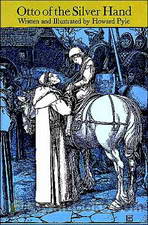 Otto of the Silver Hand
The story of little Otto, a gentle, peace-loving child born into the heart of turmoil and strife in the castle of a feuding robber baron in medieval Germany. (Summary by Arctura) | |
By: Howard R. Garis (1873-1962) | |
|---|---|
|
Uncle Wiggily's Adventures
Due to Uncle Wiggily's rheumatism being so very bad, Dr. Possum prescribes a journey to help him move around, have a change of air, and a good long bout of traveling to get more exercise. So Uncle Wiggily packs his valise and sets forth! | |
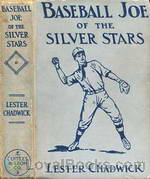 Baseball Joe of the Silver Stars
"Baseball Joe" Matson has recently moved to Riverside with his family, in this opening volume of Baseball Joe series. Joe is a wide-awake country boy who enjoys playing baseball. We follow his career in the series, and his adventures, as he joins Riverside's local nine and makes good, playing the position he most enjoys - that of pitcher, are recounted here. When not on the diamond, Joe is assisting his father against foes who are trying to steal Mr. Matson's machinery patents.Lester Chadwick is one of dozens of house pseudonyms created by the Stratemeyer Syndicate in the early to mid 1900's, to "author" children's series... | |
|
Ned, Bob and Jerry at Boxwood Hall, or, The Motor Boys as Freshman
The seventeenth book in the popular "Motor Boys" series sees our heroes as college freshman. Written under the house pseudonym of Clarence Young. - Summary by Lynne Thompson | |
By: Hugh Lofting (1886-1947) | |
|---|---|
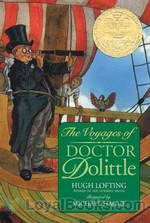 The Voyages of Doctor Dolittle
The delightfully eccentric Doctor Dolittle, rendered immortal on screen by the gifted Rex Harrison, has remained a firm favorite with generations of children ever since he made his debut in an earlier novel, The Story of Doctor Dolittle. In his second outing titledThe Voyages of Doctor Dolittle, the maverick physician takes on a new assistant, Tommy Stubbins. The story is structured as a first person account given by Tommy, who is now a very old man. The boy who was the son of the village cobbler first meets Doctor Dolittle when he takes a hurt squirrel to the doctor for treatment... | |
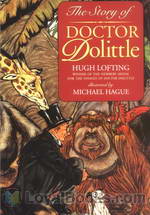 The Story of Doctor Dolittle
An adventurous children’s novel, The Story of Doctor Dolittle is the first book in the Doctor Dolittle series. The novel depicts the many adventures of Dr. John Dolittle as he learns the language of animals and takes on various feats including exotic travel, a dangerous encounter with pirates, and a mission to set right from wrong. The novel begins with the introduction of Dr. John Dolittle, an animal lover and respected physician, who lives in the small English town of Puddleby-on-the-Marsh with his unmarried sister... | |
|
Doctor Dolittle's Post Office (version 2) (dramatic reading)
While working in Africa, the eminent naturalist John Dolittle sets out to create the best post office on earth, using his bird friends to carry messages and packages anywhere in the world in record time. Along the way, he also manages to foil a slave trader, enrich a kingdom, save a ship, and meet the oldest living creature on earth! - Summary by Devorah Allen Cast: Doctor Dolittle: ToddHWSpeedy the Swallow: TJ BurnsDab-Dab the Duck: Leanne YauJip the Dog: Rafe BallGub-Gub the Pig: Campbell SchelpThe... | |
By: Ian Bernard Stoughton Holborn (1872-1935) | |
|---|---|
|
Child of the Moat
Ian Holborn was on board the RMS Lusitania when it was torpedoed, and as it sank he rescued a 12 year old girl named Avis Dolphin. She later complained that books for girls were not very interesting, so he decided to write one for her "as thrilling as any book written for boys!" This book is dedicated to her. From the Preface: This story is not written for grown-ups, and if they want to know why it begins with such a gruesome first chapter, let them ask the children. Children like the horrors first and the end all bright. Many grown-ups like the tragedy at the end. But perhaps the children are right and the grown-ups are standing on their heads. - Summary by Beth Thomas | |
By: Irving Crump (1887-1979) | |
|---|---|
|
Og - Son of Fire
Five hundred thousand years ago, Og has been separated from his people during a volcano eruption. This story follows Og on his journey to find his people and the many adventures he experiences along the way. | |
By: J. M. Barrie (1860-1937) | |
|---|---|
 Peter Pan
His name has become a metaphor for one who will never grow old. Peter Pan by JM Barrie is the story of a boy who remains a boy while the world around him changes. Sir James Mathew Barrie was a Scottish playwright and novelist whose works were received with great critical and commercial success in the late nineteenth and early twentieth century. He discovered the main inspiration for his creative genius in his friendship (and later guardianship) with the children of Arthur and Sylvia Llewellyn-Davies... | |
|
Little White Bird
"A children's book, sharp social commentary and sad psychological thriller about a man's search for a sense of belonging. All in one amazing and lyrical collection. This is the first book in which Peter Pan starts to appear. His adventure in Kensington Gardens are first narrated here. Other than that, it offers a magical portrait of contemporary London, and a realistic tale of a family to which every one of us could have belonged." | |
By: J. Thomas Warren | |
|---|---|
|
Northern Spy
The Northern Spy, written in the 1800s, is a lively story about a Union soldier who infiltrates a Confederate battalion in order to aid in the conquering of South Carolina. The novel was very popular, so much so that allegedly Northern Spy apples were named for the hero of the story. - Summary by A. Gramour | |
By: J. Thorne Smith, Jr. (1892-1934) | |
|---|---|
 Biltmore Oswald
The hilarious diary of a young man's recruitment into, and service in a navy, which, though well equipped and disciplined, remains woefully ill prepared for his arrival and dubious contribution. (Introduction by Nigel Boydell) | |
By: J. W. Duffield (1859-1946) | |
|---|---|
|
Bert Wilson at the Wheel
First volume of an adventure series for young adults - Summary by kathrinee | |
|
Radio Boys in the Secret Service
Twin sixteen year-old brothers, Guy and Walter Burton are the “Radio Boys” headed for another adventure. Travels take Guy from their home in New England to London where he meets another radio enthusiast, Glennon. There are city adventures before they find themselves on an old steamer headed for disaster. Can the wireless radio help them in their time of need? And, where is Walter? - Summary by Larry Wilson | |
By: J. Walker McSpadden (1874-1960) | |
|---|---|
 Robin Hood
Robin Hood is a heroic outlaw in English folklore. A highly skilled archer and swordsman, he is known for "robbing from the rich and giving to the poor", assisted by a group of fellow outlaws known as his "Merry Men". Traditionally Robin Hood and his men are depicted wearing Lincoln green clothes. The origin of the legend is claimed by some to have stemmed from actual outlaws, or from ballads or tales of outlaws. | |
|
Boys' Book of Famous Soldiers
These 12 stories give a personal portrait of twelve famous soldiers from the past two centuries. Each story explores the early life of the solder —to trace his career up from boyhood through the formative years. Such data serves to explain the great soldier of later years. Summary compiled from the preface of the book. (Summary by philchenevert) | |
By: Jack London (1876-1916) | |
|---|---|
 The Sea Wolf
A maritime classic acclaimed for its exciting adventure, The Sea Wolf offers a thrilling tale of life at sea, while exploring the many difficulties that may erupt on board a ship captained by a brutally hedonistic and controlling individual. Additionally, the psychological adventure novel covers several themes including mutiny, existentialism, individualism, brutality, and the intrinsic will to survive. The novel sets into motion when its protagonist, the soft and cultivated scholar Humphrey van Weyden, is witness to a precarious collision between his ferry and another ship... | |
 The Mutiny of the Elsinore
This is the story of a voyage of a sailing ship from Baltimore to Seattle, east-to-west around Cape Horn in the winter. It is set in 1913 and the glory days of “wooden ships and iron men” are long over. The Elsinore is a four-masted iron sailing vessel carrying a cargo of 5000 tons of coal. She has a “bughouse” crew of misfits and incompetents. This book was published in 1915 and some actions of some of the characters seem odd to us today. There is romance, but it is strangely platonic. Two important characters disappear with no real explanation... | |
 The Jacket (or Star Rover)
This book by Jack London was published under the name of "The Jacket" in the UK and "The Star Rover" in the US. A framing story is told in the first person by Darrell Standing, a university professor serving life imprisonment in San Quentin State Prison for murder. Prison officials try to break his spirit by means of a torture device called "the jacket," a canvas jacket which can be tightly laced so as to compress the whole body, inducing angina. Standing discovers how to withstand the torture by entering a kind of trance state, in which he walks among the stars and experiences portions of past lives... | |
 The Game
Jack London wrote at least four stories about boxing; A Piece of Steak (1909), The Mexican (1911), The Abysmal Brute (1911), and The Game (1905). The Game is told, in part, from the point of view of a woman, the fiancée of one of the competitors. This is to be his last fight and they are to be married on the morrow. Against her better judgment, she agrees to watch the bout. (Introduction by Tom Crawford) | |
|
Burning Daylight
Burning Daylight, Jack London's fictional novel published in 1910, was one of the best selling books of that year and it was his best selling book in his lifetime. The novel takes place in the Yukon Territory in 1893. The main character, nicknamed Burning Daylight was the most successful entrepreneur of the Alaskan Gold Rush. The story of the main character was partially based upon the life of Oakland entrepreneur "Borax" Smith. (Wikipedia) | |
|
When God Laughs, and Other Stories
This collection of Jack London's short stories touches on a variety of topics, from his love of boxing, to relationships between criminals, to the trials of life and travel on many frontiers, to an allegory about a king who desired a nose. London is considered a master of the short story, a form much more to his liking and personality than his novels. He was active and quick of mind and the short story suited him well. | |
|
Stories of Ships and the Sea
5 Exciting short stories by one of Americas best story tellers | |
|
Daughter of the Snows
In Jack London's first novel, he tells the story of Frona Welse, a strong and interesting heroine, "a Stanford graduate and physical Valkyrie," who heads to the Yukon gold fields after creating a stir in her hometown by being strong and forthright and by befriending the town's prostitute. In the course of her adventures, she finds herself at the distaff point of a love triangle. This novel contains very overt racial and gender stereotypes and as such reflects the attitudes growing in society at the time it was written. It is the practice at Librivox to record works as they stand, without judgment. | |
|
Dutch Courage and Other Stories
Jack London was quoted as saying, "I've never written a line that I'd be ashamed for my young daughters to read, and I never shall write such a line!" After his death in 1916, his wife Charmian assembled a collection of stories, most of which he had written for young readers, but at least one of which was for more mature readers, "Whose Business is to Live." Like most of London's work, his short stories could be read by young readers and then again when they were older with mature minds. These stories draw from London's own extensive experience in the world and demonstrate the dictum that "good writing is good writing" no matter for whom it was written. | |
|
Tales of the Fish Patrol
Wildest among the fisher-folk may be accounted the Chinese shrimp-catchers. It is the habit of the shrimp to crawl along the bottom in vast armies till it reaches fresh water, when it turns about and crawls back again to the salt. And where the tide ebbs and flows, the Chinese sink great bag-nets to the bottom, with gaping mouths, into which the shrimp crawls and from which it is transferred to the boiling-pot. This in itself would not be bad, were it not for the small mesh of the nets, so small that the tiniest fishes, little new-hatched things not a quarter of an inch long, cannot pass through... | |
|
Abysmal Brute
Young Pat Glendon is twenty-two years old, weighs two-hundred and twenty pounds, has never drunk alcohol nor tasted tobacco and knows little of city life. He’s all muscle, moves with cat-like grace and possesses great stamina and strength acquired from living natural in the wilds of northern California with his father. Young Pat is a natural at prize-fighting. In addition to his brawn he has speed and a natural instinct for the sport. His father, a former heavyweight prize-fighter himself, has trained Young Pat and believes it is time for the boy to take on the heavyweight world... | |
|
South Sea Tales
The eight short stories that comprise South Sea Tales are powerful tales that vividly evoke the early 1900’s colonial South Pacific islands. Tales of hurricanes, missionaries, brotherhood and seafaring are intertwined with enslavement, savagery, and lawless trading to expose the often-barbarous history of the South Pacific islands. You will also gain unsparing insight into the life, culture and relations between natives and Westerners during this period. If you like nautical and sea adventures, if you are interested in the history of the South Pacific islands, and especially if you want to read gripping tales set in the exotic lands, then this book will be perfect for you... | |
|
Moon-Face and Other Stories
Well-known and well-regarded author Jack London, known for adventurous stories of the outdoors such as Call of the Wild and White Fang shows us a broader scope of interest in his short stories which here run the gamut from darkly comic tales of murder most foul to light and frothy tales of newspapermen and from crackling sci-fi to stories of sinister shadowy organizations and spiritualism, London illustrates the many talents he holds as a writer beyond his tales of the frozen north. | |
By: James B. Hendryx (1880-1963) | |
|---|---|
|
Snowdrift
The story revolves around Carter Brent, an alcoholic and gambler who had struck gold many times in the Yukon, but gambled and drank it away in Dawson; and Snowdrift, the half-breed who had spent her life with a wandering band of Indians in the frozen north country. Snowdrift had been raised by Wananebish, yet never knew who her father was, and yet Wananebish had somehow been able to send her to be schooled at a nearby mission.The paths of this unlikely pair would cross in the barren lands of the Yukon where Brent had hopes of finding more gold, but it was well known that there was no gold in the region between Dawson and the MacKenzie... | |
By: James Blish (1921-1975) | |
|---|---|
 The Thing in the Attic
Honath the Pursemaker is a heretic. He doesn’t believe the stories in the Book of Laws which claims giants created his tree-dwelling race. He makes his opinion known and is banished with his infidel friends to the floor of the jungle where dangers abound. Perhaps he’ll find some truth down there. – The Thing in the Attic is one of Blish’s Pantropy tales and was first published in the July, 1954 edition of If, Worlds of Science Fiction magazine. | |
By: James Brendan Connolly (1868-1957) | |
|---|---|
 The Trawler
The Trawler is a short story revolving around the trying life of a group of bank fishermen based in Gloucester. Skipper Hugh Glynn worked his men hard; some said too hard, and Arthur Snow was one who had paid the ultimate price.Arthur's close friend Simon Kippen decided he'd ask to take the place of his fallen friend aboard Hugh Glynn's vessel as a dory mate, and from there we have a tale of the open seas between Gloucester and Newfoundland where perhaps only the names and locations have changed from the countless stories of similar nature; the key being that this one, however, is first hand. | |
By: James Cook | |
|---|---|
 A Voyage Towards the South Pole and Round the World
Having, on his first voyage, discovered Australia, Cook still had to contend with those who maintained that the Terra Australians Incognita (the unknown Southern Continent) was a reality. To finally settle the issue, the British Admiralty sent Cook out again into the vast Southern Ocean with two sailing ships totalling only about 800 tons. Listen as Cook, equipped with one of the first chronometers, pushes his small vessel not merely into the Roaring Forties or the Furious Fifties but becomes the first explorer to penetrate the Antarctic Circle, reaching an incredible Latitude 71 degrees South, just failing to discover Antarctica. (Introduction by Shipley) | |
By: James De Mille (1833-1880) | |
|---|---|
 A Strange Manuscript Found in a Copper Cylinder
A Strange Manuscript Found in a Copper Cylinder is the most popular of James De Mille’s works. It was serialized posthumously in Harper’s Weekly, and published in book form by Harper and Brothers of New York City in 1888. This satirical romance is the story of Adam More, a British sailor. Shipwrecked in Antarctica, he stumbles upon a tropical lost world of prehistoric animals, plants, and a cult of death-worshipping primitives. He also finds a highly developed human society which has reversed the values of Victorian society... | |
By: James Fenimore Cooper (1789-1851) | |
|---|---|
 The Last Of The Mohicans
The Last of the Mohicans is an epic novel by James Fenimore Cooper, first published in January 1826. It was one of the most popular English-language novels of its time, and helped establish Cooper as one of the first world-famous American writers.The story takes place in 1757 during the French and Indian War, when France and Great Britain battled for control of the American and Canadian colonies. During this war, the French often allied themselves with Native American tribes in order to gain an advantage over the British, with unpredictable and often tragic results. | |
 The Deerslayer
The Deerslayer, or The First Warpath (1841) was the last of James Fenimore Cooper’s Leatherstocking tales to be written. Its 1740-1745 time period makes it the first installment chronologically and in the lifetime of the hero of the Leatherstocking tales, Natty Bumppo. | |
 The Pioneers
The Pioneers: The Sources of the Susquehanna; a Descriptive Tale is one of the Leatherstocking Tales, a series of five novels by American writer James Fenimore Cooper. The Pioneers was first of these books to be published (1823), but the period of time covered by the book (principally 1793) makes it the fourth chronologically. (The others are The Deerslayer, The Last of the Mohicans, The Pathfinder, and The Prairie.)The story takes place on the rapidly advancing frontier of New York State and features... | |
|
Prairie - A Tale
The story opens with Ishmael, his family, Ellen and Abiram slowly making their way across the virgin prairies of the Midwest looking for a homestead, just two years after the Louisiana Purchase, and during the time of the Lewis and Clark Expedition. They meet the trapper (Natty Bumppo), who has left his home in New York state to find a place where he cannot hear the sound of people cutting down the forests. In the years between his other adventures and this novel, he tells us only that he has walked all the way to the Pacific Ocean and seen all the land between the coasts (a heroic feat, considering Lewis and Clark hadn’t yet completed the same trek). | |
By: James Macdonald Oxley (1855-1907) | |
|---|---|
|
My Strange Rescue
An anthology of short stories, anecdotes and observations of sport and adventure in Canada. Tobogganing, snowshoeing , ice skating and hockey all feature, along with other cold-weather pursuits. | |
By: James Norman Hall | |
|---|---|
 Faery Lands of the South Seas
Returning from the horrors of World War I James Hall and Charles Nordhoff follow a dream to tour the South Pacific. They later co authored “Mutiny on the Bounty”. This is a love story. A travelogue and an adventure rolled into one. This book just went into the public domain, so enjoy an early 20th Century look at paradise. | |
 Kitchener's Mob Adventures of an American in the British Army
“Pvt Ryan”, “Platoon”, “A Soldier’s Home”, “Kitchener’s Mob”. These aren’t happy stories, they are about the experience of War. War at different times, and although modern warfare may be more sanitized, the adventure, the horror, the emotions don’t change. James Norman Hall has been there. He “Saw the Elephant”, and his portrayal of his WWI experience is a tribute to those ordinary people who do such extraordinary things. Those who have served will identify with at least some part if not all of this book, be it the rigors of training, the camaraderie, or possibly those memories that try as you may, you can never make go away... | |
By: James Oliver Curwood | |
|---|---|
 The Alaskan
This story opens with a young woman who voyages alone into the wilds of Alaska to escape her tragic past. It then continues on to a young man who passionately protects the pristine environment, people and way of life in this snowbound country. Finally, a greedy profiteer arrives in the narrative whose only aim is to fill his pockets. When these three characters encounter each other on the stark and snowy plains, it's a clash of ideals and the sparks begin to fly. The Alaskan by James Oliver Curwood is one of his very engaging adventure romance conservationist stories and was an instant bestseller, like most of his books, when it was first published in 1923... | |
 The Flaming Forest
A tale of mystery, romance, and honor, as David Carrigan must choose between his duty as an officer of the law and a girl who holds him captive; a girl who Carrigan thinks he may have fallen in love with no less! Who is this strange girl Jean-Marie, and why won’t she give him his freedom? And who are the people that she surrounds herself with along the great Canadian rivers and wilderness barrens and forests of the northwest? | |
 Flower of the North
Flower of the North finds Philip Whittemore on an adventure which takes him up the Churchill River of northern Canada to a land which he thought he knew. However, tucked in among the rocks and hills lies an unfamiliar outpost which he’s been told is called Fort o’ God whose inhabitants and history are shrouded in mystery. It is Jeanne D’Arcambal and her protector Pierre who have told him of this place, but there is so much which they haven’t told him, including who they really are, where they come from, and their clouded past. | |
 God's Country—And the Woman
James Curwood wrote many adventures of the far north. By 1909 he had saved enough money to travel to the Canadian northwest, a trip that provided the inspiration for his wilderness adventure stories. The success of his novels afforded him the opportunity to return to the Yukon and Alaska for several months each year that allowed him to write more than thirty such books. The Canadian North is often referred to as “God’s Country” God’s Country is a tale of adventure, mystery and romance! | |
 The Country Beyond
The Country Beyond, subtitled A Romance In the Wilderness, is a story of “Jolly” Roger McKay, an outcast on the run from the law; Nada, the girl he falls in love with; and Peter, the devoted mixed-breed dog who links the two together as no human could, as action, adventure, and romance take them through the Northwest Canadian wilderness in search of The Country Beyond. (Summary by Roger Melin) | |
 The Valley of Silent Men
Subtitled: A Story of the Three River Country. James Kent has learned that he is terminally ill with perhaps only days to live, and so decides to confess to a murder and thus save an innocent man. Nobody believes his confession, particularly Marette, a mysterious girl who had shown up at Athabasca Landing only weeks before. Kent’s illness takes a turn and his death is postponed, and he sets about to find out more about the girl, who he ends up falling in love with, although she’ll not reveal her past to him, nor what she knows about the murder... | |
 The Danger Trail
Chicago engineer Jack Howland is sent to the edge of the Canadian barren lands north of Prince Albert to establish a train route through some of the most treacherous terrain in North America. He would soon learn that it was not only the terrain that was forbidding, as he begins to understand why the previous engineers sent on the same mission had been forced to give up the task and flee back to the south. Mysterious visitors, suspicious characters, strange apparent coincidences, and one particularly mysterious girl meet Howland at every turn in this suspenseful tale of adventure, excitement, danger, and romance set in the northern Canadian wilderness. | |
 The Gold Hunters
In The Gold Hunters we find 3 men in search of a treasure of gold hidden away in the upper reaches of the Canadian wilderness. One, a young white man, another his half breed friend, and the third the wise old Indian sage who communes with the wilderness as only his people have done through the generations. The 3 men know the gold is there, they had found the map which is leading them to it. Yet it seems that the map is leading them to places that don't exist, and each day finds a new adventure and new dangers which they must overcome if they are to achieve their reward. (Introduction by Roger Melin) | |
 The Golden Snare
With but two years of service in the RNMP Philip Raine finds himself somewhat unwillingly on the trail of Bram Johnson, wanted for murder and a wild, untamed and savage man who commands a pack of wolves as his brethren.But most peculiar of all is the snare which Bram had had in his posession and had somehow lost. It was a golden snare intricately woven out of the finest, most delicate flaxen hair of a woman. But what could possibly be the relationship between this half-human murderer and a woman... | |
 The Wolf Hunters
Follow Roderick and his friends Wabi and Mukoki on their adventures in the pristine North. They fight voracious wolves, hostile natives, and the vicious elements of nature, while on the hunt. Getting more than they bargained for, they discover a mysterious cabin, and stumble upon a secret that has lain hidden for half a century. Full of twists and turns, danger and suspense, The Wolf Hunters, the prequal to The Gold Hunters, is an excellent read. (Introduction by Brian Adey) | |
 Kazan
Kazan
Kazan (sometimes published with the subtitle The Wolf Dog) is a once very popular novel by environmentalist and author James Oliver Curwood. After a trip to the Yukon area of Canada and Alaska, Curwood wrote a series of wilderness adventure novels that were best-sellers in the 1910’s and 1920’s and remained popular through mid century. Jack London had begun the vogue for northland dog stories with his Call of the Wild and White Fang, and there were many imitators, but none had a greater impact than Curwood... | |
 Isobel
Action, intrigue, and a touch of romance in the farthest reaches of northern Canada. Sergeant Billy MacVeigh of the Canadian Northwest Mounted, with his only partner Pelliter are the only official representatives in the lonely and desolate reaches of Point Fullerton, hundreds of miles from the next nearest outpost, and from any civilization. Both are nearing the end of their service in those regions, and their main function has been to try to find the elusive murderer Scottie Deane, and if they happen upon anybody trading in Eskimo women to haul them in also... | |
|
Nomads of the North
An unlikely pair were Neewa, the black bear cub who had been orphaned at a young age, and Miki, part Mackenzie hound, part Airedale and Spitz who had become separated from his master in the frozen reaches of northern Canada. But the two befriended one another, and these nomads fended for themselves until they too became separated in an unfortunate way. While Neewa searched for his friend, Miki was taken by northern trappers who felt he could be trained to become a good fighting dog, a valuable asset in the north. What follows is Miki's attempts to flee from his captors and search for his master, and Neewa's search for his canine friend. | |
|
Hunted Woman
This adventurous story of a woman in peril begins "It was all new - most of it singularly dramatic and even appalling to the woman who sat with the pearl-gray veil drawn closely about her face. For eighteen hours she had been a keenly attentive, wide-eyed, and partly frightened bit of humanity in this onrush of "the horde." She had heard a voice behind her speak of it as "the horde" - a deep, thick, gruff voice which she knew without looking had filtered its way through a beard." - Introduction from the book | |
|
Courage of Marge O'Doone
David Raine is travelling, trying to escape his own memories. On the train he meets Father Rolland, who invites him North, to a world of "mystery and savage glory", to help him find himself again. On the same train, he meets a mysterious woman searching for a man named Michael O'Doone. When she's gone, he finds a thin package on her seat. It contains the photograph of a girl and David makes it his aim to find her, while following Father Rolland into the mysterious North. | |