 |
Books Should Be Free Loyal Books Free Public Domain Audiobooks & eBook Downloads |
|
|
|
Books Should Be Free Loyal Books Free Public Domain Audiobooks & eBook Downloads |
|
Fiction |
|---|
|
Book type:
Sort by:
View by:
|
By: Rabindranath Tagore | |
|---|---|
 Mashi and Other Stories
A collection of short stories written iin English by the Nobel prize winning Bengali writer. | |
 The Hungry Stones and Other Stories
This is a collection of short stories written by the Nobel Laureate Rabindranath Tagore. The stories contained in this volume were translated by several hands. The version of The Victory is the author's own work. The seven stories which follow were translated by Mr. C. F. Andrews, with the help of the author's help. Assistance has also been given by the Rev. E. J. Thompson, Panna Lal Basu, Prabhat Kumar Mukerjii, and the Sister Nivedita. | |
By: John Kendrick Bangs (1862-1922) | |
|---|---|
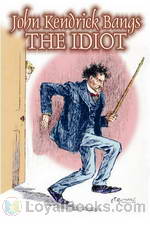 The Idiot
The Idiot is anything but, yet his fellow boarders at Mrs. Smithers-Pedagog’s home for single gentlemen see him as such. His brand of creative thought is dismissed as foolishness yet it continues to get under their skin, because when you’re beneath contempt you can say what you please. – This is the first of John Kendrick Bangs' “Idiot” books and was published by Harper and Brothers in 1895. | |
 A House-Boat on the Styx
The premise of the book is that everyone who has ever died (up until the time in which the book is set, which seems to be about the time of its publication) has gone to Styx. This does not appear to be the conventional Hell described by Dante in The Inferno, but rather the Hades described in Greek myth (both of which had Styxes): a universal collecting pot for dead souls, regardless of their deeds in life. The book begins with Charon, ferryman of the Styx (in The Inferno, he was the ferryman of the river Acheron) being startled—and annoyed—by the arrival of a house boat on the Styx... | |
 The Inventions of the Idiot
"It was before the Idiot's marriage, and in the days when he was nothing more than a plain boarder in Mrs. Smithers-Pedagog's High-class Home for Single Gentlemen, that he put what the School-master termed his "alleged mind" on plans for the amelioration of the condition of the civilized." This humorous story by the editor of Puck magazine describes how the Idiot sets out to improve the lot of civilized man through his inventions - the lot of barbarian man already being well tended to by missionaries and other do-gooders. | |
 The Autobiography of Methuselah
A satirical look at early biblical events from the point of view of someone who was there to witness most of them: the oldest man in recorded history. | |
 Ghosts I Have Met and Some Others
New York-born John Kendrick Bangs was associate editor and then editor of Life and Harper magazines, eventually finding his way into the Humour department. Here he began to write his own satire and humour. Ghosts I Have Met and Some Others is a delightfully humourous collection of short tales relating encounters with ghosts. | |
 Coffee and Repartee
First released in 1893, Coffee And Repartee is a collection of breakfast chats at a gentlemans boarding house run by a Mrs. Smithers. Here these fellows repeatedly face questions and proclamations by an inhabitant they call The Idiot. The discussions sound friendly under pretense, but are really sly battles of ribald wit and cunning charm, as well as rather offensive remarks during a time period considered by many to favour a height of refined etiquette. The Idiot spars well, but will the other residents get the better of him? | |
 A Little Book Of Christmas
Summary: Four short Christmas stories, a bit sentimental, but still affecting and worthwhile. Plus Four Christmas verses. (Summary by David Wales) | |
 The Pursuit of the House-Boat
This sequel to Bangs' A House-Boat on the Styx continues the "thought-experiment" of bringing various historical and fictional figures together, detailing the adventures of the ladies of Hades after they are kidnapped by pirates and the attempts of the Associated Shades (led by Sherlock Holmes) to retrieve their house-boat. (Introduction by Emma Joyce) | |
 R. Holmes and Co.
Raffles Holmes is introduced in these stories as the son of the great Sherlock Holmes. He is also revealed to be the grandson of A.J. Raffles, a gentleman thief pursued by Sherlock Holmes many years earlier. This apparently contradictory family background sets the stage for his colorful and amusing adventures. | |
|
Over The Plum Pudding
Great Caesar’s ghost and shades of A Christmas Carol! Stories – some ghostly, some Christmas, some humorous, some all three -- twelve of them by a master story teller and humorist of the late nineteenth and early twentieth centuries. | |
|
Mrs. Raffles
Mrs. Raffles, widow of the now deceased A. J. Raffles (who was the gentleman thief pursued at one time by Sherlock Holmes), continues the family legacy of crime—but this time in America. These stories are narrated by her cohort, Harry “Bunny” Manders, previously the devoted friend and sidekick of A.J. Raffles before his death. | |
 Genial Idiot
John Kendrick Bangs once again takes us on a journey with the loveable, but somewhat self-opinionated and irritating Mr Idiot. | |
 Toppleton's Client
A pre-eminent legal firm gets far more than it bargained for when it hires the son of its late senior partner, Hopkins Toppleton, Sr., simply to retain the illustrious family name on the company masthead. Knowing Jr. is a loose cannon, their strategy is to pack him off to the UK to head up a European branch of the firm - a branch they have no intention of sending work. The unwitting Hopkins Toppleton, Jr. is, however, determined to make his mark. | |
By: Philip Verrill Mighels (1869-1911) | |
|---|---|
 Thurley Ruxton
This is a rags to riches romance about an exceedingly beautiful, poor, young girl (Thurley Ruxton) who is mentored by one of New York’s elite hostesses. In order to draw them into her social circle, she allows all the famous and moneyed populous of Gothem to believe that Thurley is the princess Thurvinia hiding in New York to escape an arranged marriage. This causes all manner of high drama and romance with a suitable ending. | |
By: Percy Bysshe Shelley (1792-1822) | |
|---|---|
 Zastrozzi, A Romance
“Would Julia of Strobazzo’s heart was reeking on my dagger!”From the asthmatic urgency of its opening abduction scene to the Satanic defiance of the villain’s departure “with a wild convulsive laugh of exulting revenge”, this first of Shelley’s Gothic novelettes recycles much sensational boyhood reading and also points to some of his more mature concerns.It is the ego-driven pursuit of passionate extremes, revenge included, which consigns figures like Zastrozzi and the murderous Matilda to an isolation which is socially destructive as well as self-annihilating... | |
By: Edward Lear (1812-1888) | |
|---|---|
 Nonsense Songs, Stories, Botany and Alphabets
A selection of nonsense poems, songs (not sung!), stories, and miscellaneous strangeness. The work includes the "Owl and the Pussycat" and a recipe for Amblongus Pie, which begins "Take 4 pounds (say 4½ pounds) of fresh ablongusses and put them in a small pipkin."Edward Lear was an English writer, poet, cat-lover, and illustrator (his watercolours are beautiful). This recording celebrates the 200th anniversary of Lear's birth. | |
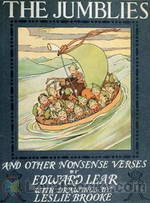 Nonsense Verses by Edward Lear
This is a collection of some of the delightful nonsense verses and stories by Edward Lear. A lot of them are also my favorites. The Jumblies, The Owl and the Pussy-cat; the Broom, the Shovel, The Poker and the Tongs; The Duck and the Kangaroo; The Cummerbund; The Dong with the Luminous Nose; The New Vestments; Calico Pie; The courtship of the Yonghy-Bonghy-Bo and Incidents in the Life of My Uncle Arly. Also included at no extra cost are two sections with my favorite Lear limericks. Only about 30 of them but they are all funny and full of delectable silliness. I hope you enjoy listening to these as much as I enjoyed recording them. | |
By: Frank Richard Stockton | |
|---|---|
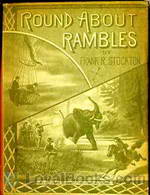 Round-about Rambles
ROUND-ABOUT RAMBLES, In Lands of FACT AND FANCYBY FRANK R STOCKTONPREFACECome along, boys and girls! We are off on our rambles. But please do not ask me where we are going. It would delay us very much if I should postpone our start until I had drawn you a map of the route, with all the stopping-places set down. We have far to go, and a great many things to see, and it may be that some of you will be very tired before we get through. If so, I shall be sorry; but it will be a comfort to think that none of us need go any farther than we choose... | |
By: George Barr McCutcheon (1866-1928) | |
|---|---|
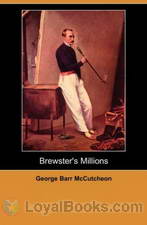 Brewster's Millions
He hosts an all expenses paid luxury cruise to Europe for fifty guests and showers them with expensive gifts. When he's mugged in a dark alley, he insists that the thugs also take the $300 stashed away in his back pocket. He flies into a rage whenever one of his employees suggests cutting costs. Every time he places a bet, he wins, causing him even more despair! In Brewster's Millions by George Barr McCutcheon, a classic riches-to-rags tale, Montgomery Brewster is bound by the terms of an eccentric uncle's will to spend one million dollars completely within a year so that he can lay claim to an even bigger fortune... | |
 Graustark
The Graustark novels are stories of court intrigue, royal disguise, and romance similar to Anthony Hope’s 1894 novel, The Prisoner of Zenda, and its sequels. They were popular best-sellers at the time they were published and the original editions are still readily available in used book shops. The novels gave their name to a fictional genre called Graustarkian: this genre contains tales of romance and intrigue usually featuring titled characters in small, fictional, Central European countries... | |
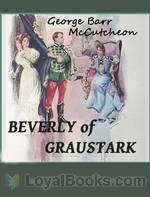 Beverly Of Graustark
Beverly Of Graustark is the second book in the Graustark series. Lorry and his wife, the princess, made their home in Washington, but spent a few months of each year in Edelweiss. During the periods spent in Washington and in travel, her affairs in Graustark were in the hands of a capable, austere old diplomat–her uncle, Count Caspar Halfont. Princess Volga reigned as regent over the principality of Axphain. To the south lay the principality of Dawsbergen, ruled by young Prince Dantan, whose half brother, the deposed Prince Gabriel, had been for two years a prisoner in Graustark, the convicted assassin of Prince Lorenz, of Axphain, one time suitor for the hand of Yetive... | |
By: Lester Del Rey (1915-1993) | |
|---|---|
 Badge of Infamy
Shifting between Earth and Mars, Badge of Infamy focuses on the gripping tale of a former doctor who becomes a pariah due to being temporarily governed by emotion and compassion, rather than complying with the highly regarded rules established by the Medical Lobby. Furthermore, the novel covers numerous topics including justice, brutality, betrayal, ethics, political control, and lobbying. Set in the year 2100, the novel begins with the introduction of its protagonist, Daniel Feldman, an ethical man, who makes the terrible mistake of going against the fixed medical protocol and performing surgery to save the life of a friend... | |
By: Lester del Rey | |
|---|---|
 Victory
Lester del Rey (1915 – 1993) was a Golden Age science fiction author and editor closely connected to John W. Campbell Jr. and Astounding Science Fiction magazine. He also founded Del Rey Books, a popular publishing label he edited with his wife Judy-Lynn. Victory is the story of an undefended Earth in a warring galaxy. It appeared in the August 1955 issue of Astounding Science Fiction. | |
|
The Sky Is Falling
After dying in a terrible accident at a building site, Dave Hanson finds himself being brought back to life in a world where magic is real, and where the sky is breaking apart and falling. And he is expected to put it back together again. Will he be able to save this strange world, and his own new life? | |
 Let'em Breathe Space
The old space freighter Wahoo is all Dr. Pietro can afford for his expedition to the rings of Saturn. Although built for a crew of 6 the good doctor crams 19 people into the Wahoo, and after 5 months they are really getting on each other’s nerves. Then someone starts killing people and poisoning the air giving plants in the hydroponics bay. Can our hero Paul Tremaine find the killer before he suffocates? Perhaps you should hold your breath. – Let’em Breathe Space was first published in the July 1953 edition of Space Science Fiction magazine. | |
By: Frank R. Stockton (1834-1902) | |
|---|---|
 Buccaneers and Pirates of Our Coasts
Buccaneers and Pirates of our Coasts is a non-fiction, rolicking story of the origins of piracy and of the famous pirates of the coasts of the United States. The stories don’t cast pirates in the glowing light of modern day renditions – in Stockton’s stories, pirates are bad guys! – but the dramatic style makes them good fun to read, anyway! (Summary by Sibella Denton) | |
By: Anatole France (1844-1924) | |
|---|---|
|
Thais
The fourth century ascetic Paphnuce, journeys from his remote desert hermitage to urban Alexandria determined to locate the stunningly beautiful and libertine actress, Thais. He earnestly desires that she convert to Christianity. Gaining an audience by deception, the hermit passionately speaks to the actress of eternity. Remarkably, Thais repents and retires to a convent for the rest of her days. The hermit however, cannot rid his mind of her charms, not even with the help of the most severe austerities. After years of anguish the monk learns of Thais' immanent demise and hastens to her side. There he confesses the unspeakable. | |
By: Max Brand (1892-1944) | |
|---|---|
 Trailin'!
“Max Brand”, the most used pseudonym of Frederick Schiller Faust (1892-1944), is best known today for his western fiction. Faust began in the early twentieth century selling his stories to the pulp magazines, writing in many genres under numerous pseudonyms. He is probably best known as the creator of the character Destry. His novel Destry Rides Again has been filmed several times, most notably the 1939 version starring James Stewart and Marlene Dietrich. Also his character Dr. Kildare which was popularized in film and on television earned him a fortune... | |
 Ronicky Doone
Frederick Schiller Faust (1892-1944), is best known today for his western fiction. Faust was born in Seattle, Washington and at an early age moved with his parents to the San Joaquin Valley in California where he worked as a ranchhand. After a failed attempt to enlist in the Great War in 1917 and with the help of Mark Twain’s sister he met Robert Hobart Davis, editor of All-Story Weekly and became a regular contributor writting under his most used pseudonym “Max Brand”. He wrote in many genres during his career and produced more than 300 western novels and stories... | |
 The Night Horseman
A man, a dog, and a horse. The call of the wild geese. A very smart doctor from the east who finds there is a lot to learn from these desert people. A woman loved by three men. A gunslinger who has a debt to settle. Max Brand brings them all together in another one of his over three hundred exciting western tales. Brand is not your typical western writer. | |