 |
Books Should Be Free Loyal Books Free Public Domain Audiobooks & eBook Downloads |
|
|
|
Books Should Be Free Loyal Books Free Public Domain Audiobooks & eBook Downloads |
|
Fiction |
|---|
|
Book type:
Sort by:
View by:
|
By: Charles Neville Buck (1879-1930) | |
|---|---|
 Destiny
| |
|
The Lighted Match
| |
By: Charles Norris Williamson (1859-1920) | |
|---|---|
 The Second Latchkey
Jewelry thefts, society parties, clairvoyance, and romance marks this mystery, which is set in England and the US in the early 20th century. | |
 It Happened In Egypt
Lord Ernest Borrow and Captain Anthony Fenton think they know a secret – a secret that could make them both rich. En route, they are sidetracked by Sir Marcus Antonius Lark, a woman who thinks she’s Cleopatra reincarnate, a Gilded Rose of an American Heiress, and Mrs. Jones, a mysterious Irish woman with a past. Will they find the secret? Or will the trip up the Nile on the Enchantress Isis net them another discovery altogether? | |
 The Princess Passes
An American heiress nicknamed the Manitou Princess (after her daddy’s richest silver mine) is devastated to find that her fiancé only loves her money, so she does what anyone might do: she bolts for Europe, dons male attire and sets out on a walking tour of the Alps, passing as a teenage boy. Though professing hatred of all men, she soon falls in with a just-jilted English lord, aptly named Monty Lane, who is attempting to walk off a broken heart of his own. The Princess Passes presents the ups and downs of their alpine relationship through the unpenetrating eyes of Lord Lane... | |
 The Golden Silence
Trying to get away from an engagement he had got himself into more or less against his will, Stephen Knight travels to Algiers to visit his old friend Nevill. On the Journey there he meets the charming and beautiful Victoria. She is on her way to Algiers to search for her sister, who had disappeared years ago after marrying an Arab nobleman. With the support of his friend, Stephen Knight decides to help the girl - but when she also disappears, the adventure begins... | |
|
The Car of Destiny
| |
|
My Friend the Chauffeur
| |
|
A Soldier of the Legion
| |
|
The Motor Maid
| |
|
The Heather-Moon
| |
|
Secret History Revealed By Lady Peggy O'Malley
| |
|
The Princess Virginia
| |
|
Set in Silver
| |
|
Winnie Childs The Shop Girl
| |
 Secret history revealed by Lady Peggy O'Malley
"If, two years ago, when I was sixteen, I hadn’t wanted money to buy a white frock with roses on it, which I saw in Selfridge’s window, a secret crisis between the United States and Mexico would have been avoided; and the career of a splendid soldier would not have been broken.” Read here what happened to the girl, the soldier, and the white frock. - Summary by Carolin | |
By: Charles Perrault (1628-1703) | |
|---|---|
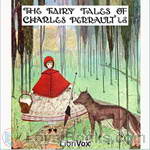 The Fairy Tales of Charles Perrault
This book is an early collection of ten well-known fairy tales. It is thought to have begun the genre of fairy tales. | |
|
Contes des fées
| |
|
Old-Time Stories
| |
 Tales of Passed Times
| |
By: Charles Reade (1814-1884) | |
|---|---|
|
Stories by English Authors: England
| |
|
Foul Play
| |
|
Hard Cash
| |
|
Christie Johnstone
| |
|
Put Yourself in His Place
| |
|
A Woman-Hater
| |
|
Peg Woffington
| |
|
A Simpleton
| |
By: Charles S. Bentley | |
|---|---|
|
The Fifth of November A Romance of the Stuarts
| |
By: Charles Theodore Murray (1843-1924) | |
|---|---|
 Mlle. Fouchette A Novel of French Life
| |
By: Charles V. De Vet (1911-1997) | |
|---|---|
|
Monkey On His Back
| |
By: Charles W. Diffin (1884-1966) | |
|---|---|
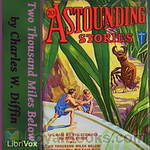 Two Thousand Miles Below
A science fiction novel that was originally produced in four parts in the publication: Astounding Stories in June, September, November 1932, January 1933. The main character is Dean Rawson, who plans on discovering a way of mining power from a dead volcano, but ends up discovering more than he bargained for. | |
 Dark Moon
Mysterious, dark, out of the unknown deep comes a new satellite to lure three courageous Earthlings on to strange adventures. | |
 The Finding of Haldgren
Chet Ballard answers the pinpoint of light that from the craggy desolation of the moon stabs out man's old call for help. | |
By: Charles W. Whistler (1856-1913) | |
|---|---|
|
King Alfred's Viking A Story of the First English Fleet
| |
By: Charles Waddell Chesnutt (1858-1932) | |
|---|---|
 The Conjure Woman
Published in 1899 by Houghton Mifflin, Chesnutt's first book, The Conjure Woman, was a collection of seven short stories, all set in "Patesville" (Fayetteville), North Carolina. While drawing from local color traditions and relying on dialect, Chesnutt's tales of conjuring, a form of magic rooted in African hoodoo, refused to romanticize slave life or the "Old South." Though necessarily informed by Joel Chandler Harris's popular Uncle Remus stories and Thomas Nelson Page's plantation fiction, The Conjure Woman consciously moved away from these models, instead offering an almost biting examination of pre- and post-Civil War race relations... | |
 The Marrow of Tradition
In The Marrow of Tradition, Charles W. Chesnutt--using the 1898 Wilmington, North Carolina massacre as a backdrop--probes and exposes the raw nerves and internal machinery of racism in the post-Reconstruction-era South; explores how miscegenation, caste, gender and the idea of white supremacy informed Jim Crow laws; and unflinchingly revisits the most brutal of terror tactics, mob lynchings. (Introduction by James K. White) | |
 The Wife of His Youth and Other Stories of the Color Line
Published in 1899, The Wife of His Youth and Other Stories of the Color Line is a collection of narratives that addresses the impact of Jim Crow laws on African Americans and white Americans of the South. Many of Chesnutt's characters are of mixed-race ancestry which sets them apart for a specific yet degrading kind of treatment from blacks and whites. These stories examine particularly how life in the South was informed through a legacy of slavery and Reconstruction—how members of the “old dominion” desperately struggled to breath life into the corpse of an antebellum caste system that no longer defined the path and direction in which this country was headed... | |
|
House Behind the Cedars
In this, Chesnutt's first novel, he tells the tragic story of love set against a backdrop of racism, miscegenation and “passing” during the period spanning the antebellum and reconstruction eras in American history. And through his use of the vernacular prevalent in the South of that time, Chesnutt lent a compassionate voice to a group that America did not want to hear. More broadly, however, Chesnutt illustrated, in this character play, the vast and perhaps insurmountable debt this country continues to pay for the sins of slavery. | |
|
Colonel's Dream
In this novel, Chesnutt described the hopelessness of Reconstruction in a post-Civil War South that was bent on reestablishing the former status quo and rebuilding itself as a region of the United States where new forms of "slavery" would replace the old. This novel illustrated how race hatred and the impotence of a reluctant Federal Government trumped the rule of law, ultimately setting the stage for the rise of institutions such as Jim Crow, lynching, chain gangs and work farms--all established with the intent of disenfranchising African Americans. | |
By: Charles Warren Adams (1833-1903) | |
|---|---|
|
Notting Hill Mystery
Charles Felix was the pseudonym of Charles Warren Adams, an English Lawyer and publisher and is now known to have been the author of "The Notting Hill Mystery", thought to be the first full length detective novel in English. The story first appeared as an eight part serial in a weekly magazine in 1862, and was subsequently published as a single volume novel in 1865. The story deals with the then newly emerging field of 'mesmerism' which we now know as hypnotism, and its use in the planning and execution of three truly devious crimes... | |
By: Charles Wesley Alexander (1837-1927) | |
|---|---|
|
Angel Agnes The Heroine of the Yellow Fever Plague in Shreveport
| |
By: Charles Willard Diffin (1884-1966) | |
|---|---|
 Moon Master
Through Infinite Deeps of Space Jerry Foster Hurtles to the Moon—Only to be Trapped by a Barbaric Race and Offered as a Living Sacrifice to Oong, their Loathsome, Hypnotic God. | |
By: Charles Willing Beale (1845-1932) | |
|---|---|
 The Ghost of Guir House
Do you think you understand ghosts? Now you will.Paul Henley, seemingly summoned to a mysterious rural Virginia mansion from his home in New York, finds himself as a guest at a remote, dilapidated colonial house with a host and a hostess every bit as mysterious as the house itself. Might Dorothy, his hostess, somehow be implicated in the hideous crime which he came to know took place in the hidden depths of Guir House some years ago? He hardly thought so, she seemed so innocent. And yet .... (Introduction by Roger Melin) | |
By: Charles Winslow Hall (1843-1916) | |
|---|---|
|
Adrift in the Ice-Fields
| |
By: Charlotte B. Herr (1875-1963) | |
|---|---|
|
How Freckle Frog Made Herself Pretty
| |
|
The Wise Mamma Goose
| |
|
Their Mariposa Legend; a romance of Santa Catalina
| |
By: Charlotte Brontë (1816-1855) | |
|---|---|
 Villette
Villette was Charlotte Bronte's last published novel. It came out in 1853, just two years before her death in 1855. It is a poignant, strangely lonely and sad work, steeped in conflict between society's demands and personal desires. Set in the fictional town of Villette in France, it is the story of the young and intelligent Lucy Snowe, the narrator in the book. She is described by another character in the book as having “no beauty...no attractive accomplishments...” and strangely seems to lack a personal history or living relatives... | |
 The Professor
The book tells the story of a young man named William Crimsworth. It describes his maturation, his loves and his eventual career as a professor at an all-girls’ school. | |
 Shirley
Shirley is an 1849 social novel by the English novelist Charlotte Brontë. It was Brontë's second published novel after Jane Eyre (originally published under Brontë's pseudonym Currer Bell). The novel is set in Yorkshire in the period 1811–1812, during the industrial depression resulting from the Napoleonic Wars and the War of 1812. The novel is set against a backdrop of the Luddite uprisings in the Yorkshire textile industry. | |
|
Emma: A Fragment of a Story
Miss Mabel Wilcox, the owner of a newly opened girl's boarding school, meets the wealthy Mr. Conway Fitzgibbon, who drops off his frail daughter to be educated there. When background checks are made, it is discovered that no well-to-do family by the name of Fitzgibbon exists! Supposed Matilda Fitzgibbon is a pseudo-heiress - a fake! What is Miss Wilcox to do?Published posthumously and prefaced by Charlotte Brontë's editor, W. M. Thackeray, these two chapters are the only existing fragments of Emma, the novel Brontë worked on until her untimely death. Since then, it has been "completed" twice by other authors | |
By: Charlotte Dacre | |
|---|---|
|
Zofloya
Victoria de Loredani lives the life of a fairy tale princess in Venice. She has everything one might desire and more, until the sinister Count Ardolph enters her world. The Count carries off Victoria's mother in an elopement, and sets off a series of dramatic events that begin to unhinge Victoria's life entirely. Passion, brutality, and murder begin to dominate the separated worlds of Victoria and her brother Leonardo. - Summary by Carolin | |
By: Charlotte Grace O'Brien (1845-1909) | |
|---|---|
 Basil, or, Honesty and Industry
A poor boy discovers the value of honesty and industry. More than that, he discovers the value of his relationship with God. (Introduction by Robert Harder) | |
By: Charlotte Lennox (1730-1804) | |
|---|---|
 The Female Quixote
The novel formally inverts Don Quixote: as the don mistakes himself for the knightly hero of a Romance, so Arabella mistakes herself for the maiden love of a Romance. While the don thinks it his duty to praise the platonically pure damsels he meets (such as the woman he loves), so Arabella believes it is in her power to kill with a look and it is the duty of her lovers to suffer ordeals on her behalf. | |
By: Charlotte M. Brame (1836-1884) | |
|---|---|
|
Dora Thorne
| |
By: Charlotte M. Higgins | |
|---|---|
|
The Angel Children or, Stories from Cloud-Land
| |
By: Charlotte M. Yonge (1823-1901) | |
|---|---|
 The Little Duke
The Little Duke by Charlotte M. Yonge is historical fiction based on the the life of Richard, Duke of Normandy. He assumes the title of Duke at only 8 years of age, after his father is murdered. The story first appeared in her magazine, The Monthly Packet, as a serial. | |
 Little Lucy's Wonderful Globe
Travel with Little Lucy around the globe and learn a little geography and small bits about other cultures. | |
By: Charlotte Maria Tucker (1821-1893) | |
|---|---|
|
Ned Franks, or The Christian's Panoply
Ned Franks, a one-armed Christian sailor, returns to his sister's home after several years away at sea. She and her son are not Christians, and are cold toward him, viewing him as a hindrance and expense. By his upright, kind behavior and willingness to work, he soon begins supporting himself and becomes well-liked in the community, especially by the children. Various other characters face and overcome challenges, including a servant girl who breaks a habit of dishonesty and a Jew who is faced with the reality that Jesus Christ is the Messiah... | |
By: Charlotte Mary Yonge (1823-1901) | |
|---|---|
|
Heir of Redclyffe
The Heir of Redclyffe (1853) was the first of Charlotte M. Yonge's bestselling romantic novels. Its religious tone derives from the High Church background of her family and from her friendship with a leading figure in the Oxford Movement, John Keble, who closely supervised the writing of the book. The germ of its plot was suggested by her friend Marianne Dyson. | |
|
Clever Woman of the Family
| |
|
Two Penniless Princesses
| |
|
Abbeychurch
| |
|
The Caged Lion
| |
|
Unknown to History: a story of the captivity of Mary of Scotland
| |
|
The Prince and the Page; a story of the last crusade
| |
|
Heartsease, Or, the Brother's Wife
| |
|
Countess Kate
| |
|
Hopes and Fears or, scenes from the life of a spinster
| |
|
That Stick
| |
|
The Carbonels
| |
|
A Modern Telemachus
| |
|
Friarswood Post Office
| |
|
Henrietta's Wish Or, Domineering
| |
|
Nuttie's Father
| |
|
Dynevor Terrace: or, the clue of life — Volume 2
| |
|
My Young Alcides
| |
|
Dynevor Terrace: or, the clue of life — Volume 1
| |
By: Charlotte Perkins Gilman (1860-1935) | |
|---|---|
 Herland
Herland is a utopian novel from 1915, written by feminist Charlotte Perkins Gilman. The book describes an isolated society comprised entirely of Aryan women who reproduce via parthenogenesis (asexual reproduction). The result is an ideal social order, free of war, conflict and domination. It first appeared as a serial in Perkin’s monthly magazine Forerunner. | |
 What Diantha Did
Charlotte Perkins Gilman opens a window of history through which we see a small part of the determined efforts made by women to elevate the circumstances of women in the early 20th century.Diantha Bell is a normal young woman desiring marriage and a home, but also she desires a challenging career in new territory that raises many eyebrows and sets malicious tongues wagging. Her effort to elevate housework and cooking to a regulated and even a scientific business, for the relief of homemakers, is a depiction of the late 19th century movement to promote Domestic Science, or Home Economics, as a means of providing more healthful home life, as well as career paths for women... | |
|
The Yellow Wallpaper
| |
|
With Her in Ourland
Third in the trilogy of the feminist classics, after Moving the Mountain and Herland. It was published serially in Perkins Gilman's periodical The Forerunner. In Herland, three American young men discover a country inhabited solely by women, who were parthenogenetic , and had borne only girl children for two thousand years; they marry three of the women. Two of the men and one woman leave the country of Herland to return to America; Jeff Margrave remaining in Herland with his wife, Celis, a willing citizen; Terry O... | |
By: Charlotte Selina Bompas (1830-1917) | |
|---|---|
|
Owindia : a true tale of the MacKenzie River Indians, North-West America
| |
By: Charlotte Turner Smith (1749-1806) | |
|---|---|
|
The Old Manor House
The proud, cruel and arrogant Mrs. Rayland never married. Therefore, "Rayland Hall", the old Manor House of the title, had to pass to their heir, Somerive, whom they never treated kindly. According to the British laws at the time, the heir must be the oldest son. But what is to be done when the second son is more worthy of it - and is more beloved by Miss Rayland herself? And must the fact that he is in love with a servant and dependent of Miss Rayland take its toll? | |
|
Celestina
Celestina was adopted by Mrs. Willoughby from a convent in France. No one knows who her parents are. Her secret birth causes problems for her in the marriage market. But this novel is not only a courtship novel. It is about creating and keeping friendships, finding the meaning of family, the difference between love and obsession, and the development of Celestina from a dependent child to a strong woman of virtue. - Summary by Stav Nisser. | |
By: Chelsea Curtis Fraser (1876-) | |
|---|---|
|
Around the World in Ten Days
| |
By: Chester K. Steele | |
|---|---|
 The Mansion of Mystery
Mr. and Mrs. Langmore were found mysteriously murdered in their mansion one morning. Their daughter Margaret, who was at home at the time of the deaths, is quickly suspected of having committed the crime. However, her fiance Raymond Case will not believe in her guilt and convinces the famous detective Adam Adams to investigate.This book was written by Edward Stratemeyer, head of the Stratemeyer Syndicate, under the pseudonym of Chester K. Steele. | |
|
The Diamond Cross Mystery
Colonel Ashley is confronted with a difficult case: The proprietor of a jewelry shop is found murdered, and a valuable diamond cross is stolen. Whodunnit, and how can the Colonel's expertise in fishing help to solve the case? | |
|
The Golf Course Mystery
| |
By: Chesterton, G. K. | |
|---|---|
 The Superstition of Divorce
This short book was written in 1920, and in it Chesterton, with his usual wit and incisive logic, presents a series of articles defending marriage and indicating the weaknesses in divorce. He did this 16 year before the first Christian denomination in the world allowed it’s members to divorce. Till then Christendom was unanimous in standing against it. Chesterton saw clearly the trends of this time, and delivered this defense. | |
By: Chretien de Troyes | |
|---|---|
 Erec and Enide
A medieval romance in which Erec goes through many trials until he is sure of Enide’s loyalty and true love | |
By: Christina Rossetti (1830-1894) | |
|---|---|
|
Maude
Maude is a novella by Christina Rossetti, written in 1850 but published posthumously in 1897. Considered by scholars to be semi-autobiographical, the protagonist is 15-year-old Maude Foster, a quiet and serious girl who writes poetry that explores the tensions between religious devotion and worldly desires. The text includes several of Rossetti's early verses, which were later published as part of her collections of poetry. | |
By: Christoph von Schmid (1768-1854) | |
|---|---|
|
Basket of Flowers, The
James is the king's gardener and he deeply enjoys caring for and cultivating flowers. He teaches his daughter Mary many principles of godliness through the flowers. One day Mary is falsely accused of stealing, and the penalty is death. Through many trials and hardships, Mary learns of the goodness of God, the blessing of praying for her enemies, how to consider her trials as a joy, and true forgiveness. | |
By: Christopher Marlowe (1564-1593) | |
|---|---|
 The Jew of Malta
Christopher “Kit” Marlowe (baptised 26 February 1564 – 30 May 1593) was an English dramatist, poet, and translator of the Elizabethan era. The foremost Elizabethan tragedian before William Shakespeare, he is known for his magnificent blank verse, his overreaching protagonists, and his own untimely death. The Jew of Malta (1589) is an original story of religious conflict, intrigue, and revenge, set against a backdrop of the struggle for supremacy between Spain and the Ottoman Empire in the Mediterranean... | |
By: Christopher Morley (1890-1957) | |
|---|---|
 The Haunted Bookshop
Roger Mifflin is the somewhat eccentric proprietor of The Haunted Bookshop, a second-hand bookstore in Brooklyn that is “haunted by the ghosts of all great literature.” Beginning with the arrival of a young advertising man and the mysterious disappearance of a certain volume from the shelves of the bookshop, a lively and often humorous tale of intrigue unfolds, generously sprinkled with liberal doses of Roger’s unique philosophy on literature and book selling. | |
 Parnassus on Wheels
Parnassus on Wheels is about a fictional traveling book-selling business. The original owner of the business, Roger Mifflin, sells it to 39-year-old Helen McGill, who is tired of taking care of her ailing older brother, Andrew. | |
 Kathleen
A group called the Scorpions, eight Oxford undergraduates, find a letter Kathleen wrote a letter to Joe at Oxford. They build up an image of Kathleen and Joe from the letter and set out to find and meet Kathleen. The competition between them leads to many entertainingly funny scenarios. | |
|
Mince Pie
Mince Pie is a compilation of humorous sketches, poetry, and essays written by Christopher Morley. Morley sets the tone in the preface: "If one asks what excuse there can be for prolonging the existence of these trifles, my answer is that there is no excuse. But a copy on the bedside shelf may possibly pave the way to easy slumber. Only a mind "debauched by learning" (in Doctor Johnson's phrase) will scrutinize them too anxiously." | |
|
Where the Blue Begins
| |