 |
Books Should Be Free Loyal Books Free Public Domain Audiobooks & eBook Downloads |
|
|
|
Books Should Be Free Loyal Books Free Public Domain Audiobooks & eBook Downloads |
|
History Books |
|---|
|
Book type:
Sort by:
View by:
|
By: Captain Rees Howell Gronow (1794-1865) | |
|---|---|
 Reminiscences of Captain Gronow
A collection of memoirs about the Peninsular War, the Battle of Waterloo, and society and personalities of Regency London and 19th century Paris, by a sometime Grenadier Guards officer, unsuccessful parliamentarian, and dandy. Gronow displays social attitudes of the day which would now be regarded as unacceptable, but is a clever raconteur who brings to life both the horrors of war and the gaiety of high society. | |
By: Charles Dudley Warner (1829-1900) | |
|---|---|
 The Story of Pocahontas
| |
|
Captain John Smith
| |
|
Our Italy
| |
|
On Horseback
| |
|
Saunterings
| |
|
Baddeck, and That Sort of Thing
| |
By: W. Somerset Maugham (1874-1965) | |
|---|---|
|
The Land of The Blessed Virgin; Sketches and Impressions in Andalusia
| |
By: T. F. Thiselton Dyer (1848-1923) | |
|---|---|
 Strange Pages from Family Papers
“Among other qualities which have been supposed to belong to a dead man’s hand, are its medicinal virtues, in connection with which may be mentioned the famous ‘dead hand,’ which was, in years past, kept at Bryn Hall, Lancashire… Thus the case is related of a woman who, attacked with the smallpox, had this dead hand in bed with her every night for six weeks, and of a poor lad living near Manchester who was touched with it for the cure of scrofulous sores.” Though not all chapters have such gruesome subjects as The Dead Hand, all are full of a curious mixture of superstition and local history that will delight and amuse the modern listener. | |
By: Ben Jonson (1573-1637) | |
|---|---|
|
Sejanus: His Fall
| |
|
The Poetaster
| |
By: Mohandas Karamchand Gandhi | |
|---|---|
 Third Class in Indian Railways
Mohandas Karamchand Gandhi (1869 – 1948) was the pre-eminent political and spiritual leader of India during the Indian independence movement. He was the pioneer of satyagraha — resistance to tyranny through mass civil disobedience. This philosophy was firmly founded upon ahimsa, or total nonviolence, and led India to independence and inspired movements for civil rights and freedom across the world. Gandhi is commonly known around the world as Mahatma Gandhi and in India also as Bapu. He is officially honoured in India as the Father of the Nation; his birthday, 2 October, is commemorated there as Gandhi Jayanti, a national holiday. | |
By: James J. Walsh (1865-1942) | |
|---|---|
 Old-Time Makers of Medicine
Dr. Walsh’s Old-Time Makers of Medicine chronicles the history and development of modern medicine from ancient times up to the discovery of America. Throughout this historical guide, Dr. Walsh shows numerous examples of practices thought to be entirely modern that were clearly anticipated hundreds or thousands of years ago. Ancient healers sought to use the body’s natural healing ability, rather than rely exclusively on external cures. Physicians even in ancient times relied on what is now recognized as the placebo effect... | |
By: Dame Shirley (d.1906) | |
|---|---|
 The Shirley Letters from California Mines in 1851-52
Louise Amelia Knapp Smith Clappe moved to California from Massachusetts during the Gold Rush of the mid-1800’s. During her travels, Louise was offered the opportunity to write for The Herald about her travel adventures. It was at this point that Louise chose the name “Shirley” as her pen name. Dame Shirley wrote a series of 23 letters to her sister Mary Jane (also known as Molly) in Massachusetts in 1851 and 1852. The “Shirley Letters”, as the collected whole later became known, gave true accounts of life in two gold mining camps on the Feather River in the 1850s... | |
By: Mary Johnston (1870-1936) | |
|---|---|
 To Have And To Hold
When I first started reading this book, I thought it to be a historical romance novel. As I read further, I pondered whether it might be a sea-faring story. Reading still further, I determined it to be an adventure story. Alas, it is all three. To Have And To Hold, written by Mary Johnston was the bestselling novel of 1900. The story takes place in colonial Jamestown during the 1600’s. Captain Ralph Percy, an English soldier turned Virginian explorer buys a wife - little knowing that she is the escaping ward of King James I... | |
|
The Long Roll
| |
|
Pioneers of the Old South: a chronicle of English colonial beginnings
| |
|
Prisoners of Hope A Tale of Colonial Virginia
| |
By: Enos A. Mills (1870-1922) | |
|---|---|
 Wild Life on the Rockies
“This book contains the record of a few of the many happy days and novel experiences which I have had in the wilds. For more than twenty years it has been my good fortune to live most of the time with nature, on the mountains of the West. I have made scores of long exploring rambles over the mountains in every season of the year, a nature-lover charmed with the birds and the trees. On my later excursions I have gone alone and without firearms. During three succeeding winters, in which I was a Government Experiment Officer and called the “State Snow Observer,” I scaled many of the higher peaks of the Rockies and made many studies on the upper slopes of these mountains.” | |
By: William Bradford (1590-1657) | |
|---|---|
 Bradford's History of the Plymouth Settlement
The journal of William Bradford, who served five terms as governor of the Plymouth colony, is an indispensable document of the events of early American history. His eyewitness account includes the stories of the Pilgrims’ sojourn in the Netherlands, the voyage of the Mayflower, the hardships of the New World, relations with the Indians, and the colony’s growth from an endangered enterprise to a thriving city. This edition of Bradford’s Of Plimoth Plantation presents the text in language made more accessible to the modern reader | |
|
Bradford's History of 'Plimoth Plantation' From the Original Manuscript. With a Report of the Proceedings Incident to the Return of the Manuscript to Massachusetts
| |
By: George Hamilton | |
|---|---|
 Voyage Round the World in His Majesty's Frigate Pandora
George Hamilton was the surgeon assigned to the frigate Pandora. The British Admiralty ordered the ship to the Pacific to arrest the Bounty mutineers and bring them back to England for trial. The commander, Captain Edward Edwards, also was ordered to chart the passage between Australia and New Guinea. While Edwards managed to arrest the mutineers still on Tahiti, he sank the Pandora on a reef near Australia. Hamilton tells this story and also the story of the crew’s fate after the Pandora sank. | |
By: United States | |
|---|---|
|
United States Declaration of Independence (HTML)
| |
By: George Pearson | |
|---|---|
 The Escape of a Princess Pat
Being the full account of the capture and fifteen months’ imprisonment of Corporal Edwards, of the Princess Patricia’s Canadian Light Infantry, and his final escape from Germany into Holland. | |
By: Titus Livius (c55BC - c17AD) | |
|---|---|
 From the Foundation of the City
Ab urbe condita, is a monumental history of ancient Rome written in the Latin language by Titus Livius(Livy), an ancient Roman historian. The work covers the time from the stories of Aeneas, the earliest legendary period from before the city's founding in c. 753 BC, to Livy's own times in the reign of the emperor, Augustus. The last year covered by Livy is 745 AUC, or 9 BC, the death of Drusus. About 25% of the work survives.Livy's History of Rome was in demand from the publication of the first packet... | |
By: George Alfred Henty (1832-1902) | |
|---|---|
|
By Pike and Dyke
It is the 1570's, and the people of the Netherlands live in terror under the cruel dominion of Spain. Though many long to be free of Spanish tyranny, efforts at rebellion are failing, and allies are nowhere to be found. Edward “Ned” Martin, son of an English captain and a Dutch lady, is thrust into the conflict when he resolves to help his mother’s people and avenge his murdered relatives. Entering the service of the revolutionary leader William the Silent, Prince of Orange, Ned is called upon to carry out dangerous secret missions deep within occupied territory... | |
By: Lyndon Orr pseudonym of Harry Thurston Peck (1856-1914) | |
|---|---|
|
Famous Affinities of History: The Romance of Devotion
"Famous Affinities of History" is a book of passion-filled accounts of the most famous love affairs of history. The stories of Cleopatra, Victor Hugo, Honore de Balzac, Jonathan Swift, Charles Dickens, Karl Marx, Percy Bysshe Shelley, Byron, George Sand and other famous people of all times (even those of royal blood are not spared), are dealt with in Lyndon Orr's own interesting and suspenseful style. Written in four volumes, this book makes for an informative, interesting and thoroughly enjoyable read, giving us an insight into the lives and lifestyles of various popular figures of history. | |
By: Talbot Mundy (1879 -1940) | |
|---|---|
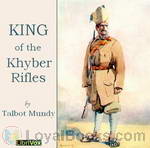 King of the Khyber Rifles
Athelstan King is a British Secret Agent stationed in India at the beginning of WWI. He is attached to the Khyber Rifles regiment as a cover, but his real job is to prevent a holy war. "To stop a holy war single-handed would be rather like stopping the wind--possibly easy enough, if one knew the way." King is ordered to work with a mysterious and powerful Eastern woman, Yasmini. Can King afford to trust her? Can he afford not to? (Introduction by Brett W. Downey) | |
By: Walter Pater | |
|---|---|
|
Appreciations, with an Essay on Style
Appreciations, with an Essay on Style, is a collection of Walter Pater's previously-published essays on literature. The collection was well received by public and critic since its first edition, in 1889. The volume includes an appraisal of the poems of Dante Gabriel Rossetti, first printed in 1883, a few months after Rossetti's death; an essay on Thomas Browne, whose Baroque style Pater admired; and a discussion of Measure for Measure, one of Pater's most often reprinted pieces. The second edition, published in 1890, had a few modifications, and is the basis for all other editions of the book. | |
|
Greek Studies: a Series of Essays
| |
|
Essays from 'The Guardian'
| |
By: John Munro (1849-1930) | |
|---|---|
 The Story of Electricity
In the book's preface, the author writes: "Let anyone stop to consider how he individually would be affected if all electrical service were suddenly to cease, and he cannot fail to appreciate the claims of electricity to attentive study."In these days when we take for granted all kinds of technology - communications, entertainment, medical, military, industrial and domestic - it is interesting to learn what progress had been made in the fields of electricity and technology by the beginning of the 20th century... | |