 |
Books Should Be Free Loyal Books Free Public Domain Audiobooks & eBook Downloads |
|
|
|
Books Should Be Free Loyal Books Free Public Domain Audiobooks & eBook Downloads |
|
Literature |
|---|
|
Book type:
Sort by:
View by:
|
By: George Barr McCutcheon (1866-1928) | |
|---|---|
 The Hollow of Her Hand
| |
By: John Masefield (1878-1967) | |
|---|---|
|
William Shakespeare
| |
|
Martin Hyde, the Duke's Messenger
| |
By: Lester Del Rey (1915-1993) | |
|---|---|
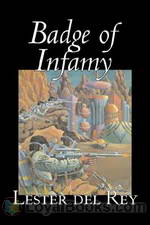 Badge of Infamy
Shifting between Earth and Mars, Badge of Infamy focuses on the gripping tale of a former doctor who becomes a pariah due to being temporarily governed by emotion and compassion, rather than complying with the highly regarded rules established by the Medical Lobby. Furthermore, the novel covers numerous topics including justice, brutality, betrayal, ethics, political control, and lobbying. Set in the year 2100, the novel begins with the introduction of its protagonist, Daniel Feldman, an ethical man, who makes the terrible mistake of going against the fixed medical protocol and performing surgery to save the life of a friend... | |
By: Lester del Rey | |
|---|---|
 Victory
Lester del Rey (1915 – 1993) was a Golden Age science fiction author and editor closely connected to John W. Campbell Jr. and Astounding Science Fiction magazine. He also founded Del Rey Books, a popular publishing label he edited with his wife Judy-Lynn. Victory is the story of an undefended Earth in a warring galaxy. It appeared in the August 1955 issue of Astounding Science Fiction. | |
 The Sky Is Falling
After dying in a terrible accident at a building site, Dave Hanson finds himself being brought back to life in a world where magic is real, and where the sky is breaking apart and falling. And he is expected to put it back together again. Will he be able to save this strange world, and his own new life? | |
By: Lester Del Rey (1915-1993) | |
|---|---|
|
Dead Ringer
| |
By: Lester del Rey (1915-1993) | |
|---|---|
|
Police Your Planet
Bruce Gordon looked at his ticket, grimaced at the ONE WAY stamped on it, then tore it into bits and let the pieces scatter over the floor. He counted them as they fell; thirty pieces in all, one for each year of his life. Little ones for the two years he'd wasted as a cop. Shreds for the four years as a kid in the ring before that--he'd never made the top. Bigger bits for two years also wasted in trying his hand at professional gambling; and the six final pieces that spelled his rise from special reporter helping out with a police shake-up coverage, through a regular leg-man turning up rackets, and on up like a meteor until... | |
By: Frank R. Stockton (1834-1902) | |
|---|---|
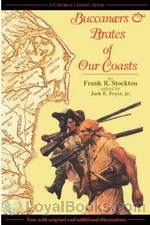 Buccaneers and Pirates of Our Coasts
Buccaneers and Pirates of our Coasts is a non-fiction, rolicking story of the origins of piracy and of the famous pirates of the coasts of the United States. The stories don’t cast pirates in the glowing light of modern day renditions – in Stockton’s stories, pirates are bad guys! – but the dramatic style makes them good fun to read, anyway! (Summary by Sibella Denton) | |
By: Anatole France (1844-1924) | |
|---|---|
 Penguin Island
An old monk is tricked by the Devil into undertaking a voyage to a remote island to save the souls of thousands who live there. He arrives on the island which is actually a desolate one, inhabited only by colonies of millions of penguins. The old monk whose eyesight and hearing are almost nonexistent, mistakes them for humans and begins baptizing them. In Heaven, God finds Himself in a dilemma; the old monk's unwavering faith compels him to regard the baptisms as genuine. However, in Christian theology, only humans have souls – hence God is forced to grant the thousands of newly baptized penguins with souls! This is the beginning of their journey into “civilization... | |
|
Thais
The fourth century ascetic Paphnuce, journeys from his remote desert hermitage to urban Alexandria determined to locate the stunningly beautiful and libertine actress, Thais. He earnestly desires that she convert to Christianity. Gaining an audience by deception, the hermit passionately speaks to the actress of eternity. Remarkably, Thais repents and retires to a convent for the rest of her days. The hermit however, cannot rid his mind of her charms, not even with the help of the most severe austerities. After years of anguish the monk learns of Thais' immanent demise and hastens to her side. There he confesses the unspeakable. | |
|
Gods are Athirst
The Gods Are Athirst (French: Les dieux ont soif, also translated as The Gods Are Thirsty or The Gods Will Have Blood) is a 1912 novel by Anatole France. The story follows the young Parisian painter Évariste Gamelin, who rises speedily from his humble beginnings to a member of the Revolutionary Tribunal in the second and third year of the French Revolution. In brilliant prose, Anatole France describes how Évariste's idealism turns into fanaticism, and he allows more and more heads to roll and blood to flow, placing himself and those he loves into ever greater danger. | |
|
The Red Lily
| |
|
The Seven Wives Of Bluebeard 1920
| |
|
The Well of Saint Clare
| |
|
A Mummer's Tale
| |
|
Child Life In Town And Country 1909
| |
|
Balthasar and Other Works - 1909
| |
|
The Miracle Of The Great St. Nicolas 1920
| |
|
Our Children Scenes from the Country and the Town
| |
|
Putois 1907
| |
|
The Merrie Tales of Jacques Tournebroche And Child Life in Town and Country
| |
|
Marguerite
| |
|
The Queen Pedauque
| |
|
The Story Of The Duchess Of Cicogne And Of Monsieur De Boulingrin 1920
| |
By: Max Brand | |
|---|---|
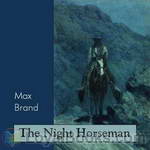 The Night Horseman
A man, a dog, and a horse. The call of the wild geese. A very smart doctor from the east who finds there is a lot to learn from these desert people. A woman loved by three men. A gunslinger who has a debt to settle. Max Brand brings them all together in another one of his over three hundred exciting western tales. Brand is not your typical western writer. | |
|
The Seventh Man
The Seventh Man by Max Brand, tells part of the story of the larger-than-life western character, Dan Barry, known as “Whistling Dan,” and his alter-ego companions, Black Bart, the wolf-dog, and Satan, the indomitable black stallion. It’s also the story of Kate Cumberland and the incredible five-year-old daughter of Kate and Dan, Joan. We first see Dan as a gentle, caring man with a deep sense of fairness. But then, after six years of a peaceful life in their mountain cabin Dan, more feral than human, sets out to revenge an injustice by killing seven men... | |
|
Riders of the Silences
| |
By: Lord Dunsany (1878-1957) | |
|---|---|
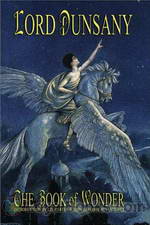 The Book of Wonder
“Come with me, ladies and gentlemen who are in any wise weary of London: come with me: and those that tire at all of the world we know: for we have new worlds here.” – Lord Dunsany, the preface to “The Book of Wonder” | |
By: Paul Laurence Dunbar (1872-1906) | |
|---|---|
 The Sport of the Gods
The Sport of the Gods is a novel by Paul Laurence Dunbar, first published in 1902, centered around urban black life.Forced to leave the South, a family falls apart amid the harsh realities of Northern inner city life in this 1902 examination of the forces that extinguish the dreams of African Americans. | |
By: Joseph Bédier (1864-1938) | |
|---|---|
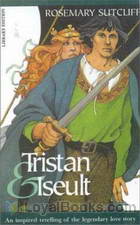 Tristan and Iseult
He is a divinely handsome young man, valiant and fiercely loyal to his uncle who adopted and nurtured him from the time he was an abandoned orphan. She is the ethereally beautiful princess of a faraway country, betrothed to the middle-aged uncle. They meet when the young man is sent as an emissary to her country to bring her back for the grand wedding. On board the ship, the two fall tragically in love. Tristan and Iseult by Joseph Bedier is a retelling of an ancient legend which has been popular... | |
By: Upton Sinclair | |
|---|---|
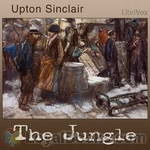 The Jungle
Originally crafted as a scathing expose of the Chicago meatpacking industry of the early twentieth century, The Jungle by American journalist and author, Upton Sinclair, was based on his investigative work into the dark underbelly of capitalism in the country. Throughout his entire career, he wrote passionately about the inhuman conditions that lay behind the glittering facade of free market economics. Jurgis Rudkus is a Lithuanian immigrant. The novel opens on his wedding day to the lovely young Ona Lukoszaite... | |
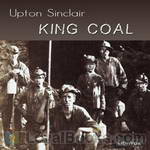 King Coal
King Coal is a book by Upton Sinclair, first published in 1917, that exposes the dirty working conditions in the coal mining industry in the western United States during the 1910s. As in an earlier work, The Jungle, Sinclair expresses his socialist viewpoints from the perspective of a single protagonist, Hal Warner, caught up in the schemes and plots of the oppressive American capitalist system. The book itself is based on the 1914-1915 Colorado coal strikes.Reader’s note: In Book 4, there is no chapter numbered Section 16 in the public domain Gutenberg e-text. However, no actual text from the book appears to be missing. | |
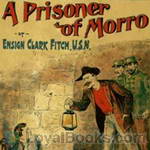 A Prisoner of Morro
Upton Sinclair, born in 1878 was a Pulitzer Prize-winning American author. He wrote over 90 books in many genres. Best known for his muckraking novel, The Jungle, Sinclair also wrote adventure fiction. Many of these works were written under the pseudonym, Ensign Clark Fitch, U.S.N. A Prisoner of Morrow, published in 1898 when Sinclair was but 20 years old, is one of these efforts. The period for this work is the ten-week Spanish–American War which occurred in 1898. Revolts against Spanish rule had been prevalent for decades in Cuba and were closely watched by Americans... | |
|
The Moneychangers
A story of white collar crime and intrigue told from the point of view of Montague, a member of the privileged class of New York. Montague witnesses the manipulation and upset of the stock market by high financier Dan Waterman who is motivated by revenge. Waterman's character is loosely based on J.P. Morgan. | |
|
100%: The Story of a Patriot
"100%:The Story of a Patriot" dramatically recounts the adventures of a poor uneducated young man who lives by his wits and guile, as he becomes politicized during his involvement in the sometimes violent struggle between American “patriots” and “Reds”. The author wrote in the Appendix, which is not included in this recording: "Everything that has social significance is truth.... Practically all the characters in "100%" are real persons." This exciting, polemical novel was published in 1920... | |
|
King Midas: a Romance
| |
|
Damaged Goods; the great play "Les avaries" by Brieux, novelized with the approval of the author
| |
|
Naturewoman
The Mastersons, a wealthy Bostonian family, await the arrival of their cousin Anna in the wake of her grandfather's death. Though born in Boston, Anna, who prefers the name Oceana, spent most of her life on a tropical island in the Pacific with her father. A free spirit, her practices and values surrounding proper dress, romance, and entertainment clash with those of her conservative relatives. What will happen as patience and tolerance wear thin for both parties when alluring Oceana catches the... | |
|
The Second-Story Man
| |
|
Prince Hagen
| |
|
The Journal of Arthur Stirling : the Valley of the Shadow
| |
|
Jimmie Higgins
| |
By: Israel Zangwill (1864-1926) | |
|---|---|
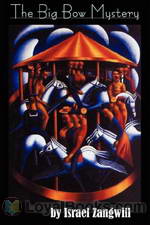 The Big Bow Mystery
Regarded as the first full-length locked room mystery, the novel focuses on a murder that has occurred inside a locked room, with no clear indication as to the weapon used, the perpetrator of the horrendous crime, or a possible escape route. Needless to say, The Big Bow Mystery has all the elements necessary to engage its audience and encourage them to look between the lines in an attempt to unravel the complex murder. Set in Bow, east London, the novel opens when Mrs. Drabdump, a widow who rents out rooms, panics when one of her lodgers does not respond to her fervent attempts to wake him... | |
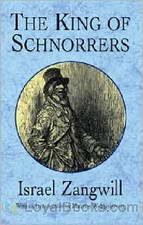 The King of Schnorrers
Manasseh da Costa is a schnorrer (beggar) who lives on the charitable contributions of the Jews of late 18th-century London. But Manasseh is far from being a humble panhandler for, as every schnorrer knows, supporting the poor is a commandment from God (a mitzvah) not just a favour. And as the descendant of Portuguese Jews who had lived in England for many generations, Manasseh is the social superior of those newly arrived from Eastern Europe (called ‘Tedesco’), even his wealthy patron Joseph Grobstock... | |
|
Dreamers of the Ghetto
| |
|
Merely Mary Ann
| |
By: Robert W. Chambers (1865-1933) | |
|---|---|
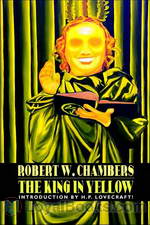 The King in Yellow
Robert W. Chambers (1865-1933) studied art in Paris in the late 80’s and early 90’s, where his work was displayed at the Salon. However, shortly after returning to America, he decided to spend his time in writing. He became popular as the writer of a number of romantic novels, but is now best known as the author of “The King In Yellow”. This is a collection of the first half of this work of short stories which have an eerie, other-worldly feel to it; but the stories in the second half are essentially love stories, strongly coloured by the author’s life as an artist in France... | |
 The Flaming Jewel
During the last two years, Fate, Chance, and Destiny had been too busy to attend to Mike Clinch. But now his turn was coming in the Eternal Sequence of things. The stars in their courses indicated the beginning of the undoing of Mike Clinch. In the North Woods, mayhem ensues as three parties vie for possession of the Flaming Jewel. Become immersed in the chasing and slinking to determine who will possess this famed jewel. Better than typical adventure writing magnificently describe the 19th Century Northeastern US in this great novel. | |
By: Honore de Balzac (1799-1850) | |
|---|---|
 Letters of Two Brides
An epistolary novel written by renowned French novelist Balzac, who is regarded as one of the founders of realism and a significant influence to later novelists, the novel focuses on two young women who preserve their friendship through regular correspondence. Originally published in the French newspaper La Presse in 1841 as a serial, the piece later became a part of Balzac’s distinguished novel sequence La Comédie Humaine, or The Human Comedy. Furthermore, Letters of Two Brides surrounds intriguing topics including love, romance, confusion, duty, and the complexity of relationships... | |
By: Henrik Ibsen | |
|---|---|
 A Doll's House
Nineteenth century attitudes towards marriage, the role of women, morality and the search for identity are brilliantly explored in Henrik Ibsen's three act play, A Doll's House. It was highly controversial and received with a sense of outrage among opinion leaders in Europe. Many thinkers like August Strindberg lashed out at Ibsen for portraying the sacred institution of marriage in such a derogatory way. A Doll's House, written in the original Danish, was first performed at the Royal Theater in Copenhagen in 1879... | |
 Hedda Gabler
Hedda Gabler is a play first published in 1890 by Norwegian playwright Henrik Ibsen. In it, Hedda Gabler, daughter of an aristocratic General, has just returned from her honeymoon with George Tesman, an aspiring young academic, reliable but not brilliant, who has combined research with their honeymoon. The reappearance of Tesman’s academic rival, Eilert Lovborg, throws their lives into disarray. | |
 The Master Builder
Henrik Ibsen's The Master Builder, first published in 1892, is about architect Halvard Solness, who despite personal tragedy (including the death of his two sons) has risen to the top of his profession. He has succeeded partly through ruthless competition and exploitation and partly through a seeming ability to force his will on others. His unhappy wife Aline mourns for their lost life, and resents his interest in various young women, including his bookkeeper Kaia Fosli. Solness disregards the ambitions of other architects, including Knut Brovik and his son Ragnar, and seeks solace in the advice of family physician and friend Dr... | |
 The Lady From the Sea
The title character in Ibsen's drama, Ellida Wangel, is married to a prosperous doctor, but feels stifled by her roles as wife and stepmother to her husband's two daughters by a previous marriage, Hilde and Bolette. Ten years earlier she had promised to marry another man - and on a sultry summer day, he comes back to her. Ellida must decide whether to choose the safety of her life with Wangel, or to yield to the siren song of the sea. | |
 Little Eyolf
Henrik Ibsen's 1894 play Little Eyolf tells the story of the Allmers family: the father, Alfred, his wife Rita, their crippled nine-year-old son Eyolf, and Alfred's sister Asta. As the play begins, Alfred has just gotten back from a trip to the mountains, and resolves to spend more time with his son, rather than on intellectual pursuits. Asta is romantically pursued by Borgheim, an engineer, while the cracks in Alfred and Rita's marriage gradually reveal themselves. The family receives a visit from the Rat-Wife, and are never the same again. | |
|
A Doll's House
| |
|
Enemy of the People
A small coastal town in Norway is experiencing an economic boom from its newly found hot springs. When Dr. Thomas Stockmann finds that the waters are contaminated and dangerous, the people refuse to accept his statement, and Dr. Stockmann's friends turn against him. | |
|
When We Dead Awaken
When We Dead Awaken (1899) is the last play by Norwegian dramatist Henrik Ibsen. Dreamlike and highly symbolic, the play charts the dissolution of sculptor Arnold Rubek's marriage to Maia, her flirtation with Ulfheim, and his involvement with the mysterious Irene, his former model. The tensions rise between the characters as they climb higher and higher into the Norwegian mountains. | |
|
Pillars of Society
Pillars of Society was Ibsen's first successful realist drama, first performed in 1877. Karsten Bernick is the dominant businessman in a small coastal town in Norway, with interests in shipping and shipbuilding in a long-established family firm. Now he is planning his most ambitious project yet, backing a railway which will connect the town to the main line and open a fertile valley which he has been secretly buying up. Suddenly his past explodes on him with the arrival of Lona Hessel, the woman he once jilted, and Johan Tonnesen, who left town in disgrace fifteen years earlier. | |
|
The Vikings of Helgeland The Prose Dramas Of Henrik Ibsen, Vol. III.
| |