 |
Books Should Be Free Loyal Books Free Public Domain Audiobooks & eBook Downloads |
|
|
|
Books Should Be Free Loyal Books Free Public Domain Audiobooks & eBook Downloads |
|
Psychology Books |
|---|
Book type:
Sort by:
View by:
|
By: Thomas Hardy (1840-1928) | |
|---|---|
 A Pair of Blue Eyes
The book describes the love triangle between a young woman, Elfride Swancourt, and her two suitors from very different backgrounds. Stephen Smith is a socially inferior but ambitious young man who adores her and with whom she shares a country background. Henry Knight is the respectable, established, older man who represents London society. | |
By: Edith Wharton (1862-1937) | |
|---|---|
 The Touchstone
Stephen Glennard's career is falling apart and he desperately needs money so that he may marry his beautiful fiancee. He happens upon an advertisement in a London magazine promising the prospect of financial gain. Glennard was once pursued by Margaret Aubyn, a famous and recently deceased author, and he still has her passionate love letters to him. Glennard removes his name from the letters and sells them, making him a fortune and building a marriage based on the betrayal of another. | |
By: Henry James (1843-1916) | |
|---|---|
 The American
One of James’s early novels, The American plunges right in to one of the writer’s most enduring subjects, that of the innocent, or at least inexperienced, American abroad, seeking to come to terms with the social customs and conventions of an old European aristocracy (think of Daisy Miller, Portrait of a Lady, The Wings of the Dove and others). The aptly named Christopher Newman, having made a small fortune from business in California, has come to the Old World for the first time, determined to enlarge his experience by learning all he can of it... | |
 The Bostonians (Vol. 1 & 2)
This bittersweet tragicomedy centers on an odd triangle of characters: Basil Ransom, a political conservative from Mississippi; Olive Chancellor, Ransom's cousin and a Boston feminist; and Verena Tarrant, a pretty, young protégée of Olive's in the feminist movement. The storyline concerns the struggle between Ransom and Olive for Verena's allegiance and affection, though the novel also includes a wide panorama of political activists, newspaper people, and quirky eccentrics. | |
By: Fyodor Dostoyevsky (1821-1881) | |
|---|---|
 The Brothers Karamazov
Set in 19th century Russia, The Brothers Karamazov (Russian: Братья Карамазовы) is the last novel written by the illustrious author Fyodor Dostoyevsky who died a few months before the book's publication. The deeply philosophical and passionate novel tells the story of Fyodor Karamazov, an immoral debauch whose sole aim in life is the acquisition of wealth. Twice married, he has three sons whose welfare and upbringing, he cares nothing about. At the beginning of the story, Dimitri Karamazov, the eldest son who is now a twenty-eight year old war veteran, returns to his home town to claim the inheritance left to him by his dead mother... | |
By: James Allen (1864-1912) | |
|---|---|
 As a Man Thinketh
“A man is literally what he thinks, his character being the complete sum of all his thoughts,” is one of the quotes from James Allen's classic self help books, As a Man Thinketh. Published in 1902, it provides many more such insightful concepts on the power of thought and its effect on a human being's personality and behavior. This volume is more of a literary essay than a complete book and its title is based on a Biblical proverb, “As a man thinketh in his heart, so is he.” Taking this piece of ancient wisdom further, James Allen explores the far-reaching effects of the inner workings of a person's mind and motivation... | |
By: Wilkie Collins (1824-1889) | |
|---|---|
 Basil
Basil
Basil, son of a father who values the family pedigree and who would not let him marry below his station, falls in love at first sight with a girl he sees on a bus. He stalks her and discovers she is Margaret Sherwin, only daughter of a linen draper. He stalks her and persuades her father to let him marry her secretly. He agrees on the condition, that, as his daughter is only seventeen, they live apart for the first year. At first the secret works, but then the mysterious Mannion, whose emotions cannot be read in his face, returns from abroad. On the last night of the year Basil follows Margaret and Mannion and discovers them in flagrante delicto. (Wikipedia) | |
 Poor Miss Finch
"Poor Miss Finch." That is what everyone calls the courageous protagonist of this book. In other words, "poor thing, she's blind, isn't it awful?" Ha! Lucilla Finch is the wisest of all the characters, in spite of, and perhaps because of, her blindness. This story is about her trials, tribulations and triumphs. She reminds me of myself. Not the falling recklessly in love and being pulled this way and that by foolish young men and mad old doctors. I mean that, like her, I'm blind and proud of it! (Introduction by Sandra G) | |
By: Sigmund Freud | |
|---|---|
 Reflections on War and Death
Anyone, as Freud tells us in Reflections on War and Death, forced to react against his own impulses may be described as a hypocrite, whether he is conscious of it or not. One might even venture to assert—it is still Freud’s argument—that our contemporary civilisation favours this sort of hypocrisy and that there are more civilised hypocrites than truly cultured persons, and it is even a question whether a certain amount of hypocrisy is not indispensable to maintain civilisation. When this... | |
 Totem and Taboo
Totem and Taboo: Resemblances Between the Mental Lives of Savages and Neurotics is a book by Sigmund Freud, published in German in 1913. It is a collection of four essays first published in the journal Imago (1912–13), employing the application of psychoanalysis to the fields of archaeology, anthropology, and the study of religion. The four essays are entitled: The Horror of Incest; Taboo and Emotional Ambivalence; Animism, Magic and the Omnipotence of Thoughts; and The Return of Totemism in Childhood. | |
By: Ayn Rand (1905-1982) | |
|---|---|
 Anthem
The title 'Anthem' is derived as an anthem to sense of self and self-governing thoughts. Anthem is a story of Equality 7-2521 who is a young man living in some unspecified future time and place. In this future era freedom and individual rights have been eradicated. The starring character of the novel is an inquisitive street cleaner. He lives in a society where people have lost their knowledge of individualism, to the extreme that people do not know words like 'I' or 'mine'. All the people live and work for their livelihood in collective groups, along with the people with power, namely the 'Councils'... | |
By: Adam Smith (1723-1790) | |
|---|---|
 The Theory of Moral Sentiments (First Edition)
“How selfish soever man may be supposed, there are evidently some principles in his nature, which interest him in the fortunes of others, and render their happiness necessary to him, though he derives nothing from it, except the pleasure of seeing it.” (from The Theory of Moral Sentiments) Adam Smith considered his first major book, The Theory of Moral Sentiments, his most important work. Indeed, the tome was a wild success upon its publication, selling out immediately. It has not lost popularity since... | |
By: Bertrand Russell (1872-1970) | |
|---|---|
 Analysis of Mind
A neat work on philosophy of mind by the 20th century analytic philosopher Bertrand Russell. | |
By: William James (1842-1910) | |
|---|---|
 Essays in Radical Empiricism
William James (1842 – 1910) was a pioneering American psychologist and philosopher. He wrote influential books on the young science of psychology, educational psychology, psychology of religious experience and mysticism, and the philosophies of pragmatism and Radical Empiricism. Essays in Radical Empiricism is a collection edited and published posthumously by his colleague and biographer Ralph Barton Perry in 1912. It was assembled from a collection of reprinted journal articles published from 1904–1905 which James had deposited in August 1906 at Harvard University, for supplemental use by his students. | |
|
Varieties of Religious Experience
The Varieties of Religious Experience: A Study in Human Nature is a book by the Harvard psychologist and philosopher William James that comprises his edited Gifford Lectures on "Natural Theology" delivered at the University of Edinburgh in Scotland between 1901 and 1902. These lectures concerned the nature of religion and the neglect of science, in James' view, in the academic study of religion. Soon after its publication, the book found its way into the canon of psychology and philosophy, and has remained in print for over a century. | |
|
Pragmatism
'Pragmatism' contains a series of public lectures held by William James in Boston 1906–7. James provides a popularizing outline of his view of philosophical pragmatism while making highly rhetorical and entertaining lashes towards rationalism and other competing schools of thought. James is especially concerned with the pragmatic view of truth. True beliefs should be defined as, according to James, beliefs that can successfully assist people in their everday life. This is claimed to not be relativism... | |
By: Warren Hilton (1874-?) | |
|---|---|
 Initiative Psychic Energy
Learn how to accomplish your goals through increasing your mental power, avoiding energy drains, and becoming more mentally efficient. | |
By: Henry Fielding (1707-1754) | |
|---|---|
 The History of Tom Jones, A Foundling
Tom Jones is considered one of the first prose works describable as a novel. The novel is divided into 18 smaller books. Tom Jones is a foundling discovered on the property of a very kind, wealthy landowner, Squire Allworthy. Tom grows into a vigorous and lusty, yet honest and kind-hearted, youth. He develops affection for his neighbor’s daughter, Sophia Western. On one hand, their love reflects the romantic comedy genre popular in 18th-century Britain. However, Tom’s status as a bastard causes Sophia’s father and Allworthy to oppose their love; this criticism of class friction in society acted as a biting social commentary... | |
By: A. Alpheus | |
|---|---|
 Complete Hypnotism, Mesmerism, Mind-Reading and Spiritualism
Written in 1903, just sixty years after the word ‘hypnotism’ was coined, this book explores the contemporary understanding of the nature, uses and dangers of the technique. Hypnotism has been practiced for many centuries, but it was in the mid-to-late nineteenth century that it became a particularly fashionable way to explore the human mind. Although understanding of the subject has evolved considerably over subsequent years, this book remains a fascinating insight into a technique once thought to be at the forefront of medical science. | |
By: Peter Kropotkin (1842-1921) | |
|---|---|
 Mutual Aid: A Factor of Evolution
Mutual Aid: A Factor of Evolution is a book by Peter Kropotkin on the subject of mutual aid, written while he was living in exile in England. It was first published by William Heinemann in London in October 1902. The individual chapters had originally been published in 1890-96 as a series of essays in the British monthly literary magazine, Nineteenth Century. Written partly in response to Social Darwinism and in particular to Thomas H. Huxley’s Nineteenth Century essay, The Struggle for Existence, Kropotkin’s book drew on his experiences in scientific expeditions in Siberia to illustrate the phenomenon of cooperation... | |
By: Elliott O’Donnell (1872—1965) | |
|---|---|
 Animal Ghosts
Summary: This is a collection of ghost stories in which the antagonists are various animals. Divided up into chapters of ghost sightings by each group of animals, you will hear of hauntings by dogs, cats, birds, jungle animals, etc. (Summary by Allyson Hester) | |
By: Thomas Henry Huxley (1825-1895) | |
|---|---|
 Has a Frog a Soul?
Thomas Huxley, known as “Darwin’s Bulldog” for his championing and development of Darwinism, was perhaps the most important Victorian biologist after Darwin himself. This speech to the Metaphysical Society in 1870 is one of Huxley’s best known texts outside the sphere of his specialism, and remains read today by students of philosophy. In it, Huxley argues from the results of vivisection to metaphysics. | |
By: William Walker Atkinson (1862-1932) | |
|---|---|
|
Hindu-Yogi Science Of Breath
Increase your awareness about the forgotten art of breathing as researched, practiced and written by our Eastern brothers. Inside you will find how our Western society has perhaps forgotten the proper way to breath, hence leaving us more susceptible to disease and poor health. This book explains in layman's terms what happens inside our bodies when we inhale and then exhale. And the effects improper breathing has on both our internal and external extremities. It describes nature's proximity for the respiratory, and circulatory systems. The final sections include invaluable Yogi breathing exercises for increased breathing awareness and better health. Salaam. (Mike Justice) | |
By: Robert Burton (1577-1640) | |
|---|---|
 The Anatomy of Melancholy
The Anatomy of Melancholy is a book by Robert Burton, first published in 1621. On its surface, the book is a medical textbook in which Burton applies his large and varied learning in the scholastic manner to the subject of melancholia (which includes what is now termed clinical depression). Though presented as a medical text, The Anatomy of Melancholy is as much a sui generis work of literature as it is a scientific or philosophical text, and Burton addresses far more than his stated subject. In... | |
By: Maria Montessori (1870-1952) | |
|---|---|
 Dr. Montessori's Own Handbook
This is the authoritative book written by Montessori to describe her methods. It gives an overview of the Montessori Method as developed for 3 to 6 year olds. It is a short work, intended as a manual for teachers and parents, detailing the materials used as well as her philosophy in developing them. "As a result of the widespread interest that has been taken in my method of child education, certain books have been issued, which may appear to the general reader to be authoritative expositions of the Montessori system... | |
By: Charles Mackay (1814-1889) | |
|---|---|
 Memoirs of Extraordinary Popular Delusions and the Madness of Crowds
The book chronicles and vilifies its targets in three parts: “National Delusions”, “Peculiar Follies”, and “Philosophical Delusions”.The subjects of Mackay’s debunking include alchemy, beards (influence of politics and religion on), witch-hunts, crusades and duels. Present day writers on economics, such as Andrew Tobias, laud the three chapters on economic bubbles. | |
By: George Berkeley (1685-1753) | |
|---|---|
 A Treatise Concerning the Principles of Human Knowledge
A Treatise Concerning the Principles of Human Knowledge, Part 1 (Commonly called “Treatise” when referring to Berkeley’s works) is a 1710 work by the Irish Empiricist philosopher George Berkeley. It largely seeks to refute the claims made by his contemporary John Locke about the nature of human perception. Both Locke and Berkeley agreed that there was an outside world, and it was this world which caused the ideas one has within one’s mind. Berkeley sought to prove that the outside world was also composed solely of ideas, suggesting that “Ideas can only resemble Ideas”... | |
By: Théodule Ribot (1839-1916) | |
|---|---|
 Essay on the Creative Imagination
“It is quite generally recognized that psychology has remained in the semi-mythological, semi-scholastic period longer than most attempts at scientific formulization. For a long time it has been the “spook science” per se, and the imagination, now analyzed by M. Ribot in such a masterly manner, has been one of the most persistent, apparently real, though very indefinite, of psychological spooks. Whereas people have been accustomed to speak of the imagination as an entity sui generis, as a... | |
By: Havelock Ellis (1859-1939) | |
|---|---|
|
Studies in the Psychology of Sex, Volume One
The first of six volumes, this volume covers in extensive detail the topics of "The Evolution of Modesty", "The Phenomena of Sexual Periodicity", and "Auto-Eroticism". Written as an anthropological and psychological study from the point of view of Havelock, the famous British sexologist of the late 19th century, who was also a physician and social reformer. | |
By: T. F. Thiselton Dyer (1848-1923) | |
|---|---|
 Strange Pages from Family Papers
“Among other qualities which have been supposed to belong to a dead man’s hand, are its medicinal virtues, in connection with which may be mentioned the famous ‘dead hand,’ which was, in years past, kept at Bryn Hall, Lancashire… Thus the case is related of a woman who, attacked with the smallpox, had this dead hand in bed with her every night for six weeks, and of a poor lad living near Manchester who was touched with it for the cure of scrofulous sores.” Though not all chapters have such gruesome subjects as The Dead Hand, all are full of a curious mixture of superstition and local history that will delight and amuse the modern listener. | |
By: Baron Paul Henri Thiry d'Holbach (1723-1789) | |
|---|---|
 Good Sense
In 1770, Baron D'Holbach published his masterpiece, "Systeme de la Nature", which for a long time passed as the posthumous work of M. de Mirabaud. That text-book of "Atheistical Philosophy" caused a great sensation, and two years later, 1772, the Baron published this excellent abridgment of it, freed from arbitrary ideas; and by its clearness of expression, facility, and precision of style, rendered it most suitable for the average student. This text is based on an undated English translation of "Le Bon Sens" published c. 1900. The name of the translator was not stated. | |
By: John Addington Symonds (1840-1893) | |
|---|---|
|
A Problem in Modern Ethics
“Society lies under the spell of ancient terrorism and coagulated errors. Science is either wilfully hypocritical or radically misinformed.” John Addington Symonds struck many an heroic note in this courageous (albeit anonymously circulated) essay. He is a worthy Virgil guiding the reader through the Inferno of suffering which emerging medico-legal definitions of the sexually deviant were prepared to inflict on his century and on the one which followed. Symonds pleads for sane human values in... | |
By: Hugo Münsterberg (1863-1916) | |
|---|---|
|
Psychotherapy
Talking about viewing the Ocean "If I take the attitude of appreciation, it would be absurd to say that this wave is composed of chemical elements which I do not see; and if I take the attitude of physical explanation, it would be equally absurd to deny that such elements are all of which the wave is made. From the one standpoint, the ocean is really excited; from the other standpoint, the molecules are moving according to the laws of hydrodynamics. If I want to understand the meaning of this scene every reminiscence of physics will lead me astray; if I want to calculate the movement of my boat, physics alone can help me".(from the Introduction) | |
By: Clarence Darrow (1857-1938) | |
|---|---|
 Crime: Its Cause and Treatment
Clarence Darrow was an American lawyer. He remains notable for his wit and agnosticism, which marked him as one of the most famous American lawyers and civil libertarians.In this book, Darrow expands on his lifelong contention that psychological, physical, and environmental influences—not a conscious choice between right and wrong—control human behavior. To my ears (the reader's), the author has a rather simplistic behaviourist view of human behaviour, but he argues his position with wonderful clarity... | |
By: Orison Swett Marden (1850-1924) | |
|---|---|
|
Pushing to the Front
Published in 1894, this is the first book by the renowned inspirational author, Dr. Orison Swett Marden. Pushing to the Front is the product of many years of hard work, and marks a turning point in the life of Dr. Marden. He rewrote it following an accidental fire that brought the five-thousand-plus page manuscript to flames. It went on to become the most popular personal-development book of its time, and is a timeless classic in its genre. Filled with stories of success, triumph and the surmounting of difficulties, it is especially well-targeted at the adolescent or young adult... | |
By: J Hudson Taylor (1832-1905) | |
|---|---|
|
Union and Communion - or Thoughts on the Song of Solomon
This little book, whose design is to lead the devout Bible student into the Green Pastures of the Good Shepherd, thence to the Banqueting House of the King, and thence to the service of the Vineyard, is one of the abiding legacies of Mr. Hudson Taylor to the Church. In the power of an evident unction from the Holy One, he has been enabled herein to unfold in simplest language the deep truth of the believer's personal union with the Lord, which under symbol and imagery is the subject of The Song of Songs. (From the Foreword by J Stuart Holden). | |
By: Laurence M. Janifer (1933-2002) | |
|---|---|
|
Supermind
FBI agent Kenneth Malone lives in a world where psionic powers such as telepathy and teleportation exist. He must cope with them as well as an FBI Director who leaves Malone continually confused about what situation he is being asked to handle and what he is expected to do about it. Someone or something is causing confusion in the U.S. Government, Unions, The Mafia, and other sectors of society and Malone has been given the job of finding the source of the confusion. A good story composed of science fiction and slap stick comedy with a bit of romance thrown into the mix. | |
By: Patanjali | |
|---|---|
 The Yoga Sutras of Patanjali
Yoga sutras by Patanjali is a seminal work in yoga, this book is more about control of mind and the true goal of yoga. The sutras are extremely brief, and the translation in neat English makes it very easy for people to understand the ancient Sanskrit text. It starts with the birth and growth of spiritual man through the control of mind. In all, this is a "all in one" book for yoga philosophy written by the master himself. | |
By: Gustave Le Bon (1841-1931) | |
|---|---|
|
Crowd
"Civilisations as yet have only been created and directed by a small intellectual aristocracy, never by crowds. Crowds are only powerful for destruction. Their rule is always tantamount to a barbarian phase. A civilisation involves fixed rules, discipline, a passing from the instinctive to the rational state, forethought for the future, an elevated degree of culture — all of them conditions that crowds, left to themselves, have invariably shown themselves incapable of realising. In consequence of the purely destructive nature of their power crowds act like those microbes which hasten the dissolution of enfeebled or dead bodies... | |
By: Charles Waddell Chesnutt (1858-1932) | |
|---|---|
|
Colonel's Dream
In this novel, Chesnutt described the hopelessness of Reconstruction in a post-Civil War South that was bent on reestablishing the former status quo and rebuilding itself as a region of the United States where new forms of "slavery" would replace the old. This novel illustrated how race hatred and the impotence of a reluctant Federal Government trumped the rule of law, ultimately setting the stage for the rise of institutions such as Jim Crow, lynching, chain gangs and work farms--all established with the intent of disenfranchising African Americans. | |
By: John Berryman (1919-1988) | |
|---|---|
|
Card Trick
The Psi Lodge had their ways and means of applying pressure, when pressure was needed. But the peculiar talent this fellow showed was one that even they'd never heard of...! | |
By: Thomas H. Burgoyne (1855-1894) | |
|---|---|
 The Light of Egypt, vol II
"The Light of Egypt" will be found to be an Occult library in itself, a textbook of esoteric knowledge, setting forth the "wisdom Religion" of life, as taught by the Adepts of Hermetic Philosophy. It will richly repay all who are seeking the higher life to carefully study this book, as it contains in a nutshell the wisdom of the ages regarding man and his destiny, here and hereafter. The London and American first edition, also the French edition, Vol. I, met with lively criticism from Blavatsky Theosophists, because it annihilates that agreeable delusion of "Karma" and "Reincarnation" from the minds of all lovers of truth for truth's sake. | |
By: Henry Drummond | |
|---|---|
|
The Greatest Thing in the World and Other Addresses
The spiritual classic The Greatest Thing In the World is a trenchant and tender analysis of Christian love as set forth in the thirteenth chapter of I Corinthians. The other addresses speak to other aspects of Christian life and thought. | |
By: Ralph Waldo Trine (1866-1958) | |
|---|---|
|
In Tune with the Infinite
Trine tells us that by connecting and harmonizing with the Universe we attract love, health, peace and success. Trines' writings may have been the most important to the "New Thought" movement of the late 1800's and early 1900's which was the forerunner to the "New Age" movement. | |
By: James Cardinal Gibbons (1834-1921) | |
|---|---|
|
The Faith of Our Fathers
The Faith of Our Fathers: A Plain Exposition and Vindication of the Church Founded by Our Lord Jesus Christ is a book published in 1876 by archbishop James Gibbons, which became a best-selling conversion manual in the United States, and by 1980 was in its 111th printing.(From the preface) “The object of this little volume is to present in a plain and practical form an exposition and vindication of the principal tenets of the Catholic Church. It was thought sufficient to devote but a brief space to such Catholic doctrines and practices as are happily admitted by Protestants, while those that are controverted by them are more elaborately elucidated... | |
By: Charles B. Towns (1862-1947) | |
|---|---|
 Habits that Handicap
Habits that Handicap is one of three novels about alcholoism and drug addiction written by Charles B. Towns. Towns was an expert on alcoholism and drug addiction who helped draft drug control legislation in the United States during the early 20th century. He also founded the Towns Hospital in New York City, which aimed at drying out the well-to-do patient. | |
By: Justus Hecker (1795-1850) | |
|---|---|
 The Dancing Mania
Numerous theories have been proposed for the causes of dancing mania, and it remains unclear whether it was a real illness or a social phenomenon. One of the most prominent theories is that victims suffered from ergot poisoning, which was known as St Anthony’s Fire in the Middle Ages. During floods and damp periods, ergots were able to grow and affect rye and other crops. Ergotism can cause hallucinations, but cannot account for the other strange behaviour most commonly identified with dancing mania... | |
By: William D. Granger | |
|---|---|
 How to Care for the Insane
"The writer believes that all attendants should be regularly instructed in their duties, and the highest standard of care can be reached only when this is done. He also believes that every person who is allowed to care for the insane will be greatly benefited by such instruction, and will be able to learn every thing taught, if the teacher uses simple methods and is patient to instruct."As this manual was originally written in 1886, the basic medical instruction IS out-of-date and should not be used to diagnose any medical problem, nor should be used in the case of an emergency. It has been recorded for entertainment purposes only! | |
By: Marguerite Bernard and Edith Serrell | |
|---|---|
 Deer Godchild
A young New-Yorker of twelve heard an appeal for the Fatherless Children of France and his heart was touched. He had no money, but he resolved to give his spare time and his utmost energy to support a "kid in France." The French child needed ten cents worth of extra food each day, in order to grow up with strength and courage. The little American godfather earned those ten cents; he sold newspapers at the subway entrance, after school hours, and undertook an amazing variety of more or less lucrative odd jobs... | |
By: Helen Ekin Starrett (1840-1920) | |
|---|---|
|
Letters to a Daughter and A Little Sermon to School Girls
Helen Ekin Starrett, journalist, mother of two daughters, grandmother of seven granddaughters and teacher to many young girls at the Starrett School for Girls offers lessons in life and religion to girls about to "pass out from the guardianship of home into life with its duties and trials". | |
By: Various | |
|---|---|
 American Psychology 1900-1922
This is the first of what is intended to be three projects featuring journal articles which chart the development of psychology as an academic discipline in the United States during the twentieth century. This first collection begins with an appraisal of functionalism by William James and takes in: early contributions to educational psychology; works of early feminist psychologists; discussions of behaviourism and pragmatism. Also included is Watson and Rayner's famous 1920 "Little Albert" study. | |
By: Sigmund Freud (1856-1939) | |
|---|---|
 Psychopathology of Everyday Life
Professor Freud developed his system of psychoanalysis while studying the so-called borderline cases of mental diseases, such as hysteria and compulsion neurosis. By discarding the old methods of treatment and strictly applying himself to a study of the patient's life he discovered that the hitherto puzzling symptoms had a definite meaning, and that there was nothing arbitrary in any morbid manifestation. Psychoanalysis always showed that they referred to some definite problem or conflict of the person concerned... | |
By: Max Heindel (1865-1918) | |
|---|---|
|
The Rosicrucian Mysteries
A primer for those interested in the basic philosophy, beliefs & secrets of the Rosicrucians. | |
By: Herbert J. Hall (1870-1923) | |
|---|---|
|
The Untroubled Mind
A very wise physician has said that “every illness has two parts—what it is, and what the patient thinks about it.” What the patient thinks about it is often more important and more troublesome than the real disease. What the patient thinks of life, what life means to him is also of great importance and may be the bar that shuts out all real health and happiness. The following pages are devoted to certain ideals of life which I would like to give to my patients, the long-time patients who have especially fallen to my lot. | |
By: James Allen (1864-1912) | |
|---|---|
 The Divine Companion
James Allen was a British philosophical writer known for his inspirational books and poetry and as a pioneer of the self-help movement.In the introduction Lily Allen writes: "It cannot be said of this book that James Allen wrote it at any particular time or in any one year, for he was engaged in it over many years and those who have eyes to see and hearts to understand will find in its pages the spiritual history of his life. It was his own wish that The Divine Companion should be the last manuscript of his to be published. 'It is the story of my soul,' he said, 'and should be read last of all my books, so that the student may understand and find my message in its pages.'" | |
By: Elizabeth Klett (1867-1936) | |
|---|---|
 Six Characters in Search of an Author
Six Characters in Search of an Author (Sei personaggi in cerca d’autore) is the most famous and celebrated play by the Italian writer Luigi Pirandello. Pirandello, in the preface to the play, says that whenever a reader opens Dante’s Inferno, Francesca will drift down from the dark wind in her circle of Hell and tell the Pilgrim her story; and it will always be for the first time – just as the Mother in Pirandello’s play at one point makes an agonizing cry, always for the first time. Each character sees events and the other characters differently... | |
By: St. John Chrysostom (349-407) | |
|---|---|
|
Commentary on Galatians
St. Chrysostom’s Commentary on the Epistle to the Galatians is continuous, according to chapter and verse, instead of being arranged in Homilies, with a moral or practical application at their close, as in his exposition of other Epistles. It was written in Antioch, as Montfaucon infers from a reference which the Author, makes upon Chap. i., ver. 16 to other of his writings, which certainly were written about the same time in that city. (Introduction from the preface by John Henry Newman) | |
By: Henry Hazlitt (1894-1993) | |
|---|---|
|
Thinking as a Science
Written in a conversational style that will appeal to the younger person as well as seasoned professional, "Thinking as a Science" is timeless classic. Through eleven chapters, the last being a descriptive, annotated bibliography, Henry Hazlitt systematically takes the step-by-step on the process of introducing logic and context into the thinking process. The rather long chapter on "Reading and Thinking" clarifies several notions on where one needs to understand where mere knowledge acquisition ends and using reading the stimulate thinking begins.For an individual who was largely self taught, Hazlitt's contribution to the process of thinking is a must-read. | |
By: H. G. Wells (1866-1946) | |
|---|---|
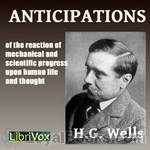 Anticipations
Wells considered this book one of his most important, a natural follow-up to such works as his Man of the Year Million and The Time Machine. His goal was to get people to think and act in new ways. The book starts with a look at how humans get along socially and how they carry out their business ventures. It then discusses how these elements influence others, such as politics, the world of work, and education. H. G. tried to make clear how the current social order was disintegrating without preparing another to take its place. He then traced the roots of democracy, which in its present state he saw as unworkable. Instead, he proposed a new republic. He also critiqued modern warfare. | |
By: Aristotle (384 BCE-322 BCE) | |
|---|---|
 Parva Naturalia
Parva Naturalia [the "short treatises on nature" (a conventional Latin title first used by Giles of Rome)] is a collection of books by Aristotle, which discuss natural phenomena involving the body and the soul. The books are as follows:I - On Sensation and the SensibleII - On Memory and RecollectionIII - On Sleeping and WakingIV - On DreamsV - On Prophecy in SleepVI - On Longevity and Shortness of LifeVII - On Youth and Old Age, Life and Death VIII - On Respiration | |