 |
Books Should Be Free Loyal Books Free Public Domain Audiobooks & eBook Downloads |
|
|
|
Books Should Be Free Loyal Books Free Public Domain Audiobooks & eBook Downloads |
|
Top Authors |
|---|
|
Book type:
Sort by:
|
By: Henry James (1843-1916) | |
|---|---|
 The Jolly Corner
“The Jolly Corner,” published in 1908, is considered by many to be a ghost story ranking second only to “The Turn of the Screw.” James’s protagonist, Spencer Brydon, is an American of 56, returned to New York after 33 years in Europe, where he has apparently accomplished little while living off his New York rentals. His friendship with Alice Staverton, and his engagement in the development of a property awaken him to the possibilities that might have been his, had he chosen a different course of life... | |
 What Maisie Knew
When Beale and Ida Farange are divorced, the court decrees that their only child, the very young Maisie, will shuttle back and forth between them, spending six months of the year with each. The parents are immoral and frivolous, and they use Maisie to intensify their hatred of each other. | |
 The Pupil
Pemberton, a young American with an Oxford education and out of money, takes a job tutoring Morgan Moreen, the 12-year old son of an American couple living in Europe in a style not quite matched by their income. Morgan, who is highly intelligent, is also precocious and perceptive enough to understand his parents' pretentious aimlessness. Nor, as it happens, do his parents pay Pemberton the salary to which they'd agreed -- shouldn't he be satisfied, after all, by his life with them, and by the joy of tutoring young Morgan? Alternately charmed and put off by the Moreen family, Pemberton is left to choose between his attachment to his young pupil and his need to get on in life. | |
 In the Cage
In the Cage is a novella by Henry James, first published as a book in 1898. This long story centers on an unnamed London telegraphist. She deciphers clues to her clients' personal lives from the often cryptic telegrams they submit to her as she sits in the "cage" at the post office. Sensitive and intelligent, the telegraphist eventually finds out more than she may want to know. | |
 The Figure in the Carpet
The story ostensibly concerns a young literary critic who greatly admires the writer Hugh Vereker. A meeting with Vereker, however, shows him that he — and all other critics — have in fact missed the great point of Vereker’s work, and the critic (and his editor) thereupon devote themselves to trying to unravel the mystery. James’s story, however, almost certainly has an autobiographical side to it, perhaps itself criticizing those critics who couldn’t see, or wouldn’t see, the figures lost in the carpet of his own writing. | |
 The Real Thing
The Real Thing is, on one level, a somewhat ironic tale of an artist and two rather particular models. Yet it also raises questions about the relationship between the notion of reality in our humdrum world, and the means that an artist must use in trying to achieve, or reflect, that reality. Though the protagonist is an artist and illustrator of books, not a writer, it's not hard to imagine that James has himself, and other writers, in mind. | |
 A Small Boy and Others
A Small Boy and Others is a book of autobiography by Henry James published in 1913. The book covers James’s earliest years and discusses his intellectually active family, his intermittent schooling, and his first trips to Europe. | |
 The Death of the Lion
This short novel is a black comedy about fame, manipulation, pretension, and surviving it all. The narrator, a reprehensible and seedy journalist, sets out to interview a minor author, and in his own quest for glory, turns the author into the celebrity of the day. The sudden and untimely death of the author, with his latest work unfinished, presents a troubling dilemma for the narrator, which he resolves with no more conscience than he had when he began his quest. (Introduction by Christine Dufour) | |
 The Spoils of Poynton
The recently widowed Adela Gereth, a lover of beauty and passionate collector of fine objects, strikes up a friendship with the young Fleda Vetch, when both of them find themselves guests in the tasteless house of the Brigstock family. Mrs. Gereth fears that her son Owen, an honorable but somewhat unimaginative young man, may take up with one of the Brigstock girls, and indeed he presently announces his engagement to Mona, the eldest daughter. That means that Mrs. Gereth will have to leave Poynton, the beautiful house that she and her husband filled with the furniture, china, tapestries, and other objects that they lovingly collected over the years... | |
 The Sacred Fount
Published in 1901, The Sacred Fount delves into the interior observations and obsessions of one Englishman during a weekend gathering in the country. Regarding himself as a master of human psychology, the narrator watches the goings-on of the other guests and weaves theories about the interpersonal implications of what he witnesses, leaving the not infrequently perplexed reader the task of sorting out whether his conclusions are facts or fancies. (Introduction by S. Kovalchik) | |
 Sir Dominick Ferrand
“Levity” is not a word often applied to Henry James, but this story has about it an attractively lighthearted quality. It tells of Peter Baron, a poor, young struggling writer of adequate, if not transcendent, talent, who lives in a dreary London boarding house inhabited also by a mysteriously clairvoyant and beautiful young widow, with her small boy. When Baron buys himself a second-hand writing desk to stimulate the creative juices, he finds carefully hidden within it a cache of letters that appear to compromise a recently deceased statesman... | |
 The Bostonians (Vol. 1 & 2)
This bittersweet tragicomedy centers on an odd triangle of characters: Basil Ransom, a political conservative from Mississippi; Olive Chancellor, Ransom's cousin and a Boston feminist; and Verena Tarrant, a pretty, young protégée of Olive's in the feminist movement. The storyline concerns the struggle between Ransom and Olive for Verena's allegiance and affection, though the novel also includes a wide panorama of political activists, newspaper people, and quirky eccentrics. | |
 The Birthplace
Neither the name of Shakespeare nor that of Stratford appears directly in this short piece by James, and yet both are absolutely central to his plot. The story has to do with Mr. and Mrs. Gedge, tempted away from a dreary northern town library, which he runs, to become the wardens – caretakers and tour guides – of the house where the greatest writer of the English language was born, and in which he grew up.Or did he? There is, after all, a paucity of facts about His life (in James's text, that pronoun is always capitalized, as befits a deity) and only the slenderest of historical evidence about the existence of such a man... | |
 The Coxon Fund
This novella explores the relationship between Frank Saltram, a charismatic speaker who is also a freeloader; Ruth Anvoy, a young American who visits her widowed aunt, Lady Coxon, an American who married a Brit; and George Gravener, a British intellectual with a future in politics who becomes engaged to Ms. Anvoy. The story revolves around the dispersal of The Coxon Fund, a sum of money left by Ms. Anvoy’s father with the stipulation that is be given to a great man to publish and pursue moral truth. | |
 Roderick Hudson
Published as a serial in 1875, Roderick Hudson is James's first important novel. The theme of Americans in Europe, so important in much of James's work, is already central to the story. Hudson is a young law student in Northampton, Massachusetts, who shows such surprising ability as a sculptor that the rich Rowland Mallett, visiting a cousin in Northampton, decides to stake him to several years of study in Rome, then a center of expatriate American society. The story has to do not only with Roderick's growth as an artist and the problems it brings, but also as a man susceptible to his new environment, and indeed his occasional rivalries with his American friend and patron... | |
By: Henry james (1843-1916) | |
|---|---|
 Awkward Age
Nanda Brookenham is coming of age, and thus 'coming out' in London society - which leads to complications in her family's social set in London's fin de siècle life. James presents the novel almost entirely in dialogue, an experiment that adds to the immediacy of the scenes but also creates serious ambiguities about characters and their motives. | |
|
London Life
A devoted sister attempts to check her sibling's scandalous behavior in the world of British high society. A delightful comedy of Anglo-American manners and a fascinating glimpse of late Victorian London. | |
|
Chaperon
What on earth is a girl to do when London society has convicted her mother of a dreadful sin and has ostracized her? If blood is thicker than water, and the daughter remains loyal to her erring parent, how far will affect her own standing in society (and most important, of course) in the marriage market that is controlled by that society? This is the problem facing Rose Tramore and it will take all her charm -- and perseverance -- to solve it. (Nicholas Clifford) | |
By: Jacob & Wilhelm Grimm (1785-1863; 1786-1859) | |
|---|---|
 Grimms' Fairy Tales
Talking animals, wicked stepmothers, valiant tailors, cruel witches! Sixty-two stories that feature familiar figures like Hansel and Gretel, Rapunzel, Rumplestiltskin, The Twelve Dancing Princesses and Snow-White and Rose Red as well as lesser-known characters like The White Snake, Sweetheart Roland and Clever Elsie are contained in this volume of Grimms' Fairy Tales by Jacob and Wilhelm Grimm. The original volume published in 1812 contained more than 85 tales and this number kept increasing till it got to the seventh edition which contained more than two hundred stories... | |
By: John B. Bury (1861-1927) | |
|---|---|
 A History of Greece to the Death of Alexander the Great
For the Irish historian John Bagnell Bury, history should be treated as a science and not a mere branch of literature. Many contemporary histories written in the late nineteenth and early twentieth century were poetic and heroic in tone, blending fact and fiction, myths and legends. They sometimes relied on sources from Shakespeare and classical poets. For Bury, the facts of history may be legendary or romantic in nature, but they should be recounted in a scholarly and non-judgmental manner, without the accompanying emotions... | |
 The Students' Roman Empire
The writings of J. B. Bury (1861-1927), on subjects ranging from ancient Greece to the 19th-century papacy, are at once scholarly and accessible to the layman. This work covers the period from the beginning of the Roman Empire until Gibbon begins; from Augustus through Marcus Aurelius and the Antoinine Emporers. | |
By: Jonathan Swift (1667-1745) | |
|---|---|
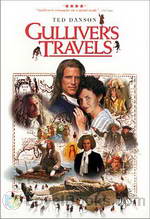 Gulliver's Travels
Comprised of four parts, Gulliver’s Travels documents the bizarre, yet fascinating voyages of Lemuel Gulliver as he makes his way through several uncharted destinations, experiencing the lives of the small, the giant, the scientific, and downright eccentric societies. Narrated in first person, Swift successfully portrays Gulliver’s thoughts and reactions as he faces struggles of integration throughout his travels. Beginning with the introduction of Gulliver, an educated ship’s surgeon, who after a series of unfortunate events is victim to repeated shipwrecks, desertions, and set adrift... | |
 A Modest Proposal
A satirical essay written by one of the most renowned satirists, Jonathan Swift, A Modest Proposal expresses the author’s exasperation with the ill treatment of impoverished Irish citizens as a result of English exploitation and social inertia. Furthermore, Swift ventilates the severity of Ireland’s political incompetence, the tyrannical English policies, the callous attitudes of the wealthy, and the destitution faced by the Irish people. Focusing on numerous aspects of society including government exploitation, reckless greed, hypocrisy, apathy, and prejudice, the essay successfully exemplifies Swift’s satirical skills... | |
|
Tale of a Tub
A Tale of a Tub was the first major work written by Jonathan Swift, composed between 1694 and 1697, that was eventually published in 1704. It is arguably his most difficult satire, and perhaps his most masterly. The Tale is a prose parody which is divided into sections of "digression" and a "tale" of three brothers, each representing one of the main branches of western Christianity. A Tale was long regarded as a satire on religion itself, and has famously been attacked for that, starting with William Wotton... | |
|
Poems of Jonathan Swift, Volume One
Sit back and listen to these light-hearted witty rhymes and see the world Jonathan Swift saw -- and maybe recognize your own. Think there is such a thing as corrupt rich guys who pretend they're God's gift to the world? So did Swift. Think some of these types strut around as if calls of nature don't apply to them? So did Swift. In one hilarious poem, he even describes gold diggers fighting over the loaded gentleman's gaseous offerings! His poem On Poetry, A Rhapsody, censored for treasonous mocking of the royal family, is in its rare uncensored form here... | |
By: Jean de La Fontaine (1621-1695) | |
|---|---|
 Fables in Rhyme for Little Folks
Several of La Fontaine’s fables, translated into English by W. T. Larned. | |
|
Old Man and the Ass
LibriVox volunteers bring you 8 recordings of The Old Man and the Ass by Jean de La Fontaine. (There was no translator acknowledged in the text.) This was the Weekly Poetry project for July 7, 2013.Jean de La Fontaine was the most famous French fabulist and one of the most widely read French poets of the 17th century. He is known above all for his Fables, which provided a model for subsequent fabulists across Europe and numerous alternative versions in France, and in French regional languages.According to Flaubert, he was the only French poet to understand and master the texture of the French language before Hugo... | |
By: Anthony Trollope (1815-1882) | |
|---|---|
 Barchester Towers
Second in the series of novels set in the fictional cathedral town of Barchester, the reader is treated to a hilarious, if unseemly, competition for domination of the diocese! The contenders in Barchester Towers are Mrs. Proudie the wife of the mild, sadly henpecked bishop and Mr. Slope his slimy and devious chaplain. When the beloved former bishop suddenly dies, a complete outsider is brought in to take his place. Instead of the bishop's son, Archdeacon Grantly, whom the entire parish was expecting, a more low-church minister, Bishop Proudie is given the post... | |
 Can You Forgive Her?
The first book in the political Palliser series, the novel deals with parliamentary politics, while concurrently devoting its pages to much more intricate issues. Presenting three parallel stories, the parliamentary novel draws its attention to three contrasting young women, who are beset with arduous decisions concerning courtship and marriage. Additionally, the novel covers topics including women in conventional society and their discernment, while illustrating the tentative stages of marriage with all the attributes of sacrifice, compromise and temptation... | |
 The Warden
Published in 1855, The Warden is the first installment in Trollope’s highly acclaimed series Chronicles of Barsetshire, and offers an enlightening insight into the life of the Victorian clergy, its gentry, politics, and social settings. The novel focuses on Mr. Harding, an elderly clergyman who finds himself in the center of a vehement dispute over his questionable position as warden of Hiram’s Hospital. Exploring various themes including human nature, morals, reform, and manners, The Warden is a perfect representation of the structure of Victorian society... | |
 The Way We Live Now
The Way We Live Now is a scathing satirical novel published in London in 1875 by Anthony Trollope, after a popular serialization. It was regarded by many of Trollope’s contemporaries as his finest work. One of his longest novels (it contains a hundred chapters), The Way We Live Now is particularly rich in sub-plot. It was inspired by the financial scandals of the early 1870s, and lashes at the pervading dishonesty of the age, commercial, political, moral, and intellectual. It is one of the last memorable Victorian novels to have been published in monthly parts. | |
 The Eustace Diamonds
Lizzie Greystock, a fortune-hunter who ensnares the sickly, dissipated Sir Florian Eustace, is soon left a very wealthy widow and mother. While clever and beautiful, Lizzie has several character flaws; the greatest of these is an almost pathological delight in lying, even when it cannot benefit her. Before he dies, the disillusioned Sir Florian discovers all this, but does not think to change the generous terms of his will. The diamonds of the book’s title are a necklace, a Eustace family heirloom that Sir Florian gave to Lizzie to wear... | |