 |
Books Should Be Free Loyal Books Free Public Domain Audiobooks & eBook Downloads |
|
|
|
Books Should Be Free Loyal Books Free Public Domain Audiobooks & eBook Downloads |
|
Top Authors |
|---|
|
Book type:
Sort by:
|
By: Irvin S. Cobb (1876-1944) | |
|---|---|
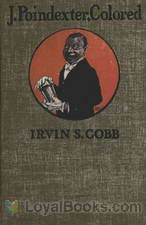 J. Poindexter, Colored
This comic novel relates the first-person adventures in New York City of Jefferson Poindexter, personal assistant to Cobb's famous Judge Priest, while the judge is vacationing abroad. (Introduction by Grant Hurlock) | |
By: Alfred Noyes (1880-1958) | |
|---|---|
 Drake
Drake
Alfred Noyes, in the blank-verse epic "Drake", fictionalizes the historical Francis Drake, who, during the reign of Elizabeth I of England, sailed (and plundered) on the Spanish Main and beyond. | |
By: Peter Kropotkin (1842-1921) | |
|---|---|
 Mutual Aid: A Factor of Evolution
Mutual Aid: A Factor of Evolution is a book by Peter Kropotkin on the subject of mutual aid, written while he was living in exile in England. It was first published by William Heinemann in London in October 1902. The individual chapters had originally been published in 1890-96 as a series of essays in the British monthly literary magazine, Nineteenth Century. Written partly in response to Social Darwinism and in particular to Thomas H. Huxley’s Nineteenth Century essay, The Struggle for Existence, Kropotkin’s book drew on his experiences in scientific expeditions in Siberia to illustrate the phenomenon of cooperation... | |
 The Conquest of bread
In this work, Kropotkin points out what he considers to be the fallacies of the economic systems of feudalism and capitalism, and how he believes they create poverty and scarcity while promoting privilege. He goes on to propose a more decentralised economic system based on mutual aid and voluntary cooperation, asserting that the tendencies for this kind of organisation already exist, both in evolution and in human society. | |
By: William Dean Howells (1837-1920) | |
|---|---|
 My Mark Twain
William Dean Howells (1837-1920) became fast friends with Mark Twain from the moment in 1869 when Twain strode into the office of The Atlantic Monthly in Boston to thank Howells, then its assistant editor, for his favorable review of Innocents Abroad. When Howells became editor a few years later, The Atlantic Monthly began serializing many of Twain’s works, among them his non-fiction masterpiece, Life on the Mississippi. In My Mark Twain, Howells pens a literary memoir that includes such fascinating scenes as their meetings with former president Ulysses Grant who was then writing the classic autobiography that Twain would underwrite in the largest publishing deal until that time... | |
 Five O'Clock Tea
A light-hearted romantic comedy in twelve short scenes, set during a tea party in the home of Mrs. Amy Somers, a widow who is courted by the ingenuous and delightful Mr. Willis Campbell. | |
 Indian Summer
In his novel Indian Summer, William Dean Howells presents a mellow but realistic story that has the complete feel of that delightful time of the year, although the plot actually spans several seasons. The Indian summer aspect applies to a sophisticated gentleman, Theodore Colville, who has just entered his middle years as he returns to a scene, Florence, Italy, that played an important part in his early manhood. It was here twenty years earlier that he first fell in love, seemingly successfully until a sudden and harsh rejection... | |
 A Little Swiss Sojurn
A charming brief account of a two months' autumnal stay on the shores of the Lake of Geneva. Howells, who was there with his family traveling from England to Italy, has a sharp eye not only for scenery and architecture, but for people and customs, both Swiss and foreign. | |
|
Christmas Every Day and Other Stories Told for Children
Five short delightful stories for children, told in the voice of "the papa" to "the girl" and "the boy." William Dean Howells (March 1, 1837 – May 11, 1920) was an American realist author and literary critic. Nicknamed "The Dean of American Letters", he was particularly known for his tenure as editor of the Atlantic Monthly as well as his own prolific writings, including the Christmas story "Christmas Every Day" and the novel The Rise of Silas Lapham. (Reader’s Note for story 3: A pony engine is a small locomotive for switching cars from one track to another.) | |
|
Annie Kilburn
After 11 years in Rome, Annie Kilburn returns home to the US after the death of her father. But the home she knew is dramatically changed in many ways. She starts to work with sick children, and finds herself attached to them, and to the minister who helps her, Mr. Peck. | |
|
Hazard of New Fortunes
Howell’s novel is set in New York of the late nineteenth century, a city familiar to readers of Edith Wharton and Henry James. Basil March, a businessman from Boston of a literary bent, moves with his family to New York to edit a new journal founded by an acquaintance. Its financial support, however, comes from a Mr. Dryfoos, a Pennsylvania Dutch farmer suddenly become millionaire by the discovery of natural gas on his property, and now living in New York with his family in a style he hopes will befit his new wealth... | |
|
Coast of Bohemia
William Dean Howells is at his iconoclastic best in this exploration of bourgeois values, particularly in the clash between respectable society and the dubious bohemian world of Art and Poetry. Cornelia Saunders has everything going for her in her middle-class world: comfort, good looks, attentive young men. She seems willing to risk it all for the sake of what might be an artistic Gift, venturing with great trepidation to put her foot over the line into Bohemia to see if it might be the thing for her. Skewering the conventions of sentimental literature as usual, Howells keeps the reader guessing to the end as to the fate of Cornelia and her Gift. | |
By: Alfred Russel Wallace (1823-1913) | |
|---|---|
 Is Mars Habitable?
In 1907 Wallace wrote the short book Is Mars Habitable? to criticize the claims made by Percival Lowell that there were Martian canals built by intelligent beings. Wallace did months of research, consulted various experts, and produced his own scientific analysis of the Martian climate and atmospheric conditions. Among other things Wallace pointed out that spectroscopic analysis had shown no signs of water vapor in the Martian atmosphere, that Lowell’s analysis of Mars’ climate was seriously flawed and badly overestimated the surface temperature, and that low atmospheric pressure would make liquid water, let alone a planet girding irrigation system, impossible. | |
By: Brooks Adams (1848-1927) | |
|---|---|
 The Theory of Social Revolutions
Brooks Adams (1848- 1927), was an American historian and a critic of capitalism. He believed that commercial civilizations rise and fall in predictable cycles. First, masses of people draw together in large population centers and engage in commercial activities. As their desire for wealth grows, they discard spiritual and creative values. Their greed leads to distrust and dishonesty, and eventually the society crumbles. In The Law of Civilisation and Decay (1895), Adams noted that as new population centers emerged in the west, centers of world trade shifted from Constantinople to Venice to Amsterdam to London... | |
By: Fanny Dickerson Bergen (1846-1924) | |
|---|---|
 Current Superstitions
No matter how enlightened, chances are you’ve been raised around superstitious lore of one kind or another. Fanny Dickerson Bergen was one of the original researchers of North American oral traditions relating to such key life events and experiences as babyhood and childhood, marriage, wishes and dreams, luck, warts and cures, death omens and mortuary customs, and “such truck,” as Huck Finn would say. You’ll be surprised at how many of these old saws you’ll know. Here’s a quote from... | |
By: Carl Sandburg (1878-1967) | |
|---|---|
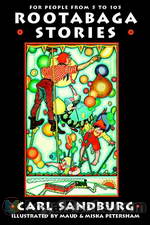 Rootabaga Stories
Carl Sandburg is beloved by generations of children for his Rootabaga Stories and Rootabaga Pigeons (which is not in the public domain), a series of whimsical, sometimes melancholy stories he originally created for his own daughters. The Rootabaga Stories were born of Sandburg’s desire for “American fairy tales” to match American childhood. He felt that the European stories involving royalty and knights were inappropriate, and so populated his stories with animals, skyscrapers, trains, corn fairies, and other colorful characters. | |
 Cornhuskers
Carl Sandburg’s collection of 103 poems that earned a Pulitzer Prize Special Letters Award in 1919. | |
By: Dale Carnegie (1888-1955) | |
|---|---|
 The Art of Public Speaking
A great start to shaking off public speaking jitters, socializing and mastering the art of small talk. The principles of public speaking written by Dale Carnegie decades ago in this book are timeless. They are just as effective in working a crowd in today’s society as they were back then. He delves into ways of commanding and charming an audience with the right energy, tone of voice, pitch, pronunciation and vocabulary. Armed with the principles highlighted in this book, you can do more than convey a message to a group of people, you can move them... | |
By: Ernest Bramah (1868-1942) | |
|---|---|
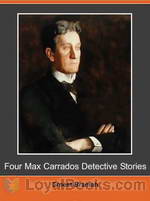 Four Max Carrados Detective Stories
Ernest Bramah is mainly known for his ‘Kai Lung’ books – Dorothy L Sayers often used quotes from them for her chapter headings. In his lifetime however he was equally well known for his detective stories. Since Sherlock Holmes we have had French detectives, Belgian detectives, aristocratic detectives, royal detectives, ecclesiastical detectives, drunken detectives and even a (very) few quite normal happily married detectives. Max Carrados was however probably the first blind detective. | |
 Max Carrados
Max Carrados is a blind detective who has developed his own remaining senses to a superior level and who has enlisted the superior observations skills of his butler to fill in for any deficiency of his own. His visual deficiency is no obstacle to solving the most difficult cases. As with some better known sleuths, Mr. Carrados' feats amaze, entertain and satisfy. | |
|
Wallet of Kai Lung
The Wallet of Kai Lung is a collection of fantasy stories by Ernest Bramah, all but the last of which feature Kai Lung, an itinerant story-teller of ancient China. The collection's importance in the history of fantasy literature was recognized by the anthologization of two of its tales in the celebrated Ballantine Adult Fantasy Series. | |
By: Mary Godolphin (1781-1864) | |
|---|---|
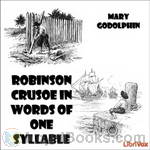 Robinson Crusoe in Words of One Syllable
Mary Godolphin was the pseudonym of Lucy Aikin who undertook translating great literature into single-syllable words so that young readers could enjoy plots that were considerably more interesting than, say, the McGuffey readers of the 1880’s or the “Dick and Jane” primers of the 1950s (still around today as “decodable readers” in elementary schools). She produced this volume based on Daniel Defoe’s most famous work, considered by many to be the first English novel (1719). She also rendered Bunyan’s Pilgrim’s Progress and Wyss’ Swiss Family Robinson, which she translated as well. | |
By: Elizabeth E. Lea (1793-1858) | |
|---|---|
 Domestic Cookery, Useful Receipts, and Hints to Young Housekeepers
The compiler of [this book] having entered early in life upon a train of duties, was frequently embarrassed by her ignorance of domestic affairs. For, whilst receipt books for elegant preparations were often seen, those connected with the ordinary, but far more useful part of household duties, were not easily procured; thus situated, she applied to persons of experience, and embodied the information collected in a book, to which, since years have matured her judgment, she has added much that is the result of her own experiments... | |
By: Friedrich Nietzsche (1844-1900) | |
|---|---|
|
Case of Wagner / Nietzsche Contra Wagner / Selected Aphorisms
A collection of three of Nietzsche's writings concerning the music of Wagner. In particular, he relates Wagner's music as degenerate, unrefined and unintelligent and relates it to a gradually degenerating German culture and society. The translator provides a detailed introduction. | |
By: Francis Pharcellus Church (1839-1906) | |
|---|---|
 Yes, Virginia, There Is A Santa Claus
“Is There A Santa Claus?” was the headline that appeared over an editorial in the September 21, 1897 edition of the New York Sun. The editorial, which included the response of “Yes, Virginia, There is a Santa Claus,” has become an indelible part of popular Christmas lore in the United States. | |
By: Hilaire Belloc (1870-1953) | |
|---|---|
 The French Revolution
“It is, for that matter, self-evident that if one community decides in one fashion, another, also sovereign, in the opposite fashion, both cannot be right. Reasoning men have also protested, and justly, against the conception that what a majority in numbers, or even (what is more compelling still) a unanimity of decision in a community may order, may not only be wrong but may be something which that community has no authority to order since, though it possesses a civil and temporal authority, it acts against that ultimate authority which is its own consciousness of right... | |
 The Servile State
A clear boundary exists between the servile and the non-servile condition of labour, and the conditions upon either side of that boundary utterly differ one from another, Where there is compulsion applicable by positive law to men of a certain status, such compulsion enforced in the last resort by the powers at the disposal of the State, there is the institution of Slavery; and if that institution be sufficiently expanded the whole State may be said to repose upon a servile basis, and is a Servile State. (Hilaire Belloc) | |
 Europe and the Faith
The Catholic brings to history (when I say "history" in these pages I mean the history of Christendom) self-knowledge. As a man in the confessional accuses himself of what he knows to be true and what other people cannot judge, so a Catholic, talking of the united European civilization, when he blames it, blames it for motives and for acts which are his own. He himself could have done those things in person. He is not relatively right in his blame, he is absolutely right. As a man can testify to his own motive so can the Catholic testify to unjust, irrelevant, or ignorant conceptions of the European story; for he knows why and how it proceeded... | |
 First and Last
“When a man weighs anchor in a little ship or a large one he does a jolly thing! He cuts himself off and he starts for freedom and for the chance of things. He pulls the jib a-weather, he leans to her slowly pulling round, he sees the wind getting into the mainsail, and he feels that she feels the helm. He has her on a slant of the wind, and he makes out between the harbour piers.” (quotation from Hilaire Belloc) | |
 On Something
“Now that story is a symbol, and tells the truth. We see some one thing in this world, and suddenly it becomes particular and sacramental; a woman and a child, a man at evening, a troop of soldiers; we hear notes of music, we smell the smell that went with a passed time, or we discover after the long night a shaft of light upon the tops of the hills at morning: there is a resurrection, and we are refreshed and renewed.” – Hilaire Belloc | |
 On Nothing & Kindred Subjects
“I knew a man once, Maurice, who was at Oxford for three years, and after that went down with no degree. At College, while his friends were seeking for Truth in funny brown German Philosophies, Sham Religions, stinking bottles and identical equations, he was lying on his back in Eynsham meadows thinking of Nothing, and got the Truth by this parallel road of his much more quickly than did they by theirs; for the asses are still seeking, mildly disputing, and, in a cultivated manner, following the... | |
 This, That, and the Other
“When Fame comes upon a man well before death then must he most particularly beware of it, for is it then most dangerous. Neither must he, having achieved it, relax effort nor (a much greater peril) think he has done his work because some Fame now attaches thereto.” -- Hilaire Belloc | |
 On Anything
"Long before I knew that the speech of men was misused by them and that they lied in the hearing of the gods perpetually in those early days through which all men have passed, during which one believes what one is told, an old and crusty woman of great wealth, to whom I was describing what I intended to do with life (which in those days seemed to me of infinite duration), said to me, ( You are building castles in Spain.' I was too much in awe of this woman not on account of the wealth, but on account... | |
 The Free Press
I propose to discuss in what follows the evil of the great modern Capitalist Press, its function in vitiating and misinforming opinion and in putting power into ignoble hands; its correction by the formation of small independent organs, and the probably increasing effect of these last. (Introduction by Hilaire Belloc) | |
By: Ida Laura Pfeiffer | |
|---|---|
 A Visit to the Holy Land, Egypt, and Italy
Ida Pfeiffer travelled alone in an era when women didn’t travel. She went first on a pilgrimage to the Holy Land, then went on to Egypt and Italy. Understanding the difficulties a woman would face travelling alone and on a budget, she made a will before she left. Go she did, however; and upon her return she wrote this book. She used the proceeds to finance her next trip – six months in Iceland. | |
By: Lieh-Tzu | |
|---|---|
 The Book of Lieh-Tzü
The Liezi (Chinese: 列子; pinyin: Lièzĭ; Wade-Giles: Lieh Tzu; literally “[Book of] Master Lie”) is a Daoist text attributed to Lie Yukou, a circa 5th century BCE Hundred Schools of Thought philosopher, but Chinese and Western scholars believe it was compiled around the 4th century CE. During the reign of Emperor Xuanzong of Tang, the Liezi was designated a Daoist classic, completing the trilogy with the more famous Daodejing and Zhuangzi. The Liezi is generally considered to be the most practical of the major Daoist works, compared to the philosophical writings of Laozi and the poetic narrative of Zhuangzi... | |
By: L. Frank Baum (1856-1919) | |
|---|---|
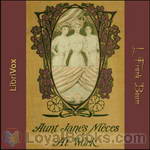 Aunt Jane's Nieces at Work
The novel carries forward the continuing story of the three cousins Louise Merrick, Beth De Graf, and Patsy Doyle, and their circle. The title is somewhat misleading; it could more accurately have been called Aunt Jane's Nieces in Politics. (Uncle John Merrick tells his nieces that politics is "work," which yields the title.)The story begins three days after the end of the previous book, Aunt Jane's Nieces at Millville; the freckled and red-haired Patsy still sports a sunburn from her summer in the Adirondacks... | |
|
Aunt Jane's Nieces Out West
After visiting Louise, Arthur and Toodlums at their ranch in Southern California, Beth and Patsy, together with Uncle John, decide to spend the winter at an hotel in the little village of Hollywood, where they get drawn into the new motion picture industry. New friends, adventures and mysteries await. | |
|
Aunt Jane's Nieces In The Red Cross
The 10th and final book in the series for adolescent girls sees two of the three cousins react to atrocities in World War I by volunteering in the Red Cross. Written under the pseudonym of Edith Van Dyne, this is the 1915 version, which reflects United States' neutrality. A later version, published in 1918, differed significantly to reflect changes in the position of the United States. | |
|
Policeman Bluejay
This is another "TWINKLE TALE" from Mr. Baum (written under the pen name Laura Bancroft) and celebrates the further adventures of Twinkle and Chubbins as they magically become child-larks and live the exciting, and often dangerous, life of birds in the forest. | |
|
Aunt Jane's Nieces In Society
Written under pseudonym of Edith Van Dyne. The story continues the adventures of three cousins, Louise, Patsy and Beth,with their debuts in society and the appearance of suitors, one of whom is rejected and kidnaps Louise. | |
 Aunt Jane's Nieces On The Ranch
Aunt Jane's Nieces On The Ranch sees the reappearance of Louise and Arthur Weldon after the birth of their first child, Jane. The family lives in California and hire a nurse, a local Mexican woman, much to Uncle John's disapproval. Racial tension is explored as a New York woman is brought in to care for the child. Meanwhile, the Mexican nurse, Inez, is certain the ranch is haunted. | |
|
Aunt Jane's Nieces And Uncle John
Aunt Jane's Nieces and Uncle John picks up the continuing story of the three cousins Patsy Doyle, Beth De Graf, and Louise Merrick, and their family; the plot of the book begins three days after the wedding of Louise and her fiancé Arthur Weldon, the event that concluded the sixth book in the series, Aunt Jane's Nieces in Society. Uncle John hires a touring car and the party makes a tour of the South West, visiting New Mexico and Arizona. | |
|
Aunt Jane's Nieces on Vacation
Aunt Jane's Nieces on Vacation is a juvenile novel for girls, written by L. Frank Baum. It is the seventh in the ten volumes in the Aunt Jane's Nieces series, and carries forward the continuing story of the three cousins Lousie Merrick Weldon, Patsy Doyle, and Elizabeth De Graf. Like all the books in the series, it was issued under Baum's "Edith Van Dyne" pseudonym. | |
By: Robert Green Ingersoll (1833-1899) | |
|---|---|
 Lectures of Col. R. G. Ingersoll
Colonel Robert Green Ingersoll (1833–1899) was a Civil War veteran, American political leader and orator during the Golden Age of Freethought, noted for his defense of atheism. This book is the first of two volumes collecting Ingersoll’s speeches. | |
By: E. E. Smith (1895-1965) | |
|---|---|
 Spacehounds of IPC
When the Inter-Planetary Corporation's (IPC) crack liner “IPV Arcturus” took off on a routine flight to Mars, it turned out to be the beginning of a unexpected and long voyage. There had been too many reports of errors in ship's flight positions from the Check Stations and brilliant physicist Dr. Percival (“Steve”) Stevens is aboard the Arcturus on a fact-finding mission to find out what's really happening, and hopefully save the honor of the brave pilots of the space-liner Arcturus from the desk-jockeys' in the Check Stations implications of imprecision - the nastiest insult you could cast at a ships pilot... | |
|
Skylark Three
This is a sequel to The Skylark of Space. The novel concerns Richard Seaton and his allies who have encounters with aliens while fighting DuQuesne and the Fenachrone.. | |
|
The Skylark of Space
The Skylark of Space is one of the earliest novels of interstellar travel and is considered a classic of pulp science fiction. Originally serialized in 1928 in the magazine Amazing Stories it is often categorized as the first literary space opera, complete with protagonists perfect in mind, body, and spirit, who fight against villains of absolute evil. | |
By: R. Austin Freeman (1862-1943) | |
|---|---|
 The Eye of Osiris
The Eye of Osiris is an early example from the Dr. Thorndyke series of detective stories written by R. Austin Freeman. In these stories, the author drew on his extensive medical and scientific knowledge for his main character, a medico-legal expert who relies on forensic evidence and logical deduction in solving cases. In this case, Thorndyke steps in to investigate the disappearance of one John Bellingham, an English gentleman and amateur Egyptologist, who has vanished under very mysterious circumstances... | |
|
The Mystery of 31 New Inn
Jeffrey Blackmore suspiciously made two wills, both deceptively alike, but still, in a cunning way, completely different. John Thorndyke, equally cunning and smart, smells something fishy. With stylish cool and logic, he leads the story up to its marvelous and fully credible climax. | |
 The Red Thumb Mark
Missing diamonds, untouched safe, two blood smeared thumb prints and a mysterious Mr X. If these are present, Dr Thorndyke must be there too. Will he be able to solve this case?The Red Thumb Mark is the first novel of Freeman’s best-selling Thorndyke series. | |
 The Uttermost Farthing
Humphrey Challoner is a solitary old man who spent a lifetime collecting for his private museum, primarily mammals exhibiting osteological abnormalities but also 24 articulated human skeletons without any apparent defect. His friend, Dr. Wharton, is puzzled by the collection, but he humors Challoner's eccentricities and tends to him in his final illness. When Wharton inherits the collection on Challoner's death, the dark mystery that ties the collection together is finally revealed. | |
By: Bret Harte (1837-1902) | |
|---|---|
 Selected Stories
Bret Harte (1837–1902) was an American author and poet, best remembered for his accounts of pioneering life in California. | |
|
Mrs. Skagg's Husbands and Other Stories
A collection of short stories set in the American West at the end of the 19th century. | |
|
What the Wolf Really Said to Little Red Riding Hood
Francis Bret Harte was an American author and poet, best remembered for his short fiction featuring miners, gamblers, and other romantic figures of the California Gold Rush. In a career spanning more than four decades, he wrote poetry, fiction, plays, lectures, book reviews, editorials, and magazine sketches in addition to fiction. As he moved from California to the eastern U.S. to Europe, he incorporated new subjects and characters into his stories, but his Gold Rush tales have been most often reprinted, adapted, and admired. | |
By: William Harrison Ainsworth (1805-1882) | |
|---|---|
 Rookwood
A rich and complex Gothic-Romance centring on the murky deeds of an ancient family. It is a wonderfully atmospheric piece that combines narrative, poetry, song, and descriptive writing to great effect. The character of Dick Turpin that we know today – the dashing highwaymen and unmatched horseman – can be said to stem directly from this novel, as the most famous part of the book (often published on its own in the past), Turpin’s Ride To York, is devoted to him. Although seemingly little known to a modern audience, Ainsworth’s ‘Rookwood’ gave the world the image of the highwayman with which we are all so familiar. | |
 Windsor Castle, Book 1
Book 1 - Ann Boleyn. The focus of the novels is on the events surrounding Henry VIII's replacing Catherine of Aragon with Anne Boleyn as his wife. During Henry's pursuit of Boleyn, the novel describes other couples, including the Earl of Surrey and Lady Elizabeth Fitzgerald, a match Henry does not support. However, some of the individuals oppose Henry and his desires for Boleyn, including Thomas Wyat who wants her for himself and Cardinal Wolsey, who uses his own daughter, Mabel Lyndwood, to lure Henry away from Boleyn... | |
By: Samuel Butler (1835-1902) | |
|---|---|
 Erewhon
Erewhon, or Over the Range is a novel by Samuel Butler, published anonymously in 1872. The title is also the name of a country, supposedly discovered by the protagonist. In the novel, it is not revealed in which part of the world Erewhon is, but it is clear that it is a fictional country. Butler meant the title to be read as the word Nowhere backwards, even though the letters “h” and “w” are transposed. It is likely that he did this to protect himself from accusations of being unpatriotic, although Erewhon is obviously a satire of Victorian society. | |
 The Way of All Flesh
The Way of All Flesh (1903) is a semi-autobiographical novel by Samuel Butler which attacks Victorian-era hypocrisy. Written between 1873 and 1884, it traces four generations of the Pontifex family. It represents the diminishment of religious outlook from a Calvinistic approach, which is presented as harsh. Butler dared not publish it during his lifetime, but when it was published it was accepted as part of the general revulsion against Victorianism. | |
By: William McGonagall (1825-1902) | |
|---|---|
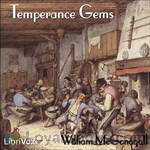 Temperance Gems
Good people all, of every degree,I pray, ye all be warned by me:I advise ye all to pause and think,And never more to taste strong drink. Some people do say it is good when taken in moderation,But, when taken to excess, it leads to tribulation,Also to starvation and loss of reputation,Likewise your eternal soul’s damnation. McGonagall has been widely acclaimed as the worst poet in British history. He campaigned vigorously against excessive drinking, appearing in pubs and bars to give edifying poems and speeches... | |