 |
Books Should Be Free Loyal Books Free Public Domain Audiobooks & eBook Downloads |
|
|
|
Books Should Be Free Loyal Books Free Public Domain Audiobooks & eBook Downloads |
|
Top Authors |
|---|
|
Book type:
Sort by:
|
By: Margaret Penrose (1876-1954) | |
|---|---|
 The Motor Girls
When Cora Kimball got her new auto for her birthday she had no idea what adventures would start for her and brother Jack.Where did Ed’s money and bonds disappear? Were they misplaced or were they stolen and lost forever.Did the conceited Sid Wilcox have something to do with the missing money, with the help of Ida Giles? And what did the obnoxious Lem Gildy have to do with it all?Join Cora and her friends in this mystery and adventure of The Motor Girls. | |
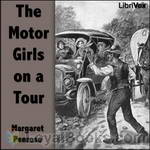 The Motor Girls on a Tour
This is the second book in the series of the Motor Girls. Join Cora and her friends in this mystery and adventure of The Motor Girls. Also the search for a missing table and promise book belonging to a cripple girl called Wren. Why is Clip so mysterious? What is she up to? Is Sid Wilcox up to his old tricks with his chum Rob Roland? | |
 The Motor Girls on Crystal Bay or, The Secret of the Red Oar
| |
|
The Campfire Girls of Roselawn Or, a Strange Message from the Air
| |
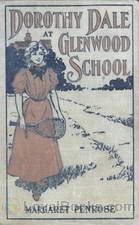 Dorothy Dale At Glenwood School
The second book in the Dorothy Dale series, in which Dorothy and her friends have an unfortunate encounter, which has long-lasting implications. Major Dale inherits some money, which enables him to send his daughter to Glenwood School, where she makes new friends - and enemies. Dorothy Dale: A Girl of Today (1908) Dorothy Dale at Glenwood School (1908) Dorothy Dale's Great Secret (1909) Dorothy Dale and Her Chums (1909) Dorothy Dale’s Queer Holidays (1910) Dorothy Dale’s Camping Days (1911) Dorothy... | |
|
The Motor Girls on the Coast or, The Waif From the Sea
| |
|
The Motor Girls on Cedar Lake Or the Hermit of Fern Island
| |
|
The Motor Girls Through New England or, Held by the Gypsies
| |
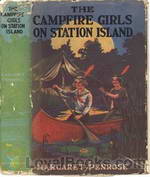 The Campfire Girls on Station Island or, The Wireless from the Steam Yacht
| |
|
The Motor Girls on Waters Blue Or the Strange Cruise of the Tartar
| |
|
The Motor Girls at Camp Surprise The Cave in the Mountains
| |
By: Thomas Paine (1737-1809) | |
|---|---|
 Common Sense
First published anonymously due to its seditious content in 1776, the pamphlet argues for the need of American colonists to pursue complete independence from Great Britain, and not be driven simply by the urge to free themselves from unfair taxation. Paine provides argumentation for his revolutionary ideas, suggesting the unification of colonial forces to achieve this goal. Furthermore, Paine strengthens his case by clearly asserting the advantages that would come out as a result of independence, and further fortifies his argumentation with religious references... | |
|
A Letter Addressed to the Abbe Raynal, on the Affairs of North America, in Which the Mistakes in the Abbe's Account of the Revolution of America Are Corrected and Cleared Up
| |
By: John Stuart Mill (1806-1873) | |
|---|---|
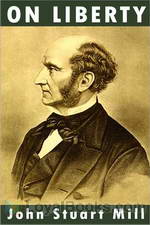 On Liberty
Published in 1859, On Liberty is a libertarian philosophical work by English philosopher John Stuart Mill that endorses his view on the importance of individuality for the constant progression and improvement of society. The work also supports economic and moral freedom, and openly criticizes the influence of social authority that in one way or another imposes a predefined set of acceptable attitudes and opinions. Highlighting issues including the incongruity between authority and liberty, the oppressive... | |
 Essays on Some Unsettled Questions of Political Economy
This is Mill’s first work on economics. It foreshadows his Political Economy which was the standard Anglo-American Economics textbook of the late 19th and early 20th centuries. Mill’s economic theory moved from free market capitalism, to government intervention within the precepts of Utilitarianism, and finally to Socialism. | |
 Utilitarianism
John Stuart Mill’s book Utilitarianism is one of the most influential and widely-read philosophical defenses of utilitarianism in ethics. The essay first appeared as a series of three articles published in Fraser’s Magazine in 1861; the articles were collected and reprinted as a single book in 1863. It went through four editions during Mill’s lifetime with minor additions and revisions. Although Mill includes discussions of utilitarian ethical principles in other works such as On Liberty and The Subjection of Women, Utilitarianism contains Mill’s only major discussion of the fundamental grounds for utilitarian ethical theory. | |
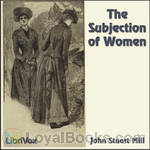 The Subjection of Women
The Subjection of Women is the title of an essay written by John Stuart Mill in 1869, possibly jointly with his wife Harriet Taylor Mill, stating an argument in favor of equality between the sexes. It offers both detailed argumentation and passionate eloquence in opposition to the social and legal inequalities commonly imposed upon women by a patriarchal culture. Just as in “On Liberty,” Mill defends the emancipation of women on utilitarian grounds, convinced that the moral and intellectual advancement of women would result in greater happiness for everybody. | |
 Considerations on Representative Government
Mill's volume was published in 1861 as an argument favoring this form of governance. Mill covers what forms of government work best, including when representative government is applicable and when not. He details appropriate functions of representative bodies and warns of problems to avoid. He distinguishes between true and false democracy. Other areas covered include how voting is carried out, the role of a second chamber in Parliament, and how an executive branch might function. | |
|
Auguste Comte and Positivism
Part 1 lays out the framework for Positivism as originated in France by Auguste Comte in his Cours de Philosophie Positive. Mill examines the tenets of Comte's movement and alerts us to defects. Part 2 concerns all Comte's writings except the Cours de Philosophie Positive. During Comte's later years he gave up reading newspapers and periodicals to keep his mind pure for higher study. He also became enamored of a certain woman who changed his view of life. Comte turned his philosophy into a religion, with morality the supreme guide. Mill finds that Comte learned to despise science and the intellect, instead substituting his frantic need for the regulation of change. | |
|
The Contest in America
| |
|
A System of Logic: Ratiocinative and Inductive 7th Edition, Vol. I
| |
By: Sir John Barrow (1764-1848) | |
|---|---|
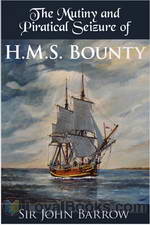 Eventful History of the Mutiny and Piratical Seizure of H.M.S. Bounty
On December 31 1787, the HMS Bounty, a small sailing vessel embarked from Spithead Harbor, England bound for Tahiti. Her mission was sponsored by the Royal Society in London and aimed at picking up breadfruit plants and fruit from Tahiti and conveying them to the West Indies, where it was hoped they would take root and become a commercial crop. The Bounty was an old ship with a young captain and 46 young officers. The captain's cabin was converted into a potting shed for the expected breadfruit cargo... | |
By: Willa Cather (1873-1947) | |
|---|---|
 My Antonia
Two young children arrive in a small frontier settlement on the wild and desolate plains of Nebraska, on the same day and by the same train. Jim Burden is a ten year old orphan from Virginia who has come to live with his grandparents, while Antonia Shimerda who's the same age as Jim, arrives with her large, immigrant family from Eastern Europe to try and eke out a living in the New World. The children find themselves thrown together as they live in adjoining farms. Jim tutors Antonia in English and they become good friends as they grow up... | |
 O Pioneers!
Published in 1913, O Pioneers! is the first novel in Cather’s Great Plains trilogy and follows the life of its young heroine, Alexandra Bergson, as she fulfills her father’s dying wish to take care of his farm, while also ensuring her brothers are well looked after. Entrusted with a great responsibility, Alexandra is determined to fulfill her father’s wish, as she goes on to prove her skills as a thriving farmer even though the task comes with a hefty price on her happiness. In addition, the... | |
 One of Ours
This 1923 Pulitzer Prize winning novel was written by Willa Cather. This work had been inspired by reading her cousin G.P. Cather’s wartime letters home to his mother. He was the first officer from Nebraska killed in World War I. Claude Wheeler, the subject of the novel, is a young man growing up on a Nebraska farm. The son of well to do parents, Claude is troubled by his apparent inability to find purpose with his life. Everything he does seems to turn out wrong, at least in his own mind. Although he is a skilled farmer, Claude believes his destiny lies elsewhere... | |
By: Horatio Alger, Jr. (1832-1899) | |
|---|---|
 Adrift in New York
Set in 19th century New York, this is the story of a wealthy old man who adopts his orphaned nephew and niece after his own four year old son mysteriously disappears. However, under a smooth exterior, the nephew is a conniving and avaricious villain who wants to grab all the old man's wealth for himself. This is also the story of a young boy, who doesn't know he's the sole heir to a fabulous fortune, but grows up homeless in the streets of New York. The villainous nephew proposes marriage to his cousin with a view to grabbing the entire inheritance... | |
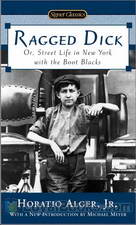 Ragged Dick
A fourteen year old homeless boy, Dick, tries to make an honest living in the streets of 1860s New York as a bootblack. He is determined to stay honorable, though he is tempted many times to easy pickings and a life of crime. When a regular customer is impressed by Dick's integrity and invites him to his mansion, this marks a turning point in the life of the young street-smart teenager. Ragged Dick by Horatio Alger Jr was first published in 1868. It represents a typical coming of age story in which a child attains the maturity of adulthood through circumstances in which important choices are made... | |
 Fame and Fortune
Richard Hunter, in this sequel to Ragged Dick, continues his way in the world through hard work and excellent morals. He, along with his friend Henry, continue their positive outlook as they try to advance their lives. But Dick soon finds envy and jealousy leads others to work against him. How will Dick react as he tries to strive forward while others conspire to hold him down? (Written by Barry Eads) | |
By: William Wordsworth (1770-1850) | |
|---|---|
|
The Prelude
Among monuments of narrative poetry, The Prelude; or, Growth of a Poet's Mind, by William Wordsworth, occupies a unique place. Wordsworth published the first version of the poem in 1798, but continued to work on it for the rest of his life. The final version, which is the subject of this recording, was published posthumously in 1850, by Wordworth’s widow, Mary. The Prelude is the first major narrative poem in European literature which deals solely with the spiritual journey of the author. In this respect the only predecessor to which it can be compared in Dante’s Divine Comedy, which is similarly a journey from personal confusion to certitude, from ignorance to realization... | |
|
The Prose Works of William Wordsworth
| |
|
Selections from Wordsworth and Tennyson
| |
|
Poems in Two Volumes, Volume 1
| |
By: Hermann Hesse (1877-1962) | |
|---|---|
 Siddhartha
Once regarded as a cult book in the 1960s by the Flower Power generation, Siddhartha by Herman Hesse remains even today a simple and fresh tale of a man's spiritual quest. Penned by a deeply spiritual German author, Siddhartha explores multiple themes of enlightenment, thinking beyond set rules, love and humanity. Siddhartha is a young contemporary of the spiritual master Gautam Buddha who lived in India at some time during the 4th century BC. The story has striking parallels to Buddha's own life story in which he abandons his wealth and status as the young prince of Kapilavastu, his wife and young son and his family to embark on a voyage of self discovery... | |
By: Adam Smith (1723-1790) | |
|---|---|
 The Wealth of Nations
Adam Smith’s “The Wealth of Nations” gives an in-depth discussion of different economic principles like the productivity, division of labor and free markets. Although written and published more than 200 years ago, it’s still hailed as one of the most original works in the field of economics and is still used as a reference by many modern economists. “An Inquiry Into the Nature and Causes of the Wealth of Nations” is the complete title of this book and it was first published in 1776, the same year that the American colonies declared their independence from Britain... | |
By: John Buchan (1875-1940) | |
|---|---|
 The Thirty-nine Steps
The typical action hero with a stiff upper lip whose actions speak louder than his words, a mysterious American who lives in dread of being killed, an anarchist plot to destabilize Greece, a deadly German spy network, a notebook entirely written in code, and all this set in the weeks preceding the outbreak of World War I. The Thirty-nine Steps, by John Buchan is a spy classic entirely worthy of its genre and will delight modern day readers with its complicated plot. It is also notable for being the literary progenitor of the spook novel that typically features the secret operative on the run, determined to unravel a world domination plot... | |
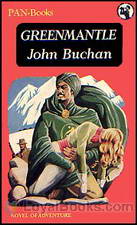 Greenmantle
Greenmantle is the second of five Richard Hannay novels by John Buchan, first published in 1916 by Hodder & Stoughton, London. It is one of two Hannay novels set during the First World War, the other being Mr Standfast (1919); Hannay’s first and best-known adventure, The Thirty-Nine Steps (1915), is set in the period immediately before the war started. – Hannay is called in to investigate rumours of an uprising in the Muslim world, and undertakes a perilous journey through enemy territory to meet up with his friend Sandy in Constantinople. Once there, he and his friends must thwart the Germans’ plans to use religion to help them win the war, climaxing at the battle of Erzurum. | |
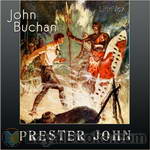 Prester John
This classic adventure novel by the author of Greenmantle and The Thirty-Nine Steps relates the first-person exploits of young David Crawfurd before the age of twenty. | |
|
The Path of the King
| |
|
The Moon Endureth: Tales and Fancies
| |
|
The African Colony Studies in the Reconstruction
| |
|
The Half-Hearted
| |
|
Salute to Adventurers
| |
By: Guy Wetmore Carryl (1873-1904) | |
|---|---|
 Fables for the Frivolous
The Urban Rat and the Suburban Rat, The Persevering Tortoise and the Pretentious Hare, The Ambitious Fox and the Unapproachable Grapes.... If some of these titles seem vaguely familiar to you, you wouldn't be mistaken! Fables for the Frivolous by Guy Wetmore Carryl contains some well-known fables in a modern packaging, with a delightful new twist! The complete title of the original published in 1898 was Fables for the Frivolous (With apologies to La Fontaine) and it was the first published work of this gifted American journalist, humorist and poet... | |
 Grimm Tales Made Gay
A comic rendering in verse of well-loved Fairy Tales of the Brothers Grimm, each ending with a moral and full of puns. The titles of the tales themselves make another verse. | |
|
The Lieutenant-Governor A Novel
| |
By: Bill Nye | |
|---|---|
 Comic History of the United States
For American journalist and humorist Edgar Wilson Nye who wrote under the pen name Bill Nye in the late 19th century, facts are not to be presented in their newborn, bare state. They should be properly draped and embellished before they can be presented before the public. Hence, in the Comic History of the United States published in 1894, he gives his readers the facts. But in a bid to make the historical figures more human he describes them as “people who ate and possibly drank, people who were born, flourished and died, not grave tragedians posing perpetually for their photographs... | |
 Comic History of England
If you thought history was dull, dry and boring, you haven't read Bill Nye's books! He brings wit, humor, satire, irony and sheer nonsensical fun into the subject, making it both entertaining and memorable. The Comic History of England was published posthumously in 1896 after the writer's tragic and untimely death half-way through the project. Hence it remains incomplete and covers the history of the island nation only up to the Tudor period. However, beginning with Julius Caesar, the Roman invasion of Britain, the Druids and Stonehenge, this book is still a rib-tickling ride through the centuries... | |
|
Bill Nye's Funniest Thoughts
Bill Nye was a famous American humor columnist in the middle 1800's. He said "We can never be a nation of snobs so long as we are willing to poke fun at ourselves." And he did exactly that in hundreds of newspaper columns that were later collected into books. This is a selection of just 35 of the most humorous, wry and downright funny cogitations of his, written of course in the somewhat convoluted style common in the 19th century which just adds to their flavor in my opinion. The selection process was rigorous: only those that made me laugh, giggle or snort are included. | |
 A Guest at the Ludlow and Other Stories
| |
By: Montague R. James (1862-1936) | |
|---|---|
 Ghost Stories of an Antiquary
An English tourist in a small, rural town in the South of France discovers an ancient manuscript with a strange illustration on the last page. A young orphan is sent to live with his elderly cousin, a secretive man who is obsessed with immortality. A picture that tells stories that change according to who is viewing it. These and other delicious, goose bump evoking tales are part of Ghost Stories of an Antiquary by Montague R James. A master of his craft, MR James was an academic and administrator of King's College, Cambridge and later of Eton... | |
 The Five Jars
The Five Jars is the only novel written by James, who is best known for his ghost stories. It is a peculiarly surreal fantasy apparently written for children. While he is out walking, the narrator is drawn to a remote pool, and finds a small box that has been hidden since Roman times. He gradually learns how to use its contents, fighting off a series of attempts to steal it, and becomes aware of a strange world hidden from our own. | |
By: Saki (1870-1916) | |
|---|---|
 Reginald
Saki was the pen name of the British author Hector Hugh Munro (1870 – 1916). His witty, biting and occasionally odd short stories satirised Edwardian culture. Saki is considered a master of the short story and has been compared to O. Henry and Dorothy Parker as well as Noel Coward and Oscar Wilde (who clearly influenced Saki). His first collection of short stories, Reginald, was published by Methuen Press in 1904 though these stories first appeared in the ‘Westminster Gazette’. The stories... | |
 The Chronicles of Clovis
This is the third collection of short stories by Saki, following on from “Reginald” and “Reginald in Russia”. Although some of the stories have characters that do not appear elsewhere in the collection, many of them are loosely centred round the young Clovis Sangrail (effectively a reincarnation of Reginald). | |
 Beasts and Super-Beasts
Saki (December 18, 1870 – November 14, 1916) was the pen name of British author Hector Hugh Munro. Saki’s world contrasts the effete conventions and hypocrisies of Edwardian England with the ruthless but straightforward life-and-death struggles of nature. Nature generally wins in the end. | |
 When William Came
We have had many novels about alternate histories, often of the ‘What would have happened if Hitler had won the war’ type and this is another – except that this one is set in 1913 and the ‘William’ of the title is that old bogeyman ‘Kaiser Bill’. For some reason, at the height of Britain’s power, the fear of invasion was common at that time. (See ‘The Riddle of the Sands’, ‘The Battle of Dorking’, ‘Spies of the Kaiser’ or even ‘The War of the Worlds’)WARNING:- Contains mild anti-semitism and jingoism typical of the period | |
By: Patrick Henry (1736-1799) | |
|---|---|
 Give Me Liberty or Give Me Death
This speech was given March 23, 1775, at St. John’s Church in Richmond, Virginia, and is credited with having singlehandedly convinced the Virginia House of Burgesses to pass a resolution delivering the Virginia troops to the Revolutionary War. In attendance were Thomas Jefferson and George Washington. Reportedly, the crowd, upon hearing the speech, jumped up and shouted, “To Arms! To Arms!” | |
By: Robert W. Service (1874-1958) | |
|---|---|
 Ballads of a Bohemian
Ballads of a Bohemian is a collection of poems tied together by the narration of the “author” Stephen Poore. The poems speak of bohemian life in Paris before the war, his experiences during World War I and its aftermath. | |
 Selections from Ballads of a Cheechako
These twelve poems are from Ballads of a Cheechako which was Robert W. Service’s third book of Yukon poems, published in 1909. The word Cheechako, from Chinook Jargon, originated in the United States (Alaska) and Canada (Yukon) and was imported into local English during the Yukon gold rush that began in 1896. Cheechako, is a non derogatory word meaning “newcomer” or “tenderfoot.” The derivation looks something like this: chee new cha come ko home. | |
|
Ottawa Folk Festival Robert Service Collection
The Spell of the Yukon by Robert Service with patrons, musicians and organizers. Robert Service is an iconic Canadian poet. | |
By: Theodor Storm (1817-1888) | |
|---|---|
|
Immensee
| |