 |
Books Should Be Free Loyal Books Free Public Domain Audiobooks & eBook Downloads |
|
|
|
Books Should Be Free Loyal Books Free Public Domain Audiobooks & eBook Downloads |
|
Top Authors |
|---|
|
Book type:
Sort by:
|
By: Daniel A. Lord (1888-1955) | |
|---|---|
 Clouds Cover the Campus
On an American college campus, in the early years of World War II, a professor from Germany is murdered and the plans for a new bomb sight he had invented are missing. Who murdered the professor and stole the plans? And are the accidents, happening with alarming frequency to young student aviators from the campus, really accidents -- or is some unknown conspiracy afoot?This mystery novel was written by Daniel A Lord, S.J., a priest and popular American Catholic writer. The subjects of the works in his bibliography range from religion, humor, plays, songs, mysteries and even politics. His most influential work was possibly in drafting the 1930 Production Code for motion pictures. ( | |
By: Margaret Burnham | |
|---|---|
 The Girl Aviators and the Phantom Airship
Teenagers Peggy Prescott and her brother Roy share a love of aviation that they inherited from their late father. Mr. Prescott had always dreamed of building an aeroplane that would be free of the defects of planes already invented. Peggy and Roy manage to build a plane starting with the framework their father had begun. Peggy christens it ‘The Golden Buttefly’ and she and Roy are determined to enter it in a young aviator’s contest for a prize of $5000. The Prescotts need the money desperately to save the home they share with their aunt which is about to be taken from them by the rather nasty banker, Mr... | |
By: Dorothy Canfield Fisher (1879-1958) | |
|---|---|
|
The Bent Twig
Semi-autobiographical series of incidents in the life of an intellectual American family in the late 19th - early 20th Century as seen by favored daughter, Sylvia Marshall. Her father is an economics professor in a Midwestern state university and she is following in his inquisitive footsteps. Canfield writes this in a matter-of-fact manner with Tarkingtonesque good humor. | |
By: Mary Huestis Pengilly | |
|---|---|
 Diary Written in the Provincial Lunatic Asylum
Mary Pengilly was taken to a Lunatic Asylum by her sons where she kept a diary, which this book is taken from. Mary records the harsh conditions and treatments received at the hands of the nurses during her stay. Once Mary is released she takes it upon herself to make the authorities aware of the situation at the Provincial Lunatic Asylum. | |
By: Harl Vincent (1893-1968) | |
|---|---|
|
Astounding Stories 02, February 1930
This is the second issue of the classic science fiction Astounding Magazine. It contains the finale of The Beetle Horde by Victor Rousseau, as well as stories by Harl Vincent, Charles Willard Diffin, Hugh B. Cave, Sophie Wenzel Ellis, Sterner St. Paul, Anthony Pelcher and Captain S. P. Meek. | |
By: Victor Hugo (1802-1885) | |
|---|---|
|
The Last Day of a Condemned
A man who has been condemned to death writes down his cogitations, feelings and fears while he is waiting for his execution. He does not betray his name to the reader or what he has done. He describes his life in prison, everything from what his cell looks like to the personality of the prison priest. (Introduction by Wikipedia) | |
By: Sophocles (495-406 BC) | |
|---|---|
|
Philoctetes
Sophocles' play recounts an episode from the Trojan War, in which the wily Odysseus and Achilles' son Neoptolemus travel to a remote island to persuade Philoctetes to come with them to Troy. A prophet has foreseen that the Greeks will need Philoctetes and his bow (given to him by Heracles before his death) in order to defeat the Trojans. The problem is that years before Odysseus had engineered Philoctetes' abandonment on the island, due to a festering, stinking wound he had received from a snakebite. Will Philoctetes forgive and forget, or will he take his revenge? | |
By: W. O. E. Oesterley (1866-1950) | |
|---|---|
|
Immortality and the Unseen World
The full title of this book is Immortality and the Unseen World - A Study in Old Testament Religion. Oesterley describes the beliefs that pre-Christian Hebrews and Semites held regarding the afterlife and the immortal nature of humans. The nature, form and evolution of these beliefs are derived from the Tanakh (Old Testament), comparisons with the beliefs and mythologies of neighboring cultures, and archeological finds. To develop a full study, additional beliefs of these people are also considered, including the beliefs of the constituent parts of humans; demonology, angelology, shades and the Satan; the home of the dead, ancestor worship, necromancy, and burial customs... | |
By: Omar Khayyám (1048-1131) | |
|---|---|
|
The Rubáiyát of Omar Khayyám
The Rubáiyát of Omar Khayyám (Persian: رباعیات عمر خیام) is the title that Edward FitzGerald gave to his translation of a selection of poems, originally written in Persian and of which there are about a thousand, attributed to Omar Khayyám (1048–1131), a Persian poet, mathematician and astronomer. A Persian ruba'i is a two-line stanza with two parts (or hemistechs) per line, hence the word "Rubáiyát" (derived from the Arabic root word for "four"), meaning "quatrains". (Introduction by Wikipedia) The three translations by women comprise this collection of recordings of the Rubaiyat of Omar Khayyam. | |
By: Edward M. Bounds (1835-1913) | |
|---|---|
 The Essentials of Prayer
The Sunday School Times says of the author, "he was a specialist in prayer and his books are for the quiet hour, for careful meditation and for all who wish to seek and find the treasures of God." This book is a ready helper for those who want to follow his path, with more and better communication with the Lord. | |
By: Thomas Middleton and Thomas Dekker | |
|---|---|
|
The Roaring Girl
The Roaring Girl is a rip-roaring Jacobean comedy co-written by Thomas Middleton and Thomas Dekker and first published in 1611. The play is a fictionalized dramatization of the life of Mary Frith, known as "Moll Cutpurse", a woman who had gained a reputation as a virago in the early 17th century. (The term "roaring girl" was adapted from the slang term "roaring boy", which was applied to a young man who caroused publicly, brawled, and committed petty crimes.) The play combines the exploits of the cross-dressed Moll with the amorous adventures of a trio of merchants' wives, and the forbidden romance between Sebastian Wengrave and Mary Fitzallard. | |
By: Saint Catherine of Genoa (1447-1510) | |
|---|---|
 Spiritual Dialogue Between the Soul, the Body, Self-Love, the Spirit, Humanity, and the Lord God
Saint Catherine of Genoa (Caterina Fieschi Adorno, born Genoa 1447 – 15 September 1510) is an Italian Roman Catholic saint and mystic, admired for her work among the sick and the poor. She was a member of the noble Fieschi family, and spent most of her life and her means serving the sick, especially during the plague which ravaged Genoa in 1497 and 1501. She died in that city in 1510.In 1551, 41 years after her death, a book about her life and teaching was published, entitled Libro de la vita mirabile et dottrina santa de la Beata Caterinetta de Genoa... | |
By: Elizabeth Stoddard (1823-1902) | |
|---|---|
|
The Morgesons
Stoddard’s novel traces the education and development of a young female in American middle-class society. The protagonist, Cassandra Morgeson, is educated by a series of journeys she makes throughout her youth and early adulthood. Each new setting represents a different stage in her intellectual development.Cassandra is born in Surrey, a small New England town. Surrey is quiet and isolated, granting a young woman little intellectual stimulation. Cassandra escapes the boredom of domestic life through stories of adventure and exploration. Surrey instills in Cassandra a restlessness that drives her quest for knowledge and experience.(Introduction by Wikipedia) | |
By: William H. Herndon (1818-1891) | |
|---|---|
|
Herndon's Lincoln
A biography of Abraham Lincoln by his long-time law partner, William Herndon and Herndon's collaborator, Jesse Weik. The book is notable for its extensive use of first hand interviews (unusual for its time) and for Herndon's overriding determination to convey an affectionate but frank picture of his law partner's life story as remembered by Lincoln's family, friends, associates and neighbors. | |
By: Rudyard Kipling (1865-1936) | |
|---|---|
 Stalky & Co (More Stories)
This small collection puts together stories by Kipling that feature the characters from Stalky & Co. but which for some reason were not included in the book Stalky & Co. Of these the more interesting is the first, “Stalky”, which introduces the characters and is full of the humour and understanding of adolescent males and their timeless jostling with adult powers that characterise the stories in Stalky & Co.“Stalky” was the first of the tales to be written, and was published in 1898, so it is difficult to understand how it came to be omitted from the book in 1899... | |
By: Basil of Caesarea (329/30?-378/9) | |
|---|---|
 The Hexaemeron
The Hexaemeron is the title of nine homilies delivered by St. Basil on the the cosmogony of the opening chapters of Genesis. When and where they were delivered is quite uncertain. They are Lenten sermons, delivered at both the morning and evening services, and appear to have been listened to by working men. (Hom. iii. 1) Some words in Hom. viii. have confirmed the opinion that they were preached extempore, in accordance with what is believed to have been Basil's ordinary practice. Internal evidence... | |
By: Francis Cassilly (1860-1938) | |
|---|---|
 A Story of Love
This is not a love story, but the story of love, a love which every man and woman was created to experience, a love so intense and fulfilling that it scarcely seems possible to grasp, yet one that is offered to every human person who opens his heart and mind to its beauty and wonder. This is a love that so many of our forefathers have found and even now enjoy, but which so many of us still seek. The American Jesuit Father Cassilly opens our eyes to this love, the unifying and personal love between the human person and his Creator... | |
By: Henrik Ibsen (1828-1906) | |
|---|---|
 Rosmersholm
Rosmersholm is a play written in 1886 by Norwegian playwright Henrik Ibsen. In the estimation of many critics the piece is Ibsen’s masterwork, only equalled by The Wild Duck of 1884. As expressed by the protagonist, Rosmer, the theme of the play is social and political change, in which the traditional ruling classes relinquish their right to impose their ideals on the rest of society, but the action is entirely personal, resting on the conduct of the immoral, or amoral, “free thinking” heroine, Rebecca, who sets herself to undermine Rosmer’s religious and political beliefs because of his influential position in the community... | |
By: Ella Middleton Tybout (1871-1952) | |
|---|---|
 The Wife of the Secretary of State
In this political thriller set at the turn of the 20th century, several lives, both of Washington insiders and those on the periphery, intersect over the issue of some stolen diplomatic papers. And what hidden secrets bind Mrs. Redmond, the wife of the Secretary of State, to the unscrupulous Count Valdmir, the Russian ambassador? Politics, power, and intrigue combine in this novel, first published in 1905. | |
By: John Relly Beard (1800-1876) | |
|---|---|
 Toussaint L’Ouverture: A Biography and Autobiography
François-Dominique Toussaint L’Ouverture (1743-1803) rose to fame in 1791 during the Haitian struggle for independence. In this revolt, he led thousands of slaves on the island of Hispañola to fight against the colonial European powers of France, Spain and England. The former slaves ultimately established the independent state of Haiti and expelled the Europeans. L’Ouverture eventually became the governor and Commander-In-Chief of Haiti before recognizing and submitting to French rule in 1801... | |
By: Anonymous | |
|---|---|
 The Curtezan Unmasked
"The Curtezan unmasked or, the Whoredomes of Jezebel Painted to the Life: With Antidotes against them, or Heavenly Julips to cool Men in the Fever of Lust" is a fire-and-brimstone polemic by "A Spiritual Physician" to persuade young men not to succumb to harlotry and its accompanying perils. (Introduction by Denny Sayers) | |
By: George Sand (1804-1876) | |
|---|---|
 Indiana
This is George Sand's first novel. Her real name was Amantine (or Amandine) Lucile Dupin, and she later became baroness Dudevant. As an aristocratic woman living in 19th century France, she chose her first novel to be, above all, a realistic work. Indiana is trapped since the age of 16 in a loveless marriage with a rich, much older, man. Her only real friend is her cousin, sir Ralph, who, sometimes, just does things which are- logically- the best for her but- mentally- the worsed he could do. She tries to find means of escape. But would she be able to recreate her own reality? Can a woman find true love while trying to maintain her identity and independence in a man's world?" | |
By: Elizabeth Bonhôte (1744-1818) | |
|---|---|
 Bungay Castle: A Novel
MANUAL OF SURGERY, OXFORD MEDICAL PUBLICATIONSBY ALEXIS THOMSON, F.R.C.S.Ed.PREFACE TO SIXTH EDITION Much has happened since this Manual was last revised, and many surgical lessons have been learned in the hard school of war. Some may yet have to be unlearned, and others have but little bearing on the problems presented to the civilian surgeon. Save in its broadest principles, the surgery of warfare is a thing apart from the general surgery of civil life, and the exhaustive literature now available on every aspect of it makes it unnecessary that it should receive detailed consideration in a manual for students... | |
By: Anonymous | |
|---|---|
 Baltimore Catechism, No. 2 -- Catechism of Christian Doctrine
A catechism is a summary of the principles of Christian religion and articles of the faith. The Baltimore Catechism specifically was the de facto standard Catholic school text in the United States from 1885 to the late 1960s. It was the first such catechism written for Catholics in North America, replacing a translation of Bellarmine's Small Catechism. The Baltimore Catechism remained in use in nearly all Catholic schools until many moved away from catechism-based education, though it is still used up to this day in some. (Summary by Wikipedia) | |
By: Florence Morse Kingsley (1859-1937) | |
|---|---|
|
And So They Were Married
This is the story of Elizabeth North a young woman who becomes engaged and with the aid of a social climbing friend begins to plan her wedding beyond what she can afford. Her friend Evelyn Tripp, convinces Elizabeth that she “simply can’t afford” not to live a fashionable and expensive lifestyle. However her husband and her grandma help her to see sense and pull herself out of the debt she has got herself into. | |
By: August Strindberg (1849-1912) | |
|---|---|
|
The Red Room
A young idealistic civil servant, Arvid Falk, leaves the drudgery of bureaucracy to become a journalist and author. As he explores various social activities — politics, publishing, theatre, philanthropy, and business — he finds more hypocrisy and corruption than he thought possible. He takes refuge with a group of "bohemians", who meet in a red dining room in Berns Salonger to discuss these matters. (Introduction adopted from Wikipedia) | |
By: Ben Hecht (1894-1964) | |
|---|---|
 Gargoyles
The author, Ben Hecht, was a prolific writer as well as a renowned screenwriter, producer, and director of films. His screenwriting skills include some of the most popular films of Hollywood's golden era, including "Gone With the Wind", "Wuthering Heights", "Spellbound", and "Scarface", to name but a few.Hecht had already established himself as a novelist and an author of short stories when "Gargoyles" was published. "Gargoyles" delves deep into the psyches of individuals and of their relationships within social classes, revealing both the darker sides and the sentimental sides... | |
By: Unknown | |
|---|---|
 The Drama: A Quarterly Review
This is a collection of theatrical essays from the American quarterly The Drama, including six non-fiction works -- 3 profiles: Schnitzler, Andreyev, and O'Neill, and 3 articles: Characterization vs Situation, The Actor in England, & The Evolution of The Actor. | |
By: William F. Cody, Col. (1846-1917) | |
|---|---|
|
The Adventures of Buffalo Bill
MANUAL OF SURGERY, OXFORD MEDICAL PUBLICATIONSBY ALEXIS THOMSON, F.R.C.S.Ed.PREFACE TO SIXTH EDITION Much has happened since this Manual was last revised, and many surgical lessons have been learned in the hard school of war. Some may yet have to be unlearned, and others have but little bearing on the problems presented to the civilian surgeon. Save in its broadest principles, the surgery of warfare is a thing apart from the general surgery of civil life, and the exhaustive literature now available on every aspect of it makes it unnecessary that it should receive detailed consideration in a manual for students... | |
By: Francis Godwin (1562-1633) | |
|---|---|
|
The Man in the Moone
A self-serving Spaniard discovers a means of traveling to the moon, describing his sensations in transit in terms remarkably consistent with modern astronauts' experiences. He finds on the moon a utopia, which he describes in detail, but being a fallen creature, he takes the first opportunity of coming home. ( | |
By: Henry Rider Haggard (1856-1925) | |
|---|---|
|
Pearl Maiden
This is the story of Miriam, an orphan Christian woman living in Rome in the first century. She falls in love with a Roman officer, but knows that her Jewish childhood playmate loves her too and will do anything in order to get her love in return. | |
By: Barbara Hofland (1770-1844) | |
|---|---|
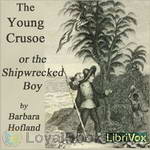 The Young Crusoe, or The Shipwrecked Boy
The Young Crusoe, or The Shipwrecked Boy (1829) Novel. At the novel's opening, Charles Crusoe, thirteen years of age, asks his mother if he is related to the famous Robinson Crusoe, and is told that he is not. His future adventures, however, strongly resemble those of the earlier Crusoe. | |
By: Cardinal Nicholas Patrick Wiseman (1802-1865) | |
|---|---|
 Fabiola or The Church of the Catacombs
This historical novel is set in Rome in the early 4th century AD, during the time of the cruel persecution of Christians under the Emperor Diocletian. The heroine of the book is Fabiola, a young pagan beauty from a noble Roman family. Fabiola seems to have everything, including a superior education in the philosophers, yet under the surface, she is not content with her life. One day, in a fit of rage, she attacks and wounds her slave girl Syra, who is a secret Christian. The proud, spoiled Roman girl is humbled by Syra's humility, maturity and devotion to her in this situation, and a slow transformation begins... | |
By: Frances Trego Montgomery (1858-1925) | |
|---|---|
 Zip, the Adventures of a Frisky Fox Terrier
Zip, a little fox terrier, lives in the town of Maplewood in the house of his owner, Dr. Elsworth. Each day when Dr. Elsworth drives his carriage to visit his patients, Zip goes along with him so that he can keep the doctor company and, most importantly, visit with the other animals in the town. Zip likes to find out all the latest news so that he can tell it to his best friend, Tabby the cat, who also lives with Dr. Elsworth. However, he also finds himself getting into mischief, whether it's trying to solve a burglary, sneaking fried chicken from a picnic, getting stuck in a stovepipe or fighting with Peter-Kins the monkey. Zip is one dog who never has a dull day. | |
By: James Parton (1822-1891) | |
|---|---|
|
Captains of Industry
In this volume are presented examples of men who shed lustre upon ordinary pursuits, either by the superior manner in which they exercised them or by the noble use they made of the leisure which success in them usually gives. Such men are the nobility of republics.Most of these chapters were published originally in "The Ledger" of New York, and a few of them in "The Youths' Companion" of Boston, the largest two circulations in the country. I have occasionally had reason to think that they were of some service to young readers, and I may add that they represent more labor and research than would be naturally supposed from their brevity... | |
By: Owen Wister (1860-1938) | |
|---|---|
 A Journey in Search of Christmas
Cowboy Lin McLean rides into frontier Cheyenne, Wyoming, at Christmastime and learns a powerful meaning of Christmas. Author Owen Wister is well known for his western writings, famously the novel The Virginian. Illustrations are by the western artist Frederic Remington. | |
By: Edna Ferber (1885-1968) | |
|---|---|
|
The Dancing Girls
The Dancing Girls is just one of the 4 excellent short stories in this recording. All written by the master, Edna Ferber for magazines between 1910 and 1919 they naturally contain her unique mix of real people, sadness, joy and always humor. The lead Story, The Dancing Girls, is my favorite for the way she paints a picture of mid America small town society and how good people somehow (and sometimes) can find their way to each other. Other stories in this collection are Old Lady Mandel; Long Distance; and One Hundred Percent | |
By: Leo The Great | |
|---|---|
|
Sermons of Leo the Great, Bishop of Rome
Leo the Great was unanimously elected Bishop of Rome on September 29, 440 a.d. At the Council of Chalcedon, his famous "Tome" was a decisive contribution to the Christological controversies of the fifth century. But the Tome did not stand alone. It was written in the context of over two decades of pastoral sensitivity. This collection of sermons is the best way to let Leo himself unpack the nuances and power of Chalcedonian Christology according to one of its most influential proponents. (Introduction by Jonathan Lange) | |
By: Washington Irving (1783-1859) | |
|---|---|
 The Alhambra: A Series of Tales and Sketches of the Moors and Spaniards
This is a collection of essays, verbal sketches, and stories by Washington Irving. Irving lived at the Alhambra Palace while writing some of the material for his book. In 1828, Washington Irving traveled from Madrid, where he had been staying, to Granada, Spain. At first sight, he described it as "a most picturesque and beautiful city, situated in one of the loveliest landscapes that I have ever seen." He immediately asked the then-governor of the historic Alhambra Palace as well as the archbishop of Granada for access to the palace, which was granted because of Irving's celebrity status... | |
By: Charles H. Spurgeon (1834-1892) | |
|---|---|
 The Treasury of David, Vol. 6 (Abridged)
Charles Spurgeon was a British Particular Baptist preacher who remains highly influential among Christians of different denominations, among whom he is still known as the "Prince of Preachers". In his lifetime, Spurgeon preached to around 10,000,000 people, often up to 10 times each week at different places. He was the pastor of the congregation of the New Park Street Chapel (later the Metropolitan Tabernacle) in London for 38 years.Spurgeon was a prolific author of many types of works. This sixth volume of Spurgeon’s commentary on the Psalms covers Psalm 119 to Psalm 124. | |
By: Upton Sinclair (1878-1968) | |
|---|---|
|
They Call Me Carpenter
The story takes place in the fictional city of Western City circa 1920. It begins with a man named Billy who is attacked by a mob of ex-servicemen outside a theater after watching a German film. Billy stumbles into a church to escape the mob and is visited by Carpenter, that is Jesus, who walks out of the stained glass window of the church. Carpenter is shocked and appalled by his observations of greed, selfishness, lust, sorrow, and the ultimate division between rich and poor. The story then roughly follows the ministry of Jesus. | |
By: Lilian Gask (1865-????) | |
|---|---|
|
The Fairies and the Christmas Child
The worst of being a Christmas Child[2] is that you don’t get birthday presents, but only Christmas ones. Old Naylor, who was Father’s coachman, and had a great gruff voice that came from his boots and was rather frightening, used to ask how I expected to grow up without proper birthdays, and I thought I might have to stay little always. When I told Father this he laughed, but a moment later he grew quite grave. “Listen, Chris,” he said. And then he took me on his knee—I was a small chap then—and told me things that made me forget old Naylor, and wish and wish that Mother could have stayed with us... | |
By: William Bernard Ullathorne (1806-1889) | |
|---|---|
 The Groundwork of the Christian Virtues
William Bernard Ullathorne was a Benedictine monk and Roman Catholic priest who ministered in Australia from 1833 until 1840 and then returned to his native England, where he was ordained a bishop in 1847 and served as Bishop of Birmingham from 1850 until 1888. He is best known for his catechetical trilogy: The Endowments of Man, The Groundwork of the Christian Virtues, and Christian Patience, published in the 1880s. The Groundwork of the Christian Virtues is presented in sixteen lectures, wherein Bishop Ullathorne makes the case that the virtue of humility is the foundation of all virtues, especially of the three theological virtues and the four cardinal moral virtues... | |
By: Booth Tarkington (1869-1946) | |
|---|---|
|
Monsieur Beaucaire
A madcap Frenchman posing as an ambassador's barber blackmails a dishonest duke to introduce him as a nobleman to a wealthy belle of Bath. Since the duke himself hopes to mend his fortunes by wedding this very woman, he attempts to murder Beaucaire, and failing that to discredit him. To test the lady's mettle, Beaucaire allows his deception to be exposed--up to a point--and there we must draw the curtain to preserve the surprise ending. ( | |
By: Vernon Lee (1856-1935) | |
|---|---|
|
A Phantom Lover
A Phantom Lover is a supernatural novella by Vernon Lee (pseudonym of Violet Paget) first published in 1886. Set in a Kentish manor house, the story concerns a portrait painter commissioned by a squire, William Oke, to produce portraits of him and his wife, the eccentric Mrs. Alice Oke, who bears a striking resemblance to a woman in a mysterious, seventeenth century painting. | |
By: Arthur Wing Pinero (1855-1934) | |
|---|---|
 The Amazons: A Farcical Romance
This 1895 farce inspired by the outlandish idea of women wearing pants, centers around the predicament of the three daughters of the eccentric Marchioness of Castlejordan, who determined to have sons, raised them like boys. She encouraged them to dress and act like boys at home, yet dress like ladies when out. As the girls come of age, they are conflicted. They want to please mother by acting as her sons, but, suddenly smitten with three gentlemen, they are compelled to grow up and be ladies. When their suitors secretly come to woo, they aren’t sure what to do……and what will mother do if she finds out? | |
By: Pansy (1841-1930) | |
|---|---|
 One Commonplace Day
A temperance lecturer misses his train and ends up attending a town picnic. It was a common enough picnic on a commonplace day. But the discussions, actions, and attitudes from that picnic reverberate through the lives of many people. What are the far-reaching consequences of one commonplace day in OUR lives? | |
By: Charles Dickens (1812-1870) | |
|---|---|
 The Strange Gentleman
Before he became a novelist, Dickens wrote several successful plays. This one from 1836, his first, he called, "A Comic Burletta in Two Acts". Characters arrive at a village inn called "The St. James Arms" and much confusion ensues. | |
By: Henry James (1843-1916) | |
|---|---|
 The Last of the Valerii
An unnamed American painter resident in Rome serves as narrator in this story, watching as his god-daughter Martha, becomes the wife of Prince Marco Valerio. The young bride is eager to use some of her American fortune in the service of archeology at the Villa Valerio, her husband's somewhat run down Roman house. Archeology can be, her god-father suggests, a rather expensive hobby, but to his (and her) surprise, the dig brings to light a lovely marble statue of Juno. Martha is overjoyed, but it is soon clear that her husband is overcome by the discovery, and overcome in ways that are to be disquieting... | |
By: Eliza Haywood (1693-1756) | |
|---|---|
 The History of Miss Betsy Thoughtless, Volume 1
The flirtations of a rich young maiden, Miss Betsy Thoughtless with several suitors, as she alienates the right man by refusing to take the issue of marriage seriously. Because of this her guardian commits her to marriage to the wrong man, a situation over which she has little control. As the heroine describes her fate, this text exposes the institution of marriage, the powerlessness of women and the double standards held during that time.(Introduction by Joyce Martin) | |
By: Various | |
|---|---|
 One Act Play Collection 004
This collection of twelve one-act dramas features plays by James Allen, John Kendrick Bangs, Gordon Bottomley, Charles Dickens, Lord Dunsany, Susan Glaspell, George Bernard Shaw, August Strindberg, Marion Craig Wentworth, and William Butler Yeats. The plays were coordinated by Elizabeth Barr, Margaret Espaillat, Amanda Friday, Elizabeth Klett, Kristingj, David Lawrence, Algy Pug, Todd, and Chuck Williamson. | |
By: George Moore (1852-1933) | |
|---|---|
 Celibates
The author is considered the first great Irish writer of realist fiction and is said to have been an inspiration for James Joyce. Celibates is a novel of three characters: Mildred Lawson, John Norton and Agnes Lahens.They have nothing in common other than an absolute love of themselves and an inability to sympathize with others. In that vein, it constitutes a striking image of our own modern day self-absorbed society. (Introduction by James Carson) | |
By: William Ruschenberger (1807-1895) | |
|---|---|
 The Elements of Entomology
The Elements of Entomology is one of seven in a Series of First Books of Natural History Prepared for the Use of Schools and Colleges. It is a succinct little textbook from 1845 presents an introduction to entomology. The author was a surgeon in the U.S. Navy and president of the Academy of Natural Sciences. | |
By: Samuel D. Gordon (1859-1936) | |
|---|---|
|
Quiet Talks about Jesus
So far as I can find out, I have no theory about Jesus to make these talks fit into. I have tried to find out for myself what the old Book of God tells about Him. And here I am trying to tell to others, as simply as I can, what I found. It was by the tedious, twisting path of doubt that I climbed the hill of truth up to some of its summits of certainty. I am free to confess that I am ignorant of the subject treated here save for the statements of that Book, and for the assent within my own spirit to these statements, which has greatly deepened the impression they made, and make... | |
By: Sheikh Nefzaoui | |
|---|---|
|
The Perfumed Garden
A fifteenth-century Arabic sex manual and work of erotic literature. The book presents opinions on what qualities men and women should have to be attractive, gives advice on sexual technique, warnings about sexual health, and recipes to remedy sexual maladies. It gives lists of names for the penis and vagina, has a section on the interpretation of dreams, and briefly describes sex among animals. Interspersed with these there are a number of stories which are intended to give context and amusement. | |
By: Thomas Love Peacock (1785-1866) | |
|---|---|
|
Headlong Hall
Headlong Hall is the first novel by Thomas Love Peacock, published in 1815 (dated 1816). As in his later novel Crotchet Castle, Peacock assembles a group of eccentrics, each with a single monomaniacal obsession, and derives humor and social satire from their various interactions and conversations. The setting is the country estate of Squire Harry Headlong Ap-Rhaiader, Esq. in Wales. | |
By: Silas Hocking (1850-1935) | |
|---|---|
 Her Benny
A very heart touching story about two homeless children, a brother and sister, living on the streets of Liverpool, England during Victorian times. | |
By: Agnes Strickland, Elisabeth Strickland (1796-1874) | |
|---|---|
|
The Lives of the Queens of England Volume 3
The Lives of the Queens of England is a multi-volumed work attributed to Agnes Strickland, though it was mostly researched and written by her sister Elizabeth. These volumes give biographies of the queens of England from the Norman Conquest in 1066. Although by today's standards, it is not seen as a very scholarly work, the Stricklands used many sources that had not been used before.Volume three includes the biographies of Isabella of Valois, Joanna of Navarre, Katherine of Valois, Margaret of Anjou, Elizabeth Woodville and Anne of Warwick. (Introduction by Ann Boulais) | |
By: Florence Irwin (1869-19??) | |
|---|---|
 The Mask
The mask is the one which we all wear, even though unconsciously, to hide our thoughts and feelings. Alison Terry wore one, though she had never realized it until she faced a crisis in her life. Alison, a girl of sympathetic mood and action whose keen intelligence is overbalanced by the inexperience of innocence and a sheltered upbringing, goes to New York with her erratic husband, Phil Howland. She passes through various stages of disillusionment inevitably resulting from cheap boarding-house life,... | |
By: Henry James | |
|---|---|
 Sir Edmund Orme
Henry James wrote a number of ghost stories -- The Turn of the Screw being the most famous. Did he believe in ghosts himself, as did many of his contemporaries? It's generally possible to find earthly interpretations, Freudian and other, for his ghosts. Sir Edmund Orme, though, is unquestionably a real ghost -- except of course that James's unnamed narrator tells the story in the voice of yet a third man, and the narrator himself passes no judgments on the factual nature of what he is reporting (there's a resemblance here to The Turn of the Screw)... | |
By: Dreiser, Theodore (1871-1945) | |
|---|---|
 Hollywood: Its Morals and Manners
Serialized in Shadowland from November 1921 to February 1922, Hollywood: Its Morals and Manners is Theodore Dreiser's shocking four part expose on the motion picture industry. In it, he shares his observations from his extended stay in Los Angeles, and gives us an intimate look at the seedier underside of Hollywood. | |
By: Harold Bindloss (1866-1945) | |
|---|---|
 Northwest!
Northwest! takes place in western Canada, primarily western Alberta and British Columbia. The story revolves around Jimmy not being sure whether or not he shot and killed a Northwest Mounted while he and some friends were out hunting one day. Not exactly a bushman, he needs to head northwest to avoid capture by the officials who are out to find him and bring him to trial. At least that's what he suspects. Survival in the wilderness for one who was raised in British class proves to be a daunting experience, and we learn of the trials he is to be put through while he is on the lam. | |
By: Various | |
|---|---|
 Short Nonfiction Collection Vol. 026
A collection of short nonfiction works in the public domain. The selections included in this collection were independently chosen by the readers, and the topics encompass history, travel, mathematics, humor, philosophy, and nature. | |
 Insomnia Collection, Vol. 2
Soporific dullness is in the ear of the listener, and what's tedium incarnate to one person will be another person's passion and delight. However, it is hoped that at least one from the range of topics here presented will lull the busy mind to a state of sweet sleep. (Introduction by Cori Samuel) | |
By: Francis Archibald Bruton (1869-1929) | |
|---|---|
 Lancashire
The county of Lancashire in the north-west of England is best known as the engine room of the nineteenth-century Industrial Revolution. Steering clear of the industrial districts, F. A. Bruton takes the reader on an engaging tour of the county's beauty spots and lesser known landscapes. Taking the view that the charm of a district is nothing without its historical associations, Bruton packs his account with historical detail and literary references to, among others, Leland, Wordsworth, Ruskin, Arnold, and Mrs. Carlyle. (Introduction by Phil Benson) | |
By: Philip Melanchthon (1497-1560) | |
|---|---|
|
The Defense of the Augsburg Confession
The Apology of the Augsburg Confession was written by Philip Melanchthon during and after the 1530 Diet of Augsburg as a response to the Pontifical Confutation of the Augsburg Confession, Charles V's commissioned official Roman Catholic response to the Lutheran Augsburg Confession of June 25, 1530. It was intended to be a defense of the Augsburg Confession and a refutation of the Confutation. It was signed as a confession of faith by leading Lutheran magnates and clergy at the meeting of the Smalcald League in February, 1537, and subsequently included in the German [1580] and Latin [1584] Book of Concord... | |
By: Jessie Graham Flower (-1931) | |
|---|---|
 Grace Harlowe's Fourth Year at Overton College
The four series follow Grace Harlowe and her friends through high school, college, abroad during World War I, and on adventures around America. In The High School Girls Series, Grace attends Oakdale High School with friends Anne Pierson, Nora O'Malley, and Jessica Bright. The four promote fair play and virtue while winning over troubled girls like Miriam Nesbit and Eleanor Savell, playing basketball, and founding sorority Phi Sigma Tau. The group becomes friends with boys in their acquaintance: David Nesbit, Tom Gray, Hippy Wingate, and Reddy Brooks, forming "The Eight Originals." (Introduction by Wikipedia) | |
By: A. S. M. Hutchinson (1879-1971) | |
|---|---|
|
If Winter Comes
If Winter Comes, was in many aspects ahead of its time, dealing with an unhappy marriage, eventual divorce, and an unwed mother who commits suicide. According to the New York Times, "If Winter Comes" was the best-selling book in the United States for all of 1922. | |
By: Arthur Machen (1863-1947) | |
|---|---|
|
The Angels of Mons
The Angels of Mons is a popular legend about a group of angels who supposedly protected members of the British army in the Battle of Mons at the outset of World War I. The story is fictitious, developed through a combination of a patriotic short story by Arthur Machen, rumours, mass hysteria and urban legend, claimed visions after the battle and also possibly deliberately seeded propaganda. | |
By: Cal Stewart (1856-1919) | |
|---|---|
|
Uncle Josh's Punkin Centre Stories
A collection of comedic short stories from the perspective of an old country man. | |
By: William Shakespeare (1564-1616) | |
|---|---|
|
Shakespearean Dialogues Collection
This is a collection of scenes from Shakespeare's plays, mainly comprising dialogues between two characters. The theme for this collection is "Wooing, Wedding, and Repenting" (inspired by a line from Much Ado About Nothing). | |
By: Charles Warren Stoddard | |
|---|---|
 The Lepers of Molokai
This is the story of the lepers of Molokai and of the Roman Catholic missionary, Father Damien, who ministered to those who languished in that desolate place, waiting for death to release them from a most intense form of physical and mental suffering. Fr. Damien, born Jozef De Veuster, was a Roman Catholic priest from Belgium and member of the Congregation of the Sacred Hearts of Jesus and Mary, a missionary religious order. He won recognition for his ministry to people with leprosy (Hansen's disease), who had been placed under a government-sanctioned medical quarantine on the remote island of Molokai in the Kingdom of Hawaii... | |
By: John Reed (1887-1920) | |
|---|---|
 Insurgent Mexico
In the autumn of 1913 John Reed was sent to Mexico by the Metropolitan Magazine to report the Mexican Revolution. He shared the perils of Pancho Villa's army for four months, present with Villa's Constitutional Army when it defeated Federal forces at Torreón, opening the way for its advance on Mexico City. Reed's time with the Villistas resulted in a series of outstanding magazine articles that brought Jack a national reputation as a war correspondent. Reed deeply sympathized with the plight of the peons and vehemently opposed American intervention, which came shortly after he left... | |
By: Margaret Gatty (1809-1873) | |
|---|---|
|
Parables from Nature
Parables From Nature is a collection of short stories which were originally published as 4 separate volumes. They are inspired from Nature and written for children. Nevertheless, Gatty uses children's literature because she knows that in doing so, she can reach a wider group of readers and point out problems from the Victorian Age. | |
By: Katharine Pyle (1863-1938) | |
|---|---|
|
Tales of Folk and Fairies
In "Tales of Folk and Fairies" Ms. Pyle tells 15 different children's stories from around the world; each more delightful than the last. Each story stands completely on it's own and although they were probably meant for children, adults will certainly enjoy them as well. | |
By: Anonymous | |
|---|---|
 The Broken Vase and Other Stories
The Broken Vase and Other Stories;for Children and Youth,Compiled by a Teacher | |
By: Randall Garrett (1927-1987) | |
|---|---|
|
Nor Iron Bars A Cage....
Iron bars do not confine a Man—only his body. There are more subtle, and more confining bindings, however....Police methods of the future will naturally use complex new technology but police will still need to deal with the same old sad human nature, that is forever doing horrible deeds. The night stick may be replaced by the hypo-gun but is prison the only solution? Listen to this speculative story from Randall Garrett bizarre mind and see. | |
By: Henry Edward Manning (1808-1892) | |
|---|---|
|
Sin and Its Consequences
Henry Edward Manning (1808-1892) was an Anglican priest who, in 1851, converted to Roman Catholicism. In 1865, he was appointed archbishop of Westminster, which is the mother diocese of Roman Catholics in England and Wales, and in 1875, was made a cardinal by Pope Pius IX.Sin and Its Consequences is based on a series of eight Lenten lectures. The first four chapters deal with the problem of sin. After explaining the nature sin, Manning explains the distinction between mortal and venial sins. He further discusses sins of omission which, if left unchecked, can all too easily lead to more serious sins... | |
By: Robert Hugh Benson (1871-1914) | |
|---|---|
 Confessions of a Convert
Robert Hugh Benson was the youngest son of Edward White Benson, the Archbishop of Canterbury and his wife Mary. Benson was was a prolific and popular writer during his time, and in 1903 he became a prominent convert to the Roman Catholic Church from Anglicanism . In 1904 he was ordained a Catholic priest.This book is his personal story of his journey to the Catholic faith, containing comparisons between Catholicism and the Anglican religion. | |
By: Anonymous | |
|---|---|
|
Young Girl's Diary
The diary of an upper middle class Austrian girl, this book describes her life between the ages of eleven and fourteen. It's a coming of age story full of angst, boys, and questions. | |
By: Edgar Thurston (1855-1935) | |
|---|---|
 Omens and Superstitions of Southern India
This book deals mainly with some aspects of what may be termed the psychical life of the inhabitants of the Madras Presidency, and the Native States of Travancore and Cochin. | |
By: James T. Nichols (1865-?) | |
|---|---|
|
Birdseye Views of Far Lands
Birdseye Views of Far Lands is an interesting, wholesome presentation of something that a keen-eyed, alert traveler with the faculty of making contrasts with all classes of people in all sorts of places, in such a sympathetic way as to win their esteem and confidence, has been able to pick up as he has roamed over the face of the earth for a quarter of a century.The book is not a geography, a history, a treatise on sociology or political economy. It is a Human Interest book which appeals to the reader who would like to go as the writer has gone and to see as the writer has seen the conformations of surface, the phenomena of nature and the human group that make up what we call a "world... | |
By: A. A. Milne (1882-1956) | |
|---|---|
|
Not That It Matters
More of the witty, wry, and deliciously wicked essays and articles written by Milne. Most people know him as the creator of Winnie The Pooh, but he worked for many years as editor of Punch Magazine and these are some of his best. Not That It Matters is a collection of over 40 of these short stories and articles. Not That It Matters collects his columns for Punch, which include poems, essays and short stories, from 1912 to 1920. Most of his writing pokes fun, both gentle and not so gentle at a variety of topics... | |
By: John Latimer (1824-1904) | |
|---|---|
 Sixteenth-century Bristol
Plague, piracy and payments to members of Parliament! The town of Bristol, England in the Sixteenth Century was a fascinating place, and John Latimer's book is a comprehensive guide to this period, describing royal visits from both Henry VIII and Elizabeth I, as well as detailing contemporary pastimes such as wrestling competitions, bear-baiting and traveling players. He explains the sanitary arrangements, dreadful postal service and the difficulty of moving from the status of town to "City" among many other interesting topics.It is made up of papers originally published in the Bristol Mercury in 1902-3 and is read by Bristolian, Elaine Webb.Summary by Cori Samuel and Elaine Webb | |
By: George Horace Lorimer (1869-1937) | |
|---|---|
 Letters from a Self-Made Merchant to His Son
Being the Letters written by John Graham, Head of the House of Graham & Company, Pork-Packers in Chicago, familiarly known on 'Change as "Old Gorgon Graham," to his Son, Pierrepont, facetiously known to his intimates as "Piggy." George Horace Lorimer was an American journalist and author. He is best known as the editor of The Saturday Evening Post. | |
By: Various (1833-1884) | |
|---|---|
|
John Stuart Mill; His Life and Works
This biography is actually a series of essays by prominent personalities of the time that shed light on John Stuart Mill's life and areas of endeavor. Those areas include his experiences in India House, his moral character, certain botanical explorations, how effective he was as a critic, studies in morals and the law, and discoveries concerning political economy. They also explore ideas concerning his influence on institutions of higher learning, accomplishments as a politician, and fame as a philosopher. | |
By: Francis William Bourdillon (1844-1912) | |
|---|---|
 Aucassin and Nicolette.
Aucassin and Nicolette is a medieval romance written in a combination of prose and verse called a “song-story.” Created probably in the early 13th century by an unknown French author, the work deals with the love between the son of a count and a Saracen slave girl who has been converted to Christianity and adopted by a viscount. Since Aucassin’s father is strongly opposed to their marriage, the two lovers must endure imprisonment, flight, separation in foreign lands, and many other ordeals before their ardent love and fierce determination finally bring them back together... | |
By: Various | |
|---|---|
 National Geographic Magazine Vol. 01 No. 2
National Geographic Magazine Volume 1 Number 2 published in 1889. Topics of articles are:Africa, its Past and Future Reports on:Geography of the LandGeography of the SeaGeography of the AirGeography of Life | |
By: Moliere (1622-1673) | |
|---|---|
|
The Imaginary Invalid
The Imaginary Invalid is a three-act comédie-ballet by the French playwright Molière. It was first performed in 1673 and was the last work he wrote. The plot centers around Argan, the 'imaginary invalid' who is completely dependent on his doctors and wants to marry his daughter to a doctor against her will, so that he will always have medical care freely available to him. In an ironic twist of fate, Molière collapsed during his fourth performance as Argan on 17 February and died soon after. | |
By: Anonymous | |
|---|---|
 The Chymical Wedding of Christian Rosenkreutz
The Chymical Wedding of Christian Rosenkreutz was edited in 1616 in Strasbourg (annexed by France in 1681). It is the third of the original manifestos of the mysterious "Fraternity of the Rose Cross" (Rosicrucians). NOTE: It was translated into English for the first time in 1690 by E. Foxcroft. This translation became the source for many of the modern attempts to improve the original. The translation presented here is that of E. Foxcroft. Although the book first appeared in 1616, the story takes place over 150 years earlier... | |
By: George W. Bateman | |
|---|---|
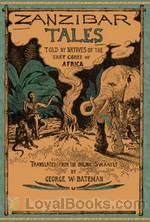 Zanzibar Tales
If you have read any accounts of adventure in Africa, you will know that travelers never mention animals of any kind that are gifted with the faculty of speech, or gazelles that are overseers for native princes, or hares that eat flesh. No, indeed; only the native-born know of these; and, judging by the immense and rapid strides civilization is making in those parts, it will not be long before such wonderful specimens of zoölogy will be as extinct as the ichthyosaurus, dinornis, and other poor creatures who never dreamed of the awful names that would be applied to them when they were too long dead to show their resentment... | |
By: Theodor Herzl (1860-1904) | |
|---|---|
 A Jewish State
Read in English, this is a pivotal document in the history of Zionism and the State of Israel. Herzl designed this work to elevate the discussion of "the Jewish Question" so it would "no longer take the form of violent abuse or sentimental vindication but of a debate, practical, large, earnest, and political." While few of Herzl's proposals were actually carried out, the importance of A JEWISH STATE was in the groundswell of support for a Jewish homeland engendered by its solutions to the practical problems of establishing a new state... | |
By: Athanasius of Alexandria (297-373) | |
|---|---|
 Contra Gentes
Contra Gentes is the first of a two volume work published by Athanasius of Alexandria prior to the outbreak of the Arian controversy (ca. 319). It focuses especially on pagan beliefs and worship concluding with a defense of the Christian view of God and creation -- especially creation by the eternal Word. In this way, the ground is prepared for the second volume of his work, now published separately under the title De Incarnatione Verbi. | |
By: Jean Guibert (1857-1914) | |
|---|---|
|
On the Exercises of Piety
In this book, Father Jean Guibert of the Society of St. Sulpice shows how piety permeates the spiritual life in mental and vocal prayer, in the sacraments, in various devotions, in spiritual reading, in the examination of one's conscience, and in spiritual retreats. This book is the sequel to Father Guibert's On Piety, wherein he explains the nature of piety and its effects. Both books bear an imprimatur. | |
By: L. G. Moberly (1861-1931) | |
|---|---|
 Christina
Christina is a story of two people: Christina, a strong young and poor woman, who searches for work and finds more than she bargained for, and Rupert, a middle class man, who is pressured to marry and settle down. These two people meet frequently and start to confide in each other. But can they really help one another put their wounds from the past to rest and start a new life? And will their new life include one another? Lucy Gertrude Moberly was an English popular novelist whose wonderful writing style deserves attention. | |
By: Molière (1622-1673) | |
|---|---|
|
Miser
The Miser is a comedy of manners about a rich moneylender named Harpagon. His feisty children long to escape from his penny-pinching household and marry their respective lovers. Although the 17th-century French upper classes presumably objected to the play's message, it is less savage and somewhat less realistic than Molière's earlier play, Tartuffe, which attracted a storm of criticism on its first performance. | |
By: Caroline Emelia Stephen (1834-1909) | |
|---|---|
|
French History for English Children
A history of France from Ancient Gaul up until 1880, written in short easy to comprehend chapters aimed at teaching English children. | |
By: Christopher Morley (1890-1957) | |
|---|---|
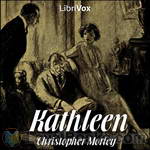 Kathleen
A group called the Scorpions, eight Oxford undergraduates, find a letter Kathleen wrote a letter to Joe at Oxford. They build up an image of Kathleen and Joe from the letter and set out to find and meet Kathleen. The competition between them leads to many entertainingly funny scenarios. | |
By: Louise M. Stacpoole-Kenny (1885-1933) | |
|---|---|
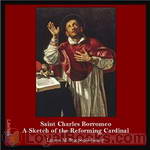 Saint Charles Borromeo: A Sketch of the Reforming Cardinal
Charles Borromeo was the cardinal archbishop of the Catholic Archdiocese of Milan from 1564 to 1584. He was a leading figure during the Counter-Reformation and was responsible for significant reforms in the Catholic Church, including the founding of seminaries for the education of priests. He is honored as a saint in the Catholic Church and his feast day is November 4. | |
By: Marcus Tullius Cicero (106-43 BC) | |
|---|---|
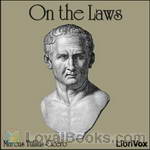 On the Laws
De Legibus (On the Laws) is a philosophical dialogue between: Cicero's friend Titus Pomponius Atticus; Cicero's brother Quintus; and Cicero himself. The dialogue is written in the style of Plato who was greatly revered by Cicero. De Legibus forms a continuation of Cicero's own work De re Publica (On the Commonwealth or On the Republic) and is also a response to Plato's work Νόμοι (Laws). It is unknown how many books the work originally contained but several complete books have been lost. Cicero's... | |