 |
Books Should Be Free Loyal Books Free Public Domain Audiobooks & eBook Downloads |
|
|
|
Books Should Be Free Loyal Books Free Public Domain Audiobooks & eBook Downloads |
|
Top Authors |
|---|
|
Book type:
Sort by:
|
By: Herbert George Jenkins (1876-1923) | |
|---|---|
 Malcolm Sage, detective
A collection of short stories that chronicles the first year of the Malcolm Sage Detective Bureau. | |
 John Dene of Toronto; a Comedy of Whitehall
John Dene comes to England with a great invention, and the intention of gingering-up the Admiralty. His directness and unconventional methods bewilder and embarrass the officials at Whitehall, where, according to him, most of the jobs are held by those "whose great-grandfathers had a pleasant way of saying how-do-you-do to a prince." Suddenly John Dene disappears, and the whole civilised world is amazed at an offer of £20,000 for news of him. Scotland Yard is disorganised by tons of letters and thousands of callers... | |
|
Bindle
Herbert Jenkins' most popular fictional creation was Mr. Joseph Bindle, who first appeared in a humorous novel in 1916 and in a number of sequels. In the preface to the books, T. P. O'Connor said that "Bindle is the greatest Cockney that has come into being through the medium of literature since Dickens wrote Pickwick Papers". The stories are based on the comedic drama of life at work, at home and all the adventures that take place along the way. Bindle leaves a path of good-natured destruction behind him and walks away unscathed every time... | |
 Adventures of Bindle
Jenkins' most popular fictional creation was Mr. Joseph Bindle, who first appeared in a humorous novel in 1916 and in a number of sequels. In the preface to the books, T. P. O'Connor said that "Bindle is the greatest Cockney that has come into being through the medium of literature since Dickens wrote Pickwick Papers". The stories are based on the comedic drama of life at work, at home and all the adventures that take place along the way. | |
By: Henry Charles Lea (1825-1909) | |
|---|---|
 History of the Inquisition of Spain
The first volume of Lea’s monumental work on the Inquisition of Spain, covering its origin and establishment and its relations with the state. Also included are appendices listing Tribunals, Inquisitors-General, and Spanish coinage. | |
By: Paul | |
|---|---|
|
The Sheridan Road Mystery
A shot rings out in the middle of the night in a quiet Chicago neighborhood. Patrolman Murphy is directed to an apartment where a man says the shot came from. The apartment is locked and apparently empty. Was there a murder here? And if so, where is the victim? | |
By: Stewart Edward White (1873-1946) | |
|---|---|
 Conjuror's House, a Romance of the Free Forest
In the northern outreaches of the Canadian wilderness, it was understood that the Hudson Bay Company governed all trading, and one factor named Galen Albret took his position seriously. Free traders, or those who dared try to do their trading outside of the Company, found themselves having to face Galen Albret and his methods of dealing with them. One or two offenses he might tolerate, but for those who repeatedly refuse to acknowledge his warning out, he would send them on “La Longue Traverse” through the wilderness without supplies, and from which they seldom returned... | |
 The Blazed Trail
Stewart Edward White wrote fiction and non-fiction about adventure and travel, with an emphasis on natural history and outdoor living. White's books were popular at a time when America was losing its vanishing wilderness and many are based on his experiences in mining and lumber camps. The Blazed Trail is the story of early lumbermen in the northern woods of Michigan. The novel portrays the challenges faced by the workers focusing on one, Harry Thorpe, as he endeavors to be successful though completely unskilled when he enters the woods... | |
 Arizona Nights
Arizona Nights is a collection of tales from the American West as told by those who took part in them. | |
 Gold
Gold
This is a well written story of the California gold rush of 1849. Four friends decide they are going to go to California and get rich in the gold fields. Follow their adventures as they travel to California across the isthmus of Panama to San Francisco. In their search for gold they encounter hostile Indians, various desperadoes, and natural disasters. Did they strike it rich? Listen and find out. | |
|
Blazed Trail Stories and Stories Of The Wild Life
Thirteen short stories by a popular writer of the early 20th century (not to be confused with an earlier book Blazed Trail). White's books were popular at a time when America was losing its vanishing wilderness. He was a keen observer of the beauties of nature and human nature, yet could render them in a plain-spoken style. Based on his own experience, whether writing camping journals or Westerns, he included pithy and fun details about cabin-building, canoeing, logging, gold-hunting, and guns and fishing and hunting... | |
By: James Cook | |
|---|---|
 A Voyage Towards the South Pole and Round the World
Having, on his first voyage, discovered Australia, Cook still had to contend with those who maintained that the Terra Australians Incognita (the unknown Southern Continent) was a reality. To finally settle the issue, the British Admiralty sent Cook out again into the vast Southern Ocean with two sailing ships totalling only about 800 tons. Listen as Cook, equipped with one of the first chronometers, pushes his small vessel not merely into the Roaring Forties or the Furious Fifties but becomes the first explorer to penetrate the Antarctic Circle, reaching an incredible Latitude 71 degrees South, just failing to discover Antarctica. (Introduction by Shipley) | |
By: Fred M. White (1859-?) | |
|---|---|
 The Mystery of the Four Fingers
A fabulously rich gold mine in Mexico is known by the picturesque and mysterious name of The Four Fingers. It originally belonged to an Aztec tribe, and its location is known to one surviving descendant. Surprises, strange and startling, are concealed in every chapter of this completely engrossing detective story. And through it runs the thread of a curious love story. | |
By: George Washington Plunkitt (1842-1924) | |
|---|---|
 Plunkitt of Tammany Hall
“I seen my opportunities and I took ‘em.”, George Washington Plunkitt of Tamminy Hall. There’s honest graft and dishonest graft according to Plunkitt. Listen to this candid discourse from a 19th century politician, and decide for yourself if things have changed. | |
By: Christina & Dante Gabriel Rossetti | |
|---|---|
 Selected Poems
Dante Gabriel Rossetti (1828-1882) and his sister Christina Georgina Rossetti (1830-1894) played important roles in the artistic milieu of Victorian England. Members of a highly cultured Italian immigrant family, they achieved widespread fame and exerted a significant influence upon the poetry and art of their time.Dante Gabriel was a co-founder of the Pre-Raphaelite Brotherhood of painters, contributing to a renewed interest in medieval themes and techniques. Both his painting and his poetry anticipated the Aesthetic movement of the late 19th and early 20th centuries... | |
By: William Healy, Mary Healy | |
|---|---|
 Pathological Lying, Accusation, and Swindling – A Study in Forensic Psychology
This work describes and analyzes several cases of pathological behavior. The interest comes not only from the cases themselves, but also from the of-its-time analysis which is mired in what we now know to be wrong thinking about mental illness, sexuality, gender, and race. - written by Mary Schneider | |
By: John Mark | |
|---|---|
|
Jesus of Nazareth, A Biography
"Jesus of Nazareth, a Biography, by John Mark," recognizes the author of the second Gospel as that "John, whose surname was Mark" (Acts 15:37), whom Barnabas chose as companion when he sailed for Cyprus on his second missionary journey. In making use of the new title, the plan of the Editor is to present "The Gospel: According to Mark" as it would be printed were it written in the twentieth rather than the first century. (Introduction from Forward, by D. Appleton & Co, Publishers, 1922) | |
By: Leigh Brackett (1915-1978) | |
|---|---|
 Black Amazon of Mars
Carrying out the last wishes of a comrade, mercenary Eric John Stark takes on the task of returning a stolen talisman to a walled city near the Martian pole; a city that guards the mysterious Gates of Death. Now all he has to do is get past the brutal clans of Mekh and the shadowy Lord Ciaran to get to Kushat where they’ll probably attempt to kill him. All while he tries to hold on to a talisman that imprints ancient memories of the Gates in his mind. That’s not easy for a human raised by Mercurian aborigines... | |
By: Marcel Allain (1885-1969) | |
|---|---|
 Fantômas
Fantômas is the first of 32 novels penned from 1911 to 1913 by Marcel Allain and Pierre Souvestre. The title character is a ruthless thief and killer, a bloodthirsty successor to LeBlanc's Arsène Lupin. The first five novels were made into silent film serials. The character and the movies caught the eye of the French Surrealists who admired the primal violence of Fantômas, as well as his portrayal in the films, which are considered landmarks in French Cinema. In Fantômas, the Marquise de Langrune is savagely murdered and Inspector Juve, who is obsessed with capturing Fantômas, arrives to solve the murder. | |
 Messengers of Evil
Fantômas was introduced a few years after Arsène Lupin, another well-known thief. But whereas Lupin draws the line at murder, Fantômas has no such qualms and is shown as a sociopath who enjoys killing in a sadistic fashion. He is totally ruthless, gives no mercy, and is loyal to none, not even his own children. He is a master of disguise, always appearing under an assumed identity, often that of a person whom he has murdered. Fantômas makes use of bizarre and improbable techniques in his crimes, such as plague-infested rats, giant snakes, and rooms that fill with sand... | |
By: Valmiki (ca. 400 BC?) | |
|---|---|
 The Ramayana, Book 1
The Ramayana is an ancient Sanskrit epic. It is attributed to the Hindu sage Valmiki and forms an important part of the Hindu canon (smṛti). The Ramayana is one of the two great epics of India, the other being Mahabharata. It depicts the duties of relationships, portraying ideal characters like the ideal servant, the ideal brother, the ideal wife and the ideal king. | |
 The Ramayana Book 2
The Ramayana is an ancient Sanskrit epic. It is attributed to the Hindu sage Valmiki and forms an important part of the Hindu canon (smṛti). The Ramayana is one of the two great epics of India, the other being Mahabharata. It is the story of Rama, who emabrks on an epic journey followed by the fight with Ravana, the demon king who abducted Rama's wife, Sita. The epic depicts the duties of relationships, portraying ideal characters like the ideal servant, the ideal brother, the ideal wife and the ideal king. (Introduction by Om123) | |
By: William Butler Yeats (1865-1939) | |
|---|---|
 The Wild Swans at Coole
The Wild Swans at Coole is a collection of poems by William Butler Yeats, first published in 1917. It is also the name of a poem in that collection. The Wild Swans at Coole is in the "middle stage" of Yeats' writing and is concerned with, amongst other themes, Irish nationalism and the creation of an Irish aesthetic. | |
By: William Law | |
|---|---|
 A Dialogue between a Methodist and a Churchman
William Law (1686-1761) was an Anglican priest, Christian mystic, and one of the most prominent, popular, and controversial theological writers of his time. Law revolutionized the way in which 18th century Anglicans engaged the spiritual aspect of their faith, and his popularity rivaled that of John and Charles Wesley. Law adapted mystical practices from early church writings to the practice and doctrine of the modern British church, with the intention of equipping the Anglican layman to pursue intimacy with Christ... | |
By: Abraham Tomlinson | |
|---|---|
 The Military Journals of Two Private Soldiers, 1758-1775
“Perceiving that much of the intrinsic value of these Journals would consist in a proper understanding of the historical facts to which allusions are made in them, I prevailed upon Mr. Lossing, the well-known author of the “Pictorial Field-Book of the Revolution” to illustrate and elucidate these diaries by explanatory notes. His name is a sufficient guaranty for their accuracy and general usefulness” | |
By: Sara Cone Bryant (1873-?) | |
|---|---|
 How to Tell Stories to Children, and Some Stories to Tell
Sara Cone Bryant was an educator and storyteller who wrote several books on the importance of oral storytelling to children, and stories to tell children. This volume expounds on her theories and practices of telling stories to children, and provides several examples. Her conversational writing style makes this work as relevant for parents and teachers as it was 90 years ago. | |
By: Carey Rockwell | |
|---|---|
|
Stand by for Mars
Tom Corbett - Space Cadet was one of the first multimedia sensations. In the 1950s the character had his own radio show, TV series, comic book, breakfast cereal, and a line of young-adult novels. A cross between "Tom Brown's School Days" and Horatio Hornblower (and loosely based upon Robert A. Heinlein's novel "Space Cadet"), the books follow the adventures of Tom and his friends Roger Manning and Astro as they work their way through Space Academy to become officers of the Solar Guard. Along the way they tangle with space pirates, smugglers, and the threat of demerits for breaking the rules... | |
 On the Trail of the Space Pirates
Tom Corbett is the main character in a series of Tom Corbett — Space Cadet stories that were depicted in television, radio, books, comic books, comic strips, and other media in the 1950s. The stories followed the adventures of Corbett and other cadets at the Space Academy as they train to become members of the Solar Guard. The action takes place at the Academy in classrooms and bunkrooms, aboard their training ship the rocket cruiser Polaris, and on alien worlds, both within our solar system and in orbit around nearby stars... | |
|
Sabotage in Space
This book is part of the on-going adventures of Tom Corbett in the Space Cadet Stories. Tom, Astro and Roger are determined to find the saboteurs but get framed in the process, risking court martial and expulsion from the Space Academy. NOTE: Carey Rockwell is a pseudonym used by Grosset & Dunlap. It is unknown who wrote the books. | |
By: Kathleen Norris | |
|---|---|
 Mother
With seven children and a home to take care of, Margaret wondered how her Mother could be so happy living a life that seemed all drudgery. As Margaret has new experiences, she comes to realize that “her mother was not only the truest, the finest, the most generous woman she had ever known, but the happiest as well”. | |
By: Barton Wood Currie | |
|---|---|
 Officer 666
Bored with his life as a wealthy businessman's only son, Travers Gladwin learns of a plot by a renowned art burglar to rob his house, so rather than thwart the planned burglary, he borrows a police uniform from a friend and decides to confront the robber by posing as an officer. When the burglar arrives at the house, he tries to pass himself off as Travers Gladwin. From there, things only get more complicated, including the arrival of the burglar's girlfriend who believes that her beau is the wealthy man's son. Comical and timely, the book was made into a movie multiple times, each hugely successful. | |
By: Clara Reeve (1729-1807) | |
|---|---|
 The Old English Baron
The story follows the adventures of Sir Philip Harclay, who returns to medieval England to find that the castle seat and estate of his friend Lord Lovel have been usurped. A series of revelations, horrors and betrayals climax in a scene of single combat in which good battles evil for the return of the prize. | |
By: Doris Stevens (1892-1963) | |
|---|---|
 Jailed for Freedom
A first-hand account of the 1913-1919 campaign of American suffragists, detailing their treatment at the hands of the courts, and the true conditions of their incarceration. | |
By: Elsie Spicer Eells | |
|---|---|
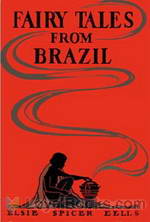 Fairy Tales from Brazil
This book, subtitled "How and Why Tales from Brazilian Folk-Lore", is a collection of short stories, most of them etiologial myths from Brazilian Indian Folklore. | |
By: Robert Tressell | |
|---|---|
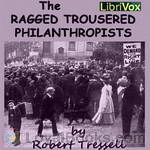 The Ragged Trousered Philanthropists
Clearly frustrated at the refusal of his contemporaries to recognise the iniquity of society, Tressell’s cast of hypocritical Christians, exploitative capitalists and corrupt councillors provide a backdrop for his main target — the workers who think that a better life is “not for the likes of them”. Hence the title of the book; Tressell paints the workers as “philanthropists” who throw themselves into back-breaking work for poverty wages in order to generate profit for their masters... | |
By: Charles W. Diffin (1884-1966) | |
|---|---|
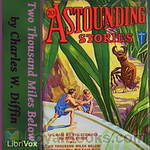 Two Thousand Miles Below
A science fiction novel that was originally produced in four parts in the publication: Astounding Stories in June, September, November 1932, January 1933. The main character is Dean Rawson, who plans on discovering a way of mining power from a dead volcano, but ends up discovering more than he bargained for. | |
By: Clara Barton (1821-1912) | |
|---|---|
 The Story of My Childhood
Clara Barton, founder of the American Red Cross, recalls growing up in early 19th Century Massachusetts. (Introduction by Veronica Jenkins) | |
By: Andrew Jackson | |
|---|---|
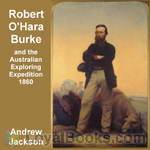 Robert O'Hara Burke
A non-fictional account of Burke and Wills’s 1860 expedition to cross the Australian continent from south to north and then return. Containing many excerpts from the diaries and accounts of the explorers, this book was published the year after the expedition met its disastrous end.(description written by trioptimum) | |
By: Edwin E. Slosson (1865-1929) | |
|---|---|
 Easy Lessons in Einstein
Published in 1920, Slosson’s Easy Lessons in Einstein is one of the first popularizations of Einstein’s theory of relativity. This book is meant to convey to the general reader the ideas of relativity in non-mathematical terms, by the use of thought experiements and pop-cultural references of the day. This edition also includes a short article by Einstein on Time, Space and Gravitation. | |
|
Creative Chemistry
Slosson reviews the transformation of alchemistry from an obscure and imprecise practice to the science of chemistry. Along the way, he explains how the modern industrial world now relies on fertilizers, explosives, textile materials, polymers and metals.By exploring the properties of a once undervalued element, the high strength of vanadium steel made the Ford car possible. Another element, cerium, appears in butane lighters and was once seen as a threat to the match industry in France.In his chapter on oils, Slosson reviews the development of hydrogenated oils, especially during WWII, in the search for a way to reuse otherwise discarded components of corn and cottonseed... | |
By: George Müller (1805-1898) | |
|---|---|
|
Answers to Prayer, from George Müller's Narratives
Mr. Brooks, in this compilation, has endeavored to select those incidents and practical remarks from Mr. Müller's Narratives, that show in an unmistakeable way, both to believers and unbelievers, the secret of believing prayer, the manifest hand of a living God, and His unfailing response, in His own time and way, to every petition which is according to His will. (From the Preface) | |
By: Miles Franklin | |
|---|---|
 My Brilliant Career
Sybella “There is no plot in this story, because there has been none in my life or in any other life which has come under my notice. I am one of a class, the individuals of which have no time for plots in their life, but have all they can do to get their work done without indulging in such a luxury”. Like the author Miles Franklin, Sybella grows up in the bush, and as her family’s fortunes decline, so her feelings rise that life should hold more for her than the relentless hard physical work farming marginal land in times of drought. | |
By: Bahá'u'lláh | |
|---|---|
 The Arabic Hidden Words
Kalimát-i-Maknúnih or The Hidden Words is a book written in Baghdad around 1857 by Bahá'u'lláh, the founder of the Bahá'í Faith. This work is written partly in Arabic and partly in Persian. The Hidden Words is written in the form of a collection of short utterances, 71 in Arabic and 82 in Persian, in which Bahá'u'lláh claims to have taken the basic essence of certain spiritual truths and written them in brief form. Bahá'ís are advised by `Abdu'l-Bahá, the son of Bahá'u'lláh to read them every day and every night and to implement its latent wisdom into their daily lives... | |
By: Robert C. Leslie (1826-1901) | |
|---|---|
 A Waterbiography
Robert C. Leslie (1826-1901) was an artist and writer who, at an early age fell in love with the sea, the sea of Sail, not of Steam. He describes the progression of this love from wave to wave and boat to boat. Leslie sailed during the Great Age of Sail before Industrialism had taken possession of Britain. Leslie comments on the early days of singlehanded small boat sailing: “When I first began boating in the early forties[1840s], what is now called single-handed cruising was almost unknown among amateurs…... | |
By: William Sangster (1808-1888) | |
|---|---|
 Umbrellas and Their History
A whimsically serious look at the umbrella and society. | |
By: Joseph Lister (1827-1912) | |
|---|---|
 On the Antiseptic Principle of the Practice of Surgery
Joseph Lister was born near London in 1827. He studied medicine at the University of London and pursued a career as a surgeon in Scotland. He became professor of Surgery in Glasgow and later (1877) at Kings College Hospital, in London. Lister’s contribution to the advancement of surgery cannot be overestimated. Before his work on antisepsis, wounds were often left open to heal, leading to long recoveries, unsightly scarring, and not infrequently amputation or death due to infection. Lister’s work enabled more wounds to be closed primarily with sutures, drastically reducing healing time, scarring, amputations, and deaths due to infection... | |
By: Maria Susanna Cummins (1827-1866) | |
|---|---|
 The Lamplighter
Gertrude began life as an abused child in the care of Nan Grant, a cold and cruel woman. The only human character who was kind to her was the lamplighter, Truman Flint. When Nan, in one of her tantrums, threw Gertrude away from her house, he took her into his care. A few unforgettable people taught Gertrude everything that a young lady has to know. Almost everybody loves and admires Gertrude. But the one she loved best is Willie Sullivan. Will this love stay strong even after 6 years of separation? And will Gertrude, so admired and loved as she is, be happy - once in her life - for herself and not for others? | |
By: Sir Percy Fitzpatrick (1862-1931) | |
|---|---|
 Jock of the Bushveld
Jock of the Bushveld is a true story by South African author Sir Percy Fitzpatrick when he worked as a storeman, prospector's assistant, journalist and ox-wagon transport-rider. The book tells of Fitzpatrick's travels with his dog, Jock, during the 1880s. Jock was saved by Fitzpatrick from being drowned in a bucket for being the runt of the litter. Jock was very loyal towards Percy, and brave. Jock was an English Staffordshire Bull Terrier. | |
By: Bob Brown (1886-1959) | |
|---|---|
 The Complete Book of Cheese
This recording was released to coincide with National Cheese Lovers’ Day 2010 in the United States. Robert Carlton Brown (1886 – 1959), after living thirty years in as many foreign lands and enjoying countless national cheeses at the source, returned to New York and summed them all up in this book. After majoring in beer and free lunch from Milwaukee to Munich, Bob celebrated the end of Prohibition with a book called Let There Be Beer! and then decided to write another about Beer’s best friend, Cheese... | |
By: John Dos Passos (1896-1970) | |
|---|---|
|
Three Soldiers
Three Soldiers, the second novel by John Dos Passos, follows the experiences of several young Americans thrown into the confusion and brutality of World War I.Written when the author was just twenty-three, it was key to the development of a realistic depiction of war in American literature, and earned Dos Passos, later named by Jean-Paul Sartre "the greatest living writer of our time", important early attention.Critic H L Menken said of it: "no war story can be written in the United States without challenging comparison with it--and no story that is less meticulously true will stand up to it... | |
By: Frederick G. Aflalo (1870-1918) | |
|---|---|
 Birds in the Calendar
Delightful sketches of British wild birds – a bird for every month of the year from the pheasant in January to the robin in December. This collection of articles, reprinted in book form from the periodical The Outlook, is full of fascinating information about bird behaviour and habitat, as well as many interesting anecdotes. Out of date in some respects, particularly in its reference to the (now illegal) collecting of birds’ eggs, this book brings home forcefully how the populations of some British wild birds have declined since it was written. | |
By: Ralph Connor | |
|---|---|
 The Man from Glengarry
With international book sales in the millions, Ralph Connor was the best-known Canadian novelist of the first two decades of the Twentieth Century. The Man from Glengarry was his most popular and accomplished work. Immediately after its publication in 1901, the novel spent several months in the top ranks of the New York Times "Books in Demand" list.We follow the story of Ranald Macdonald, who is shaped by family and community in rural eastern Ontario in the early decades after Canadian confederation... | |
 Glengarry School Days
With international book sales in the millions, Ralph Connor was the best-known Canadian novelist of the first two decades of the Twentieth Century. Glengarry School Days (1902), hugely popular in its time, is based on his memories of growing up in rural Ontario around the time of Canadian confederation. Although Connor saw himself as writing moral fiction for adults, generations of younger readers have also enjoyed these affectionate and gently amusing sketches, and excerpts from Glengarry School Days have appeared in school anthologies. | |
By: Geronimo (1829-1909) | |
|---|---|
 Geronimo’s Story of His Life
Geronimo’s Story of His Life is the oral life history of a legendary Apache warrior. Composed in 1905, while Geronimo was being held as a U.S. prisoner of war at Fort Sill, Oklahoma, Geronimo’s story found audience and publication through the efforts of S. M. Barrett--Lawton, Oklahoma, Superintendent of Education, who wrote in his preface that “the initial idea of the compilation of this work was . . . to extend to Geronimo as a prisoner of war the courtesy due any captive, i.e. the right to state the causes which impelled him in his opposition to our civilization and laws... | |
By: Joseph Lievesley Beeston | |
|---|---|
 Five Months at Anzac
A Narrative of Personal Experiences of the Officer Commanding the 4th Field Ambulance, Australian Imperial Force from his leaving Australia December 1914 till his evacuation due to illness after 5 months at Gallipoli. Read to remember those who were there. (Introduction by Annise) | |
By: Mary Kennedy Core | |
|---|---|
 The Khaki Kook Book
We cannot ignore the fact that we must eat, and that much as we dislike to acknowledge it, we are compelled to think a great deal about filling our stomachs. This is especially true these days, when prices have soared and soared and taken along with them, far out of the reach of many of us, certain articles of food which we heretofore have always felt were quite necessary to us. About ten years ago the idea of writing a little cook book had its birth. We were in Almora that summer. Almora is a station far up in the Himalayas, a clean little bazaar nestles at the foot of enclosing mountains... | |
By: Louis D. Brandeis (1856-1941) | |
|---|---|
 Other People's Money
Other People's Money and How the Bankers Use It is a collection of essays written by Louis Brandeis published as a book in 1914. The book attacked the use of investment funds to promote the consolidation of various industries under the control of a small number of corporations, which Brandeis alleged were working in concert to prevent competition. Brandeis harshly criticized investment bankers who controlled large amounts of money deposited in their banks by middle-class people. The heads of these... | |
By: Charles Willing Beale (1845-1932) | |
|---|---|
 The Ghost of Guir House
Do you think you understand ghosts? Now you will.Paul Henley, seemingly summoned to a mysterious rural Virginia mansion from his home in New York, finds himself as a guest at a remote, dilapidated colonial house with a host and a hostess every bit as mysterious as the house itself. Might Dorothy, his hostess, somehow be implicated in the hideous crime which he came to know took place in the hidden depths of Guir House some years ago? He hardly thought so, she seemed so innocent. And yet .... (Introduction by Roger Melin) | |
By: Romesh C Dutt | |
|---|---|
 The Mahabharata by Vyasa: the epic of ancient India condensed into English verse
The Mahabharata is one of the two major Sanskrit epics of ancient India. Traditionally, the authorship of the Mahabharata is attributed to Vyasa. With more than 74,000 verses, Mahabharata is said to be the longest poem. Mahabharata tells the story of the epic Kurukshetra War and the fates of the cousin brothers Kauravas and the Pandavas. But more than that the Mahabharata contains much philosophical and devotional material, such as a discussion of the four "goals of life" or 'purusharthas'. The latter are enumerated as dharma (right action), artha (purpose), kama (pleasure), and moksha (liberation). (Introduction by om123) | |
By: Ferrar Fenton (1832-1920) | |
|---|---|
 The Bible in Modern English: Genesis - Judges, 1 & 2 Samuel
Work on the translation began in 1853 by a London businessman called Ferrar Fenton (1832–1920). The complete Bible was first published in 1903, though parts were published as separate volumes during the preceding 11 years. The translation is noted for a rearranging of the books of the Bible into what the author believed was the correct chronological order. In the Old Testament, this order follows that of the Hebrew Bible. The name of God was translated throughout the Old Testament as "The Ever-Living"... | |