 |
Books Should Be Free Loyal Books Free Public Domain Audiobooks & eBook Downloads |
|
|
|
Books Should Be Free Loyal Books Free Public Domain Audiobooks & eBook Downloads |
|
Top Authors |
|---|
|
Book type:
Sort by:
|
By: John Bunyan (1628-1688) | |
|---|---|
 Pilgrim's Progress in Words of One Syllable
The Pilgrim's Progress from This World to That Which Is to Come is a Christian allegory written by John Bunyan and published in February, 1678. It is regarded as one of the most significant works of religious English literature, has been translated into more than 200 languages, and has never been out of print. The author says in the preface " I have endeavored as far as possible to avoid hard and technical expressions, and I cannot but think that the mere fact of the brevity of the words must be a great attraction to beginners of all ages. | |
By: Edmund Spenser (1552?-1599) | |
|---|---|
 Spenser's The Faerie Queene, Book I
| |
By: Rafael Sabatini (1875-1950) | |
|---|---|
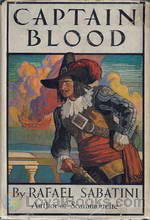 Captain Blood
An adventure novel with an unexpected hero, Captain Blood follows the unintended journey of chivalrous and well-educated gentleman Peter Blood, who without much choice was plunged into the world of piracy forcing him to leave his tranquil lifestyle behind. Sabatini first introduced his protagonist in a series of eight short stories published in magazine installments, until later weaving them together in 1922 as a novel. Set in the late 17th century, the novel begins with the image of Peter Blood, a physician, casually attending his geraniums and smoking a pipe... | |
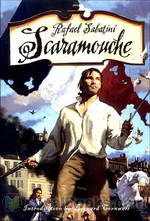 Scaramouche
“He was born with a gift of laughter and a sense that the world was mad!” The wonderful opening lines of this 1921 novel set the tone for the rest of this delightful story of an adventurer and romantic who dons several roles in his colorful life. Scaramouche by Rafael Sabatini is an historical novel set in the turbulent times of the French Revolution. The plot describes Andre-Louis Moreau, a young lawyer adopted by his godfather who cannot reveal his parentage. Moreau inadvertently stumbles into political events and becomes a wanted man based on the evil machinations of a sinister Marquis... | |
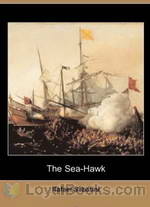 The Sea Hawk
First published in 1915, The Sea Hawk follows the adventures of its protagonist Sir Oliver Tressilian, as he is unjustly betrayed and left to the mercy of others by his selfish brother, who seeks only to save his own skin no matter the cost. Exploring various themes including betrayal, vengeance, sacrifice, injustice, and tormented love, the novel successfully demonstrate Sabatini’s exceptional flair for adventure. Set in the late 16th century, the tale begins with the introduction of Sir Oliver Tressilian, a wealthy gentleman who lives together with his brother Lionel, haunted by his family’s bad-tempered reputation... | |
 The Tavern Knight
Follow the exploits of Sir Crispin Galliard, also known as The Tavern Knight, in his defence of the King of England against Cromwell and his Puritan Entourage. | |
|
The Life of Cesare Borgia
| |
|
Mistress Wilding
| |
|
Works Of Rafael Sabatini
| |
|
The Historical Nights' Entertainment
| |
|
Love-at-Arms
| |
|
The Trampling of the Lilies
| |
|
Bardelys the Magnificent
| |
|
Saint Martin's Summer
| |
|
The Shame of Motley
| |
|
The Strolling Saint
| |
|
The Suitors of Yvonne
| |
By: John Milton (1608-1674) | |
|---|---|
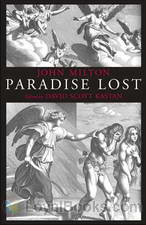 Paradise Lost
Magnificent in its scale and scope, this monumental poem by the blind poet John Milton was the first epic conceived in the English language. It describes an omniscient, all powerful God, the Fall of Man, the Temptation in the Garden of Eden, the disgraced angel who later becomes known as Satan, the Angelic Wars fought by Archangels Michael and Raphael and the Son of God who is the real hero of this saga. The poet John Milton was more than sixty years old when he embarked on this immense work of literary creation... | |
 Paradise Regained
Paradise Regained is a poem by the 17th century English poet John Milton, published in 1671. It is connected by name to his earlier and more famous epic poem Paradise Lost, with which it shares similar theological themes. Based on the Gospel of Luke’s version of the Temptation of Christ, Paradise Regained is more thoughtful in writing style, and thrives upon the imagery of Jesus’ perfection in contrast to the shame of Satan. | |
 Areopagitica
A prose tract or polemic by John Milton, published November 23, 1644, at the height of the English Civil War… Milton, though a supporter of the Parliament, argued forcefully against the Licensing Order of 1643, noting that such censorship had never been a part of classical Greek and Roman society. The tract is full of biblical and classical references which Milton uses to strengthen his argument. The issue was personal for Milton as he had suffered censorship himself in his efforts to publish... | |
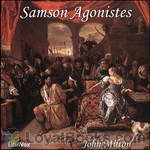 Samson Agonistes
“The Sun to me is darkAnd silent as the Moon,When she deserts the nightHid in her vacant interlunar cave.”Milton composes his last extended work as a tragedy according to the classical Unities of Time, Place and Action. Nevertheless it “never was intended for the stage” and is here declaimed by a single reader.Samson the blinded captive, in company with the Chorus of friends and countrymen, receives his visitors on their varying missions and through them his violent story is vividly recalled... | |
|
Milton's Comus
| |
|
Minor Poems by Milton
| |
|
L'Allegro, Il Penseroso, Comus, and Lycidas
| |
|
Poemata : Latin, Greek and Italian Poems by John Milton
| |
By: J. M. Barrie (1860-1937) | |
|---|---|
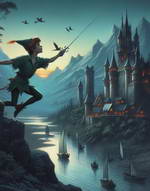 Peter Pan
His name has become a metaphor for one who will never grow old. Peter Pan by JM Barrie is the story of a boy who remains a boy while the world around him changes. Sir James Mathew Barrie was a Scottish playwright and novelist whose works were received with great critical and commercial success in the late nineteenth and early twentieth century. He discovered the main inspiration for his creative genius in his friendship (and later guardianship) with the children of Arthur and Sylvia Llewellyn-Davies... | |
 The Admirable Crichton
From the author of Peter Pan:Lord Loam, a British peer, considers class divisions to be artificial. He promotes his views during tea-parties where servants mingle with his aristocratic guests, to the embarrassment of all. Crichton, his butler, particularly disapproves of this.Loam, his family, a maid, and Crichton are shipwrecked on a deserted tropical island. The resourceful Crichton is the only one of the party with any practical knowledge. Eventually, social roles are reversed, and Crichton becomes the governor. | |