 |
Books Should Be Free Loyal Books Free Public Domain Audiobooks & eBook Downloads |
|
|
|
Books Should Be Free Loyal Books Free Public Domain Audiobooks & eBook Downloads |
|
Top Authors |
|---|
|
Book type:
Sort by:
|
By: Washington Irving (1783-1859) | |
|---|---|
 The Legend of Sleepy Hollow
Set in the small secluded valley of Sleepy Hollow, Irving’s short speculative story follows the rivalry between Ichabod Crane and Brom Van Brunt for Katrina Van Tassel’s hand in marriage. Mostly inhabited by descendants from Dutch settlers, the residents are known for their belief in superstitions and the supernatural, and have many stories to suffice their colorful imaginations. The story begins when the scrawny schoolmaster Ichabod Crane from Connecticut moves to Sleepy Hollow for a teaching job and rotates living with the families of his students... | |
 The Sketch Book of Geoffrey Crayon, Gent.
Apart from "Rip Van Winkle" and "The Legend of Sleepy Hollow" - the pieces which made both Irving and The Sketch Book famous - other tales include "Roscoe", "The Broken Heart", "The Art of Book-making", "A Royal Poet", "The Spectre Bridegroom", "Westminster Abbey", "Little Britain", and "John Bull". His stories were highly influenced by German folktales, with "The Legend of Sleepy Hollow" being inspired by a folktale recorded by Karl Musaus. Stories range from the maudlin (such as "The Wife" and... | |
 The Short-story
| |
 Old Christmas: From the Sketch Book of Washington Irving
Washington Irving's Old Christmas tells of an American's travels through England during the Christmas season. Through a chance meeting with an old friend he is able to experience Christmas in a stately manor house. Through his eyes as a houseguest he glimpses the uniquely British customs and celebrations of Christmas as it would have been experienced during the Middle Ages, rather than in the early 19th century. | |
|
Knickerbocker's History of New York, Vol. 1
Washington Irving, an author, biographer, historian, and diplomat, completed his first major work, a satire of contemporary local history and politics entitled A History of New-York from the Beginning of the World to the End of the Dutch Dynasty, by Diedrich Knickerbocker in 1809. Prior to its publication, Irving started a promotional hoax (not unlike some modern-day publicity stunts?) by placing fake missing persons advertisements in local newspapers asking for help in locating Diedrich Knickerbocker... | |
|
Chronicle of the Conquest of Granada
| |
|
The Life and Voyages of Christopher Columbus (Volume II)
MANUAL OF SURGERY, OXFORD MEDICAL PUBLICATIONSBY ALEXIS THOMSON, F.R.C.S.Ed.PREFACE TO SIXTH EDITION Much has happened since this Manual was last revised, and many surgical lessons have been learned in the hard school of war. Some may yet have to be unlearned, and others have but little bearing on the problems presented to the civilian surgeon. Save in its broadest principles, the surgery of warfare is a thing apart from the general surgery of civil life, and the exhaustive literature now available on every aspect of it makes it unnecessary that it should receive detailed consideration in a manual for students... | |
|
Bracebridge Hall, or The Humorists
| |
|
Little Britain
| |
|
Life of George Washington — Volume 01
| |
|
Oliver Goldsmith A Biography
| |
|
The Crayon Papers
| |
|
Wolfert's Roost and Miscellanies
| |
|
The Student's Life of Washington; Condensed from the Larger Work of Washington Irving For Young Persons and for the Use of Schools
| |
By: Franz Kafka (1883-1924) | |
|---|---|
 The Metamorphosis
“One morning Gregor Samsa woke from anxious dreams to find himself transformed into a disgusting insect...” Thus opens one of the most famous books of the twentieth century, The Metamorphosis by Franz Kafka. Published in 1915, The Metamorphosis is written originally in German. It is a brief but extremely thought provoking novella. Readers and writers have termed it one of the most influential works of the century and hailed Kafka as the creator of a new form in literary tradition. Today, the book has been studied, analyzed and researched extensively by teachers, students and psychologists... | |
By: Robert Frost (1874-1963) | |
|---|---|
 North of Boston
One of the first collections of poetry by Robert Frost, published in 1914.The Fear (00:00:16)The Self-seeker (00:05:27)The Wood-pile (00:16:35)Good Hours (00:18:47) | |
 A Boy's Will
Robert Frost preferred to describe the New England countryside using everyday language. He used both as tools to explore world views and life philosophies. A Boy's Will was his first poetry anthology. | |
By: Victor Appleton (1873-1962) | |
|---|---|
 Tom Swift and the Visitor From Planet X
If you haven't come across the 200-book series about Tom Swift Jr, this book would be an interesting one to start with. The series is aimed at the young adult readership, probably male, and the young adolescent hero, Tom Swift Jr is the son of Tom Swift Sr. The books portray the perennially 18-year-old Tom, a tall and angular youngster, possessed of a very high intelligence and presence of mind. Regular characters include his parents, younger sister Sandy, best buddy Bud Barclay, his regular date Phyllis Newton, and the comic roly-poly Chow Winkler... | |
 Tom Swift and His Aerial Warship, or, the Naval Terror of the Seas
Tom Swift is an inventor, and these are his adventures. The locale is the little town of Shopton in upstateNew York, near Lake Carlopa. While some of Tom’s inventions are not well-founded in a scientific sense, others elaborated developments in the news and in popular magazines aimed at young science and invention enthusiasts. Presenting themselves as a forecast of future possibilities, they now and then hit close to the mark. Some predicted inventions that came true include “photo telephones”, vertical takeoff aircraft, aerial warships, giant cannons, and “wizard” cameras... | |
 Tom Swift in the Land of Wonders
Tom Swift is the young protagonist in a series of juvenile adventure novels which began in the early twentieth century and continue to the present. Tom Swift is a genius inventor whose breakthroughs in technology (especially transport technology) drive the plots of the novels, placing them in a genre sometimes called “invention fiction” or “Edisonade”. This book is the 20th in the original series published from 1910 -1942, written by a ghost writer using the name of Victor Appleton. This adventure takes Tom and his cohorts to Honduras in search of a Mayan idol of gold. | |
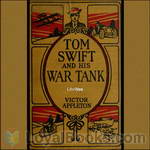 Tom Swift and His War Tank
Tom Swift, that prolific youthful inventor, is engaged in trying to help the Allies win WWI. After reading newspaper accounts of the British tanks, Tom takes a sheet of paper and sets out to design a better one from scratch. And fortunately, he can throw the whole family business behind his venture. He has two problems: First, his friends and acquaintances are questioning his patriotism because he hasn’t enlisted as a rifleman for the front lines. Even his girl is worried his blood isn’t true-blue... | |
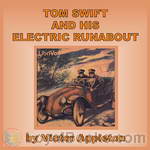 Tom Swift and his Electric Runabout
Tom Swift enters an upcoming race with his specially-designed prototype electric race car. But as he makes the final preparations and adjustments, days before the race, he discovers a plot that would bankrupt not only his family, but also everyone else that relies on the local bank (which is the target of a nefarious bank-run scheme). Tom must solve the mystery and stop the criminals behind the plot before he’ll test himself on a 500 mile race against some of the best electric cars and skilled drivers in the United States... | |
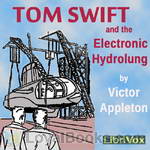 Tom Swift and the Electronic Hydrolung
The US Government is very smartly letting Tom Swift Jr. handle the recovery of its probe to Jupiter. But a mystery missile suddenly intercepts the probe and splashes it in the South Atlantic.Faced with a huge search task to find the probe on the ocean bottom, Tom soon realizes that the same shadowy group that attacked the probe is competing to find it, and no holds are barred: kidnap, coercion, and lethal force are all in play.Under such circumstances, what can Tom do? What he does every time, of course! He invents some utterly cool device to get the job done! And his Electronic Hydrolung is just the beginning! | |
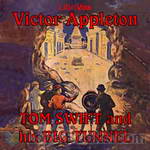 Tom Swift and His Big Tunnel
The Titus Brothers Contractors company have won a government contract in Peru to blast a tunnel through a mountain and connect two isolated railroad lines. The deadline is approaching, and the contractors have hit a literal wall: excessively hard rock which defies conventional blasting techniques. The company is under pressure to finish, or else the contract will default to their rivals, Blakeson & Grinder. Mr. Job Titus has heard of Tom Swift and Tom's giant cannon, which is used in protecting the Panama Canal, and wants to hire Tom to develop a special blasting powder to help them finish the excavation... | |
 Tom Swift in Captivity
Tom Swift is approached by Mr. Preston, the owner of a circus, and begins to tell the story of Jake Poddington, Mr. Preston's most skilled hunter. As it turns out, Jake went missing just after sending word to Preston that Jake was on the trail of a tribe of giants, somewhere in South Africa. That was the last Preston has heard of Jake Poddington. Preston would like Tom to use one of his airships to search for Poddington, and if possible, bring back a giant for the circus.Listeners are forewarned that some elements and characters included in Tom Swift books portray certain ethnic groups in a very dated manner that modern readers, and listeners, may find offensive... | |
By: Immanuel Kant (1724-1804) | |
|---|---|
 The Critique of Pure Reason
The Critique of Pure Reason, first published in 1781 with a second edition in 1787, has been called the most influential and important philosophical text of the modern age. Kant saw the Critique of Pure Reason as an attempt to bridge the gap between rationalism (there are significant ways in which our concepts and knowledge are gained independently of sense experience) and empiricism (sense experience is the ultimate source of all our concepts and knowledge) and, in particular, to counter the radical empiricism of David Hume (our beliefs are purely the result of accumulated habits, developed in response to accumulated sense experiences)... | |
 The Critique of Practical Reason
The Critique of Practical Reason (Kritik der praktischen Vernunft) is the second of Immanuel Kant’s three critiques, first published in 1788. It follows on from his Critique of Pure Reason and deals with his moral philosophy. The second Critique exercised a decisive influence over the subsequent development of the field of ethics and moral philosophy, becoming the principle reference point for ethical systems that focus on the rightness or wrongness of actions themselves, as opposed to the rightness or wrongness of the consequences of those actions... | |
|
The Metaphysical Elements of Ethics
| |
By: Jean Webster (1876-1916) | |
|---|---|
 Daddy-Long-Legs
Jerusha Abbott, an eighteen year old orphan, faces an uncertain future in the charity home where she has lived all her life. On reaching adulthood, the orphanage can no longer offer shelter to its inmates. Her anxiety leads her into wild speculation when she is summoned to the matron's office. But a surprise awaits her. One of the visitors, a wealthy Trustee of the orphanage, has offered to fund Jerusha's college education and fulfill her dreams of becoming a writer. The only condition he makes is that he remain anonymous and that she write to him regularly about her progress... | |
 Dear Enemy
Dear Enemy is the sequel to Jean Webster’s novel Daddy-Long-Legs. The story as presented in a series of letters written by Sallie McBride, Judy Abbott’s college mate in Daddy-Long-Legs. Among the recipients of the letters are the president of the orphanage where Sallie is filling in until a new director can be installed, his wife (Judy Abbott of Daddy-Long-Legs), and the orphanage’s doctor (to whom Sallie addresses her letters: “Dear Enemy”). | |
 The Four-Pools Mystery
In The Four Pools Mystery the tyrannical plantation owner is deemed responsible for his own murder because of his mistreatment of the former slaves who continued in his employment after the war. Jean Webster (pseudonym for Alice Jane Chandler Webster) was born July 24, 1876 and died June 11, 1916. She was an American writer and author of many books including Daddy-Long-Legs and Dear Enemy. (Wiki) | |
 When Patty Went to College
When Patty Went to College is Jean Webster's first novel, published in 1903. It is a humorous look at life in an all-girls college at the turn of the 20th century. Patty Wyatt, the protagonist of this story is a bright, fun loving, imperturbable girl who does not like to conform. The book describes her many escapades on campus during her senior year at college. Patty enjoys life on campus and uses her energies in playing pranks and for the entertainment of herself and her friends. An intelligent girl, she uses creative methods to study only as much as she feels necessary... | |