 |
Books Should Be Free Loyal Books Free Public Domain Audiobooks & eBook Downloads |
|
|
|
Books Should Be Free Loyal Books Free Public Domain Audiobooks & eBook Downloads |
|
Top Authors |
|---|
|
Book type:
Sort by:
|
By: Mary Macleod (?/?) | |
|---|---|
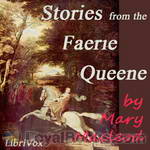 Stories from the Faerie Queene
"The object of this volume is to excite interest in one of the greatest poems of English literature, which for all its greatness is but little read and known--to excite this interest not only in young persons who are not yet able to read "The Faerie Queene," with its archaisms of language, its distant ways and habits of life and thought, its exquisite melodies that only a cultivated ear can catch and appreciate, but also in adults." (From the Author's introduction) | |
By: Anne Catherine Emmerich (1774-1824) | |
|---|---|
 The Nativity of our Lord Jesus Christ
Anne Catherine Emmerich (1774-1824) was a German Augustinian nun who had visions about Christ's life and death. This book relates her visions regarding the Blessed Virgin Mary, from her marriage to St. Joseph to the events surrounding the birth of Christ.(Introduction by Ann Boulais) | |
By: Annie Besant (1847-1933) | |
|---|---|
|
Annie Besant
In her autobiography, Annie Besant poignantly writes of her search for the truth of what she believed in, leaving Christianity behind to embrace Atheism, and ultimately finding her peace in Theosophy, which she became interested in after meeting Helena Blavatsky. She moved to India to better study Theosophical ideas and this is where she made her home until her death. She was a gifted orator and writer, often speaking and writing on her religious beliefs, as well as women's rights and social reform... | |
|
My Path to Atheism
My Path to Atheism is a remarkable document in many ways, not least that it was written by a woman in Victorian England, not the most open free-thinking of societies, especially for women at that time. It needed a remarkable woman to write such a revolutionary and to 19th century minds, heretical document in a society where the Church had such a stronghold. Besant herself was originally married to a clergyman, but her increasingly anti-religious views and writings led to a legal separation. She went... | |
By: Dorothy Osborne (1627-1695) | |
|---|---|
 Love Letters of Dorothy Osborne
A lively, interesting and important collection of 17th century love-letters written by an English lady, against the background of the Civil War and the Restoration | |
By: Burton E. Stevenson (1872-1962) | |
|---|---|
 That Affair at Elizabeth
A detective novel set in turn-of-the-century New York City, in which a young lawyer plays the sleuth. Packed with plot twists (and the ubiquitous romantic complication, of course). ( | |
By: Burton Egbert Stevenson (1872-1962) | |
|---|---|
|
Gloved Hand
Mr. Lester, a private investigator, and his friend Godfrey are caught up in a strange case that takes them to a large estate in the country where at midnight they witness a mysterious "falling star" that appears to burst into a shower of sparks over two white robed figures standing in the air. There is a young lady in a flowing white dress and many more twists and complications before the mystery is solved. | |
|
Holladay Case
Stevenson's introduction of the protagonist Lester (law clerk with New York firm Graham & Royce) finds him occupying a front row seat in the murder trial of Wall Street multi-millionaire Hiram Holladay. Scandalously, suspicion points very solidly on the banker's loving daughter, Frances. Lester proves himself a useful aide to the firm's senior partner, Mr. Royce, in his attempt to prove the lovely Frances innocent. | |
|
Mystery of the Boule Cabinet
Three men are dead. Killed by a very powerful poison. Their deaths seem to be connected to a very old cabinet purchased in France and a notorious French criminal. What is the link? It is up to the lawyer Lester and the newspaperman Godfrey to pool their talents and solve the mystery. | |
|
American Men of Action
In this book, Burton Egbert Stevenson writes a brief biography of some of the most noteworthy men in American history. He begins at the very beginning of the history of America with Christopher Columbus and proceeds forward with the story of people who made America what it is today by their respective vocations. It is interesting to note that the vast majority of the subjects started in poverty and excelled financially and in stature.He makes something that could be very dull, a very readable and enjoyable book. | |
|
American Men of Mind
“American Men of Mind” is a collection of short biographies of men of note in various disciplines. It is an absorbing collection of short biographies of men who made a difference in American history; most beginning life in very humble circumstances, both in the United States and in foreign countries. Although “men” is mentioned in the title, Mr. Stevenson also relates biographies of several women.This is a most interesting read.(William Tomcho) | |
By: Charles Neville Buck (1879-1930) | |
|---|---|
 The Tyranny of Weakness
Torn between her love for her aging father, a minister steeped in the puritanical values of old New England, and the young Virginian who was born and raised of southern chivalrous tradition, the many and conflicting emotions which stir deep within Conscience Williams envelop this tale of desire, devotion, inner strength, devious treachery, and individuality of spirit. | |
By: Jacob A. Riis (1849-1914) | |
|---|---|
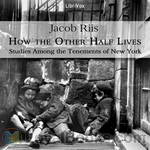 How the Other Half Lives: Studies Among the Tenements of New York
How the Other Half Lives: Studies Among the Tenements of New York (1890) was a pioneering work of photojournalism by Jacob Riis, documenting the squalid living conditions in New York City slums in the 1880s. It served as a basis for future muckraking journalism by exposing the slums to New York City’s upper and middle class. The title of the book is a reference to a phrase of François Rabelais, who wrote in Pantagruel: "one half of the world does not know how the other half lives". | |
By: Rolf Boldrewood (1826-1915) | |
|---|---|
|
Robbery Under Arms
A tale of cattle duffing, horse stealing and bushranging in the New South Wales outback with Captain Starlight.To quote the author "though presented in the guise of fiction, this chronicle of the Marston family must not be set down by the reader as wholly fanciful or exaggerated. Much of the narrative is literally true, as can be verified by official records. A lifelong residence in Australia may be accepted as a guarantee for fidelity as to local colour and descriptive detail." | |
By: Paul Ehrlich (1854-1915) | |
|---|---|
 Histology of the Blood
This is a textbook on the science of blood and bloodwork by (1908) Nobel Prize winner, Dr. Paul Ehrlich. Should appeal to hematologists, phlebotomists, and just plain folks interested in how our bodies work. | |
By: F. Tennyson Jesse (1888-1958) | |
|---|---|
|
The Milky Way
The Milky Way - F. Tennyson Jesse's first novel - began life as a 1913 magazine serial called The Adventures of Viv. In it, poor-but-plucky Cornish painter/model Vivian Lovel recounts events of her twenty-first year: en route from Penzance to London by steamer, she catches a baby dropped over the side of a sinking ship - and decides to keep it. Penniless, however, she "platonically" pairs up with pan-like fellow passenger Peter Whymperis, an actor and aspiring writer, and together they find work with a fifth-rate repertory troupe... | |
By: Sapper (Herman Cyril McNeile) (1888-1937) | |
|---|---|
|
Bulldog Drummond
‘Sapper’, the pseudonym of Colonel. H.C. McNeile M.C. was one of the most popular English writers of thrillers between the two world wars. And Hugh (Bulldog) Drummond was his most popular leading character. This book, the first of the series, is of its time. Opinions are expressed which would not pass muster today and the books are strongly laced with jingoism, racial stereotypes and hostile references to foreigners. Naturally all the villains are masters of disguise and invariably put off murdering the hero until later whist they think of something absolutely beastly. Nevertheless the story is a good one and well told. | |
By: Lord Alfred Tennyson (1809-1892) | |
|---|---|
|
Beauties of Tennyson
A collection of Tennyson's poetry : 1 The Brook - 00:16 2 Song from "Maud" - 1:20 3 A Farewell - 2:34 4 Song from “Maud” - 3:26 5 Break, Break, Break - 4:53 6 From “Locksley Hall”- 5:43 7 Song from “Maud” - 6:43 8 Song from “The Princess” - 7:43 9 Lillian - 8:37 10 Ring out, Wild Bells - 9:52 11 From “The Princess” - 11:27 12 Song From “The Princess” - 12:43 13 From “Enoch Arden” - 13:58 14 From “Enoch Arden” - 15:36 15 The Charge of the Light Brigade- 16:56 16 From “The May Queen” - 18:51 17 Song from “The Princess” - 19:36 18 From “Harold” - 20:14 19 From “The Revenge” - 21:28 (From Sam Stinsson) | |
By: Jacob William Wright | |
|---|---|
 The Long Ago
Short memory of boyhood by a little-known American poet based in Carmel-By-The-Sea, California. | |
By: Mary Elizabeth Braddon (1835-1915) | |
|---|---|
 The Doctor's Wife
This is one of the Victorian “Sensationist” Mary Elizabeth Braddon's many novels (best known among them: “Lady Audley’s Secret”). It is extremely well written, fluid, humorous and, in places, self-mocking: one of the main characters is a Sensation Author. The motifs of the-woman-with-a-secret, adultery, and death are classic “sensationist” material. Yet this is also a self-consciously serious work of literature, taking on various social themes of the day. Specifically, Braddon presents... | |
 Fenton's Quest
This story revolves around Gilbert Fenton, a very talented middle class businessman from London, who falls in love with a beautiful country woman far below his station. He decides to marry her anyway. But is she all that she seems? | |
 Run to Earth
A captivating Victorian “sensation” novel by the author of Lady Audley's Secret, Run to Earth has it all: scoundrels and mercenaries, love and lust, jealousy, intrigue, and suspense. (Introduction by Gail Mattern) | |
 The Lovels of Arden
The novel traces the return of a young Englishwoman from several years of schooling abroad, to find that her life will not take up where she thought it would. Clarissa Lovel faced not only an emotionally and financially bereft father, but her first glimpse at love - and that not from the best vantage point. | |
By: Mary Elizabeth Bradden (1835-1915) | |
|---|---|
 John Marchmont's Legacy
"Like Wuthering Heights, the center of this story is a dramatic love triangle, the setting is a huge English manor. Olivia Marchmont has always "done her duty." However, when she falls in love and her beloved is in love with another woman, the malice of her heart is released in full view. In this dramatic tale, the vivid description of the country is also important- as if nature has a part in it. Unlike many novels, nobody gets what they deserve at the end. Or do they? Read and decide for yourself." | |
By: Mary Elizabeth Braddon (1835-1915) | |
|---|---|
|
Birds of Prey
The first part of the book builds the characters of four con men who become interconnected and attempt their schemes on each other. This book is the first of a two part story, the second part is the book Charlotte's Inheritance. | |
|
Golden Calf
A late 19th Century sensation novel following the young life of Ida Palliser as she searches for fortune and love within England's Gentry Class. Victorian sensation books were often set in ordinary, familiar setting, undermining the perceived adherence to social convention. They exposed the true lives of Victorian England's upper class - lives they tried to keep hidden. | |
|
Henry Dunbar
In this novel by Victorian sensationalist Mary Elizabeth Braddon, Henry Dunbar returns to England after a 30-year exile to India for committing forgery. What follows is an adventure involving murder, deception, the ethical quandaries of guilt and responsibility, and the struggle against the gender and social barriers of the Victorian era. | |
|
Phantom Fortune, A Novel
Lady Maulevrier was once a beautiful socialite, beloved and welcomed in London high society. But her life took a turn for the worse when her husband, whom she married only for his fortune, committed a terrible crime in India. Forty years later, she is taking care of her two granddaughters, Mary and Lesbia. She prefers Lesbia, because of her beauty. Therefore, the relationship between the sisters is tolerable at best. Mary marries the man of her dreams while Lesbia enters London society under the wing of her grandmother's faithful friend... | |
By: Anne MacLanahan Grenfell (1885-1938) | |
|---|---|
 Le Petit Nord
A collection of letters from Anne (MacLanahan) Grenfell, future wife of Sir Wilfred Grenfell, regarding her year of missionary service at the orphanage in St. Anthony, Newfoundland and Labrador, Canada. | |
By: Rick Raphael (1919-1994) | |
|---|---|
 Make Mine Homogenized
Just sixty miles from ground zero in Nevada there lies Circle T Ranch run by Hetty Thompson the owner, Barney Hatfield the farmhand, and Johnny Culpepper the assistant manager. It was just another ordinary ranch until, that is, the two cows and the roster hit the nuclear jackpot.(Introduction by Jeanie1914) | |
By: Frances Sheridan | |
|---|---|
|
Memoirs of Miss Sidney Bidulph
Sidney and Cecilia are best childhood friends who are forced to part for 5 years. In that interval, Sidney Bidulph - an undoubtedly good and dutiful woman - writes to her friend about everything: her marriage, her children, her other friendships and, above all, about her great love for Mr. Faulkland. In an amazing and unforgettable way, this book shows us that the road to happiness is not always clear - and that sometimes doing what seems to be right is not really the right thing to do. With Rachel's lovely reading, we see her - Sidney Bidulph - as she was meant to be, and as she really is. | |
By: Mary Cowden Clarke (1809-1898) | |
|---|---|
 Ophelia, the Rose of Elsinore
This story is from Mary Cowden Clarke’s multi-volume work The Girlhood of Shakespeare’s Heroines, in which she imagined the early lives of characters from Portia to Beatrice to Lady Macbeth. In her revision of Ophelia from Hamlet, she creates a backstory for Shakespeare’s tragic heroine, from her infancy to just before the action of Hamlet begins. | |
By: Langdon Mitchell (1862-1935) | |
|---|---|
 The New York Idea
I find it very hard to classify "The New York Idea" under any of the established rubrics. It is rather too extravagant to rank as a comedy; it is much too serious in its purport, too searching in its character-delineation and too thoughtful in its wit, to be treated as a mere farce. Its title—not, perhaps, a very happy one—is explained in this saying of one of the characters: "Marry for whim and leave the rest to the divorce court—that's the New York idea of marriage." Like all the plays,... | |
By: editor: Frank Munsey | |
|---|---|
|
The Scrap Book Sampler
18 works -- two non-fic articles & one short fiction or poetry each -- from issues March, April, May, June, July, & August 1906 of The Scrap Book, Volume 1, edited by Frank Munsey. As he states in the editorial of the April 1906 issue (Vol 1, Iss 2) this was a sort of supplement to the editor's popular monthly, Munsey's Magazine. The Scrap Book is very like an American version of Punch with many short, often humorous articles interspersed with at least one short story, some poetry, and several longer non-fic pieces. The Scrap Book ran up to 1922. | |
By: Thomas Dowler Murphy (1866-1928) | |
|---|---|
 British Highways And Byways From A Motor Car
In this chronicle of a summer's motoring in Britain I have not attempted a guide-book in any sense, yet the maps, together with the comments on highways, towns, and country, should be of some value even in that capacity. I hope, however, that the book, with its many illustrations and its record of visits to out-of-the way places, may be acceptable to those who may desire to tour Britain by rail or cycle as well as by motor car. Nor may it be entirely uninteresting to those who may not expect to visit the country in person but desire to learn more of it and its people. (Introduction by Thomas Dowler Murphy) | |
By: Neil Boyton, S.J. (1884-1956) | |
|---|---|
 Killgloom Park
Join Angelo Daily and his chums during a fun filled summer at Killgloom Park, a Coney Island, New York amusement park in the 1930's. A runaway tiger! Tracking down a wanted thief! Climbing down a ferris wheel in the middle of the night! These are just a few of the exciting things that happen during this adventurous summer!The author grew up in the world of amusement parks, providing first hand material for two of his boys books – “On the Sands of Coney” and its sequel, this title - “Killgloom Park”... | |
By: Edward S. Ellis (1840-1916) | |
|---|---|
 The Life of Kit Carson
Christopher Carson, or as he was familiarly called, Kit Carson, was a man whose real worth was understood only by those with whom he was associated or who closely studied his character. He was more than hunter, trapper, guide, Indian agent and Colonel in the United States Army....His lot was cast on the extreme western frontier, where, when but a youth, he earned the respect of the tough and frequently lawless men with whom he came in contact. Integrity, bravery, loyalty to friends, marvelous quickness... | |
|
Steam Man of the Prairies
Ethan Hopkins and Mickey McSquizzle-a "Yankee" and an "Irishman"-encounter a colossal, steam-powered man in the American prairies. This steam-man was constructed by Johnny Brainerd, a teenaged boy, who uses the steam-man to carry him in a carriage on various adventures. | |
By: William Jackson | |
|---|---|
 Extracts from The New and Complete Newgate Calendar
Volume One of the New and Complete Newgate Calendar, covering the years 1700 through 1723, relates stories of British trials, the persons accused and the crimes committed. It is primarily based upon contemporary newspaper and pamphlet accounts of these trials. Where the criminal is particularly well known, such as the highwayman, burglar and escape artist Jack Sheppard, other sources were used as well. The readings used here are selected to illustrate different aspects of the eighteenth century criminal world and the British legal system. | |
By: Marie Curie (1867-1934) | |
|---|---|
 Radioactive Substances
Marie Curie, born in Warsaw in 1867, was a French physicist and chemist famous for her work on radioactivity. She was a pioneer in the field of radioactivity and the first person honored with two Nobel Prizes - in physics (1903) and chemistry (1911). The risks of working with strongly radioactive materials were not known at that time, and she eventually died in 1934 from an illness likely caused by radiation poisoning.Radioactive Substances is the thesis of Marie Curie, presented to the Faculté de Sciences de Paris in 1903, and subsequently published in "Chemical News" vol 88, 1903... | |
By: John Addington Symonds (1840-1893) | |
|---|---|
|
A Problem in Modern Ethics
“Society lies under the spell of ancient terrorism and coagulated errors. Science is either wilfully hypocritical or radically misinformed.” John Addington Symonds struck many an heroic note in this courageous (albeit anonymously circulated) essay. He is a worthy Virgil guiding the reader through the Inferno of suffering which emerging medico-legal definitions of the sexually deviant were prepared to inflict on his century and on the one which followed. Symonds pleads for sane human values in... | |
By: Charles Norris Williamson | |
|---|---|
 The Princess Passes
An American heiress nicknamed the Manitou Princess (after her daddy’s richest silver mine) is devastated to find that her fiancé only loves her money, so she does what anyone might do: she bolts for Europe, dons male attire and sets out on a walking tour of the Alps, passing as a teenage boy. Though professing hatred of all men, she soon falls in with a just-jilted English lord, aptly named Monty Lane, who is attempting to walk off a broken heart of his own. The Princess Passes presents the ups and downs of their alpine relationship through the unpenetrating eyes of Lord Lane... | |
By: Amelia Opie (1769-1853) | |
|---|---|
 Adeline Mowbray
Everybody makes mistakes, and everything has a price. This novel describes, according to it's name, the life of Adeline Mowbray, full of everything: sorrow, happiness, falsehood, truth, kindness, and mistakes. This novel is an exploration of the human heart. Be prepaired for a strong and enjoyable read. | |
By: Alfred Dreyfus (1859-1935) | |
|---|---|
 Five Years of My Life 1894-1899
Alfred Dreyfus, a Jewish captain in the French Army was court martialed in 1894 on a trumped up charge of treason and condemned to life imprisonment on Devil’s island, a penal colony off French Guiana. His prison diary, published as Five Years of My Life in 1901 is a heroic tale of survival against daunting odds: isolation, deprivation, torture . . Alfred left behind in Paris his wife Lucie, who, forbidden to join her husband in exile, struggled to protect their two children from the rampant anti-Semitism that swirled about them, while she begged her husband to hold onto life as she tried to clear his name... | |
By: Timothy S. Arthur (1809-1885) | |
|---|---|
 Off-hand Sketches
The reader cannot but smile at some of the phases of life presented in this volume. Yet the smile will, in no case, the author thinks, be at the expense of humanity, good feeling, or virtue. Many of the incidents given, are facts embellished by a few touches of fancy. In all, lessons may be read that some, at least, will do well to lay to heart. | |
By: Joseph Munk (1847-1927) | |
|---|---|
 Arizona Sketches
An introduction to Arizona from approximately a century ago. | |
By: Dame Rose Macaulay (1881-1958) | |
|---|---|
 Mystery at Geneva: An Improbable Tale of Singular Happenings
Henry Beechtree, a newspaper correspondent for the British Bolshevist, is covering the latest otherwise sleepy session of the League of Nations in Geneva, when the newly elected President – a member of the Norwegian delegation – disappears mysteriously, adding some badly needed ‘spice’ to Henry's assignment. (Introduction by Cathy Barratt) | |
By: George Douglas Watson (1845-1924) | |
|---|---|
 Soul Food
A guide for Christians to walk a godly life. Covering various practical and spiritual topics. | |
By: Rex Beach (1877-1949) | |
|---|---|
 The Spoilers
MANUAL OF SURGERY, OXFORD MEDICAL PUBLICATIONSBY ALEXIS THOMSON, F.R.C.S.Ed.PREFACE TO SIXTH EDITION Much has happened since this Manual was last revised, and many surgical lessons have been learned in the hard school of war. Some may yet have to be unlearned, and others have but little bearing on the problems presented to the civilian surgeon. Save in its broadest principles, the surgery of warfare is a thing apart from the general surgery of civil life, and the exhaustive literature now available on every aspect of it makes it unnecessary that it should receive detailed consideration in a manual for students... | |
By: Albertus Magnus (1193-1280) | |
|---|---|
 On Union With God
Surely the most deeply-rooted need of the human soul, its purest aspiration, is for the closest possible union with God. As one turns over the pages of this little work, written by Blessed Albert the Great towards the end of his life, when that great soul had ripened and matured, one feels that here indeed is the ideal of one's hopes. (From the Preface) | |
By: Percy Fitzpatrick | |
|---|---|
 The Outspan: Tales of South Africa
Six poignant short stories reminiscent of life as a transport rider in the Transvaal veld in the days of the gold rush in South Africa at the end of the 19th century. From an early age Fitzpatrick believed that life should be enjoyed to the full and his honest and often moving style of writing leaves one richer for having known him. | |
By: Mary Augusta Ward (1851-1920) | |
|---|---|
 Lady Rose's Daughter
"Julie Le Breton enchants almost everyone around her with her smart, charm, and excellent manners. She almost belongs to the English highest nobility, but just almost… Her parents, 2 aristocrats who ran away from England in order to be together, could never marry - because her mother was married to someone else. Therefore, she is forced to work for the cruel Lady Henry Delafield, who hates her. She has a few good friends, amongst whom are 2 admirers… And that is only the beginning. This is a compelling drama, set mostly in England, among the English aristocracy... | |
By: Louis Joseph Vance (1879-1933) | |
|---|---|
 The Lone Wolf
The Lone Wolf is the first of eight books in a series featuring the jewel thief turned private detective Michael Lanyard. With his identity betrayed and the police on his heels, he must fly from Paris, which is made much more difficult by his self-imposed duty to take care of the beautiful Lucia, who has a dark secret of her own...A large number of movies have been based on the books. | |
 The Black Bag
Mr. Philip Kirkwood, a not so successful painter, receives a visitor from his home town in America, who wants him to do him an unspecified favor, but Kirkwood doesn't trust him and sends him away. That night, he sees the stranger dine with his beautiful daughter. In order to protect the girl, the stranger confesses to Kirkwood that he expects to be arrested upon leaving the restaurant. Kirkwood agrees to take care of the girl, but when he brings her home, he knows that she is in danger and that there must be a mystery attached. He decides to protect the girl... | |
 The False Faces
This is the second book in the Lone Wolf series. Michael Lanyard had turned his back on his career as gentleman-thief and started a respectable life, when World War I wrecks his life. With his family dead and the spy Ekstrom alive after all, his special skills as the Lone Wolf are needed once more, this time in the war behind enemy lines. But again, there is a mysterious woman involved... | |
|
Red Masquerade
In the beginning of his career, Michael Lanyard alias The Lone Wolf, the most talented thief of his day, made the acquaintance of the beautiful Princess Sofia, but he also made an enemy of her husband, Prince Victor. Years later, Lanyard's daughter gets into the crossfiere... Red Masquerade is the third book in the Lone Wolf Series. | |
By: Charles E. Jefferson (1860-1937) | |
|---|---|
 Quiet Hints to Growing Preachers
Charles Edward Jefferson was pastor of the Broadway Tabernacle in Brooklyn, New York for 33 years. In Quiet Hints, published in 1901, he provided guidance to young preachers on what we would today call ministerial deportment, an old-fashioned word that refers to how a man carries himself, how he presents himself, his manners, his bearing, his habits, and his whole approach to life. Jefferson wrote in short, pithy statements that encapsulate practical truth in just a few words. | |
By: Jean Racine (1639-1699) | |
|---|---|
|
Phaedra
In the court of Louis XIV, adaptations of Greek tragedies were very popular. This play, heavily influenced by Euripides' Hippolytus, deals with love that violates social taboos. Note: In Racine's work, a new "scene" begins whenever a character enters or exits. Therefore, there are no stage directions, only a list of the characters on stage for each scene. The action is continuous for the entire act. | |
By: John Leighton (1822-1912) | |
|---|---|
|
Christmas Comes but Once a Year
A Christmas tale of John Brown's ghastly family (suburban snobs), Captain Bonaventure de Camp and his equally awful brood (a dubious crew), and poor Soavo Spohf, organist of St. Stiff the Martyr, gifted in musical ability but not blessed in looks or love. No-one could call this a great work of literature, but it definitely raises a few chuckles and it also offers a fascinating glimpse into Christmas festivities and social mores in well-to-do households in the mid-19th century. (Introduction by Ruth Golding) | |
By: Hugo Münsterberg (1863-1916) | |
|---|---|
|
Psychotherapy
Talking about viewing the Ocean "If I take the attitude of appreciation, it would be absurd to say that this wave is composed of chemical elements which I do not see; and if I take the attitude of physical explanation, it would be equally absurd to deny that such elements are all of which the wave is made. From the one standpoint, the ocean is really excited; from the other standpoint, the molecules are moving according to the laws of hydrodynamics. If I want to understand the meaning of this scene every reminiscence of physics will lead me astray; if I want to calculate the movement of my boat, physics alone can help me".(from the Introduction) | |