 |
Books Should Be Free Loyal Books Free Public Domain Audiobooks & eBook Downloads |
|
|
|
Books Should Be Free Loyal Books Free Public Domain Audiobooks & eBook Downloads |
|
Top Authors |
|---|
|
Book type:
Sort by:
|
By: Edith Nesbit (1858-1924) | |
|---|---|
 The Phoenix and the Carpet
The Phoenix and the Carpet is a fantasy novel for children, written in 1904 by E. Nesbit. It is the second in a trilogy of novels that began with Five Children and It (1902), and follows the adventures of the same five protagonists – Cyril, Anthea, Robert, Jane and the Lamb. Their mother buys the children a new carpet to replace the one from the nursery that was destroyed in an unfortunate fire accident. Through a series of exciting events, the children find an egg in the carpet which cracks into a talking Phoenix. The Phoenix explains that the carpet is a magical one that will grant them three wishes per day. | |
 The Wouldbegoods, Being the Further Adventures of the Treasure Seekers
The Bastable children, first met in The Treasure Seekers, are sent to stay in the countryside; is it large enough to contain their exuberant activities? They (and Pincher the dog) have every intention of being good… | |
 Harding's Luck
Harding's luck is sequel to E. Nesbit's "The House of Arden". It tells the story of Dickie Harding, a disabled boy, who one day accidentelly discovers an old magic, that allows him to travel into his own past. There he meets Elfrida and Edred Arden (as told in "The House of Arden") and together they seek for a long lost treasure. | |
By: John Cleland (1709-1789) | |
|---|---|
 Memoirs Of Fanny Hill A New and Genuine Edition from the Original Text (London, 1749)
| |
By: Andrew Murray (1828-1917) | |
|---|---|
|
The Ministry of Intercession A Plea for More Prayer
| |
 Holy in Christ Thoughts on the Calling of God's Children to be Holy as He is Holy
In introducing this book, which Andrew Murray sub-titled “Thoughts on the Calling of God’s Children to Be Holy as He is Holy”, I can do no better than to quote from the author’s own Preface: “It has been my earnest desire that I might be a helper of the faith of my brethren in seeking to trace with them the wondrous revelation of God’s Holiness through the ages as recorded in His blessed Word. It has been my continual prayer that God might use what is written to increase in His children the conviction that we must be holy, the knowledge of how we are to be holy, the joy that we may be holy, the faith that we can be holy... | |
|
Lord, Teach Us To Pray
| |
|
The Master's Indwelling
| |
|
'Jesus Himself'
Is it possible to be familiar with Jesus, to know the Bible, to be involved in church life, and yet not really know Jesus at all well? Andrew Murray, with his perceptive insights into the church of his day, and indeed of ours too, shows how this is all too often the condition of many believers. In the two essays comprising this book, Murray shows how we can move to a new place in really knowing Jesus, and how the presence of the Lord can become much more real to us. There is a cost, but God always abundantly rewards those who seek Him with their whole heart. | |
By: Margaret Penrose (1873-1954) | |
|---|---|
 Dorothy Dale – A Girl of Today
Dorothy Dale is the daughter of an old Civil War veteran who is running a weekly newspaper in a small Eastern town. Her sunny disposition, her fun-loving ways and her trials and triumphs make clean, interesting and fascinating reading. The Dorothy Dale Series is one of the most popular series of books for girls ever published. | |
 Dorothy Dale's Camping Days
So the parties separated and then Dorothy was free to leave her hiding place. She longed to tell her friends the strange story, but she knew that the finding of Tavia was the one and only thing to be thought of just then. “Are you sure that this is the direction in which the boys went?” asked Nat, with something like a sigh. Dorothy looked over the rough woodland. “No,” she said, “there was a swamp, for I distinctly remember that they picked their way through tall grass, and about here the grass is actually dried up.” (Extract from Chapter 26) | |
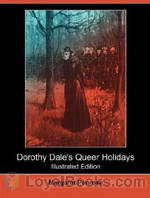 Dorothy Dale's Queer Holidays
Relates the details of a mystery that surrounded Tanglewood Park. There is a great snowstorm, and the young folks become snowbound, much to their dismay. | |
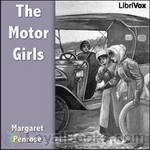 The Motor Girls
When Cora Kimball got her new auto for her birthday she had no idea what adventures would start for her and brother Jack.Where did Ed’s money and bonds disappear? Were they misplaced or were they stolen and lost forever.Did the conceited Sid Wilcox have something to do with the missing money, with the help of Ida Giles? And what did the obnoxious Lem Gildy have to do with it all?Join Cora and her friends in this mystery and adventure of The Motor Girls. | |
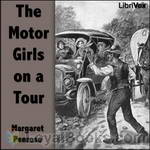 The Motor Girls on a Tour
This is the second book in the series of the Motor Girls. Join Cora and her friends in this mystery and adventure of The Motor Girls. Also the search for a missing table and promise book belonging to a cripple girl called Wren. Why is Clip so mysterious? What is she up to? Is Sid Wilcox up to his old tricks with his chum Rob Roland? | |
|
The Motor Girls on Crystal Bay or, The Secret of the Red Oar
| |
|
The Campfire Girls of Roselawn Or, a Strange Message from the Air
| |
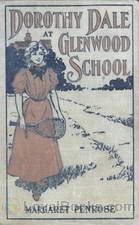 Dorothy Dale At Glenwood School
The second book in the Dorothy Dale series, in which Dorothy and her friends have an unfortunate encounter, which has long-lasting implications. Major Dale inherits some money, which enables him to send his daughter to Glenwood School, where she makes new friends - and enemies. Dorothy Dale: A Girl of Today (1908) Dorothy Dale at Glenwood School (1908) Dorothy Dale's Great Secret (1909) Dorothy Dale and Her Chums (1909) Dorothy Dale’s Queer Holidays (1910) Dorothy Dale’s Camping Days (1911) Dorothy... | |
|
The Motor Girls on the Coast or, The Waif From the Sea
| |
|
The Motor Girls on Cedar Lake Or the Hermit of Fern Island
| |
|
The Motor Girls Through New England or, Held by the Gypsies
| |
 The Campfire Girls on Station Island or, The Wireless from the Steam Yacht
| |
|
The Motor Girls on Waters Blue Or the Strange Cruise of the Tartar
| |
|
The Motor Girls at Camp Surprise The Cave in the Mountains
| |
By: Thomas Paine (1737-1809) | |
|---|---|
 Common Sense
First published anonymously due to its seditious content in 1776, the pamphlet argues for the need of American colonists to pursue complete independence from Great Britain, and not be driven simply by the urge to free themselves from unfair taxation. Paine provides argumentation for his revolutionary ideas, suggesting the unification of colonial forces to achieve this goal. Furthermore, Paine strengthens his case by clearly asserting the advantages that would come out as a result of independence, and further fortifies his argumentation with religious references... | |
|
A Letter Addressed to the Abbe Raynal, on the Affairs of North America, in Which the Mistakes in the Abbe's Account of the Revolution of America Are Corrected and Cleared Up
| |
By: John Stuart Mill (1806-1873) | |
|---|---|
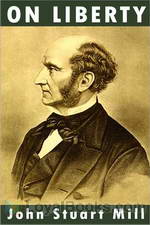 On Liberty
Published in 1859, On Liberty is a libertarian philosophical work by English philosopher John Stuart Mill that endorses his view on the importance of individuality for the constant progression and improvement of society. The work also supports economic and moral freedom, and openly criticizes the influence of social authority that in one way or another imposes a predefined set of acceptable attitudes and opinions. Highlighting issues including the incongruity between authority and liberty, the oppressive... | |
 Essays on Some Unsettled Questions of Political Economy
This is Mill’s first work on economics. It foreshadows his Political Economy which was the standard Anglo-American Economics textbook of the late 19th and early 20th centuries. Mill’s economic theory moved from free market capitalism, to government intervention within the precepts of Utilitarianism, and finally to Socialism. | |
 Utilitarianism
John Stuart Mill’s book Utilitarianism is one of the most influential and widely-read philosophical defenses of utilitarianism in ethics. The essay first appeared as a series of three articles published in Fraser’s Magazine in 1861; the articles were collected and reprinted as a single book in 1863. It went through four editions during Mill’s lifetime with minor additions and revisions. Although Mill includes discussions of utilitarian ethical principles in other works such as On Liberty and The Subjection of Women, Utilitarianism contains Mill’s only major discussion of the fundamental grounds for utilitarian ethical theory. | |
 The Subjection of Women
The Subjection of Women is the title of an essay written by John Stuart Mill in 1869, possibly jointly with his wife Harriet Taylor Mill, stating an argument in favor of equality between the sexes. It offers both detailed argumentation and passionate eloquence in opposition to the social and legal inequalities commonly imposed upon women by a patriarchal culture. Just as in “On Liberty,” Mill defends the emancipation of women on utilitarian grounds, convinced that the moral and intellectual advancement of women would result in greater happiness for everybody. | |
|
Considerations on Representative Government
Mill's volume was published in 1861 as an argument favoring this form of governance. Mill covers what forms of government work best, including when representative government is applicable and when not. He details appropriate functions of representative bodies and warns of problems to avoid. He distinguishes between true and false democracy. Other areas covered include how voting is carried out, the role of a second chamber in Parliament, and how an executive branch might function. | |
|
Auguste Comte and Positivism
Part 1 lays out the framework for Positivism as originated in France by Auguste Comte in his Cours de Philosophie Positive. Mill examines the tenets of Comte's movement and alerts us to defects. Part 2 concerns all Comte's writings except the Cours de Philosophie Positive. During Comte's later years he gave up reading newspapers and periodicals to keep his mind pure for higher study. He also became enamored of a certain woman who changed his view of life. Comte turned his philosophy into a religion, with morality the supreme guide. Mill finds that Comte learned to despise science and the intellect, instead substituting his frantic need for the regulation of change. | |
|
The Contest in America
| |