 |
Books Should Be Free Loyal Books Free Public Domain Audiobooks & eBook Downloads |
|
|
|
Books Should Be Free Loyal Books Free Public Domain Audiobooks & eBook Downloads |
|
Top Authors |
|---|
|
Book type:
Sort by:
|
By: Victor Appleton | |
|---|---|
 Tom Swift and His Wireless Message
Tom Swift & friends decide to trial an experimental airship near the New Jersey coast, and are unexpectedly swept out to sea by hurricane winds. Unable to steer or navigate without tearing the airship apart, the hapless crew must simply let the storm take them wherever it will. Unfortunately, the storm proves too much for the craft and Tom makes a crash landing on the uninhabited and crumbling Earthquake Island. | |
|
Tom Swift and His Sky Racer
A $10,000 prize lures Tom into competing at a local aviation meet at Eagle Park. Tom is determined to build the fastest plane around, but his plans mysteriously disappear, which means Tom must redesign his new airplane from the beginning. | |
By: Vicente Blasco Ibáñez (1867-1928) | |
|---|---|
|
Four Horsemen of the Apocalypse
The Four Horsemen of the Apocalypse, by Vicente Blasco Ibañez and translated into English by Charlotte Brewster Jordan, depicts two branches of a family with its roots in the pampas of Argentina. The wealthy Argentinian, Julio Madariaga, comes from Spain and raises himself from poverty, becoming a self-made, wealthy cattleman. He is a man of extremes; an honest man with a rascally knack for taking advantage of others; a self-made man with overweening pride, prejudices, and a sharp, flinty temper that can spark into violence, he is at the same time given to great generosity toward those who are under him... | |
By: Notker the Stammerer | |
|---|---|
 The Life of Charlemagne (Notker)
Notker’s work consists of anecdotes relating chiefly to the Emperor Charlemagne and his family. It was written for Charles the Fat, great-grandson of Charlemagne, who visited Saint Gall in 883. It has been scorned by traditional historians, who refer to the Monk as one who “took pleasure in amusing anecdotes and witty tales, but who was ill-informed about the true march of historical events”. However, several of the Monk’s tales, such as that of the nine rings of the Avar stronghold, have been used in modern biographies of Charlemagne. | |
By: Ray Cummings (1887-1957) | |
|---|---|
 Brigands of the Moon
Gregg Haljan was aware that there was a certain danger in having the giant spaceship Planetara stop off at the moon to pick up Grantline’s special cargo of moon ore. For that rare metal — invaluable in keeping Earth’s technology running — was the target of many greedy eyes. But nevertheless he hadn’t figured on the special twist the clever Martian brigands would use. So when he found both the ship and himself suddenly in their hands, he knew that there was only one way in which he could hope to save that cargo and his own secret — that would be by turning space-pirate himself and paying the Brigands of the Moon back in their own interplanetary coin. (From the Gutenberg e-text) | |
 The Girl in the Golden Atom
While examining a golden ring under a microscope, a chemist discovers a sub-atomic world. During his examination of this world he sees a beautiful young girl. After developing chemicals that will allow him to either shrink or grow larger in size, he and three friends journey to this small world. | |
|
Fire People
In effect Professor Newland declared that the curious astronomical phenomena of the previous November--the new "stars" observed, the two meteors that had fallen with their red and green light-fire--were all evidence of the existence of intelligent life on the planet Mercury. (An excerpt from chapter 1. ) | |
|
Wandl the Invader
There were nine major planets in the Solar System and it was within their boundaries that man first set up interplanetary commerce and began trading with the ancient Martian civilization. And then they discovered a tenth planet--a maverick! This tenth world, if it had an orbit, had a strange one, for it was heading inwards from interstellar space, heading close to the Earth-Mars spaceways, upsetting astronautic calculations and raising turmoil on the two inhabited worlds. But even so none suspected then just how much trouble this new world would make... | |
|
Tarrano the Conqueror
In "Tarrano the Conqueror" is presented a tale of the year 2430 A.D.--a time somewhat farther beyond our present-day era than we are beyond Columbus' discovery of America. My desire has been to create for you the impression that you have suddenly been plunged forward into that time--to give you the feeling Columbus might have had could he have read a novel of our present-day life. To this end I have conceived myself a writer of that future time, addressing his contemporary public. You are to imagine... | |
By: Chalkley J. Hambleton | |
|---|---|
 A Gold Hunter's Experience
“Early in the summer of 1860, I had an attack of gold fever. In Chicago, the conditions for such a malady were all favorable. Since the panic of 1857 there had been three years of general depression, money was scarce, there was little activity in business, the outlook was discouraging, and I, like hundreds of others, felt blue.” Thus Chalkley J. Hambleton begins his pithy and engrossing tale of participation in the Pike’s Peak gold rush. Four men in partnership hauled 24 tons of mining equipment by ox cart across the Great Plains from St... | |
By: Kate Langley Bosher (1865-1932) | |
|---|---|
 Mary Cary, Frequently Martha
“My name is Mary Cary. I live in the Yorkburg Female Orphan Asylum. You may think nothing happens in an Orphan Asylum. It does. The orphans are sure enough children, and real much like the kind that have Mothers and Fathers; and that’s why I am going to write this story.” So begins Mary’s diary, which she fills with her various doings and misadventures at the Asylum in Virginia and her sharp observations about life and human nature. She loathes Miss Bray, the head of the Asylum, who is not above telling bald-faced lies to the Board to further her own selfish ends... | |
 People Like That
A single woman from a family that is well-off, buys a house at a place that is looked down upon and disapproved by her family and friends alike. Her reason - she wants to live the life of and know people like that. (This book's got one of the cutest romantic endings I've ever read). What is surprising is this book is in the PD - there are quite a few modern expressions and comparatively less quaint, out-of-fashion expressions. | |
By: Edward Phillips Oppenheim | |
|---|---|
 The Zeppelin's Passenger
The Zeppelin’s Passenger is a tale of German espionage in England during World War I. Dreymarsh is a fictional “backwater” area in England with no apparent military value. The story begins with Dreymarsh residents discovering an observation car from a German zeppelin along with a Homburg hat near Dreymarsh. The mystery is further complicated when an Englishman, Mr. Hamar Lessingham, presents himself at Mainsail Haul which is the residence of Sir Henry Cranston. Lessingham bears with him, hand-carried letters from Major Richard Halstead, and a British prisoner of war in Germany... | |
 The Great Impersonation
E. Phillips Oppenheim, an English novelist created well in excess of 100 novels and 30 plus collections of short stories. Most of his tales are thrillers and espionage. The Great Impersonation was written following World War I and is considered by many to be perhaps his best novel. The story focuses on German espionage in England prior to the start of World War I. The tale centers on two characters that are almost identical in appearance. Indeed, while both attend the same school in England, they are often mistaken for one another... | |
By: Havelock Ellis (1859-1939) | |
|---|---|
|
Studies in the Psychology of Sex, Volume One
The first of six volumes, this volume covers in extensive detail the topics of "The Evolution of Modesty", "The Phenomena of Sexual Periodicity", and "Auto-Eroticism". Written as an anthropological and psychological study from the point of view of Havelock, the famous British sexologist of the late 19th century, who was also a physician and social reformer. | |
By: Fabian Franklin | |
|---|---|
 What Prohibition Has Done to America
In What Prohibition Has Done to America, Fabian Franklin presents a concise but forceful argument against the Eighteenth Amendment of the U.S. Constitution. Beginning in 1920, this Amendment prohibited the sale and manufacture of alcoholic beverages in the United States, until it was repealed in 1933. Franklin contends that the Amendment “is not only a crime against the Constitution of the United States, and not only a crime against the whole spirit of our Federal system, but a crime against the first principles of rational government... | |
By: Irenaeus | |
|---|---|
|
Against Heresies
St. Irenaeus, Bishop of Lyons, describes several schools of Gnosticism which were prevalent among pre-Nicene Christianity. He then refutes these beliefs as heresies by contrasting them with what he describes as catholic, orthodox Christianity. Against Heresies demonstrates that earliest Christianity was a fascinating and diverse plethora of beliefs, debates, and schisms. | |
By: Mary Baker Eddy (1821-1910) | |
|---|---|
 The People's Idea of God
“The improved theory and practice of religion and of medicine are mainly due to the people’s improved views of the Supreme Being.” (from The People’s Idea of God) | |
By: Lilli Lehmann (1848-1929) | |
|---|---|
 How to Sing (Meine Gesangskunst)
Lilli Lehmann, born Elisabeth Maria Lehmann, was a German operatic soprano of phenomenal versatility. She was also a voice teacher.She wrote: "Every serious artist has a sincere desire to help others reach the goal—the goal toward which all singers are striving: to sing well and beautifully." This is the 1915 second (expanded) edition of her book and includes many illustrations and diagrams, both physiological and musical, which the listener will find useful.Much of Lilli Lehmann's advice is complex and demanding - the standards which she set for herself were beyond the highest aspirations of most professional singers... | |
By: Morgan Robertson | |
|---|---|
 Futility, Or the Wreck of the Titan
This novel was published a full 14 years before the sinking of the Titanic, but listeners may be surprised at how many parallels this fictional tale has with subsequent true events. The Titan is the largest and most technologically advanced steamship of her time. She is considered unsinkable. Her full speed crossings of the Northern Lane Route carry her rich passengers in the highest standards of luxury and comfort. The less well-off travel in rougher quarters but still benefit from the speed of travel... | |
By: James E. Talmage | |
|---|---|
 The Story of Mormonism
A few years before James E. Talmage was called to serve as an apostle for the Church of Jesus Christ of Latter-day Saints (also known as the "Mormon" church), he gave a series of lectures at universities such as the University of Michigan and Cornell, describing the history of the Church. These lectures were later compiled and published as 'The Story of "Mormonism."' It is a concise, yet informative summary for all interested in learning the history and beliefs of the "Mormon" church. (Summary by Nathan Markham) | |
|
The Great Apostasy: Considered in the Light of Scriptural and Secular History
Elder James E. Talmage, an apostle of The Church of Jesus Christ of Latter-day Saints, makes a survey of the Latter-day Saint view of the Great Apostasy. The book's subtitle states that it is a study "considered in the in the light of scriptural and secular history," and includes a discussion of the establishment of Christ's church in the meridian of time, the predictions and causes of its apostasy, or falling away, and the restoration of Christ's church in the Latter-days by a modern prophet. | |
By: Margaret Oliphant (1828-1897) | |
|---|---|
 The Open Door and The Portrait: Stories of the Seen and the Unseen
Two stories with mysterious occurrences by Margaret O. Oliphant, originally published in 1881. | |
By: Ferdinand Ossendowski (1876-1945) | |
|---|---|
 Beasts, Men and Gods
“Beasts, Men and Gods” is an account of an epic journey, filled with perils and narrow escapes, in the mold of “The Lord of the Rings.”The difference is: it’s all true.Ferdinand Ossendowski was a Pole who found himself in Siberia and on the losing side during the Bolshevik Revolution. To escape being rounded up and shot, he set out with a friend to reach the Pacific, there to take ship back to Europe. During his journey he fell in with dozens of other military men who shared the same objective… but nearly every one of them perished on the way... | |
By: Henry Ford | |
|---|---|
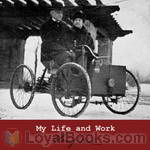 My Life and Work
Henry Ford profiles the events that shaped his personal philosophy, and the challenges he overcame on the road to founding the Ford Motor Company. Throughout his memoir, he stresses the importance of tangible service and physical production over relative value as judged by profits and money. He measures the worth of a business or government by the service it provides to all, not the profits in dollars it accumulates. He also makes the point that only service can provide for human needs, as opposed to laws or rules which can only prohibit specific actions and do not provide for the necessaries of life... | |
By: Jennie Hall (1875-1921) | |
|---|---|
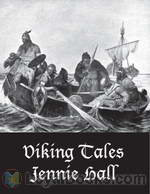 Viking Tales
Viking tales are tales from Iceland, featuring the king Halfdan and his son Harald. | |
By: Knut Hamsun (1859-1952) | |
|---|---|
 Hunger
Hunger (Norwegian: Sult) is a novel by the Norwegian author and Nobel Prize winner Knut Hamsun and was published in its final form in 1890. The novel has been hailed as the literary opening of the 20th century and an outstanding example of modern, psychology-driven literature. It hails the irrationality of the human mind in an intriguing and sometimes humorous novel. Written after Hamsun's return from an ill-fated tour of America, Hunger is loosely based on the author's own impoverished life before his breakthrough in 1890... | |
 Growth of the Soil
Growth of the Soil (Markens Grøde) is the novel by Norwegian writer Knut Hamsun which won him the Nobel Prize in Literature in 1920. The essential elements of this novel are expressed in the words of the English translator W.W. Worster in his footnote in December 1920: 'It is the life story of a man in the wilds, the genesis and gradual development of a homestead, the unit of humanity, in the unfilled, uncleared tracts that still remain in the Norwegian Highlands. It is an epic of earth; the history of a microcosm... | |
By: Ida Coe and Alice Christie (1876-?) | |
|---|---|
 Story Hour Readers: Third Year
Short and sweet stories for children from the 19th century. The stories were compiled by two New York City teachers and were thought appropriate for third year children at that time. | |
By: Kate Percival | |
|---|---|
 The Life and Amours of the Beautiful, Gay and Dashing Kate Percival, the Belle of the Delaware
This surprisingly explicit sample of Victorian erotica follows the sexual awakening and subsequent adventures of its author, Kate Percival, the "belle of the Delaware." Content warning: this one is definitely NC-17 rated. | |
By: Mary Rowlandson (c.1637-1711) | |
|---|---|
 A Narrative of the Captivity and Restoration of Mrs. Mary Rowlandson
This is the story of Mary Rowlandson’s capture by American Indians in 1675. It is a blunt, frightening, and detailed work with several moments of off-color humor. Mary, the wife of a minister, was captured by Natives during King Philips War while living in a Lancaster town, most of which was decimated, and the people murdered. See through her eyes, which depict Indians as the instruments of Satan. Her accounts were a best-seller of the era, and a seminal work, being one of the first captivity narratives ever published by a woman... | |
By: J. Walker McSpadden (1874-1960) | |
|---|---|
 Robin Hood
Robin Hood is a heroic outlaw in English folklore. A highly skilled archer and swordsman, he is known for "robbing from the rich and giving to the poor", assisted by a group of fellow outlaws known as his "Merry Men". Traditionally Robin Hood and his men are depicted wearing Lincoln green clothes. The origin of the legend is claimed by some to have stemmed from actual outlaws, or from ballads or tales of outlaws. | |