 |
Books Should Be Free Loyal Books Free Public Domain Audiobooks & eBook Downloads |
|
|
|
Books Should Be Free Loyal Books Free Public Domain Audiobooks & eBook Downloads |
|
Fairy Tales |
|---|
Book type:
Sort by:
View by:
|
By: Leo Tolstoy (1828-1910) | |
|---|---|
 Ivan the Fool
Written after Tolstoy suffered a spiritual crisis, Ivan the Fool is a fairy tale that offers children instruction in how to live rightly, simply, and generously. The story emphasizes the destructive aspects of materialism and militarism while idealizing manual labor and the peasant life. (Introduction by Dorlene Kaplan) | |
By: Lewis Carroll | |
|---|---|
 Sylvie and Bruno
The novel has two main plots; one set in the real world at the time the book was published (the Victorian era), the other in the fantasy world of Fairyland. While the latter plot is a fairytale with many nonsense elements and poems, similar to Carroll’s Alice books, the story set in Victorian Britain is a social novel, with its characters discussing various concepts and aspects of religion, society, philosophy and morality. This book is the first of two volumes and the two intertwining stories are brought to a close in the second volume, Sylvie and Bruno Concluded. | |
By: Charles Dickens (1812-1870) | |
|---|---|
 The Magic Fishbone A Holiday Romance
| |
By: Aesop (620 BC - 563 BC) | |
|---|---|
 Aesop's Fables
As children, our first experience of the magic of talking animals, the conflict between good and evil, the battle of wits between the cunning and the innocent most probably came from Aesop's Fables. These delightful, pithy and brief narratives are simple, easy to understand and convey their message in a memorable and charming fashion. Aesop's Fables by Aesop consists of about 600 tales, some well-loved and familiar, others less known but just as entertaining and educative and help us map the perimeters of our moral universe... | |
By: L. Frank Baum (1856-1919) | |
|---|---|
 The Enchanted Island of Yew
A fairy has become bored with her life, and convinces some young girls to transform her into a human boy so she can go on adventures. The adventures come fast and furious, as the newly-named Prince Marvel explores the surrounding kingdoms. A masochistic squire accompanies Marvel, helping him with assorted kings, knights, dragons, and other medieval menaces along the way. | |
 American Fairy Tales
This collection of fantasy stories was originally serialized in regional newspapers, prior to being published as a complete volume. The stories, as critics have noted, lack the high-fantasy aspect of the best of Baum’s work, in Oz or out. With ironic or nonsensical morals attached to their ends, their tone is more satirical, glib, and tongue-in-cheek than is usual in children’s stories; the serialization in newspapers for adult readers was appropriate for the materials. (Introduction by Wikipedia and Matthew Reece) | |
 The Surprising Adventures of the Magical Monarch of Mo and His People
The Magical Monarch of Mo is a set of stories about the titular king, his queen, and his royal children. The stories are uproariously funny, dealing with topics as absurd as a man losing his temper who then tries to find it, an evil midget who steals a princess's big toe, and an entire city filled with highly civilized monkeys! Join the Monarch and all his friends for a rollicking adventure, filled with fun for the whole family! | |
By: Oscar Wilde (1854-1900) | |
|---|---|
 The Happy Prince and Other Tales
The Happy Prince and Other Tales (also sometimes called The Happy Prince and Other Stories) is an 1888 collection of stories for children by Oscar Wilde. It is most famous for The Happy Prince, the short tale of a metal statue who befriends a migratory bird. Together, they bring happiness to others, in life as well as in death. The stories included in this collection are:The Happy PrinceThe Nightingale and the RoseThe Selfish GiantThe Devoted FriendThe Remarkable RocketThe stories convey an appreciation for the exotic, the sensual and for masculine beauty. | |
 The Fisherman and His Soul
”The Fisherman and his Soul” is a fairy tale first published in November of 1891 in Wilde’s “A House of Pomegranates”. It tells of a fisherman who nets and falls in love with a mermaid. But to be with her he must shed his soul, which goes off to have adventures of its own. Will forbidden love endure? | |
By: G. K. Chesterton (1874-1936) | |
|---|---|
 The Ballad of the White Horse
An English epic poem that follows the exploits of Alfred the Great in his defense of Christian civilization in England from the heathen nihilism of the North. Following a string of defeats at the hands of the invading Danes, a vision from heaven in the river island of Athelney fills Alfred with joy and hope. Though it gives no promise of victory in the coming struggle, it inspires him to rally his chieftains for a last stand against the invading hordes. His adventures lead throughout the country... | |
By: Louisa May Alcott (1832-1888) | |
|---|---|
 Flower Fables
Flower Fables is Louisa May Alcott’s first book, penned at 16 for Ralph Waldo Emerson’s daughter, Ellen. | |
By: George MacDonald (1824-1905) | |
|---|---|
 The Light Princess
A king and queen are in despair. After years of marriage, they are yet to be blessed with a child. Finally a lovely daughter is born to them. They plan a grand christening ceremony for the baby, but as destiny would have it, they forget to invite the nastiest lady in the kingdom, who also happens to be the king's sister, the evil Princess Makemnoit. Now if all that seems distinctly familiar to you, it was meant to! Using the Sleeping Beauty/Briar Rose fairytale as a starting point, Scottish writer George MacDonald creates a story that's even more enchanting and gives it a nice little twist... | |
 The Princess and the Goblin
George MacDonald’s fairy stories and fantasy have inspired a number of writers including C.S. Lewis and J.R.R. Tolkien and of this popular fairy story, which as you might suspect concerns a little princess plotted against by a race of goblins, G.K. Chesterton said that it “made a difference to my whole existence.” | |
 At the Back of the North Wind
Written by the man who mentored Lewis Carroll and encouraged him to submit Alice for publication, At the Back of the North Wind is today a forgotten classic of Victorian children's literature. The story tells of a young boy named Diamond, the son of a coachman in an English country mansion. Diamond sleeps in the hayloft above the stables and at night he finds he's disturbed by the wind blowing through the holes in the wall. He tries to plug them but one night, he hears an imperious voice scolding him for doing this! It is the magnificent North Wind that speaks to him and tells him that he's closed up her windows... | |
 The Princess and Curdie
The Princess and Curdie is the sequel to The Princess and the Goblin by George MacDonald. It’s been a year since the Princess Irene and Curdie first met, and a year since the goblin incident and all appears to be going well in the Kingdom. Or is it? After a visit from Irene’s great-great-grandmother, Curdie finds himself on a mission to save the kingdom, with a rather strange companion in tow. | |
 The Shadows
“Old Ralph Rinkelmann made his living by comic sketches, and all but lost it again by tragic poems. So he was just the man to be chosen king of the fairies…” George MacDonald (December 10, 1824 – September 18, 1905) was a Scottish author, poet, and Christian minister. Though no longer well known, his works (particularly his fairy tales and fantasy novels) have inspired admiration in such notables as W. H. Auden, J. R. R. Tolkien, and Madeleine L’Engle. The Shadows is one such fairy tale... | |
 The Light Princess & Other Fairy Tales
George MacDonald claimed that he did not write for children, but for the child-like. Some of his longer works are clearly intended for adults, and this fantastic fiction influenced later writers such as G.K. Chesterton, J.R.R. Tolkien and C.S. Lewis. But you can find some of his best writing in the stories aimed squarely at children, and these are three of the finest.The Light Princess. A wicked aunt curses her baby niece so that gravity has no effect on her, and she floats through the air as if it were water... | |
|
The Lost Princess (or A Double Story, or The Wise Woman)
Also known as "A Double Story" or "The Wise Woman."The story of two very spoiled girls, a princess and a peasant, who are kidnapped by a strange woman for a lesson in life. They may not emerge the same... but will their parents be changed for the better too? | |
|
At the Back of the North Wind for Children
| |
By: Carlo Collodi (1826-1890) | |
|---|---|
|
Pinocchio
This is the wonderful story of Pinocchio, the puppet who must learn many lessons before he can become a real boy. Carved by a woodcarver named Geppetto in a small Italian village, he dreamed of becoming a real boy but strays from the path of goodness many times and is very willing to listen to temptation. He has also been used as a character who is prone to telling lies and fabricating stories for various reasons. The story has appeared in many adaptations in other mediums. Pinocchio has been called an icon of modern culture, and one of most reimagined characters in the pantheon of children's literature... | |
By: Hans Christian Andersen (1805-1875) | |
|---|---|
 Andersen's Fairy Tales
The Little Mermaid, The Ugly Duckling, The Snow Queen, The Real Princess and a host of other wonderful tales which form so much a part of childhood are part of Andersen's Fairy Tales, by Hans Christian Andersen. This volume contains eighteen selected stories. Some of them are old familiar friends, while others maybe new to some readers, but all of them equally enchanting and enthralling. Today, these stories are known almost everywhere in the world and have been translated into hundreds of languages... | |
By: Jacob Grimm (1785-1863) | |
|---|---|
|
Household Stories by the Brothers Grimm
| |
By: William Patten (1868-1946) | |
|---|---|
 The Junior Classics
The purpose of The Junior Classics is to provide, in ten volumes containing about five thousand pages, a classified collection of tales, stories, and poems, both ancient and modern, suitable for boys and girls of from six to sixteen years of age. | |
By: James Baldwin (1841-1925) | |
|---|---|
 Fifty Famous Stories Retold
King Alfred and the Cakes. Damon and Pythias. The Sword of Damocles. Bruce and the Spider. These are stories that many people who grew up in the last century would be familiar with. They were included in our text books or to be found in anthologies in our school libraries. However, for a new generation growing up, some of these may be new and unknown. Hence, Fifty Famous Stories Retold by James Baldwin would indeed be a great addition to your children's bookshelf. James Baldwin, who shares his name with another famous American author was an editor, author and gifted teacher... | |
By: Andrew Lang (1844-1912) | |
|---|---|
 The Blue Fairy Book
Published in 1889, The Blue Fairy Book is the first book in the series of story collections known as Andrew Lang's “Coloured” Fairy Books, which bring to life the classic fairytales by Grimm, Madame d'Aulnoy and Perrault among other folklore sources. Most captivating is the fact that the collection features the stories in pristine an unaltered conditions, therefore they contain a darker side than the polished versions most are familiar with from childhood memories. Featuring 37 tales, The... | |
 The Yellow Fairy Book
Published in 1894, The Yellow Fairy Book is the fourth installment in the series of fairytale collections known as Andrew Lang's “Coloured” Fairy Books and is comprised of stories collected from various foreign language sources including French, German, English, Scottish, Russian, and Polish. Moreover, the tales not only intend to entertain, but also offer an underlying didactic purpose, as many of the stories place an important emphasis on righteous behavior. Featuring 48 stories, The Yellow... | |
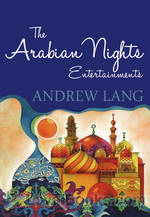 The Arabian Nights
The Arabian Nights is a collection of Perso-Arabic folk tales and other stories. The collection, or at least certain stories drawn from it (or purporting to be drawn from it), became widely known in the West from the 18th century, after it was translated from the Arabic — first into French and then into English and other European languages. The first English language edition, based on Galland’s French rather than the original Arabic, rendered the title as The Arabian Nights’ Entertainment – and this, or simply The Arabian Nights, has been the title by which it has been best known to English-speaking people ever since. | |
 The Red Fairy Book
The Red Fairy Book is the second in a series of twelve books known as Andrew Lang’s Fairy Books or Andrew Lang’s “Coloured” Books. The series was immensely popular and proved of great influence in children’s literature, increasing the popularity of fairy tales over tales of real life. | |
 The Green Fairy Book
Andrew Lang's Fairy Books or Andrew Lang's "Coloured" Fairy Books constitute a twelve-book series of fairy tale collections. Although Andrew Lang did not collect the stories himself from the oral tradition, the extent of his sources, who had collected them originally (with the notable exception of Madame d'Aulnoy), made them an immensely influential collection, especially as he used foreign-language sources, giving many of these tales their first appearance in English. As acknowledged in the prefaces, although Lang himself made most of the selections, his wife and other translators did a large portion of the translating and telling of the actual stories... | |
 The Pink Fairy Book
All people in the world tell nursery tales to their children, and the stories are apt to be like each other everywhere. A child who has read the Blue and Red and Yellow Fairy Books will find some old friends with new faces in the Pink Fairy Book. Courage, youth, beauty, kindness, have many trials, but they always win the battle; while witches, giants, unfriendly cruel people, are on the losing hand. So it ought to be, and so, on the whole, it is and will be; and that is all the moral of fairy tales... | |
 The Orange Fairy Book
Andrew Lang's Fairy Books or Andrew Lang's "Coloured" Fairy Books constitute a twelve-book series of fairy tale collections. Although Andrew Lang did not collect the stories himself from the oral tradition, the extent of his sources, who had collected them originally (with the notable exception of Madame d'Aulnoy), made them an immensely influential collection, especially as he used foreign-language sources, giving many of these tales their first appearance in English. As acknowledged in the prefaces, although Lang himself made most of the selections, his wife and other translators did a large portion of the translating and telling of the actual stories... | |
 The Grey Fairy Book
The tales in the Grey Fairy Book are derived from many countries—Lithuania, various parts of Africa, Germany, France, Greece, and other regions of the world. They have been translated and adapted by Mrs. Dent, Mrs. Lang, Miss Eleanor Sellar, Miss Blackley, and Miss hang. 'The Three Sons of Hali' is from the last century 'Cabinet des Fees,' a very large collection. The French author may have had some Oriental original before him in parts; at all events he copied the Eastern method of putting tale within tale, like the Eastern balls of carved ivory... | |
 The Crimson Fairy Book
The Crimson Fairy Book contains thirty-six stories collected from around the world and edited by Andrew Lang. Many tales in this book are translated, or adapted, from those told by mothers and nurses in Hungary; others are familiar to Russian nurseries; the Servians are responsible for some; a rather peculiarly fanciful set of stories are adapted from the Roumanians; others are from the Baltic shores; others from sunny Sicily; a few are from Finland, and Iceland, and Japan, and Tunis, and Portugal... | |
 The Brown Fairy Book
Andrew Lang’s Brown Fairy Book (1904) was a beautifully produced and illustrated edition of fairy tales that has become a classic. This was one of many other collections of fairy tales, collectively known as Andrew Lang’s Fairy Books. | |
|
The Fairy Books of Andrew Lang
| |
|
Violet Fairy Book
Andrew Lang’s Violet Fairy Book (1901) was a beautifully produced and illustrated edition of fairy tales that has become a classic. This was one of many other collections of fairy tales, collectively known as Andrew Lang’s Fairy Books. | |
|
The Lilac Fairy Book
| |
|
Prince Prigio From "His Own Fairy Book"
| |
|
Prince Ricardo of Pantouflia being the adventures of Prince Prigio's son
| |
|
Prince Prigio
| |
 Custom and Myth
CUSTOM AND MYTHINTRODUCTION.Though some of the essays in this volume have appeared in various serials, the majority of them were written expressly for their present purpose, and they are now arranged in a designed order. During some years of study of Greek, Indian, and savage mythologies, I have become more and more impressed with a sense of the inadequacy of the prevalent method of comparative mythology. That method is based on the belief that myths are the result of a disease of language, as the pearl is the result of a disease of the oyster... | |
By: L. Leslie Brooke (1862-1940) | |
|---|---|
 The Story of the Three Little Pigs
Leonard Leslie Brooke was a talented nineteenth/early twentieth century illustrator who also wrote some delightful children's books. He was well-known for his caricatures, portrait and landscape painting and sketches. He illustrated many children's books, especially those written by Andrew Lang. Some of his famous works are The Nursery Rhyme Book, The Golden Goose Book, Johnny Crow's Party and Ring O' Roses. The Story of the Three Little Pigs was published in 1904. Most readers would be familiar with this children's tale... | |
 The Golden Goose Book
A charming little book full of the most gorgeous illustrations. We see a number of stories in which kindness is rewarded and selfishness is punished but Brooke squeezes a number of intriguing and quite bizarre twists and turns into the story so it is not nearly so predictable as you might imagine. Victorian moral fairy tales from a delightfully inventive mind. | |
By: Ambrose Bierce (1842-1914) | |
|---|---|
|
Cobwebs from an Empty Skull
Ambrose Bierce's collection of short parables, published under the pen name of Dod Grile, is similar to Aesop's Fables. This compilation is comprised of "Fables of Zambri, the Parsee," "Brief Seasons of Intellectual Dissipation" and the "Divers Tales," all of which were first serialized in the magazine "FUN." A great read for any lover of short stories or poetry with faraway lands, talking animals and supernatural occurrences! | |
By: Joel Chandler Harris (1848-1908) | |
|---|---|
 Uncle Remus and Brer Rabbit
Uncle Remus' stories feature a trickster hero called Br'er Rabbit ("Brother" Rabbit), who uses his wits to slide out of trouble and gain the advantage over the slower witted other animals, many of whom are trying to eat him. Br'er Rabbit stories were mostly collected directly from the afro-american oral story-telling tradition and are said to be a direct interpretation of Yoruba tales of Hare. This book contains 11 unique stories and was the last one published before the author's death. (Introduction by Phil Chenevert) | |
By: Guy Wetmore Carryl (1873-1904) | |
|---|---|
 Fables for the Frivolous
The Urban Rat and the Suburban Rat, The Persevering Tortoise and the Pretentious Hare, The Ambitious Fox and the Unapproachable Grapes.... If some of these titles seem vaguely familiar to you, you wouldn't be mistaken! Fables for the Frivolous by Guy Wetmore Carryl contains some well-known fables in a modern packaging, with a delightful new twist! The complete title of the original published in 1898 was Fables for the Frivolous (With apologies to La Fontaine) and it was the first published work of this gifted American journalist, humorist and poet... | |
 Grimm Tales Made Gay
A comic rendering in verse of well-loved Fairy Tales of the Brothers Grimm, each ending with a moral and full of puns. The titles of the tales themselves make another verse. | |
By: Charles Kingsley (1819-1875) | |
|---|---|
 The Water-Babies
First published in 1863, The Water Babies by Rev Charles Kingsley became a Victorian children's classic along with J.M. Barrie's Peter Pan and Lewis Caroll's Alice books. It is an endearing and entertaining novel that can equally be enjoyed by adult readers as well. However, it fell out of favor in later years since it contained many ideas that are considered politically incorrect and offensive today from a humanitarian perspective. The Water Babies, A Fairy Tale for a Land Baby to give the book its complete title tells the story of Tom, a young orphan chimney-sweep in Victorian London... | |
 The Heroes, or Greek Fairy Tales for my Children
The Heroes, or Greek Fairy Tales for my Children by Charles Kingsley is a collection of three Greek mythology stories: Perseus, The Argonauts, and Theseus. The author had a great fondness for Greek fairy tales and believed the adventures of the characters would inspire children to achieve higher goals with integrity. | |
By: E.M. Berens | |
|---|---|
 Myths and Legends of Ancient Greece and Rome
Silver footed, fair haired Thetis, Ares the God of War, Nike the Goddess of Victory, The Furies and The Muses, Zeus the presiding deity of the Universe and the magical, mysterious Olympus, are some of the amazing, mythical Greek and Roman deities you'll encounter in this book. Myths and Legends of Ancient Greece and Rome by EM Berens was originally intended for young readers. Written in an easy and light style, the author attempts to bring the pantheon of gods into a comprehensible format.... | |
By: Walter Crane (1845-1915) | |
|---|---|
 The Frog Prince and Other Stories
The three charming stories contained in The Frog Prince and Other Tales include a less-known fairy-tale called Princess Belle-Etoile besides the title story and Alladin and the Wonderful Lamp. Published in 1874, the tales are re-told by the famous illustrator Walter Crane, who has also provided some of the most lovely illustrations in the book. The book makes an ideal gift and both parents and children will certainly enjoy it. It's perfect for bedtime story-reading sessions and kids would love gazing at the beautiful Greek-style illustrations that are scattered throughout the book... | |
|
The Sleeping Beauty Picture Book
| |
|
The Song of Sixpence Picture Book
| |
By: Charles Perrault (1628-1703) | |
|---|---|
 The Fairy Tales of Charles Perrault
This book is an early collection of ten well-known fairy tales. It is thought to have begun the genre of fairy tales. | |
|
Contes des fées
| |
|
Old-Time Stories
| |
 Tales of Passed Times
| |
By: Frank Richard Stockton (1834-1902) | |
|---|---|
|
Ting-a-ling
| |
By: Anatole France (1844-1924) | |
|---|---|
|
Thais
The fourth century ascetic Paphnuce, journeys from his remote desert hermitage to urban Alexandria determined to locate the stunningly beautiful and libertine actress, Thais. He earnestly desires that she convert to Christianity. Gaining an audience by deception, the hermit passionately speaks to the actress of eternity. Remarkably, Thais repents and retires to a convent for the rest of her days. The hermit however, cannot rid his mind of her charms, not even with the help of the most severe austerities. After years of anguish the monk learns of Thais' immanent demise and hastens to her side. There he confesses the unspeakable. | |
By: Miss Mulock (1826-1887) | |
|---|---|
 The Little Lame Prince
Paralyzed in an accident while a baby, young Prince Dolor is imprisoned in a lonely tower by his usurping uncle. He is visited by his mysterious godmother who provides him with magical gifts, including a traveling cloak that allows him to fly across the land. He uses his gifts to return to his rightful place on the throne. Also included are several short stories by the author also featuring princes. (Chapters 12-15) | |