 |
Books Should Be Free Loyal Books Free Public Domain Audiobooks & eBook Downloads |
|
|
|
Books Should Be Free Loyal Books Free Public Domain Audiobooks & eBook Downloads |
|
Fiction |
|---|
|
Book type:
Sort by:
View by:
|
By: G. K. Chesterton (1874-1936) | |
|---|---|
 The Trees of Pride
Three trees, known as the Peacock trees, are blamed by the peasants for the fever that has killed many. Squire Vane scoffs at this legend as superstition. To prove them wrong, once and for all, he takes a bet to spend the night in the trees. In the morning he has vanished. Is he dead, and if so who has killed him? The poet? The lawyer? The woodsman? The trees? | |
 Robert Browning
There is an old anecdote, probably apocryphal, which describes how a feminine admirer wrote to Browning asking him for the meaning of one of his darker poems, and received the following reply: “When that poem was written, two people knew what it meant–God and Robert Browning. And now God only knows what it means. | |
 Lord Kitchener
“The paradox of all this part of his life lies in this–that, destined as he was to be the greatest enemy of Mahomedanism, he was quite exceptionally a friend of Mahomedans.” | |
By: Louisa May Alcott (1832-1888) | |
|---|---|
 Little Women
Set in nineteenth century New England, Little Women follows the lives of the four March sisters-Jo, Beth, Amy and Meg. The novel is a classic rites of passage story, that has often split literature critics but has been adored by many over the years. Intended as a book for young girls, the book is too sentimental for some but plenty of adults and young men have Little Women firmly featured in their best books of all time. The pace of the novel can be slow at times and the language almost too perfect but the overall sympathetic tone of Alcott wins over the reader... | |
 Jack and Jill
Louisa May Alcott, more famously known for her Little Women series, takes a familiar nursery rhyme and creates a whole novel out of it in one of her last books Jack and Jill: A Village Story. Though she continued to publish under the penname AM Barnard, this book probably marked the end of a particular writing phase in 1880. Jack and Jill is set in the fictional Harmony Village. On a December afternoon, the youngsters of the village are out enjoying the bracing cold and snow. The bright winter shines down as they have fun skating and sledding... | |
 An Old-Fashioned Girl
Polly Milton, a 14-year-old country girl, visits her friend Fanny Shaw and her wealthy family in the city for the first time. Poor Polly is overwhelmed by the splendor at the Shaws’ and their urbanized, fashionable lifestyles, fancy clothes and some other habits she considers weird and, mostly, unlikable. However, Polly’s warmth, support and kindness eventually win her the hearts of all the family members. Six years later, Polly comes back to the city to become a music teacher. | |
 Jo's Boys
Jo’s Boys is the third book in the Little Women trilogy by Louisa May Alcott, published in 1886. In it, Jo’s “children”, now grown, are caught up in real world troubles. All three books – although fiction – are highly autobiographical and describe characters that were really in Alcott’s life. This book contains romance as the childhood playmates become flirtatious young men and women. The characters are growing up, going out into the world and deciding their futures. | |
 A Garland For Girls
“These stories were written for my own amusement during a period of enforced seclusion. The flowers which were my solace and pleasure suggested titles for the tales and gave an interest to the work. If my girls find a little beauty or sunshine in these common blossoms, their old friend will not have made her Garland in vain.” – L.M. Alcott, September, 1887 | |
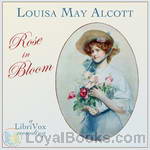 Rose in Bloom
Opening several years after the close of "Eight Cousins", we find Rose coming home fresh from a voyage overseas, to find much changed about her. Now of a marriageable age and heiress to a fortune, Rose finds joy,sorrow, and finally love await her -- as the Rose is finally ready to bloom into a good, strong, sweet and true woman.This sequel to Eight Cousins was written by Louisa May Alcott, the author of many well beloved children's books including Little Women, An Old Fashioned Girl, Under the Lilacs and more. | |
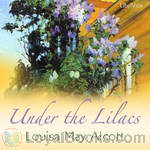 Under the Lilacs
"When two young girls decide to have a tea party with their dolls and a mysterious dog comes and eats their prized cake, they end up finding a circus run-away, Ben Brown. Ben is a horse master, and loves horses, so when the Moss' take the young boy in, they decide to give him work at the neighbors house driving cows (on a horse, of course). After that a series of events happens, and Ben finds out his beloved father is dead. Miss Celia, a neighbor, feels sorry and comforts him, and finally offers to let Ben stay with her and her fourteen-year-old brother, Thornton who is called Thorny... | |
 Aunt Jo's Scrapbag
A collection of short stories by Louisa May Alcott that were written with the intent to entertain the whole family and to fill children's heads with wonder and delight. | |
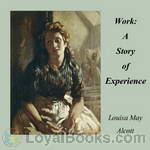 Work: A Story of Experience
It is one of “several nineteenth-century novels [which] uncovers the changes in women’s work in the new industrial era, as well as the dilemmas, tensions, and the meaning of that work” The story depicts the struggles of a young woman trying to support herself. The main character, Christie Devon, works outside the home in a variety of different jobs, but the end of her story marks “the beginning of a new career as a voice and activist for other working women”. | |
 Flower Fables
Flower Fables is Louisa May Alcott’s first book, penned at 16 for Ralph Waldo Emerson’s daughter, Ellen. | |
 The Mysterious Key and What It Opened
In this delightful short story, we discover the secrets of the Trevlyn family. 'The Mysterious Key and What it Opened' is a mystery entwined with romance (Introduction by ashleighjane) | |
 Behind a Mask, or a Woman's Power
Fans of Louisa May Alcott's Little Women will remember that her heroine Jo wrote racy novels before turning her hand to more "serious" literature. Alcott, writing under the pseudonym A. M. Barnard, often did the same, and Behind a Mask (1866) is one of her sensation novels. It focuses on Jean Muir, who enters the home of the wealthy Coventry family as governess to their sixteen-year-old daughter. But is the beguiling Miss Muir all that she seems to be? (Introduction by Elizabeth Klett) | |
 The Louisa Alcott Reader: a Supplementary Reader for the Fourth Year of School
| |
|
Shawl-Straps: A Second Series of Aunt Jo's Scrap-Bag
| |
|
The Candy Country
| |
|
Marjorie's Three Gifts
| |
 Spinning-Wheel Stories
A group of stories-within-a-story, told in the classic Louisa May Alcott style. "I've a little cold," said the old lady, "and am too hoarse for talking, my dears; but Aunt Elinor has looked up a parcel of old tales that I've told her at different times and which she has written down. You will like to hear her reading better than my dull way of telling them, and I can help Minnie and Lotty with their work, for I see they are bent on learning to spin." The young folk were well pleased with grandma's proposal; for Aunt Nell was a favorite with all, being lively and kind and fond of children, and the only maiden aunt in the family... | |
By: Alan Edward Nourse (1928-1992) | |
|---|---|
 Five Stories by Alan Nourse
These Five Stories were written by Alan Edward Nourse, an American science fiction (SF) author and physician. He wrote both juvenile and adult science fiction, as well as nonfiction works about medicine and science. His SF works generally focused on medicine and/or psionics. Psionics refers to the practice, study, or psychic ability of using the mind to induce paranormal phenomena. Examples of this include telepathy, telekinesis, and other workings of the outside world through the psyche. | |
|
Derelict
| |
|
Image of the Gods
| |
|
Contamination Crew
| |
|
My Friend Bobby
| |
|
The Dark Door
| |
|
The Native Soil
| |
|
Circus
| |
|
The Coffin Cure
| |
 Marley's Chain
| |
|
Meeting of the Board
| |
 Martyr
| |