 |
Books Should Be Free Loyal Books Free Public Domain Audiobooks & eBook Downloads |
|
|
|
Books Should Be Free Loyal Books Free Public Domain Audiobooks & eBook Downloads |
|
Fiction |
|---|
|
Book type:
Sort by:
View by:
|
By: Max Brand (1892-1944) | |
|---|---|
 The Untamed
Whistlin' Dan Berry is one of the most interesting characters in Western fiction. With uncanny abilities he controls a wild stallion, appropriately named Satan, and a ferocious wolf dog, Black Bart. Easy going, Berry proves absolutely unforgiving when physically assaulted by a feared, vicious outlaw, Jim Silent. Seemingly without any emotions, Whistlin' Dan is relentless in his vengeful search for Silent and his outlaw gang. The is the first book in the "Whistlin Dan" series. (Introduction by rkilmer) | |
 The Seventh Man
The Seventh Man by Max Brand, tells part of the story of the larger-than-life western character, Dan Barry, known as “Whistling Dan,” and his alter-ego companions, Black Bart, the wolf-dog, and Satan, the indomitable black stallion. It’s also the story of Kate Cumberland and the incredible five-year-old daughter of Kate and Dan, Joan. We first see Dan as a gentle, caring man with a deep sense of fairness. But then, after six years of a peaceful life in their mountain cabin Dan, more feral than human, sets out to revenge an injustice by killing seven men... | |
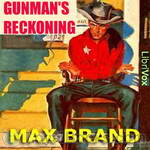 Gunman's Reckoning
A typical early 20th century western. It's a tale of a tough guy who gets involved with an evil man with an angel daughter for whom the tough guy falls. His efforts to recover hers and her father's gold mine claims is the story. Not a lot of shoot em up but enough story to make one want to finish the book to see how things work out. (Introduction by Charles Montgomery) | |
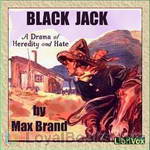 Black Jack
The son of a notorious outlaw is adopted into a wealthy, law-abiding family as an infant after his father is killed in an attempted robbery. Will he follow in the footsteps of his outlaw father or will his life be guided by the respectable woman who nurtured him to manhood? Another exciting tale by the master of the pulp western, Max Brand. | |
By: Lord Dunsany (1878-1957) | |
|---|---|
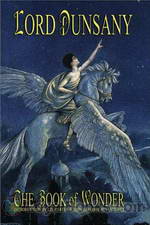 The Book of Wonder
“Come with me, ladies and gentlemen who are in any wise weary of London: come with me: and those that tire at all of the world we know: for we have new worlds here.” – Lord Dunsany, the preface to “The Book of Wonder” | |
 Time and the Gods
Lord Dunsany (24 July 1878 – 25 October 1957) was a London-born Anglo-Irish writer and dramatist notable for his work in fantasy. He was influenced by Algernon Swinburne, who wrote the line “Time and the Gods are at strife” in his 1866 poem “Hymn to Proserpine”, as well as by the fairy tales of the Brothers Grimm and Hans Christian Andersen. In turn, Dunsany’s influence was felt by H. P. Lovecraft and Ursula K. Le Guin. Arthur C. Clarke corresponded with Dunsany between 1944 and 1956. Those letters are collected in the book Arthur C. Clarke & Lord Dunsany: A Correspondence. Time and the Gods, a series of short stories written in a myth-like style, was first published in 1906. | |
By: Paul Laurence Dunbar (1872-1906) | |
|---|---|
 The Sport of the Gods
The Sport of the Gods is a novel by Paul Laurence Dunbar, first published in 1902, centered around urban black life.Forced to leave the South, a family falls apart amid the harsh realities of Northern inner city life in this 1902 examination of the forces that extinguish the dreams of African Americans. | |
By: Upton Sinclair (1878-1968) | |
|---|---|
 King Coal
King Coal is a book by Upton Sinclair, first published in 1917, that exposes the dirty working conditions in the coal mining industry in the western United States during the 1910s. As in an earlier work, The Jungle, Sinclair expresses his socialist viewpoints from the perspective of a single protagonist, Hal Warner, caught up in the schemes and plots of the oppressive American capitalist system. The book itself is based on the 1914-1915 Colorado coal strikes.Reader’s note: In Book 4, there is no chapter numbered Section 16 in the public domain Gutenberg e-text. However, no actual text from the book appears to be missing. | |
 A Prisoner of Morro
Upton Sinclair, born in 1878 was a Pulitzer Prize-winning American author. He wrote over 90 books in many genres. Best known for his muckraking novel, The Jungle, Sinclair also wrote adventure fiction. Many of these works were written under the pseudonym, Ensign Clark Fitch, U.S.N. A Prisoner of Morrow, published in 1898 when Sinclair was but 20 years old, is one of these efforts. The period for this work is the ten-week Spanish–American War which occurred in 1898. Revolts against Spanish rule had been prevalent for decades in Cuba and were closely watched by Americans... | |
|
The Moneychangers
A story of white collar crime and intrigue told from the point of view of Montague, a member of the privileged class of New York. Montague witnesses the manipulation and upset of the stock market by high financier Dan Waterman who is motivated by revenge. Waterman's character is loosely based on J.P. Morgan. | |
 Damaged Goods; the great play "Les avaries" by Brieux, novelized with the approval of the author
| |
By: Charles Morris | |
|---|---|
 Historic Tales
Historical Tales, The Romance of RealityBy CHARLES MORRISPREFACE.It has become a commonplace remark that fact is often stranger than fiction. It may be said, as a variant of this, that history is often more romantic than romance. The pages of the record of man's doings are frequently illustrated by entertaining and striking incidents, relief points in the dull monotony of every-day events, stories fitted to rouse the reader from languid weariness and stir anew in his veins the pulse of interest in human life... | |
By: Israel Zangwill (1864-1926) | |
|---|---|
|
Dreamers of the Ghetto
| |
|
Merely Mary Ann
| |
By: Robert W. Chambers (1865-1933) | |
|---|---|
 The King in Yellow
Robert W. Chambers (1865-1933) studied art in Paris in the late 80’s and early 90’s, where his work was displayed at the Salon. However, shortly after returning to America, he decided to spend his time in writing. He became popular as the writer of a number of romantic novels, but is now best known as the author of “The King In Yellow”. This is a collection of the first half of this work of short stories which have an eerie, other-worldly feel to it; but the stories in the second half are essentially love stories, strongly coloured by the author’s life as an artist in France... | |
 The Flaming Jewel
During the last two years, Fate, Chance, and Destiny had been too busy to attend to Mike Clinch. But now his turn was coming in the Eternal Sequence of things. The stars in their courses indicated the beginning of the undoing of Mike Clinch. In the North Woods, mayhem ensues as three parties vie for possession of the Flaming Jewel. Become immersed in the chasing and slinking to determine who will possess this famed jewel. Better than typical adventure writing magnificently describe the 19th Century Northeastern US in this great novel. | |
By: Honore de Balzac (1799-1850) | |
|---|---|
 Letters of Two Brides
An epistolary novel written by renowned French novelist Balzac, who is regarded as one of the founders of realism and a significant influence to later novelists, the novel focuses on two young women who preserve their friendship through regular correspondence. Originally published in the French newspaper La Presse in 1841 as a serial, the piece later became a part of Balzac’s distinguished novel sequence La Comédie Humaine, or The Human Comedy. Furthermore, Letters of Two Brides surrounds intriguing topics including love, romance, confusion, duty, and the complexity of relationships... | |
By: Henrik Ibsen | |
|---|---|
 A Doll's House
Nineteenth century attitudes towards marriage, the role of women, morality and the search for identity are brilliantly explored in Henrik Ibsen's three act play, A Doll's House. It was highly controversial and received with a sense of outrage among opinion leaders in Europe. Many thinkers like August Strindberg lashed out at Ibsen for portraying the sacred institution of marriage in such a derogatory way. A Doll's House, written in the original Danish, was first performed at the Royal Theater in Copenhagen in 1879... | |
By: Emma Orczy (1865-1947) | |
|---|---|
|
The League of the Scarlet Pimpernel
Written by Baroness Orczy and first published in 1919, The League of the Scarlet Pimpernel is a sequel book to the classic adventure tale, The Scarlet Pimpernel. The book consists of eleven short stories about Sir Percy Blakeney’s exploits in rescuing various aristos and French citizens from the clutches of the guillotine. The stories which are listed below, are set in 1793 but appear in no particular order. They occasionally refer to events in other books in the series. | |
By: Aldous Huxley (1894-1963) | |
|---|---|
 Crome Yellow
A shy, introverted young poet. A weekend in a magnificent English country house. A beautiful young lady whom the poet is secretly in love with. An assorted group of guests with varied interests, motives, ambitions and aspirations, and the complex web of history and events that connect all of them. Crome Yellow by Aldous Huxley was his first book, published in 1921, when he was just 27 years old. It is typical of many books written during this period by writers like Thomas Love Peacock and Somerset Maugham, centered round a country mansion and the quaint, British tradition of being invited to spend a weekend with a group of people whom one may or may not know... | |
By: Henry van Dyke (1852-1933) | |
|---|---|
 The Story of the Other Wise Man
You know the story of the Three Wise Men of the East, and how they travelled from far away to offer their gifts at the manger-cradle in Bethlehem. But have you ever heard the story of the Other Wise Man, who also saw the star in its rising, and set out to follow it, yet did not arrive with his brethren in the presence of the young child Jesus? Of the great desire of this fourth pilgrim, and how it was denied, yet accomplished in the denial; of his many wanderings and the probations of his soul;... | |
|
First Christmas Tree
This is a folk tale of how the first tree came into being. It tells of a hero Winfried with his young companion stepping boldly into the pagan right of the passing into winter. He preaches the gospel of Christ and His birth on that night; then from the heavens came a miracle that resulted in the salvation of the people. To celebrate, they brought new life or the Christmas tree into their homes. | |
By: Henry Van Dyke (1852-1933) | |
|---|---|
|
The Story of the Other Wise Man
| |
|
The Lost Word A Christmas Legend of Long Ago
| |
By: Henry van Dyke (1852-1933) | |
|---|---|
|
Blue Flower
"Sometimes short stories are brought together like parcels in a basket. Sometimes they grow together like blossoms on a bush. Then, of course, they really belong to one another, because they have the same life in them. ...There is such a thought in this book. It is the idea of the search for inward happiness, which all men who are really alive are following, along what various paths, and with what different fortunes! Glimpses of this idea, traces of this search, I thought that I could see in certain tales that were in my mind,—tales of times old and new, of lands near and far away... | |
By: Henry Van Dyke (1852-1933) | |
|---|---|
|
Fisherman's Luck and Some Other Uncertain Things
| |
|
The Unruly Sprite A Partial Fairy Tale
| |
By: Anton Chekhov (1860-1904) | |
|---|---|
 The Tales of Chekhov
This is the first of thirteen volumes of Anton Chekhov’s short stories, translated by Constance Garnett. Anton Chekhov was a Russian doctor who turned to fiction as a hobby, and quickly blossomed into one of the masters of the short story genre. Though he is arguably best known for his dramatic works, such as The Cherry Orchard, his stories are widely considered to be some of the most perfect examples of short fiction ever written. Constance Black Garnett was an English housewife who taught herself Russian as a hobby, and subsequently introduced the English-speaking world to some of the greatest Russian authors, including Chekhov and Dostoevsky... | |
 The Cherry Orchard
The Cherry Orchard is Russian playwright Anton Chekhov's last play. It premiered at the Moscow Art Theatre 17 January 1904 in a production directed by Constantin Stanislavski. Chekhov intended this play as a comedy and it does contain some elements of farce; however, Stanislavski insisted on directing the play as a tragedy. Since this initial production, directors have had to contend with the dual nature of this play. The play concerns an aristocratic Russian woman and her family as they return to the family's estate (which includes a large and well-known cherry orchard) just before it is auctioned to pay the mortgage... | |
 The Duel
The plot centres around Laevsky, who is living in a small seaside town in the Caucasus after running away with another man's wife, Nadyezhda Fyodorovna, amid dreams of starting a new life.The dreams have come to nothing as Laevsky idles away his life drinking and playing cards, and Nadyezhda begins to have other affairs.Laevsky's scheme to run away again, this time without his mistress, brings him into conflict with the rationalist Von Koren, who believes in Darwinian principles of natural selection and extinction of the weak and useless.Matters come to a head when an outburst from Laevsky leads to a duel. Von Koren is determined to teach Laevksy a lesson.(Introduction by Phil) | |
By: Mary Wollstonecraft (1759-1797) | |
|---|---|
 Maria: or, the Wrongs of Woman
Maria: or, The Wrongs of Woman is Mary Wollstonecraft's unfinished novelistic sequel to her revolutionary political treatise A Vindication of the Rights of Woman. It was published posthumously in 1798 by her husband, William Godwin. Maria revolves around the story of a woman imprisoned in an insane asylum by her husband, and focuses on the societal rather than the individual "wrongs of woman". Publicised at the same time as Wollstonecraft's memoirs, both were considered scandalous. Not until the 20th century was the novel considered an important historical and feminist work. | |
|
Mary: A Fiction
Eliza, Mary's mother, is obsessed with novels, rarely considers anyone but herself, and favours Mary's brother. She neglects her daughter, who educates herself using only books and the natural world. Ignored by her family, Mary devotes much of her time to charity. When her brother suddenly dies, leaving Mary heir to the family's fortune, her mother finally takes an interest in her; she is taught "accomplishments", such as dancing, that will attract suitors. However, Mary's mother soon sickens and requests on her deathbed that Mary wed Charles, a wealthy man she has never met. Stunned and unable to refuse, Mary agrees. Immediately after the ceremony, Charles departs for the Continent. | |