 |
Books Should Be Free Loyal Books Free Public Domain Audiobooks & eBook Downloads |
|
|
|
Books Should Be Free Loyal Books Free Public Domain Audiobooks & eBook Downloads |
|
Fiction |
|---|
|
Book type:
Sort by:
View by:
|
By: Stewart Edward White (1873-1946) | |
|---|---|
 Conjuror's House, a Romance of the Free Forest
In the northern outreaches of the Canadian wilderness, it was understood that the Hudson Bay Company governed all trading, and one factor named Galen Albret took his position seriously. Free traders, or those who dared try to do their trading outside of the Company, found themselves having to face Galen Albret and his methods of dealing with them. One or two offenses he might tolerate, but for those who repeatedly refuse to acknowledge his warning out, he would send them on “La Longue Traverse” through the wilderness without supplies, and from which they seldom returned... | |
 The Blazed Trail
Stewart Edward White wrote fiction and non-fiction about adventure and travel, with an emphasis on natural history and outdoor living. White's books were popular at a time when America was losing its vanishing wilderness and many are based on his experiences in mining and lumber camps. The Blazed Trail is the story of early lumbermen in the northern woods of Michigan. The novel portrays the challenges faced by the workers focusing on one, Harry Thorpe, as he endeavors to be successful though completely unskilled when he enters the woods... | |
 Arizona Nights
Arizona Nights is a collection of tales from the American West as told by those who took part in them. | |
 Gold
Gold
This is a well written story of the California gold rush of 1849. Four friends decide they are going to go to California and get rich in the gold fields. Follow their adventures as they travel to California across the isthmus of Panama to San Francisco. In their search for gold they encounter hostile Indians, various desperadoes, and natural disasters. Did they strike it rich? Listen and find out. | |
 Blazed Trail Stories and Stories Of The Wild Life
Thirteen short stories by a popular writer of the early 20th century (not to be confused with an earlier book Blazed Trail). White's books were popular at a time when America was losing its vanishing wilderness. He was a keen observer of the beauties of nature and human nature, yet could render them in a plain-spoken style. Based on his own experience, whether writing camping journals or Westerns, he included pithy and fun details about cabin-building, canoeing, logging, gold-hunting, and guns and fishing and hunting... | |
 The Riverman
| |
|
The Adventures of Bobby Orde
| |
By: Fred M. White (1859-?) | |
|---|---|
 The Mystery of the Four Fingers
A fabulously rich gold mine in Mexico is known by the picturesque and mysterious name of The Four Fingers. It originally belonged to an Aztec tribe, and its location is known to one surviving descendant. Surprises, strange and startling, are concealed in every chapter of this completely engrossing detective story. And through it runs the thread of a curious love story. | |
By: Leigh Brackett (1915-1978) | |
|---|---|
 Black Amazon of Mars
Carrying out the last wishes of a comrade, mercenary Eric John Stark takes on the task of returning a stolen talisman to a walled city near the Martian pole; a city that guards the mysterious Gates of Death. Now all he has to do is get past the brutal clans of Mekh and the shadowy Lord Ciaran to get to Kushat where they’ll probably attempt to kill him. All while he tries to hold on to a talisman that imprints ancient memories of the Gates in his mind. That’s not easy for a human raised by Mercurian aborigines... | |
By: Marcel Allain (1885-1969) | |
|---|---|
 Fantômas
Fantômas is the first of 32 novels penned from 1911 to 1913 by Marcel Allain and Pierre Souvestre. The title character is a ruthless thief and killer, a bloodthirsty successor to LeBlanc's Arsène Lupin. The first five novels were made into silent film serials. The character and the movies caught the eye of the French Surrealists who admired the primal violence of Fantômas, as well as his portrayal in the films, which are considered landmarks in French Cinema. In Fantômas, the Marquise de Langrune is savagely murdered and Inspector Juve, who is obsessed with capturing Fantômas, arrives to solve the murder. | |
 Messengers of Evil
Fantômas was introduced a few years after Arsène Lupin, another well-known thief. But whereas Lupin draws the line at murder, Fantômas has no such qualms and is shown as a sociopath who enjoys killing in a sadistic fashion. He is totally ruthless, gives no mercy, and is loyal to none, not even his own children. He is a master of disguise, always appearing under an assumed identity, often that of a person whom he has murdered. Fantômas makes use of bizarre and improbable techniques in his crimes, such as plague-infested rats, giant snakes, and rooms that fill with sand... | |
|
A Nest of Spies
| |
|
A Royal Prisoner
| |
By: William Butler Yeats (1865-1939) | |
|---|---|
|
The Secret Rose
| |
|
Rosa Alchemica
| |
|
Stories of Red Hanrahan
| |
By: Sara Cone Bryant (1873-) | |
|---|---|
|
Stories to Tell Children Fifty-Four Stories With Some Suggestions For Telling
| |
By: Carey Rockwell | |
|---|---|
|
Stand by for Mars
Tom Corbett - Space Cadet was one of the first multimedia sensations. In the 1950s the character had his own radio show, TV series, comic book, breakfast cereal, and a line of young-adult novels. A cross between "Tom Brown's School Days" and Horatio Hornblower (and loosely based upon Robert A. Heinlein's novel "Space Cadet"), the books follow the adventures of Tom and his friends Roger Manning and Astro as they work their way through Space Academy to become officers of the Solar Guard. Along the way they tangle with space pirates, smugglers, and the threat of demerits for breaking the rules... | |
|
Danger in Deep Space
| |
|
Sabotage in Space
This book is part of the on-going adventures of Tom Corbett in the Space Cadet Stories. Tom, Astro and Roger are determined to find the saboteurs but get framed in the process, risking court martial and expulsion from the Space Academy. NOTE: Carey Rockwell is a pseudonym used by Grosset & Dunlap. It is unknown who wrote the books. | |
By: Kathleen Norris | |
|---|---|
 Mother
With seven children and a home to take care of, Margaret wondered how her Mother could be so happy living a life that seemed all drudgery. As Margaret has new experiences, she comes to realize that “her mother was not only the truest, the finest, the most generous woman she had ever known, but the happiest as well”. | |
By: Barton Wood Currie | |
|---|---|
 Officer 666
Bored with his life as a wealthy businessman's only son, Travers Gladwin learns of a plot by a renowned art burglar to rob his house, so rather than thwart the planned burglary, he borrows a police uniform from a friend and decides to confront the robber by posing as an officer. When the burglar arrives at the house, he tries to pass himself off as Travers Gladwin. From there, things only get more complicated, including the arrival of the burglar's girlfriend who believes that her beau is the wealthy man's son. Comical and timely, the book was made into a movie multiple times, each hugely successful. | |
By: Clara Reeve (1729-1807) | |
|---|---|
 The Old English Baron
The story follows the adventures of Sir Philip Harclay, who returns to medieval England to find that the castle seat and estate of his friend Lord Lovel have been usurped. A series of revelations, horrors and betrayals climax in a scene of single combat in which good battles evil for the return of the prize. | |
By: Elsie Spicer Eells | |
|---|---|
 Fairy Tales from Brazil
This book, subtitled "How and Why Tales from Brazilian Folk-Lore", is a collection of short stories, most of them etiologial myths from Brazilian Indian Folklore. | |
|
Tales of Giants from Brazil
| |
By: Robert Tressell | |
|---|---|
 The Ragged Trousered Philanthropists
Clearly frustrated at the refusal of his contemporaries to recognise the iniquity of society, Tressell’s cast of hypocritical Christians, exploitative capitalists and corrupt councillors provide a backdrop for his main target — the workers who think that a better life is “not for the likes of them”. Hence the title of the book; Tressell paints the workers as “philanthropists” who throw themselves into back-breaking work for poverty wages in order to generate profit for their masters... | |
By: Charles W. Diffin (1884-1966) | |
|---|---|
 Two Thousand Miles Below
A science fiction novel that was originally produced in four parts in the publication: Astounding Stories in June, September, November 1932, January 1933. The main character is Dean Rawson, who plans on discovering a way of mining power from a dead volcano, but ends up discovering more than he bargained for. | |
By: Miles Franklin | |
|---|---|
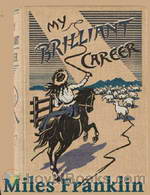 My Brilliant Career
Sybella “There is no plot in this story, because there has been none in my life or in any other life which has come under my notice. I am one of a class, the individuals of which have no time for plots in their life, but have all they can do to get their work done without indulging in such a luxury”. Like the author Miles Franklin, Sybella grows up in the bush, and as her family’s fortunes decline, so her feelings rise that life should hold more for her than the relentless hard physical work farming marginal land in times of drought. | |
By: Joseph Lister (1827-1912) | |
|---|---|
 On the Antiseptic Principle of the Practice of Surgery
Joseph Lister was born near London in 1827. He studied medicine at the University of London and pursued a career as a surgeon in Scotland. He became professor of Surgery in Glasgow and later (1877) at Kings College Hospital, in London. Lister’s contribution to the advancement of surgery cannot be overestimated. Before his work on antisepsis, wounds were often left open to heal, leading to long recoveries, unsightly scarring, and not infrequently amputation or death due to infection. Lister’s work enabled more wounds to be closed primarily with sutures, drastically reducing healing time, scarring, amputations, and deaths due to infection... | |
By: Maria Susanna Cummins (1827-1866) | |
|---|---|
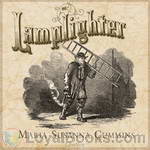 The Lamplighter
Gertrude began life as an abused child in the care of Nan Grant, a cold and cruel woman. The only human character who was kind to her was the lamplighter, Truman Flint. When Nan, in one of her tantrums, threw Gertrude away from her house, he took her into his care. A few unforgettable people taught Gertrude everything that a young lady has to know. Almost everybody loves and admires Gertrude. But the one she loved best is Willie Sullivan. Will this love stay strong even after 6 years of separation? And will Gertrude, so admired and loved as she is, be happy - once in her life - for herself and not for others? | |
By: John Dos Passos (1896-1970) | |
|---|---|
|
Three Soldiers
Three Soldiers, the second novel by John Dos Passos, follows the experiences of several young Americans thrown into the confusion and brutality of World War I.Written when the author was just twenty-three, it was key to the development of a realistic depiction of war in American literature, and earned Dos Passos, later named by Jean-Paul Sartre "the greatest living writer of our time", important early attention.Critic H L Menken said of it: "no war story can be written in the United States without challenging comparison with it--and no story that is less meticulously true will stand up to it... | |
By: Ralph Connor (1860-1937) | |
|---|---|
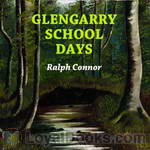 Glengarry School Days
With international book sales in the millions, Ralph Connor was the best-known Canadian novelist of the first two decades of the Twentieth Century. Glengarry School Days (1902), hugely popular in its time, is based on his memories of growing up in rural Ontario around the time of Canadian confederation. Although Connor saw himself as writing moral fiction for adults, generations of younger readers have also enjoyed these affectionate and gently amusing sketches, and excerpts from Glengarry School Days have appeared in school anthologies. | |