 |
Books Should Be Free Loyal Books Free Public Domain Audiobooks & eBook Downloads |
|
|
|
Books Should Be Free Loyal Books Free Public Domain Audiobooks & eBook Downloads |
|
Fiction |
|---|
|
Book type:
Sort by:
View by:
|
By: Edward Lear (1812-1888) | |
|---|---|
 More Nonsense
| |
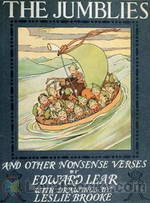 Nonsense Verses by Edward Lear
This is a collection of some of the delightful nonsense verses and stories by Edward Lear. A lot of them are also my favorites. The Jumblies, The Owl and the Pussy-cat; the Broom, the Shovel, The Poker and the Tongs; The Duck and the Kangaroo; The Cummerbund; The Dong with the Luminous Nose; The New Vestments; Calico Pie; The courtship of the Yonghy-Bonghy-Bo and Incidents in the Life of My Uncle Arly. Also included at no extra cost are two sections with my favorite Lear limericks. Only about 30 of them but they are all funny and full of delectable silliness. I hope you enjoy listening to these as much as I enjoyed recording them. | |
By: Frank Richard Stockton (1834-1902) | |
|---|---|
|
The Lady, or the Tiger?
| |
|
The Magic Egg and Other Stories
| |
|
Ting-a-ling
| |
|
The House of Martha
| |
|
A Jolly Fellowship
| |
|
John Gayther's Garden and the Stories Told Therein
| |
|
The Squirrel Inn
| |
|
What Might Have Been Expected
| |
|
My Terminal Moraine 1892
| |
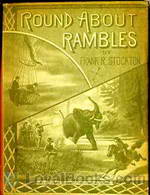 Round-about Rambles
ROUND-ABOUT RAMBLES, In Lands of FACT AND FANCYBY FRANK R STOCKTONPREFACECome along, boys and girls! We are off on our rambles. But please do not ask me where we are going. It would delay us very much if I should postpone our start until I had drawn you a map of the route, with all the stopping-places set down. We have far to go, and a great many things to see, and it may be that some of you will be very tired before we get through. If so, I shall be sorry; but it will be a comfort to think that none of us need go any farther than we choose... | |
By: George Barr McCutcheon (1866-1928) | |
|---|---|
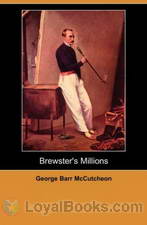 Brewster's Millions
He hosts an all expenses paid luxury cruise to Europe for fifty guests and showers them with expensive gifts. When he's mugged in a dark alley, he insists that the thugs also take the $300 stashed away in his back pocket. He flies into a rage whenever one of his employees suggests cutting costs. Every time he places a bet, he wins, causing him even more despair! In Brewster's Millions by George Barr McCutcheon, a classic riches-to-rags tale, Montgomery Brewster is bound by the terms of an eccentric uncle's will to spend one million dollars completely within a year so that he can lay claim to an even bigger fortune... | |
 Graustark
The Graustark novels are stories of court intrigue, royal disguise, and romance similar to Anthony Hope’s 1894 novel, The Prisoner of Zenda, and its sequels. They were popular best-sellers at the time they were published and the original editions are still readily available in used book shops. The novels gave their name to a fictional genre called Graustarkian: this genre contains tales of romance and intrigue usually featuring titled characters in small, fictional, Central European countries... | |
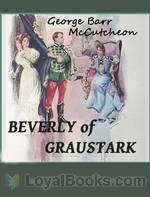 Beverly Of Graustark
Beverly Of Graustark is the second book in the Graustark series. Lorry and his wife, the princess, made their home in Washington, but spent a few months of each year in Edelweiss. During the periods spent in Washington and in travel, her affairs in Graustark were in the hands of a capable, austere old diplomat–her uncle, Count Caspar Halfont. Princess Volga reigned as regent over the principality of Axphain. To the south lay the principality of Dawsbergen, ruled by young Prince Dantan, whose half brother, the deposed Prince Gabriel, had been for two years a prisoner in Graustark, the convicted assassin of Prince Lorenz, of Axphain, one time suitor for the hand of Yetive... | |
|
West Wind Drift
| |
|
The Husbands of Edith
| |
By: John Masefield (1878-1967) | |
|---|---|
|
Martin Hyde, the Duke's Messenger
| |
By: Maude L. Radford (1875-1934) | |
|---|---|
 King Arthur and His Knights
Published in 1903, King Arthur and His Knights by Maude L. Radford is an easy to read version of the Arthurian legends, made simple and interesting for children. Maude Lavinia Radford Warren was a Canadian born American who taught literature and composition at the University of Chicago between 1893-1907. Following the success of some of her books, she left teaching to take up writing as a full time career. She also served as a war correspondent for the New York Times magazine during WWI and contributed several remarkable features on the role of women in the conflict... | |
By: Lester Del Rey (1915-1993) | |
|---|---|
 Badge of Infamy
Shifting between Earth and Mars, Badge of Infamy focuses on the gripping tale of a former doctor who becomes a pariah due to being temporarily governed by emotion and compassion, rather than complying with the highly regarded rules established by the Medical Lobby. Furthermore, the novel covers numerous topics including justice, brutality, betrayal, ethics, political control, and lobbying. Set in the year 2100, the novel begins with the introduction of its protagonist, Daniel Feldman, an ethical man, who makes the terrible mistake of going against the fixed medical protocol and performing surgery to save the life of a friend... | |
By: Lester del Rey | |
|---|---|
 Victory
Lester del Rey (1915 – 1993) was a Golden Age science fiction author and editor closely connected to John W. Campbell Jr. and Astounding Science Fiction magazine. He also founded Del Rey Books, a popular publishing label he edited with his wife Judy-Lynn. Victory is the story of an undefended Earth in a warring galaxy. It appeared in the August 1955 issue of Astounding Science Fiction. | |
 The Sky Is Falling
After dying in a terrible accident at a building site, Dave Hanson finds himself being brought back to life in a world where magic is real, and where the sky is breaking apart and falling. And he is expected to put it back together again. Will he be able to save this strange world, and his own new life? | |
 Let'em Breathe Space
The old space freighter Wahoo is all Dr. Pietro can afford for his expedition to the rings of Saturn. Although built for a crew of 6 the good doctor crams 19 people into the Wahoo, and after 5 months they are really getting on each other’s nerves. Then someone starts killing people and poisoning the air giving plants in the hydroponics bay. Can our hero Paul Tremaine find the killer before he suffocates? Perhaps you should hold your breath. – Let’em Breathe Space was first published in the July 1953 edition of Space Science Fiction magazine. | |
By: Frank R. Stockton (1834-1902) | |
|---|---|
 Buccaneers and Pirates of Our Coasts
Buccaneers and Pirates of our Coasts is a non-fiction, rolicking story of the origins of piracy and of the famous pirates of the coasts of the United States. The stories don’t cast pirates in the glowing light of modern day renditions – in Stockton’s stories, pirates are bad guys! – but the dramatic style makes them good fun to read, anyway! (Summary by Sibella Denton) | |
By: Anatole France (1844-1924) | |
|---|---|
 Penguin Island
An old monk is tricked by the Devil into undertaking a voyage to a remote island to save the souls of thousands who live there. He arrives on the island which is actually a desolate one, inhabited only by colonies of millions of penguins. The old monk whose eyesight and hearing are almost nonexistent, mistakes them for humans and begins baptizing them. In Heaven, God finds Himself in a dilemma; the old monk's unwavering faith compels him to regard the baptisms as genuine. However, in Christian theology, only humans have souls – hence God is forced to grant the thousands of newly baptized penguins with souls! This is the beginning of their journey into “civilization... | |
|
Thais
The fourth century ascetic Paphnuce, journeys from his remote desert hermitage to urban Alexandria determined to locate the stunningly beautiful and libertine actress, Thais. He earnestly desires that she convert to Christianity. Gaining an audience by deception, the hermit passionately speaks to the actress of eternity. Remarkably, Thais repents and retires to a convent for the rest of her days. The hermit however, cannot rid his mind of her charms, not even with the help of the most severe austerities. After years of anguish the monk learns of Thais' immanent demise and hastens to her side. There he confesses the unspeakable. | |
|
The Red Lily
| |
|
A Mummer's Tale
| |
|
Balthasar and Other Works - 1909
| |
|
Our Children Scenes from the Country and the Town
| |
By: Max Brand (1892-1944) | |
|---|---|
 Alcatraz
This is a story of a wild horse who many said could not be caught or broken, and the man who set out to prove them wrong. | |
 Trailin'!
“Max Brand”, the most used pseudonym of Frederick Schiller Faust (1892-1944), is best known today for his western fiction. Faust began in the early twentieth century selling his stories to the pulp magazines, writing in many genres under numerous pseudonyms. He is probably best known as the creator of the character Destry. His novel Destry Rides Again has been filmed several times, most notably the 1939 version starring James Stewart and Marlene Dietrich. Also his character Dr. Kildare which was popularized in film and on television earned him a fortune... | |
 Ronicky Doone
Frederick Schiller Faust (1892-1944), is best known today for his western fiction. Faust was born in Seattle, Washington and at an early age moved with his parents to the San Joaquin Valley in California where he worked as a ranchhand. After a failed attempt to enlist in the Great War in 1917 and with the help of Mark Twain’s sister he met Robert Hobart Davis, editor of All-Story Weekly and became a regular contributor writting under his most used pseudonym “Max Brand”. He wrote in many genres during his career and produced more than 300 western novels and stories... | |
 The Night Horseman
A man, a dog, and a horse. The call of the wild geese. A very smart doctor from the east who finds there is a lot to learn from these desert people. A woman loved by three men. A gunslinger who has a debt to settle. Max Brand brings them all together in another one of his over three hundred exciting western tales. Brand is not your typical western writer. | |
 The Untamed
Whistlin' Dan Berry is one of the most interesting characters in Western fiction. With uncanny abilities he controls a wild stallion, appropriately named Satan, and a ferocious wolf dog, Black Bart. Easy going, Berry proves absolutely unforgiving when physically assaulted by a feared, vicious outlaw, Jim Silent. Seemingly without any emotions, Whistlin' Dan is relentless in his vengeful search for Silent and his outlaw gang. The is the first book in the "Whistlin Dan" series. (Introduction by rkilmer) | |
 Way Of The Lawless
Young Andrew Lanning made one mistake in the beginning, and now the most feared lawman in the mountain desert, Hal Dozier, is on his trail and will stop at nothing to bring the outlaw Lanning to justice. But is Andrew guilty of all the things he is being accused of? There is one, a pretty young girl, who doesn't believe all she hears about him. Again, Max Brand shows us why he is the master of the pulp western. (Introduction by Richard Kilmer) | |
|
The Seventh Man
The Seventh Man by Max Brand, tells part of the story of the larger-than-life western character, Dan Barry, known as “Whistling Dan,” and his alter-ego companions, Black Bart, the wolf-dog, and Satan, the indomitable black stallion. It’s also the story of Kate Cumberland and the incredible five-year-old daughter of Kate and Dan, Joan. We first see Dan as a gentle, caring man with a deep sense of fairness. But then, after six years of a peaceful life in their mountain cabin Dan, more feral than human, sets out to revenge an injustice by killing seven men... | |
 Gunman's Reckoning
A typical early 20th century western. It's a tale of a tough guy who gets involved with an evil man with an angel daughter for whom the tough guy falls. His efforts to recover hers and her father's gold mine claims is the story. Not a lot of shoot em up but enough story to make one want to finish the book to see how things work out. (Introduction by Charles Montgomery) | |
 Black Jack
The son of a notorious outlaw is adopted into a wealthy, law-abiding family as an infant after his father is killed in an attempted robbery. Will he follow in the footsteps of his outlaw father or will his life be guided by the respectable woman who nurtured him to manhood? Another exciting tale by the master of the pulp western, Max Brand. | |
By: Lord Dunsany (1878-1957) | |
|---|---|
 The Book of Wonder
“Come with me, ladies and gentlemen who are in any wise weary of London: come with me: and those that tire at all of the world we know: for we have new worlds here.” – Lord Dunsany, the preface to “The Book of Wonder” | |
 Time and the Gods
Lord Dunsany (24 July 1878 – 25 October 1957) was a London-born Anglo-Irish writer and dramatist notable for his work in fantasy. He was influenced by Algernon Swinburne, who wrote the line “Time and the Gods are at strife” in his 1866 poem “Hymn to Proserpine”, as well as by the fairy tales of the Brothers Grimm and Hans Christian Andersen. In turn, Dunsany’s influence was felt by H. P. Lovecraft and Ursula K. Le Guin. Arthur C. Clarke corresponded with Dunsany between 1944 and 1956. Those letters are collected in the book Arthur C. Clarke & Lord Dunsany: A Correspondence. Time and the Gods, a series of short stories written in a myth-like style, was first published in 1906. | |
By: Paul Laurence Dunbar (1872-1906) | |
|---|---|
 The Sport of the Gods
The Sport of the Gods is a novel by Paul Laurence Dunbar, first published in 1902, centered around urban black life.Forced to leave the South, a family falls apart amid the harsh realities of Northern inner city life in this 1902 examination of the forces that extinguish the dreams of African Americans. | |
By: Joseph Bédier (1864-1938) | |
|---|---|
 Tristan and Iseult
He is a divinely handsome young man, valiant and fiercely loyal to his uncle who adopted and nurtured him from the time he was an abandoned orphan. She is the ethereally beautiful princess of a faraway country, betrothed to the middle-aged uncle. They meet when the young man is sent as an emissary to her country to bring her back for the grand wedding. On board the ship, the two fall tragically in love. Tristan and Iseult by Joseph Bedier is a retelling of an ancient legend which has been popular... | |
By: Upton Sinclair | |
|---|---|
 The Jungle
Originally crafted as a scathing expose of the Chicago meatpacking industry of the early twentieth century, The Jungle by American journalist and author, Upton Sinclair, was based on his investigative work into the dark underbelly of capitalism in the country. Throughout his entire career, he wrote passionately about the inhuman conditions that lay behind the glittering facade of free market economics. Jurgis Rudkus is a Lithuanian immigrant. The novel opens on his wedding day to the lovely young Ona Lukoszaite... | |
 King Coal
King Coal is a book by Upton Sinclair, first published in 1917, that exposes the dirty working conditions in the coal mining industry in the western United States during the 1910s. As in an earlier work, The Jungle, Sinclair expresses his socialist viewpoints from the perspective of a single protagonist, Hal Warner, caught up in the schemes and plots of the oppressive American capitalist system. The book itself is based on the 1914-1915 Colorado coal strikes.Reader’s note: In Book 4, there is no chapter numbered Section 16 in the public domain Gutenberg e-text. However, no actual text from the book appears to be missing. | |
 A Prisoner of Morro
Upton Sinclair, born in 1878 was a Pulitzer Prize-winning American author. He wrote over 90 books in many genres. Best known for his muckraking novel, The Jungle, Sinclair also wrote adventure fiction. Many of these works were written under the pseudonym, Ensign Clark Fitch, U.S.N. A Prisoner of Morrow, published in 1898 when Sinclair was but 20 years old, is one of these efforts. The period for this work is the ten-week Spanish–American War which occurred in 1898. Revolts against Spanish rule had been prevalent for decades in Cuba and were closely watched by Americans... | |
|
The Moneychangers
A story of white collar crime and intrigue told from the point of view of Montague, a member of the privileged class of New York. Montague witnesses the manipulation and upset of the stock market by high financier Dan Waterman who is motivated by revenge. Waterman's character is loosely based on J.P. Morgan. | |
|
Damaged Goods; the great play "Les avaries" by Brieux, novelized with the approval of the author
| |
By: Charles Morris | |
|---|---|
 Historic Tales
Historical Tales, The Romance of RealityBy CHARLES MORRISPREFACE.It has become a commonplace remark that fact is often stranger than fiction. It may be said, as a variant of this, that history is often more romantic than romance. The pages of the record of man's doings are frequently illustrated by entertaining and striking incidents, relief points in the dull monotony of every-day events, stories fitted to rouse the reader from languid weariness and stir anew in his veins the pulse of interest in human life... | |
By: Israel Zangwill (1864-1926) | |
|---|---|
 The Big Bow Mystery
Regarded as the first full-length locked room mystery, the novel focuses on a murder that has occurred inside a locked room, with no clear indication as to the weapon used, the perpetrator of the horrendous crime, or a possible escape route. Needless to say, The Big Bow Mystery has all the elements necessary to engage its audience and encourage them to look between the lines in an attempt to unravel the complex murder. Set in Bow, east London, the novel opens when Mrs. Drabdump, a widow who rents out rooms, panics when one of her lodgers does not respond to her fervent attempts to wake him... | |
|
Dreamers of the Ghetto
| |
|
Merely Mary Ann
| |
By: Robert W. Chambers (1865-1933) | |
|---|---|
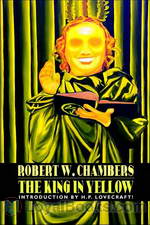 The King in Yellow
Robert W. Chambers (1865-1933) studied art in Paris in the late 80’s and early 90’s, where his work was displayed at the Salon. However, shortly after returning to America, he decided to spend his time in writing. He became popular as the writer of a number of romantic novels, but is now best known as the author of “The King In Yellow”. This is a collection of the first half of this work of short stories which have an eerie, other-worldly feel to it; but the stories in the second half are essentially love stories, strongly coloured by the author’s life as an artist in France... | |
 The Flaming Jewel
During the last two years, Fate, Chance, and Destiny had been too busy to attend to Mike Clinch. But now his turn was coming in the Eternal Sequence of things. The stars in their courses indicated the beginning of the undoing of Mike Clinch. In the North Woods, mayhem ensues as three parties vie for possession of the Flaming Jewel. Become immersed in the chasing and slinking to determine who will possess this famed jewel. Better than typical adventure writing magnificently describe the 19th Century Northeastern US in this great novel. | |
By: Honore de Balzac (1799-1850) | |
|---|---|
 Letters of Two Brides
An epistolary novel written by renowned French novelist Balzac, who is regarded as one of the founders of realism and a significant influence to later novelists, the novel focuses on two young women who preserve their friendship through regular correspondence. Originally published in the French newspaper La Presse in 1841 as a serial, the piece later became a part of Balzac’s distinguished novel sequence La Comédie Humaine, or The Human Comedy. Furthermore, Letters of Two Brides surrounds intriguing topics including love, romance, confusion, duty, and the complexity of relationships... | |
By: Henrik Ibsen | |
|---|---|
 A Doll's House
Nineteenth century attitudes towards marriage, the role of women, morality and the search for identity are brilliantly explored in Henrik Ibsen's three act play, A Doll's House. It was highly controversial and received with a sense of outrage among opinion leaders in Europe. Many thinkers like August Strindberg lashed out at Ibsen for portraying the sacred institution of marriage in such a derogatory way. A Doll's House, written in the original Danish, was first performed at the Royal Theater in Copenhagen in 1879... | |
By: Baroness Orczy (1865-1947) | |
|---|---|
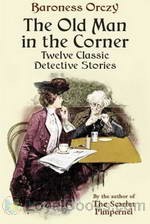 The Old Man in the Corner
Created by Baroness Orczy, author of the famous Scarlet Pimpernel series, The Old Man in the Corner was one of the earliest armchair detectives, popping up with so many others in the wake of the huge popularity of the Sherlock Holmes stories. The Old Man relies mostly upon sensationalistic “penny dreadful” newspaper accounts, with the occasional courtroom visit for extra laughs. He narrates all this information (while tying complicated knots in a piece of string) to a Lady Journalist who frequents the same tea-shop. | |
By: Emma Orczy (1865-1947) | |
|---|---|
|
The League of the Scarlet Pimpernel
Written by Baroness Orczy and first published in 1919, The League of the Scarlet Pimpernel is a sequel book to the classic adventure tale, The Scarlet Pimpernel. The book consists of eleven short stories about Sir Percy Blakeney’s exploits in rescuing various aristos and French citizens from the clutches of the guillotine. The stories which are listed below, are set in 1793 but appear in no particular order. They occasionally refer to events in other books in the series. | |
By: Aldous Huxley (1894-1963) | |
|---|---|
 Crome Yellow
A shy, introverted young poet. A weekend in a magnificent English country house. A beautiful young lady whom the poet is secretly in love with. An assorted group of guests with varied interests, motives, ambitions and aspirations, and the complex web of history and events that connect all of them. Crome Yellow by Aldous Huxley was his first book, published in 1921, when he was just 27 years old. It is typical of many books written during this period by writers like Thomas Love Peacock and Somerset Maugham, centered round a country mansion and the quaint, British tradition of being invited to spend a weekend with a group of people whom one may or may not know... | |
By: Henry van Dyke (1852-1933) | |
|---|---|
 The Story of the Other Wise Man
You know the story of the Three Wise Men of the East, and how they travelled from far away to offer their gifts at the manger-cradle in Bethlehem. But have you ever heard the story of the Other Wise Man, who also saw the star in its rising, and set out to follow it, yet did not arrive with his brethren in the presence of the young child Jesus? Of the great desire of this fourth pilgrim, and how it was denied, yet accomplished in the denial; of his many wanderings and the probations of his soul;... | |
|
First Christmas Tree
This is a folk tale of how the first tree came into being. It tells of a hero Winfried with his young companion stepping boldly into the pagan right of the passing into winter. He preaches the gospel of Christ and His birth on that night; then from the heavens came a miracle that resulted in the salvation of the people. To celebrate, they brought new life or the Christmas tree into their homes. | |
By: Henry Van Dyke (1852-1933) | |
|---|---|
|
The Story of the Other Wise Man
| |
|
The Lost Word A Christmas Legend of Long Ago
| |
By: Henry van Dyke (1852-1933) | |
|---|---|
|
Blue Flower
"Sometimes short stories are brought together like parcels in a basket. Sometimes they grow together like blossoms on a bush. Then, of course, they really belong to one another, because they have the same life in them. ...There is such a thought in this book. It is the idea of the search for inward happiness, which all men who are really alive are following, along what various paths, and with what different fortunes! Glimpses of this idea, traces of this search, I thought that I could see in certain tales that were in my mind,—tales of times old and new, of lands near and far away... | |
By: Henry Van Dyke (1852-1933) | |
|---|---|
|
Fisherman's Luck and Some Other Uncertain Things
| |
|
The Unruly Sprite A Partial Fairy Tale
| |
By: Anton Chekhov (1860-1904) | |
|---|---|
 The Tales of Chekhov
This is the first of thirteen volumes of Anton Chekhov’s short stories, translated by Constance Garnett. Anton Chekhov was a Russian doctor who turned to fiction as a hobby, and quickly blossomed into one of the masters of the short story genre. Though he is arguably best known for his dramatic works, such as The Cherry Orchard, his stories are widely considered to be some of the most perfect examples of short fiction ever written. Constance Black Garnett was an English housewife who taught herself Russian as a hobby, and subsequently introduced the English-speaking world to some of the greatest Russian authors, including Chekhov and Dostoevsky... | |
 The Cherry Orchard
The Cherry Orchard is Russian playwright Anton Chekhov's last play. It premiered at the Moscow Art Theatre 17 January 1904 in a production directed by Constantin Stanislavski. Chekhov intended this play as a comedy and it does contain some elements of farce; however, Stanislavski insisted on directing the play as a tragedy. Since this initial production, directors have had to contend with the dual nature of this play. The play concerns an aristocratic Russian woman and her family as they return to the family's estate (which includes a large and well-known cherry orchard) just before it is auctioned to pay the mortgage... | |
 The Duel
The plot centres around Laevsky, who is living in a small seaside town in the Caucasus after running away with another man's wife, Nadyezhda Fyodorovna, amid dreams of starting a new life.The dreams have come to nothing as Laevsky idles away his life drinking and playing cards, and Nadyezhda begins to have other affairs.Laevsky's scheme to run away again, this time without his mistress, brings him into conflict with the rationalist Von Koren, who believes in Darwinian principles of natural selection and extinction of the weak and useless.Matters come to a head when an outburst from Laevsky leads to a duel. Von Koren is determined to teach Laevksy a lesson.(Introduction by Phil) | |
By: Mary Wollstonecraft (1759-1797) | |
|---|---|
 Maria: or, the Wrongs of Woman
Maria: or, The Wrongs of Woman is Mary Wollstonecraft's unfinished novelistic sequel to her revolutionary political treatise A Vindication of the Rights of Woman. It was published posthumously in 1798 by her husband, William Godwin. Maria revolves around the story of a woman imprisoned in an insane asylum by her husband, and focuses on the societal rather than the individual "wrongs of woman". Publicised at the same time as Wollstonecraft's memoirs, both were considered scandalous. Not until the 20th century was the novel considered an important historical and feminist work. | |
|
Mary: A Fiction
Eliza, Mary's mother, is obsessed with novels, rarely considers anyone but herself, and favours Mary's brother. She neglects her daughter, who educates herself using only books and the natural world. Ignored by her family, Mary devotes much of her time to charity. When her brother suddenly dies, leaving Mary heir to the family's fortune, her mother finally takes an interest in her; she is taught "accomplishments", such as dancing, that will attract suitors. However, Mary's mother soon sickens and requests on her deathbed that Mary wed Charles, a wealthy man she has never met. Stunned and unable to refuse, Mary agrees. Immediately after the ceremony, Charles departs for the Continent. | |
By: Robert Smythe Hichens | |
|---|---|
 The Return of the Soul
Can the soul of the dead come back to haunt the one who was responsible for its death? What would happen if the responsible one did not believe it could be so, and yet was in love with the returned soul? The Return of the Soul is a horror story of a man who is visited by the returning soul of a deceased, and who has some very perplexing issues to deal with upon that return. (Introduction by Roger Melin) | |
|
Green Carnation
The Green Carnation, first published anonymously in 1894, was a scandalous novel by Robert Hichens whose lead characters are closely based on Oscar Wilde and Lord Alfred Douglas - also known as 'Bosie', whom the author personally knew. It was an instant succès de scandale on both sides of the Atlantic. The book features the characters of 'Esmé Amarinth' (Wilde), and 'Lord Reginald (Reggie) Hastings' (Douglas). The words put in the mouths of the hero and his young friend in the story are mostly gathered from the sayings of their originals... | |
|
The Garden of Allah
| |
|
In the Wilderness
| |
|
The Call of the Blood
| |
|
Bella Donna A Novel
| |
|
Tongues of Conscience
Tongues of Conscience (1898) is a collection of five thought-provoking stories where an innocent, but selfish, action leads to horrific consequences. Robert Hichens writes some wonderfully evocative descriptions of nature: from a raw and exposed violent seascape, to the serene and idyllic countryside “…the violets seemed to sing in odours…” , to a train pushing through the white-out of a blizzard. In Sea Change an artist with a dark secret (“…I painted for him in words, the varying colors of waves in different seas… I drowned little Jack in the sea... | |
|
"Fin Tireur" 1905
| |
|
The Desert Drum 1905
| |
|
The Way of Ambition
| |
|
The Prophet of Berkeley Square
| |
|
A Spirit in Prison
| |
|
The Princess And The Jewel Doctor 1905
| |
|
Halima And The Scorpions 1905
| |
|
Desert Air 1905
| |
|
The Figure In The Mirage 1905
| |
|
The Mission Of Mr. Eustace Greyne 1905
| |
|
The Folly Of Eustace 1896
| |
|
The Spinster 1905
| |
|
Smaïn; and Safti's Summer Day 1905
| |
|
The Collaborators 1896
| |
By: Robert Benchley (1889-1945) | |
|---|---|
 Love Conquers All
Sixty-three essays on a variety of topics as wide apart as Family Life in America, Opera Synopses, Bigamy, International Finance and many more, Love Conquers All by Robert Benchley strangely enough does not touch upon romance at all! However, these delightful notes provide hours of browsing pleasure for young and old readers alike. Robert Benchley was a well-known humorist and newspaper columnist, radio and television presenter, actor, scriptwriter and broadcaster. He is also credited with creating the first ever television entertainment show and one of his iconic short films, How to Sleep won an Academy Award in 1936... | |
By: Sarah Orne Jewett (1849-1909) | |
|---|---|
 Country of the Pointed Firs
The Country of the Pointed Firs (1896) is considered Jewett’s finest work, described by Henry James as her “beautiful little quantum of achievement.” Despite James’s diminutives, the novel remains a classic. Because it is loosely structured, many critics view the book not as a novel, but a series of sketches; however, its structure is unified through both setting and theme. Jewett herself felt that her strengths as a writer lay not in plot development or dramatic tension, but in character development... | |
 Deephaven
Sarah Orne Jewett is best known for her clean and clear descriptive powers that at once elevate common-place daily events to something remarkable, and lend dignity and grace to the most humble and homely human character. In Deephaven, go with her on vacation to an unforgettable seaside village where time runs slower and small pleasures are intensified. Much space is given to outdoor rambles and sights and events of daily living that draw you into another era. Jewett’s loving and gentle descriptions of the people and life of Deephaven will make you sorry when the book is over, and long to be able to find that village for yourself. | |
 The Gray Mills of Farley
As contemporary today as it was over a century ago, this relatively unsentimental tale of labor relations still packs a punch. | |
|
The Queen's Twin and Other Stories
| |
|
Betty Leicester A Story For Girls
| |
By: John Habberton | |
|---|---|
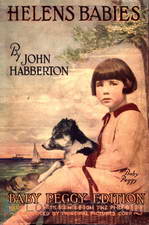 Helen's Babies
Harry Burton, salesman of white-goods, bachelor of twenty-eight leads a charmed existence. A letter from his sister, Helen changes his life forever. She and her husband have been invited for a holiday but they can't find anyone to baby-sit their two toddlers, five-year-old Budge and three-year-old Toddie. Ever the gallant helpful, Harry steps in, foreseeing nothing but a relaxed vacation with lots of books to read and thinks baby-sitting's a breeze. But destiny has other plans. Harry has long adored a lovely lady from afar and hopes to convince her that he is marriage material by displaying his nurturing side... | |
By: Benito Pérez Galdós (1843-1920) | |
|---|---|
|
Dona Perfecta
| |