 |
Books Should Be Free Loyal Books Free Public Domain Audiobooks & eBook Downloads |
|
|
|
Books Should Be Free Loyal Books Free Public Domain Audiobooks & eBook Downloads |
|
Fiction |
|---|
|
Book type:
Sort by:
View by:
|
By: John Ruskin | |
|---|---|
 The King of the Golden River
When three brothers mortally offend Mr. Southwest Wind, Esquire, their farm is laid waste and their riches lost. Desperate for money, the brothers become goldsmiths and melt down their remaining treasures . . . only to find that the spirit of the King of the Golden River resides with a molded tankard, and knows the secret of the riches of the Golden River. (Introduction by Xenutia) | |
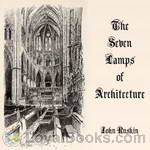 The Seven Lamps of Architecture
The Seven Lamps of Architecture, published in May 1849, is an extended essay written by the English art critic and theorist John Ruskin. The 'lamps' of the title are Ruskin's principles of architecture, which he later enlarged upon in the three-volume The Stones of Venice. To an extent, they codified some of the contemporary thinking behind the Gothic Revival. At the time of its publication A.W.N. Pugin and others had already advanced the ideas of the Revival and it was well under way in practice... | |
By: John Stuart Mill (1806-1873) | |
|---|---|
|
Three Essays on Religion
The Three Essays on Religion were written at different times during Mill's life, and only published after his death. The first two, 'Nature' and 'The Utility of Religion' date from the 1850s - the period between the publication of 'The Principles of Political Economy' and 'On Liberty'. The third longer essay, 'Theism' was written between 1868 and 1870. The three essays were published posthumously in 1874. | |
By: John Thomas McIntyre (1871-1951) | |
|---|---|
 Ashton-Kirk, Investigator
Ashton-Kirk, who has solved so many mysteries, is himself something of a problem even to those who know him best. Although young, wealthy, and of high social position, he is nevertheless an indefatigable worker in his chosen field. He smiles when men call him a detective. "No; only an investigator," he says.He has never courted notoriety; indeed, his life has been more or less secluded. However, let a man do remarkable work in any line and, as Emerson has observed, "the world will make a beaten path to his door... | |
|
Ashton-Kirk, Secret Agent
Those who have read "Ashton-Kirk, Investigator" will recall references to several affairs in which the United States government found the investigator's unusual powers of inestimable service. In such matters, tremendous interests often stand dangerously balanced, and the most delicate touch is required if they are not to be sent toppling. As Ashton-Kirk has said: "When a crisis arises between two of the giant modern nations, with their vast armies, their swift fleets, their dreadful engines of war, the hands which control their affairs must be steady, secret, and sure... | |
By: John W. Campbell (1910-1971) | |
|---|---|
 The Ultimate Weapon
The star Mira was unpredictably variable. Sometimes it was blazing, brilliant and hot. Other times it was oddly dim, cool, shedding little warmth on its many planets. Gresth Gkae, leader of the Mirans, was seeking a better star, one to which his "people" could migrate. That star had to be steady, reliable, with a good planetary system. And in his astronomical searching, he found Sol.With hundreds of ships, each larger than whole Terrestrial spaceports, and traveling faster than the speed of light, the Mirans set out to move in to Solar regions and take over... | |
By: John William Norie (1772-1843) | |
|---|---|
 Piloting Directions for the Gulf of Finland
Norie's series of piloting and sailing directions was something of a staple in the chart-room of 19th century British (and other) merchant vessels. The description of landmarks and ports, as well as the rules and regulations provide another viewpoint to an earlier age. Please note that these piloting directions are rather completely out of date. They are given here for purposes of historical interest only, and should not be used for navigation purposes. | |
By: John Wood Campbell Jr. (1910-1971) | |
|---|---|
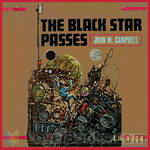 The Black Star Passes
A sky pirate armed with superior weapons of his own invention... First contact with an alien race dangerous enough to threaten the safety of two planets... The arrival of an unseen dark sun whose attendant marauders aimed at the very end of civilization in this Solar System. These were the three challenges that tested the skill and minds of the brilliant team of scientist-astronauts Arcot, Wade, and Morey. Their initial adventures are a classic of science-fiction which first brought the name of their author, John W. Campbell, into prominence as a master of the inventive imagination. | |
By: John Wood Campbell. Jr. (1910-1971) | |
|---|---|
|
Islands of Space
As Earth's faster-than-light spaceship hung in the void between galaxies, Arcot, Wade, Morey and Fuller could see below them, like a vast shining horizon, the mass of stars that formed their own island universe. Morey worked a moment with his slide rule, then said, "We made good time! Twenty-nine light years in ten seconds! Yet you had it on at only half power...." Arcot pushed the control lever all the way to full power. The ship filled with the strain of flowing energy, and sparks snapped in the air of the control room as they raced at an inconceivable speed through the darkness of intergalactic space... | |
By: Johnny Gruelle (1880-1938) | |
|---|---|
 Raggedy Andy Stories
Raggedy Ann is a fictional character created by writer Johnny Gruelle (1880–1938) in a series of books he wrote and illustrated for young children. Raggedy Ann is a rag doll with red yarn for hair. The character was created in 1915 as a doll, and was introduced to the public in the 1918 book Raggedy Ann Stories. A doll was also marketed along with the book to great success. A sequel, Raggedy Andy Stories (1920) introduced the character of her brother, Raggedy Andy, dressed in sailor suit and hat. | |
By: Johnny Gruelle (1880-1938) | |
|---|---|
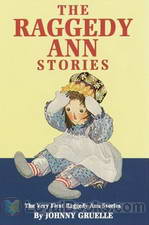 Raggedy Ann Stories
To the millions of children and grown-ups who have loved a Rag Doll, the author dedicated these stories. Now listen as Shannon reads to you Raggedy Ann’s exciting adventures; as gentle and charming today, as they were when first published in 1918. Find out what is written on her candy heart, what was the gift the fairies brought, and all about Raggedy Ann’s new sisters. | |
By: Johnston McCulley (1883-1958) | |
|---|---|
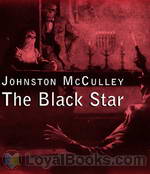 The Black Star
The Black Star was a master criminal who took great care to never be identifiable, always wore a mask so nobody knew what he looked like, rarely spoke to keep his voice from being recognized, and the only mark left at the scenes of the crimes which he and his gang committed were small black stars which were tacked as a sign of their presence, and an occasional sarcastic note to signify his presence and responsibility. Even those who worked for him knew nothing of him, all of which were making his crimes virtually unsolvable... | |
 The Curse of Capistrano
The Curse of Capistrano by Johnston McCulley is the first work to feature the fictional character Zorro (zorro is the Spanish word for fox). The story was later republished under the name The Mark of Zorro. Senor Zorro is deemed an outlaw as he fights those in authority while seeking justice for the oppressed. He also woos and captures the heart of the lovely Senorita Lolita, but her father would see her married to the rich Don Diego Vega. Meanwhile, the ever persistent Sgt. Gonzales is closing in on our lovers and would means to see the end of Senor Zorro. | |
By: Jonathan Swift (1667-1745) | |
|---|---|
 Gulliver's Travels
Comprised of four parts, Gulliver’s Travels documents the bizarre, yet fascinating voyages of Lemuel Gulliver as he makes his way through several uncharted destinations, experiencing the lives of the small, the giant, the scientific, and downright eccentric societies. Narrated in first person, Swift successfully portrays Gulliver’s thoughts and reactions as he faces struggles of integration throughout his travels. Beginning with the introduction of Gulliver, an educated ship’s surgeon, who after a series of unfortunate events is victim to repeated shipwrecks, desertions, and set adrift... | |
 A Modest Proposal
A satirical essay written by one of the most renowned satirists, Jonathan Swift, A Modest Proposal expresses the author’s exasperation with the ill treatment of impoverished Irish citizens as a result of English exploitation and social inertia. Furthermore, Swift ventilates the severity of Ireland’s political incompetence, the tyrannical English policies, the callous attitudes of the wealthy, and the destitution faced by the Irish people. Focusing on numerous aspects of society including government exploitation, reckless greed, hypocrisy, apathy, and prejudice, the essay successfully exemplifies Swift’s satirical skills... | |
By: Joris-Karl Huysmans | |
|---|---|
 Against the Grain, or Against Nature
“THE BOOK THAT DORIAN GRAY LOVED AND THAT INSPIRED OSCAR WILDE”. Such is the enticing epigraph of one early translation of Huysmans’ cult novel of 1884, which is also routinely called the Bible of Decadence. Accurate descriptions, both, of this bizarre masterpiece which has reverberated ever since through high and popular culture. “Against Nature” (or in this version “Against The Grain”) explores to the furthest limit the life of the world-rejecting aesthete living a reclusive existence devoted entirely to artificial paradises of his own devising... | |
By: José de Alencar (1829-1877) | |
|---|---|
|
Iracema, the Honey-Lips: a Legend of Brazil
Iracema (translated as Iracema, the Honey Lips: a legend of Brazil) is considered one of the most important books of Brazilian romanticism, but also of Brazilian literature as a whole. It's been called a poem in prose, a poetic novel, a fictional-historical novel, an indianist novel, an epic-lyric narrative, a mythic poem. The obvious difficulty in defining this work shows its many facets: legendary, narrative, poetic, lyric, mythic. The story revolves around the unexpected appearance of a Portuguese warrior in the lands of the Tabajara indians, on the shores of Ceará, Brazil, in the early years of the 16th century... | |
By: José Maria de Eça de Queirós (1845-1900) | |
|---|---|
|
Our Lady of the Pillar
A ghost story and love story all at once, set in medieval Portugal. Don Ruy is in love with Dona Leonor, but her husband has guessed his feelings and hatches a plan. Don Ruy rides right into a trap, but on the way, a dead man joins him and saves his life. - Summary by Carolin | |
By: José Rizal (1861-1896) | |
|---|---|
 Noli Me Tangere (The Social Cancer)
Noli Me Tangere (Latin for Touch Me Not) is a novel by the National Hero of the Philippines, Dr. José Rizal. It was originally written in Spanish, and first published in Germany in 1887. Noli Me Tangere exposed the corruption and abuse of the Spanish government and clergy towards the Philippine people and the ills of the Philippine society. This novel, and its sequel El Filibusterismo were banned in many parts of the Islands. Rizal was later arrested for inciting rebellion, based largely on his writings, and was excuted in Manila... | |
By: Joseph Alexander Altsheler (1862-1919) | |
|---|---|
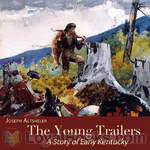 The Young Trailers: A Story of Early Kentucky
This is the story of Henry Ware, a young boy living in the wilds of the Kentucky frontier of the 1700's. The story follows Henry as he helps to establish a frontier outpost, is captured by an Indian tribe, and ultimately ensures the safety and security of a band of settlers against the warring Shawnee Indians. The Young Trailers is action packed and brings to life the adventures that awaited the early settlers as they traversed into the endless forests of the American frontier. | |
 The Guns of Shiloh
The Northern Army has just be handed a great defeat at Bull Run and is headed back to Washington, DC. How will the North answer this defeat? Follow our hero, Dick Mason, into the Western campaign to find out.This is the second book in the Civil War Series by Joseph A. Altsheler. | |
 The Star of Gettysburg
The Army of Northern Virginia, still victorious after three hard years of fighting, capitalize on their victories at Fredericksburg and Chancellorsville, and a young Harry Kenton, is an eyewitness to the Confederate invasion of the north, culminating in the epic three-day struggle at Gettysburg, Pennsylvania, where Robert E. Lee puts into place a strategy that will end the war, or shatter his army. (Introduction by Robert Fletcher) | |
|
Guns of Bull Run
The first volume in the Civil War series, following the adventures of Harry Kenton, who leaves his home in Kentucky. He travels through dangerous territory to South Carolina on a secret mission on the eve of the Civil War. (From Chapter 4) "They will not fire! They dare not!" cried Shepard in a tense, strained whisper. As the last word left his lips there was a heavy crash. A tongue of fire leaped from one of the batteries, followed by a gush of smoke, and a round shot whistled over the Star of the West... | |
|
Sword of Antietam
"The Sword of Antietam" tells a complete story, but it is one in the chain of Civil War romances, begun in "The Guns of Bull Run" and continued through "The Guns of Shiloh" and "The Scouts of Stonewall." The young Northern hero, Dick Mason, and his friends are in the forefront of the tale. | |
|
Rock of Chickamauga
"The Rock of Chickamauga," presenting a critical phase of the great struggle in the west, is the sixth volume in the series, dealing with the Civil War, of which its predecessors have been "The Guns of Bull Run," "The Guns of Shiloh," "The Scouts of Stonewall," "The Sword of Antietam" and "The Star of Gettysburg." Dick Mason who fights on the Northern side, is the hero of this romance, and his friends reappear also. | |
|
Scouts of Stonewall
In this third book of Joseph Altsheler's Civil War series, Harry Kenton, a lieutenant in the Southern Army, is on scout patrol in the Shenandoah Valley. He has attracted the notice of the great General Stonewall Jackson after his regiment, the Invincibles of South Carolina, suffered great losses at the Battle of Bull Run. As the war continues, Harry meets each challenge that he faces with his close friends and fellow warriors. | |
|
Shades of the Wilderness
"The Shades of the Wilderness" is the seventh book of the Civil War Series by Joseph A. Altsheler. Picking up where "The Star of Gettysburg" left off, this story continues the Civil War experiences of Harry Kenton and his friends in the Southern army, from the retreat after Gettygurg, to Richmond, and then through the battles of the Wilderness and Spottsylvania, to Robert E. Lee's heroic stand during the siege of Petersburg. Other books in the Civil War series are: "The Guns of Bull Run," "The Guns of Shiloh," "The Scouts of Stonewall," "The Sword of Antietam", "The Star of Gettysburg","The Rock of Chickamauga", and "The Tree of Appomattox." | |
|
Tree of Appomattox
"The Tree of Appomattox" concludes the series of connected romances dealing with the Civil War, begun in "The Guns of Bull Run," and continued successively through "The Guns of Shiloh," "The Scouts of Stonewall," "The Sword of Antietam," "The Star of Gettysburg," "The Rock of Chickamauga" and "The Shades of the Wilderness" to the present volume. It has been completed at the expense of vast labor, and the author has striven at all times to be correct, wherever facts are involved. So far, at least, no historic detail has been challenged by critic or reader... | |
By: Joseph Bédier (1864-1938) | |
|---|---|
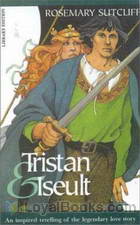 Tristan and Iseult
He is a divinely handsome young man, valiant and fiercely loyal to his uncle who adopted and nurtured him from the time he was an abandoned orphan. She is the ethereally beautiful princess of a faraway country, betrothed to the middle-aged uncle. They meet when the young man is sent as an emissary to her country to bring her back for the grand wedding. On board the ship, the two fall tragically in love. Tristan and Iseult by Joseph Bedier is a retelling of an ancient legend which has been popular... | |
By: Joseph Conrad (1857-1924) | |
|---|---|
 The Secret Agent
In this world of modern day spying, Joseph Conrad's spy story, The Secret Agent, is very pertinent. It deals with the over reaching influence of politics in everyday life, the sordid underbelly that lies beneath our civilization's sophisticated veneer, the strange persuasive power of anarchy, unbridled capitalism and its tragic consequences and the scourge of terrorism, exploitation and espionage. In an uncannily prophetic plot, The Secret Agent portrays a sinister scheme to bomb the famous Greenwich Observatory in London... | |
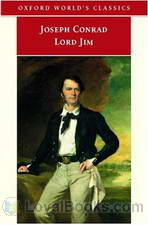 Lord Jim
This story opens on a ship crowded with pilgrims traveling from Singapore to Mecca for the hajj. A young Englishman is the vessel's first mate. This is his first job and it is something that he has longed for all his life—to be on board a ship that sails the seven seas. One night as the ship sails through the calm waters of the Arabian Sea, it mysteriously begins to shudder. The crew, including the young first mate, believe that it is about to sink. They decide to strike out for themselves in a life-boat, abandoning the passengers... | |
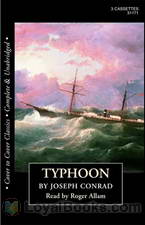 Typhoon
First published in 1902 as a serial in Pall Mall Magazine, the adventure novel follows the disrupting events onboard a steamboat after it takes a perilous course at sea, which triggers a state of mayhem onboard the steamer. Furthermore, the incident prompts the crew to gradually reveal their true nature which is brought to light in the time of crisis. Interestingly, the tale is believed to possess some autobiographical elements taken from Conrad’s own experiences at sea, which provide the novel with a strong foundation, as he effectively uses personification, imagery, and descriptive language to accurately illustrate the danger and chaos instigated by a powerful storm at sea... | |