 |
Books Should Be Free Loyal Books Free Public Domain Audiobooks & eBook Downloads |
|
|
|
Books Should Be Free Loyal Books Free Public Domain Audiobooks & eBook Downloads |
|
Fiction |
|---|
|
Book type:
Sort by:
View by:
|
By: Joseph Conrad (1857-1924) | |
|---|---|
 An Outcast Of The Islands
An Outcast of the Islands is the second novel by Joseph Conrad, published in 1896, inspired by Conrad's experience as mate of a steamer, the Vigar. The novel details the undoing of Peter Willems, a disreputable, immoral man who, on the run from a scandal in Makassar, finds refuge in a hidden native village, only to betray his benefactors over lust for the tribal chief's daughter. The story features Conrad's recurring character Tom Lingard, who also appears in Almayer's Folly (1895) and The Rescue (1920), in addition to sharing other characters with those novels... | |
 Under Western Eyes
Under Western Eyes (1911) is a novel by Joseph Conrad. The novel takes place in St. Petersburg, Russia, and Geneva, Switzerland, and is viewed as Conrad's response to the themes explored in Crime and Punishment, Conrad being reputed to have detested Dostoevsky. It is also, some say, Conrad's response to his own early life; his father was a famous revolutionary imprisoned by the Russians, but, instead of following in his father's footsteps, at the age of sixteen Conrad left his native land forever... | |
|
Shadow-Line
Dedicated to the author's son who was wounded in World War 1, The Shadow-Line is a short novel based at sea by Joseph Conrad; it is one of his later works, being written from February to December 1915. It was first published in 1916 as a serial and in book form in 1917. The novella depicts the development of a young man upon taking a captaincy in the Orient, with the shadow line of the title representing the threshold of this development. The novella is notable for its dual narrative structure. The full, subtitled title of the novel is The Shadow-Line, A Confession, which immediately alerts the reader to the retrospective nature of the novella... | |
|
Almayer's Folly
A European businessman and his Malayan wife have a daughter, Nina. A Malayan prince comes to do trade with the businessman and falls in love with the daughter. Conflict arises when other influences cause distrust in the business partnership and the daughter runs off to be with the prince. | |
By: Joseph Crosby Lincoln (1870-1944) | |
|---|---|
|
Cape Cod Stories
This book (eleven short stories) was also published under the title of “The Old Home House”. Joseph Crosby Lincoln (1870 – 1944) was an American author of novels, poems, and short stories, many set in a fictionalized Cape Cod. Lincoln's work frequently appeared in popular magazines such as the Saturday Evening Post and The Delineator.... Lincoln claimed that he was satisfied "spinning yarns" that made readers feel good about themselves and their neighbors. Two of his stories have been adapted to film... | |
By: Joseph E. Badger, Jr (1848-1909) | |
|---|---|
 The Lost City
Bruno and Waldo Gillespie are orphaned brothers living with the extremely eccentric Professor Phaeton Featherwit. One day they set off in one of the professor’s machines to investigate a tornado at close range and accidentally get sucked into it! They are then transported by the tornado and find themselves in a barren, uncharted wasteland wherein lies a city– a long lost Aztec city! Find out what happens next to the brothers and the professor in this harrowing and exhilarating adventure! | |
By: Joseph E. Kelleam (1913-1975) | |
|---|---|
 Hunters Out of Space
Originally published in the May, 1960 issue of Amazing Science Fiction Stories. Jack Odin has returned to the world of Opal, the world inside our own world, only to find it in ruins. Many of his friends are gone, the world is flooded, and the woman he swore to protect has been taken by Grim Hagen to the stars. Jack must save her, but the difficulties are great and his allies are few. | |
By: Joseph Hocking (1860-1937) | |
|---|---|
|
Weapons of Mystery
Justin Blake receives an invitation from his old school-fellow Tom Temple to join him and his family for the Christmas holidays in Yorkshire. Having no other plans, he decides to go. Though he is normally much the opposite of what would be called a lady's man, he falls instantly in love with Miss Forrest, one of the guests, who had already shared his train compartment on the way. When he meets the mysterious Herod Voltaire and finds that he must protect the girl from him and his weapons of mystery, the adventure begins. | |
By: Joseph Jacobs (1854-1916) | |
|---|---|
 English Fairy Tales
Jack the Giant-Killer, Tom Thumb, Goldilocks and The Three Bears, Henny Penny, Dick Whittington, The Three Little Pigs, Red Riding Hood and a host of immortal characters are found in this delightful collection of English Fairy Tales by Joseph Jacobs. The book made its first appearance in 1890 and has remained a firm favorite with both young and old ever since. Fairy tales have traditionally emanated from France and Germany. The famous compilations by La Fontaine and the Brothers Grimm have overshadowed children's literature for centuries... | |
 Celtic Folk and Fairy Tales
Celtic Fairy Tales is a collection of 25 folk and fairy stories collected from Ireland and Scotland. At what I imagine is the Frontispiece, or the dedication page, is the phrase: “SAY THIS Three times, with your eyes shut ‘Mothuighim boladh an Éireannaigh bhinn bhreugaigh faoi m’fhóidín dúthaigh.’And you will see/What you will see_” A loose translation of this Gaelic phrase is “I sense the smell of a sweet, enchanting Irishman around my dear homeplace.” | |
|
Indian Fairy Tales
This book is a fine collection of Indian fairy tales, some are folklore, some are from the Jataka tales, and some from panchatantra. | |
By: Joseph Lister (1827-1912) | |
|---|---|
 On the Antiseptic Principle of the Practice of Surgery
Joseph Lister was born near London in 1827. He studied medicine at the University of London and pursued a career as a surgeon in Scotland. He became professor of Surgery in Glasgow and later (1877) at Kings College Hospital, in London. Lister’s contribution to the advancement of surgery cannot be overestimated. Before his work on antisepsis, wounds were often left open to heal, leading to long recoveries, unsightly scarring, and not infrequently amputation or death due to infection. Lister’s work enabled more wounds to be closed primarily with sutures, drastically reducing healing time, scarring, amputations, and deaths due to infection... | |
By: Joseph Sheridan Le Fanu (1814-1873) | |
|---|---|
|
Wyvern Mystery
A classic with a pinch of romance, a pinch of gothic, and a dash of mystery, are you interested yet? When young Alice Maybell’ father dies she is taken in by Squire Fairfield, a widower with two handsome young sons, Charles and Harry. As Alice grows into a lovely young woman she attracts the attentions of more than one admirer, not all welcome. She marries the man she loves whilst fleeing the home she grew up in, but the blissful happiness that follows is short-lived. She finds herself pulled into the middle of the secrets of her husbands family’s past... | |
By: Joseph Sheridan LeFanu (1814-1873) | |
|---|---|
 Carmilla
Published in 1872, Carmilla is an early work in the vampire literature genre and is incidentally one of the most influential of its type. The gothic novella accounts the tale of Laura, a young woman who becomes susceptible to the friendship and seductive charms of the mysterious Carmilla. A gripping tale of coincidence, mystery, compulsion, dark romance, and deception, Le Fanu’s classic is regarded as having paved the way for modern takes on vampires. Narrated by Laura, the novel opens with a recount of her childhood, as she depicts growing up in a beautiful, yet solitary castle encompassed by a forest in Styria, Austria... | |
 Uncle Silas
Uncle Silas is a Victorian Gothic mystery/thriller novel by the Anglo-Irish writer J. Sheridan Le Fanu. It is notable as one of the earliest examples of the locked room mystery subgenre. It is not a novel of the supernatural (despite a few creepily ambiguous touches), but does show a strong interest in the occult and in the ideas of Swedenborg. | |
 Wylder's Hand
The marriage of Mark Wylder and Dorkas Brenden is supposed to end a history of arguments between the two families. However, both people involved do not seem to like the idea. Before the wedding, Mark disappears. But to where? And how will the people around him react to his disappearance? | |
 The Evil Guest
Le Fanu’s inimitable style continues with The Evil Guest, a murder mystery fraught with dark imagery and mysterious characters. An unwanted guest visiting a dreary and isolated home is murdered; the thriller leads the reader down countless ‘dead’ ends before revealing the identity of the guilty party. (Introduction by Cathy Barratt) | |
 The Room in the Dragon Volant
J. Sheridan LeFanu's Gothic mystery novel is narrated by Richard Beckett, a young Englishman abroad in Napoleonic-era France. He falls instantly in love with a mysterious and imperiled Countess, whom he glimpses momentarily behind her black veil. In order to be near her, he takes a room in the Dragon Volant (the Flying Dragon), a haunted inn that has been the site of mysterious disappearances. | |
By: Joseph Smith Fletcher (1863-1935) | |
|---|---|
 The Middle Temple Murder
Midnight. A lonely courtyard. The dead body of a stranger—a prosperous looking, well dressed, elderly man is found in Middle Temple Lane, London. This is one of England's ancient Inns of Court where barristers were traditionally apprenticed and carried on their work. Middle Temple is just a few minutes walk away from busy Fleet Street and the Thames Embankment. In the dead man's pocket is a piece of paper with the name and address of a young barrister. One of the first people to reach the crime scene is the investigative reporter, Frank Spargo, who writes for a leading London newspaper, The Watchman... | |
 Dead Men's Money
A naïve but sincere young lawyer's assistant who only dreams of marrying his childhood sweetheart and yearns to have a home and family with her. His sharp witted boss keeps the firm going by dint of shrewd business sense and legal talent. When the assistant accidentally stumbles into a murder case, the scene is set for events that change all their lives. Dead Men's Money by Joseph Smith Fletcher was published in 1920, the era considered to be the Golden Age of detective fiction. Writers like Agatha Christie, Ngaio Marsh, Dorothy L... | |
 The Middle of Things
If you're in the mood for a cracking good classic murder mystery, The Middle of Things by JS Fletcher will certainly come up to expectations! Richard Viner is your average man on the street who stumbles upon a dead body in a dimly lit alley while taking his usual nightly stroll. When the police arrive, they conclude that this is a case of a robbery gone wrong, as the dead man's valuables are missing. However, as the case progresses, Viner discovers to his consternation, that the prime accused in the case is an old school-mate who is caught pawning items of jewelry belonging to the dead man... | |
 The Paradise Mystery
A quiet cathedral town in England, full of gossips and people who are not quite who they seem to be, is the setting for this murder mystery. | |
 The Chestermarke Instinct
Bank manager John Hornbury is missing, as are securities and jewels from the bank’s vault. Gabriel Chestermarke and his nephew Joseph have unaccountably refused to call in the police to investigate the theft from their bank. When Betty Fosdyke shows up to visit her Uncle John, she finds it past belief that he would simply disappear – let alone that he would commit larceny. Unable to simply sit by and wait while a detective from Scotland Yard investigates, Betty elicits the help of the chief clerk at Chestermarke’s bank and launches into the middle of the mystery. | |
|
Borough Treasurer
Messrs. Mallalieu and Cotherstone were outsiders who had built a prosperous business in Highmarket and even been elected as Mayor and Treasurer of the borough. But when an ex-detective moves to town, 30 years of respectability is suddenly threatened by revelations from the past. | |
By: Joseph Trienens (b. 1863) | |
|---|---|
 The Handy Cyclopedia of Things Worth Knowing
Written in 1910, this “cyclopedia” is full of information that was quite useful at the time. A hundred years later, its text is more humorous than practical — although some advice never goes out of style. | |
By: Jules Verne (1828-1905) | |
|---|---|
 Twenty Thousand Leagues Under the Sea
An early science fiction novel written by the second most translated author, French writer Jules Verne, the classic tale depicts an incredible sea expedition on board a state-of-the-art submarine. First published in 1870 and a part of the Voyages Extraordinaires series, the novel is regarded as one of the most thrilling adventure stories and one of Verne’s greatest pieces of work. Immersed in themes of exploration, avant-garde technology, and man’s insatiable desire for knowledge and scientific progression, Twenty Thousand Leagues Under the Sea has been an influence for many writers as well as an inspiration for numerous film adaptations... | |
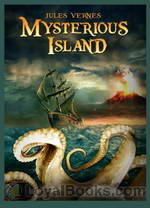 The Mysterious Island
The Mysterious Island is another exquisite novel written by the master of adventure writing, Jules Verne. The novel has been seen as the sequel to two other famous novels written by the same author: Twenty Thousand Leagues Under the Sea and In Search of the Castaway. The story revolves around five Americans who live in a dark and harsh environment as prisoners of the American Civil War. Depleted by famine and death all around them, the five war prisoners take a big risk and escape by hijacking a hot air balloon... | |
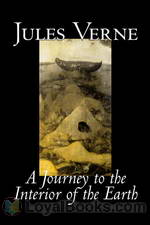 A Journey to the Interior of the Earth
A historical manuscript penned by a medieval Norse poet. A mysterious code. Three intrepid explorers. A subterranean world filled with prehistoric creatures and proto-humans. These are some of the brilliant ideas that are superbly blended in A Journey to the Interior of the Earth by Jules Verne. Jules Verne, the French writer who created several works of science fiction, adventure stories and very popular novels, wrote A Journey to the Interior of the Earth in 1864. Some of his other books explore different aspects of geography, space and time travel... | |
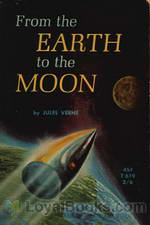 From the Earth to the Moon
One of the earliest examples of literature written in the science fiction genre, From the Earth to the Moon is a part of the Voyages Extraordinaires series by French novelist Jules Verne. Written more than a century before the Apollo mission, Verne’s classic is somewhat a prophetic novel of man’s travel to the moon with its thorough and descriptive detail. A remarkable blend of action, humor, science, and audacious schemes, the timeless classic is sure to fascinate with its unique vision of lunar exploration... | |
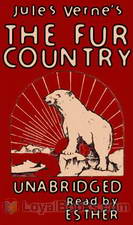 The Fur Country
The Hudson's Bay Company is one of the earliest corporations in the world and the oldest commercial organization in North America. It began as a fur trading company in 1670 and today owns a variety of retail corporations selling a diverse range of goods. In The Fur Country by Jules Verne, the plot describes how a team of Hudson's Bay Company members travel through the Northwest Territory of Canada with the aim of establishing a mission on the Arctic Circle. The members are a mixed bunch. One of the ladies, Paulina Barnett, seeks adventure, while a meteorologist Thomas Black hopes to view a spectacular solar eclipse scheduled to occur during their travel... | |
 An Antarctic Mystery or The Sphinx of the Ice Fields
A wonderful coming together of two writers who wrote their books more than half a century apart. Neither of them had ever visited the remote islands they were writing about yet they provided inspiration for a couple of exciting adventure tales. In 1838, Edgar Allan Poe published The Narrative of Arthur Gordon Pym of Nantucket. It was the only complete novel published by the American author. It was the story of a young boy who stows away on board a whaling ship and it goes on to relate the events that follow... | |
 The Master of the World
Published in 1904, The Master of the World is the penultimate novel in the Voyages Extraordinaires series, by renowned French novelist and pioneer of science fiction, Jules Verne. The novel acts as a sequel to Verne’s novel Robur the Conqueror, and consequently brings back some of its most notable characters, including the brilliant, yet villainous inventor Robur. Set in the summer of 1903, the adventure kicks off when a string of enigmatic events have been reported in the western part of North Carolina, leaving residents in fear of a possible volcanic eruption, even though the Blue Ridge Mountains are known to be non-volcanic ... | |
 Five Weeks in a Balloon
First published in 1863, Five Weeks in a Balloon depicts an insightful journey undertaken by a group of intrepid explorers into the partly uncharted African continent, as they aim to explore its exotic wonders. Apart from concentrating on themes including exploration, loyalty, friendship, determination, and honor, the novel also offers an endearing set of jovial characters and vivid imagery. Furthermore, the novel is the first book in Verne’s distinguished Voyages Extraordinaires series. The adventure begins when Dr... | |
 In Search of the Castaways
The book tells the story of the quest for Captain Grant of the Britannia. After finding a bottle cast into the ocean by the captain himself after the Britannia is shipwrecked, Lord and Lady Glenarvan of Scotland decide to launch a rescue expedition. The main difficulty is that the coordinates of the wreckage are mostly erased, and only the latitude (37 degrees) is known.Lord Glenarvan makes it his quest to find Grant; together with his wife, Grant’s children and the crew of his yacht the Duncan they set off for South America... | |
 Eight Hundred Leagues on the Amazon
First published in 1881, Eight Hundred Leagues on the Amazon is an adventure novel in two parts by Jules Verne, having a basis in codes and cryptography. Unlike many of his other stories, it is not a work of science fiction. Rather, it describes a voyage down the Amazon River on a large raft, or jangada). Many aspects of the raft, scenery, and journey are described in detail. | |
 Dick Sands the Boy Captain
Dick Sands, a youth of fifteen, must assume command of a ship after the disappearance of its captain. Nature’s forces combined with evil doings of men lead him and his companions to many dangerous adventures on sea and in Central Africa. | |
 Michael Strogoff
This is the account of the perilous mission of Michael Strogoff, courier for Czar Alexander II, who is sent from Moscow to the besieged city of Irkutsk, where the governor, brother of the Czar, has taken his last stand against a Tartar rebellion led by the fearsome Feofar-Khan. When telegraph lines are cut between the Russian Far East and the mainland, Strogoff must make his way through hostile territory to warn the governor of the return of the traitor Ivan Ogareff, a disgraced former officer who seeks vengeance against the Tsar’s family by the destruction of Irkutsk. | |
 The Blockade Runners
Writing at the end of the American Civil War, Verne weaves this story of a Scottish merchant who, in desperation at the interruption of the flow of Southern cotton due to the Union blockade, determines to build his own fast ship and run guns to the Confederates in exchange for the cotton piling up unsold on their wharves. His simple plan becomes complicated by two passengers who board his new ship under false pretenses in order to carry out a rescue mission, one which Capt. Playfair adopts as his own cause. This is going make the Rebels in Charleston rather unhappy with him.Sure, his new ship is fast - but can it escape the cannonballs of both North and South? | |
 Off on a Comet
The story starts with a comet that touches the Earth in its flight and collects a few small chunks of it. Some forty people of various nations and ages are condemned to a two-year-long journey on the comet. They form a mini-society and cope with the hostile environment of the comet (mostly the cold). The size of the 'comet' is about 2300 kilometers in diameter - far larger than any comet or asteroid that actually exists. | |
 Journey to the Centre of the Earth
The story involves a German professor (Otto Lidenbrock in the original French, Professor Von Hardwigg in the most common English translation) who believes there are volcanic tubes going toward the center of the Earth. He, his nephew Axel (Harry), and their guide Hans encounter many adventures, including prehistoric animals and natural hazards, eventually coming to the surface again in southern Italy. | |
 The Underground City or The Child of the Cavern
Covering a time span of over ten years, this novel follows the fortunes of the mining community of Aberfoyle near Stirling, Scotland. Receiving a letter from an old colleague, mining engineer James Starr sets off for the old Aberfoyle mine, thought to have been mined out ten years earlier. Starr finds mine overman Simon Ford and his family living in a cottage deep inside the mine; he is astonished to find that Ford has made a discovery of the presence of a large vein of coal. Accompanying Simon Ford are his wife, Madge, and adult son, Harry. | |
 Doctor Ox's Experiment
An early, light-hearted short story, published in 1872 by Jules Verne. It takes place in the Flemish town of Quiquendone, where life moves at an extraordinarily tranquil pace. Doctor Ox has offered to light the town with a new gas, but actually has other plans in place. | |
 Facing the Flag
Like The Begum's Millions, which Verne published in 1879, it has the theme of France and the entire world threatened by a super-weapon (what would now be called a weapon of mass destruction) with the threat finally overcome through the force of French patriotism. | |
 Topsy-Turvy
Topsy Turvy is a translation of Sans dessus dessous (1889) . This anonymous translation was first published by J. G. Ogilvie (New York, 1890). We meet our old friends Barbicane and J.T. Maston from “Earth to the Moon” who now give us their own approach to the topic of “global warming”. Although they are searching for coal and not oil, readers will find that the auction of the Arctic energy reserves has a definite 21st century ring. | |
 The Tribulations of a Chinaman in China
The rich and flegmatic Kin-Fo loses his fortune and decides to die, but not before experiencing some strong emotions. He asks his friend Wang to kill him before a given date. Everything changes when Kin-Fo discovers he is not poor after all and he sets on a journey around China, trying to find his friend to cancel their deal. | |
|
Adventures of Captain Hatteras, Part 1: The English at the North Pole
The novel, set in 1861, describes adventures of British expedition led by Captain John Hatteras to the North Pole. Hatteras is convinced that the sea around the pole is not frozen and his obsession is to reach the place no matter what. Mutiny by the crew results in destruction of their ship but Hatteras, with a few men, continues on the expedition. ( Wikipedia) | |
|
Master Zacharius
Master Zacharius is a man of science, skill, and overpowering pride. He is the first to successfully, and accurately, regulate time. Does this not make him God-like? What then, should such a man do when his time is running out and his legacy is in danger? | |
By: Julia Augusta Schwartz (1873-1957) | |
|---|---|
|
Vassar Studies
Published in 1899, Vassar Studies is a collection of twelve realistic glimpses into the character of attending students at Vassar College. It delves more with the inner workings of people rather than with dramatic incidents or what was studied in college. The glimpses themselves are both wordy and enlightening. The dialogue within each tends to have a background of various people, some with names and some who remain nameless as part of the scenery. The manner in which they speak may be surprisingly academic for those used to college girl stories of the adventurous or mysterious nature... | |
By: Julia Lestarjette Glover | |
|---|---|
 Briarwood Girls
Kindred Spirits return for their Sophomore year at Briarwood College. There’s a new girl who upsets the status quo. (Introduction by Linda Velwest) | |
By: Julian Hawthorne, editor | |
|---|---|
 Library of the World's Best Mystery and Detective Stories
The Library of the World's Best Mystery and Detective Stories is a six-volume edition, which contains one hundred and one tales written by authors as diverse and separated by history as Pliny the Younger (first century AD), Voltaire (17th century) and Guy de Maupassant (19th century) and also from different parts of the world. This volume which is the first, contains twenty interesting stories, and an introduction by the editor. The fascinating aspect of mystery stories is that sometimes the author allows the puzzle to solve itself without expert detective aid, while in other cases, a sleuth bends his or her deductive powers to the mystery... | |
By: Julian Street | |
|---|---|
 American Adventures
AMERICAN ADVENTURES, A SECOND TRIP ABROAD AT HOMEBY JULIAN STREETCHAPTER IHad my companion and I never crossed the continent together, had we never gone abroad at home, I might have curbed my impatience at the beginning of our second voyage. But from the time we returned from our first journey, after having spent some months in trying, as some one put it, to discover America, I felt the gnawings of excited appetite. The vast sweep of the country continually suggested to me some great delectable repast:... | |
By: Julie Sutter | |
|---|---|
|
Bilihild: A Tale of the Irish Missionaries in Germany, A.D. 703
When the God-fearing Herzog of Thuringia dies, the Irish missionary settlements face the wrath of his bitterly heathen wife, Geila, and her son, now Herzog Hedan. But when Hedan falls in love with Bilihild, a young Christian maiden, he offers peace to his Christian subjects if Bilihild will become his wife. As Bilihild strives to love her new husband and protect her people, she faces increasing difficulty and danger, especially from her jealous mother-in-law. As the clouds thicken around her, Bilihild must put her entire reliance on the God whom she honors and loves. | |
By: Justin McCarthy (1830-1912) | |
|---|---|
|
The Riddle Ring
This romantic mystery - or mysterious romance - tells the tale of jilted lover, Jim Conrad, who discovers an unusual gold ring while on a visit to Paris. What is the story of the ring? Why is Clelia Vine so sad? Who is the nameless 'chief'? And how is a dour English barber in a Parisian salon mixed up in all this?The novel, published in 1896, was written by Justin McCarthy, an Irish nationalist, Liberal historian, novelist and politician. (Introduction by Ruth Golding) | |
|
Red Diamonds
In the South African wilderness, six men got together to mine for diamonds and become very rich. They agree that the wealth is to be split equally between them or their heirs after a few years and that the share of any one who died without leaving an heir or whose heir died before the time would be split between the remaining partners. Soon, all heirs are notified and wait expectantly for the first of January, on which the diamonds are to be divided between the partners. However, the diamonds are becoming increasingly blood stained, and January the first is still some time off... | |
By: Kate Douglas Wiggin (1856-1923) | |
|---|---|
 Rebecca of Sunnybrook Farm
Eleven year old Rebecca Rowena Randall travels to Riverboro, Maine, to live with her spinster aunts, Jane and Miranda Sawyer. Her father has been dead for three years and her mother is unable to cope with her brood of seven growing children. Rebecca is being sent to her aunts' farm to try to improve her prospects in life and also ease the family's burden. The aunts had actually wanted her older and more placid sister, Hannah, who is more handy round the house to be sent, but Rebecca's mother sends the dreamy, more imaginative Rebecca instead... | |
 New Chronicles of Rebecca
This book tells further stories from the period of Rebecca’s sojourn in Riverboro. | |
 The Diary of a Goose Girl
The "Goose Girl" is a young and somewhat independent lady who, in fleeing from her lover with whom there had been a "little tiff," became a "paying guest" at poultry farm in a quiet, out-of-the-way Sussex village, in the care of which she participates. From the author of Mother Carey's Chickens, The Bird's Christmas Carol, etc. | |
 The Old Peabody Pew: A Christmas Romance of a Country Church
A sweet, old fashioned Christmas romance set in an old New England meeting house. | |
 The Romance of a Christmas Card
The story of the mission of two Christmas cards written by a minister’s wife. These cards find their way to two straying sheep from the village fold, who hear through the message in the words, and the little scenes on the cards, the compelling voice of home. There was inspiration and good cheer in the cards, and from them came, in one case reformation, in the other romance. | |
 Penelope's English Experiences
Penelope's English Experiences is a fictional travelogue, which documents the experiences of three American ladies on a visit to England. Included are scenes in London and the village of Belvern, containing fanciful sketches of a West-end ball, portraits of domestic originals, etc., characterized by humorous trifling and droll exaggeration of English traits. By the author Mother Carey's Chickens, A Cathedral Courtship, etc. | |
 A Cathedral Courtship
A romantic comedy. A pretty young American girl tours English Cathedrals, with her very blue-blooded Aunt. Then boy meets girl. Boy chases girl. Boy loses girl. Boy finds girl. Finally, girl catches boy with the help of a mad bull. | |
|
Rose O' The River
Rose Wiley is a pretty country girl. She's engaged to Stephen Waterman, a country boy. She is quite content, until Claude Merril, a man from Boston, tells her that her love is ruining Stephen's life. A cute coming-of-age novel. | |
By: Kate Douglas Wiggins (1856-1923) | |
|---|---|
 Mother Carey’s Chickens
“When Captain Carey went on his long journey into the unknown and uncharted land, the rest of the Careys tried in vain for a few months to be still a family, and did not succeed at all. They clung as closely to one another as ever they could, but there was always a gap in the circle where father had been….. The only thing to do was to remember father's pride and justify it, to recall his care for mother and take his place so far as might be; the only thing for all, as the months went on, was to be what mother called the three Bs -- brave, bright, and busy... | |
By: Kate Langley Bosher (1865-1932) | |
|---|---|
 Mary Cary, Frequently Martha
“My name is Mary Cary. I live in the Yorkburg Female Orphan Asylum. You may think nothing happens in an Orphan Asylum. It does. The orphans are sure enough children, and real much like the kind that have Mothers and Fathers; and that’s why I am going to write this story.” So begins Mary’s diary, which she fills with her various doings and misadventures at the Asylum in Virginia and her sharp observations about life and human nature. She loathes Miss Bray, the head of the Asylum, who is not above telling bald-faced lies to the Board to further her own selfish ends... | |
 People Like That
A single woman from a family that is well-off, buys a house at a place that is looked down upon and disapproved by her family and friends alike. Her reason - she wants to live the life of and know people like that. (This book's got one of the cutest romantic endings I've ever read). What is surprising is this book is in the PD - there are quite a few modern expressions and comparatively less quaint, out-of-fashion expressions. | |
By: Kate M. Foley | |
|---|---|
|
Five Lectures on Blindness
The [five] lectures were written primarily to be delivered at the summer sessions of the University of California, at Berkeley and at Los Angeles, in the summer of 1918. . . they are the outgrowth of almost a quarter of a century spent in work for the blind, and were written from the standpoint of a blind person, seeking to better the condition of the blind. They were addressed not to the blind, but to the seeing public, for the benefit that will accrue to the blind from a better understanding of their problems. (Extract from the Forward by Milton J. Ferguson) | |
By: Kate Percival | |
|---|---|
 The Life and Amours of the Beautiful, Gay and Dashing Kate Percival, the Belle of the Delaware
This surprisingly explicit sample of Victorian erotica follows the sexual awakening and subsequent adventures of its author, Kate Percival, the "belle of the Delaware." Content warning: this one is definitely NC-17 rated. | |
By: Katharine Berry Judson (1866-1929) | |
|---|---|
|
Myths And Legends Of The Pacific Northwest Especially Of Washington And Oregon
The basis on which these myths were selected necessarily excluded those which showed traces of the white man's religion or of the red man's coarseness. Relatively speaking, only a few myths could be selected. These were the creation myths, the origin of the races, the theft of fire, the salmon, and especially those connected with the physical features of the country, such as those of Takhoma, Shasta, the Columbia River, and the group of mountains of the bridge of the gods…. No claim is made... | |
By: Katharine Newlin Burt (1882-1977) | |
|---|---|
 Snow-Blind
A bit of a menage-a-quatre in a remote cabin in the wilderness as fugitive Hugh, his younger brother Pete, nursemaid and cook Bella, and now the newly arrived snow-blinded young Sylvie who had been snatched from near death in the snow by the heroic but moody Hugh. Because of her blindness, Sylvie is led to believe her rescuer to be a handsome and dashing hero; his younger brother to be but a young lad of 14; and Bella a matronly old maid. But Sylvie would, in time, form her own image of the clan and attempt to bring them together as they were destined to be split apart... | |
 The Branding Iron
From the cold and mountainous regions of Wyoming to the bright lights of the big city, The Branding Iron is the story of a remarkable woman, Joan Carver. Born of poor means, at a fairly young age Joan decides to leave her father and strike out on her own, but she is to face more difficulties and hardships than she had reckoned for, and the men she encounters on her way share different means of dealing with her; and she of them. She becomes her own individual, with a strong will and a determination to lead her life as she sees fit. As with many of Ms. Burt's stories, The Branding Iron is filled with unexpected surprises at each turn. | |
By: Katharine Pyle (1863-1938) | |
|---|---|
|
Tales of Folk and Fairies
In "Tales of Folk and Fairies" Ms. Pyle tells 15 different children's stories from around the world; each more delightful than the last. Each story stands completely on it's own and although they were probably meant for children, adults will certainly enjoy them as well. | |
By: Katharine S. Prichard (1883-1969) | |
|---|---|
 The Pioneers
The Pioneers is set against the background of pioneering life in the Gippsland region of Victoria in pre-Federation Australia. Mary and Donald Cameron are free-settlers who make a home in the wilderness and grow a prosperous cattle operation that establishes their position as prominent members of the new settlement.At first, the novel privileges Mary’s perspective as she encounters escaped convicts, bush fires, and raising a son in a remote community. Later, it follows her son, Davey, as he struggles for independence against his father’s harsh authority... | |
By: Katherine Keene Galt | |
|---|---|
|
Girl Scouts at Home
Little Rosanna Horton was a very poor little girl. When I tell you more about her, you will think that was a very odd thing to say. She lived in one of the most beautiful homes in Louisville, a city full of beautiful homes. And Rosanna's was one of the loveliest. It was a great, rambling house of red brick with wide porches in the front and on either side. On the right of the house was a wonderful garden. It covered half a square, and was surrounded by a high stone wall. No one could look in to see what she was doing... | |
By: Katherine MacLean (1925-?) | |
|---|---|
|
Contagion
Minos was such a lovely planet. Not a thing seemed wrong with it. Excepting the food, perhaps. And a disease that wasn't really. Originally published in Galaxy Science Fiction, October, 1950. Katherine Anne MacLean (born January 22, 1925) is an American science fiction author best known for her short fiction of the 1950s which examined the impact of technological advances on individuals and society. | |
By: Katherine Mansfield (1888-1923) | |
|---|---|
 At The Bay
Katherine Mansfield was a prominent Modernist writer of short fiction, and one of New Zealand’s best-known authors. “At the Bay” is a story from her collection The Garden Party. | |
 Prelude
One of the first books to be published by Leonard & Virginia Woolf's Hogarth Press, Prelude is among Katherine Mansfield's most accomplished stories, inspired by her childhood in New Zealand. (Introduction by iremonger) | |
|
In a German Pension
The first collected volume of short stories of the New Zealand modernist. Inspired by her own travels, Mansfield begins to refine her craft with a series of tales which depict German life at the brink of the first world war. (Introduction by S. Kovalchik) | |
By: Katherine Pyle (1863-1938) | |
|---|---|
 The Counterpane Fairy
A little boy, recuperating from a lengthy illness, is entertained by visits from the Counterpane Fairy, who treats him to stories associated with each of the squares in the counterpane (quilt) on his sickbed. She has him concentrate on one of the squares until it turns into something like a doorway into the story. Once inside the story, he becomes its lead character until it fades out as if he’s awakening from a dream. | |
By: Katherine Thurston (1875-1911) | |
|---|---|
 The Masquerader
The Masquerader is one of two Katherine Cecil Thurston’s books that appeared on the Publisher’s Weekly best-sellers list in 1905. The Masquerader is part mystery, part romance and part political thriller – all tied up in one neat package. Nature has a way of sometimes making two people nearly indistinguishable in appearance. Such is the premise for this book. John Chilcote, a British politician, and John Loder, a man down on his luck meet by accident one night during one of London’s worst fogs... | |
 The Gambler
Clodagh, 18 years old, is the eldest daughter of Dennis Asshlin, an Irish gentleman who lives in an area of Ireland called Orristown. Dennis is passionate, proud and indebted to no one. But, Dennis has an obsession with gambling that is leading the family to ruin. When tragedy strikes, Clodagh finds herself in a situation where she must defend the family honor because “no Asshlin is ever obliged to anyone”. She marries a man she does not love who is many times her age and is thrust from adolescence to adulthood literally overnight... | |
By: Kathleen Norris | |
|---|---|
 Mother
With seven children and a home to take care of, Margaret wondered how her Mother could be so happy living a life that seemed all drudgery. As Margaret has new experiences, she comes to realize that “her mother was not only the truest, the finest, the most generous woman she had ever known, but the happiest as well”. | |
By: Keith Laumer (1925-1993) | |
|---|---|
|
Gambler's World & The Yillian Way
Here are two stores starring the always unconventional Terrestrial Diplomat, Retief. As a diplomat, Retief does not always follow procedure. Well the truth is that he almost never follows procedure but somehow his wit and strength manage to salvage most situations from the bumbling of his superiors. His sardonic approach to inter galactic negotiations in these two stories is a delight to hear. Despite everything, he manages to save the day and come out on top. | |
By: Kenneth Grahame (1859-1932) | |
|---|---|
 The Golden Age
If you've loved and cherished The Wind in The Willows, you'll be delighted to read The Golden Age. In this book of reminiscences by Kenneth Grahame, the much loved creator of Winnie The Pooh, readers are granted an insight into the writer's childhood. The opening lines of the Prologue provide a poignant reminder of Grahame's childhood. When he was just five, his mother died in childbirth and his father who had a long standing problem with alcoholism consigned his four children, including the newborn baby, to the care of their grandmother in Berkshire... | |
 The Reluctant Dragon
Regarded as one of Grahame’s most distinguished short stories, the children’s classic was first published in 1898 and featured in Dream Days, a reminiscent short story collection for children, and has also been adapted into a feature film from Walt Disney Productions. The story centers on the events following the discovery of a dragon living inside a cave near a small town, which its residents perceive as dangerous and a threat to their safety, whereas as a young boy goes out of his way to prove the dragon’s harmless nature... | |
 Dream Days
Dream Days is a collection of children’s fiction and reminiscences of childhood written by Kenneth Grahame. A sequel to Grahame’s 1895 collection The Golden Age (some of its selections feature the same family of five children), Dream Days was first published in 1898 under the imprint John Lane: The Bodley Head. (The first six selections in the book had been previously published in periodicals of the day—in the Yellow Book, the New Review, and in Scribner’s Magazine in the United States.) The book is best known for its inclusion of Grahame’s classic story The Reluctant Dragon... | |
By: Kenneth McGaffrey (??-1938) | |
|---|---|
|
The Sorrows of a Show Girl
Originally printed in The Morning Telegraph in New York, this is the story of Miss Sabrina, the show girl, and her ups and downs with the unpredictable theatrical industry and the Great White Way, the lights and glamour of Broadway. "In order to set myself right with both the public and the vast army of Sabrinas that add youth and beauty to our stage, and brilliancy and gaiety to our well known cafes, I wish to say that she is all that she should be...”- Kenneth McGaffrey | |
By: Kirk Munroe (1850-1930) | |
|---|---|
 The Copper Princess: A Story of Lake Superior Mines
The Copper Princess: A Story of Lake Superior Mines is an adventure set in the beautiful Upper Peninsula of Michigan. The delightful story features a brave and wholesome hero struggling for his rightful copper mining inheritance against smugglers and bandits. He also encounters a beautiful and mysterious maiden who is caught in her father’s secret crimes. | |
By: Knut Hamsun (1859-1952) | |
|---|---|
 Hunger
Hunger (Norwegian: Sult) is a novel by the Norwegian author and Nobel Prize winner Knut Hamsun and was published in its final form in 1890. The novel has been hailed as the literary opening of the 20th century and an outstanding example of modern, psychology-driven literature. It hails the irrationality of the human mind in an intriguing and sometimes humorous novel. Written after Hamsun's return from an ill-fated tour of America, Hunger is loosely based on the author's own impoverished life before his breakthrough in 1890... | |
 Growth of the Soil
Growth of the Soil (Markens Grøde) is the novel by Norwegian writer Knut Hamsun which won him the Nobel Prize in Literature in 1920. The essential elements of this novel are expressed in the words of the English translator W.W. Worster in his footnote in December 1920: 'It is the life story of a man in the wilds, the genesis and gradual development of a homestead, the unit of humanity, in the unfilled, uncleared tracts that still remain in the Norwegian Highlands. It is an epic of earth; the history of a microcosm... | |
By: Kurt Becker. S. J. (1915-2010) | |
|---|---|
|
Countdown
The first flight to outer space became an actual fact – Mars would be the first stop. But before the spaceship took off, two insane enemies almost succeeded in preventing the departure. This science fiction story for teens was written by a Catholic priest. | |
By: Kurt Vonnegut (1922-2007) | |
|---|---|
 2 B R 0 2 B
In this chilling short-story by a master of the craft, Kurt Vonnegut creates a fictional world of the future where life and death are no longer matters of individual choice or destiny. The title refers to the famous quote from Hamlet, “To be or not to be....” with “0” being pronounced as “naught.” It also refers to the eternal dilemma of life and death that face every human being at some point in their lives. Written in 1962 it is set in some unspecified time in the future, when earth has become a Utopia... | |
By: L. Adams Beck (1862-1931) | |
|---|---|
 The ninth vibration and other stories
This is a collection of the following short stories: The Ninth Vibration -- The Interpreter : A Romance of the East -- The Incomparable Lady : A Story of China with a Moral -- The Hatred of the Queen : A Story of Burma -- Fire of Beauty -- The Building of the Taj Majal -- How Great is the Glory of Kwannon! -- The Round-Faced Beauty. Many of them are romantic, some of them are fantasy and others are occult fiction.(Introduction by Linda Andrus) | |
By: L. Frank Baum (1856-1919) | |
|---|---|
 Dorothy and the Wizard in Oz
Its publication soon after the 1906 San Francisco earthquake got readers instantly hooked on the story in which Dorothy and her friends sink into the bowels of the earth, following a devastating earthquake in California. Dorothy and the Wizard in Oz is the fourth in the series of books written by American children's author L. Frank Baum. In this novel, Dorothy visits her Uncle Henry in his California ranch. She, her friends, her cousins and a few pets are traveling in a buggy when the earth suddenly splits open and the entire lot falls into the crack... | |
 The Scarecrow of Oz
Published in 1915, The Scarecrow of Oz is the ninth book in the Oz book series and focuses on the adventures of Cap’n Bill, Trot, and the Scarecrow, who find themselves entangled in the politics of Jinxland and must work against formidable odds to overthrow its despot and restore rule to its rightful successor. Apart from the appearances of familiar faces, the novel also accommodates a fresh set of characters and magical creatures residing in the Land of Oz, further contributing to its classification as a typical Baum masterpiece... | |
 The Marvelous Land of Oz
Published in 1904, The Marvelous Land of Oz is the second book in Baum’s Oz series and follows the adventures of Tip, a young boy who travels the mystical Oz after running away from the terrifying witch Mombi. Furthermore, the novel reunites readers with familiar characters including the Scarecrow, Tin Woodman, Glinda the Good Witch, while also introducing bright new characters who deem to be just as memorable. Unlimited action, intense magic, captivating characters, and an unexpected twist, the adventure novel has remained a classic for generations, and has only strengthened the series appeal with its fresh intake on the familiar set... | |
 Tik-Tok of Oz
Betsy Bobbin encounters many strange and exciting adventures and people in the land of Oz; a side-plot is Queen Ann of Oogaboo’s mission to take over Oz. | |
 The Lost Princess of Oz
Who is stealing all the magic in Oz? Dorothy and her friends set out to comb all of Oz, not only for magic stolen from Glinda and the Wizard, but also for the kidnapped princess, Ozma. Along the way, they explore regions never seen in other Oz books, meeting strange and interesting people and animals, and falling into peril more than once. It’s a desperate mission – for if the thefts are all linked, then it means that some magician unknown to them has acquired powers beyond any available to them now. How will they find him? And how will they conquer him? Not one of them knows – but with continuing faith that goodness will triumph, they march forth to try. | |
 Sky Island
Published in 1912, the fantasy novel focuses on the exciting adventures of Trot, Cap’n Bill and Button Bright, as they are accidentally transported to a mysterious island in the sky, where they encounter its eccentric residents, an unscrupulous ruler, and a strange set of laws. The story sets into motion when Trot, a little girl from the southern coast of California, and Cap’n Bill meet a peculiar young boy carrying a large umbrella. Introduced as Button Bright, the young boy reveals that... | |
 Little Wizard Stories of Oz
The “Little Wizard Stories of Oz” are six short stories written by L. Frank Baum in 1913. By all accounts, Baum intended to finish the Oz series with “The Emerald City of Oz,” published in 1910. Following that, he attempted to write non-Oz books, publishing “The Sea Fairies” in 1911 and “Sky Island” in 1912. But, (as Baum himself laments in the prefaces of many of his Oz books,) his “little tyrants” were only interested in hearing more Oz stories. So in 1913, he returned to writing about Oz, putting out both The “Little Wizard Stories” and “The Patchwork Girl of Oz” that year... | |
 The Enchanted Island of Yew
A fairy has become bored with her life, and convinces some young girls to transform her into a human boy so she can go on adventures. The adventures come fast and furious, as the newly-named Prince Marvel explores the surrounding kingdoms. A masochistic squire accompanies Marvel, helping him with assorted kings, knights, dragons, and other medieval menaces along the way. | |