 |
Books Should Be Free Loyal Books Free Public Domain Audiobooks & eBook Downloads |
|
|
|
Books Should Be Free Loyal Books Free Public Domain Audiobooks & eBook Downloads |
|
Fiction |
|---|
|
Book type:
Sort by:
View by:
|
By: Samuel Richardson | |
|---|---|
 Pamela, or Virtue Rewarded
Now first Published In order to cultivate the Principles of Virtue and Religion in the Minds of the YOUTH of BOTH SEXES.A Narrative which has its Foundation in TRUTH and NATURE; and at the same time that it agreeably entertains, by a Variety of curious and affecting Incidents, is intirely divested of all those Images, which, in too many Pieces calculated for Amusement only, tend to inflame the Minds they should instruct.(From the frontspiece of the first edition)Pamela tells the story of a 14 year old lady’s maid named Pamela whose master, Mr... | |
 Clarissa, or the History of a Young Lady
Clarissa Harlowe, the tragic heroine of Clarissa, is a beautiful and virtuous young lady whose family has become very wealthy only in recent years and is now eager to become part of the aristocracy by acquiring estates and titles through advantageous pairings. Clarissa’s relatives attempt to force her to marry a rich but heartless man (Roger Solmes) against her will and, more importantly, against her own sense of virtue. Desperate to remain free, she is tricked by a young gentleman of her acquaintance, Lovelace, into escaping with him. However, she refuses to marry him, longing — unusual for a girl in her time — to live by herself in peace. | |
By: Sapper (Herman Cyril McNeile) (1888-1937) | |
|---|---|
 Bulldog Drummond
‘Sapper’, the pseudonym of Colonel. H.C. McNeile M.C. was one of the most popular English writers of thrillers between the two world wars. And Hugh (Bulldog) Drummond was his most popular leading character. This book, the first of the series, is of its time. Opinions are expressed which would not pass muster today and the books are strongly laced with jingoism, racial stereotypes and hostile references to foreigners. Naturally all the villains are masters of disguise and invariably put off murdering the hero until later whist they think of something absolutely beastly. Nevertheless the story is a good one and well told. | |
By: Sara Ware Bassett (1872-1968) | |
|---|---|
 Flood Tide
Willie Spence may have been a bit eccentric by most standards, but he had a knack for creating gadgets in his small workshop at his home on Cape Cod. Whenever he was 'ketched' by an 'idee' he had to see it to completion, and always did. His small cottage on the Cape had become a labyrinth of string and wires tacked here and there so as to make life a bit challenging for his housekeeper Celestina. But she and most everyone else among the coastal towns and villages loved the old man for all his eccentricities as Willie spent his waning years just waiting for his ship to come in. | |
|
Story of Wool
Mr. Clark and Donald spend a year out west to the Crescent Ranch in Idaho learning about raising sheep. | |
By: Sarah Cory Rippey | |
|---|---|
 The Goody-Naughty Book
The Goody-Naughty Book was originally published as two books back to back. Opening the book from one end, the reader experiences “The Goody Side” where the children are polite and thoughtful. However, turning the book over and beginning from the other side, one reads “The Naughty Side” where the children are lazy and irritable. These short, moral stories teach children the proper way to behave and that there are consequences if they don’t. | |
By: Sarah E. Trueblood (1849-1918) | |
|---|---|
|
Cats by the Way
Between these pages you will find only the good, old-fashioned, every-day cat. No Angora or thoroughbred has been entered here, unless it be "Hansie," who is little more than mentioned. These are true incidents and true lives, with the exception of the one chapter, "The Mission of the Cat." The reader will pardon the intrusion of Victor, the dog. I have added him as the cook adds her trace of spice, but feeling also that he is entirely in place, being an ardent cat-lover himself. | |
By: Sarah J Richardson (1835-????) | |
|---|---|
 Life in the Grey Nunnery at Montreal
Life in the Grey Nunnery was first published in Boston, in 1857 by Edward P. Hood, who was credited as the book's editor. It is likely that this account is by Sarah J. Richardson "as told to" Edward Hood, though it may in fact be completely fictional. It is clearly an anti-Catholic book, an example of the genre of fiction referred to as "the convent horror story."As this summary shows, it is not known if this book is fictional or a true account.(Summary by project Gutenberg and Elaine Webb) | |
By: Sarah Orne Jewett (1849-1909) | |
|---|---|
 Country of the Pointed Firs
The Country of the Pointed Firs (1896) is considered Jewett’s finest work, described by Henry James as her “beautiful little quantum of achievement.” Despite James’s diminutives, the novel remains a classic. Because it is loosely structured, many critics view the book not as a novel, but a series of sketches; however, its structure is unified through both setting and theme. Jewett herself felt that her strengths as a writer lay not in plot development or dramatic tension, but in character development... | |
 Deephaven
Sarah Orne Jewett is best known for her clean and clear descriptive powers that at once elevate common-place daily events to something remarkable, and lend dignity and grace to the most humble and homely human character. In Deephaven, go with her on vacation to an unforgettable seaside village where time runs slower and small pleasures are intensified. Much space is given to outdoor rambles and sights and events of daily living that draw you into another era. Jewett’s loving and gentle descriptions of the people and life of Deephaven will make you sorry when the book is over, and long to be able to find that village for yourself. | |
 The Gray Mills of Farley
As contemporary today as it was over a century ago, this relatively unsentimental tale of labor relations still packs a punch. | |
By: Sarah S. Baker (1824-1906) | |
|---|---|
 Aunt Friendly's Picture Book
This book includes the classic alphabet, Sing-A-Song Of Sixpence, The Frog Who Would A Wooing Go, The Three Little Pigs, Puss In Boots, and The Ugly Duckling. Fun for all ages! | |
By: Sarah Stuart Robbins (1817-1910) | |
|---|---|
 Miss Ashton's New Pupil
Marion Park, the daughter of missionaries, is sent to Miss Ashton's boarding school. There she meets with many young girls and together they learn not just lessons in German, Logic, Arithmetic, Latin and Rhetoric, but also life lessons of study habits, lady like manners, self control, thoughtfulness of others, truthfulness, and many other character traits. Join these girls of Montrose Academy as they plunge into the adventures of a secret society, fall into a scrape with the boys of Atherton Academy, and plan many Holiday festivities. | |
By: Sax Rohmer (1883-1959) | |
|---|---|
 Bat Wing
Private detective Paul Harley investigates a mysterious case involving voodoo, vampirism, and macabre murder in the heart of London. The first book in the Paul Harley series, written by Sax Rohmer, author of The Insidious Dr. Fu Manchu. | |
 The Return of Dr. Fu-Manchu
Burmese Commisioner Nayland Smith and his faithful friend Dr Petrie continue their fight against the evil genius of Dr Fu-Manchu when they seek to save the good doctor’s lost love and protect the British Empire from disaster when their malignant enemy returns to England. | |
 The Hand of Fu-Manchu
Further adventures of Nayland Smith and Doctor Petrie as they continue their battles against the evil genius, Dr Fu-Manchu. | |
|
The Insidious Dr. Fu-Manchu
The first of the Fu-Manchu novels this story follows the two characters who are set against the machinations of the insidious doctor. | |
 The Quest of the Sacred Slipper
Cavanagh becomes involved in the adventurous search for a precious relic in the mysterious East. (Introduction by Laineyben) | |
|
Dope
A minor lord is killed and a rich socialite is missing, and they are both tied to the enigmatic Kazmah the Dream Reader, who has also disappeared. New Scotland Yard Chief Inspector Red Kerry scours post-WWI London looking for clues, encountering rich Bohemians, theatre people, landed gentry, sailors, and, stereotypically, sinister Chinese people and sneaky Jews. The story is based on the history of Billie Carleton, a young English actress whose scandalous lifestyle ended with her death from a drug overdose in 1918. - Summary by TriciaG | |
By: Selma Lagerloef (1858-1940) | |
|---|---|
 Thy Soul Shall Bear Witness!
“Thy Soul shall bear Witness” (Körkarlen) by the Swedish Nobel Laureate Selma Lagerlöf is a kind of spooky Novel. It was first published in 1912 and in English in 1922, the same year as the international release of the Silent Movie “The Phantom Carriage”, today considered a classic movie, and one that strongly influenced the Swedish Director Ingmar Bergman. A second Movie based on the Novel was made again in 1958. In English the Novel is today very rare, very few copies are said to exist... | |
By: Selma Lagerlöf (1858-1940) | |
|---|---|
 The Wonderful Adventures of Nils
Selma Lagerlöf was born in Vaermland, Sweden, in 1858 and enjoyed a long and very successful career as a writer, receiving the Nobel-Price in Literature in 1909. She died in Vaermland in 1940. The Wonderful Adventures of Nils (Orig. Nils Holgerssons underbara resa genom Sverige) is a famous work of fiction by Selma Lagerlöf, published in two parts in 1906 and 1907. The background for publication was a commission from the National Teachers Association in 1902 to write a geography reader for the public schools... | |
 Invisible Links
Selma Lagerlöf was born in Vaermland, Sweden, in 1858 and enjoyed a long and very successful career as a writer, receiving the Nobel-Price in Literature in 1909. She died in Vaermland in 1940. Invisible Links (Osynliga länkar) is a collection of short stories with an underlying theme about the links that influence and guide people’s actions and lives. It was first published in 1894 and the English translation in 1895. The stories are often set in Lagerlöf’s Vaermland, but they also depict legends and history of Sweden, and some have connections to other works by Lagerlöf. Invisible Links is a good introduction to the writings of Selma Lagerlöf. | |
 The Story of Gösta Berling
The Story of Gösta Berling" was published in Sweden in 1894 and immediately brought its author into prominence.The tales are founded on actual occurrences and depict the life in the province of Värmland at the beginning of the 19th Century century. Värmland is a lonely tract in the southern part of Sweden, and has retained many of its old customs, while mining is the principal industry of its sparse population. It consists of great stretches of forest, sloping down to long, narrow lakes, connected by rivers.Miss Lagerlöf has grown up in the midst of the wild legends of her country, and, deeply imbued with their spirit, interprets them with a living force all her own. | |
|
The Emperor of Portugallia
Selma Lagerlöf was born in Vaermland, Sweden, in 1858 and enjoyed a long and very successful career as a writer, receiving the Nobel-Price in Literature in 1909. She died in Vaermland in 1940. The Emperor of Portugallia was first Published 1914 in Sweden, and 1916 in English, translated by Velma Swanston Howard. The Story i set in Vaermland around 1860 or 1870. In the centre is Jan of Ruffluck Croft. He loves his daughter more than anything, but when she moves to Stockholm and never sends a word home about her doings, he sinks into a dream-world where she is a noble Empress of Portugallia... | |
 Liliecrona's Home
Liliecrona's Home was published in Sweden 1911 and translated into English by Anna Barwell and published in London 1913. The story is set in the same surroundings in the district of Värmland, which Lagerlöf knew so well, and used in many of her books. At the bottom of the dried out Svartsjö lake (Black Lake) there lies the Lövdala Parsonage with its stables and outhouses. There resides the goodhearted, widowed, Pastor Lyselius and his beautiful daughter. Here one day, arrives his new wife, who turns out to be a wicked stepmother... | |
|
From a Swedish Homestead
”From a Swedish Homestead” by the Swedish author Selma Lagerloef (translated by Jessie Brochner) is a varied collection of stories, mostly set in Dalarne or Vaermland in Sweden, but also some stories or legends from Kungahalla on the west-coast at the time between Heathendom and early Christianity plus some Legends from Italy and Belgium. The first nine sections, “The Story of a Country House”, is a short Novel, originally published on its own, but here part of the collection. It is the story... | |
By: Sergey Nikolov | |
|---|---|
 The Legend of the Black Sea
A story which shows that strength of character, and belief in the good in everything is above all else The old fisherman had a good dog, Boley, and an evil black cat, Sershina. "Master, this cat will be our undoing! Let's drive her away! Black cat, evil cat!" yelped Boley "Don't say that! You'll see that Serzhina will change and become good!" answered the old fisherman... Excerpt: There once lived an old man on the shore of a beautiful sea. All day he wove nets and caught fish. There were so many that the old fisherman shared them with his animals... | |
By: Sherwood Anderson (1876-1941) | |
|---|---|
 Winesburg, Ohio
Anderson’s uniquely structured piece focuses on the lives of Winesburg’s most intriguing residents, as each shares a personal recount of their lives and experiences in the small town. The stories essentially intertwine to illustrate the development of George Willard, as he transforms from a heedless young man, to a man well aware of life’s trials and the extent of human misery. Exploring various themes including isolation, communication, limitation, and suffering, Winesburg, Ohio offers a glimpse into its characters heartfelt confessions... | |
By: Sholem Aleichem (1859-1916) | |
|---|---|
 Jewish Children (Yudishe Kinder)
Although written from a child’s perspective, this is not a kids book but a series of funny, poignant, and sometimes disturbing stories about life in a late 19th-century Russian-Jewish village — the world of my grandparents. Sholem Rabinovich (1859-1916) was born in Pereiaslav, Ukraine and later immigrated to New York. His short stories about Tevye and his daughters were freely adapted into the musical FIDDLER ON THE ROOF. Rabinovich’s will contained the following injunction: “Let my name be recalled with laughter or not at all.” His translator, Hannah Berman, was Irish of Lithuanian descent.Some of these stories may be too intense for younger children. | |
By: Silas Hocking (1850-1935) | |
|---|---|
 Her Benny
A very heart touching story about two homeless children, a brother and sister, living on the streets of Liverpool, England during Victorian times. | |
By: Sinclair Lewis (1885-1951) | |
|---|---|
 Main Street
A social satire, Main Street became a best-seller soon after its publication, fascinating readers with its biting humor and realistic portrayal of small-town communities. Published in 1920, the novel follows Carol Milford as she moves to a conventional small town, where she encounters its conceited residents characterized by their ignorance, hypocrisy, and smugness, while simultaneously being the target of their careless ridicule. Furthermore, the novel efficiently exemplifies the dividing line between the sophisticated urban setting and the conventionally governed small-town, as it tackles issues of embracing differences, social class, disillusionment, feminism, and community... | |
 Babbitt
| |
 Free Air
This road trip novel is set in the early twentieth century and follows the experiences of an aristocratic New Englander and her father as they travel by automobile from Minneapolis to Seattle. She is wooed and won by a noble but simple commoner she meets along the way. Lewis is at his usual wryly humorous self, poking fun at the upper class and treating the common people only slightly better. | |
 The Trail of the Hawk
| |
 The Innocents, A Story for Lovers
“Mr. and Mrs. Seth Appleby were almost old. They called each other 'Father' and 'Mother.' But frequently they were guilty of holding hands, or of cuddling together in corners, and Father was a person of stubborn youthfulness.” It is only by subterfuge that Seth is able every year to obtain his two week's vacation from the shoe store, and they are off to the farm-house of Uncle Joe Tubbs on Cape Cod. But this year the vacation turns into a full blown scheme to open a country tea room somewhere on Cape Cod, and their life suddenly begins to change. . . . (Introduction by Don W. Jenkins) | |
 Our Mr. Wrenn, the Romantic Adventures of a Gentle Man
"At thirty-four Mr. Wrenn was the sales-entry clerk of the Souvenir Company. He was always bending over bills and columns of figures at a desk behind the stock-room. He was a meek little bachelor--a person of inconspicuous blue ready-made suits, and a small unsuccessful mustache." Mr. Wrenn, however has a rich inner life embellished by his own imagination. When he comes into a modest inheritance, he feels he ought to learn to get out and wander a bit, and then his education begins. He finds life more "interesting", perhaps than he had "imagined". . . (Introduction by Don Jenkins) | |
 The Job
‘The Job’ is an early work by American novelist Sinclair Lewis. It is considered an early declaration of the rights of working women. The focus is on the main character, Una Golden, who desires to establish herself in a legitimate occupation while balancing the eventual need for marriage. The story takes place in the early 1900-1920’s and takes Una from a small Pennsylvania town to New York. Forced to work due to family illness, Una shows a talent for the traditional male bastion of commercial real estate and, while valued by her company, she struggles to achieve the same status of her male coworkers... | |
By: Sir Arthur Conan Doyle (1859-1930) | |
|---|---|
 The Return of Sherlock Holmes
A young gambler is found shot dead in a closed room. Dr. Watson, who still mourns the disappearance of his famous friend is intrigued enough to step out of his house and take a look at the crime scene. A crowd has gathered there, curiously gazing up at the room where the crime is supposed to have taken place. Watson inadvertently jostles against an elderly, deformed man and knocks a stack of books from the fellow's hand. The man curses Watson vilely and disappears into the throng. It suddenly occurs to Watson that one of the books that he had helped the stranger pick up had seemed familiar... | |
 The Memoirs of Sherlock Holmes
For more than a century and a quarter, fans of detective fiction have enjoyed the doings of the iconic sleuth, Mr. Sherlock Holmes. In the company of his faithful companion, Dr Watson, Holmes has consistently delighted generations of readers. Created by a Scottish writer and physician, Sir Arthur Conan Doyle, this immortal private eye has solved cases for kings and commoners, lovely damsels and little old ladies, engineers and country squires and a legion of others who come to him in distress and perplexity... | |
 Tales of Terror and Mystery
Though Sir Arthur Conan Doyle is best known for his detective stories, he also wrote other short stories which are masterpieces of mystery and suspense. In some of the stories in “Tales of Terror and Mystery”, a suppressed uneasiness gradually builds up and evolves into sheer terror. In others, the story line unexpectedly changes and comes to a horrific conclusion. Sit back in the comfort of your armchair and let yourself be transported to the strange but compelling world created by Sir Arthur Conan Doyle. | |
 The Sign of the Four
A secret shared by four convicts and two prison guards, a daughter in search of her missing father, a strange gift of a single pearl received every year, a fabulous treasure buried in the ancient Agra Fort in India, an eccentric detective being consulted to solve a deadly puzzle. All these events are set against the turbulent backdrop of the Great Indian Mutiny of 1857 in the second Sherlock Holmes novel by Sir Arthur Conan Doyle, The Sign of the Four. Mary Morstan, a lovely young woman, comes to the Baker Street lodgings shared by Holmes and Dr Watson... | |
 His Last Bow
The disappearance of a German spy and the gathering storm that foretells the prelude to World War I is what greets you in this riveting book. The further you read the more mysteries unfold like secret submarine plans with some pages missing found in the hands of a corpse. There's also family insanity in Cornwall, a dead Spaniard and mafia hiding in an empty London flat. His Last Bow was published in the Strand Magazine circa 1908 and included several other short stories as well. Even during Sir Arthur Conan Doyle's own lifetime, Holmes had acquired cult status... | |
 The Valley of Fear
Doyle's final novel featuring the beloved sleuth, Sherlock Holmes, brings the detective and his friend to a country manor where they are preceded by either a murder or a suicide. A secretive organization lies culprit and an infiltration of it is in order. | |
 The Adventures of Gerard
These lesser known stories were penned by Conan Doyle during the period between killing off Sherlock Holmes in 1893 and reluctantly resurrecting him some ten years later. The swashbuckling, eponymous hero, Etienne Gerard, is one of Napoleon's gallant French Hussars, who considers himself the finest of them all. Through these "Boys Own Adventures", Conan Doyle pokes gentle fun at both the French and the English. This is the second volume containing eight adventures. | |
 The Poison Belt
Three years after the events that took place in The Lost World, Professor Challenger urgently summons his fellow explorers (Professor Summerlee, Lord John Roxton, and reporter E.D. Malone) to a meeting. Oddly, he requires each to bring an oxygen cylinder with him. What he soon informs them is that from astronomical data and just-received telegraphs of strange accidents on the other side of the world, he has deduced that the Earth is starting to move through a region of space containing something poisonous to humankind... | |
 The White Company
Set during the Hundred Years’ War with France, The White Company tells the story of a young Saxon man who is learning what it is to be a knight. Raised by Cistercian Monks and rejected by a violent elder brother, Alleyn Edricson takes service with one of the foremost knights in the country. When Alleyn falls in love with the knight’s daughter, he must prove himself to be a courageous and honourable knight before he can win her hand. Alleyn and his friends set forth with the other men-at-arms to join Prince Edward in Bordeaux, from where they will take part in the Prince’s campaign into Spain... | |
 The Tragedy of the Korosko
| |
|
The Great Shadow
Set in an English-Scottish border village during the waning days of the Napoleonic era, this adventure story introduces us to Jock Calder, whose quiet way of life is shattered when a mysterious stranger steps ashore near his home. The stranger changes forever the lives of Jock, his cousin Edie, and his best friend Jim, sending the young men into the jaws of the final battle to defeat The Great Shadow that threatens to devour the whole of Europe. Don't look for Sherlock Holmes in this well-written tale, but do expect a wonderful glimpse of life at the end of the Napoleonic era, including an exciting rendition of The Battle of Waterloo. (Introduction by Christine Dufour) | |
 The Hound of the Baskervilles (dramatic reading)
The Hound of the Baskervilles is the third of four crime novels by Sir Arthur Conan Doyle featuring the detective Sherlock Holmes. Originally serialised in The Strand Magazine from August 1901 to April 1902, it is set largely on Dartmoor in Devon in England's West Country and tells the story of an attempted murder inspired by the legend of a fearsome, diabolical hound. | |
 The Exploits of Brigadier Gerard
The hero, Etienne Gerard, is a Hussar in the French Army during the Napoleonic Wars. Gerard's most notable attribute is his vanity - he is utterly convinced that he is the bravest soldier, greatest swordsman, accomplished horseman and gallant lover in all France. Gerard is not entirely wrong since he displays notable bravery on many occasions, but his self-satisfaction undercuts this quite often. Obsessed with honour and glory, he is always ready with a stirring speech or a gallant remark to a lady. | |
 The Mystery of Cloomber
This novel is written by the author of, among other novels, the Stories of Sherlock Holmes. It is narrated by John Fothergill West, who tries to discover why the tenant of Cloomber Hall, General Heatherstone, is nervous to the point of being paranoid. Why are his fears becoming stronger every year at the fifth of October? And why doesn't he let his children leave home? This is a great mystery novel with a sharp twist at the end. | |
 Sir Nigel
By 1348 the House of Loring has fallen on hard times. Together, the Black Death and the greedy monks of Waverley have bled away all of the Loring wealth. Even the manor house will have to go to pay their debts.Then a chance encounter with the King of England provides Nigel, the last of the Lorings, with the chance to seek his fortune in the constant wars with France. But more importantly for Nigel it also means that he may be able to do the "three small deeds" that will show he is worthy to ask for the hand of the Lady Mary in marriage.Filled with chivalry, humour, and high romance, Sir Nigel is simply a rattling good yarn. | |
|
Uncle Bernac: A Memory of the Empire
Looking for a replacement to Sherlock Holmes after the author had killed him off in 1894, Doyle wrote this murder mystery in the dying years of the 19th century. Set in Napoleon’s era, it involves a Frenchman returning to his native land to join the Emperor’s ranks. | |
|
Captain of the Polestar, and other tales
This is a collection of early Sir Arthur Conan Doyle short stories. It includes stories of mystery, comedy, shipwrecks and fantasy. | |
|
Round the Red Lamp: Being Facts and Fancies of Medical Life
This is a collection of short stories focussing on the problems that present themselves to physicians and surgeons in the course of their work. The volume is named "Round the Red Lamp" as a reference to the red lamps that marked general practitioner's offices in Arthur Conan Doyle's times. | |
|
Desert Drama: Being the Tragedy Of The Korosko
Also published under the title The Tragedy of the Korosko (1898). A group of European tourists are enjoying their trip to Egypt in the year 1895. They are sailing up the River Nile in a "a turtle-bottomed, round-bowed stern-wheeler", the Korosko. They intend to travel to Abousir at the southern frontier of Egypt, after which the Dervish country starts. They are attacked and abducted by a marauding band of Dervish warriors. The novel contains a strong defence of British Imperialism and in particular the Imperial project in North Africa. It also reveals the very great suspicion of Islam felt by many Europeans at the time. | |
|
Stark Munro Letters
"The letters of my friend Mr. Stark Munro appear to me to form so connected a whole, and to give so plain an account of some of the troubles which a young man may be called upon to face right away at the outset of his career, that I have handed them over to the gentleman who is about to edit them. There are two of them, the fifth and the ninth, from which some excisions are necessary; but in the main I hope that they may be reproduced as they stand. I am sure that there is no privilege which my friend... | |
|
Four Noncanonical Sherlock Holmes Short Stories
Although the Sherlock Holmes canon traditionally consists of four novels and 56 short stories written by Arthur Conan Doyle, there are many Sherlock Holmes stories outside the canon. Most of these noncanonical stories were written by authors other than Doyle, but there are four short stories about Holmes written by Doyle that are nonetheless excluded from the canon, for various reasons. This album consists of these four noncanonical stories. The first story, "The Field Bazaar", was first published in 1896 in a special issue of a University of Edinburgh student newspaper called The Student... | |
|
Last Galley, Impressions and Tales
From the Preface: I HAVE written "Impressions and Tales" upon the title-page of this volume, because I have included within the same cover two styles of work which present an essential difference. The second half of the collection consists of eight stories, which explain themselves. The first half is made up of a series of pictures of the past which may be regarded as trial flights towards a larger ideal which I have long had in my mind. It has seemed to me that there is a region between actual story and actual history which has never been adequately exploited... | |
|
Study In Scarlet (Version 6)
A Study in Scarlet is a detective mystery novel written by Sir Arthur Conan Doyle, introducing his new characters, "consulting detective" Sherlock Holmes and his friend and chronicler, Dr. John Watson, who later became two of the most famous characters in literature. Conan Doyle wrote the story in 1886, and it was published the following year. The book's title derives from a speech given by Holmes to Doctor Watson on the nature of his work, in which he describes the story's murder investigation as his "study in scarlet": "There's the scarlet thread of murder running through the colourless skein of life, and our duty is to unravel it, and isolate it, and expose every inch of it... | |
|
Return of Sherlock Holmes (version 2 Dramatic Reading)
The Return of Sherlock Holmes is set three years after the detective fell to his death in the Reichenbach Falls in his final struggle with Moriarty. Or did he? In the first story of the series Holmes explains to Watson what really happened that day, followed by twelve more adventures of the dynamic duo including two of Doyle's own favourite stories: The Dancing Men and The Second Stain. Other notable characters in this book include Black Peter and Charles Augustus Milverton. Watson: Cori SamuelHolmes:... | |
|
His Last Bow (version 3)
His Last Bow: Some Reminiscences of Sherlock Holmes is a collection of previously published Sherlock Holmes stories by Arthur Conan Doyle, including the titular short story, "His Last Bow. The War Service of Sherlock Holmes" . The collection's first US edition adjusts the anthology's subtitle to Some Later Reminiscences of Sherlock Holmes. All editions contain a brief preface, by "John H. Watson, M.D.", that assures readers that as of the date of publication , Holmes is long retired from his profession of detective but is still alive and well, albeit suffering from a touch of rheumatism. - Summary by David Clarke | |
By: Sir George Webbe Dasent (1817-1896) | |
|---|---|
 Popular Tales from the Norse
The most careless reader can hardly fail to see that many of the Tales in this volume have the same groundwork as those with which he has been familiar from his earliest youth. They are Nursery Tales, in fact, of the days when there were tales in nurseries–old wives’ fables, which have faded away before the light of gas and the power of steam. (Excerpt from Popular Tales from the Norse.) | |
By: Sir Hall Caine | |
|---|---|
 The Manxman
Sir Thomas Henry Hall Caine, CH, KBE (14 May 1853 – 31 August 1931), usually known as Hall Caine, was a British author. He is best known as a novelist and playright of the late Victorian and the Edwardian eras. In his time he was exceedingly popular and at the peak of his success and his novels outsold those of his contemporaries. Many of his novels were also made into films. His novels were primarily romantic in nature, involving the love triangle, but they did also address some of the more serious political and social issues of the day... | |
By: Sir Harry Johnston (1858-1927) | |
|---|---|
|
Mrs. Warren's Daughter
Mrs. Warren's Daughter is a continuation, in novel form, of George Bernard Shaw's controversial play, Mrs. Warren's Profession. In the play, Vivie Warren, an emancipated young woman recently graduated from University, disavows her mother Kitty when she learns that Kitty's fortune comes from an ownership share in an international string of brothels, and that Kitty herself was once a prostitute. This novel, written by a world renowned botanist, explorer, and colonial administrator, follows Vivie's personal and political adventures through her involvement in the Suffragist movement and the years leading up to and during World War I. | |
By: Sir James Knowles | |
|---|---|
 The Legends of King Arthur and His Knights
MANUAL OF SURGERY, OXFORD MEDICAL PUBLICATIONSBY ALEXIS THOMSON, F.R.C.S.Ed.PREFACE TO SIXTH EDITION Much has happened since this Manual was last revised, and many surgical lessons have been learned in the hard school of war. Some may yet have to be unlearned, and others have but little bearing on the problems presented to the civilian surgeon. Save in its broadest principles, the surgery of warfare is a thing apart from the general surgery of civil life, and the exhaustive literature now available on every aspect of it makes it unnecessary that it should receive detailed consideration in a manual for students... | |
By: Sir Philip Sidney (1554-1586) | |
|---|---|
|
Countess of Pembroke's Arcadia
Arcadia is a prose work by Sir Philip Sidney, a classic of the Renaissance pastoral and a work of high romance, a fleeting vision of a lost world of gallantry and adventure, representing an escape from the realities of politics in the Elizabethan court. It contributes to the ongoing legend of Sidney as the perfect Renaissance man, "soldier, scholar, horseman he/And all he did done perfectly". | |
By: Sir Stephen King-Hall | |
|---|---|
 Diary of a U-boat Commander
The infamous U boats deployed by Germany in the two World Wars have spawned several works of fiction and non-fiction. These deadly vessels were not just efficient and lethal killing machines, but they were also used very effectively in economic blockades. They were positioned primarily to obstruct the conveyance of fuel, food and other essential supplies which the enemy needed to sustain the war effort. In the Diary of a U Boat Commander, the author, Stephen King-Hall draws upon his vast personal experiences as a naval officer in World War I... | |
By: Sir Thomas Malory | |
|---|---|
 Le Morte d'Arthur
Le Morte d’Arthur (spelled Le Morte Darthur in the first printing and also in some modern editions, Middle French for la mort d’Arthur, “the death of Arthur”) is Sir Thomas Malory’s compilation of some French and English Arthurian romances. The book contains some of Malory’s own original material (the Gareth story) and retells the older stories in light of Malory’s own views and interpretations. First published in 1485 by William Caxton, Le Morte d’Arthur is perhaps the best-known work of English-language Arthurian literature today. Many modern Arthurian writers have used Malory as their source, including T. H. White for his popular The Once and Future King. | |
By: Sir Thomas More (1478-1535) | |
|---|---|
 Utopia
He was a trusted aide of Henry VIII, but when he supposedly opposed the monarch's second marriage, he was thrown into prison and executed for treason. More than two hundred years later, he was canonized as the patron saint of statesmen and politicians by the Catholic Church. Philosopher, writer, diplomat, lawyer, Renaissance man, avid gardener, humanist thinker and statesman are only some of the words used to describe him. A lifelong opponent of Protestantism who was rumored to have had heretics imprisoned, murdered and burned at the stake, Thomas More is even today an enigmatic figure... | |
By: Sir Walter Scott (1771-1832) | |
|---|---|
 Ivanhoe
Medieval England in the 12th century. The evil Prince John rules England in place of his brother, the noble Richard the Lionheart, who is being held in an Austrian prison by Duke Leopold of Austria, while returning from one of his Crusades. Under the avaricious and Machiavellian John, the Norman aristocrats are in constant conflict with the native Saxon people. Ivanhoe by Sir Walter Scott is set in these turbulent times. The eponymous hero, Wilfred of Ivanhoe, the son of a Saxon nobleman has been disinherited by his father for following King Richard into war... | |
 The Talisman
The Talisman is a gripping tale set near the end of the Third Crusade. King Richard the Lionheart is grievously ill, and all around him the leaders from allied countries plot and scheme to gain personal power, putting the future of the crusade in jeopardy. Sir Kenneth of Scotland finds himself caught up in events, and finds both his honour and his life are now on the line. Can a cure be found for the King? Can Kenneth redeem his honour? – Written by Rowen. | |
 Rob Roy
Rob Roy is a historical novel by Walter Scott. It is narrated by Frank Osbaldistone, the son of an English merchant who travels first to the North of England, and subsequently to the Scottish Highlands to collect a debt stolen from his father. On the way he encounters the larger-than-life title character of Rob Roy MacGregor. Though Rob Roy is not the lead character (in fact the narrative does not move to Scotland until half way through the book) his personality and actions are key to the development of the novel. | |
 Waverley
Waverley is set during the Jacobite Rebellion of 1745, which sought to restore the Stuart dynasty in the person of Charles Edward Stuart (or 'Bonnie Prince Charlie'). It relates the story of a young dreamer and English soldier, Edward Waverley, who was sent to Scotland in 1745. He journeys North from his aristocratic family home, Waverley-Honour, in the south of England first to the Scottish Lowlands and the home of family friend Baron Bradwardine, then into the Highlands and the heart of the 1745 Jacobite uprising and aftermath. | |
 Kenilworth
An Elizabethan era historical novel by Scotland’s master of fiction, Sir Walter Scott. With a cast of historical and created characters, including the Queen herself, Scott presents the sad history and tragic consequences of the secretive marriage of young Amy Robsart and the Earl of Leicester. (Summary by SK) | |
 The Antiquary
Illegitimacy, false identity, and bankruptcy are the major elements of Sir Walter Scott's 1816 novel, The Antiquary. Set in the period of the French Revolution, the novel's hero, Lovel, struggles to gain repute and the hand of his beloved despite his uncertain parentage. During these pursuits, he befriends the title's antiquary, Johnathan Oldbuck, who finds Lovel a captive audience to his scholarly studies and a tragic likeness to his own disappointments in love. Readers will discover whether Lovel's acts of bravery and courage ultimately earn him the birth and fortunes of a nobleman. | |
 Translations & Imitations of German Ballads
The narrative poems in this collection are written by Sir Walter Scott - the well-known English poet and novelist. Each of these five poems are based loosely upon German ballads: rewritten in flowing English meter.The Chase - a.k.a. The Wild Huntsman - A profligate, noble-born keeper of the royal forest - avidly addicted to the pleasures of the hunt - cruelly uses and mistreats his fellow-men. One day God's messengers come to test him: executing sentence immediately in just proportion to the huntsman's responses... | |
 The Bridal of Triermain
Scott's The Bridal of Triermain is a rhymed, romantic, narrative poem which weaves together elements of popular English legend using dramatic themes. This beautiful poem celebrates the exploits of a knight errant - Sir Roland De Vaux - as he seeks to rescue (and hopefully espouse) a beautiful maiden, Gyneth. Gyneth is the illegitimate daughter of King Arthur: doomed by Merlin 500 years previously to an enchanted sleep inside a magic castle. The enchantment can only be broken by a rescuer both brave and noble enough to overcome the temptations used successively to distract and overcome him, namely: fear, wealth, pleasure and pride.(Introduction by Godsend) | |
By: Sister M. Imelda Wallace, S.L. (1884-?) | |
|---|---|
 Outlaws of Ravenhurst
This exciting historical adventure depicts the last stand of the Gordons - God's "outlaws" - fighting for their Catholic Faith in the early days of the Protestant Revolution in seventeenth-century Scotland. | |
By: Sister Mary Jean Dorcy (1914-1988) | |
|---|---|
 A Crown for Joanna
She was born a princess, heir to her father’s kingdom of Portugal, and she might at will have reigned from almost any throne in Europe. But instead of this, she made what to her world seemed a thoroughly mad choice – for she chose to have a throne in heaven. Today those scepters are dust which she would not accept, and as Blessed Joanna of Portugal she possesses a throne imperishable… This children’s biography of Blessed Joanna of Portugal was written by Sister Mary Jean Dorcy, a Catholic Dominican Nun... | |
By: Somerset Maugham | |
|---|---|
 Of Human Bondage
Of Human Bondage, published in 1915, is considered to be W. Somerset Maugham’s best work. Many believe the novel to be one of the world’s literary masterpieces. The story follows Phillip Carey from early childhood through his 30’s. Orphaned at 9, Phillip spends his early years raised by his childless aunt and uncle. His aunt tries to be a mother to Philip, but she is unsure how to behave whereas his uncle, a vicar, takes a cold disposition towards him. Philip is sent to a boarding school but his shyness and his club foot make it difficult for him to fit in... | |
By: Sōseki Natsume (1867-1916) | |
|---|---|
 Botchan
Botchan is the story of a young math teacher from Tokyo whose first assignment takes him to a middle school in the country side. His arrival there is not very lucky: The pupils are bound to test his perseverance and cheerily comments every one of his perceived missteps. In the teacher's room, he soon finds himself in the middle of an intrigue between the jovial "Porcupine" and the fat "Hubbard Squash" on one side, and the effeminate "Red Shirt" and his follower "Clown" on the other. Will Botchan choose the right side in the end? Botchan - with morality as the main theme - is one of the most popular novels in Japan... | |
By: St. George Henry Rathborne (1854-1938) | |
|---|---|
|
Boy Scouts First Camp Fire
The Silver Fox Patrol is out on their first camping trip! The boys, Thad the fill-in scout-master, Allan, Bumpus, Davy Jones, Smithy, Bob White, Giraffe and Step-Hen, are learning many new things about being scouts and about themselves. But when a bear invades the camp, their trip turns into an adventure that they will talk about for a long time! Herbert Carter is one of many pseudonyms used by St George Rathborne. | |
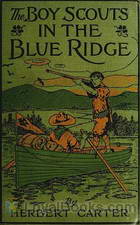 Boy Scouts in the Blue Ridge
The Silver Fox Patrol is hiking in the Blue Ridge Mountains of North Carolina, at the invitation of Bob White. They are enjoying their outing in a real wilderness, but trouble comes along from a local Moonshiner. Herbert Carter is one of many pseudonyms used by St George Rathborne. (Ann Boulais) | |
|
Old Broadbrim into the Heart of Australia or, A Strange Bargain and Its Consequences
Old Broadbrim, the famous Quaker detective listened as one of the richest men in New York continued "......I want you to guard my person for one year, and if at the end of that time I am still in the land of the living, why, your work ceases." - Summary by Annise | |
By: St. John Emile Clavering Hankin (1869-1909) | |
|---|---|
|
Mr. Punch's Dramatic Sequels
A collection of short and humorous one-act "sequels" to 14 major plays (many already in the catalog). Plays end too soon. They never show the whole of what I want to know. The curtain falls and I'm perplexed with doubts about what happened next. Did HAMLET'S father haunt no more the battlements of Elsinore? Does LADY TEAZLE never call at LADY SNEERWELL'S now at all? Was BENEDICK'S a happy marriage? And will the MELNOTTES keep a carriage? Will AUBREY take to wife one day another MRS. TANQUERAY? Do ECCLES and his stepson wrangle? Has anything been heard of DANGLE? What has become of MRS... | |
By: Stamp Act Congress of 1765 | |
|---|---|
 Declaration of Rights
On June 8, 1765 James Otis, supported by the Massachusetts Assembly sent a letter to each colony calling for a general meeting of delegates. The meeting was to be held in New York City in October. Representatives from nine colonies met in New York. Though New Hampshire, Virginia, North Carolina and Georgia did not send delegates, the Assemblies of those missing colonies nonetheless agreed to support the works of the Congress. The meetings were held in Federal Hall in New York, and the delegates assembled on October 2... | |
By: Stanley Grauman Weinbaum (1902-1935) | |
|---|---|
 Works of Stanley G. Weinbaum - A Martian Odyssey
Stanley G. Weinbaum is best known for his short story “A Martian Odyssey” which has been influencing Science Fiction since it was first published in 1934. Weinbaum is considered the first writer to contrive an alien who thought as well as a human, but not like a human. A Martian Odyssey and its sequel are presented here as well as other Weinbaum gems including 3 stories featuring the egomaniacal physicist Haskel van Manderpootz and his former student, playboy Dixon Wells. | |
By: Stanley Waterloo | |
|---|---|
 The Story of Ab
This is the story of Ab, a man of the Age of Stone, who lived so long ago that we cannot closely fix the date, and who loved and fought well. | |
By: Stefan Zweig (1881-1942) | |
|---|---|
|
Burning Secret
A lonely, convalescing 12 year-old boy and his attractive mother, who is in a loveless marriage, meet a gentleman while vacationing at a European resort. Seeking an enjoyable way to pass the time, the man schemes to seduce the woman with the unwitting help of the boy. The son, puzzled by the developing relationship, becomes increasingly isolated and suspicious as he loses his childish innocence in this gripping coming-of-age novella. This work is translated from the original German, Brennendes Geheimnis, which has also been recorded for Librivox... | |
By: Stella Benson (1892-1933) | |
|---|---|
 Living Alone
This is not a real book. It does not deal with real people, nor should it be read by real people. But there are in the world so many real books already written for the benefit of real people, and there are still so many to be written, that I cannot believe that a little alien book such as this, written for the magically-inclined minority, can be considered too assertive a trespasser. -- Stella Benson (author) Published in 1919, and set in London during the First World War, Living Alone tells of the meeting of a recluse and a witch, then rambles through magic, morality and aerial dogfights on broomsticks... | |
By: Stella M. Francis | |
|---|---|
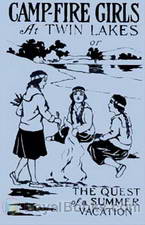 Campfire Girls at Twin Lakes or The Quest of a Summer Vacation
“Girls, I have some great news for you. I’m sure you’ll be interested, and I hope you’ll be as delighted as I am. Come on, all of you. Gather around in a circle just as if we were going to have a Council Fire and I’ll tell you something that will—that will—Teddy Bear your teeth.” A chorus of laughter, just a little derisive, greeted Katherine Crane’s enigmatical figure of speech. The merriment came from eleven members of Flamingo Camp Fire, who proceeded to form an arc of a circle in front of the speaker on the hillside grass plot near the white canvas tents of the girls’ camp. (Gutenberg) | |
 Campfire Girls In The Allegheny Mountains or, A Christmas Success Against Odds
The Camp Fire Girls books is a series of fiction novels written for children by various authors from 1912 into the 1930s. (Wikipedia) | |
|
Camp-Fire Girls in the Country or The Secret Aunt Hannah Forgot
Teen-ager Hazel Edwards and the other twelve members of the Flamingo Camp-Fire Girls experience some real adventure when they are invited to spend part of their summer as guests of Hazel’s elderly aunt on her large country farm. Mrs. Hannah Hutchins is a widow living alone with a few servants and farming assistants in her home in the midwestern town of Fairberry. The girls set up camp on a section of Aunt Hannah’s farm but, before too long, an incident occurs during the annual Fourth of July celebration in Fairberry... | |
By: Stendhal | |
|---|---|
|
The Red and the Black, Volume I
Stendhal - a German pen-name for a French writer who hated the English. Contemporary to some of the great names of French literature like Balzac and Flaubert, Stendhal is quite often considered a writer that doesn't seem to fit a defined genre. Some say he's a Romantic, others that he's a Modernist and that Le Rouge et Le Noir is the first modern novel. On one point they are all agreed: the novel is a masterpiece that shows a young theology student - Julien Sorel - intelligent, handsome and who is determined to rise above his humble peasant origins... | |
By: Stephen Crane (1871-1900) | |
|---|---|
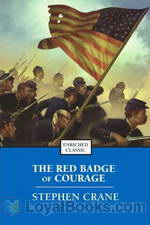 The Red Badge of Courage
The Red Badge of Courage is a fiction that tells the story of a soldier named Henry Fleming during the American Civil War. The novel gained widespread praise from critics and was also a commercial success shortly after its release and made Stephen Crane an instant celebrity at the young age of 24. In the novel, Henry was one of the enlisted soldiers in the 304th New York Regiment. He flees from battle in one of the skirmishes they had against the Confederates and to hide his cowardice, he attempted to inflict a wound to himself which is referred to as the “red badge of courage... | |
 Maggie: A Girl of the Streets
Stephen Crane’s first novel, Maggie: A Girl of the Streets has been called “the first dark flower of American Naturalism” for its distinctive elements of naturalistic fiction. The chief character, Maggie, descends into prostitution after being led astray by her lover. Rather than focusing on those that make up the very rich or middle class, the novel highlights the deplorable living conditions of the working class during the so-called Gilded Age in New York’s Bowery. | |
 Selected Short Stories
At the time of his death at the age of 28, Stephen Crane had become an important figure in American literature. He was nearly forgotten, however, until two decades later when critics revived interest in his life and work. Stylistically, Crane's writing is characterized by vivid intensity, distinctive dialects, and irony. Common themes involve fear, spiritual crises and social isolation. Although recognized primarily for The Red Badge of Courage, which has become an American classic, Crane is also known for short stories such as "The Open Boat", "The Blue Hotel", "The Bride Comes to Yellow Sky", and The Monster... | |
|
Wounds In The Rain; War Stories
Eleven stories of war by the author of The Red Badge of Courage. Stephen Crane was an American author. He is recognized by modern critics as one of the most innovative writers of his generation. Crane's writing is characterized by vivid intensity, distinctive dialects, and irony. Common themes involve fear, spiritual crises and social isolation. His writing made a deep impression on 20th-century writers, most prominent among them Ernest Hemingway, and is thought to have inspired the Modernists and the Imagists. | |
By: Stephen Leacock (1869-1944) | |
|---|---|
 Frenzied Fiction
From the cave man to Santa Claus; spies, know-it-alls, and journalists: all are fair game for Leacock’s special brand of humor. He touches on the changes time has brought about in the city, education, and work habits. Among the other topics in this work are nature, fishing, gardening, success, and spirits–both of the departed and of the variety Prohibition prohibited. Each chapter of this book is a standalone story and if you love a good laugh, these stories are for you. In me, Leacock’s wit produced the full range of laughter: smiles, chuckles, guffaws, and some uncontrollable giggles. Also, occasionally, I found myself shedding a tear or two. (Review by Debra Lynn) | |