 |
Books Should Be Free Loyal Books Free Public Domain Audiobooks & eBook Downloads |
|
|
|
Books Should Be Free Loyal Books Free Public Domain Audiobooks & eBook Downloads |
|
Historical Fiction |
|---|
|
Book type:
Sort by:
View by:
|
By: Anthony Trollope (1815-1882) | |
|---|---|
 Miss Mackenzie
The thirty-five year-old (hence utterly over-the-hill) Miss Margaret Mackenzie, having devoted her life to others, suddenly finds herself with no one to care for, and in possession of a moderate fortune. Having money, she is now much sought-after and no longer universally deemed too old to marry. Partly because she has spent her life taking care of the brother whose money she has now inherited, she has no experience of wealth or popularity. Miss Mackenzie is the definition of “other-oriented. (Indeed, Trollope originally considered naming the novel, and his heroine, “Griselda”, presumably to invoke the folkloric character’s qualities of stolid obedience and endless patience... | |
By: Trollope, Anthony (1815-1882) | |
|---|---|
 Belton Estate, The
Clara Amedroz is the virtuous, intelligent, and quick-witted heroine of this novel. Like all women of her time, she has few options other than to marry. She is lucky enough to have two eligible suitors, and chooses the more urbane and worldly of the two. Alas, however, she realizes fairly quickly that Captain Aylmer is not a nice person. Throughout much of the novel we find her trying hard not to recognize that Will Belton - the suitor she rejected, and who still loves and wants to marry her - is... | |
By: Anthony Trollope (1815-1882) | |
|---|---|
 The Golden Lion of Granpere
Time to do a short Continental trip with Trollope and see if we agree with Walpole. "...not only Trollope's very best shorter book, but one of the most charming idylls in English literature. - . . It has all the colour and richness and cohesion of something done irresistibly." -Walpole . The storyline is simple - boy meets girl - parents object - trials and tribulations follow - and then the story reaches it's conclusion - but you will need to find what that is for yourself ! | |
 Castle Richmond
| |
|
La Vendée
| |
By: Fyodor Dostoyevsky (1821-1881) | |
|---|---|
|
Possessed
| |
By: Edward M. Forster (1879-1970) | |
|---|---|
 Where Angels Fear to Tread
On a journey to Tuscany with her young friend and traveling companion Caroline Abbott, widowed Lilia Herriton falls in love with both Italy and a handsome Italian much younger than herself, and decides to stay. Furious, her dead husband’s family send Lilia’s brother-in-law to Italy to prevent a misalliance, but he arrives too late. Lilia marries the Italian and in due course becomes pregnant again. When she dies giving birth to her child, the Herritons consider it both their right and their duty to travel to Monteriano to obtain custody of the infant so that he can be raised as an Englishman. | |
By: Geoffrey Chaucer (c. 1343-1400) | |
|---|---|
 The Canterbury Tales
Anyone who has ever been on a package tour with a group of strangers who soon become friends, and passed time swapping stories with them, would instantly identify with this timeless classic of English literature. The Canterbury Tales by Geoffrey Chaucer recounts twenty different stories recounted by a diverse group of pilgrims who gather at The Tabard Inn in Southwark, near London, before setting out for the shrine of Thomas Becket in Canterbury. The Host of the inn proposes that they entertain themselves by telling stories along the route and the one who tells the best tale would win a prize – a meal at Bailey's tavern, sponsored by the losers... | |
By: Nathaniel Hawthorne (1804-1864) | |
|---|---|
 The Scarlet Letter
A beautiful woman who is punished for the mortal sin of loving a man other than her husband, a cowardly lover, a vengeful husband, a rebellious illegitimate child and the oppressive and patriarchal morality of 17th century Puritanism in Boston. Together these form an unforgettable and thought-provoking glimpse of how much social attitudes have changed over the centuries. Nathaniel Hawthorne was the creator of such beloved works as Twice-Told Tales, A Wonder Book for Boys and Girls, The House of the Seven Gables and spine-chilling tales like Roger Malvin's Burial... | |
 The House of the Seven Gables
“The wrongdoing of one generation lives into the successive ones and… becomes a pure and uncontrollable mischief.” Hawthorne’s moral for “The House of the Seven Gables,” taken from the Preface, accurately presages his story. The full weight of the gloomy mansion of the title seems to sit on the fortunes of the Pyncheon family. An ancestor took advantage of the Salem witch trials to wrest away the land whereon the house would be raised… but the land’s owner, about to be executed as a wizard, cursed the Pyncheon family until such time as they should make restitution... | |
|
The Snow Image and other stories
| |
|
John Inglefield's Thanksgiving (From: "The Snow Image and Other Twice-Told Tales")
| |
|
The Wives of the Dead (From: "The Snow Image and Other Twice-Told Tales")
| |
|
Main Street (From: "The Snow Image and Other Twice-Told Tales")
| |
|
The Man of Adamant (From: "The Snow Image and Other Twice-Told Tales")
| |
|
Little Daffydowndilly (From: "The Snow Image and Other Twice-Told Tales")
| |
|
Old Ticonderoga, a Picture of the Past (From: "The Snow Image and Other Twice-Told Tales")
| |
|
Sylph Etherege (From: "The Snow Image and Other Twice-Told Tales")
| |
|
Old News (From: "The Snow Image and Other Twice-Told Tales")
| |
By: Andre Norton (1912-2005) | |
|---|---|
 Rebel Spurs
In 1866, only men uprooted by war had reason to ride into Tubacca, Arizona, a nondescript town as shattered and anonymous as the veterans drifting through it. So when Drew Rennie, newly discharged from Forrest’s Confederate scouts, arrived leading everything he owned behind him—his thoroughbred stud Shiloh, a mare about to foal, and a mule—he knew his business would not be questioned. To anyone in Tubacca there could be only one extraordinary thing about Drew, and that he could not reveal: his name, Rennie... | |
|
Ride Proud, Rebel!
Drew Rennie, served as a cavalry scout in Confederate general John Hunt Morgan's command. He had left home in 1862 after a final break with his harsh grandfather, who despised him since his birth because of his mother's runaway marriage to a Texan. During the final year of conflict Drew has the additional responsibility of looking out for his headstrong fifteen-year-old cousin Boyd, who has run away from home to join Morgan's command and has a lot to learn in the school of hard knocks the army provides. The story follows the two of them and a new friend, Anson Kirby, through campaigns in Kentucky, Tennessee and later on deeper into the South, first with Morgan and later under Forrest. | |
By: George Eliot (1819-1880) | |
|---|---|
 The Mill on the Floss
The novel details the lives of Tom and Maggie Tulliver, a brother and sister growing up on the river Floss near the village of St. Oggs, evidently in the 1820’s, after the Napoleonic Wars but prior to the first Reform Bill (1832). The novel spans a period of 10-15 years, from Tom and Maggie’s childhood up until their deaths in a flood on the Floss. The book is fictional autobiography in part, reflecting the disgrace that George Eliot (Mary Ann Evans) herself had while in a lengthy relationship with a married man, George Henry Lewes... | |
 Romola
George Eliot's own favorite among her novels, this novel tells the story of Romola, the intelligent daughter of a blind scoller, who is falling in love with a man who is going to change her life and the politics of Florence in a way she doesn't like. Set in 15th century Florence, it is "a deep study of life in the city of Florence from an intellectual, artistic, religious, and social point of view". | |
By: H. Beam Piper (1904-1964) | |
|---|---|
|
Rebel Raider
| |
By: Arnold Bennett (1867-1931) | |
|---|---|
|
Ghost: A Modern Fantasy
The novel opens with Carl Foster, a recently qualified doctor, coming to London to try and make his fortune. He meets a famous tenor, Signor Alresca, who suffers a dreadful injury backstage and Foster tends to him. He thus meets the lead soprano, Rosetta Rosa, and falls hopelessly in love with her.Alresca takes Foster under his wing and they travel to Alresca's home in Bruges. It is clear to Foster that Alresca has some strange obsession. Foster also notices a stranger who seems to be dogging his footsteps.Things take an even more sinister turn when Alresca inexplicably dies. . . | |
By: Stephen Crane (1871-1900) | |
|---|---|
 The Red Badge of Courage
The Red Badge of Courage is a fiction that tells the story of a soldier named Henry Fleming during the American Civil War. The novel gained widespread praise from critics and was also a commercial success shortly after its release and made Stephen Crane an instant celebrity at the young age of 24. In the novel, Henry was one of the enlisted soldiers in the 304th New York Regiment. He flees from battle in one of the skirmishes they had against the Confederates and to hide his cowardice, he attempted to inflict a wound to himself which is referred to as the “red badge of courage... | |
By: Edward George Bulwer-Lytton (1803-1873) | |
|---|---|
 Last Days of Pompeii
The Last Days of Pompeii, a novel by Edward George Bulwer-Lytton tells the love story of the Greeks Glaucus and Ione who were living in Pompeii when Mt. Vesuvius erupted and destroyed the city. But aside from telling their romance, the book is also full of insights about the decadent lifestyle of the Romans during the later part of their empire’s history. The different characters in the story represent the different civilizations which they come from. Glaucus, the main protagonist in the novel was portrayed as a handsome Greek nobleman... | |
By: James Fenimore Cooper (1789-1851) | |
|---|---|
 The Last Of The Mohicans
The Last of the Mohicans is an epic novel by James Fenimore Cooper, first published in January 1826. It was one of the most popular English-language novels of its time, and helped establish Cooper as one of the first world-famous American writers.The story takes place in 1757 during the French and Indian War, when France and Great Britain battled for control of the American and Canadian colonies. During this war, the French often allied themselves with Native American tribes in order to gain an advantage over the British, with unpredictable and often tragic results. | |
 The Spy
Between 1865-73 the tumultuous American Revolution rages on in different battlefields. The air is thick with hatred and suspicion as the Continental and British armies clash in bloody warfare. In Westchester County, New York, an area is considered a neutral ground for both forces, Harvey Birch plies his dangerous mission. An innocuous peddler by day, he is in fact an American spy, though he does nothing to correct anyone who assumes he is a British spy. In a magnificent country mansion, The Locusts, live the wealthy Whartons... | |
 The Pathfinder
Natty Bumppo goes by many names: La Longue Carabine, Hawk Eye, Leatherstocking, and in this tale, The Pathfinder. Guide, scout, hunter, and when put to it, soldier, he also fills a lot of roles in pre-Revolution upstate New York. An old friend, Sergeant Dunham of the 55th Regiment of Foot, asks him to guide his daughter through the wilderness to the fort at Oswego where Dunham serves. With the French engaging native Indian allies against the British and the Yankee colonists, such a journey is far from safe... | |
 The Pioneers
The Pioneers: The Sources of the Susquehanna; a Descriptive Tale is one of the Leatherstocking Tales, a series of five novels by American writer James Fenimore Cooper. The Pioneers was first of these books to be published (1823), but the period of time covered by the book (principally 1793) makes it the fourth chronologically. (The others are The Deerslayer, The Last of the Mohicans, The Pathfinder, and The Prairie.)The story takes place on the rapidly advancing frontier of New York State and features... | |
|
Prairie - A Tale
The story opens with Ishmael, his family, Ellen and Abiram slowly making their way across the virgin prairies of the Midwest looking for a homestead, just two years after the Louisiana Purchase, and during the time of the Lewis and Clark Expedition. They meet the trapper (Natty Bumppo), who has left his home in New York state to find a place where he cannot hear the sound of people cutting down the forests. In the years between his other adventures and this novel, he tells us only that he has walked all the way to the Pacific Ocean and seen all the land between the coasts (a heroic feat, considering Lewis and Clark hadn’t yet completed the same trek). | |
|
The Two Admirals
| |
|
The Chainbearer Or, The Littlepage Manuscripts
| |
By: Rafael Sabatini (1875-1950) | |
|---|---|
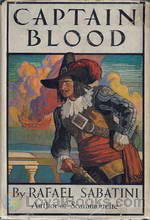 Captain Blood
An adventure novel with an unexpected hero, Captain Blood follows the unintended journey of chivalrous and well-educated gentleman Peter Blood, who without much choice was plunged into the world of piracy forcing him to leave his tranquil lifestyle behind. Sabatini first introduced his protagonist in a series of eight short stories published in magazine installments, until later weaving them together in 1922 as a novel. Set in the late 17th century, the novel begins with the image of Peter Blood, a physician, casually attending his geraniums and smoking a pipe... | |
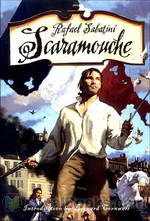 Scaramouche
“He was born with a gift of laughter and a sense that the world was mad!” The wonderful opening lines of this 1921 novel set the tone for the rest of this delightful story of an adventurer and romantic who dons several roles in his colorful life. Scaramouche by Rafael Sabatini is an historical novel set in the turbulent times of the French Revolution. The plot describes Andre-Louis Moreau, a young lawyer adopted by his godfather who cannot reveal his parentage. Moreau inadvertently stumbles into political events and becomes a wanted man based on the evil machinations of a sinister Marquis... | |
 The Sea Hawk
First published in 1915, The Sea Hawk follows the adventures of its protagonist Sir Oliver Tressilian, as he is unjustly betrayed and left to the mercy of others by his selfish brother, who seeks only to save his own skin no matter the cost. Exploring various themes including betrayal, vengeance, sacrifice, injustice, and tormented love, the novel successfully demonstrate Sabatini’s exceptional flair for adventure. Set in the late 16th century, the tale begins with the introduction of Sir Oliver Tressilian, a wealthy gentleman who lives together with his brother Lionel, haunted by his family’s bad-tempered reputation... | |
 The Tavern Knight
Follow the exploits of Sir Crispin Galliard, also known as The Tavern Knight, in his defence of the King of England against Cromwell and his Puritan Entourage. | |
|
Mistress Wilding
| |
By: D. H. Lawrence (1885-1930) | |
|---|---|
 The Prussian Officer and Other Stories
The collection of short stories – of which The Prussian Officer is one – was Lawrence’s first such book. A German officer and his orderly are the focus of the piece and, while socially the superior of his orderly, the officer demonstrates his is the distinctly baser character. (Introduction by Cathy Barratt) | |
By: Zane Grey (1872-1939) | |
|---|---|
 The Last Trail
Return with us to those thrilling days of yesteryear as Mike Vendetti narrates this early Zane Grey novel of hardy pioneers taming the wild west. Yes, despite the difficult times, romance flourishes and the bad guys are eliminated almost single handedly as our heroes Jonathan Zane and his sidekick Lew “Deathwind” Wetzel fight their way through mud, blood, gore, savage Indians, and despicable outlaws, to make the land safe for pioneer families as they settle the wild west. | |
 The Last of the Plainsmen
Travel along as Mike Vendetti aka miketheauctioneer narrates an outstanding true account of a trip made in 1909 by Zane Grey and a plainsman, Buffalo Jones, through the Grand Canyon to lasso a cougar. That’s right lasso. Throw a rope around. That’s equivalent to catching one by the tail. As I narrated this book, I found fact to be as exciting as fiction. This part of the west was relatively wild and untamed at this time. Wolves, wild horses, buffalo and other wildlife were quite prevalent, and the Indians were not that friendly... | |
 The Spirit of the Border
This is an early novel by the phenomenally successful author of frontier, western and sports stories. It deals with historical characters and incidents in the Ohio Valley in the late 18th century, especially with the foundation of Gnaddenhutten, a missionary village intended to bring Christianity to the Indians of Ohio, despite the violent opposition of both Indians and white renegades. This turbulent adventure romance features the heroics of a semi-legendary frontiersman, Lewis Wetzel, who attempts to protect the settlers from hostile Native Americans and the vicious white outlaws the Girty brothers. (Introduction by Leonard Wilson) | |
|
Betty Zane
| |
By: Howard Pyle (1853-1911) | |
|---|---|
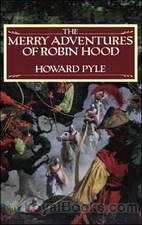 The Merry Adventures of Robin Hood
A modern day legend, Robin Hood is an archetypal hero of the common people who goes to great lengths to famously take from the rich and give to the poor. Luckily he is not alone in his mission, as his righteous views are shared by his band of Merry Men, a group of yeomen, and together they pursue an end to injustice and oppression. Set in medieval England, the tale begins with the introduction of a young archer, who is provoked into conflict and committing a crime against the formidable Sherriff of Nottingham and is immediately dubbed an outlaw... | |
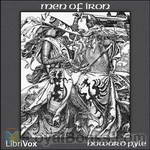 Men of Iron
Men of Iron by Howard Pyle is historical fiction that transports us back to the 1400’s, a time of knighthood and chivalry. Myles Falworth is eight years old when news comes they must flee their home. His blind father is accused of treason. We see Myles grow up, train as a knight, and with perseverance, clear his father of any wrong-doing and restore their family name. | |
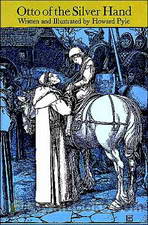 Otto of the Silver Hand
The story of little Otto, a gentle, peace-loving child born into the heart of turmoil and strife in the castle of a feuding robber baron in medieval Germany. (Summary by Arctura) | |
|
Howard Pyle's Book of Pirates
Swashbuckling tales of legendary pirates, buccaneers, and marooners, terrors of the Spanish Main. | |
By: Washington Irving (1783-1859) | |
|---|---|
|
Old Christmas: From the Sketch Book of Washington Irving
Washington Irving's Old Christmas tells of an American's travels through England during the Christmas season. Through a chance meeting with an old friend he is able to experience Christmas in a stately manor house. Through his eyes as a houseguest he glimpses the uniquely British customs and celebrations of Christmas as it would have been experienced during the Middle Ages, rather than in the early 19th century. | |
By: Gene Stratton-Porter | |
|---|---|
|
A Daughter of the Land
Independent Kate Bates resents the fact that, as the youngest of a large family, she is expected to stay at home and help her parents while her brothers and sisters are free to pursue their desires. When she defies her family and leaves home, she finds that the path to independence is paved with hardships. | |
By: James Oliver Curwood | |
|---|---|
 The Alaskan
This story opens with a young woman who voyages alone into the wilds of Alaska to escape her tragic past. It then continues on to a young man who passionately protects the pristine environment, people and way of life in this snowbound country. Finally, a greedy profiteer arrives in the narrative whose only aim is to fill his pockets. When these three characters encounter each other on the stark and snowy plains, it's a clash of ideals and the sparks begin to fly. The Alaskan by James Oliver Curwood is one of his very engaging adventure romance conservationist stories and was an instant bestseller, like most of his books, when it was first published in 1923... | |
 God's Country—And the Woman
James Curwood wrote many adventures of the far north. By 1909 he had saved enough money to travel to the Canadian northwest, a trip that provided the inspiration for his wilderness adventure stories. The success of his novels afforded him the opportunity to return to the Yukon and Alaska for several months each year that allowed him to write more than thirty such books. The Canadian North is often referred to as “God’s Country” God’s Country is a tale of adventure, mystery and romance! | |
By: Robert Michael Ballantyne (1825-1894) | |
|---|---|
 Fast in the Ice
At the age of 16 Ballantyne went to Canada and was six years in the service of the Hudson’s Bay Company. His rule in writing, being in every case, was to write as far as possible from personal knowledge of the scenes he described. In this book he details the lives of the crew as they must overwinter in the frozen north including their meetings with Eskimos and bears and their struggles with disease. This is a realistic account of what life was like for the explorers of the Arctic. | |
By: Mary Roberts Rinehart (1876-1958) | |
|---|---|
 The Amazing Interlude
It is the early days of The Great War. As the curtain rises, Sara Lee is sitting by the fire in her aunt and uncle’s home, knitting a baby afghan. Her beau’s name is Harvey. He has his eye on a little house that is just perfect for two and he will soon propose to Sara Lee. But in this play, the mise en scène is about to change. A fairyland transformation will take place and Sara Lee will step into a new and different story, where she is the princess in a forest of adventure. There is a prince, too, whose name is Henri... | |
|
More Tish
Mary Roberts Rinehart wrote 6 books about the elderly Letitia (Tish) Carberry and the escapades she gets her elderly lady cronies into. The series led to a 1942 movie with Marjorie Main. This particular book, the third in the series, was written after Mary's stint as a war correspondent in Belgium during the first World War. | |
By: John Galsworthy (1867-1933) | |
|---|---|
 The Man of Property
The first book in Galsworthy’s trilogy, The Forsyte Saga, The Man of Property revolves around the lives of the Forsytes, a self-conceited and cold family, who place a high value on propagating money and rising from their yeoman roots. The novel chronicles the events that lead to their inevitable demise, which is instigated by the stuffy man of property, Soames Forsyte, as he pursues the ideals of the preceding generation, whilst maintaining his own obsession with ownership. At the same time, Galsworthy candidly criticizes the values of the upper-middle classes, by means of satire, irony, a mixed array of realistic characters, an evocative setting, and an intricate plot... | |
|
Beyond
Gyp, the daughter of ex-Major Charles Claire Winton, at the age of 23 marries Fiorsen, a Swedish violin virtuoso. Her mother, the wife of another man, has been Winton's mistress; she had died when Gyp was born. A highly sensitive child, Gyp has grown up in isolated surroundings with a kind, but very British, father. As she gets older her father tries to introduce her into society. An attack of gout takes him to Wiesbaden for a cure and, as he never goes anywhere without her, she accompanies him... | |
By: Gustave Flaubert (1821-1880) | |
|---|---|
|
Salammbô
After completing the famous Mme Bovary, Flaubert put all his efforts into researching the Punic Wars and completed the lesser known Salammbô. In this volume, Flaubert describes in detail the Mercenary Revolt and the fight of the Mercenaries against the all-powerful Carthage, the theft of the magical Zaimph and the love and hate between the Carthaginian princess Salammbô and the fiercest leader of the Mercenaries, Matho. | |
By: Honoré de Balzac (1799-1850) | |
|---|---|
|
Father Goriot
One of Balzac's most popular works, set around 1815 during the re-ascendancy of the Bourbon kings following the defeat of Napoleon. Said to have been an inspiration to Charles Dickens and Henry James as well as others, the novel seeks to portray the realism of scenes and people. It is also a commentary upon the changing social strata and mores of the day. | |
By: William Makepeace Thackeray | |
|---|---|
 The History of Henry Esmond, Esq., A Colonel in the Service of Her Majesty Queen Anne
A classic Victorian novel and a historical novel rolled into one! Read about court and army life during the reign of Queen Anne – a story of Catholic – Protestant intrigue, and the party which aspired to the restoration of Bonny Prince Charlie. And, a good love story as well. | |