 |
Books Should Be Free Loyal Books Free Public Domain Audiobooks & eBook Downloads |
|
|
|
Books Should Be Free Loyal Books Free Public Domain Audiobooks & eBook Downloads |
|
Literature |
|---|
|
Book type:
Sort by:
View by:
|
By: William Blake (1757-1827) | |
|---|---|
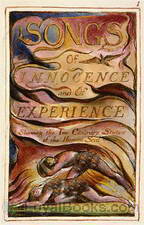 Songs of Innocence and Experience
“Tiger, tiger, burning bright/In the forests of the night/ What immortal hand or eye/ Could frame thy fearful symmetry?” These often quoted lines are part of The Tiger in William Blake's Songs of Innocence and Experience. In 1789, William Blake released a limited edition of the book. Being a gifted artist, poet and printmaker, he undertook to personally publish all his work himself through a very painstaking but highly artistic process of etching, thereby transferring his drawings and poems individually onto copper plates by hand... | |
 Poems of William Blake
Songs of Innocence and of Experience: Shewing the Two Contrary States of the Human Soul are two books of poetry by the English poet and painter, William Blake. Although Songs of Innocence was first published by itself in 1789, it is believed that Songs of Experience has always been published in conjunction with Innocence since its completion in 1794. Songs of Innocence mainly consists of poems describing the innocence and joy of the natural world, advocating free love and a closer relationship with God, and most famously including Blake’s poem The Lamb... | |
By: Andre Norton (1912-2005) | |
|---|---|
 Plague Ship
A Free Trader rocket ship heads for the remote planet, Sargol, which is blessed with immense natural wealth and precious gemstones. The ship is manned by the heroic Dane Thorson and his crew of intrepid space traders. On Sargol, they enter into complicated negotiations with the inhabitants of this strange planet. These feline people, the Salariki, are reluctant to enter into a business partnership with the free traders till they discover that the ship carries a small amount of catnip on board which they'd obtained from another trading post... | |
 Star Born
If you've read and enjoyed The Stars Are Ours, you will certainly enjoy this exciting sequel! Star Born by Andre Norton was first published in 1957, two years after the previous book and is in itself a complete and riveting read. The theme depicts an early inter-stellar flight undertaken by people who call themselves the Free Scientists escaping from an oppressive regime on Earth. When Pax, a global authoritarian regime takes over the planet, it deems all space travel illegal. However this small group flees before the rules come into force... | |
 The Time Traders
If it is possible to conquer space, then perhaps it is also possible to conquer time. At least that was the theory American scientists were exploring in an effort to explain the new sources of knowledge the Russians possessed. Perhaps Russian scientists had discovered how to transport themselves back in time in order to learn long-forgotten secrets of the past. That was why young Ross Murdock, above average in intelligence but a belligerently independent nonconformist, found himself on a “hush-hush” government project at a secret base in the Arctic... | |
 Star Hunter
A science fiction novella depicting a thrilling cat-and-mouse game which plays out between a credulous young man and an interstellar safari leader, as the two take up an unanticipated adventure on the mysterious planet Jumala. Norton combines mind control, cunning schemes, interstellar travel, and alien intelligence in an action-packed adventure. The story unfolds with the introduction of Ras Hume, a pilot and Out-Hunter, who with the help of a criminal mastermind from the planet Nahuatl plans a conspiracy to secure a fortune by manipulating its supposed beneficiary... | |
 Key Out of Time
This is Book 4 in the Time Traders Series, In this book Ross Murdock and Arthur Ashe continue their adventures in Time and Space on the World of Hawaika. Hawaiian and Polynesian settlers help Ross and Ashe discover the way the world has changed from the data tape to present time. Helped by a girl (Karara) and her two trained dolphins (Tino-rau and Taua) | |
 The Defiant Agents
Travis Fox and a band of fellow Apache AmerIndians have their racial memories and survival abilities enhanced by the Redax machine and are sent to the planet Topaz, one of the few worlds of the ancient star empire that the US has voyage tapes to. But the Reds have “snooped” the tapes and get there first, and have a nasty surprise waiting for any ship that does not have the proper identification. Travis and some of his fellow Apaches survive the ensuing crash landing…but can they defeat the Reds and win Topaz for themselves? This work is a sequel to both The Time Traders and Galactic Derelict... | |
 The People of the Crater
An air force pilot adrift in peacetime is recruited to join an Antarctic expedition. When a strange mist downs his plane he discovers an ancient alien civilization which has prophesized his arrival. Now he and his faithful pet Ana must descend to the depths of the crater and face the Black Ones in order to rescue the fair Thrala, daughter of the Ancient Ones. – Andre Norton (Alice Mary Norton) was a popular author of science fiction and fantasy who began publishing stories in the early 1930s. “The People of the Crater” was first published in volume 1 number 1 of Fantasy Book in 1947. | |
 All Cats Are Gray
| |
 Rebel Spurs
In 1866, only men uprooted by war had reason to ride into Tubacca, Arizona, a nondescript town as shattered and anonymous as the veterans drifting through it. So when Drew Rennie, newly discharged from Forrest’s Confederate scouts, arrived leading everything he owned behind him—his thoroughbred stud Shiloh, a mare about to foal, and a mule—he knew his business would not be questioned. To anyone in Tubacca there could be only one extraordinary thing about Drew, and that he could not reveal: his name, Rennie... | |
|
The Gifts of Asti
| |
|
Ralestone Luck
Rupert Ralestone is officially the Marquess of Lorne--but with no family money or prestige, the title is worthless. He and his younger brother and sister return to the old family homestead--Pirate's Haven. Their only hope is to find the family's talisman, a great sword, and restore it to its proper place. | |
By: Jerome K. Jerome (1859-1927) | |
|---|---|
 Idle Thoughts of an Idle Fellow
Idle Thoughts of an Idle Fellow, published in 1886, is a collection of humorous essays by Jerome K. Jerome. It was the author’s second published book and helped establish him as a leading English humorist. The book consists of 14 independent articles arranged by themes. | |
 Told after Supper
It is Christmas Eve, and the narrator, his uncle and sundry other local characters are sitting round the fire drinking copious quantities of whisky punch and telling ghost stories until bedtime, when… But no, I won’t spoil the fun. This is a little gem: Jerome at his tongue-in-cheek best. | |
 Stage Land
A comic look at the curious habits and customs of the inhabitants of ‘Stage Land’. Dedicated to ‘that highly respectable but unnecessarily retiring individual, of whom we hear so much but see so little, “the earnest student of drama” | |
 They and I
A man and his three children leave the “Little Mother” at home in the city and set up temporary housekeeping in a country cottage to supervise the remodeling of the house he has just purchased there. The story is narrated by the father. His interactions with his children, interspersed with his own recollections of past events, make for hilarious reading. This is Jerome at his best, IMHO, although this is apparently one of this lesser known novels. | |
 Tea-table Talk
As the New York Times said in 1903, this lesser-known work by Jerome K. Jerome does not display “the wit of Congreve or even the glittering sort Mr. Jerome employs in some of his other books.”It takes the form of imaginary conversations between the writer and a number of un-named characters at the afternoon tea table. The Woman of the World, the Old Maid, the Girton Girl, the Philosopher and the Minor Poet wax lyrical on subjects like marriage, art, society and politics. Frequently they appear to prefer the sound of their own voice to that of others... | |
 Idle Ideas in 1905
Back in 1905 Jerome K. Jerome shared his thoughts on a variety of subjects, including "Should Women Be Beautiful?", "Should Soldiers Be Polite?" and "Is The American Husband Made Entirely Of Stained Glass?". Every subject is analysed and commented on in the witty and satirical style we have grown to expect from the author. | |
By: George Eliot (1819-1880) | |
|---|---|
 Daniel Deronda
A lovely young woman gambling at a casino in Leubronn, Germany. A young man watches, fascinated from afar. She begins to lose heavily and leaves the casino. Thus opens the last and probably the most controversial of George Eliot's novels. Published in 1876, Daniel Deronda is also the only one in which the great Victorian novelist portrays contemporary society of her own time. There were only a few murmurs when it first came out, but later, they became a full fledged outpouring of resentment against what many readers felt was an extremely controversial stand on Jewish, proto-Zionist and Kabbalistic ideas... | |
 Adam Bede
A young carpenter falls in love with the village beauty. She, however, has set her sights on a dashing army captain who's the son of the wealthy local squire. Meanwhile, a beautiful and virtuous young woman preacher arrives in the village. What happens to these people and the strange twists and turns that their lives take are described in the rest of the book. Adam Bede was George Eliot's first published novel. Published in 1859, the book has remained a firm favorite with readers and academicians alike and is still taught in many English literature courses all over the world... | |
 Middlemarch
George Eliot's seventh and perhaps most famous novel almost didn't get written! It took birth as a short novella titled Miss Brooke but she was unhappy with its progress and finally in despair, she decided to put it aside for a couple of years. Meanwhile, personal problems intervened and when she took up the project again, it was with a renewed sense of creativity. Middlemarch: A Study of Provincial Life first appeared as an eight-part serial novel in 1871-72. In 1874, it was finally compiled into a full length novel and attained instant fame and success... | |
 The Mill on the Floss
The novel details the lives of Tom and Maggie Tulliver, a brother and sister growing up on the river Floss near the village of St. Oggs, evidently in the 1820’s, after the Napoleonic Wars but prior to the first Reform Bill (1832). The novel spans a period of 10-15 years, from Tom and Maggie’s childhood up until their deaths in a flood on the Floss. The book is fictional autobiography in part, reflecting the disgrace that George Eliot (Mary Ann Evans) herself had while in a lengthy relationship with a married man, George Henry Lewes... | |
 Romola
George Eliot's own favorite among her novels, this novel tells the story of Romola, the intelligent daughter of a blind scoller, who is falling in love with a man who is going to change her life and the politics of Florence in a way she doesn't like. Set in 15th century Florence, it is "a deep study of life in the city of Florence from an intellectual, artistic, religious, and social point of view". | |
 Scenes of Clerical Life
Scenes of Clerical Life, which appeared in book form in 1858 (after serial publication in the previous year), was the first published fiction by George Eliot, the pen name for Mary Anne Evans. It consists of three novellas based on the lives of country clergymen and their communities. These characters interest Eliot not for their theology — she had abandoned conventional Christian belief — but for their humanity. In these stories, we find the earliest signs of the narrative voice, the humanism, and the realism that would make George Eliot one of the greatest novelists of the 1800s. (Introduction by Bruce Pirie) | |
|
The Essays of "George Eliot"
| |
|
Brother Jacob
Brother Jacob is a short story by George Eliot, in which she explores the relationship between the selfish, self-centered and ambitious David Faux and his idiot brother, Jacob. | |
|
How Lisa Loved the King
| |
By: Joseph Smith Fletcher (1863-1935) | |
|---|---|
 The Middle Temple Murder
Midnight. A lonely courtyard. The dead body of a stranger—a prosperous looking, well dressed, elderly man is found in Middle Temple Lane, London. This is one of England's ancient Inns of Court where barristers were traditionally apprenticed and carried on their work. Middle Temple is just a few minutes walk away from busy Fleet Street and the Thames Embankment. In the dead man's pocket is a piece of paper with the name and address of a young barrister. One of the first people to reach the crime scene is the investigative reporter, Frank Spargo, who writes for a leading London newspaper, The Watchman... | |
 Dead Men's Money
A naïve but sincere young lawyer's assistant who only dreams of marrying his childhood sweetheart and yearns to have a home and family with her. His sharp witted boss keeps the firm going by dint of shrewd business sense and legal talent. When the assistant accidentally stumbles into a murder case, the scene is set for events that change all their lives. Dead Men's Money by Joseph Smith Fletcher was published in 1920, the era considered to be the Golden Age of detective fiction. Writers like Agatha Christie, Ngaio Marsh, Dorothy L... | |
 The Middle of Things
If you're in the mood for a cracking good classic murder mystery, The Middle of Things by JS Fletcher will certainly come up to expectations! Richard Viner is your average man on the street who stumbles upon a dead body in a dimly lit alley while taking his usual nightly stroll. When the police arrive, they conclude that this is a case of a robbery gone wrong, as the dead man's valuables are missing. However, as the case progresses, Viner discovers to his consternation, that the prime accused in the case is an old school-mate who is caught pawning items of jewelry belonging to the dead man... | |
 The Paradise Mystery
A quiet cathedral town in England, full of gossips and people who are not quite who they seem to be, is the setting for this murder mystery. | |
 The Chestermarke Instinct
Bank manager John Hornbury is missing, as are securities and jewels from the bank’s vault. Gabriel Chestermarke and his nephew Joseph have unaccountably refused to call in the police to investigate the theft from their bank. When Betty Fosdyke shows up to visit her Uncle John, she finds it past belief that he would simply disappear – let alone that he would commit larceny. Unable to simply sit by and wait while a detective from Scotland Yard investigates, Betty elicits the help of the chief clerk at Chestermarke’s bank and launches into the middle of the mystery. | |
By: Marion Zimmer Bradley | |
|---|---|
 The Door Through Space
At one time Race Cargill had been the best Terran Intelligence agent on the complex and mysterious planet of Wolf. He had repeatedly imperiled his life amongst the half-human and non-human creatures of the sullen world. And he had repeatedly accomplished the fantastic missions until his name was emblazoned with glory. But that had all seemingly ended. For six long years he’d sat behind a boring desk inside the fenced-in Terran Headquarters, cut off there ever since he and a rival had scarred and ripped each other in blood-feud... | |
|
Year of the Big Thaw
| |
By: H. Beam Piper (1904-1964) | |
|---|---|
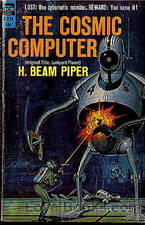 The Cosmic Computer
Conn Maxwell returns from Terra to his poverty-stricken home planet of Poictesme, “The Junkyard Planet”, with news of the possible location of Merlin, a military super-computer rumored to have been abandoned there after the last war. The inhabitants hope to find Merlin, which they think will be their ticket to wealth and prosperity. But is Merlin real, or just an old rumor? And if they find it will it save them, or tear them apart? | |
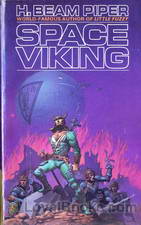 Space Viking
A galactic war has left the Terran Federation in ruins. Formerly civilized planets have decivilized into barbarism. Space Vikings roam the wreckage, plundering and killing for gain. Lord Lucas Trask of Traskon was no admirer of the Space Vikings, but when murder takes his wife on his wedding day, Trask trades everything he has for his own Space Viking ship and sets out on a galaxy-wide quest for revenge. | |
 Murder in the Gunroom
The Lane Fleming collection of early pistols and revolvers was one of the best in the country. When Fleming was found dead on the floor of his locked gunroom, a Confederate-made Colt-type percussion .36 revolver in his hand, the coroner’s verdict was “death by accident.” But Gladys Fleming had her doubts. Enough at any rate to engage Colonel Jefferson Davis Rand—better known just as Jeff—private detective and a pistol-collector himself, to catalogue, appraise, and negotiate the sale of her late husband’s collection. | |
 Omnilingual
An expedition to Mars discovers the remains of an advanced civilization, which died out many thousands of years ago. They recovered books and documents left behind, and are puzzled by their contents. Would the team find their “Rosetta Stone” that would allow them to unlock the Martian language, and learn the secrets of this long-dead race? | |
 The Return
Two-hundred years after a global nuclear war, two explorers from a research outpost, that largely survived the cataclysm, discover a settlement of humans who have managed to maintain their civilisation despite ferocious cannibal neighbours, the Scowrers. However, the explorers must turn detective in order to understand the mystery of their hosts philosophy and religion. (Description by Reynard) | |
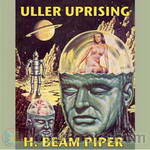 Uller Uprising
Uller Uprising is the story of a confrontation between a human overlord and alien servants, with an ironic twist at the end. Like most of Piper’s best work, Uller Uprising is modeled after an actual event in human history; in this case the Sepoy Mutiny (a Bengal uprising in British-held India brought about when rumors were spread to native soldiers that cartridges being issued by the British were coated with animal fat. The rebellion quickly spread throughout India and led to the massacre of the British Colony at Cawnpore.). Piper’s novel is not a mere retelling of the Indian Mutiny, but rather an analysis of an historical event applied to a similar situation in the far future. | |
 Four-Day Planet
Fenris isn't a hell planet, but it's nobody's bargain. With 2,000-hour days and an 8,000-hour year, it alternates blazing heat with killing cold. A planet like that tends to breed a special kind of person: tough enough to stay alive and smart enough to make the best of it. When that kind of person discovers he's being cheated of wealth he's risked his life for, that kind of planet is ripe for revolution. (Introduction from the Gutenberg text) | |
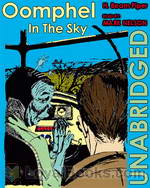 Oomphel in the Sky
Natives of the distant planet of Kwannon believe that their world is about to end, and in preparing for the apocalypse, may be unnecessarily bringing about their own demise. The planetary government can’t overcome its own bureaucracy to help them, and the military is overwhelmed. Can a single newsman change the course of a whole people, and save their world? | |
 The Edge of the Knife
The Terro-Human Future History is Piper’s detailed account of the next 6000 years of human history. 1942, the year the first fission reactor was constructed, is defined as the year 1 A.E. (Atomic Era). In 1973, a nuclear war devastates the planet, eventually laying the groundwork for the emergence of a Terran Federation, once humanity goes into space and develops antigravity technology.The story “The Edge of the Knife” (collected in Empire) occurs slightly before the war, and involves a man who sees flashes of the future. It links many key elements of Piper’s series. | |
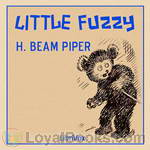 Little Fuzzy
Jack Holloway, a prospector on the planet Zarathustra discovers small furry creatures. These creatures are obviously intelligent, but are they animals or are they sapient? If they are sapient the planet will be declared a protected zone and the company that is developing the planet commercially will lose their exclusive rights to the resources… | |
 Police Operation
H. Beam Piper (1904–1964) was an American science fiction author. He wrote many short stories and several novels. He is best known for his extensive Terro-Human Future History series of stories and a shorter series of “Paratime” alternate history tales. | |
 Last Enemy
An undercover Paratimer has disappeared on assignment while in an alternate time line, and it’s up to Verkan Vall of the Paratime Police to save her. To do so, he must infiltrate a universe in which assassination is an honorable profession, and reincarnation a scientific fact. Will Verkan Vall survive in a world of killers and the undead? | |