 |
Books Should Be Free Loyal Books Free Public Domain Audiobooks & eBook Downloads |
|
|
|
Books Should Be Free Loyal Books Free Public Domain Audiobooks & eBook Downloads |
|
Literature |
|---|
|
Book type:
Sort by:
View by:
|
By: Charles Lamb (1775-1834) | |
|---|---|
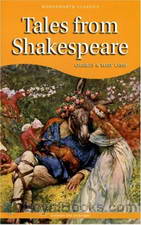 Tales from Shakespeare
This little gem of a book was probably the first introduction to Shakespeare that most readers have had as children. Tales from Shakespeare was written in 1807 by a young clerk called Charles Lamb in the offices of the East India Company. Lamb co-authored them with his beloved sister Mary. The pair lived together for life, having gone through immense trauma caused by mental illness and tragedy. However, far from being a melancholy duo, they led an active and ample social life in the company of some of the literary greats of the Romantic movement of the 19th century... | |
By: Helen Keller (1888-1968) | |
|---|---|
 The Story of My Life
An autobiography of Helen Keller published when the author was still in her early 20's. The narrative reveals how her mind developed and matured until she began her studies at Radcliffe College | |
By: Johann Wolfgang von Goethe (1749-1832) | |
|---|---|
|
The Sorrows of Young Werther
The Sorrows of Young Werther (German, Die Leiden des jungen Werther, originally published as Die Leiden des jungen Werthers) is an epistolary and loosely autobiographical novel by Johann Wolfgang von Goethe, first published in 1774. The story follows the life and sorrows of Werther after he falls desperately in love with a young woman who is married to another. A climactic scene prominently features Goethe's own German translation of a portion of James Macpherson's Ossian cycle of poems, which had originally been presented as translations of ancient works, and was later found to have been written by Macpherson. (Introduction by Wikipedia and Barry Eads) | |
 Faust, Part 1
Faust is the protagonist of a classic German legend; a highly successful scholar, but also dissatisfied with his life, and so makes a deal with the devil, exchanging his soul for unlimited knowledge and worldly pleasures.Johann Wolfgang von Goethe's Faust is a tragic play in two parts. It is Goethe's most famous work and considered by many to be one of the greatest works of German literature.This first part of Faust is not divided into acts, but is structured as a sequence of scenes in a variety of settings. After a dedicatory poem and a prelude in the theatre, the actual plot begins with a prologue in Heaven and Scene 1 in Faust's study. | |
 Erotica Romana
Also known as the "Roman Elegies," Erotica Romana is von Goethe's literary tribute to human sexuality and eroticism. Written in 24 elegies to emulate classical Roman elegy writers such as Tibullus, Propertius, and Catullus, von Goethe creates a lyrical work of art that has often been subject to censorship. | |
 Faust — Part 1
| |
|
May Song
Johann Wolfgang von Goethe was a German writer and statesman. His body of work includes epic and lyric poetry written in a variety of metres and styles; prose and verse dramas; memoirs; an autobiography; literary and aesthetic criticism; treatises on botany, anatomy, and colour; and four novels. In addition, numerous literary and scientific fragments, more than 10,000 letters, and nearly 3,000 drawings by him are extant. | |
|
Faust; a Tragedy, Translated from the German of Goethe
| |
|
Iphigenia in Tauris
| |
|
Egmont
| |
By: D. H. Lawrence (1885-1930) | |
|---|---|
 The Rainbow
Set against the backdrop of a rapidly industrializing England, the bewildering shift in social structure, the fading away of traditions and the advent of new ways of life, The Rainbow by DH Lawrence depicts how one family's story becomes the story of a society. Originally planned as a novel titled The Sisters, Lawrence finally split the theme into two separate novels after many revisions and rewrites. The Rainbow is the first novel in the Brangwen family saga. Tom Brangwen is a small time farmer in rural Nottinghamshire... | |
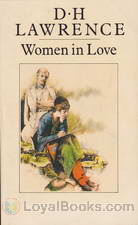 Women in Love
If you have read DH Lawrence's The Rainbow, you'd certainly want to read the sequel, Women in Love. Published in 1920, the two books were originally meant to be a single work, spanning several generations of the Brangwen family, especially the women. However, a complicated publishing history, delays and editorial revisions, followed by the hostile reception and controversies that faced The Rainbow led to a gap of five years between the two books. Yet, by 21st century standards, Women in Love seems almost tame, and modern-day readers may well be bewildered by the amount of criticism it generated among the custodians of morals in an earlier age... | |
 Sons and Lovers
This intimate portrait of a coal-miner’s family fastens on each member in turn: Walter Morel, the collier; Gertrude, his wife; and the children: William, Annie, Arthur, and Paul. When Mrs. Morel begins to be estranged from her husband because of his poor financial sense and his drinking habits, she comes to inhabit the lives of her children – most particularly, her sons. She is determined that they will grow to be something more than men that come home blackened with coal dust every day and roaring with drink every night... | |
 The Prussian Officer and Other Stories
The collection of short stories – of which The Prussian Officer is one – was Lawrence’s first such book. A German officer and his orderly are the focus of the piece and, while socially the superior of his orderly, the officer demonstrates his is the distinctly baser character. (Introduction by Cathy Barratt) | |
By: Emily Dickinson | |
|---|---|
 Poems: Series One
Renowned poet Emily Dickinson (1830 – 1886) wrote many many poems. This collection, “Poems: Series One”, presents the first installment of the complete poetic works of Miss Emily Dickinson. It is broken into four parts: Life, Love, Nature, and Time and Eternity. The verses of Emily Dickinson belong emphatically to what Emerson long since called “the Poetry of the Portfolio,”–something produced absolutely without the thought of publication, and solely by way of expression of the writer’s own mind. The poetry found here is then entirely honest, and indicative of the authors true feelings. | |
 Poems: Series Two
"The eagerness with which the first volume of Emily Dickinson's poems has been read shows very clearly that all our alleged modern artificiality does not prevent a prompt appreciation of the qualities of directness and simplicity in approaching the greatest themes,—life and love and death. That "irresistible needle-touch," as one of her best critics has called it, piercing at once the very core of a thought, has found a response as wide and sympathetic as it has been unexpected even to those who knew best her compelling power. This second volume, while open to the same criticism as to form with its predecessor, shows also the same shining beauties." | |
|
Poems by Emily Dickinson, Third Series
| |
By: Zane Grey (1872-1939) | |
|---|---|
 Riders of the Purple Sage
Dubbed the “most popular Western of all times” Zane Grey's Riders of the Purple Sage was the benchmark by which every other novel in the “Western” genre came to be judged. It portrays the archetypal lone gun slinger, out to wreak revenge for past wrongs who falls foul of the rich and powerful and finally rides away into the sunset, having rid the town of poisonous villains! Riders of the Purple Sage is set in 1871, in a remote part of Utah. It opens with the young and lovely Jane Withersteen being victimized and harassed by her Mormon Church elders for associating with Gentiles or Non-Mormons... | |
 The Lone Star Ranger
Post-Civil War Texas, the Lone Star state. Buck Duane is a man who was almost born holding a gun in his hand. His father was an infamous outlaw and the young child grew up witnessing scenes of violence and betrayal. When he himself inadvertently kills a man, he is forced to go into hiding and must live with the very men he despises. However, the love of a beautiful young woman is his redemption. He joins the Texas Rangers and helps to rid the state of notorious criminals, hoping to exchange this for his good name and freedom... | |
 The Last of the Plainsmen
Travel along as Mike Vendetti aka miketheauctioneer narrates an outstanding true account of a trip made in 1909 by Zane Grey and a plainsman, Buffalo Jones, through the Grand Canyon to lasso a cougar. That’s right lasso. Throw a rope around. That’s equivalent to catching one by the tail. As I narrated this book, I found fact to be as exciting as fiction. This part of the west was relatively wild and untamed at this time. Wolves, wild horses, buffalo and other wildlife were quite prevalent, and the Indians were not that friendly... | |
 The Spirit of the Border
This is an early novel by the phenomenally successful author of frontier, western and sports stories. It deals with historical characters and incidents in the Ohio Valley in the late 18th century, especially with the foundation of Gnaddenhutten, a missionary village intended to bring Christianity to the Indians of Ohio, despite the violent opposition of both Indians and white renegades. This turbulent adventure romance features the heroics of a semi-legendary frontiersman, Lewis Wetzel, who attempts to protect the settlers from hostile Native Americans and the vicious white outlaws the Girty brothers. (Introduction by Leonard Wilson) | |
|
Call Of The Canyon
Glenn Kilbourne returns from the war and travels to Arizona to regain his health. There he is nursed back to health by an Arizona girl, Flo Hutter Kilbourne's fiancée, Carley Burch arrives in Arizona but soon becomes disillusioned with life in the West and returns to New York. Carley soon learns that life in the Big City is not what she really wants. Should she return to Arizaona? Will Glen still love Her? Not only a great love story, Grey, as usual, describes the environment in all its glory. | |
|
The Man of the Forest
| |
|
Light of the Western Stars
| |
|
Desert Gold
| |
|
Valley of Wild Horses
| |
|
Rainbow Trail
The Rainbow Trail is a sequel to The Riders of the Purple Sage. Both novels are notable for their protagonists' mild opposition to Mormon polygamy, but in The Rainbow Trail this theme is treated more explicitly. The plots of both books revolve around the victimization of women in the Mormon culture: events in Riders of the Purple Sage are centered on the struggle of a Mormon woman who sacrifices her wealth and social status to avoid becoming a junior wife of the head of a local church, while The Rainbow Trail contrasts the older Mormons with the rising generation of Mormon women who will not tolerate polygamy and Mormon men who do not seek it. | |
|
Betty Zane
| |
|
The U. P. Trail
| |
|
The Redheaded Outfield
| |
|
The Young Forester
| |
|
The Young Pitcher
| |
By: Howard Pyle (1853-1911) | |
|---|---|
 The Merry Adventures of Robin Hood
A modern day legend, Robin Hood is an archetypal hero of the common people who goes to great lengths to famously take from the rich and give to the poor. Luckily he is not alone in his mission, as his righteous views are shared by his band of Merry Men, a group of yeomen, and together they pursue an end to injustice and oppression. Set in medieval England, the tale begins with the introduction of a young archer, who is provoked into conflict and committing a crime against the formidable Sherriff of Nottingham and is immediately dubbed an outlaw... | |
|
Howard Pyle's Book of Pirates
Swashbuckling tales of legendary pirates, buccaneers, and marooners, terrors of the Spanish Main. | |
|
Howard Pyle's Book of Pirates
| |
|
The Ruby of Kishmoor
| |
By: Andrew Lang (1844-1912) | |
|---|---|
 HE
HE
This book is a parody of the famous swashbuckling novel, She, by H. Rider Haggard. Her beauties are beyond the reach of danger from Burlesque, nor does her form flit across our humble pages.” (taken from the Dedication) | |
|
Ban and Arriere Ban
| |
|
Shakespeare, Bacon, and the Great Unknown
| |
|
Helen of Troy
| |
|
Essays in Little
| |
|
Books and Bookmen
| |
|
Letters on Literature
| |
|
Lost Leaders
| |
|
The Library
| |
|
The Disentanglers
| |
|
A Monk of Fife
| |
|
New Collected Rhymes
| |
|
Alfred Tennyson
| |
|
The Mark Of Cain
| |
|
How to Fail in Literature; a lecture
| |
|
Ballads in Blue China
| |
By: R. F. Murray (1863-1894) | |
|---|---|
|
Wasted Day
Robert Fuller Murray was a Victorian poet. Although born in the United States, Murray lived most of his life in the United Kingdom, most notably in St Andrews, Scotland. He wrote two books of poetry and was published occasionally in periodicals. | |
By: Andrew Lang (1844-1912) | |
|---|---|
|
The Puzzle of Dickens's Last Plot
| |
|
Grass of Parnassus
| |
|
Sir Walter Scott and the Border Minstrelsy
| |
|
Rhymes a la Mode
| |
|
Much Darker Days
| |
|
Letters to Dead Authors
| |
By: Washington Irving (1783-1859) | |
|---|---|
 The Sketch Book of Geoffrey Crayon, Gent.
Apart from "Rip Van Winkle" and "The Legend of Sleepy Hollow" - the pieces which made both Irving and The Sketch Book famous - other tales include "Roscoe", "The Broken Heart", "The Art of Book-making", "A Royal Poet", "The Spectre Bridegroom", "Westminster Abbey", "Little Britain", and "John Bull". His stories were highly influenced by German folktales, with "The Legend of Sleepy Hollow" being inspired by a folktale recorded by Karl Musaus. Stories range from the maudlin (such as "The Wife" and... | |