 |
Books Should Be Free Loyal Books Free Public Domain Audiobooks & eBook Downloads |
|
|
|
Books Should Be Free Loyal Books Free Public Domain Audiobooks & eBook Downloads |
|
Books of Memoirs |
|---|
|
Book type:
Sort by:
View by:
|
By: Thomas Hughes (1822-1896) | |
|---|---|
 Tom Brown's School Days
Tom Brown’s Schooldays is a novel by Thomas Hughes first published in 1857. The story is set at Rugby School, a public school for boys, in the 1830s. Hughes attended Rugby School from 1834 to 1842. The novel was originally published as being “by an Old Boy of Rugby”, and much of it is based on the author’s experiences. Tom Brown is largely based on the author’s brother, George Hughes; and George Arthur, another of the book’s main characters, is based on Arthur Penrhyn Stanley. The fictional Tom’s life also resembles the author’s in that the culminating event of his school career was a cricket match... | |
By: Xenophon | |
|---|---|
 Xenophon's Anabasis
Xenophon the Athenian was born 431 B.C. He was a pupil of Socrates. He marched with the Spartans, and was exiled from Athens. Sparta gave him land and property in Scillus, where he lived for many years before having to move once more, to settle in Corinth. He died in 354 B.C. “Anabasis” is a Greek work which meane “journey from the coast to the center of a country.” This is Xenophon’s account of his march to Persia with a troop of Greek mercenaries to aid Cyrus, who enlisted Greek help to try and take the throne from his brother Artaxerxes, and the ensuing return of the Greeks, in which Xenophon played a leading role... | |
By: Carlton McCarthy (1847-1936) | |
|---|---|
 Detailed Minutiae of Soldier Life in the Army of Northern Virginia, 1861-1865
The author, who fought as a private in the Army of Northern Virginia during the Civil War, describes the Confederate soldier’s daily struggles with hunger, illness, fear, and the perils of combat; as well as his pride of service, love of comrades, and courage in the face of overwhelming odds | |
By: Mary Antin (1881-1949) | |
|---|---|
 From Plotzk to Boston
An intensely personal account of the immigration experience as related by a young Jewish girl from Plotzk (a town in the government of Vitebsk, Russia). Mary Antin, with her mother, sisters, and brother, set out from Plotzk in 1894 to join their father, who had journeyed to the “Promised Land” of America three years before. Fourth class railroad cars packed to suffocation, corrupt crossing guards, luggage and persons crudely “disinfected” by German officials who feared the cholera, locked “quarantine” portside, and, finally, the steamer voyage and a famiily reunited... | |
By: P. T. Barnum (1810-1891) | |
|---|---|
 The Humbugs of the World
P. T. Barnum exposes some of the chief humbugs of the world with his usual entertaining style. He looks at medicine and quacks, ghosts, witchcraft, religious humbugs, money manias, adventurers, personal reminiscences, and much more. | |
By: Richard Burton Deane (1848-1940) | |
|---|---|
 Mounted Police Life in Canada : a record of thirty-one years' service (1916)
Learn more about the famous and respected Royal Canadian Mounted Police. This book is the personal recollections of one ‘Mountie’; his life, experiences and trials as an officer in a new frontier – The Canadian Northwest. | |
By: Anna Harriette Leonowens | |
|---|---|
 The English Governess at the Siamese Court
1862 Anna Leonowens accepted an offer made by the Siamese consul in Singapore, Tan Kim Ching, to teach the wives and children of Mongkut, king of Siam. The king wished to give his 39 wives and concubines and 82 children a modern Western education on scientific secular lines, which earlier missionaries’ wives had not provided. Leonowens sent her daughter Avis to school in England, and took her son Louis with her to Bangkok. She succeeded Dan Beach Bradley, an American missionary, as teacher to the Siamese court... | |
By: Eliza P. Donner Houghton (1843-1922) | |
|---|---|
 The Expedition of the Donner Party and Its Tragic Fate
The Donner Party was a group of California-bound American settlers caught up in the “westering fever” of the 1840s. After becoming snowbound in the Sierra Nevada in the winter of 1846–1847, some of the emigrants resorted to cannibalism. Although this aspect of the tragedy has become synonymous with the Donner Party in the popular imagination, it actually was a minor part of the episode. The author was about 4 at the time. The first part of the book accounts the tragic journey and rescue attempts; the last half are reminiscences of the child orphan, passed from family to family while growing up. | |
By: Edmund Gosse (1849-1928) | |
|---|---|
 Father and Son
Father and Son (1907) is a memoir by poet and critic Edmund Gosse, which he subtitled “a study of two temperaments.” The book describes Edmund’s early years in an exceptionally devout Plymouth Brethren home. His mother, who dies early and painfully of breast cancer, is a writer of Christian tracts. His father, Philip Henry Gosse, is an influential, though largely self-taught, invertebrate zoologist and student of marine biology who, after his wife’s death, takes Edmund to live in Devon... | |
By: Thornton Chase | |
|---|---|
 In Galilee
Thornton Chase (1847 – 1912) is commonly recognized as the first convert to the Bahá’í Faith of Occidental background. During his life he organized many Bahá’í activities in Chicago and Los Angeles and was considered a prominent Bahá’í. In 1907 Chase was able to go on pilgrimage. Though Chase was able to be with `Abdu’l Bahá in Akka for only three days, the experience transformed him. `Abdu’l Bahá, highly impressed by Chase’s qualities, conferred on him the title Thábit, “steadfast... | |
By: Chalkley J. Hambleton | |
|---|---|
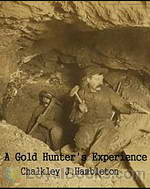 A Gold Hunter's Experience
“Early in the summer of 1860, I had an attack of gold fever. In Chicago, the conditions for such a malady were all favorable. Since the panic of 1857 there had been three years of general depression, money was scarce, there was little activity in business, the outlook was discouraging, and I, like hundreds of others, felt blue.” Thus Chalkley J. Hambleton begins his pithy and engrossing tale of participation in the Pike’s Peak gold rush. Four men in partnership hauled 24 tons of mining equipment by ox cart across the Great Plains from St... | |
By: Ferdinand Ossendowski (1876-1945) | |
|---|---|
 Beasts, Men and Gods
“Beasts, Men and Gods” is an account of an epic journey, filled with perils and narrow escapes, in the mold of “The Lord of the Rings.”The difference is: it’s all true.Ferdinand Ossendowski was a Pole who found himself in Siberia and on the losing side during the Bolshevik Revolution. To escape being rounded up and shot, he set out with a friend to reach the Pacific, there to take ship back to Europe. During his journey he fell in with dozens of other military men who shared the same objective… but nearly every one of them perished on the way... | |
By: Henry Ford | |
|---|---|
 My Life and Work
Henry Ford profiles the events that shaped his personal philosophy, and the challenges he overcame on the road to founding the Ford Motor Company. Throughout his memoir, he stresses the importance of tangible service and physical production over relative value as judged by profits and money. He measures the worth of a business or government by the service it provides to all, not the profits in dollars it accumulates. He also makes the point that only service can provide for human needs, as opposed to laws or rules which can only prohibit specific actions and do not provide for the necessaries of life... | |
By: Mary Rowlandson (c.1637-1711) | |
|---|---|
 A Narrative of the Captivity and Restoration of Mrs. Mary Rowlandson
This is the story of Mary Rowlandson’s capture by American Indians in 1675. It is a blunt, frightening, and detailed work with several moments of off-color humor. Mary, the wife of a minister, was captured by Natives during King Philips War while living in a Lancaster town, most of which was decimated, and the people murdered. See through her eyes, which depict Indians as the instruments of Satan. Her accounts were a best-seller of the era, and a seminal work, being one of the first captivity narratives ever published by a woman... | |
By: Frances M. A. Roe | |
|---|---|
 Army Letters from an Officer's Wife, 1871-1888
"There appeared from the bushes in front of me, and right in the path, two immense gray wolves . . . Rollo saw them and stopped instantly, giving deep sighs, preparing to snort, I knew . . . To give myself courage, I talked to the horse, slowly turning him around . . . when out of the bushes in front of us, there came a third wolf! The situation was not pleasant and without stopping to think, I said ‘Rollo, we must run him down - now do your best’ and taking a firm hold of the bridle, and bracing myself in the saddle, I struck the horse with my whip and gave an awful scream... | |
By: Henry W. Lucy (1842-1924) | |
|---|---|
 East by West: a Journey in the Recess
East by West: a Journey in the Recess is an account of British journalist Henry Lucy's travels across America and on to the Far East during the parliamentary recess in 1883. Lucy was one of the most influential journalists of his day and, as "Toby M.P.", a noted humorist in Punch magazine. His acute powers of observation and light touch make this a most engaging book. It is a fascinating insight into the Englishman's travels abroad within two decades of the American Civil War and the end of Japanese isolationism... | |
By: Sarah Elizabeth Harper Monmouth (1829-1887) | |
|---|---|
 Living on Half a Dime a Day
How to live on 5 cents a day! How to survive financial ruin without losing your house! How to keep to a bare bones budget and still have money left over to buy books! Tough questions! They were tough questions even in the 1870’s, when Sarah Elizabeth Harper Monmouth penned her quirky memoir, the subtitle of which was “How a Lady, Having Lost a Sufficient Income from Government Bonds by Misplaced Confidence, Reduced to a Little Homestead Whose Entire Income is But .00 per Annum, Resolved to Hold It, Incurring no Debts and Live Within it... | |
By: William Westgarth (1815-1889) | |
|---|---|
 Personal Recollections of Early Melbourne and Victoria
Son of John Westgarth, surveyor-general of customs for Scotland, was born at Edinburgh, in June 1815. He was educated at the high schools at Leith and Edinburgh, and at Dr Bruce’s school at Newcastle-on-Tyne. He then entered the office of G. Young and Company of Leith, who were engaged in the Australian trade, and realizing the possibilities of the new land, decided to emigrate to Australia. He arrived in Melbourne, then a town of three or four thousand inhabitants, in December 1840.When the new colony was constituted Westgarth headed the poll for Melbourne at the election for the legislative council... | |
By: Captain Rees Howell Gronow (1794-1865) | |
|---|---|
 Reminiscences of Captain Gronow
A collection of memoirs about the Peninsular War, the Battle of Waterloo, and society and personalities of Regency London and 19th century Paris, by a sometime Grenadier Guards officer, unsuccessful parliamentarian, and dandy. Gronow displays social attitudes of the day which would now be regarded as unacceptable, but is a clever raconteur who brings to life both the horrors of war and the gaiety of high society. | |
By: Charles Dudley Warner (1829-1900) | |
|---|---|
 Being a Boy
Warner's thoughtful and often humorous memoir of his life as a young farm-boy in Charlemont, Massachusetts. (Introduction by Mark Penfold) | |
By: Dame Shirley (d.1906) | |
|---|---|
 The Shirley Letters from California Mines in 1851-52
Louise Amelia Knapp Smith Clappe moved to California from Massachusetts during the Gold Rush of the mid-1800’s. During her travels, Louise was offered the opportunity to write for The Herald about her travel adventures. It was at this point that Louise chose the name “Shirley” as her pen name. Dame Shirley wrote a series of 23 letters to her sister Mary Jane (also known as Molly) in Massachusetts in 1851 and 1852. The “Shirley Letters”, as the collected whole later became known, gave true accounts of life in two gold mining camps on the Feather River in the 1850s... | |
By: William Bradford (1590-1657) | |
|---|---|
 Bradford's History of the Plymouth Settlement
The journal of William Bradford, who served five terms as governor of the Plymouth colony, is an indispensable document of the events of early American history. His eyewitness account includes the stories of the Pilgrims’ sojourn in the Netherlands, the voyage of the Mayflower, the hardships of the New World, relations with the Indians, and the colony’s growth from an endangered enterprise to a thriving city. This edition of Bradford’s Of Plimoth Plantation presents the text in language made more accessible to the modern reader | |
By: Horatio Alger, Jr. (1832-1899) | |
|---|---|
|
Helping Himself, or Grant Thornton's Ambition
Helping Himself, or Grant Thornton's Ambition deals with the grit and determination of Grant, a 15 year old farmer's boy whose father is dead and in order to pay his minister father's debts, and to help his mother deal with their abject poverty young Grant postpones his college education to take a job as a Wall Street broker's clerk. The first step is to deal with the avaricious and greedy man who is keeping them from obtaining the meager amount due them and which will at least allow them to eat... | |
By: Ulysses S. Grant (1822-1885) | |
|---|---|
 Personal Memoirs of U. S. Grant
"In preparing these volumes for the public, I have entered upon the task with the sincere desire to avoid doing injustice to any one, whether on the National or Confederate side, other than the unavoidable injustice of not making mention often where special mention is due. There must be many errors of omission in this work, because the subject is too large to be treated of in two volumes in such way as to do justice to all the officers and men engaged. There were thousands of instances, during the rebellion, of individual, company, regimental and brigade deeds of heroism which deserve special mention and are not here alluded to... | |
 Letters of Ulysses S. Grant to His Father and His Youngest Sister
Among the national leaders whose names will always hold an honorable place in American history is Ulysses S. Grant, the simple-hearted man and capable soldier, to whose patriotism, courage, persistence, and skill was so largely due the successful termination of the war between the States, the contest which assured the foundations of the Republic. We are interested not only in learning what this man did, but in coming to know, as far as may be practicable, what manner of man he was. It is all-important in a study of development of character to have placed within reach the utterances of the man himself... | |
By: George Gissing (1857-1903) | |
|---|---|
|
Private Papers of Henry Ryecroft
This novel consists of selections from the diary of an author, starting soon after his retirement and continuing until just before his death. There is very little in the way of plot, but a great deal of quiet musing about art, nature, society, and the things that make life worth living. Although this is a work of fiction, there are clear parallels between the narrator's life and Gissing's own life. This leads many commenters to view it as semi-autobiographical. | |
By: Herbert George Jenkins (1876-1923) | |
|---|---|
|
Bindle
Herbert Jenkins' most popular fictional creation was Mr. Joseph Bindle, who first appeared in a humorous novel in 1916 and in a number of sequels. In the preface to the books, T. P. O'Connor said that "Bindle is the greatest Cockney that has come into being through the medium of literature since Dickens wrote Pickwick Papers". The stories are based on the comedic drama of life at work, at home and all the adventures that take place along the way. Bindle leaves a path of good-natured destruction behind him and walks away unscathed every time... | |
By: Abraham Tomlinson | |
|---|---|
 The Military Journals of Two Private Soldiers, 1758-1775
“Perceiving that much of the intrinsic value of these Journals would consist in a proper understanding of the historical facts to which allusions are made in them, I prevailed upon Mr. Lossing, the well-known author of the “Pictorial Field-Book of the Revolution” to illustrate and elucidate these diaries by explanatory notes. His name is a sufficient guaranty for their accuracy and general usefulness” | |
By: Doris Stevens (1892-1963) | |
|---|---|
 Jailed for Freedom
A first-hand account of the 1913-1919 campaign of American suffragists, detailing their treatment at the hands of the courts, and the true conditions of their incarceration. | |
By: Sir Percy Fitzpatrick (1862-1931) | |
|---|---|
 Jock of the Bushveld
Jock of the Bushveld is a true story by South African author Sir Percy Fitzpatrick when he worked as a storeman, prospector's assistant, journalist and ox-wagon transport-rider. The book tells of Fitzpatrick's travels with his dog, Jock, during the 1880s. Jock was saved by Fitzpatrick from being drowned in a bucket for being the runt of the litter. Jock was very loyal towards Percy, and brave. Jock was an English Staffordshire Bull Terrier. | |
By: Joseph Lievesley Beeston | |
|---|---|
 Five Months at Anzac
A Narrative of Personal Experiences of the Officer Commanding the 4th Field Ambulance, Australian Imperial Force from his leaving Australia December 1914 till his evacuation due to illness after 5 months at Gallipoli. Read to remember those who were there. (Introduction by Annise) | |
By: Jane Addams (1860-1935) | |
|---|---|
 Twenty Years at Hull-House
Jane Addams was the first American woman to be awarded the Nobel Peace Prize. In a long, complex career, she was a pioneer settlement worker and founder of Hull-House in Chicago, public philosopher (the first American woman in that role), author, and leader in woman suffrage and world peace. She was the most prominent woman of the Progressive Era and helped turn the nation to issues of concern to mothers, such as the needs of children, public health and world peace. She emphasized that women have a special responsibility to clean up their communities and make them better places to live, arguing they needed the vote to be effective... | |
By: Ezra Meeker (1830-1928) | |
|---|---|
 Ox-Team Days on the Oregon Trail
Ezra Meeker…was an early pioneer who traveled the Oregon Trail by ox cart as a young man. Beginning in his 70s, he worked tirelessly to memorialize the trail, repeatedly retracing the trip of his youth. This book is a memoir of those days. | |
By: Mary Chesnut | |
|---|---|
 A Diary from Dixie
Mary Boykin Miller Chesnut, a well-educated South Carolina woman who was the wife of a Confederate general, kept extensive journals during the Civil War. Mrs. Chesnut moved in elite circles of Southern society and had a keen interest in politics. Her diary is both an important historic document and, due to her sharp wit and often irreverent attitude, a fascinating window into Southern society of the time. This recording is of the first published edition of the diary, compiled from Mrs. Chesnut's revisions of her original journals. | |
By: Edward Streeter (1891-1976) | |
|---|---|
 Dere Mable
Bill is in training camp, preparing to go off to World War I. This book is a collection of love letters written to his sweetheart, Mable. The letters are humorous, mis-spelled, and have many stories of life in an army camp – all from Bill’s unique perspective. | |
By: Robert Falcon Scott (1868-1912) | |
|---|---|
 The Journals of Robert Falcon Scott
Capt. Robert F. Scott's bid to be the leader of the first expedition to reach the South Pole is one of the most famous journeys of all time. What started as a scientific expedition turned out to be an unwilling race against a team lead by R. Admunsen to reach the Pole. The Norwegian flag already stood at the end of the trail when Scott's party reached their target. All the five men of the Scott expedition who took part in the last march to the Pole perished on their way back to safety. Robert F. Scott kept a journal throughout the journey, all the way to the tragic end, documenting all aspects of the expedition... | |
By: Ward Muir (1878-1927) | |
|---|---|
 Observations of an Orderly
Ward Muir brings us into the heart of an English war hospital, describing scenes of cleanliness, triumph, order and sadness. Through the eyes of the orderly we get to see the processes that kept the wards running, and relive some tales from within the hospital walls. | |
By: Thomas Frost (1821-1908) | |
|---|---|
 In Kent with Charles Dickens
By his own admission, Thomas Frost found it hard to make a living from his writing, and no doubt he used the name of Dickens in the title of this book to boost sales. Frost tells a good tale, and the book is not only of interest to enthusiasts of Dickens and the county of Kent.He includes some of Dickens’ own descriptions of locations, as well as regaling us with anecdotes about towns and villages which he visits, including an account of the last armed rising on British soil – the Battle of Bossenden Wood... | |
By: Arthur Graeme West (1891-1917) | |
|---|---|
 The Diary of a Dead Officer
Published posthumously in 1919, this collection of diary entries presents a scathing picture of army life and is said to be one of the most vivid accounts of daily life in the trenches. It chronicles West's increasing disillusion with war and his move toward pacifist and atheist beliefs. The final part consists of his powerful war poems, including God, How I Hate You, You Young Cheerful Men, and Night Patrol. West was killed by a sniper in 1917. In view of some of his poems, one wonders if death was not unwelcome. (Introduction adapted from Wikipedia by Ruth Golding) | |
By: Lavinia Honeyman Porter | |
|---|---|
 By Ox Team to California - A Narrative of Crossing the Plains in 1860
Imagine a young, twenty-something woman in 1860, reared “in the indolent life of the ordinary Southern girl” (which means she has never learned to cook); married to a professional man who knows “nothing of manual labor;” who is mother to a young son; and who has just found out she is pregnant with their second child. Imagine that this couple has become “embarrassed financially” by “imprudent speculations,” and that they are discussing what to do. They decide to buy a wagon and three yoke of unbroke oxen and head overland to California... | |
By: Henry Vizetelly | |
|---|---|
 California
Vizetelly, writing under the pseudonym J. Tyrwhitt Brooks, recalls an expedition to California he took between 1847-1848 . Originally, he planned to enlist as a surgeon for the US Army during the Mexican war, but conflicts had ended by the time he applied. In a quick change of plans, he joined a group of prospectors on their way to the newly found gold fields of California. While he might not find service in the military, his training as a physician made him a valuable addition to the ragtag team of explorers... | |
By: Watkin Tench (1758-1833) | |
|---|---|
 A Narrative of the Expedition to Botany-Bay
Watkin Tench was an officer of the British Marines in the First Fleet to settle NSW. This is an interesting and entertaining account of his experiences during that time (Introduction by Tabithat) | |
By: Alvar Núñez Cabeza de Vaca (ca. 1490/1507 - ca.1557/1579) | |
|---|---|
 The Journey of Alvar Núñez Cabeza de Vaca
Few stories of shipwreck and survival can equal that of the 16th century Spaniard Alvar Núñez Cabeza de Vaca who, cast ashore near present day (USA) Tampa Bay, Florida, in 1528, survived eight years of hand-to-mouth existence among the Indians of the South and Southwest, and who walked on foot across the plains to the Pacific Coast, arriving in Mexico in 1536. In 1542 he published an account of his adventures, and the present reading is based on Fanny Bandelier’s English translation of that text... | |
By: Eddie Rickenbacker (1890-1973) | |
|---|---|
 Fighting the Flying Circus
This is the WWI memoirs of Medal of Honor winner, Capt Eddie Rickenbacker. He fought in and eventually became commander of the 94th "Hat-in-the-Ring" Squadron, which ended the war with the highest number of air victories of any American squadron. The circus mentioned in the title refers to the German squadron commanded by the famous Red Baron, Manfred von Richthofen. (Introduction by Brett W. Downey) | |
By: George-Günther Freiherr von Forstner (1882-1940) | |
|---|---|
 The Journal of Submarine Commander Von Forstner
The Journal of Submarine Commander Von Forstner is a graphic account of WWI submarine warfare. Forstner was the commander of German U-boat U-28. His journal, first published 1916, gives a gritty picture of daily life inside a submarine and details several torpedo attacks on Allied shipping. The 1917 translation of Forstner’s journal into English was unquestionably intended to bolster the Allied war effort. In the foreword, the translator states: “Nothing at the present day has aroused such fear as this invisible enemy, nor has anything outraged the civilized world like the tragedies caused by the German submarines... | |
By: May Kellogg Sullivan | |
|---|---|
 A Woman Who Went to Alaska
Alaska has only been a state since 1959, and the breathtaking terrain remains mostly unspoiled and natural. In modern times, many of us have had the pleasure of visiting Alaska via a luxurious cruise ship, where we enjoyed gourmet meals, amazing entertainment, and a climate-controlled environment. It's easy to also book a land package that enables you to see more of the country by train.Imagine what it was like to visit the same wild, untamed countryside in 1899. Instead of boarding a sleek, stylish cruise ship, you travel for weeks on a steamer... | |
By: Harriet E. Wilson (1825-1900) | |
|---|---|
 Our Nig, or, Sketches from the Life of a Free Black, In A Two-Story White House
Frado is a colored girl, living in the USA a few years before the Civil War. She is abandoned by her own white mother in the house of the Bellmont's- where she is treated badly. This is a sad book, but Frado's cheerfulness and dignity will make you love her until the end. (Introduction by Stav Nisser) | |
By: Sarah Morgan Dawson (1842-1909) | |
|---|---|
 A Confederate Girl's Diary
Sarah Morgan Dawson was a young woman of 20 living in Baton Rouge, Louisiana, when she began this diary. The American Civil War was raging. Though at first the conflict seemed far away, it would eventually be brought home to her in very personal terms. Her family's loyalties were divided. Sarah's father, though he disapproved of secession, declared for the South when Louisiana left the Union. Her eldest brother, who became the family patriarch when his father died in 1861, was for the Union, though he refused to take up arms against his fellow Southerners... | |
By: William Hanford Edwards | |
|---|---|
 Football Days: Memories of the Game and of the Men behind the Ball
A book reminiscent of the days when football was gaining popularity in America by MHAIJH85 | |
By: Dorothy Osborne (1627-1695) | |
|---|---|
 Love Letters of Dorothy Osborne
A lively, interesting and important collection of 17th century love-letters written by an English lady, against the background of the Civil War and the Restoration | |
By: Jacob William Wright | |
|---|---|
 The Long Ago
Short memory of boyhood by a little-known American poet based in Carmel-By-The-Sea, California. | |
By: Anne MacLanahan Grenfell (1885-1938) | |
|---|---|
 Le Petit Nord
A collection of letters from Anne (MacLanahan) Grenfell, future wife of Sir Wilfred Grenfell, regarding her year of missionary service at the orphanage in St. Anthony, Newfoundland and Labrador, Canada. | |
By: Frances Sheridan | |
|---|---|
|
Memoirs of Miss Sidney Bidulph
Sidney and Cecilia are best childhood friends who are forced to part for 5 years. In that interval, Sidney Bidulph - an undoubtedly good and dutiful woman - writes to her friend about everything: her marriage, her children, her other friendships and, above all, about her great love for Mr. Faulkland. In an amazing and unforgettable way, this book shows us that the road to happiness is not always clear - and that sometimes doing what seems to be right is not really the right thing to do. With Rachel's lovely reading, we see her - Sidney Bidulph - as she was meant to be, and as she really is. | |
By: Alfred Dreyfus (1859-1935) | |
|---|---|
 Five Years of My Life 1894-1899
Alfred Dreyfus, a Jewish captain in the French Army was court martialed in 1894 on a trumped up charge of treason and condemned to life imprisonment on Devil’s island, a penal colony off French Guiana. His prison diary, published as Five Years of My Life in 1901 is a heroic tale of survival against daunting odds: isolation, deprivation, torture . . Alfred left behind in Paris his wife Lucie, who, forbidden to join her husband in exile, struggled to protect their two children from the rampant anti-Semitism that swirled about them, while she begged her husband to hold onto life as she tried to clear his name... | |
By: Philip Stanhope, 4th Earl of Chesterfield | |
|---|---|
 Letters to His Son on the Art of Becoming a Man of the World and a Gentleman
Philip Stanhope, Earl of Chesterfield, was at one time Ambassador to the Hague, negotiated the second Treaty of Vienna, was a founding governor of London’s Foundling Hospital, Lord-Lieutenant of Ireland, and Secretary of State. Having no legitimate children, his heir was his third cousin (another Philip) whom he adopted. Although known as a hard, calculating man, he is most well known for his letters to his natural son (i.e., illegitimate son) (also called Philip). When Philip died in 1768, the letters are addressed to his grandchildren (Philip’s two sons, Charles, and, yes, Philip!)... | |
By: Fa'iz El-Ghusein (1883-1968) | |
|---|---|
 Martyred Armenia
This is a first hand account of the Armenian Genocide written by a Syrian who had been a Turkish official for three and a half years. His accounts tell of the worst of humanity, and also of the noblest. The noble include families who courageously support each other in the face of death, and Turks who refuse to follow orders to kill, knowing that they shall be executed themselves for their defiance. | |
By: Gen. George A. Custer (1839-1876) | |
|---|---|
 My Life on the Plains
George Armstrong Custer (December 5, 1839 – June 25, 1876), one of the most mythologized figures in American history, was an United States Army officer and cavalry commander in the American Civil War and the Indian Wars. He eventually met his fate in the battle of Little Big Horn in one of the most notable defeats of American armed forces.My Life on the Plains is an autobiographical first-hand account of the Indian Wars of 1867-1869, detailing the winter campaign of 1868 in which Custer led the 7th US cavalry against the Cheyenne Indians... | |
By: Flavius Philostratus | |
|---|---|
|
The Life of Apollonius of Tyana
Apollonius of Tyana (ca. 40-120 AD) was a Greek Pythagorean philosopher and teacher. He hailed from the town of Tyana in the Roman province of Cappadocia in Asia Minor. His date of birth is a matter of conjecture as some say he was roughly a contemporary of Jesus.After Apollonius' death his name remained famous among philosophers and occultists. In a "novelistic invention" inserted in the Historia Augusta, Aurelian, at the siege of Tyana in 272, was said to have experienced a visionary dream in which Aurelian claimed to have seen Apollonius speak to him, beseeching him to spare the city of his birth... | |
By: Johanna Brandt (1876-1964) | |
|---|---|
 The Petticoat Commando
In introducing the English version of this book I venture to bespeak a welcome for it, not only for the light which it throws on some little-known incidents of the South African war, but also because of the keen personal interest of the events recorded. It is more than a history. It is a dramatic picture of the hopes and fears, the devotion and bitterness with which some patriotic women in Pretoria watched and, as far as they could, took part in the war which was slowly drawing to its conclusion on the veld outside... | |
By: Maria Edgeworth (1768-1849) | |
|---|---|
 Castle Rackrent
| |