 |
Books Should Be Free Loyal Books Free Public Domain Audiobooks & eBook Downloads |
|
|
|
Books Should Be Free Loyal Books Free Public Domain Audiobooks & eBook Downloads |
|
Non-fiction |
|---|
|
Book type:
Sort by:
View by:
|
By: Arthur Schopenhauer (1788-1860) | |
|---|---|
 Studies in Pessimism
Arthur Schopenhauer, an early 19th century philosopher, made significant contributions to metaphysics, ethics, and aesthetics. His work also informed theories of evolution and psychology, largely through his theory of the will to power – a concept which Nietzsche famously adopted and developed. Despite this, he is today, as he was during his life, overshadowed by his contemporary, Hegel. Schopenhauer’s social/psychological views, put forth in this work and in others, are directly derived from his metaphysics, which was strongly influenced by Eastern thought... | |
By: David Hume (1711-1776) | |
|---|---|
 An Enquiry Concerning Human Understanding
The Enquiry Concerning Human Understanding is a shortened and simplified version of Hume’s masterpiece A Treatise of Human Nature. It sought to reach a wider audience, and to dispel some of the virulent criticism addressed toward the former book. In it, Hume explains his theory of epistemology, and argues against other current theories, including those of John Locke, George Berkeley, and Nicolas Malebranche. | |
 Dialogues Concerning Natural Religion
In Dialogues Concerning Natural Religion, philosopher David Hume examines whether belief in God can be rational. The work takes the form of a debate between three characters: Cleanthes, who argues that the existence and nature of God can be empirically verified; Demea, who argues that God is completely beyond human knowledge; and Philo, a philosophical skeptic widely thought to represent Hume’s own beliefs. Much of the debate centers around Cleanthes’ presentation of the analogical argument from design... | |
 A Treatise Of Human Nature
This book, published in two volumes called “books” by the author, is a treatment of everything from the origin of our ideas to how they are to be divided. It includes important statements of Scepticism and Hume’s experimental method. Part 1 deals with the nature of ideas. Part 2 deals with the ideas of space and time. Part 3 deals with knowledge and probability. Part 4 deals with skeptical and other systems of philosophy, including a discussion of the soul and personal identity.This is a recording of Volume I (or Book 1). Volume II (which contains Books 2 and 3) is in production at the moment. | |
 History of England from the Invasion of Julius Caesar to the Revolution of 1688, Volume 1A
David Hume is one of the great philosophers of the Western intellectual tradition. His philosophical writings earned him lasting fame and renown; his historical writing earned his bread and butter. His "The History of England from the Invasion of Julius Caesar to the Revolution of 1688", published between 1754 and 1764, was immensely popular and Hume wrote that "the copy-money given me by the booksellers much exceeded any thing formerly known in England; I was become not only independent, but opulent... | |
By: Frederick Douglass (1818-1895) | |
|---|---|
 Narrative of the Life of Frederick Douglass
Frederick Douglass was born into slavery on a Maryland plantation. He faced hardship as a child, but later encountered owners who were relatively liberal and allowed him to learn to read, write and be in contact with freed slaves. At the age of 20, he escaped from the plantation and made his way to New York. Though he remained a fugitive, he married and changed his name to avoid being caught. He continued his education and became involved in the Abolitionist Movement. He began touring the country, speaking passionately about the unjust, cruel and inhuman practice of slavery... | |
By: Frederick Douglass (c.1818-1895) | |
|---|---|
 Collected Articles of Frederick Douglass
These two articles were reproduced as an e-book by Project Gutenberg in 2008 to supplement "...several articles by Frederick Douglass, whose larger work was presented in book form as a January, 1993 Project Gutenberg Etext to commemorate Martin Luther King Jr. Day...." The articles narrated here are "My Escape From Slavery" (1881) and "Reconstruction" (1866). | |
By: Eugene Field (1850-1895) | |
|---|---|
 The Love Affairs of a Bibliomaniac
Do you love books? No, I mean REALLY love books? These series of sketches on the delights, adventures, and misadventures connected with bibliomania (bibliomania is characterized by the collecting of books which have no use to the collector nor any great intrinsic value to a genuine book collector. The purchase of multiple copies of the same book and edition and the accumulation of books beyond possible capacity of use or enjoyment are frequent symptoms of bibliomania.). The author wholeheartedly enjoyed this pursuit all his life and his descriptions are delightful to read... | |
By: Ernest Shackleton | |
|---|---|
 South! The Story of Shackleton's Last Expedition 1914-1917
The expedition was given the grand title of The Imperial Trans-Antarctic Expedition. Due to be launched in 1914, two ships were to be employed. The first, the lead vessel, fittingly named the Endurance was to transport the team to the Weddell Sea from where the great explorer Ernest Shackleton and five others would cross the icy wastes of Antarctica on foot. The second ship, the Aurora was to approach the continent from the other side and put down supplies at various points to help the explorers... | |
By: Laozi | |
|---|---|
 The Tao Teh King, or the Tao and its Characteristics
Written in classical Chinese some time during the sixth century BC, The Tao Teh King or The Tao and its Characteristics is a classical Chinese text that is one of the important keystones in understanding the thought systems of Asia. Though no clear records exist, it is traditionally thought to have been the work of the sage Lao Tzu, the founder of classical Taoism. He is reputed to have been a contemporary of Confucius, though this is also shrouded in mystery. However, many succeeding emperors and dynasties have claimed that he lived in their eras... | |
By: Francis Bacon (1561-1626) | |
|---|---|
 The Essays of Francis Bacon
Among the many ideas explored in this book are beauty, gardens, honor and reputation, cunning, nobility, friendship and many others. Authored by the man who is credited with having invented the essay form in English, The Essays of Francis Bacon was written over an extended period, ranging from the mid sixteenth century. They were compiled in a single edition in 1597 and later re-written, enlarged and added to in other editions in 1612 and 1625. However, their compelling and insightful quality still appears fresh and appealing to modern day readers... | |
 The New Atlantis
In 1623, Francis Bacon expressed his aspirations and ideas in New Atlantis. Released in 1627, this was his creation of an ideal land where people were kind, knowledgeable, and civic-minded. Part of this new land was his perfect college, a vision for our modern research universities. Islands he had visited may have served as models for his ideas. | |
By: Rabindranath Tagore (1861-1941) | |
|---|---|
 Creative Unity
Gurudev Rabindranath Tagore talks of the many things he feels is necessary for creativity through joy of unity, he covers many topics like the creative ideal, makes comparisons of creativity between the east and the west, the spirit of freedom and about his idea of an University. | |
By: George Edmundson (1848-1930) | |
|---|---|
 History of Holland
The title, “History of Holland,” given to this volume is fully justified by the predominant part which the great maritime province of Holland took in the War of Independence and throughout the whole of the subsequent history of the Dutch state and people. | |
By: Edward Channing (1856-1931) | |
|---|---|
 A Short History of the United States
First published in 1908, A Short History of The United States by Edward Channing aims to provide a compact and concise account of the events that went into the making of the United States of America. Divided into 45 short chapters which are laid out point-wise, the book is designed as a school text book. Each chapter has a section at the end with a set of questions regarding the facts given in it. Beginning with theories about the first European who may have “discovered” the North American... | |
By: Logan Marshall | |
|---|---|
 The Sinking of the Titanic and Great Sea Disasters
Logan Marshall's book "The Sinking of the Titanic and Great Sea Disasters" gives readers a first-hand account of the greatest sea disaster of all time straight from the survivors of the ill-fated sunken ship. Unlike many of the books about the Titanic that was written recently, Logan Marshall was fortunate that he was able to interview the survivors of the Titanic and access to all the important documents about the ship, including the diagrams, maps and actual photographs related to the disaster... | |
By: Thomas D’Arcy McGee | |
|---|---|
 Popular History of Ireland
Book 1: Thomas D’Arcy McGee was an Irish refugee and a father of the Canadian confederation. His work on Irish history is comprehensive, encompassing twelve books; Book 1 begins with the earliest modern settlement of Ireland and ends with the 8th century. | |
By: Melvin Powers (author still living) | |
|---|---|
 A Practical Guide to Self-Hypnosis
Published in 1961, A Practical Guide to Self-Hypnosis by Melvin Powers is a self help book that aims to bring the basic techniques of hypnosis to the ordinary reader and harness its legendary powers to one's own advantage. In fact, all forms of hypnosis are essentially self-hypnosis since the process does not work without the overt or covert cooperation of the person who is being hypnotized. The main difference is that all other forms of hypnosis require the guidance of a therapist or hypnotist while the one suggested here is a self-guided procedure... | |
By: Theron Q. Dumont (1862-1932) | |
|---|---|
 The Power of Concentration
Though he wrote more than 100 books during his lifetime, Theron Q Dumont is largely a forgotten entity today. In fact, Theron Q Dumont is not even his real name. It is a pen-name adopted by William Walker Atkinson, an American polymath, who began his career as a grocer's assistant in nineteenth century Baltimore, studied law and went on to amass fame and fortune as a successful legal luminary. However, disaster struck when he suffered a nervous breakdown due to over strain and he lost everything that he had earned... | |
By: Thomas Hobbes (1588-1679) | |
|---|---|
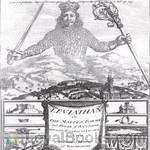 Leviathan, or The Matter, Forme and Power of a Common Wealth Ecclesiasticall and Civil
Books 1 and 2. Leviathan, or The Matter, Forme and Power of a Common Wealth Ecclesiasticall and Civil is a book written in 1651 by Thomas Hobbes. The book concerns the structure of society (as represented figuratively by the frontispiece, showing the state giant made up of individuals). In the book, Hobbes argues for a social contract and rule by a sovereign. Influenced by the English Civil War, Hobbes wrote that chaos or civil war – situations identified with a state of nature and the famous motto bellum omnium contra omnes (”the war of all against all”) – could only be averted by strong central government... | |
By: Upton Sinclair (1878-1968) | |
|---|---|
|
The Profits of Religion
The Profits of Religion: An Essay in Economic Interpretation is a non-fiction book by the American novelist and muckraking journalist Upton Sinclair, first published in 1917. It is a snapshot of the religious movements in the U.S. before its entry into World War I. In this book, Sinclair attacks institutionalized religion as a "source of income to parasites, and the natural ally of every form of oppression and exploitation." | |
By: Charles Morris (1833-1922) | |
|---|---|
 The San Francisco Calamity by Earthquake and Fire
The first half of this book describes the devastating earthquake that hit San Francisco in 1906, and the subsequent destruction caused by fire. Various eyewitnesses and victims give their account on the tragedy. In the second half, a number of different other earthquakes and volcanic eruptions are retold, like the eruption of the Vesuvius that destroyed Pompeij or the explosion of the Krakatoa, together with scientific explanations for the causes of earthquakes and the eruption of volcanos. | |
By: Israel Zangwill (1864-1926) | |
|---|---|
|
Children of the Ghetto
In this 1892 novel of London's Jewish East End, Israel Zangwill sets the apparently irrational and decidedly indecorous religious practices of transplanted eastern European Jews against the forces of assimilation. Zangwill's knowledge of Yiddishkeit and skill in melodrama created a series of unforgettable vignettes that had a significant effect on the public perception of this much stigmatized immigrant group. Israel Zangwill (1864-1926) was born in London of Russian and Polish parents. He coined the term cultural "melting pot". | |
By: Mary Wollstonecraft (1759-1797) | |
|---|---|
 A Vindication of the Rights of Woman
Regarded as the one of the earliest examples of feminist philosophy, A Vindication of the Rights of Woman is written as a direct response to Charles Maurice de Talleyrand-Périgord, a French politician who delivered a report to the French National Assembly suggesting that women should only receive domestic education and additionally encourages women to stay clear of political affairs. In her treatise, Wollstonecraft avidly criticizes this inadequate perception of women as an inferior sex and attacks social inequality, while also arguing for women’s rights in the hope of redefining their position both in society and in marriage... | |
 Letters Written During a Short Residence in Sweden, Norway and Denmark
Published in 1796, Letters Written During a Short Residence in Sweden, Norway, and Denmark is a personal travel narrative by the eighteenth-century British feminist writer Mary Wollstonecraft. The twenty-five letters cover a wide range of topics, from sociological reflections on Scandinavia and its peoples to philosophical questions regarding identity. Published by Wollstonecraft's career-long publisher, Joseph Johnson, it was the last work issued during her lifetime. Wollstonecraft undertook her tour of Sweden, Norway, and Denmark in order to retrieve a stolen treasure ship for her lover, Gilbert Imlay... | |
By: Robert Smythe Hichens (1864-1950) | |
|---|---|
 The Spell of Egypt
The author, a British journalist and novelist, is interested in the feel of the places he visits. He describes at length a visit he has made to Egypt, with emphasis on the emotional response the places generate. | |
By: Andy Adams (1859-1935) | |
|---|---|
 The Outlet
Andy Adams worked as a cowboy on trail drives from Texas for eight years. This is an account of a drive when he was the foreman of a herd of Texas cattle being driven to Montana. Expect the same quality writing as found in other books by Adams. | |
By: Agnes Ethel Conway (1885-1950) | |
|---|---|
 The Book of Art for Young People
This is a charming book on Art History for children (and everyone else). Each chapter focuses on a great painting, reproduced in color in the original text. The authors explain the story behind the paintings, as well as the life, times, and techniques of the artists. | |
By: Lewis Hodus (1872-1949) | |
|---|---|
 Buddhism and Buddhists in China
Buddhism and Buddhists in China is an anthropological text describing Buddhism as practiced in China at the beginning of the 20th Century. Interestingly, it also compares and contrasts Buddhism with Christianity with respect to or in response to missionary work. | |
By: L. A. Abbott (1813-??) | |
|---|---|
 Seven Wives and Seven Prisons
This work the author claims is indeed a true story of how he happened to be married seven times to seven different women and the rollicking, hilarious events that led (or stumbled) to the marriages and the ah–disassembling/failing/failures of each said marriage which happened oftentimes to land him in prison. The summarist finds the work a very tongue-in-cheek diatribe/lament/account of his obsessive zeal in ‘marrying the right one’, but is also the mirthful chronicle of said author’s very unconventional adventures. | |
By: Alfred Binet (1857-1911) | |
|---|---|
 The Mind and the Brain
Today, almost every layperson understands the concept of intelligence tests and can glibly discuss IQ scores. In fact, these have become so common in the popular imagination that magazines, websites and pop quizzes offer to assess your intelligence at the drop of a hat! In this scenario, it's interesting to recall the very first person who proposed the concept of measurable intelligence. Alfred Binet was basically a clinical psychologist whose wide-ranging interests in learning difficulties faced by school children prompted him to undertake extensive studies in human cognition, psychology, learning and behavior... | |
By: Susan Coolidge (1835-1905) | |
|---|---|
 What Katy Did at School
The continuing story of Katy Carr, recounting the time she spent at boarding school with her sister Clover. | |
By: Mary Everest Boole (1832-1916) | |
|---|---|
 Philosophy and Fun of Algebra
Mary Everest Boole (1832-1916) was born Mary Everest in England and spent her early years in France. She married mathematician George Boole. She was the author of several works on teaching and teaching mathematics in particular. This short book, Philosophy and Fun of Algebra, is meant to be read by children and introduces algebra and logic. She uses the word “algebra” broadly, defining it as a “method of solving problems by honest confession of one’s ignorance”. Using this definition, Boole introduces, in a conversational manner, the concepts of logic and algebra, illustrating these concepts with stories and anecdotes, often from biblical sources... | |
By: Mrs. Cecil Hall | |
|---|---|
 A Lady's Life on a Farm in Manitoba
The nineteenth century was marked by intense colonization by countries like Britain, France, Portugal, Spain and the Netherlands. Initially, the pioneering efforts were made by men who battled unfamiliar terrain to create territories that they marked out as their own, while their wives, mothers, sisters and daughters kept the home and hearth in their native land. However, with travel becoming more common and family life assuming more importance, the women too began to travel to the four corners of the earth... | |
By: H. G. Wells (1866-1946) | |
|---|---|
 God, the Invisible King
Wells wrote in his book God the Invisible King that his idea of God did not draw upon the traditional religions of the world: "This book sets out as forcibly and exactly as possible the religious belief of the writer. [Which] is a profound belief in a personal and intimate God." Later in the work he aligns himself with a "renascent or modern religion ... neither atheist nor Buddhist nor Mohammedan nor Christian ... [that] he has found growing up in himself." | |
By: Clarence Edwords (b. 1856) | |
|---|---|
 Bohemian San Francisco
While describing his dining experiences throughout “Bohemian San Francisco,” Clarence Edwords paints an historic panorama of California cuisine with all its cosmopolitan influences. Best of all, he offers tantalizing recipes culled from conversations with the master chefs of 1914 in “The City by the Bay.” | |
By: Theodore Roosevelt | |
|---|---|
 Theodore Roosevelt: An Autobiography
In his vital, illustrative and dynamic autobiography, Theodore Roosevelt let us into the life that formed one of the greatest and outspoken presidents in American history. Not only are we privy to the formation of his political ideals, but also to his love of the frontier and the great outdoors. | |
 Through the Brazilian Wilderness
Roosevelt’s popular book Through the Brazilian Wilderness describes his expedition into the Brazilian jungle in 1913 as a member of the Roosevelt-Rondon Scientific Expedition co-named after its leader, Brazilian explorer Cândido Rondon. The book describes all of the scientific discovery, scenic tropical vistas and exotic flora, fauna and wild life experienced on the expedition. One goal of the expedition was to find the headwaters of the Rio da Duvida, the River of Doubt, and trace it north to the Madeira and thence to the Amazon River... | |
 Hunting the Grisly and Other Sketches
| |
By: Helen Hunt Jackson (1830-1885) | |
|---|---|
|
Bits About Home Matters
This book is a collection of short observations by Helen Hunt Jackson, several with children and parenting as the subject matter. | |
By: Harriet Jacobs (1813-1897) | |
|---|---|
 Incidents in the Life of a Slave Girl, Written by Herself
Born in slavery, but being fortunate enough to be owned by a benevolent mistress, her life takes a tragic turn when her parents and her benefactor die. The new heir to the property (and slaves) is a cruel and lewd man who begins to make inappropriate advances to the lovely young slave-girl. In a bid to escape, she becomes entangled in a relationship with a neighboring landowner who promises a better life, and she even has two children. However, things become worse for her when her cruel owner decides to punish her by sending her and her children to a distant cotton plantation to be “broken in... | |
By: Irwin S. Cobb (1876-1944) | |
|---|---|
 Europe Revised
Irwin Cobb’s humorous Europe Revised is a travelogue and comedy almost in the style of Mark Twain. The dedication says it best, “To My Small DaughterWho bade me shed a tear at the tomb of Napoleon, which I was very glad to do, because when I got there my feet certainly were hurting me.” | |
By: William James (1842-1910) | |
|---|---|
 Essays in Radical Empiricism
William James (1842 – 1910) was a pioneering American psychologist and philosopher. He wrote influential books on the young science of psychology, educational psychology, psychology of religious experience and mysticism, and the philosophies of pragmatism and Radical Empiricism. Essays in Radical Empiricism is a collection edited and published posthumously by his colleague and biographer Ralph Barton Perry in 1912. It was assembled from a collection of reprinted journal articles published from 1904–1905 which James had deposited in August 1906 at Harvard University, for supplemental use by his students. | |
|
Varieties of Religious Experience
The Varieties of Religious Experience: A Study in Human Nature is a book by the Harvard psychologist and philosopher William James that comprises his edited Gifford Lectures on "Natural Theology" delivered at the University of Edinburgh in Scotland between 1901 and 1902. These lectures concerned the nature of religion and the neglect of science, in James' view, in the academic study of religion. Soon after its publication, the book found its way into the canon of psychology and philosophy, and has remained in print for over a century. | |
|
Pragmatism
'Pragmatism' contains a series of public lectures held by William James in Boston 1906–7. James provides a popularizing outline of his view of philosophical pragmatism while making highly rhetorical and entertaining lashes towards rationalism and other competing schools of thought. James is especially concerned with the pragmatic view of truth. True beliefs should be defined as, according to James, beliefs that can successfully assist people in their everday life. This is claimed to not be relativism... | |
By: Harry Houdini | |
|---|---|
 The Miracle Mongers, an Exposé,
“A complete exposé of the modus operandi of fire eaters, heat resisters, poison eaters, venomous reptile defiers, sword swallowers, human ostriches, strong men, etc.”, [by Harry Houdini, from the subtitle]. | |
By: M. M. Mangasarian (1859-1943) | |
|---|---|
 The Truth About Jesus. Is He a Myth?
The following work offers in book form the series of studies on the question of the historicity of Jesus, presented from time to time before the Independent Religious Society in Orchestra Hall, Chicago, 1909. No effort has been made to change the manner of the spoken, into the more regular form of the written, word. | |
By: Lady Lucie Duff-Gordon (1821-1869) | |
|---|---|
 Letters from Egypt
As a girl, Lady Duff-Gordon was noted both for her beauty and intelligence. As an author, she is most famous for this collection of letters from Egypt. Lady Duff-Gordon had tuberculosis, and went to Egypt for her health. This collection of her personal letters to her mother and her husband. By all accounts everyone loved her, and the letters are very personal in style and content. The letters are as much an introduction to her person as a record of her life on the Upper Nile. | |
By: J. Arthur Thomson (1861-1933) | |
|---|---|
 The Outline of Science
The Outline of Science, Volume 1 was written specifically with the man-on-the-street in mind as the target audience. Covering scientific subjects ranging from astronomy to biology to elementary physics in clear, concise and easily understood prose, this popular science work is largely as relevant today as when first published in 1922. Special emphasis is given to the principles of biological adaptation and evolution, especially how they relate to the rise of the human species from lower orders. Also included are the basics of the (then) fairly new concept of relativity and its impact on emerging scientific theories... | |
By: Herbert Allen Giles (1845-1935) | |
|---|---|
 China and the Chinese
Herbert Allen Giles (1845-1935) spent several years as a diplomat in China and in 1897 was appointed Cambridge University’s second professor of Chinese. His published works cover Chinese language and literature, history and philosophy. This series of lectures, published as “China and the Chinese”, was given at Columbia University in 1902, to mark the establishment of a Chinese professorship there. The lectures were not intended for the specialist, more to urge a wider and more systematic study of China and its culture, and to encourage new students into the field... | |
By: Friedrich Schiller | |
|---|---|
|
The Thirty Years War
The History of the Thirty Years War is a five volume work, which followed his very successful History of the Revolt of the Netherlands. Written for a wider audience than Revolt, it is a vivid history, colored by Schiller’s own interest in the question of human freedom and his rationalist optimism. Volume 1 covers the background of the war, through the Battle of Prague in late 1620. (Introduction by Alan Winterrowd) | |
By: Thomas Henry Huxley (1825-1895) | |
|---|---|
 The Advance of Science in the Last Half-Century
Thomas H. Huxley, an English biologist and essayist, was an advocate of the theory of evolution and a self-proclaimed agnostic. A talented writer, his essays helped to popularize science in the 19th century, and he is credited with the quote, “Try to learn something about everything and everything about something.” In The Advance of Science in the Last Half Century, he presents a summary of the major developments in Physics, Chemistry and Biology during the period 1839-1889 and their impact on society, within the historical context of philosophical thought and scientific inquiry going back to Aristotle... | |
By: Okakura Kakuzo (1863-1913) | |
|---|---|
 The Book of Tea
The Book of Tea was written by Okakura Kakuzo in the early 20th century. It was first published in 1906, and has since been republished many times. – In the book, Kakuzo introduces the term Teaism and how Tea has affected nearly every aspect of Japanese culture, thought, and life. The book is noted to be accessibile to Western audiences because though Kakuzo was born and raised Japanese, he was trained from a young age to speak English; and would speak it all his life, becoming proficient at communicating his thoughts in the Western Mind... | |
By: William George Jordan (1864-1928) | |
|---|---|
 The Majesty of Calmness
Change your life by changing your thoughts. The Majesty of Calmness is your guide to attracting prosperity, manifesting opportunities, and managing stress–all while discovering the values most precious to you. | |
By: John Ruskin (1819-1900) | |
|---|---|
 Lectures on Landscape
A series of lectures on landscape painting delivered at Oxford in 1871, by artist, critic, and social commentator, John Ruskin. | |
 The Two Paths
"The Two Paths" is a collection of five lectures delivered in 1858 and 1859 by John Ruskin on art and architecture. This is how the author himself presents the book: "The following addresses, though spoken at different times, are intentionally connected in subject; their aim being to set one or two main principles of art in simple light before the general student, and to indicate their practical bearing on modern design. The law which it has been my effort chiefly to illustrate is the dependence of all noble design, in any kind, on the sculpture or painting of Organic Form." The most famous of these, the fifth lecture, is commonly known simply as "The Work of Iron" | |
 The Seven Lamps of Architecture
The Seven Lamps of Architecture, published in May 1849, is an extended essay written by the English art critic and theorist John Ruskin. The 'lamps' of the title are Ruskin's principles of architecture, which he later enlarged upon in the three-volume The Stones of Venice. To an extent, they codified some of the contemporary thinking behind the Gothic Revival. At the time of its publication A.W.N. Pugin and others had already advanced the ideas of the Revival and it was well under way in practice... | |
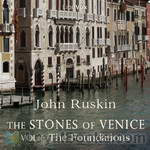 The Stones of Venice, volume 1
The Stones of Venice is a three-volume treatise on Venetian art and architecture by English art historian John Ruskin, first published from 1851 to 1853. Intending to prove how the architecture in Venice exemplified the principles he discussed in his earlier work, The Seven Lamps of Architecture, Ruskin examined the city in detail, describing for example over eighty churches. He discusses architecture of Venice's Byzantine, Gothic and Renaissance periods, and provides a general history of the city as well... | |
By: Epictetus (c.55-135) | |
|---|---|
 The Golden Sayings of Epictetus
Aphorisms from the Stoic Greek. | |
By: Myrtle Reed (1874-1911) | |
|---|---|
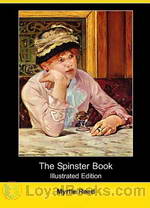 The Spinster Book
A cross between guidebook and social commentary, The Spinster Book gives clever and humorous insights on topics such as courting, handling men and women, love letters, marriage and spinsterhood. | |
By: Delmer Eugene Croft | |
|---|---|
 Supreme Personality
Life is self-realization. Every birth is divine. We are born anew every morning. My wish is that you may catch the gleam, be freed from limitations and enter upon your boundless possibilities. To bring you into the throne-room of your being, that you may awaken in self-realization, is why I have prepared this course of lessons. Should you give five minutes a day to them, in a year you will know the joy there is in Life, in Power, and in Service. (from the text) | |
By: Warren Hilton (1874-?) | |
|---|---|
 Initiative Psychic Energy
Learn how to accomplish your goals through increasing your mental power, avoiding energy drains, and becoming more mentally efficient. | |
By: Ludwig van Beethoven (1770-1827) | |
|---|---|
 Selected Letters of Beethoven
A selection of Beethoven’s letters from the compilation by Dr. Ludwig Nohl and translated by Lady Grace Wallace. | |
By: Frank Lewis Dyer and Thomas Commerford Martin | |
|---|---|
 Edison, His Life and Inventions
One of the most prolific and multi-talented geniuses the world has ever seen, Thomas Alva Edison's life is indeed an inspiration for each new generation. Today we live in a world that would not have been possible if not for several of his important inventions – the electric light bulb, the motion picture camera, electric power distribution, the phonograph, and a host of other things that we take for granted today. In fact, he still holds the world record for the maximum number of patents, numbering 1093 in all! Edison – His Life and Inventions by Frank Lewis Dyer and Thomas Commerford Martin, published in 1910 was in fact a biography commissioned by Edison himself... | |
By: George Santayana (1863-1952) | |
|---|---|
 Some Turns of Thought in Modern Philosophy
Before the beginning of World War II, during the time of the Modernist movement in philosophy, George Santayana wrote these five descriptive essays. He examined John Locke’s sensationalism, British Idealism, the “Theory of Relativity”, Freud’s psychology, and Julien Benda’s preachment on the relations between God and the world. [Summary written by Gary Gilberd] | |
|
The Life of Reason volume 1
The Life of Reason, subtitled "the Phases of Human Progress", is a book published in five volumes from 1905 to 1906, by Spanish-born American philosopher George Santayana (1863-1952). It consists of Reason in Common Sense, Reason in Society, Reason in Religion, Reason in Art, and Reason in Science. The work is considered to be the most complete expression of Santayana's moral philosophy [...]. Santayana's philosophy is strongly influenced by the materialism of Democritus and the refined ethics of Aristotle, with a special emphasis on the natural development of ideal ends... | |
|
Winds of Doctrine: Studies in Contemporary Opinion
Even before the Great War turned the world upside down, Western civilization was being revolutionized at all levels: intellectually, philosophically, artistically. Noted positivist philosopher George Santayana published this volume on the eve of the War, trying to portray the status of philosophy and theology at that moment by analyzing six significant topics: 1. the intellectual "temper" of the age 2. the clash between Modernism and Christianity 3. the new idealism of Henri Bergson 4. the new skepticism of Bertrand Russell 5. Shelley's fusion of philosophy and poetry 6. the so-called "genteel" tradition in American philosophy. | |
By: Olaudah Equiano (1745-1797) | |
|---|---|
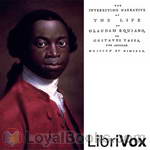 The Interesting Narrative of the Life of Olaudah Equiano, Or Gustavus Vassa, The African
The Interesting Narrative of the Life of Olaudah Equiano, written in 1789, is the autobiography of Olaudah Equiano. It discusses his time spent in slavery, serving primarily on galleys, documents his attempts at becoming an independent man through his study of the Bible, and his eventual success in gaining his own freedom and in business thereafter. The book contains an interesting discussion of slavery in West Africa and illustrates how the experience differs from the dehumanising slavery of the Americas... | |
By: Henry Fielding (1707-1754) | |
|---|---|
|
Journal of a Voyage to Lisbon
Sailing voyage from England to Portugal in the mid Eighteenth Century, by one of the premier humorists, satirists, novelists and playwrights of his age. It was to be his last work, as his failing health proved unable to persevere much longer after the voyage. | |
By: Thomas de Quincey (1785-1859) | |
|---|---|
 Miscellaneous Essays
The Hunter Thompson of the 19th Century, de Quincey is best known for his Confessions of an English Opium Eater (an activity shared with his hero, Samuel Coleridge, much to Wordsworth’s dismay). However, de Quincey’s literary genius is best captured in his essays, and, according to Wikipedia: His immediate influence extended to Edgar Allan Poe, Fitz Hugh Ludlow and Charles Baudelaire, but even major 20th century writers such as Jorge Luis Borges admired and claimed to be partly influenced by his work. | |
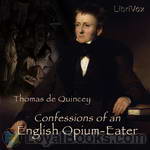 Confessions of an English Opium-Eater
“Thou hast the keys of Paradise, O just, subtle, and mighty Opium!” Though apparently presenting the reader with a collage of poignant memories, temporal digressions and random anecdotes, the Confessions is a work of immense sophistication and certainly one of the most impressive and influential of all autobiographies. The work is of great appeal to the contemporary reader, displaying a nervous (postmodern?) self-awareness, a spiralling obsession with the enigmas of its own composition and significance... | |
By: Catharine Parr Traill (1802-1899) | |
|---|---|
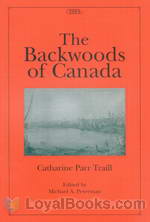 The Backwoods of Canada
The writer is as earnest in recommending ladies who belong to the higher class of settlers to cultivate all the mental resources of a superior education, as she is to induce them to discard all irrational and artificial wants and mere useless pursuits. She would willingly direct their attention to the natural history and botany of this new country, in which they will find a never-failing source of amusement and instruction, at once enlightening and elevating the mind, and serving to fill up the void left by the absence of those lighter feminine accomplishments, the practice of which are necessarily superseded by imperative domestic duties... | |
By: A. Alpheus | |
|---|---|
 Complete Hypnotism, Mesmerism, Mind-Reading and Spiritualism
Written in 1903, just sixty years after the word ‘hypnotism’ was coined, this book explores the contemporary understanding of the nature, uses and dangers of the technique. Hypnotism has been practiced for many centuries, but it was in the mid-to-late nineteenth century that it became a particularly fashionable way to explore the human mind. Although understanding of the subject has evolved considerably over subsequent years, this book remains a fascinating insight into a technique once thought to be at the forefront of medical science. | |
By: Alexander Pope (1688-1744) | |
|---|---|
 An Essay on Man
Pope’s Essay on Man, a masterpiece of concise summary in itself, can fairly be summed up as an optimistic enquiry into mankind’s place in the vast Chain of Being. Each of the poem’s four Epistles takes a different perspective, presenting Man in relation to the universe, as individual, in society and, finally, tracing his prospects for achieving the goal of happiness. In choosing stately rhyming couplets to explore his theme, Pope sometimes becomes obscure through compressing his language overmuch... | |
By: James Boswell (1740-1795) | |
|---|---|
 The Life of Samuel Johnson
Boswell’s Life of Samuel Johnson is widely considered to be the greatest English-language biography ever written. It was revolutionary in its efforts to represent Johnson as he was, celebrating his flaws as well as his genius, and in Boswell’s decision to represent Johnson primarily by quoting his writings and relating personal anecdotes rather than relying on matters of public record. From the time of its publication till now, The Life of Johnson has been one of the most popular and influential books ever written. | |
By: Yacki Raizizun | |
|---|---|
 The Secret of Dreams
A guide to different kinds of dreams, their meanings, and how they influence our waking lives. | |
By: Henry L. Mencken (1880-1956) | |
|---|---|
 In Defense of Women
In Defense of Women is H. L. Mencken’s 1918 book on women and the relationship between the sexes. Some laud the book as progressive while others brand it as reactionary. While Mencken didn’t champion women’s rights, he described women as wiser in many novel and observable ways, while demeaning average men. According to Mencken’s biographer, Fred Hobson: Depending on the position of the reader, he was either a great defender of women’s rights or, as a critic labelled him in 1916, ‘the greatest misogynist since Schopenhauer’,'the country’s high-priest of woman-haters.’ | |
By: John Wesley Powell (1834-1902) | |
|---|---|
 Canyons of the Colorado, or The exploration of the Colorado River and its Canyons
John Wesley Powell was a pioneer American explorer, ethnologist, and geologist in the 19th Century. In 1869 he set out to explore the Colorado and the Grand Canyon. He gathered nine men, four boats and food for ten months and set out from Green River, Wyoming, on May 24. Passing through dangerous rapids, the group passed down the Green River to its confluence with the Colorado River (then also known as the Grand River upriver from the junction), near present-day Moab, Utah. The expedition’s route... | |
By: Irvin S. Cobb (1876-1944) | |
|---|---|
 Cobb's Anatomy
Irvin Shrewsbury Cobb was born on June 23, 1876. At seventeen years of age, he began writing for the Paducah Daily News, his hometown paper. At nineteen he became the managing editor; up to that point, our nation’s youngest. He worked as a columnist, a humorist and an author. But ‘horror,’ and ’short stories,’ are not why he is remembered. He is remembered because he was, and still is, funny. And although he is now dead–he died March 11, 1944–this work “Cobb’s Anatomy,” among others, has left an indelible mark upon mankind: a smile. | |
By: Peter Kropotkin (1842-1921) | |
|---|---|
 Mutual Aid: A Factor of Evolution
Mutual Aid: A Factor of Evolution is a book by Peter Kropotkin on the subject of mutual aid, written while he was living in exile in England. It was first published by William Heinemann in London in October 1902. The individual chapters had originally been published in 1890-96 as a series of essays in the British monthly literary magazine, Nineteenth Century. Written partly in response to Social Darwinism and in particular to Thomas H. Huxley’s Nineteenth Century essay, The Struggle for Existence, Kropotkin’s book drew on his experiences in scientific expeditions in Siberia to illustrate the phenomenon of cooperation... | |
 The Conquest of bread
In this work, Kropotkin points out what he considers to be the fallacies of the economic systems of feudalism and capitalism, and how he believes they create poverty and scarcity while promoting privilege. He goes on to propose a more decentralised economic system based on mutual aid and voluntary cooperation, asserting that the tendencies for this kind of organisation already exist, both in evolution and in human society. | |
By: William Dean Howells (1837-1920) | |
|---|---|
 My Mark Twain
William Dean Howells (1837-1920) became fast friends with Mark Twain from the moment in 1869 when Twain strode into the office of The Atlantic Monthly in Boston to thank Howells, then its assistant editor, for his favorable review of Innocents Abroad. When Howells became editor a few years later, The Atlantic Monthly began serializing many of Twain’s works, among them his non-fiction masterpiece, Life on the Mississippi. In My Mark Twain, Howells pens a literary memoir that includes such fascinating scenes as their meetings with former president Ulysses Grant who was then writing the classic autobiography that Twain would underwrite in the largest publishing deal until that time... | |
 A Little Swiss Sojurn
A charming brief account of a two months' autumnal stay on the shores of the Lake of Geneva. Howells, who was there with his family traveling from England to Italy, has a sharp eye not only for scenery and architecture, but for people and customs, both Swiss and foreign. | |
By: Alfred Russel Wallace (1823-1913) | |
|---|---|
 Is Mars Habitable?
In 1907 Wallace wrote the short book Is Mars Habitable? to criticize the claims made by Percival Lowell that there were Martian canals built by intelligent beings. Wallace did months of research, consulted various experts, and produced his own scientific analysis of the Martian climate and atmospheric conditions. Among other things Wallace pointed out that spectroscopic analysis had shown no signs of water vapor in the Martian atmosphere, that Lowell’s analysis of Mars’ climate was seriously flawed and badly overestimated the surface temperature, and that low atmospheric pressure would make liquid water, let alone a planet girding irrigation system, impossible. | |
By: Brooks Adams (1848-1927) | |
|---|---|
 The Theory of Social Revolutions
Brooks Adams (1848- 1927), was an American historian and a critic of capitalism. He believed that commercial civilizations rise and fall in predictable cycles. First, masses of people draw together in large population centers and engage in commercial activities. As their desire for wealth grows, they discard spiritual and creative values. Their greed leads to distrust and dishonesty, and eventually the society crumbles. In The Law of Civilisation and Decay (1895), Adams noted that as new population centers emerged in the west, centers of world trade shifted from Constantinople to Venice to Amsterdam to London... | |
By: Fanny Dickerson Bergen (1846-1924) | |
|---|---|
 Current Superstitions
No matter how enlightened, chances are you’ve been raised around superstitious lore of one kind or another. Fanny Dickerson Bergen was one of the original researchers of North American oral traditions relating to such key life events and experiences as babyhood and childhood, marriage, wishes and dreams, luck, warts and cures, death omens and mortuary customs, and “such truck,” as Huck Finn would say. You’ll be surprised at how many of these old saws you’ll know. Here’s a quote from... | |
By: Dale Carnegie (1888-1955) | |
|---|---|
 The Art of Public Speaking
A great start to shaking off public speaking jitters, socializing and mastering the art of small talk. The principles of public speaking written by Dale Carnegie decades ago in this book are timeless. They are just as effective in working a crowd in today’s society as they were back then. He delves into ways of commanding and charming an audience with the right energy, tone of voice, pitch, pronunciation and vocabulary. Armed with the principles highlighted in this book, you can do more than convey a message to a group of people, you can move them... | |
By: Elizabeth E. Lea (1793-1858) | |
|---|---|
 Domestic Cookery, Useful Receipts, and Hints to Young Housekeepers
The compiler of [this book] having entered early in life upon a train of duties, was frequently embarrassed by her ignorance of domestic affairs. For, whilst receipt books for elegant preparations were often seen, those connected with the ordinary, but far more useful part of household duties, were not easily procured; thus situated, she applied to persons of experience, and embodied the information collected in a book, to which, since years have matured her judgment, she has added much that is the result of her own experiments... | |
By: Hilaire Belloc (1870-1953) | |
|---|---|
 The French Revolution
“It is, for that matter, self-evident that if one community decides in one fashion, another, also sovereign, in the opposite fashion, both cannot be right. Reasoning men have also protested, and justly, against the conception that what a majority in numbers, or even (what is more compelling still) a unanimity of decision in a community may order, may not only be wrong but may be something which that community has no authority to order since, though it possesses a civil and temporal authority, it acts against that ultimate authority which is its own consciousness of right... | |
 Europe and the Faith
The Catholic brings to history (when I say "history" in these pages I mean the history of Christendom) self-knowledge. As a man in the confessional accuses himself of what he knows to be true and what other people cannot judge, so a Catholic, talking of the united European civilization, when he blames it, blames it for motives and for acts which are his own. He himself could have done those things in person. He is not relatively right in his blame, he is absolutely right. As a man can testify to his own motive so can the Catholic testify to unjust, irrelevant, or ignorant conceptions of the European story; for he knows why and how it proceeded... | |
 First and Last
“When a man weighs anchor in a little ship or a large one he does a jolly thing! He cuts himself off and he starts for freedom and for the chance of things. He pulls the jib a-weather, he leans to her slowly pulling round, he sees the wind getting into the mainsail, and he feels that she feels the helm. He has her on a slant of the wind, and he makes out between the harbour piers.” (quotation from Hilaire Belloc) | |
 On Something
“Now that story is a symbol, and tells the truth. We see some one thing in this world, and suddenly it becomes particular and sacramental; a woman and a child, a man at evening, a troop of soldiers; we hear notes of music, we smell the smell that went with a passed time, or we discover after the long night a shaft of light upon the tops of the hills at morning: there is a resurrection, and we are refreshed and renewed.” – Hilaire Belloc | |
 On Nothing & Kindred Subjects
“I knew a man once, Maurice, who was at Oxford for three years, and after that went down with no degree. At College, while his friends were seeking for Truth in funny brown German Philosophies, Sham Religions, stinking bottles and identical equations, he was lying on his back in Eynsham meadows thinking of Nothing, and got the Truth by this parallel road of his much more quickly than did they by theirs; for the asses are still seeking, mildly disputing, and, in a cultivated manner, following the... | |
 The Free Press
I propose to discuss in what follows the evil of the great modern Capitalist Press, its function in vitiating and misinforming opinion and in putting power into ignoble hands; its correction by the formation of small independent organs, and the probably increasing effect of these last. (Introduction by Hilaire Belloc) | |
By: Ida Laura Pfeiffer | |
|---|---|
 A Visit to the Holy Land, Egypt, and Italy
Ida Pfeiffer travelled alone in an era when women didn’t travel. She went first on a pilgrimage to the Holy Land, then went on to Egypt and Italy. Understanding the difficulties a woman would face travelling alone and on a budget, she made a will before she left. Go she did, however; and upon her return she wrote this book. She used the proceeds to finance her next trip – six months in Iceland. | |
By: Robert Green Ingersoll (1833-1899) | |
|---|---|
 Lectures of Col. R. G. Ingersoll
Colonel Robert Green Ingersoll (1833–1899) was a Civil War veteran, American political leader and orator during the Golden Age of Freethought, noted for his defense of atheism. This book is the first of two volumes collecting Ingersoll’s speeches. | |
|
The Ghosts And Other Lectures
| |
|
The Works of Robert G. Ingersoll, Volume VIII. Interviews
| |
By: Justus Liebig (1803-1873) | |
|---|---|
 Familiar Letters on Chemistry
Justus von Liebig (1803-1873) was a German chemist who made major contributions to agricultural and biological chemistry and is known for his discovery of nitrogen as an essential plant nutrient. These letters “were written for the especial purpose of exciting the attention of governments, and an enlightened public, to the necessity of establishing Schools of Chemistry, and of promoting by every means, the study of a science so intimately connected with the arts, pursuits, and social well-being of modern civilised nations.” | |
By: US Army Corps of Engineers, Manhattan District | |
|---|---|
 The Atomic Bombings of Hiroshima & Nagasaki
This is the official report, published nearly 11 months after the first and only atomic bombings in history (to date), of a group of military physicians and engineers who accompanied the initial contingent of U.S. soldiers into the destroyed cities of Hiroshima and Nagasaki. The report presents a clinical description of the devastation, loss of life and continued suffering of the survivors that resulted from the world’s first and only atomic bombings. The appendix is an eyewitness account, contrasting... | |