 |
Books Should Be Free Loyal Books Free Public Domain Audiobooks & eBook Downloads |
|
|
|
Books Should Be Free Loyal Books Free Public Domain Audiobooks & eBook Downloads |
|
Philosophy Books |
|---|
Book type:
Sort by:
View by:
|
By: Leo Tolstoy (1828-1920) | |
|---|---|
 Bethink Yourselves!
As Russia goes to war against Japan, Tolstoy urges those at all levels of society, from the Tsar down to the common soldier, to consider their actions in the light of Christ's teaching. "However strange this may appear, the most effective and certain deliverance of men from all the calamities which they inflict upon themselves and from the most dreadful of all—war—is attainable, not by any external general measures, but merely by that simple appeal to the consciousness of each separate man which, nineteen hundred years ago, was proposed by Jesus—that every man bethink himself, and ask himself, who is he, why he lives, and what he should and should not do... | |
By: Lewis Carroll (1832-1898) | |
|---|---|
 Symbolic Logic
| |
|
The Game of Logic
| |
By: Aesop (620 BC - 563 BC) | |
|---|---|
 Aesop's Fables
As children, our first experience of the magic of talking animals, the conflict between good and evil, the battle of wits between the cunning and the innocent most probably came from Aesop's Fables. These delightful, pithy and brief narratives are simple, easy to understand and convey their message in a memorable and charming fashion. Aesop's Fables by Aesop consists of about 600 tales, some well-loved and familiar, others less known but just as entertaining and educative and help us map the perimeters of our moral universe... | |
By: Frances Hodgson Burnett (1849-1924) | |
|---|---|
 The Dawn of a To-morrow
A wealthy London business man takes a room in a poor part of the city. He is depressed and has decided to take his life by going the next day to purchase a hand gun he had seen in a pawnshop window. The morning comes with one of those 'memorable fogs' and the adventure he has in it alters his decisions and ultimately his life. | |
By: G. K. Chesterton (1874-1936) | |
|---|---|
 Orthodoxy
Orthodoxy is a book that has become a classic of Christian apologetics. In the book's preface Chesterton states the purpose is to "attempt an explanation, not of whether the Christian faith can be believed, but of how he personally has come to believe it." In it, Chesterton presents an original view of the Christian religion. He sees it as the answer to natural human needs, the "answer to a riddle" in his own words, and not simply as an arbitrary truth received from somewhere outside the boundaries of human experience. | |
By: Voltaire (1694-1778) | |
|---|---|
 Zadig, or the Book of Fate
Zadig, ou La Destinée, (”Zadig, or The Book of Fate”) (1747) is a famous novel written by the French Enlightenment philosopher Voltaire. It tells the story of Zadig, a philosopher in ancient Babylonia. The author does not attempt any historical accuracy, and some of the problems Zadig faces are thinly disguised references to social and political problems of Voltaire’s own day. The book is philosophical in nature, and presents human life as in the hands of a destiny beyond human control. It is a story of religious and metaphysical orthodoxy, both of which Voltaire challenges with his presentation of the moral revolution taking place in Zadig himself... | |
By: Henry David Thoreau (1817-1862) | |
|---|---|
 Walden
Two years, two months and two days! This is what forms the time line of one man's quest for the simple life and a unique social experiment in complete self reliance and independence. Henry David Thoreau published Walden in 1884. Originally drafted as a series of essays describing a most significant episode in his life, it was finally released in book form with each essay taking on the form of a separate chapter. Thoreau's parents were in financial straights, but rich intellectually and culturally... | |
By: Fyodor Dostoyevsky (1821-1881) | |
|---|---|
 The Brothers Karamazov
Set in 19th century Russia, The Brothers Karamazov (Russian: Братья Карамазовы) is the last novel written by the illustrious author Fyodor Dostoyevsky who died a few months before the book's publication. The deeply philosophical and passionate novel tells the story of Fyodor Karamazov, an immoral debauch whose sole aim in life is the acquisition of wealth. Twice married, he has three sons whose welfare and upbringing, he cares nothing about. At the beginning of the story, Dimitri Karamazov, the eldest son who is now a twenty-eight year old war veteran, returns to his home town to claim the inheritance left to him by his dead mother... | |
By: James Allen (1864-1912) | |
|---|---|
 As a Man Thinketh
“A man is literally what he thinks, his character being the complete sum of all his thoughts,” is one of the quotes from James Allen's classic self help books, As a Man Thinketh. Published in 1902, it provides many more such insightful concepts on the power of thought and its effect on a human being's personality and behavior. This volume is more of a literary essay than a complete book and its title is based on a Biblical proverb, “As a man thinketh in his heart, so is he.” Taking this piece of ancient wisdom further, James Allen explores the far-reaching effects of the inner workings of a person's mind and motivation... | |
 The Way of Peace
The Way of Peace is your guide to the power of meditation; self and truth; the acquirement of spiritual power; the realization of selfless love; entering into the infinite; saints, sages, and saviors; the law of service; and the realization of perfect peace. | |
By: Walt Whitman (1819-1892) | |
|---|---|
 Leaves of Grass
Nearly 160 years after it was first published, Walt Whitman's Leaves of Grass continues to inspire, enthrall and educate generations of readers. This collection of poems serves as a vehicle for Whitman's philosophy, ideals, love of nature and mystical musings and it subsequently became one of the corner stones of American literature. Whitman was inspired to write Leaves of Grass based on Ralph Waldo Emerson's clarion call for a truly American poet who would tell of its glories, virtues and vices... | |
By: Arnold Bennett (1867-1931) | |
|---|---|
 How to Live on Twenty-Four Hours a Day
This book is a classic piece on self improvement teaching you to live to the fullest. Judging from the title of the book, the reader might expect that the book is a manual on how to manage your time better. Nothing could be further from the truth, this book is a flowery and witty self help book aimed at helping readers improve the quality of their lives, in fact it is one of the firsts of its kind in the world. Bennett describes the twenty four hours in a day as a miracle and that it should be used for the betterment of health, wealth, respect, pleasure and contentment... | |
By: Anicius Manlius Severinus Boethius (480-525?) | |
|---|---|
|
The Theological Tractates and The Consolation of Philosophy
| |
By: Plato (427BC - 347BC) | |
|---|---|
 Euthyphro
Awaiting his trial on charges of impiety and heresy, Socrates encounters Euthyphro, a self-proclaimed authority on matters of piety and the will of the gods. Socrates, desiring instruction in these matters, converses with Euthyphro, but as usual, the man who professes to know nothing fares better than the man who claims to be an expert. One of Plato’s well-known Socratic Dialogues, Euthyphro probes the nature of piety, and notably poses the so-called Euthyphro Dilemma: Do the gods love a thing because it is holy, or is a thing holy because it is loved by the gods? | |
 The Symposium
The Symposium (Ancient Greek: Συμπόσιον) is a philosophical book written by Plato sometime after 385 BCE. On one level the book deals with the genealogy, nature and purpose of love, on another level the book deals with the topic of knowledge, specifically how does one know what one knows. The topic of love is taken up in the form of a group of speeches, given by a group of men at a symposium or a wine drinking party at the house of the tragedian Agathon at Athens. Plato constructed the Symposium as a story within a story within a story... | |
 Ion
Ion
In Plato’s Ion, Socrates questions Ion on whether he should really claim laud and glory for his ‘rhapsodic’ recitals of Homer’s poetry. | |
 Timaeus
“Our intention is, that Timaeus, who is the most of an astronomer amongst us, and has made the nature of the universe his special study, should speak first, beginning with the generation of the world and going down to the creation of man…” ‘Timaeus’ is usually regarded as one of Plato’s later dialogues, and provides an account of the creation of the universe, with physical, metaphysical and ethical dimensions, which had great influence over philosophers for centuries following. It attributes the order and beauty of the universe to a benevolent demiurge – a ‘craftsman’ or god – fashioning the physical world after the pattern of an ideal, eternal one... | |
 Phaedo
Plato's Phaedo is one of the great dialogues of his middle period, along with the Republic and the Symposium. The Phaedo, which depicts the death of Socrates, is also Plato's seventh and last dialogue to detail the philosopher's final days (the first six being Theaetetus, Euthyphro, Sophist, Statesman, Apology, and Crito).In the dialogue, Socrates discusses the nature of the afterlife on his last day before being executed by drinking hemlock. Socrates has been imprisoned and sentenced to death by an Athenian jury for not believing in the gods of the state and for corrupting the youth of the city... | |
 Phaedrus
“For there is no light of justice or temperance, or any of the higher ideas which are precious to souls, in the earthly copies of them: they are seen through a glass, dimly…”Socrates and his earnest friend Phaedrus, enjoying the Athenian equivalent of a lunchtime stroll in the park, exchange views on love and on the power of words, spoken and written.Phaedrus is the most enchanting of Plato’s Erotic dialogues (capitalised in honour of the god). The barefoot philosopher urges an eager young... | |
By: René Descartes (1596-1650) | |
|---|---|
 Discourse on the Method of Rightly Conducting One's Reason and of Seeking Truth in the Sciences
The Discourse on Method is best known as the source of the famous quotation “cogito ergo sum”, “I think, therefore I am.” …. It is a method which gives a solid platform from which all modern natural sciences could evolve. With this work, the idea of skepticism was revived from the ancients such as Sextus Empiricus and modified to account for a truth that Descartes found to be incontrovertible. Descartes started his line of reasoning by doubting everything, so as to assess the world from a fresh perspective, clear of any preconceived notions. | |
|
A Discourse of a Method for the Well Guiding of Reason and the Discovery of Truth in the Sciences
| |
By: Immanuel Kant (1724-1804) | |
|---|---|
 The Critique of Practical Reason
The Critique of Practical Reason (Kritik der praktischen Vernunft) is the second of Immanuel Kant’s three critiques, first published in 1788. It follows on from his Critique of Pure Reason and deals with his moral philosophy. The second Critique exercised a decisive influence over the subsequent development of the field of ethics and moral philosophy, becoming the principle reference point for ethical systems that focus on the rightness or wrongness of actions themselves, as opposed to the rightness or wrongness of the consequences of those actions... | |
|
The Metaphysical Elements of Ethics
| |
By: Ralph Waldo Emerson (1803-1882) | |
|---|---|
 Representative Men
A series of biographical lectures originally published in 1850. Each chapter is a philosophical treatment of the life of an intellectual. The six representatives are Plato, Swedenborg, Shakespeare, Montaigne, Napolean and Goethe. (Introduction by S. Kovalchik) | |
By: Sigmund Freud | |
|---|---|
 Reflections on War and Death
Anyone, as Freud tells us in Reflections on War and Death, forced to react against his own impulses may be described as a hypocrite, whether he is conscious of it or not. One might even venture to assert—it is still Freud’s argument—that our contemporary civilisation favours this sort of hypocrisy and that there are more civilised hypocrites than truly cultured persons, and it is even a question whether a certain amount of hypocrisy is not indispensable to maintain civilisation. When this... | |
By: Ayn Rand (1905-1982) | |
|---|---|
 Anthem
The title 'Anthem' is derived as an anthem to sense of self and self-governing thoughts. Anthem is a story of Equality 7-2521 who is a young man living in some unspecified future time and place. In this future era freedom and individual rights have been eradicated. The starring character of the novel is an inquisitive street cleaner. He lives in a society where people have lost their knowledge of individualism, to the extreme that people do not know words like 'I' or 'mine'. All the people live and work for their livelihood in collective groups, along with the people with power, namely the 'Councils'... | |
By: John Galsworthy (1867-1933) | |
|---|---|
|
Studies and Essays: Censorship and Art
| |
By: Joel Chandler Harris (1848-1908) | |
|---|---|
 Uncle Remus
Bearing a striking resemblance to Aesop of Aesop's Fables fame, American author Joel Chandler Harris' Uncle Remus is also a former slave who loves to tell simple and pithy stories. Uncle Remus or to give it its original title, Uncle Remus: His Songs and His Sayings was published in late 1880 and received instant acclaim. The book was reviewed in hundreds of journals and newspapers across the country, leading to its immense success, both critical and financial. “Remus” was originally a fictional character in a newspaper column... | |
By: John Stuart Mill (1806-1873) | |
|---|---|
 On Liberty
Published in 1859, On Liberty is a libertarian philosophical work by English philosopher John Stuart Mill that endorses his view on the importance of individuality for the constant progression and improvement of society. The work also supports economic and moral freedom, and openly criticizes the influence of social authority that in one way or another imposes a predefined set of acceptable attitudes and opinions. Highlighting issues including the incongruity between authority and liberty, the oppressive... | |
 Utilitarianism
John Stuart Mill’s book Utilitarianism is one of the most influential and widely-read philosophical defenses of utilitarianism in ethics. The essay first appeared as a series of three articles published in Fraser’s Magazine in 1861; the articles were collected and reprinted as a single book in 1863. It went through four editions during Mill’s lifetime with minor additions and revisions. Although Mill includes discussions of utilitarian ethical principles in other works such as On Liberty and The Subjection of Women, Utilitarianism contains Mill’s only major discussion of the fundamental grounds for utilitarian ethical theory. | |
 The Subjection of Women
The Subjection of Women is the title of an essay written by John Stuart Mill in 1869, possibly jointly with his wife Harriet Taylor Mill, stating an argument in favor of equality between the sexes. It offers both detailed argumentation and passionate eloquence in opposition to the social and legal inequalities commonly imposed upon women by a patriarchal culture. Just as in “On Liberty,” Mill defends the emancipation of women on utilitarian grounds, convinced that the moral and intellectual advancement of women would result in greater happiness for everybody. | |
 Considerations on Representative Government
Mill's volume was published in 1861 as an argument favoring this form of governance. Mill covers what forms of government work best, including when representative government is applicable and when not. He details appropriate functions of representative bodies and warns of problems to avoid. He distinguishes between true and false democracy. Other areas covered include how voting is carried out, the role of a second chamber in Parliament, and how an executive branch might function. | |
|
Auguste Comte and Positivism
Part 1 lays out the framework for Positivism as originated in France by Auguste Comte in his Cours de Philosophie Positive. Mill examines the tenets of Comte's movement and alerts us to defects. Part 2 concerns all Comte's writings except the Cours de Philosophie Positive. During Comte's later years he gave up reading newspapers and periodicals to keep his mind pure for higher study. He also became enamored of a certain woman who changed his view of life. Comte turned his philosophy into a religion, with morality the supreme guide. Mill finds that Comte learned to despise science and the intellect, instead substituting his frantic need for the regulation of change. | |
By: Robert W. Service (1874-1958) | |
|---|---|
 Selections from Ballads of a Cheechako
These twelve poems are from Ballads of a Cheechako which was Robert W. Service’s third book of Yukon poems, published in 1909. The word Cheechako, from Chinook Jargon, originated in the United States (Alaska) and Canada (Yukon) and was imported into local English during the Yukon gold rush that began in 1896. Cheechako, is a non derogatory word meaning “newcomer” or “tenderfoot.” The derivation looks something like this: chee new cha come ko home. | |
By: Saint Thomas Aquinas (1225-1274) | |
|---|---|
 Summa Theologica, Pars Prima
More than nine hundred years after it was first written, this unfinished work of a scholar saint still has the power to move our minds and hearts and set us thinking on the really important questions of life. Summa Theologica or simply the Summa as it is known, was written some time between 1265-74. It is a work that has had a profound and enduring influence on Western thought and literature. Designed to provide answers to Catholic theologians about the teachings of the Church, Thomas Aquinas' book instead goes far beyond its stated purpose... | |
By: Bertrand Russell | |
|---|---|
|
Proposed Roads to Freedom
Bertrand Russell, 3rd Earl Russell (1872 – 1970) was a British philosopher, logician, mathematician, political activist and Nobel laureate. He led the British “revolt against idealism” in the early 1900s and is considered one of the founders of analytic philosophy along with his predecessor Gottlob Frege and his protégé Ludwig Wittgenstein. In this book, written in 1918, he offers his assessment of three competing streams in the thought of the political left: Marxian socialism, anarchism and syndicalism. | |
|
Mysticism and Logic and Other Essays
| |
By: David Hume (1711-1776) | |
|---|---|
 Dialogues Concerning Natural Religion
In Dialogues Concerning Natural Religion, philosopher David Hume examines whether belief in God can be rational. The work takes the form of a debate between three characters: Cleanthes, who argues that the existence and nature of God can be empirically verified; Demea, who argues that God is completely beyond human knowledge; and Philo, a philosophical skeptic widely thought to represent Hume’s own beliefs. Much of the debate centers around Cleanthes’ presentation of the analogical argument from design... | |
 A Treatise Of Human Nature
This book, published in two volumes called “books” by the author, is a treatment of everything from the origin of our ideas to how they are to be divided. It includes important statements of Scepticism and Hume’s experimental method. Part 1 deals with the nature of ideas. Part 2 deals with the ideas of space and time. Part 3 deals with knowledge and probability. Part 4 deals with skeptical and other systems of philosophy, including a discussion of the soul and personal identity.This is a recording of Volume I (or Book 1). Volume II (which contains Books 2 and 3) is in production at the moment. | |
|
Enquiry Concerning the Principles of Morals
| |
By: Francis Bacon (1561-1626) | |
|---|---|
|
The Advancement of Learning
| |
|
Valerius Terminus; of the interpretation of nature
| |
By: Rabindranath Tagore (1861-1941) | |
|---|---|
 Creative Unity
Gurudev Rabindranath Tagore talks of the many things he feels is necessary for creativity through joy of unity, he covers many topics like the creative ideal, makes comparisons of creativity between the east and the west, the spirit of freedom and about his idea of an University. | |
By: Thomas Hobbes (1588-1679) | |
|---|---|
 Leviathan, or The Matter, Forme and Power of a Common Wealth Ecclesiasticall and Civil
Books 1 and 2. Leviathan, or The Matter, Forme and Power of a Common Wealth Ecclesiasticall and Civil is a book written in 1651 by Thomas Hobbes. The book concerns the structure of society (as represented figuratively by the frontispiece, showing the state giant made up of individuals). In the book, Hobbes argues for a social contract and rule by a sovereign. Influenced by the English Civil War, Hobbes wrote that chaos or civil war – situations identified with a state of nature and the famous motto bellum omnium contra omnes (”the war of all against all”) – could only be averted by strong central government... | |
By: Anton Chekhov (1860-1904) | |
|---|---|
 The Cherry Orchard
The Cherry Orchard is Russian playwright Anton Chekhov's last play. It premiered at the Moscow Art Theatre 17 January 1904 in a production directed by Constantin Stanislavski. Chekhov intended this play as a comedy and it does contain some elements of farce; however, Stanislavski insisted on directing the play as a tragedy. Since this initial production, directors have had to contend with the dual nature of this play. The play concerns an aristocratic Russian woman and her family as they return to the family's estate (which includes a large and well-known cherry orchard) just before it is auctioned to pay the mortgage... | |
By: Mary Wollstonecraft (1759-1797) | |
|---|---|
 A Vindication of the Rights of Woman
Regarded as the one of the earliest examples of feminist philosophy, A Vindication of the Rights of Woman is written as a direct response to Charles Maurice de Talleyrand-Périgord, a French politician who delivered a report to the French National Assembly suggesting that women should only receive domestic education and additionally encourages women to stay clear of political affairs. In her treatise, Wollstonecraft avidly criticizes this inadequate perception of women as an inferior sex and attacks social inequality, while also arguing for women’s rights in the hope of redefining their position both in society and in marriage... | |
By: Gelett Burgess (1866-1951) | |
|---|---|
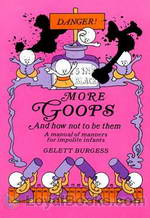 More Goops and How Not to Be Them
Deep in the heart of every parent is the wish, the desire, to have other adults tell us, in an unsolicited way, just how very polite one’s child is! This perhaps was even more the case in 1903, when Gelett Burgess produced his second book on the Goops. With entertaining cartoons – cariacatures of misbehaving children – he described many different breaches of tact and good manners. Burgess wrote several books of poetry on the Goops, each poem describing some significant way in which an unthoughtful or unkind child could offend polite society and often offering the hope that the listener would never behave that way... | |
By: H. G. Wells (1866-1946) | |
|---|---|
|
First and Last Things
| |
By: William James (1842-1910) | |
|---|---|
 Essays in Radical Empiricism
William James (1842 – 1910) was a pioneering American psychologist and philosopher. He wrote influential books on the young science of psychology, educational psychology, psychology of religious experience and mysticism, and the philosophies of pragmatism and Radical Empiricism. Essays in Radical Empiricism is a collection edited and published posthumously by his colleague and biographer Ralph Barton Perry in 1912. It was assembled from a collection of reprinted journal articles published from 1904–1905 which James had deposited in August 1906 at Harvard University, for supplemental use by his students. | |
|
Varieties of Religious Experience
The Varieties of Religious Experience: A Study in Human Nature is a book by the Harvard psychologist and philosopher William James that comprises his edited Gifford Lectures on "Natural Theology" delivered at the University of Edinburgh in Scotland between 1901 and 1902. These lectures concerned the nature of religion and the neglect of science, in James' view, in the academic study of religion. Soon after its publication, the book found its way into the canon of psychology and philosophy, and has remained in print for over a century. | |
|
Pragmatism
'Pragmatism' contains a series of public lectures held by William James in Boston 1906–7. James provides a popularizing outline of his view of philosophical pragmatism while making highly rhetorical and entertaining lashes towards rationalism and other competing schools of thought. James is especially concerned with the pragmatic view of truth. True beliefs should be defined as, according to James, beliefs that can successfully assist people in their everday life. This is claimed to not be relativism... | |
|
The Will to Believe : and Other Essays in Popular Philosophy
| |
|
Meaning of Truth
| |
|
Memories and Studies
| |
By: M. M. Mangasarian (1859-1943) | |
|---|---|
 The Truth About Jesus. Is He a Myth?
The following work offers in book form the series of studies on the question of the historicity of Jesus, presented from time to time before the Independent Religious Society in Orchestra Hall, Chicago, 1909. No effort has been made to change the manner of the spoken, into the more regular form of the written, word. | |
By: Friedrich Schiller (1759-1805) | |
|---|---|
|
Philosophical Letters of Frederich Schiller
| |
By: Okakura Kakuzo (1863-1913) | |
|---|---|
 The Book of Tea
The Book of Tea was written by Okakura Kakuzo in the early 20th century. It was first published in 1906, and has since been republished many times. – In the book, Kakuzo introduces the term Teaism and how Tea has affected nearly every aspect of Japanese culture, thought, and life. The book is noted to be accessibile to Western audiences because though Kakuzo was born and raised Japanese, he was trained from a young age to speak English; and would speak it all his life, becoming proficient at communicating his thoughts in the Western Mind... | |
By: John Ruskin (1819-1900) | |
|---|---|
 Lectures on Landscape
A series of lectures on landscape painting delivered at Oxford in 1871, by artist, critic, and social commentator, John Ruskin. | |
|
The Ethics of the Dust
| |
By: John Locke (1632-1704) | |
|---|---|
|
Essay Concerning Humane Understanding
John Locke's essays on human understanding answers the question “What gives rise to ideas in our minds?”. In the first book Locke refutes the notion of innate ideas and argues against a number of propositions that rationalists offer as universally accepted truth. In the second book Locke elaborates the role played by sensation, reflection, perception and retention in giving rise to simple ideas. Then he elaborates on how different modes, substances and relations of simple ideas (of the same kind) give rise to complex ideas v... | |
By: Epictetus (c.55-135) | |
|---|---|
 The Golden Sayings of Epictetus
Aphorisms from the Stoic Greek. | |
By: George Santayana (1863-1952) | |
|---|---|
 Some Turns of Thought in Modern Philosophy
Before the beginning of World War II, during the time of the Modernist movement in philosophy, George Santayana wrote these five descriptive essays. He examined John Locke’s sensationalism, British Idealism, the “Theory of Relativity”, Freud’s psychology, and Julien Benda’s preachment on the relations between God and the world. [Summary written by Gary Gilberd] | |
|
The Life of Reason volume 1
The Life of Reason, subtitled "the Phases of Human Progress", is a book published in five volumes from 1905 to 1906, by Spanish-born American philosopher George Santayana (1863-1952). It consists of Reason in Common Sense, Reason in Society, Reason in Religion, Reason in Art, and Reason in Science. The work is considered to be the most complete expression of Santayana's moral philosophy [...]. Santayana's philosophy is strongly influenced by the materialism of Democritus and the refined ethics of Aristotle, with a special emphasis on the natural development of ideal ends... | |
|
The Sense of Beauty Being the Outlines of Aesthetic Theory
| |
|
Winds of Doctrine: Studies in Contemporary Opinion
Even before the Great War turned the world upside down, Western civilization was being revolutionized at all levels: intellectually, philosophically, artistically. Noted positivist philosopher George Santayana published this volume on the eve of the War, trying to portray the status of philosophy and theology at that moment by analyzing six significant topics: 1. the intellectual "temper" of the age 2. the clash between Modernism and Christianity 3. the new idealism of Henri Bergson 4. the new skepticism of Bertrand Russell 5. Shelley's fusion of philosophy and poetry 6. the so-called "genteel" tradition in American philosophy. | |
By: Peter Kropotkin (1842-1921) | |
|---|---|
 The Conquest of bread
In this work, Kropotkin points out what he considers to be the fallacies of the economic systems of feudalism and capitalism, and how he believes they create poverty and scarcity while promoting privilege. He goes on to propose a more decentralised economic system based on mutual aid and voluntary cooperation, asserting that the tendencies for this kind of organisation already exist, both in evolution and in human society. | |
By: Friedrich Nietzsche (1844-1900) | |
|---|---|
|
Case of Wagner / Nietzsche Contra Wagner / Selected Aphorisms
A collection of three of Nietzsche's writings concerning the music of Wagner. In particular, he relates Wagner's music as degenerate, unrefined and unintelligent and relates it to a gradually degenerating German culture and society. The translator provides a detailed introduction. | |
By: Friedrich Wilhelm Nietzsche (1844-1900) | |
|---|---|
|
Homer and Classical Philology
| |
|
We Philologists Complete Works of Friedrich Nietzsche, Volume 8
| |
|
Thoughts out of Season Part I
| |
By: Samuel Butler (1835-1902) | |
|---|---|
 Erewhon
Erewhon, or Over the Range is a novel by Samuel Butler, published anonymously in 1872. The title is also the name of a country, supposedly discovered by the protagonist. In the novel, it is not revealed in which part of the world Erewhon is, but it is clear that it is a fictional country. Butler meant the title to be read as the word Nowhere backwards, even though the letters “h” and “w” are transposed. It is likely that he did this to protect himself from accusations of being unpatriotic, although Erewhon is obviously a satire of Victorian society. | |
|
Erewhon Revisited
| |
|
Selections from Previous Works and Remarks on Romanes' Mental Evolution in Animals
| |
By: Martin Luther (1483-1546) | |
|---|---|
|
Martin Luther's 95 Theses
| |
By: Rupert Brooke | |
|---|---|
 Collected Poems of Rupert Brooke
Rupert Chawner Brooke (August 3, 1887 – April 23, 1915) was an English poet known for his idealistic War Sonnets written during the First World War (especially The Soldier), as well as for his poetry written outside of war, especially The Old Vicarage, Grantchester and The Great Lover. He was also known for his boyish good looks, which prompted the Irish poet William Butler Yeats to describe him as “the handsomest young man in England”. | |
By: Niccolò Machiavelli (1469-1527) | |
|---|---|
|
Machiavelli, Volume I
| |
By: Herbert Spencer (1820-1903) | |
|---|---|
 The Philosophy of Style
“The Philosophy of Style,” explored a growing trend of formalist approaches to writing. Highly focused on the proper placement and ordering of the parts of an English sentence, [Spencer] created a guide for effective composition. Spencer’s aim was to free prose writing from as much “friction and inertia” as possible, so that the reader would not be slowed by strenuous deliberations concerning the proper context and meaning of a sentence. | |
|
Essays: Scientific, Political, & Speculative, Vol. I
| |
By: Charlotte Perkins Gilman (1860-1935) | |
|---|---|
 Herland
Herland is a utopian novel from 1915, written by feminist Charlotte Perkins Gilman. The book describes an isolated society comprised entirely of Aryan women who reproduce via parthenogenesis (asexual reproduction). The result is an ideal social order, free of war, conflict and domination. It first appeared as a serial in Perkin’s monthly magazine Forerunner. | |
By: Winston Churchill (1871-1947) | |
|---|---|
|
The Inside of the Cup
| |
By: Henri Bergson (1859-1941) | |
|---|---|
|
Laughter : an Essay on the Meaning of the Comic
| |
By: Marcus Tullius Cicero (106 BC - 43 BC) | |
|---|---|
|
Academica
| |
|
The Academic Questions, Treatise De Finibus, and Tusculan Disputations, of M.T. Cicero, With a Sketch of the Greek Philosophers Mentioned by Cicero
| |
By: Christopher Marlowe (1564-1593) | |
|---|---|
 The Jew of Malta
Christopher “Kit” Marlowe (baptised 26 February 1564 – 30 May 1593) was an English dramatist, poet, and translator of the Elizabethan era. The foremost Elizabethan tragedian before William Shakespeare, he is known for his magnificent blank verse, his overreaching protagonists, and his own untimely death. The Jew of Malta (1589) is an original story of religious conflict, intrigue, and revenge, set against a backdrop of the struggle for supremacy between Spain and the Ottoman Empire in the Mediterranean... | |
By: William Walker Atkinson (1862-1932) | |
|---|---|
|
Series of Lessons in Raja Yoga
The Book talks on the internal world of the self. The real nature of the subconscious mind, the way to control it, how ego comes into play and most frequently asked questions like "Who am I" are attempted to answer. | |
By: Blaise Pascal (1623-1662) | |
|---|---|
|
Pascal's Pensées
| |
By: Inazo Nitobe (1862-1933) | |
|---|---|
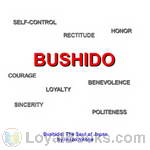 Bushido: The Soul of Japan
Bushido: The Soul of Japan written by Inazo Nitobe was one of the first books on samurai ethics that was originally written in English for a Western audience, and has been subsequently translated into many other languages (also Japanese). Nitobe found in Bushido, the Way of the Warrior, the sources of the virtues most admired by his people: rectitude, courage, benevolence, politeness, sincerity, honor, loyalty and self-control, and he uses his deep knowledge of Western culture to draw comparisons with Medieval Chivalry, Philosophy, and Christianity. | |
By: Alfred North Whitehead (1861-1947) | |
|---|---|
 The Concept of Nature
In The Concept of Nature, Alfred North Whitehead discusses the interrelatedness of time, space, and human perception.The idea of objects as ‘occasions of experience’, arguments against body-mind duality and the search for an all-encompassing ‘philosophy of nature’ are examined, with specific reference to contemporary (Einstein, with whose theory of relativity he has some complaints) and ancient (Plato, Aristotle) approaches. | |
By: Brontë sisters | |
|---|---|
 Selected Poems by Currer, Ellis and Acton Bell
Poems by Currer, Ellis and Acton Bell was a volume of poetry published jointly by the three Bronte sisters, Charlotte, Emily and Anne in 1846, and their first work to ever go in print. To evade contemporary prejudice against female writers, the Bronte sisters adopted androgynous first names. Marked by profound sentiments, gravity and melodious harmony, the poems are strewn on the fields of soulful love, rueful reminiscence and the immortal yearnings of a Christian soul, and represent a fragrant assemblage of noetic flowers from the glebes of olden England... | |
By: George Berkeley (1685-1753) | |
|---|---|
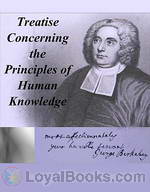 A Treatise Concerning the Principles of Human Knowledge
A Treatise Concerning the Principles of Human Knowledge, Part 1 (Commonly called “Treatise” when referring to Berkeley’s works) is a 1710 work by the Irish Empiricist philosopher George Berkeley. It largely seeks to refute the claims made by his contemporary John Locke about the nature of human perception. Both Locke and Berkeley agreed that there was an outside world, and it was this world which caused the ideas one has within one’s mind. Berkeley sought to prove that the outside world was also composed solely of ideas, suggesting that “Ideas can only resemble Ideas”... | |
 Three Dialogues Between Hylas and Philonous
Berkeley uses Hylas as his primary contemporary philosophical adversary, John Locke. A Hylas is featured in Greek mythology and the name Hylas is derived from an ancient Greek word for “matter” which Hylas argues for in the dialogues. Philonous translates as “lover of mind.” In The First Dialogue, Hylas expresses his disdain for skepticism, adding that he has heard Philonous to have “maintained the most extravagant opinion… namely, that there is no such thing as material substance in the world.” Philonous argues that it is actually Hylas who is the skeptic and that he can prove it. Thus, a philosophical battle of wit begins. | |
|
A Essay Towards a New Theory of Vision
| |
By: Desiderius Erasmus (1466/69-1536) | |
|---|---|
 The Praise of Folly
The Praise of Folly (Greek title: Morias Enkomion (Μωρίας Εγκώμιον), Latin: Stultitiae Laus, sometimes translated as In Praise of Folly, Dutch title: Lof der Zotheid) is a satirical essay written in 1509 by Desiderius Erasmus of Rotterdam (1466/69-1536). It is considered one of the most influential works of literature in Western civilization and one of the catalysts of the Protestant Reformation.It starts off with a satirical learned encomium after the manner of the Greek satirist... | |