 |
Books Should Be Free Loyal Books Free Public Domain Audiobooks & eBook Downloads |
|
|
|
Books Should Be Free Loyal Books Free Public Domain Audiobooks & eBook Downloads |
|
Philosophy Books |
|---|
|
Book type:
Sort by:
View by:
|
By: Bertrand Russell (1872-1970) | |
|---|---|
 The Problems of Philosophy
Published in 1912, The Problems of Philosophy by Bertrand Russell is one of his most popular books. It renders philosophical issues and questions in a way in which they become relevant and accessible to the man or woman on the street, provoking them to devote time and effort into thinking about these aspects of life. Here, the great philosopher and humanist thinker Bertrand Russell examines the importance of empirical (that which can be verified by observation or experience rather than deduced from logic or reasoning) thinkers like David Hume and George Berkeley the Anglo-Irish philosopher and scientist... | |
 Proposed Roads to Freedom
Bertrand Russell, 3rd Earl Russell (1872 – 1970) was a British philosopher, logician, mathematician, political activist and Nobel laureate. He led the British “revolt against idealism” in the early 1900s and is considered one of the founders of analytic philosophy along with his predecessor Gottlob Frege and his protégé Ludwig Wittgenstein. In this book, written in 1918, he offers his assessment of three competing streams in the thought of the political left: Marxian socialism, anarchism and syndicalism. | |
 Mysticism and Logic and Other Essays
| |
By: Blaise Pascal (1623-1662) | |
|---|---|
|
Pascal's Pensées
| |
By: Bliss Perry (1860-1954) | |
|---|---|
 Fishing with a Worm
Fishing with a Worm by Bliss Perry includes the poignant and philisophical observations of a fly fisherman lured by the worm. Bliss Perry was a professor of literature at Princeton and Harvard Universities and spent time in Vermont writing and fly fishing. | |
By: Brontë sisters | |
|---|---|
 Selected Poems by Currer, Ellis and Acton Bell
Poems by Currer, Ellis and Acton Bell was a volume of poetry published jointly by the three Bronte sisters, Charlotte, Emily and Anne in 1846, and their first work to ever go in print. To evade contemporary prejudice against female writers, the Bronte sisters adopted androgynous first names. Marked by profound sentiments, gravity and melodious harmony, the poems are strewn on the fields of soulful love, rueful reminiscence and the immortal yearnings of a Christian soul, and represent a fragrant assemblage of noetic flowers from the glebes of olden England... | |
By: BS Murthy | |
|---|---|
 Bhagvad-Gita: Treatise of Self-help
The spiritual ethos and the philosophical outlook that the Bhagvad - Gita postulates paves the way for the liberation of man, who, as Rousseau said, ‘being born free, is everywhere in chains’. But equally it is a mirror of human psychology, which enables man to discern his debilities for appropriate redressal. All the same, the boon of an oral tradition that kept it alive for over two millennia became its bane with the proliferation of interpolations therein. Besides muddying its pristine philosophy, these insertions affect the sequential conformity and structural economy of the grand discourse... | |
By: Carl von Clausewitz (1780-1831) | |
|---|---|
|
On War
A classic work on military strategy by a veteran of the Napoleonic Wars. The author's style is dialectical: he makes two strong but opposing statements and then draws them together to describe many facets of war. Free of technical jargon, and suitable for modern readers. This audiobook is based on a 1909 English translation. | |
By: Caroline Kane Mills Everett (1867-1921) | |
|---|---|
|
Privilege of Pain
We have seen that as mankind rises in the scale of civilization the body becomes increasingly less important. Nevertheless, I wish it to be clearly understood, that I do not maintain that it is preferable to be ill than well, but only that each state has its own peculiar privileges, which are rarely interchangeable. Health and sickness are merely different roads to achievement. The earth requires rain as well as sunshine; we need both tears and laughter; navvies are necessary and so are philosophers... | |
By: Carveth Read (1848-1931) | |
|---|---|
|
Logic Deductive and Inductive
| |
By: Charles Alexander Eastman (1858-1939) | |
|---|---|
 The Soul of the Indian
"We also have a religion which was given to our forefathers, and has been handed down to us their children. It teaches us to be thankful, to be united, and to love one another! We never quarrel about religion." | |
By: Charles Babbage (1791-1871) | |
|---|---|
|
Passages from the Life of a Philosopher
Some men write their lives to save themselves from ennui, careless of the amount they inflict on their readers. Others write their personal history, lest some kind friend should survive them, and, in showing off his own talent, unwittingly show them up. Others, again, write their own life from a different motive—from fear that the vampires of literature might make it their prey. I have frequently had applications to write my life, both from my countrymen and from foreigners. Some caterers for the public offered to pay me for it... | |
By: Charles Bradlaugh (1833-1891) | |
|---|---|
|
Ancient and Modern Celebrated Freethinkers
| |
|
Theological Essays
Charles Bradlaugh was an English political activist and atheist who founded the National Secular Society in 1866. In the 23 "Theological Essays" collected here, he discusses his views on various topics such as whether man has a soul and if there is a God; who was Jesus Christ and the Apostles. He also deals in depth with various books of the Bible, gives an overview of the history of heresy, and tries to answer the question when the Gospels were written. | |
By: Charles Coppens (1835-1920) | |
|---|---|
|
Moral Principles and Medical Practice The Basis of Medical Jurisprudence
| |
By: Charles Francis Adams (1835-1915) | |
|---|---|
|
"'Tis Sixty Years Since" Address of Charles Francis Adams; Founders' Day, January 16, 1913
| |
By: Charles Sotheran (1847-1902) | |
|---|---|
|
Percy Bysshe Shelley as a Philosopher and Reformer
| |
By: Charles Stewart Given | |
|---|---|
|
A Fleece of Gold; Five Lessons from the Fable of Jason and the Golden Fleece
| |
By: Charles Wagner (1852-1916) | |
|---|---|
|
The Simple Life
| |
By: Charlotte Mary Yonge (1823-1901) | |
|---|---|
|
Life of John Coleridge Patteson : Missionary Bishop of the Melanesian Islands
| |
By: Charlotte Perkins Gilman (1860-1935) | |
|---|---|
 Herland
Herland is a utopian novel from 1915, written by feminist Charlotte Perkins Gilman. The book describes an isolated society comprised entirely of Aryan women who reproduce via parthenogenesis (asexual reproduction). The result is an ideal social order, free of war, conflict and domination. It first appeared as a serial in Perkin’s monthly magazine Forerunner. | |
By: Christopher Marlowe (1564-1593) | |
|---|---|
 The Jew of Malta
Christopher “Kit” Marlowe (baptised 26 February 1564 – 30 May 1593) was an English dramatist, poet, and translator of the Elizabethan era. The foremost Elizabethan tragedian before William Shakespeare, he is known for his magnificent blank verse, his overreaching protagonists, and his own untimely death. The Jew of Malta (1589) is an original story of religious conflict, intrigue, and revenge, set against a backdrop of the struggle for supremacy between Spain and the Ottoman Empire in the Mediterranean... | |
By: Clarence Darrow (1857-1938) | |
|---|---|
 Crime: Its Cause and Treatment
Clarence Darrow was an American lawyer. He remains notable for his wit and agnosticism, which marked him as one of the most famous American lawyers and civil libertarians.In this book, Darrow expands on his lifelong contention that psychological, physical, and environmental influences—not a conscious choice between right and wrong—control human behavior. To my ears (the reader's), the author has a rather simplistic behaviourist view of human behaviour, but he argues his position with wonderful clarity... | |
By: Confucius (551-479 BC) | |
|---|---|
 The Sayings of Confucius
A treasure trove of wise and pithy sayings, reflections on education, family values, the ideal human being, life and living, politics, art, culture and timeless wisdom, The Sayings of Confucius is indeed an invaluable addition to your bookshelf. Ever since Chinese literary works first began to be translated into European languages, the works of the legendary Chinese philosopher and teacher Confucius, who lived in present day Qufu in the Shandong province of China, more than two thousand years ago, have held universal appeal... | |
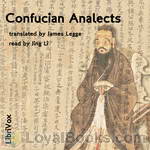 Confucian Analects
The Analects, or Lunyu (simplified Chinese: 论语; traditional Chinese: 論語; pinyin: Lún Yǔ; literally "Classified/Ordered Sayings"), also known as the Analects of Confucius, are considered a record of the words and acts of the central Chinese thinker and philosopher Confucius and his disciples, as well as the discussions they held. Written during the Spring and Autumn Period through the Warring States Period (ca. 475 BC - 221 BC), the Analects is the representative work of Confucianism and continues to have a substantial influence on Chinese and East Asian thought and values today... | |
By: Constantin-F. Volney (1757-1820) | |
|---|---|
|
The Ruins, or, Meditation on the Revolutions of Empires and the Law of Nature
| |
By: Daniel Garrison Brinton (1837-1899) | |
|---|---|
|
The Religious Sentiment Its Source and Aim: A Contribution to the Science and Philosophy of Religion
| |
By: David Hume (1711-1776) | |
|---|---|
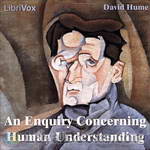 An Enquiry Concerning Human Understanding
The Enquiry Concerning Human Understanding is a shortened and simplified version of Hume’s masterpiece A Treatise of Human Nature. It sought to reach a wider audience, and to dispel some of the virulent criticism addressed toward the former book. In it, Hume explains his theory of epistemology, and argues against other current theories, including those of John Locke, George Berkeley, and Nicolas Malebranche. | |
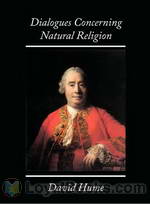 Dialogues Concerning Natural Religion
In Dialogues Concerning Natural Religion, philosopher David Hume examines whether belief in God can be rational. The work takes the form of a debate between three characters: Cleanthes, who argues that the existence and nature of God can be empirically verified; Demea, who argues that God is completely beyond human knowledge; and Philo, a philosophical skeptic widely thought to represent Hume’s own beliefs. Much of the debate centers around Cleanthes’ presentation of the analogical argument from design... | |
 A Treatise Of Human Nature
This book, published in two volumes called “books” by the author, is a treatment of everything from the origin of our ideas to how they are to be divided. It includes important statements of Scepticism and Hume’s experimental method. Part 1 deals with the nature of ideas. Part 2 deals with the ideas of space and time. Part 3 deals with knowledge and probability. Part 4 deals with skeptical and other systems of philosophy, including a discussion of the soul and personal identity.This is a recording of Volume I (or Book 1). Volume II (which contains Books 2 and 3) is in production at the moment. | |
|
Enquiry Concerning the Principles of Morals
| |
By: David Starr Jordan (1851-1931) | |
|---|---|
|
The Philosophy of Despair
| |