 |
Books Should Be Free Loyal Books Free Public Domain Audiobooks & eBook Downloads |
|
|
|
Books Should Be Free Loyal Books Free Public Domain Audiobooks & eBook Downloads |
|
Plays |
|---|
Book type:
Sort by:
View by:
|
By: Lucy Maud Montgomery (1874-1942) | |
|---|---|
 Rilla of Ingleside
Rilla of Ingleside is the eighth book in the Anne of Green Gables series and focuses on the inspiring journey of Rilla Blythe, the youngest daughter of Anne and Gilbert, as she transforms from a carefree young girl into an enduring young woman swept into the chaos of war. Written from a female perspective, Montgomery accurately depicts a time in history, as she provides a contemporaneous account of the war and serves up the most emotional book in the series. Set during the First World War, the novel explores themes of coming of age, love, separation, and most importantly women’s roles during the war... | |
By: William Shakespeare (1564-1616) | |
|---|---|
 King Lear
Considered to be one of Shakespeare's greatest plays, the tragedy King Lear portrays some of the darkest aspects of human nature that can be found in literature. The helplessness of the human condition, as we fall prey to our destinies, the injustice and random cruelties practiced by people, suffering and humiliation, the lust for power and the greed for wealth are all depicted in this magnificent play. And through it all, runs the golden thread of love and sacrifice, daughterly affection and the true nature of our relationship with our parents... | |
 Othello
In seventeenth century Venice, a wealthy and debauched man discovers that the woman he is infatuated with is secretly married to a Moorish general in the Venetian army. He shares his grief and rage with a lowly ensign in the army who also has reason to hate the general for promoting a younger man above him. The villainous ensign now plots to destroy the noble general in a diabolical scheme of jealousy, paranoia and murder, set against the backdrop of the bloody Turkish-Venetian wars. This timeless tale, Othello The Moor of Venice was one of the ten famous tragedies that William Shakespeare wrote... | |
 King Henry IV
King Henry IV, Part 1 is the second of Shakespeare’s eight Wars of the Roses history plays, with events following those of King Richard II. As the play opens, King Henry IV (formerly Henry Bolingbroke) and Henry Percy (Hotspur) argue over the disposition of prisoners from the Battle of Holmedon. The King’s attitude toward Mortimer and the Percy family prompts them to plot rebellion. In the meantime, his son Prince Hal is living the low life in the company of Sir John Falstaff. As the time of battle nears, Prince Hal joins his father and is given a high command... | |
 The Merchant of Venice
William Shakespeare's The Merchant of Venice was probably written between 1596 and 1598, and was printed with the comedies in the First Folio of 1623. Bassanio, an impoverished gentleman, uses the credit of his friend, the merchant Antonio, to borrow money from a wealthy Jew, Shylock. Antonio pledges to pay Shylock a pound of flesh if he defaults on the loan, which Bassanio will use to woo a rich heiress, Portia. A subplot concerns the elopement of Shylock's daughter Jessica with a Christian, Bassanio's friend Lorenzo... | |
 The Tempest
Banished from his own lands by a usurping brother, Prospero and his daughter Miranda have been living on a deserted island for years, until fate brings the brother within the range of Prospero's powers. Will he seek revenge, or reconcilement? | |
 King Richard II
The Tragedy of King Richard II, by William Shakespeare, is the first of the history series that continues with Parts 1 and 2 of King Henry IV and with The Life of King Henry V. At the beginning of the play, Richard II banishes his cousin Henry Bolingbroke from England. Bolingbroke later returns with an army and the support of some of the nobility, and he deposes Richard. Richard is separated from his beloved Queen, imprisoned, and later murdered. By the end of the play, Bolingbroke has been crowned King Henry IV... | |
 Much Ado About Nothing
Written around the middle of his career, Much Ado About Nothing is one of Shakespeare's great festive comedies. The men are back from the war, and everyone is ready for romance. The dashing young Claudio falls for Hero, the daughter of Leonato, governor of Messina, and his friend Don Pedro helps him secure her affection. These youthful lovers are contrasted with the more experienced (and more cynical) Benedick and Beatrice, who have to be tricked into falling in love. Don Pedro's bastard brother, Don John, provides the intrigue, and the dimwitted constable Dogberry provides the laughs. | |
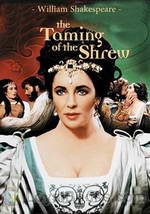 The Taming of the Shrew
The Taming of the Shrew is one of Shakespeare's earliest comedies, and was inspired by classical Roman comedy and the Italian commedia dell'arte. Baptista Minola, a rich gentleman of Padua, has two daughters: Katherina, renowned for her sharp tongue, and Bianca, who is sought after by multiple suitors. Baptista decides that Bianca cannot marry until her elder sister finds a husband. Enter Petruchio, who has come to "wive it wealthily in Padua," and who is convinced by Bianca's suitors to woo Katherina. The play ultimately poses the question of who is the bigger shrew: Kate or Petruchio. The subplot involves the subterfuge employed by Lucentio to woo the lovely Bianca. | |
 Richard III
Richard III is an early history play probably written and performed around 1592-93. It is the culmination of Shakespeare's earlier three plays about Henry VI, and chronicles the bloody career of Richard, Duke of Gloucester. As the play opens, the Wars of the Roses are over, King Edward IV (Richard's brother) is on the throne, and all is ostensibly well. The problem? Richard wants to be king - and he'll stop at nothing to realize his ambition. | |
 All's Well That Ends Well
Despite its optimistic title, Shakespeare's All's Well That Ends Well has often been considered a "problem play." Ostensibly a comedy, the play also has fairy tale elements, as it focuses on Helena, a virtuous orphan, who loves Bertram, the haughty son of her protectress, the Countess of Rousillon. When Bertram, desperate for adventure, leaves Rousillon to serve in the King's army, Helena pursues him. | |
 The Comedy of Errors
The Comedy of Errors is one of William Shakespeare's earliest plays, believed to have been written between 1592 and 1594. It is his shortest and one of his most farcical comedies, with a major part of the humour coming from slapstick and mistaken identity, in addition to puns and word play. The Comedy of Errors tells the story of two sets of identical twins that were accidentally separated at birth. Antipholus of Syracuse and his servant, Dromio of Syracuse, arrive in Ephesus, which turns out to be the home of their twin brothers, Antipholus of Ephesus and his servant, Dromio of Ephesus... | |
 Henry V
After the turmoil and uncertainty of Henry IV a new era appears to dawn for England with the accession of the eponymous Henry V. In this sunny pageant, the Chorus guides us along Henry's glittering carpet ride of success as the new king completes his transformation from rebellious wastrel to a truly regal potentate. Of course, there is an underlying feeling that the good times won't last, and this is all the more reason to enjoy the Indian summer before the protracted and bitter fall of the house of Lancaster. | |
 The Winter's Tale
Mad with jealousy, King Leontes of Sicilia orders his best friend Polixenes killed, his child abandoned, and his wife put on trial for adultery. Sixteen years later, Perdita, raised as a shepherd's daughter, falls in love with Polixenes's royal son and returns to her father's kingdom. | |
 Measure For Measure
Generally considered one of Shakespeare's problem plays, Measure for Measure examines the ideas of sin and justice. Duke Vincentio turns Vienna's rule over to the corrupt Angelo, who sentences Claudio to death for having impregnated a woman before marriage. His sister Isabella, a novice nun, pleads for her brother's life, only to be told that he will be spared if she agrees to relinquish her virginity to Angelo. | |
 Love's Labour's Lost
Love's Labour's Lost is an early comedy by William Shakespeare. Ferdinand, the King of Navarre, and his three friends take a vow of study and seclusion for three years, during which they are forbidden to see or speak to women. Their vows are immediately tested by the arrival of the Pricess of France and her three ladies to the King's court. | |
 Titus Andronicus
Titus Andronicus may be Shakespeare's earliest tragedy; it is believed to have been written in the early 1590s. It depicts a Roman general who is engaged in a cycle of revenge with his enemy Tamora, the Queen of the Goths. The play is by far Shakespeare's bloodiest work. It lost popularity during the Victorian era because of its gore, and it has only recently seen its fortunes revive. | |
 Antony and Cleopatra
Antony and Cleopatra is a tragedy by William Shakespeare, believed to have been written sometime between 1603 and 1607. It was first printed in the First Folio of 1623. The plot is based on Thomas North's translation of Plutarch's Life of Marcus Antonius and follows the relationship between Cleopatra and Mark Antony from the time of the Parthian War to Cleopatra's suicide. The major antagonist is Octavius Caesar, one of Antony's fellow triumviri and the future first emperor of Rome. The tragedy is a Roman play characterized by swift, panoramic shifts in geographical locations and in registers, alternating between sensual, imaginative Alexandria and the more pragmatic, austere Rome. | |
 Henry VI
Henry VI, Part 1 is a history play by William Shakespeare, believed to have been written in 1591, and set during the lifetime of King Henry VI of England. Whereas 2 Henry VI deals with the King's inability to quell the bickering of his nobles, and the inevitability of armed conflict, and 3 Henry VI deals with the horrors of that conflict, 1 Henry VI deals with the loss of England's French territories and the political machinations leading up to the Wars of the Roses, as the English political system is torn apart by personal squabbles and petty jealousy. | |
 Cymbeline
Cymbeline is one of Shakespeare's late romances, which (like The Tempest and The Winter's Tale) combines comedy and tragedy. Imogen, the daughter of King Cymbeline of Britain, angers her father when she marries Posthumus, a worthy but penniless gentleman. The King banishes Posthumus, who goes to Rome, where he falls prey to the machinations of Iachimo, who tries to convince him that Imogen will be unfaithful. Meanwhile, the Queen (Imogen's stepmother) plots against her stepdaughter by trying to plan a match between Imogen and her worthless son Cloten. | |
 The Two Gentlemen of Verona
The Two Gentlemen of Verona is the earliest comedy written by Shakespeare (and possibly his first play), probably written around 1590-91. It focuses on two friends, Valentine and Proteus, whose friendship is disrupted by their mutual passion for the lovely Silvia. Proteus jilts Julia in order to pursue Silvia; she responds by enlisting the help of her maid Lucetta to dress as a boy and go after Proteus. The play also includes some wonderfully comic supporting characters, particularly Launce and his scene-stealing dog Crab. | |
 Troilus and Cressida
Troilus and Cressida is Shakespeare's "problem" play about the Trojan War. As the opening Chorus tells us, the play "begins in the middle" of the epic conflict, and counterpoints the drama of battle with the romance of the title characters. Just as Agamemnon and his Greek forces (particularly the smooth-tongued Ulysses) attempt to woo the invincible Achilles to resume fighting on their side, the Trojan go-between Pandarus tries to bring together Troilus, a son of King Priam, with his niece, the lovely Cressida. | |
 Henry VIII
This is Shakespeare's dutiful tribute to one of the most imposing and terrifying rulers in European history. The kingdom trembles as the giant monarch storms through his midlife crisis, disposing of the faithful Katharine of Aragon and starting a new life and, the king hopes, a line of succession with the captivating young Anne Bullen. Unlike his predecessors, Henry has no doubt about the security of his tenure on the throne, and dominates the royal court with absolute authority. The extent of the King's power is graphically illustrated by the fate of the Duke of Buckingham, who goes calmly to execution while deploring, not the unjust despotism of the king... | |
 King John
The Life and Death of King John, a history play by William Shakespeare, dramatises the reign of John, King of England (ruled 1199–1216), son of Henry II of England and Eleanor of Aquitaine and father of Henry III of England. It is believed to have been written in the mid-1590s but was not published until it appeared in the First Folio in 1623. John (24 December 1166 – 19 October 1216), also known as John Lackland or Softsword, was King of England from 6 April 1199 until his death. His reign... | |
 The Merry Wives of Windsor
The Merry Wives of Windsor is a comedy by William Shakespeare, first published in 1602, though believed to have been written prior to 1597. It features the fat knight Sir John Falstaff, and is Shakespeare's only play to deal exclusively with contemporary Elizabethan era English middle class life. | |
 Timon of Athens
The Life of Timon of Athens is a play by William Shakespeare about the fortunes of an Athenian named Timon (and probably influenced by the philosopher of the same name, as well), generally regarded as one of his most obscure and difficult works. Originally grouped with the tragedies, it is generally considered such, but some scholars group it with the problem plays. The play has caused considerable debate among scholars. It is oddly constructed, with several lacunae (gaps) and for this reason is often described as unfinished, multi-authored, and/or experimental... | |
By: Oscar Wilde (1854-1900) | |
|---|---|
 An Ideal Husband
This story opens at a fashionable dinner party in Sir Robert Chiltern's home in the heart of London's stylish Grosvenor Square. One of Lady Chiltern's old school-friends, Mrs. Cheveley, a woman with a dubious past, accosts Sir Robert and threatens to expose a financial crime that he had once participated in, unless he agrees to finance a fraudulent construction project that she's promoting. Lady Chiltern is astounded when her husband who had been the severest critic of this project suddenly begins to speak in its favor... | |
 Lady Windermere's Fan
Lady Windermere’s Fan: A Play About a Good Woman is a four act comedy by Oscar Wilde, published in 1893. As in some of his other comedies, Wilde satirizes the morals of Victorian society, and attitudes between the sexes. The action centres around a fan given to Lady Windermere as a present by her husband, and the ball held that evening to celebrate her 21st birthday. | |
 Salome
The original 1891 version of the play was in French. Three years later an English translation was published. The play tells in one act the Biblical story of Salome, stepdaughter of the tetrarch Herod Antipas, who, to her stepfather's dismay but to the delight of her mother Herodias, requests the head of Iokanaan (John the Baptist) on a silver platter as a reward for dancing the Dance of the Seven Veils. | |
 A Florentine Tragedy and La Sainte Courtisane
Two short fragments: an unfinished and a lost play. A Florentine Tragedy, left in a taxi (not a handbag), is Wilde’s most successful attempt at tragedy – intense and domestic, with surprising depth of characterisation. It was adapted into an opera by the Austrian composer Alexander Zemlinsky in 1917. La Sainte Courtisane, or The Woman Covered in Jewels explores one of Wilde’s great idées fixes: the paradox of religious hedonism, pagan piety. Both plays, Wildean to their core, revel in the profound sadness that is the fruit of the conflict between fidelity and forbidden love... | |
 A Woman of No Importance
A Woman of No Importance is a play by Irish playwright Oscar Wilde. The play premièred on 19 April 1893 at London's Haymarket Theatre. It is a testimony of Wilde's wit and his brand of dark comedy. It looks in particular at English upper class society and has been reproduced on stages in Europe and North America since his death in 1900. | |
 The Duchess of Padua
Guido Ferranti, a young man, travels to Padua with his friend Ascanio after receiving a mysterious letter from a stranger, claiming to know the true secret of Guido's birth. His plan of revenge goes awry, however, when he falls in love with his enemy's beautiful wife, the Duchess of Padua. | |
 Vera; or the Nihilists
Vera; or, The Nihilists is a play by Oscar Wilde. It is a melodramatic tragedy set in Russia and is loosely based on the story of Vera Zasulich. It was the first play that Wilde wrote. It was produced in the United Kingdom in 1880, and in New York in 1882, but it was not a success and folded in both cities. It is nowadays rarely revived. | |
By: George MacDonald | |
|---|---|
 The Hope of the Gospel
Perhaps most well-known for his fairytales and fantasy stories such as The Golden Key and Phantastes, or for his poetry, George MacDonald was a great spiritual master of the nineteenth century. He spent several years as a minister in his native Scotland; however he was forced to resign his position due to ill health. He had a profound influence on such later writers as G. K. Chesterton and C. S. Lewis – the latter of whom considered MacDonald to be his spiritual father, and edited an anthology of his works... | |
|
The Gifts of the Child Christ
It's the Advent season in London but all is not well in the Greatorex household. All this will change with a surprise on Christmas morning. (Ann Boulais) | |
By: Joseph Conrad (1857-1924) | |
|---|---|
 One Day More
A one-act play. Eccentric Captain Hagberd has been waiting for years for his son to come home from the sea. He has scrimped and saved, outfitting a house for Harry to inherit upon his return, which will be in only "one day more." He has also planned that Harry will marry Bessie, the repressed maiden next door. Note: The recording was done outside, so there will be some ambient noise (airplanes, lawn mowers, birds, children... etc). | |
By: Jerome K. Jerome | |
|---|---|
 Stage Land
A comic look at the curious habits and customs of the inhabitants of ‘Stage Land’. Dedicated to ‘that highly respectable but unnecessarily retiring individual, of whom we hear so much but see so little, “the earnest student of drama” | |
By: John Milton (1608-1674) | |
|---|---|
 Samson Agonistes
“The Sun to me is darkAnd silent as the Moon,When she deserts the nightHid in her vacant interlunar cave.”Milton composes his last extended work as a tragedy according to the classical Unities of Time, Place and Action. Nevertheless it “never was intended for the stage” and is here declaimed by a single reader.Samson the blinded captive, in company with the Chorus of friends and countrymen, receives his visitors on their varying missions and through them his violent story is vividly recalled... | |
By: J. M. Barrie (1860-1937) | |
|---|---|
 The Admirable Crichton
From the author of Peter Pan:Lord Loam, a British peer, considers class divisions to be artificial. He promotes his views during tea-parties where servants mingle with his aristocratic guests, to the embarrassment of all. Crichton, his butler, particularly disapproves of this.Loam, his family, a maid, and Crichton are shipwrecked on a deserted tropical island. The resourceful Crichton is the only one of the party with any practical knowledge. Eventually, social roles are reversed, and Crichton becomes the governor. | |
By: Charles Lamb | |
|---|---|
|
Mr. H
Mr H is a farce that was first performed at Drury Lane in 1806. The plot is slender and revolves around a single rather feeble joke, but the characters are skilfully drawn and the sharp observations of contemporary fashion do much to divert the listener from the weakness of the central theme. More a comedy of manners rather than a true farce, this short play is best enjoyed as a gentle romp through the eccentricities of the Regency period. | |
By: John Galsworthy (1867-1933) | |
|---|---|
|
Skin Game
A small play in three acts. A kind of comic tragedy. The plot tells the story of the interaction between two very different families in rural England just after the end of the First World War. Squire Hillcrist lives in the manor house where his family has lived for generations. He has a daughter, Jill, who is in her late teens; and a wife, Amy, as well as servants and retainers. He is "old money", although his finances are at a bit of low ebb. The other family is the "nouveau riche" Hornblowers,... | |
By: Sir Arthur Conan Doyle (1859-1930) | |
|---|---|
 The Hound of the Baskervilles (dramatic reading)
The Hound of the Baskervilles is the third of four crime novels by Sir Arthur Conan Doyle featuring the detective Sherlock Holmes. Originally serialised in The Strand Magazine from August 1901 to April 1902, it is set largely on Dartmoor in Devon in England's West Country and tells the story of an attempted murder inspired by the legend of a fearsome, diabolical hound. | |
By: Upton Sinclair (1878-1968) | |
|---|---|
|
Naturewoman
The Mastersons, a wealthy Bostonian family, await the arrival of their cousin Anna in the wake of her grandfather's death. Though born in Boston, Anna, who prefers the name Oceana, spent most of her life on a tropical island in the Pacific with her father. A free spirit, her practices and values surrounding proper dress, romance, and entertainment clash with those of her conservative relatives. What will happen as patience and tolerance wear thin for both parties when alluring Oceana catches the... | |
By: Henrik Ibsen | |
|---|---|
 A Doll's House
Nineteenth century attitudes towards marriage, the role of women, morality and the search for identity are brilliantly explored in Henrik Ibsen's three act play, A Doll's House. It was highly controversial and received with a sense of outrage among opinion leaders in Europe. Many thinkers like August Strindberg lashed out at Ibsen for portraying the sacred institution of marriage in such a derogatory way. A Doll's House, written in the original Danish, was first performed at the Royal Theater in Copenhagen in 1879... | |
 Hedda Gabler
Hedda Gabler is a play first published in 1890 by Norwegian playwright Henrik Ibsen. In it, Hedda Gabler, daughter of an aristocratic General, has just returned from her honeymoon with George Tesman, an aspiring young academic, reliable but not brilliant, who has combined research with their honeymoon. The reappearance of Tesman’s academic rival, Eilert Lovborg, throws their lives into disarray. | |
 The Master Builder
Henrik Ibsen's The Master Builder, first published in 1892, is about architect Halvard Solness, who despite personal tragedy (including the death of his two sons) has risen to the top of his profession. He has succeeded partly through ruthless competition and exploitation and partly through a seeming ability to force his will on others. His unhappy wife Aline mourns for their lost life, and resents his interest in various young women, including his bookkeeper Kaia Fosli. Solness disregards the ambitions of other architects, including Knut Brovik and his son Ragnar, and seeks solace in the advice of family physician and friend Dr... | |
 The Lady From the Sea
The title character in Ibsen's drama, Ellida Wangel, is married to a prosperous doctor, but feels stifled by her roles as wife and stepmother to her husband's two daughters by a previous marriage, Hilde and Bolette. Ten years earlier she had promised to marry another man - and on a sultry summer day, he comes back to her. Ellida must decide whether to choose the safety of her life with Wangel, or to yield to the siren song of the sea. | |
 Little Eyolf
Henrik Ibsen's 1894 play Little Eyolf tells the story of the Allmers family: the father, Alfred, his wife Rita, their crippled nine-year-old son Eyolf, and Alfred's sister Asta. As the play begins, Alfred has just gotten back from a trip to the mountains, and resolves to spend more time with his son, rather than on intellectual pursuits. Asta is romantically pursued by Borgheim, an engineer, while the cracks in Alfred and Rita's marriage gradually reveal themselves. The family receives a visit from the Rat-Wife, and are never the same again. | |
|
Enemy of the People
A small coastal town in Norway is experiencing an economic boom from its newly found hot springs. When Dr. Thomas Stockmann finds that the waters are contaminated and dangerous, the people refuse to accept his statement, and Dr. Stockmann's friends turn against him. | |
|
Pillars of Society
Pillars of Society was Ibsen's first successful realist drama, first performed in 1877. Karsten Bernick is the dominant businessman in a small coastal town in Norway, with interests in shipping and shipbuilding in a long-established family firm. Now he is planning his most ambitious project yet, backing a railway which will connect the town to the main line and open a fertile valley which he has been secretly buying up. Suddenly his past explodes on him with the arrival of Lona Hessel, the woman he once jilted, and Johan Tonnesen, who left town in disgrace fifteen years earlier. | |
|
John Gabriel Borkman
John Gabriel Borkman is the penultimate play of the Norwegian playwright Henrik Ibsen, written in 1896. The Borkman family fortunes have been brought low by the imprisonment of John Gabriel who used his position as a bank manager to illegally speculate with his investors' money. The action of the play takes place eight years after Borkman's release when John Gabriel Borkman, Mrs. Borkman, and her twin sister Ella Rentheim battle over the future of young Erhart Borkman. Though John Gabriel Borkman... | |
By: Anton Chekhov (1860-1904) | |
|---|---|
 The Seagull
The Seagull (Russian: Чайка, Chayka) is the first of what are generally considered to be the four major plays by the Russian dramatist Anton Chekhov. The play was written in 1895 and first produced in 1896. It dramatises the romantic and artistic conflicts between four characters: the ingenue Nina, the fading leading lady Irina Arkadina, her son the experimental playwright Konstantin Treplyov, and the famous middlebrow story writer Trigorin. | |
 The Cherry Orchard
The Cherry Orchard is Russian playwright Anton Chekhov's last play. It premiered at the Moscow Art Theatre 17 January 1904 in a production directed by Constantin Stanislavski. Chekhov intended this play as a comedy and it does contain some elements of farce; however, Stanislavski insisted on directing the play as a tragedy. Since this initial production, directors have had to contend with the dual nature of this play. The play concerns an aristocratic Russian woman and her family as they return to the family's estate (which includes a large and well-known cherry orchard) just before it is auctioned to pay the mortgage... | |
|
Uncle Vanya
Uncle Vanya (subtitled “Scenes From Country Life”) is a tragicomedy by Anton Chekhov. It is set on the failing country estate of a retired professor, Serebrakoff, who returns after a long absence with his beautiful young wife, and throws the household into confusion. Rivalry, unrequited love, illicit romance, and attempted suicide are the result, punctuated throughout by Chekhov’s sad, wistful humor. | |
By: Oliver Goldsmith (1730-1774) | |
|---|---|
|
She Stoops to Conquer
In She Stoops to Conquer, or The Mistakes of a Night, a young lady pretends to be a servant in order to win the notice of a young man who is painfully shy around women of his own class. Hilarious misadventures and mayhem ensue before matters are neatly wrapped up at the end. This play, one of the great English comedies, was first performed in 1773 and continues to be very popular with audiences today. | |
By: Aphra Behn (1640-1689) | |
|---|---|
 Rover (Part One)
| |
By: George Bernard Shaw (1856-1950) | |
|---|---|
 Arms and the Man
Arms and the Man is a comedy by George Bernard Shaw that takes place in 1885, during the Serbo-Bulgarian War. Raina Petkoff is engaged to the gallant Sergius Saranoff, hero of the recent Bulgarian victory over the Serbs. But she is distracted by the abrupt arrival of Captain Bluntschli, a Swiss mercenary who fought for the Serbian army. He takes refuge in her bedroom after the battle and although he is initially threatening, reveals that he carries chocolates instead of bullets. Will Raina marry the posturing Sergius or the chocolate cream soldier? Extra intrigue is provided by saucy servant girl Louka, her dour fiance Nicola, and Raina's hand-wringing parents. | |
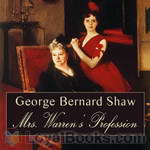 Mrs. Warren's Profession
The story centers on the relationship between Mrs Kitty Warren, a rich woman, described by the author as "on the whole, a genial and fairly presentable old blackguard of a woman" and her daughter, Vivie. Mrs Warren is a middle-aged woman whose Cambridge-educated daughter, Vivie, is horrified to discover the morally questionable way her mother acquired her fortune. | |
|
The Doctor's Dilemma
The Doctor's Dilemma is about Dr. Colenso Ridgeon, who has recently been knighted because of a miraculous new treatment he developed for tuberculosis. As his friends arrive to congratulate him on his success, he is visited by two figures who present him with a difficult decision. He has room for one more patient in his clinic; should he give it to Louis Dubedat, a brilliant but absolutely immoral artist, or Dr. Blenkinsop, a poor and rather ordinary physician who is a truly good person? Dr. Ridgeon's dilemma is heightened when he falls for Jennifer Dubedat, the artist's wife, who is innocent of her husband's profligacy. | |
By: Friedrich Schiller (1759-1805) | |
|---|---|
 Mary Stuart
Schiller's tragedy depicts the final days of Mary, Queen of Scots, who has been imprisoned by her cousin, Queen Elizabeth I, because of her potential claim on the English throne. The action of the play revolves around an attempt to rescue Mary from prison and Elizabeth's indecision over whether or not to have her executed. The 1801 translation is by Joseph Mellish, a friend of Schiller's. | |