 |
Books Should Be Free Loyal Books Free Public Domain Audiobooks & eBook Downloads |
|
|
|
Books Should Be Free Loyal Books Free Public Domain Audiobooks & eBook Downloads |
|
Religion |
|---|
|
Book type:
Sort by:
View by:
|
By: Saint Justin Martyr | |
|---|---|
 The First Apology of Justin Martyr
The purpose of the Apology is to prove to the emperors, renowned as upright and philosophical men, the injustice of the persecution of the Christians, who are the representatives of true philosophy … Christians are the true worshipers of God, the Creator of all things; they offer him the only sacrifices worthy of him, those of prayer and thanksgiving, and are taught by his Son, to whom they assign a place next in honor to him. This teaching leads them to perfect morality, as shown in their teacher’s words and their own lives, and founded on their belief in the resurrection. | |
 The Second Apology of Justin Martyr
A defense of the Christian faith delivered by St. Justin Martyr to the Roman Senate in the second century AD | |
By: Théodule Ribot (1839-1916) | |
|---|---|
 Essay on the Creative Imagination
“It is quite generally recognized that psychology has remained in the semi-mythological, semi-scholastic period longer than most attempts at scientific formulization. For a long time it has been the “spook science” per se, and the imagination, now analyzed by M. Ribot in such a masterly manner, has been one of the most persistent, apparently real, though very indefinite, of psychological spooks. Whereas people have been accustomed to speak of the imagination as an entity sui generis, as a... | |
By: Russell Herman Conwell (1843-1925) | |
|---|---|
 Acres of Diamonds
Text of famous inspirational lecture and biography of Russell Conwell, a Baptist minister and Temple University Founder | |
By: Chesterton, G. K. | |
|---|---|
 The Superstition of Divorce
This short book was written in 1920, and in it Chesterton, with his usual wit and incisive logic, presents a series of articles defending marriage and indicating the weaknesses in divorce. He did this 16 year before the first Christian denomination in the world allowed it’s members to divorce. Till then Christendom was unanimous in standing against it. Chesterton saw clearly the trends of this time, and delivered this defense. | |
By: Jewish Publication Society of America | |
|---|---|
 The Hallel (Psalms 113-118)
Hallel (Hebrew: הלל “Praise [God]“) is part of Judaism’s prayers, a verbatim recitation from Psalms 113-118, which is used for praise and thanksgiving that is recited by observant Jews on Jewish holidays. Summary from WikipediaRead by Délibáb, D.E. Wittkower, Jc Guan, Katie Gibboney, Leon Mire, and Scott Sherris | |
By: Lafcadio Hearn (1850-1904) | |
|---|---|
 Japan: An Attempt at Interpretation
Greece-born Lafcadio Hearn (1850 - 1904) spent decades of his life in Japan, even marrying a Japanese woman, thus becoming a Japanese citizen by the name of Koizumi Yakumo (小泉 八雲). He wrote many books on Japan, especially about its folklore. In this posthumously published book, he takes a closer look at Japan's religious history: How it developed from ancient beliefs into Shintoism, resisted suppression attempts by both Buddhism and Christianity and how – despite efforts to westernise Japan during the era known as Meiji Restoration – it remained the basis for Japanese society... | |
By: Martha Finley (1828-1909) | |
|---|---|
 Elsie Dinsmore
Elsie, young and motherless, has never met her father and is being raised by her father’s family. As a strong Christian, she has many trials within the unbelieving family. Her greatest comforts are her faith and her mammy, Chloe. Finally, her father returns home. Will her father love her? Will her father learn to love Jesus? | |
|
Holidays at Roselands
This is the second book of the much loved Elsie Dinsmore series and starts where the first book left off. Elsie is still recuperating from her weakness, with her kind and indulgent father by her side.The story revolves around how a strong bond of love and understanding takes root between the father and daughter, as they holiday at Roselands, and visit exciting places, with some of our favorite friends from the first book, Mr. Travilla, Adelaide, Chloe, Lora and the others. | |
 Elsie's Girlhood
In the third book of Martha Finley's much-loved Elsie Dinsmore series, Elsie's life is traced from the tender age of 12 or 13 to the mature age of 21. Her life is not all sunshine and roses, but she is secure in the love of the Lord and her family. | |
 Christmas with Grandma Elsie
| |
|
Elsie's Motherhood
After the Civil War, Elsie and her family return to their home in the South, dealing with the upheaval that the Reconstruction Era brought during the years after the war. | |
|
Elsie's Children
This book continues the delightful "Elsie Dinsmore" series. Elsie's children, introduced in the previous volume, live life, grow up, and encounter various problems of their own. Additional Proof Listeners: AlaynaMay & Rachel. | |
|
Elsie at Home
| |
|
Elsie's Vacation and After Events
| |
|
Elsie at the World's Fair
| |
|
Elsie's Kith and Kin
| |
 Elsie at Viamede
| |
|
Elsie in the South
| |
|
Elsie on the Hudson
| |
|
The Two Elsies A Sequel to Elsie at Nantucket
| |
By: Charles Foster Kent | |
|---|---|
 The Making of a Nation: The Beginnings of Israel's History
Charles Foster Kent was one of the premier scholars in Jewish Studies at the turn of the century. He was particularly well-known for his comparisons of early Christianity to its Jewish roots. He also wrote several distinguished histories of Israel, the Jewish people, Torah studies, and the development of oral Torah. | |
By: St. Ignatius of Antioch | |
|---|---|
 The Epistles of Ignatius
Ignatius of Antioch penned these letters to churches (Ephesians, Magnesians, Trallians, Romans, Philadelphians, and Smyrnaeans) and Polycarp on his way to martyrdom. Ignatius was an apologist for the Episcopal style of church government (as opposed to sole rule by a council of presbyters) which developed in the late first or early second century. Eager to die in imitation of his Savior, it was Ignatius who wrote this to the Roman church: “I am God’s wheat, and I am ground by the teeth of wild beasts that I may be found pure bread [of Christ].” | |
By: Padraic Colum (1881-1972) | |
|---|---|
 The Children of Odin
Master storyteller Padraic Colum's rich, musical voice captures all the magic and majesty of the Norse sagas in his retellings of the adventures of the gods and goddesses who lived in the Northern paradise of Asgard before the dawn of history. Here are the matchless tales of All-Father Odin, who crosses the Rainbow Bridge to walk among men in Midgard and sacrifices his right eye to drink from the Well of Wisdom; of Thor, whose mighty hammer defends Asgard; of Loki, whose mischievous cunning leads him to treachery against the gods; of giants, dragons, dwarfs and Valkyries; and of the terrible last battle that destroyed their world. | |
 The Golden Fleece and the Heroes Who Lived Before Achilles
This is Irish folklorist Padraic Colum's masterful retelling of many Greek myths, focusing on Jason and the Argonauts' quest to find the Golden Fleece. He also includes the stories of Atalanta, Heracles, Perseus, Theseus, and others. | |
By: Charles H. Spurgeon (1834-1892) | |
|---|---|
 All of Grace
HE WHO SPOKE and wrote this message will be greatly disappointed if it does not lead many to the Lord Jesus. It is sent forth in childlike dependence upon the power of God the Holy Ghost, to use it in the conversion of millions, if so He pleases. No doubt many poor men and women will take up this little volume, and the Lord will visit them with grace. To answer this end, the very plainest language has been chosen, and many homely expressions have been used. But if those of wealth and rank should glance at this book, the Holy Ghost can impress them also; since that which can be understood by the unlettered is none the less attractive to the instructed... | |
 The Treasury of David
Charles Spurgeon was a British Particular Baptist preacher who remains highly influential among Christians of different denominations, among whom he is still known as the "Prince of Preachers". In his lifetime, Spurgeon preached to around 10,000,000 people, often up to 10 times each week at different places. He was the pastor of the congregation of the New Park Street Chapel (later the Metropolitan Tabernacle) in London for 38 years.Spurgeon was a prolific author of many types of works. This is the first volume of Spurgeon’s commentary on the Psalms, covering Psalms 1 to 26. | |
By: Thornton Chase | |
|---|---|
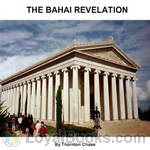 The Bahai Revelation
Thornton Chase (1847 – 1912) is commonly recognized as the first convert to the Bahá’í Faith of Occidental background. During his life he organized many Bahá’í activities in Chicago and Los Angeles and was considered a prominent Bahá’í. In 1894, Chase met Ibrahim Kheiralla, a Bahá’í from Beirut who had recently come to the United States. Chase and a small group of Chicagoans began to study the Bahá’í Faith with him. By 1895 he had completed the class and become a Bahá’í... | |
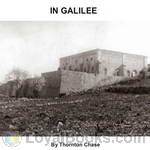 In Galilee
Thornton Chase (1847 – 1912) is commonly recognized as the first convert to the Bahá’í Faith of Occidental background. During his life he organized many Bahá’í activities in Chicago and Los Angeles and was considered a prominent Bahá’í. In 1907 Chase was able to go on pilgrimage. Though Chase was able to be with `Abdu’l Bahá in Akka for only three days, the experience transformed him. `Abdu’l Bahá, highly impressed by Chase’s qualities, conferred on him the title Thábit, “steadfast... | |
By: Unknown; | |
|---|---|
 The Didache
The Didache is the common name of a brief early Christian treatise (dated by most scholars to the late first or early second century), containing instructions for Christian communities. The text, parts of which may have constituted the first written catechism, has three main sections dealing with Christian lessons, rituals such as baptism and eucharist, and Church organization. It was considered by some of the Church Fathers as part of the New Testament but rejected as spurious or non-canonical by others, eventually not accepted into the New Testament canon with the exception of the Ethiopian Orthodox Church “broader canon... | |
By: Irenaeus | |
|---|---|
|
Against Heresies
St. Irenaeus, Bishop of Lyons, describes several schools of Gnosticism which were prevalent among pre-Nicene Christianity. He then refutes these beliefs as heresies by contrasting them with what he describes as catholic, orthodox Christianity. Against Heresies demonstrates that earliest Christianity was a fascinating and diverse plethora of beliefs, debates, and schisms. | |
By: Mary Baker Eddy (1821-1910) | |
|---|---|
 The People's Idea of God
“The improved theory and practice of religion and of medicine are mainly due to the people’s improved views of the Supreme Being.” (from The People’s Idea of God) | |
|
Science and Health, with Key to the Scriptures
| |
|
No and Yes
| |
|
Unity of Good
| |
|
Retrospection and Introspection
| |
|
Manual of the Mother Church The First Church of Christ Scientist in Boston, Massachusetts
| |
|
Rudimental Divine Science
| |
|
Pulpit and Press
| |
By: James E. Talmage | |
|---|---|
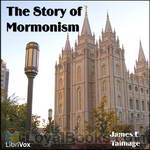 The Story of Mormonism
A few years before James E. Talmage was called to serve as an apostle for the Church of Jesus Christ of Latter-day Saints (also known as the "Mormon" church), he gave a series of lectures at universities such as the University of Michigan and Cornell, describing the history of the Church. These lectures were later compiled and published as 'The Story of "Mormonism."' It is a concise, yet informative summary for all interested in learning the history and beliefs of the "Mormon" church. (Summary by Nathan Markham) | |
|
The Great Apostasy: Considered in the Light of Scriptural and Secular History
Elder James E. Talmage, an apostle of The Church of Jesus Christ of Latter-day Saints, makes a survey of the Latter-day Saint view of the Great Apostasy. The book's subtitle states that it is a study "considered in the in the light of scriptural and secular history," and includes a discussion of the establishment of Christ's church in the meridian of time, the predictions and causes of its apostasy, or falling away, and the restoration of Christ's church in the Latter-days by a modern prophet. | |
By: Robert Michael Ballantyne (1825-1894) | |
|---|---|
|
The Red Eric
| |
|
The Prairie Chief
| |
|
Rivers of Ice
| |
|
The Floating Light of the Goodwin Sands
| |
|
The Thorogood Family
| |
|
Red Rooney The Last of the Crew
| |
|
The Crew of the Water Wagtail
| |
|
Fighting the Flames
| |
|
Hunted and Harried
| |
|
Twice Bought
This story is set in the gold fields of Oregon, where Tom Brixton, and his best friend, Fred Westly, are digging gold to try to “make their pile”. Before leaving England, the steady and God-fearing Fred had promised Tom's mother that he would do his best to take care of his friend, but in spite of all his efforts, Tom had fallen in with bad companions and taken to gambling. He was convinced that he could make his fortune quicker by attempting to increase it at the dice or card table, and all his friend's attempts to make him see his errors were unavailing... | |
|
The Lively Poll A Tale of the North Sea
| |
By: Goldsworthy Lowes Dickinson (1862-1932) | |
|---|---|
 The Greek View of Life
“With the Greek civilisation beauty perished from the world. Never again has it been possible for man to believe that harmony is in fact the truth of all existence.”This elegantly-written work provides a splendid introduction to the Greeks of the classic period: how they thought, wrote, and organised their lives and loves. Although it dates from the 1890s, there is very little about it that has dated. To its author’s credit, the subject of “Greek love” is dealt with in a sane and factual context - despite the judicial assassination of Oscar Wilde going on in the background... | |
By: Charles Monroe Sheldon (1857-1946) | |
|---|---|
|
In His Steps
In His Steps takes place in the railroad town of Raymond. The main character is the Rev. Henry Maxwell, pastor of the First Church of Raymond, who challenges his congregation to not do anything for a whole year without first asking: “What Would Jesus Do?” (taken from Wikipedia) | |
|
Robert Hardy's Seven Days A Dream and Its Consequences
| |
|
The High Calling
| |
By: Charles Alexander Eastman (1858-1939) | |
|---|---|
 The Soul of the Indian
"We also have a religion which was given to our forefathers, and has been handed down to us their children. It teaches us to be thankful, to be united, and to love one another! We never quarrel about religion." | |
By: Pope Clement I | |
|---|---|
 First Epistle of Clement to the Corinthians
“First Clement is one of the oldest Christian documents outside the New Testament canon (ca. 96 A.D.). The epistle was written by Clement, one of the elders of the church of Rome, to the church in Corinth, where it was read for centuries. The purpose of the writing was to exhort the Corinthians to reinstate its elders after they had been overthrown by other brethren. Historians generally hold First Clement to be an authentic document dating from the first century. From the fifth century to the... | |
By: Henry Thayer Niles (1825-1901) | |
|---|---|
 The Dawn and the Day
The Dawn and the Day, or, The Buddha and the Christ, Part 1 is a text similar to the epic poetry of Homer or, more accurately, classic Hindu texts, such as the Baghavad-Gita. | |
By: Twentieth Century New Testament | |
|---|---|
 Twentieth Century New Testament
Published in 1904, The Twentieth Century New Testament is considered the first translation of the Bible into modern English. It was produced in Britain over a period of 15 years by approximately 20 people -- ministers, housewives, school teachers and businessmen -- who were united by their desire for a New Testament in the language of the people. They were advised by such scholars as J. Rendel Harris and Richard Weymouth so their rendering is quite accurate. In addition they made some effort at rearranging the New Testament books in the order scholars believe they were written -- Mark comes before Matthew, for instance... | |
By: Walter Pater (1839-1896) | |
|---|---|
 Marius the Epicurean
Marius the Epicurean is a philosophical novel written by Walter Pater, published in 1885. In it Pater displays, with fullness and elaboration, his ideal of the aesthetic life, his cult of beauty as opposed to bare asceticism, and his theory of the stimulating effect of the pursuit of beauty as an ideal of its own. The principles of what would be known as the Aesthetic movement were partly traceable to this book; and its impact was particularly felt on one of the movement’s leading proponents, Oscar Wilde, a former student of Pater at Oxford. | |
By: Susan Warner (1819-1885) | |
|---|---|
 The Wide, Wide World
“How should a seven year old child react when forced to be separated from a mother who meant everything to her? How should she react when she learns that the aunt with whom she was sent to live doesn’t really care about her? Will she be able to make real friendships with people outside her family? Would she be able to take her belief in God as a comfort? If you want to find answers to all these questions, read the enjoyable novel “The Wide, Wide World”. There, you will see how the amazing Ellen Montgomery reacts to all those things, and many, many more”. | |
|
The Carpenter's Daughter
| |
|
The End of a Coil
| |
|
Daisy
| |
|
Trading
| |
|
Melbourne House
| |
|
Opportunities
| |
|
The Old Helmet, Volume I
| |
|
What She Could
| |
|
Daisy
| |
|
The House in Town
| |
|
Nobody
There are many romantic tales about a handsome and rich man falling in love with a beautiful lower class woman over the objections of his family. Remember Elizabeth Bennett and Fitzwilliam Darcy? however, it takes more than a good woman to secure a man's happiness. He has to have mental strength. It is not certain that our hero, Tom, has that. Lois is a great woman. However, according to his sister, she is a "nobody." Does money and position control everything? Certainly not. Good people deserve to be happy... | |
|
Daisy in the Field
| |
|
The Old Helmet, Volume II
| |
|
Melbourne House, Volume 1
| |
By: Ellen White (1827-1915) | |
|---|---|
 Steps to Christ
Ellen Gould White (1827 – 1915) was a prolific Christian writer, authoring 40 books in her lifetime. She was active in the Millerite movement, and was one of the principle founders of the Seventh Day Adventist Church.Steps to Christ, first published in 1892, is her most popular book. It has been translated into more than 70 languages. The theme of the book is how to come to know Christ better. | |
By: Pansy aka Isabella Alden (1841-1930) | |
|---|---|
 Interrupted
Alternately titled Out in the World. Claire Benedict is a capable, responsible, solid young Christian woman. Everyone leans on her for support and depends on her to do much that needs to be done in her church and social circle. But then her businessman father dies unexpectedly and leaves the family almost penniless, interrupting her tranquil, fulfilling life. Written by Isabella Alden under the pen name Pansy. | |
 Ruth Erskine's Son
Seventh book in the Chautauqua Girls series. Written by Isabella Alden under the pseudonym “Pansy.”Erskine, Ruth's son (a 5-year-old at the end of Judge Burnham’s Daughters) is now a grown man, and Ruth is 50-something. He brings home an American wife from Paris, a woman who seems to want to tear apart mother and son. But Irene has some big secrets to hide. | |
By: Thomas More (1478?-1535) | |
|---|---|
|
Dialogue of Comfort Against Tribulation With Modifications To Obsolete Language By Monica Stevens
| |