 |
Books Should Be Free Loyal Books Free Public Domain Audiobooks & eBook Downloads |
|
|
|
Books Should Be Free Loyal Books Free Public Domain Audiobooks & eBook Downloads |
|
Science |
|---|
|
Book type:
Sort by:
View by:
|
By: H. Beam Piper | |
|---|---|
 The Edge of the Knife
The Terro-Human Future History is Piper’s detailed account of the next 6000 years of human history. 1942, the year the first fission reactor was constructed, is defined as the year 1 A.E. (Atomic Era). In 1973, a nuclear war devastates the planet, eventually laying the groundwork for the emergence of a Terran Federation, once humanity goes into space and develops antigravity technology.The story “The Edge of the Knife” (collected in Empire) occurs slightly before the war, and involves a man who sees flashes of the future. It links many key elements of Piper’s series. | |
 Little Fuzzy
Jack Holloway, a prospector on the planet Zarathustra discovers small furry creatures. These creatures are obviously intelligent, but are they animals or are they sapient? If they are sapient the planet will be declared a protected zone and the company that is developing the planet commercially will lose their exclusive rights to the resources… | |
 Police Operation
H. Beam Piper (1904–1964) was an American science fiction author. He wrote many short stories and several novels. He is best known for his extensive Terro-Human Future History series of stories and a shorter series of “Paratime” alternate history tales. | |
 Last Enemy
An undercover Paratimer has disappeared on assignment while in an alternate time line, and it’s up to Verkan Vall of the Paratime Police to save her. To do so, he must infiltrate a universe in which assassination is an honorable profession, and reincarnation a scientific fact. Will Verkan Vall survive in a world of killers and the undead? | |
 Null-ABC
"There's some reaction these days that holds scientists responsible for war. Take it one step further: What happens if "book-learnin'" is held responsible ...?" | |
|
Temple Trouble
I'll bet you did not know that our little earth is not limited to the single time line on which we happen to exist. That's right; There are actually thousands, no many millions of parallel times, each existing alongside all the rest, using the same real estate, but following their own path. Some extremely primitive, some very advanced, but all blissfully unaware of the others. Of course this does not affect us at all, unless ... unless one of these time lines discovers the existence of the others and then a way to move easily back and forth from one to the other... | |
|
Time Crime
The Paratime Police had a real headache this time! Tracing one man in a population of millions is easy--compared to finding one gang hiding out on one of billions of probability lines! | |
 Time and Time Again
| |
|
He Walked Around the Horses
| |
|
Genesis
| |
|
The Answer
| |
|
Flight From Tomorrow
| |
|
Crossroads of Destiny
| |
|
The Mercenaries
| |
|
Day of the Moron
| |
|
Graveyard of Dreams
| |
|
Naudsonce
Naudsonce? What does THAT mean? Well, to find out you will need to listen to this story where Piper's unique mind explores what we mean by 'communication' and how it happens. The joint Space Navy-Colonial Office expedition was looking for new planets suitable for colonization; they had been out, now, for four years, which was close to maximum for an exploring expedition. They had entered eleven systems, and made landings on eight planets. Three had been reasonably close to Terra-type but were all disqualified by terrible animals or warlike inhabitants... | |
|
The Keeper
| |
|
Operation R.S.V.P.
| |
|
Ullr Uprising
| |
|
Dearest
| |
By: Arnold Bennett (1867-1931) | |
|---|---|
 How to Live on Twenty-Four Hours a Day
This book is a classic piece on self improvement teaching you to live to the fullest. Judging from the title of the book, the reader might expect that the book is a manual on how to manage your time better. Nothing could be further from the truth, this book is a flowery and witty self help book aimed at helping readers improve the quality of their lives, in fact it is one of the firsts of its kind in the world. Bennett describes the twenty four hours in a day as a miracle and that it should be used for the betterment of health, wealth, respect, pleasure and contentment... | |
By: Helen Keller (1888-1968) | |
|---|---|
|
The Story of My Life
An autobiography of Helen Keller published when the author was still in her early 20's. The narrative reveals how her mind developed and matured until she began her studies at Radcliffe College | |
 The World I Live In
The World I Live In by Helen Keller is a collection of essays that poignantly tells of her impressions of the world, through her sense of touch, smell, her imagination and dreams. My hand is to me what your hearing and sight together are to you. In large measure we travel the same highways, read the same books, speak the same language, yet our experiences are different. All my comings and goings turn on the hand as on a pivot. It is the hand that binds me to the world of men and women. The hand is my feeler with which I reach through isolation and darkness and seize every pleasure, every activity that my fingers encounter... | |
By: René Descartes (1596-1650) | |
|---|---|
 Discourse on the Method of Rightly Conducting One's Reason and of Seeking Truth in the Sciences
The Discourse on Method is best known as the source of the famous quotation “cogito ergo sum”, “I think, therefore I am.” …. It is a method which gives a solid platform from which all modern natural sciences could evolve. With this work, the idea of skepticism was revived from the ancients such as Sextus Empiricus and modified to account for a truth that Descartes found to be incontrovertible. Descartes started his line of reasoning by doubting everything, so as to assess the world from a fresh perspective, clear of any preconceived notions. | |
|
A Discourse of a Method for the Well Guiding of Reason and the Discovery of Truth in the Sciences
| |
By: Washington Irving (1783-1859) | |
|---|---|
 The Sketch Book of Geoffrey Crayon, Gent.
Apart from "Rip Van Winkle" and "The Legend of Sleepy Hollow" - the pieces which made both Irving and The Sketch Book famous - other tales include "Roscoe", "The Broken Heart", "The Art of Book-making", "A Royal Poet", "The Spectre Bridegroom", "Westminster Abbey", "Little Britain", and "John Bull". His stories were highly influenced by German folktales, with "The Legend of Sleepy Hollow" being inspired by a folktale recorded by Karl Musaus. Stories range from the maudlin (such as "The Wife" and... | |
By: Victor Appleton | |
|---|---|
 Tom Swift and the Electronic Hydrolung
The US Government is very smartly letting Tom Swift Jr. handle the recovery of its probe to Jupiter. But a mystery missile suddenly intercepts the probe and splashes it in the South Atlantic.Faced with a huge search task to find the probe on the ocean bottom, Tom soon realizes that the same shadowy group that attacked the probe is competing to find it, and no holds are barred: kidnap, coercion, and lethal force are all in play.Under such circumstances, what can Tom do? What he does every time, of course! He invents some utterly cool device to get the job done! And his Electronic Hydrolung is just the beginning! | |
By: Maurice Leblanc (1864-1941) | |
|---|---|
 The Tremendous Event
| |
By: Albert Einstein (1879-1955) | |
|---|---|
 Relativity: The Special and General Theory
Einstein wrote this book for people who are interested in understanding the Theory of Relativity but aren't experts in scientific and mathematical principles. I'm sure many people have heard about Einstein's Theory of Relativity, but most of them don't really know what it is all about. This book gives them a chance to know more about this very famous theory without the need to take a Physics course first. This book is divided into three parts. The first part explains what special relativity is all about... | |
|
Sidelights on Relativity
Sidelights on Relativity contains ETHER AND THE THEORY OF RELATIVITY, an address delivered on May 5th, 1920, in the University of Leyden; and GEOMETRY AND EXPERIENCE, an expanded form of an address to the Prussian Academy of Sciences in Berlin on January 27th, 1921. (Intro from Project Gutenberg) | |
By: Ayn Rand (1905-1982) | |
|---|---|
 Anthem
The title 'Anthem' is derived as an anthem to sense of self and self-governing thoughts. Anthem is a story of Equality 7-2521 who is a young man living in some unspecified future time and place. In this future era freedom and individual rights have been eradicated. The starring character of the novel is an inquisitive street cleaner. He lives in a society where people have lost their knowledge of individualism, to the extreme that people do not know words like 'I' or 'mine'. All the people live and work for their livelihood in collective groups, along with the people with power, namely the 'Councils'... | |
By: Gene Stratton-Porter (1863-1924) | |
|---|---|
 Moths of the Limberlost
Gene Stratton-Porter was an American author, amateur naturalist, wildlife photographer, specializing in the birds and moths in one of the last of the vanishing wetlands of the lower Great Lakes Basin. The Limberlost and Wildflower Woods of northeastern Indiana were the laboratory and inspiration for her stories, novels, essays, photography, and movies. She was an accomplished author, artist and photographer and is generally considered to be one of the first female authors to promulgate public positions; conserving the Limberlost Swamp in her case... | |
|
Song of the Cardinal
The Song of the Cardinal is about a big male Cardinal who lives in a tree near a farmer and his wife. The Cardinal immediately starts to sing to find himself a mate. Meanwhile the farmer and his wife enjoy watching this boisterous bird and seeing what he does. He does find a mate and through his singing the farmer and his wife's marriage is rejuvenated. It's a happy little parallel love story that will sweep you off your feet! | |
By: Mary Roberts Rinehart (1876-1958) | |
|---|---|
|
Why I Believe in Scouting for Girls
| |
By: Garrett P. Serviss (1851-1929) | |
|---|---|
 Curiosities of the Sky
Is there intelligent life on Mars? Why are there starless gaps in the Milky Way? What creates the Aurora Borealis or the Northern Lights? These and more are the interesting questions that are asked and sought to be answered in the 1909 book, Curiosities of the Sky by Garrett P. Serviss. Garrett Putnam Serviss was an American astronomer and popular sci-fi writer. He believed that science should be understood and enjoyed by everyone, not just by scientists. Though he was trained as a lawyer, he went to work as a newspaper reporter with The New York Sun in 1867... | |
 Edison's Conquest of Mars
Edison’s Conquest of Mars, by Garrett P. Serviss, is one of the many science fiction novels published in the nineteenth century. Although science fiction was not at the time thought of as a distinct literary genre, it was a very popular literary form, with almost every fiction magazine regularly publishing science fiction stories and novels. “Edison’s Conquest of Mars” was published in 1898 as an unauthorized sequel to H. G. Wells’s The War of the Worlds, but did not achieve the fame of its predecessor. The book was endorsed by Thomas Edison, the hero of the book — though not by Wells. | |
By: John Muir (1838-1914) | |
|---|---|
 The Story of My Boyhood and Youth
“The only fire for the whole house was the kitchen stove, with a fire box about eighteen inches long and eight inches wide and deep,- scant space for three or four small sticks, around which in hard zero weather all the family of ten shivered, and beneath which in the morning we found our socks and coarse, soggy boots frozen solid.” Thus, with perceptive eye for detail, the American naturalist, John Muir, describes life on a pioneer Wisconsin farm in the 1850’s. Muir was only eleven years old when his father uprooted the family from a relatively comfortable life in Dunbar, Scotland, to settle in the backwoods of North America... | |
 Travels in Alaska
In 1879 John Muir went to Alaska for the first time. Its stupendous living glaciers aroused his unbounded interest, for they enabled him to verify his theories of glacial action. Again and again he returned to this continental laboratory of landscapes. The greatest of the tide-water glaciers appropriately commemorates his name. Upon this book of Alaska travels, all but finished before his unforeseen departure, John Muir expended the last months of his life. | |
By: Kurt Vonnegut (1922-2007) | |
|---|---|
 2 B R 0 2 B
In this chilling short-story by a master of the craft, Kurt Vonnegut creates a fictional world of the future where life and death are no longer matters of individual choice or destiny. The title refers to the famous quote from Hamlet, “To be or not to be....” with “0” being pronounced as “naught.” It also refers to the eternal dilemma of life and death that face every human being at some point in their lives. Written in 1962 it is set in some unspecified time in the future, when earth has become a Utopia... | |
|
The Big Trip Up Yonder
| |
By: Samuel Taylor Coleridge (1772-1834) | |
|---|---|
|
Hints towards the formation of a more comprehensive theory of life.
| |
By: Murray Leinster (1896-1975) | |
|---|---|
 The Aliens
This story starts with space ships scouring the universe in an interplanetary game of tag. The humans know there are “Aliens” out there. But so do the Aliens. As each tries desperately to make the phenomenal discovery, they secretly hope that the other will not turn out to be the enemy. Humans call them “Plumies” because of the feathery plumes they inscribe on silicon-bronze tablets and cairns they have left behind on their intergalactic travels over the last thousand years. The search goes on, till one day somewhere in outer space, a Plumie ship collides with the one manned by humans... | |
 Operation Terror
An unidentified space ship lands in a Colorado lake. Equipped with a paralyzing ray weapon, the creatures begin taking human prisoners. A loan land surveyor and a journalist are trapped inside the Army cordon, which is helpless against the mysterious enemy. Can they stop the aliens before it is too late? | |
 Space Tug
Joe Kenmore heard the airlock close with a sickening wheeze and then a clank. In desperation he turned toward Haney. “My God, we’ve been locked out!” Through the transparent domes of their space helmets, Joe could see a look of horror and disbelief pass across Haney’s face. But it was true! Joe and his crew were locked out of the Space Platform. Four thousand miles below circled the Earth. Under Joe’s feet rested the solid steel hull of his home in outer space. But without tools there was no hope of getting back inside. Joe looked at his oxygen meter. It registered thirty minutes to live. | |
 The Pirates of Ersatz
Bron is the offspring of infamous space pirates but instead of following in the family footsteps he decides to become an electronic engineer. Unfortunately, every time he tries to get out, something pulls him back in. This is a tongue-in-cheek space adventure along the lines of the Stainless Steel Rat by Harry Harrison. It was originally published in the FEB-APR issues of Astounding Science Fiction in 1959. | |
 This World Is Taboo
Calhoun is an Interstellar Medical Serviceman, and he's needed on Dara. Trouble is: Dara is forbidden. Taboo. And breaking quarantine will make Calhoun a presumed plague-carrier and subject to being shot on sight by anyone from Weald. But hey! If he did the smart thing, we wouldn't have a story!But why are men from Dara shooting at him? | |
|
Talents, Incorporated
Bors felt as if he'd been hit over the head. This was ridiculous! He'd planned and carried out the destruction of that warship because the information of its existence and location was verified by a magnetometer.But, if he'd known how the information had been obtained--if he'd known it had been guessed at by a discharged spaceport employee, and a paranoid personality, and a man who used a hazel twig or something similar--if he'd known that, he'd never have dreamed of accepting it. He'd have dismissed it flatly! | |
 The Hate Disease
Dr. Calhoun and his pet tormal Murgatroyd work for the Interstellar Medical Service making routine public health inspections on far-flung colonial planets. When they reach Tallien Three they are greeted with a rocket attack by the Paras, a mutated form of human rapidly replacing the “normals”. The normals think it’s a pandemic of demonic possession but Calhoun has his doubts. If he can keep from turning into a Para, or being assassinated by them he just might figure this thing out. – The Hate Disease was first published in the August 1963 edition of Analog Science Fact and Fiction magazine. | |
 The Runaway Skyscraper
Arthur Chamberlain has problems. His one-man engineering firm is faltering and his pretty secretary Estelle barely notices him. But these problems are put aside when his Manhattan office building falls into the fourth dimension. Madison Square is filled with wigwams and it’s up to Arthur to engineer a way to make his building to fall back to the future. – The Runaway Skyscraper first appeared in the February 22, 1919 issue of Argosy magazine. | |
 Operation: Outer Space
Jed Cochrane is about to take off on man's first interstellar voyage. His mission: Make sure it's good television! (Introduction by Mark Nelson) | |
 The Machine that Saved the World
They were broadcasts from nowhere--sinister emanations flooding in from space--smashing any receiver that picked them up. What defense could Earth devise against science such as this? In the far future of 1972, on a secret military installation, Staff Sergeant Bellews is an expert on the latest scientific discovery: a way for ordinary machines like vacuums and lawnmowers to gather experience in their jobs, becoming error free over time. Then the strange broadcasts began to blow up transmitters everywhere. Were they from space? Enemies? the future? He didn't care until they started messin' with his machines. Then he took it personally. (summary from the first chapter and Phil Chenevert) | |
 The Fifth-Dimension Tube
| |
|
Space Platform
SPACE PLATFORM tells the exciting story of a young man helping to build this first station. With scientific accuracy and imagination Murray Leinster, one of the world's top science-fiction writers, describes the building and launching of the platform. Here is a fast-paced story of sabotage and murder directed against a project more secret and valuable than the atom bomb! | |
|
Long Ago, Far Away
| |
|
Invasion
| |
|
Attention Saint Patrick
| |
|
Scrimshaw
| |
|
Morale A Story of the War of 1941-43
| |
|
The Invaders
| |
|
The Leader
| |
 Sam, This is You
| |
By: John Stuart Mill (1806-1873) | |
|---|---|
 The Subjection of Women
The Subjection of Women is the title of an essay written by John Stuart Mill in 1869, possibly jointly with his wife Harriet Taylor Mill, stating an argument in favor of equality between the sexes. It offers both detailed argumentation and passionate eloquence in opposition to the social and legal inequalities commonly imposed upon women by a patriarchal culture. Just as in “On Liberty,” Mill defends the emancipation of women on utilitarian grounds, convinced that the moral and intellectual advancement of women would result in greater happiness for everybody. | |
|
Auguste Comte and Positivism
Part 1 lays out the framework for Positivism as originated in France by Auguste Comte in his Cours de Philosophie Positive. Mill examines the tenets of Comte's movement and alerts us to defects. Part 2 concerns all Comte's writings except the Cours de Philosophie Positive. During Comte's later years he gave up reading newspapers and periodicals to keep his mind pure for higher study. He also became enamored of a certain woman who changed his view of life. Comte turned his philosophy into a religion, with morality the supreme guide. Mill finds that Comte learned to despise science and the intellect, instead substituting his frantic need for the regulation of change. | |
By: Charles Kingsley (1819-1875) | |
|---|---|
 Madam How and Lady Why
Did you ever wish you knew how to explain natural phenomena such as earthquakes and volcanoes to your children? Search no more, this book has all the answers (at least all the ones that were known in 1869) and gives them in a pedagogical way. Listed on the Ambleside homeschooling list. | |
|
Glaucus, or the Wonders of the Shore
| |
|
Women and Politics
| |
|
Sanitary and Social Lectures, etc
| |
By: Sir Arthur Conan Doyle (1859-1930) | |
|---|---|
|
Danger! and Other Stories
This is a volume of short stories by the famous Arthur Conan Doyle. | |
By: Bertrand Russell (1872-1970) | |
|---|---|
|
Mysticism and Logic and Other Essays
| |
By: Emma Goldman (1869-1940) | |
|---|---|
 Anarchism and Other Essays
Chicago, May 4, 1886. In the Haymarket region of the city, a peaceful Labor Day demonstration suddenly turns into a riot. The police intervene to maintain peace, but they soon use violence to quell the mob and a bomb is thrown, resulting in death and injuries to scores of people. In the widely publicized trial that followed, eight anarchists were condemned to death or life imprisonment, convicted of conspiracy, though none of them had actually thrown the bomb. A young Russian immigrant, Emma Goldman, had arrived just the previous year in the United States... | |
|
Marriage and Love
| |
By: Arthur Schopenhauer (1788-1860) | |
|---|---|
|
The Essays of Arthur Schopenhauer; On Human Nature
| |
By: Harry Harrison (1925) | |
|---|---|
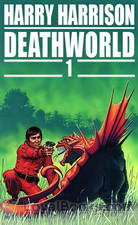 Deathworld
Jason dinAlit, an inhabitant of the planet Porgostrosaand, is a fast talking, conniving, tough as nails, gun toting gambler whose ethics wax and wane with each planet he travels to. He also has amazing psionic abilities which means he is gifted with a variety of psychic abilities including telekinesis, telepathy, pyrokinesis and a host of other interesting capabilities. He is not above using these to tip the odds in his favor while gambling. A chance meeting with Kerk Pyrrus who is the Ambassador of planet Pyrrus ends up with dinAlit traveling back with the Ambassador to Pyrrus... | |
 Planet of the Damned
Once in a generation, a man is born with a heightened sense of empathy. Brion Brandd used this gift to win the Twenties, an annual physical and mental competition among the best and smartest people on Anvhar. But scarcely able to enjoy his victory, Brandd is swept off to the hellish planet Dis where he must use his heightened sense of empathy to help avert a global nuclear holocaust by negotiating with the blockading fleet, traversing the Disan underworld, and cracking the mystery of the savagely ruthless magter. Summary by Great Plains. | |
 The Ethical Engineer
The Ethical Engineer also known as Deathworld II finds our hero Jason dinAlt captured to face justice for his crimes, but the ever-wily gambler crashes his transport on a primitive planet populated by clans that hoard knowledge. It’s a difficult situation for a guy who just wants to get back to Pyrrus. – The Ethical Engineer was first published in the July and August 1963 issues of Analog Science Fact & Fiction. | |
|
Arm of the Law
A quiet backwater outpost on Mars gets a surprise in the form of a new police recruit - in a box! Yep, it's a prototype robot cop sent to the backwater station for testing. And Harrison tells the strange, funny and scary things that begin to happen after that, as only he can. | |
|
Toy Shop
| |
|
Navy Day
| |
|
The Velvet Glove
| |
By: Edwin Abbott Abbott (1838-1926) | |
|---|---|
 Flatland: A Romance of Many Dimensions
If you've never heard the term “Mathematical Fiction” before, Edwin Abbott Abbott's 1884 novella, Flatland can certainly enlighten you! Flatland: A Romance of Many Dimensions was published in 1884 and since then, it has been discovered and re-discovered by succeeding generations who have been delighted by its unique view of society and people. The plot opens with a description of the fictional Flatland. The narrator calls himself “Square” and asks readers to “Imagine a vast sheet of paper on which straight Lines, Squares, Triangles, Pentagons, Hexagons and other figures, instead of remaining fixed in their places, move freely about... | |
|
Flatland: a romance of many dimensions (Illustrated)
| |
By: Ernest Shackleton | |
|---|---|
 South! The Story of Shackleton's Last Expedition 1914-1917
The expedition was given the grand title of The Imperial Trans-Antarctic Expedition. Due to be launched in 1914, two ships were to be employed. The first, the lead vessel, fittingly named the Endurance was to transport the team to the Weddell Sea from where the great explorer Ernest Shackleton and five others would cross the icy wastes of Antarctica on foot. The second ship, the Aurora was to approach the continent from the other side and put down supplies at various points to help the explorers... | |
By: Francis Bacon (1561-1626) | |
|---|---|
 The New Atlantis
In 1623, Francis Bacon expressed his aspirations and ideas in New Atlantis. Released in 1627, this was his creation of an ideal land where people were kind, knowledgeable, and civic-minded. Part of this new land was his perfect college, a vision for our modern research universities. Islands he had visited may have served as models for his ideas. | |
|
Valerius Terminus; of the interpretation of nature
| |
By: Frank Richard Stockton (1834-1902) | |
|---|---|
|
The Great War Syndicate
| |
|
The Great Stone of Sardis
| |
 Round-about Rambles
ROUND-ABOUT RAMBLES, In Lands of FACT AND FANCYBY FRANK R STOCKTONPREFACECome along, boys and girls! We are off on our rambles. But please do not ask me where we are going. It would delay us very much if I should postpone our start until I had drawn you a map of the route, with all the stopping-places set down. We have far to go, and a great many things to see, and it may be that some of you will be very tired before we get through. If so, I shall be sorry; but it will be a comfort to think that none of us need go any farther than we choose... | |
By: Lester Del Rey (1915-1993) | |
|---|---|
 Badge of Infamy
Shifting between Earth and Mars, Badge of Infamy focuses on the gripping tale of a former doctor who becomes a pariah due to being temporarily governed by emotion and compassion, rather than complying with the highly regarded rules established by the Medical Lobby. Furthermore, the novel covers numerous topics including justice, brutality, betrayal, ethics, political control, and lobbying. Set in the year 2100, the novel begins with the introduction of its protagonist, Daniel Feldman, an ethical man, who makes the terrible mistake of going against the fixed medical protocol and performing surgery to save the life of a friend... | |
By: Lester del Rey | |
|---|---|
 Victory
Lester del Rey (1915 – 1993) was a Golden Age science fiction author and editor closely connected to John W. Campbell Jr. and Astounding Science Fiction magazine. He also founded Del Rey Books, a popular publishing label he edited with his wife Judy-Lynn. Victory is the story of an undefended Earth in a warring galaxy. It appeared in the August 1955 issue of Astounding Science Fiction. | |
By: Lester Del Rey (1915-1993) | |
|---|---|
|
Dead Ringer
| |
By: Lester del Rey (1915-1993) | |
|---|---|
|
Police Your Planet
Bruce Gordon looked at his ticket, grimaced at the ONE WAY stamped on it, then tore it into bits and let the pieces scatter over the floor. He counted them as they fell; thirty pieces in all, one for each year of his life. Little ones for the two years he'd wasted as a cop. Shreds for the four years as a kid in the ring before that--he'd never made the top. Bigger bits for two years also wasted in trying his hand at professional gambling; and the six final pieces that spelled his rise from special reporter helping out with a police shake-up coverage, through a regular leg-man turning up rackets, and on up like a meteor until... | |
By: Thomas Hobbes (1588-1679) | |
|---|---|
 Leviathan, or The Matter, Forme and Power of a Common Wealth Ecclesiasticall and Civil
Books 1 and 2. Leviathan, or The Matter, Forme and Power of a Common Wealth Ecclesiasticall and Civil is a book written in 1651 by Thomas Hobbes. The book concerns the structure of society (as represented figuratively by the frontispiece, showing the state giant made up of individuals). In the book, Hobbes argues for a social contract and rule by a sovereign. Influenced by the English Civil War, Hobbes wrote that chaos or civil war – situations identified with a state of nature and the famous motto bellum omnium contra omnes (”the war of all against all”) – could only be averted by strong central government... | |
By: Charles Morris (1833-1922) | |
|---|---|
 The San Francisco Calamity by Earthquake and Fire
The first half of this book describes the devastating earthquake that hit San Francisco in 1906, and the subsequent destruction caused by fire. Various eyewitnesses and victims give their account on the tragedy. In the second half, a number of different other earthquakes and volcanic eruptions are retold, like the eruption of the Vesuvius that destroyed Pompeij or the explosion of the Krakatoa, together with scientific explanations for the causes of earthquakes and the eruption of volcanos. | |
By: Mary Wollstonecraft (1759-1797) | |
|---|---|
 A Vindication of the Rights of Woman
Regarded as the one of the earliest examples of feminist philosophy, A Vindication of the Rights of Woman is written as a direct response to Charles Maurice de Talleyrand-Périgord, a French politician who delivered a report to the French National Assembly suggesting that women should only receive domestic education and additionally encourages women to stay clear of political affairs. In her treatise, Wollstonecraft avidly criticizes this inadequate perception of women as an inferior sex and attacks social inequality, while also arguing for women’s rights in the hope of redefining their position both in society and in marriage... | |
By: L. A. Abbott (1813-??) | |
|---|---|
 Seven Wives and Seven Prisons
This work the author claims is indeed a true story of how he happened to be married seven times to seven different women and the rollicking, hilarious events that led (or stumbled) to the marriages and the ah–disassembling/failing/failures of each said marriage which happened oftentimes to land him in prison. The summarist finds the work a very tongue-in-cheek diatribe/lament/account of his obsessive zeal in ‘marrying the right one’, but is also the mirthful chronicle of said author’s very unconventional adventures. | |
By: Philip K. Dick (1928-1982) | |
|---|---|
 The Crystal Crypt & Beyond the Door
Two early science fiction stories by the wonderful craftsman, Philip K. Dick. In the Crystal Crypt, taken from the 1954 Planet Stories, the war between Mars and Terra is about to erupt and earth has only merchants and salesmen to fight; can they carry out their mission? Beyond the Door is a story that asks and answers the question: what lives beyond the door? And is it dangerous? | |
 The Defenders
The terrible destruction of total nuclear war between the Western and Eastern Blocks has succeeded in sterilizing the surface of the earth. No living creature can now exist there and all humans on both sides, have fled to the hives built miles below the surface where they constantly work to produce the war materials necessary to carry on the battle. For 8 years now, the actual fighting between these super powers has been conducted by robots known as Ledeys since only they can sustain the terrible levels of radiation caused by the constant bombardment... | |
|
The Gun
| |
|
Beyond Lies the Wub & The Skull
Two stories in the inimitable Philip Dick style. What is a Wub? A 400 pound slovenly, fat, ungainly, drooling animal that looks like a cross between a walrus and an enormous hog? Well, yes that is pretty much what he looks like and for 50 cents, a good bargain no matter how he tastes. The hungry spaceship crew expect to find out. Of course the Wub may not entirely agree but it doesn't have much to say about it. The second story, The Skull, is a skilful mesh of time travel, unscrupulous governments, prisoners, and religion. With an assassin thrown in for good measure. Enjoy! | |