 |
Books Should Be Free Loyal Books Free Public Domain Audiobooks & eBook Downloads |
|
|
|
Books Should Be Free Loyal Books Free Public Domain Audiobooks & eBook Downloads |
|
Top Authors |
|---|
|
Book type:
Sort by:
|
By: Rafael Sabatini (1875-1950) | |
|---|---|
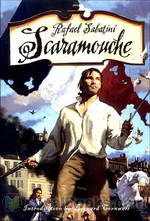 Scaramouche
“He was born with a gift of laughter and a sense that the world was mad!” The wonderful opening lines of this 1921 novel set the tone for the rest of this delightful story of an adventurer and romantic who dons several roles in his colorful life. Scaramouche by Rafael Sabatini is an historical novel set in the turbulent times of the French Revolution. The plot describes Andre-Louis Moreau, a young lawyer adopted by his godfather who cannot reveal his parentage. Moreau inadvertently stumbles into political events and becomes a wanted man based on the evil machinations of a sinister Marquis... | |
 The Sea Hawk
First published in 1915, The Sea Hawk follows the adventures of its protagonist Sir Oliver Tressilian, as he is unjustly betrayed and left to the mercy of others by his selfish brother, who seeks only to save his own skin no matter the cost. Exploring various themes including betrayal, vengeance, sacrifice, injustice, and tormented love, the novel successfully demonstrate Sabatini’s exceptional flair for adventure. Set in the late 16th century, the tale begins with the introduction of Sir Oliver Tressilian, a wealthy gentleman who lives together with his brother Lionel, haunted by his family’s bad-tempered reputation... | |
 The Tavern Knight
Follow the exploits of Sir Crispin Galliard, also known as The Tavern Knight, in his defence of the King of England against Cromwell and his Puritan Entourage. | |
 The Life of Cesare Borgia
| |
|
Mistress Wilding
| |
|
Works Of Rafael Sabatini
| |
|
The Historical Nights' Entertainment
| |
|
Love-at-Arms
| |
|
The Trampling of the Lilies
| |
|
Bardelys the Magnificent
| |
|
Saint Martin's Summer
| |
|
The Shame of Motley
| |
|
The Strolling Saint
| |
|
The Suitors of Yvonne
| |
By: John Milton (1608-1674) | |
|---|---|
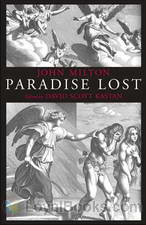 Paradise Lost
Magnificent in its scale and scope, this monumental poem by the blind poet John Milton was the first epic conceived in the English language. It describes an omniscient, all powerful God, the Fall of Man, the Temptation in the Garden of Eden, the disgraced angel who later becomes known as Satan, the Angelic Wars fought by Archangels Michael and Raphael and the Son of God who is the real hero of this saga. The poet John Milton was more than sixty years old when he embarked on this immense work of literary creation... | |
 Paradise Regained
Paradise Regained is a poem by the 17th century English poet John Milton, published in 1671. It is connected by name to his earlier and more famous epic poem Paradise Lost, with which it shares similar theological themes. Based on the Gospel of Luke’s version of the Temptation of Christ, Paradise Regained is more thoughtful in writing style, and thrives upon the imagery of Jesus’ perfection in contrast to the shame of Satan. | |
 Areopagitica
A prose tract or polemic by John Milton, published November 23, 1644, at the height of the English Civil War… Milton, though a supporter of the Parliament, argued forcefully against the Licensing Order of 1643, noting that such censorship had never been a part of classical Greek and Roman society. The tract is full of biblical and classical references which Milton uses to strengthen his argument. The issue was personal for Milton as he had suffered censorship himself in his efforts to publish... | |
 Samson Agonistes
“The Sun to me is darkAnd silent as the Moon,When she deserts the nightHid in her vacant interlunar cave.”Milton composes his last extended work as a tragedy according to the classical Unities of Time, Place and Action. Nevertheless it “never was intended for the stage” and is here declaimed by a single reader.Samson the blinded captive, in company with the Chorus of friends and countrymen, receives his visitors on their varying missions and through them his violent story is vividly recalled... | |
|
Milton's Comus
| |
|
Minor Poems by Milton
| |
|
L'Allegro, Il Penseroso, Comus, and Lycidas
| |
|
Poemata : Latin, Greek and Italian Poems by John Milton
| |
By: J. M. Barrie (1860-1937) | |
|---|---|
 Peter Pan
His name has become a metaphor for one who will never grow old. Peter Pan by JM Barrie is the story of a boy who remains a boy while the world around him changes. Sir James Mathew Barrie was a Scottish playwright and novelist whose works were received with great critical and commercial success in the late nineteenth and early twentieth century. He discovered the main inspiration for his creative genius in his friendship (and later guardianship) with the children of Arthur and Sylvia Llewellyn-Davies... | |
 The Admirable Crichton
From the author of Peter Pan:Lord Loam, a British peer, considers class divisions to be artificial. He promotes his views during tea-parties where servants mingle with his aristocratic guests, to the embarrassment of all. Crichton, his butler, particularly disapproves of this.Loam, his family, a maid, and Crichton are shipwrecked on a deserted tropical island. The resourceful Crichton is the only one of the party with any practical knowledge. Eventually, social roles are reversed, and Crichton becomes the governor. | |
By: Charles Lamb | |
|---|---|
 The Adventures of Ulysses
In The Adventures of Ulysses, Charles Lamb re-tells the story of Ulysses’s journey from Troy to his own kingdom of Ithaca. The book uses Homer’s The Odyssey as the basis for the story, but it isn’t a direct translation of the Greek classic. The book is considered a modern version of the epic tale when it was published in 1808. In the preface of the book, Lamb said that he made the narration of the story faster so that more readers would be attracted to it. To begin with, Homer’s Odyssey is already a classic and in re-telling this story, Charles Lamb aimed to make this epic poem more comprehensible to the average person... | |
 Tales from Shakespeare
This little gem of a book was probably the first introduction to Shakespeare that most readers have had as children. Tales from Shakespeare was written in 1807 by a young clerk called Charles Lamb in the offices of the East India Company. Lamb co-authored them with his beloved sister Mary. The pair lived together for life, having gone through immense trauma caused by mental illness and tragedy. However, far from being a melancholy duo, they led an active and ample social life in the company of some of the literary greats of the Romantic movement of the 19th century... | |
 Mr. H
Mr. H
Mr H is a farce that was first performed at Drury Lane in 1806. The plot is slender and revolves around a single rather feeble joke, but the characters are skilfully drawn and the sharp observations of contemporary fashion do much to divert the listener from the weakness of the central theme. More a comedy of manners rather than a true farce, this short play is best enjoyed as a gentle romp through the eccentricities of the Regency period. | |
|
A Masque of Days From the Last Essays of Elia: Newly Dressed & Decorated
| |
|
The Best Letters of Charles Lamb
| |
By: Helen Keller (1888-1968) | |
|---|---|
|
The Story of My Life
An autobiography of Helen Keller published when the author was still in her early 20's. The narrative reveals how her mind developed and matured until she began her studies at Radcliffe College | |
 The World I Live In
The World I Live In by Helen Keller is a collection of essays that poignantly tells of her impressions of the world, through her sense of touch, smell, her imagination and dreams. My hand is to me what your hearing and sight together are to you. In large measure we travel the same highways, read the same books, speak the same language, yet our experiences are different. All my comings and goings turn on the hand as on a pivot. It is the hand that binds me to the world of men and women. The hand is my feeler with which I reach through isolation and darkness and seize every pleasure, every activity that my fingers encounter... | |
|
Optimism An Essay
| |
|
The Song of the Stone Wall
| |
By: Johann Wolfgang von Goethe (1749-1832) | |
|---|---|
|
The Sorrows of Young Werther
The Sorrows of Young Werther (German, Die Leiden des jungen Werther, originally published as Die Leiden des jungen Werthers) is an epistolary and loosely autobiographical novel by Johann Wolfgang von Goethe, first published in 1774. The story follows the life and sorrows of Werther after he falls desperately in love with a young woman who is married to another. A climactic scene prominently features Goethe's own German translation of a portion of James Macpherson's Ossian cycle of poems, which had originally been presented as translations of ancient works, and was later found to have been written by Macpherson. (Introduction by Wikipedia and Barry Eads) | |
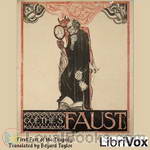 Faust, Part 1
Faust is the protagonist of a classic German legend; a highly successful scholar, but also dissatisfied with his life, and so makes a deal with the devil, exchanging his soul for unlimited knowledge and worldly pleasures.Johann Wolfgang von Goethe's Faust is a tragic play in two parts. It is Goethe's most famous work and considered by many to be one of the greatest works of German literature.This first part of Faust is not divided into acts, but is structured as a sequence of scenes in a variety of settings. After a dedicatory poem and a prelude in the theatre, the actual plot begins with a prologue in Heaven and Scene 1 in Faust's study. | |
 Erotica Romana
Also known as the "Roman Elegies," Erotica Romana is von Goethe's literary tribute to human sexuality and eroticism. Written in 24 elegies to emulate classical Roman elegy writers such as Tibullus, Propertius, and Catullus, von Goethe creates a lyrical work of art that has often been subject to censorship. | |
|
Faust — Part 1
| |
|
May Song
Johann Wolfgang von Goethe was a German writer and statesman. His body of work includes epic and lyric poetry written in a variety of metres and styles; prose and verse dramas; memoirs; an autobiography; literary and aesthetic criticism; treatises on botany, anatomy, and colour; and four novels. In addition, numerous literary and scientific fragments, more than 10,000 letters, and nearly 3,000 drawings by him are extant. | |
|
Faust; a Tragedy, Translated from the German of Goethe
| |
|
Iphigenia in Tauris
| |
|
Autobiography: Truth and Fiction Relating to My Life
| |
|
Egmont
| |
|
Maxims and Reflections
| |
|
Wilhelm Meister's Apprenticeship and Travels, Vol. I (of 2)
| |
By: Hugh Lofting (1886-1947) | |
|---|---|
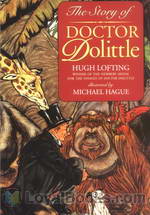 The Story of Doctor Dolittle
An adventurous children’s novel, The Story of Doctor Dolittle is the first book in the Doctor Dolittle series. The novel depicts the many adventures of Dr. John Dolittle as he learns the language of animals and takes on various feats including exotic travel, a dangerous encounter with pirates, and a mission to set right from wrong. The novel begins with the introduction of Dr. John Dolittle, an animal lover and respected physician, who lives in the small English town of Puddleby-on-the-Marsh with his unmarried sister... | |
By: Thomas S. Eliot (1888-1965) | |
|---|---|
 The Waste Land
Whether you enjoy poetry or not, TS Eliot's The Wasteland is a work of literature that makes a rich, compelling, mystical and thought-provoking reading experience. It's one of those timeless works that seems to renew itself on each subsequent reading and you will find something new and unique every time. Some of the lines have become familiar to many of us: “April is the cruellest month....” “I will show you fear in a handful of dust” and many more. Written after the moral and social crisis that gripped much of the world after the end of WWI, this poem was considered experimental and path-breaking for that era... | |
By: D. H. Lawrence (1885-1930) | |
|---|---|
 The Rainbow
Set against the backdrop of a rapidly industrializing England, the bewildering shift in social structure, the fading away of traditions and the advent of new ways of life, The Rainbow by DH Lawrence depicts how one family's story becomes the story of a society. Originally planned as a novel titled The Sisters, Lawrence finally split the theme into two separate novels after many revisions and rewrites. The Rainbow is the first novel in the Brangwen family saga. Tom Brangwen is a small time farmer in rural Nottinghamshire... | |
 Women in Love
If you have read DH Lawrence's The Rainbow, you'd certainly want to read the sequel, Women in Love. Published in 1920, the two books were originally meant to be a single work, spanning several generations of the Brangwen family, especially the women. However, a complicated publishing history, delays and editorial revisions, followed by the hostile reception and controversies that faced The Rainbow led to a gap of five years between the two books. Yet, by 21st century standards, Women in Love seems almost tame, and modern-day readers may well be bewildered by the amount of criticism it generated among the custodians of morals in an earlier age... | |
 Sons and Lovers
This intimate portrait of a coal-miner’s family fastens on each member in turn: Walter Morel, the collier; Gertrude, his wife; and the children: William, Annie, Arthur, and Paul. When Mrs. Morel begins to be estranged from her husband because of his poor financial sense and his drinking habits, she comes to inhabit the lives of her children – most particularly, her sons. She is determined that they will grow to be something more than men that come home blackened with coal dust every day and roaring with drink every night... | |
 The Prussian Officer and Other Stories
The collection of short stories – of which The Prussian Officer is one – was Lawrence’s first such book. A German officer and his orderly are the focus of the piece and, while socially the superior of his orderly, the officer demonstrates his is the distinctly baser character. (Introduction by Cathy Barratt) | |
By: Benjamin Franklin (1706-1790) | |
|---|---|
 The Autobiography of Benjamin Franklin
Inventor, author, printer, scientist, politician, diplomat—all these terms do not even begin to fully describe the amazing and multitalented, Benjamin Franklin who was of course also one of the Founding Fathers of America. At the age of 75, in 1771 he began work on what he called his Memoirs. He was still working on it when he died in 1790 and it was published posthumously, entitled An Autobiography of Benjamin Franklin. The book had a complicated and controversial publication history. Strangely enough, the first volume only was first published in French, in Paris in 1791... | |
 Memoirs of Benjamin Franklin
| |
|
Franklin's Autobiography (Eclectic English Classics)
| |
By: Confucius (551-479 BC) | |
|---|---|
 The Sayings of Confucius
A treasure trove of wise and pithy sayings, reflections on education, family values, the ideal human being, life and living, politics, art, culture and timeless wisdom, The Sayings of Confucius is indeed an invaluable addition to your bookshelf. Ever since Chinese literary works first began to be translated into European languages, the works of the legendary Chinese philosopher and teacher Confucius, who lived in present day Qufu in the Shandong province of China, more than two thousand years ago, have held universal appeal... | |
By: Mara L. Pratt | |
|---|---|
 American History Stories
A children’s book detailing early American history from the Norsemen to the Revolution, meant for educational use. (Description by the reader) | |
By: Emily Dickinson (1830-1886) | |
|---|---|
 Selected Poems of Emily Dickinson
Emily Dickinson has come to be regarded as one of the quintessential poets of 19th century America. A very private poet with a very quiet and reclusive life, her poetry was published posthumously and immediately found a wide audience. While she echoed the romantic natural themes of her times, her style was much more free and irregular, causing many to criticize her and editors to “correct” her. In the early 20th century, when poetic style had become much looser, new audiences learned to appreciate her work... | |
 Poems: Series One
Renowned poet Emily Dickinson (1830 – 1886) wrote many many poems. This collection, “Poems: Series One”, presents the first installment of the complete poetic works of Miss Emily Dickinson. It is broken into four parts: Life, Love, Nature, and Time and Eternity. The verses of Emily Dickinson belong emphatically to what Emerson long since called “the Poetry of the Portfolio,”–something produced absolutely without the thought of publication, and solely by way of expression of the writer’s own mind. The poetry found here is then entirely honest, and indicative of the authors true feelings. | |
 Poems: Series Two
"The eagerness with which the first volume of Emily Dickinson's poems has been read shows very clearly that all our alleged modern artificiality does not prevent a prompt appreciation of the qualities of directness and simplicity in approaching the greatest themes,—life and love and death. That "irresistible needle-touch," as one of her best critics has called it, piercing at once the very core of a thought, has found a response as wide and sympathetic as it has been unexpected even to those who knew best her compelling power. This second volume, while open to the same criticism as to form with its predecessor, shows also the same shining beauties." | |
|
Poems by Emily Dickinson, Third Series
| |
By: Zane Grey (1872-1939) | |
|---|---|
 Riders of the Purple Sage
Dubbed the “most popular Western of all times” Zane Grey's Riders of the Purple Sage was the benchmark by which every other novel in the “Western” genre came to be judged. It portrays the archetypal lone gun slinger, out to wreak revenge for past wrongs who falls foul of the rich and powerful and finally rides away into the sunset, having rid the town of poisonous villains! Riders of the Purple Sage is set in 1871, in a remote part of Utah. It opens with the young and lovely Jane Withersteen being victimized and harassed by her Mormon Church elders for associating with Gentiles or Non-Mormons... | |