 |
Books Should Be Free Loyal Books Free Public Domain Audiobooks & eBook Downloads |
|
|
|
Books Should Be Free Loyal Books Free Public Domain Audiobooks & eBook Downloads |
|
Top Authors |
|---|
|
Book type:
Sort by:
|
By: Ernest William Hornung (1866-1921) | |
|---|---|
 Mr. Justice Raffles
A. J. Raffles is a British gentleman thief of some renown who, in this, the hero's final adventure, ironically demonstrates a sense of morality by teaching a London East End loan shark a lesson. The book was later made into a movie, as well as a British television series. | |
By: John Lord (1810-1894) | |
|---|---|
|
Beacon Lights of History, Vol 1: The Old Pagan Civilizations
The first of 14 volumes, this book discusses ancient civilization looking primarily at religion and philosophy. | |
By: Olive Schreiner (1855-1920) | |
|---|---|
 The Story of an African Farm
The novel details the lives of three characters, first as children and then as adults - Waldo, Em and Lyndall - who live on a farm in the Karoo region of South Africa. The story is set in the middle- to late Nineteenth century - the First Boer War is alluded to, but not mentioned by name. The book is semi-autobiographical: in particular, the two principal protagonists (Waldo and Lyndall) display strong similarities to Schreiner's life and philosophy. The book was first published in 1883 in London, under the pseudonym Ralph Iron... | |
By: Robert Buist | |
|---|---|
 The Family Kitchen Gardener
The Family Kitchen Gardener contains plain and accurate descriptions (ca 1847) of all the different species and varieties of specifically American culinary vegetables, fruit, and herbs in alphabetical order. It includes the best mode of cultivating, propagating, and managing them in the garden or under glass, and a description of the best implements used in maintaining such gardens. | |
By: John Henry Newman (1801-1890) | |
|---|---|
 Apologia Pro Vita Sua
A religious autobiography of unsurpassed interest, the simple confidential tone of which "revolutionized the popular estimate of its author," establishing the strength and sincerity of the convictions which had led him into the Roman Catholic Church (Wikipedia). "No autobiography in the English language has been more read; to the nineteenth century it bears a relation not less characteristic than Boswell's 'Johnson' to the eighteenth." Rev. Wm. Barry, D.D. | |
By: Lord Dunsany (1878-1957) | |
|---|---|
|
Fifty-One Tales
Very brief, well-crafted stories, many having surprise endings, all steeped in the dye of myth and calling to every reader's neglected imagination. | |
By: Lord Dunsany (1878-1957) | |
|---|---|
|
Gods of Pegāna
"The Gods of Pegāna" is the first book by Anglo-Irish fantasy writer Lord Dunsany, published on a commission basis in 1905... The book is a series of short stories linked by Dunsany's invented pantheon of deities who dwell in Pegāna. It was followed by a further collection "Time and the Gods" and by some stories in "The Sword of Welleran and Other Stories". | |
|
Dreamer's Tales
"A Dreamer's Tales" is the fifth book by Irish fantasy writer Lord Dunsany, considered a major influence on the work of H. P. Lovecraft, J. R. R. Tolkien, Ursula K. Le Guin, Michael Moorcock and others. "A Dreamer's Tales" is a collection of sixteen fantasy short stories, and varies from the wistfulness of "Blagdaross" to the horrors of "Poor Old Bill" and "Where the Tides Ebb and Flow" to the social satire of "The Day of the Poll." (text from Wikipedia articles on Lord Dunsany and "A Dreamer's Tales") | |
|
Sword of Welleran and Other Stories
The Sword of Welleran and Other Stories is the third book by Irish fantasy writer Lord Dunsany, considered a major influence on the work of J. R. R. Tolkien, H. P. Lovecraft, Ursula K. Le Guin and others. It was first published in hardcover by George Allen & Sons in October, 1908, and has been reprinted a number of times since. Issued by the Modern Library in a combined edition with A Dreamer's Tales as A Dreamer's Tales and Other Stories in 1917. The book is a series of short stories, some of them linked by Dunsany's invented pantheon of deities who dwell in Pegāna, which were the focus of his earlier collections The Gods of Pegāna and Time and the Gods... | |
|
Tales of Wonder
The Last Book of Wonder, originally published as Tales of Wonder, is the tenth book and sixth original short story collection of Irish fantasy writer Lord Dunsany, considered a major influence on the work of J. R. R. Tolkien, H. P. Lovecraft, Ursula K. Le Guin and others. The first edition, in hardcover, was published in London by Elkin Mathews in October 1916 as Tales of Wonder, followed by a Boston hardcover publication in November 1916, by John W. Luce & Co.. The title of the American edition, The Last Book of Wonder, was Dunsany's own preferred title. The British and American editions also differ in that they arrange the material slightly differently. | |
 Don Rodriguez: Chronicles of Shadow Valley
| |
|
Tales of Three Hemispheres
Tales of Three Hemispheres is a collection of fantasy short stories by Lord Dunsany. The first edition was published in Boston by John W. Luce & Co. in November, 1919; the first British edition was published in London by T. Fisher Unwin in June, 1920. The book collects 14 short pieces by Dunsany; the last three, under the general heading "Beyond the Fields We Know," are related tales, as explained in the publisher's note preceding the first, "Idle Days on the Yann," which was previously published in the author's earlier collection A Dreamer's Tales, but reprinted in the current one owing to the relationship. | |
By: Alice Muriel Williamson (1869-1933) | |
|---|---|
 The House by the Lock
What secrets lay within the walls of the house by the lock? What secrets, if any, are held by the man who owns that mysterious house? A body is found in a backwater creek not far from the house by the lock, but what leads Noel Stanton on a quest to determine who the killer might be is more than merely the disappearance of his American friend Harvey Farnham. He has reason to believe that the wealthy and influential owner of the house, Carson Wildred, might somehow be implicated in the coincidental disappearance and murder... | |
By: Thomas Frost (1821-1908) | |
|---|---|
 In Kent with Charles Dickens
By his own admission, Thomas Frost found it hard to make a living from his writing, and no doubt he used the name of Dickens in the title of this book to boost sales. Frost tells a good tale, and the book is not only of interest to enthusiasts of Dickens and the county of Kent.He includes some of Dickens’ own descriptions of locations, as well as regaling us with anecdotes about towns and villages which he visits, including an account of the last armed rising on British soil – the Battle of Bossenden Wood... | |
By: Alexander Kinglake | |
|---|---|
 Eothen, or Impressions of Travel brought Home from the East
A classic of Victorian travel writing, Kinglake’s book describes his journey through the Ottoman empire to Cairo, and his residence there in time of plague. | |
By: Edward Stratemeyer (1862-1930) | |
|---|---|
 The Rover Boys on the Ocean
The hearty, all-American Rover Boys sail by yacht to Africa in search of their kidnapped father. | |
By: Arthur M. Winfield (1862-1930) | |
|---|---|
|
Rover Boys in the Jungle
Third entry in the then-popular boys' adventure series has the Rover brothers (Tom, Dick, & Sam) heading to Africa to search for their long-missing father, after a few more adventures at their upstate New York boarding school, Putnam Hall. | |
|
Rover Boys Out West
Despite the title, the Rover Brothers spend several chapters -- over half the book -- back East, against arch-nemeses Josiah Crabtree and the Baxter family. Formulaic fun was dated even by the 1940's when Orson Welles satirized it on the radio. | |
By: John Maynard Keynes (1883-1946) | |
|---|---|
|
Economic Consequences of the Peace
The Economic Consequences of the Peace (1919) was a best seller throughout the world, published by John Maynard Keynes. Keynes attended the Versailles Conference as a delegate of the British Treasury and argued for a much more generous peace with Germany. The book was critical in establishing a general worldwide opinion that the Versailles Treaty was a brutal and unfair peace towards Germany. It helped to consolidate American public opinion against the treaty and involvement in the League of Nations... | |
By: Ben Ames Williams | |
|---|---|
 All the Brothers Were Valiant
Joel Shore, newly appointed captain of the whaling ship Nathan Ross following his brother’s apparent demise as captain of the same ship, elects to make his first cruise as captain to the very location where his brother had last been seen – the Gilbert Islands, in order to try to learn more about what happened to his brother. The focus of this tale is of that voyage halfway around the globe and the adventures which he and his crew encounter. | |
By: H. A. Guerber (1859-1929) | |
|---|---|
|
Story of the Greeks
This book is a collection of stories and histories about the Ancient Greeks, including many of their famous myths! | |
By: Clarence Day, Jr. (1874-1935) | |
|---|---|
 This Simian World
Clarence Day, Jr., best known for his work Life with Father, presents a satirical speculation on how the world might be different if we apes had not risen to prominence, but rather one of the other species had become dominant in our place. | |
By: Thomas Anstey Guthrie (1856-1934) | |
|---|---|
 Tourmalin’s Time Cheques
Peter Tourmalin is on a sea voyage back home to England from Australia, to return to his fiancee, and he is very bored. The fact that the time difference adds on extra hours to his boredom only makes it worse. So when he gets a unique opportunity to deposit his spare time into an account with the “Anglo-Australian Joint Stock Time Bank, Limited” he doesn’t hesitate for long. By opening this account, he doesn’t have to spend his spare time right away, but can withdraw it at any future date, when he wants a break... | |
By: Frédéric Bastiat | |
|---|---|
 Sophisms of the Protectionists
"To rob the public, it is necessary to deceive them," Bastiat said and believed. He reasoned, employing repetition to various applications, against fallacious arguments promoting the "Protection" of industries to the detriment of consumers and society. (Introduction by Katie Riley) | |
By: Norman F. Langford | |
|---|---|
 The King Nobody Wanted
In a very real and interesting way, The King Nobody Wanted tells the story of Jesus. Where the actual words of the Bible are used, they are from the King James Version. But the greater part of the story is told in the words of every day. (Introduction by N. F. Langford) | |
By: Maria Gentile | |
|---|---|
|
The Italian Cook Book
One of the beneficial results of the Great War has been the teaching of thrift to the American housewife. For patriotic reasons and for reasons of economy, more attention has been bestowed upon the preparing and cooking of food that is to be at once palatable, nourishing and economical.In the Italian cuisine we find in the highest degree these three qualities. That it is palatable, all those who have partaken of food in an Italian trattoria or at the home of an Italian family can testify, that it is healthy the splendid manhood and womanhood of Italy is a proof more than sufficient... | |
By: Eva K. Betz (1897-1968) | |
|---|---|
 The Man Who Fought the Devil
Jean Marie Vianney always found it hard to learn. In fact, he made history by receiving a zero as his examination mark after his first year of study in the seminary. But with determination, and with God’s help, he won through. He became a hard-working parish priest and then a pastor – the beloved Cure of Ars.Week by week, year by year, his fame as an advisor and a confessor grew. People flocked from great distances to his little church, and privately, among themselves, they called him “saint”... | |
 Knight of Molokai
Hurricane! Volcano eruptions and fire! Leprosy! Nothing deterred Father Damien from doing the work to which he had been called. Outstandingly big and strong as a boy, he was notably kind as a young man. He needed all his strength and kindness when he went to live at the leper colony of Molokai.This children’s biography of Father Damien of Molokai was written by Eva K. Betz, a prolific Catholic writer of history and biography books for children. (Introduction from an original dust jacket and Maria Therese) | |
 Priest on Horseback - Father Farmer: 1720 - 1786
A historical novel for children, which tells the story of several months in the life of the then famous Father Farmer, as he traveled a Mass circuit in Pre-Revolutionary, Colonial America. He faced much danger and and adventure, in order to provide the Mass and the Sacraments to Catholics who had not seen a priest in years.Father Farmer was a real life missionary priest during the 1700’s in what is now New England. In 1779 he was appointed as one of the first trustees of the University of Pennsylvania. He also had a reputation as a philosopher and astronomer in his time, and was a member of the American Philosophical Society. (Introduction by Maria Therese)No on-line text available. | |
By: Pliny the Elder | |
|---|---|
 The Natural History
"Naturalis Historia" (Latin for "Natural History") is an encyclopedia published circa AD 77-79 by Pliny the Elder. It is one of the largest single works to have survived from the Roman empire to the modern day and purports to cover the entire field of ancient knowledge, based on the best authorities available to Pliny. The work became a model for all later encyclopedias in terms of the breadth of subject matter examined, the need to reference original authors, and a comprehensive index list of the contents... | |
By: Charles Johnson | |
|---|---|
|
A General History of the Pyrates
A General History of the Robberies and Murders of the most notorious Pyrates is a 1724 book containing biographies of contemporary pirates. It's author uses the name Captain Charles Johnson, generally considered a pseudonym. The real identity of the author was thought by some scholars to be Daniel Defoe, although this has since been disputed. The publisher Nathaniel Mist or somebody working for him are other suggested authors. In the first volume, "Johnson" sticks fairly close to the available sources, though he embellishes the stories somewhat... | |
By: Stanley Waterloo | |
|---|---|
 The Story of Ab
This is the story of Ab, a man of the Age of Stone, who lived so long ago that we cannot closely fix the date, and who loved and fought well. | |
By: Hamilton Wright Mabie (1846-1916) | |
|---|---|
|
Myths That Every Child Should Know
A selection of famous and timeless myths, adapted for a junior audience. | |
|
Folk Tales Every Child Should Know
We have always loved stories. people have always entertained each other by telling tales around the campfire; traveling storytellers were huge crowd-pullers. Many of these stories were passed down through the generations, largely unchanged. "The stories made by the people, and told before evening fires, or in public places and at the gates of inns in the Orient, belong to the ages when books were few and knowledge limited, or to people whose fancy was not hampered by familiarity with or care for... | |
|
Heroes Every Child Should Know
The endeavour has been made in this volume to bring together the heroic men of different races, periods and types; and in the selection of material the most attractive, intelligent and authoritative literature has been drawn upon. In cases in which the material selected belongs distinctively to the best literature, no changes have been made, although narratives have been abbreviated; in cases in which the material has a historical rather than a distinctively literary quality, the text has been treated for "substance of doctrine," and omissions have been freely made, and connecting words, phrases and even sentences have been introduced to give the narrative clear connection and completeness... | |
|
Essays on Work and Culture
The author investigates the world of work against a backdrop of culture. Each of the 25 essays focuses on one aspect of the topic. For example, the first essay, "Tool or Man?" looks at two views of man. One is that of strength as the provider of security. The other is that of aesthete, as an enthusiast of the arts or academics or religion. In our culture, provider of security is the winner every time. Man as a source of multiple talents cannot be allowed. As the author frames the argument, "Specialisation has been carried so far that it has become an organised tyranny... | |
By: Lucy Fitch Perkins | |
|---|---|
 The Belgian Twins
This story is based upon the experiences of two Belgian refugees in World War I. When their parents are marched of by Germans, Jan and Marie are left alone. Now they, along with their dog, have to find their parents! | |
 The Dutch Twins
The Dutch Twins are Kit and Kat, 5 years old and not yet big enough to be called by their real names, Christopher and Katrina. They live in a typical Dutch household, around the turn of the last century. The book follows their day-to-day adventures and accidental mishaps. The book is the first of a series of stories about twins in different countries, meant to give children an idea of life and customs in various parts of the world. | |
By: Friedrich Engels (1820-1895) | |
|---|---|
|
Condition of the Working-Class in England in 1844
This is Engels' first book (since considered a classic account of England's working class in the industrial age), which argues that workers paid a heavy price for the industrial revolution that swept the country. Engels wrote the piece while staying in Manchester from 1842 to 1844, based on th bohis observations and several contemporary reports conducted over the period. | |
By: Kate Douglas Wiggin (1856-1923) | |
|---|---|
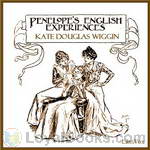 Penelope's English Experiences
Penelope's English Experiences is a fictional travelogue, which documents the experiences of three American ladies on a visit to England. Included are scenes in London and the village of Belvern, containing fanciful sketches of a West-end ball, portraits of domestic originals, etc., characterized by humorous trifling and droll exaggeration of English traits. By the author Mother Carey's Chickens, A Cathedral Courtship, etc. | |
 A Cathedral Courtship
A romantic comedy. A pretty young American girl tours English Cathedrals, with her very blue-blooded Aunt. Then boy meets girl. Boy chases girl. Boy loses girl. Boy finds girl. Finally, girl catches boy with the help of a mad bull. | |
|
Rose O' The River
Rose Wiley is a pretty country girl. She's engaged to Stephen Waterman, a country boy. She is quite content, until Claude Merril, a man from Boston, tells her that her love is ruining Stephen's life. A cute coming-of-age novel. | |
By: George Ade (1866-1944) | |
|---|---|
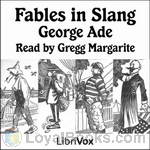 Fables in Slang
While a columnist for The Chicago Record humorist George Ade penned numerous “fables” which were subsequently collected into books. Fables in Slang is the first of these collections. It contains 26 satirical stories that lampoon phrenologists, idealists, snobs, fanatics and other ignorant fools of the day, most of which still wander through our modern lives. Jean Shepherd considered Ade a predecessor who made writers like James Thurber, Mike Royko, and himself possible. Fables in Slang was first published in 1899 by Herbert S. Stone and Company. | |
By: John S. C. Abbott (1805-1877) | |
|---|---|
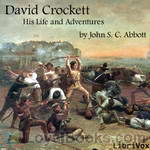 David Crockett: His Life and Adventures
David "Davy" Crockett (August 17, 1786 – March 6, 1836) was a celebrated 19th century American folk hero, frontiersman, soldier and politician. He is commonly referred to in popular culture by the epithet “King of the Wild Frontier.” He represented Tennessee in the U.S. House of Representatives, served in the Texas Revolution, and died at the Battle of the Alamo. This narrative attempts faithfully to record the influences under which David Crockett was reared and the incidents of his wild and wondrous life... | |
|
Empire of Russia from the Remotest Periods to the Present Time
A history of Russia from 500 B.C. to 1855 A.D., written by John Stevens Cabot Abbott, the brother of Jacob Abbott. | |
By: Gottfried Wilhelm Leibniz (1646-1716) | |
|---|---|
 The Monadology
The Monadology (La Monadologie, 1714) is one of Gottfried Leibniz’s best known works representing his later philosophy. It is a short text which sketches in some 90 paragraphs a metaphysics of simple substances, or monads. What he proposed can be seen as a modification of occasionalism developed by latter-day Cartesians. Leibniz surmised that there are indefinitely many substances individually ‘programmed’ to act in a predetermined way, each program being coordinated with all the others. This is the pre-established harmony which solved the mind body problem at the cost of declaring any interaction between substances a mere appearance, something which Leibniz accepted... | |
By: Ivan S. Turgenev (1818-1883) | |
|---|---|
|
Rudin
Rudin is the first and perhaps least known novel by Ivan Turgenev, a famous Russian writer best known for his short stories and the novel Fathers and Sons. The story focuses on a romantic involvement between Rudin and Natalya, a serious, intelligent young woman. The topic of the “superfluous man” and his inability to act, which was a major theme of Turgenev's literary work, is explored. – Adapted from https://en.wikipedia.org/wiki/Rudin by Lee Smalley | |
|
On the Eve
On the Eve appeared in 1860, two years before Fathers and Sons, Turgenev's most famous novel. It is set in the prior decade (by the end of the novel, the Crimean War (1853-56) has already broken out. It centers on the young Elena Nikolaevna Stakhov, daughter of Nikolai Arteyemvitch and Anna Vassilyevna Stahov. Misunderstood by both her parents (Nikolai Artemyevitch is at least as interested in his German mistress as in members of her family) she is on friendly terms with both the would-be professor Andrei Petrovitch Bersenyev and the rising young sculptor Pavel Yakovitch Shubin, both of whom might be -- or might not be -- in love with her... | |
By: Edmond Rostand (1868-1918) | |
|---|---|
|
Cyrano de Bergerac
One of the most beloved French plays of all time, Cyrano de Bergerac is a clever and tragic tale of truth concealed and love denied. Its titular character is a proud, daring swordsman and genius poet who has one terrible flaw: an abnormally large nose. Too afraid of rejection to confess his love for the beautiful Roxane, Cyrano helps her brainless but handsome suitor Christian to woo her, providing him with love letters while resolutely keeping his own passion a secret. | |
By: Ruth Plumly Thompson (1891-1976) | |
|---|---|
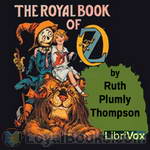 The Royal Book of Oz
The Royal Book of Oz (1921) is the fifteenth in the series of Oz books, and the first to be written by Ruth Plumly Thompson after L. Frank Baum’s death. Although Baum was credited as the author, it was written entirely by Thompson. The Scarecrow is upset when Professor Wogglebug tells him that he has no family, so he goes to where Dorothy Gale found him to trace his “roots.” Then he vanishes from the face of Oz. Dorothy and the Cowardly Lion mount a search for their friend, but when that is successful, they will need to become a rescue party! | |
By: Marion St. John Webb | |
|---|---|
 The House with the Twisting Passage
When Jenny goes to stay with her Aunt Abby, a caretaker in a grand old manor-house, she discovers a wonderful twisting passage on the second floor with an array of colourful characters living in the rooms along it – each of them with a story to tell. | |
By: Saint Thomas Aquinas (1225-1274) | |
|---|---|
|
Summa Theologica - 06 Pars Prima Secundae, On the Last End, On Human Acts
The Summa Theologica (or the Summa Theologiae or simply the Summa, written between 1265–1274) is the most famous work of Thomas Aquinas, even though it was never finished. It was intended as a manual for beginners and a compilation of all of the main theological teachings of that time. It summarizes the reasoning for almost all points of Christian theology in the West, which, before the Protestant Reformation, subsisted solely in the Roman Catholic Church. The Summa's topics follow a cycle: the existence of God, God's creation, Man, Man's purpose, Christ, the Sacraments, and back to God... | |
|
Summa Theologica - 12 Pars Secunda Secundae, Treatise on Gratuitous Graces and the States of Life
The Summa Theologica (or the Summa Theologiae or simply the Summa, written 1265–1274) is the most famous work of Thomas Aquinas (c. 1225–1274) although it was never finished. It was intended as a manual for beginners and a compilation of all of the main theological teachings of that time. It summarizes the reasoning for almost all points of Christian theology in the West, which, before the Protestant Reformation, subsisted solely in the Roman Catholic Church. The Summa's topics follow a cycle: the existence of God, God's creation, Man, Man's purpose, Christ, the Sacraments, and back to God... | |
By: Thomas Mayne Reid (1813-1883) | |
|---|---|
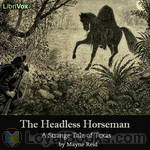 The Headless Horseman - A Strange Tale of Texas
The horse is perfect in all its parts—a splendid steed, saddled, bridled, and otherwise completely caparisoned. In it there appears nothing amiss—nothing to produce either wonder or alarm. But the man—the rider? Ah! About him there is something to cause both—something weird—something wanting! By heavens! it is the head! (Excerpt from the Prologue) The Headless Horseman is a novel by Mayne Reid written in 1865 or 1866 and is based on the author's adventures in the United States. The Headless Horseman or a Strange Tale of Texas was set in Texas and based on a South Texas folk tale... | |
By: Mayne Reid (1813-1883) | |
|---|---|
|
Gwen Wynn - A Romance of the Wye
Gwendoline Wynn, our heroine, is an orphan-heiress who lives on the river Wye. She will live with aunt until she comes of age and her money. Vivian Ryecroft, our hero and a captain in the Hussars, is on a leave of absence in Herefordshire, salmon fishing on the Wye. Gwen and Vivian have a chance, and brief, encounter on the Wye, and Vivian is enchanted. Will our hero and heroine find love? Will it last? | |
By: Thomas Mayne Reid (1818-1883) | |
|---|---|
|
Scalp Hunters
"Unroll the world’s map, and look upon the great northern continent of America. Away to the wild west, away toward the setting sun, away beyond many a far meridian, let your eyes wander. Rest them where golden rivers rise among peaks that carry the eternal snow. Rest them there. You are looking upon a land whose features are un-furrowed by human hands, still bearing the marks of the Almighty mould, as upon the morning of creation; a region whose every object wears the impress of God’s image... | |
|
Cliff Climbers
A plant hunter, Karl Linden, and his brother Caspar are on their way to the Himalayas to collect the plants of that region. Many adventures befell the brothers and their guides, all of which led to their being trapped in the mountains. This is a story of their escape from those mountains. (Ann Boulais) | |
|
Giraffe Hunters
The Young Yägers, Hans and Hendrik Von Bloom, Groot Willem and Arend Van Wyk, are again on a hunting expedition. This time, the reader will find their old acquaintances in Africa, on the banks of the Limpopo River. Here our young adventurers are looking for sport and wild animals. | |
By: Anges Strickland, Elisabeth Strickland (1796-1874) | |
|---|---|
 The Lives of the Queens of England
The Lives of the Queens of England is a multi-volumed work attributed to Agnes Strickland, though it was mostly researched and written by her sister Elizabeth. These volumes give biographies of the queens of England from the Norman Conquest in 1066. Although by today's standards, it is not seen as a very scholarly work, the Stricklands used many sources that had not been used before.Volume one includes the biographies of Matilda of Flanders, Matilda of Scotland, Adelicia of Louvaine, Matilda of Boulogne and Eleanora of Aquitaine.(Introduction by Ann Boulais) | |
By: Sara Ware Bassett (1872-1968) | |
|---|---|
 Flood Tide
Willie Spence may have been a bit eccentric by most standards, but he had a knack for creating gadgets in his small workshop at his home on Cape Cod. Whenever he was 'ketched' by an 'idee' he had to see it to completion, and always did. His small cottage on the Cape had become a labyrinth of string and wires tacked here and there so as to make life a bit challenging for his housekeeper Celestina. But she and most everyone else among the coastal towns and villages loved the old man for all his eccentricities as Willie spent his waning years just waiting for his ship to come in. | |