 |
Books Should Be Free Loyal Books Free Public Domain Audiobooks & eBook Downloads |
|
|
|
Books Should Be Free Loyal Books Free Public Domain Audiobooks & eBook Downloads |
|
Top Authors |
|---|
|
Book type:
Sort by:
|
By: Sigmund Freud (1856-1939) | |
|---|---|
 Dream Psychology
From the dawn of human consciousness, dreams have always fascinated us. Do they mean something? Do dreams help us see into the future? These questions have intrigued us for centuries. Sigmund Freud was one of the first people to examine dreams seriously and interpret them in the context of our waking lives. In Dream Psychology: Psychoanalysis for Beginners, the Austrian psychoanalyst, Dr Sigmund Freud shares his exciting early discoveries that there was indeed a connection between his patients' dreams and their mental disturbances... | |
 Reflections on War and Death
Anyone, as Freud tells us in Reflections on War and Death, forced to react against his own impulses may be described as a hypocrite, whether he is conscious of it or not. One might even venture to assert—it is still Freud’s argument—that our contemporary civilisation favours this sort of hypocrisy and that there are more civilised hypocrites than truly cultured persons, and it is even a question whether a certain amount of hypocrisy is not indispensable to maintain civilisation. When this... | |
 Totem and Taboo
Totem and Taboo: Resemblances Between the Mental Lives of Savages and Neurotics is a book by Sigmund Freud, published in German in 1913. It is a collection of four essays first published in the journal Imago (1912–13), employing the application of psychoanalysis to the fields of archaeology, anthropology, and the study of religion. The four essays are entitled: The Horror of Incest; Taboo and Emotional Ambivalence; Animism, Magic and the Omnipotence of Thoughts; and The Return of Totemism in Childhood. | |
 Leonardo da Vinci A Psychosexual Study of an Infantile Reminiscence
| |
|
Group Psychology and The Analysis of The Ego
| |
By: Saint Ambrose (337/340-397) | |
|---|---|
 On the Duties of the Clergy
Aurelius Ambrosius was a fourth century cleric who rose to become the Archbishop of Milan in 374 AD. His father was a powerful Roman general and the prefect of Gaul. His brother and sister were also consecrated as saints by the Catholic Church. As an infant, a swarm of bees settled over his face and flew away without harming the baby, but left behind a drop of honey and this was seen as a sign of his future eloquence and bees are often painted in his portraits as his symbols. Ambrosius (or Ambrose as he is referred to in English) was a highly learned man, well versed in Latin and Greek, theology and many other subjects... | |
 Concerning Virgins
Concerning Virgins (De Virginibus) is a series of letters, compiled into three “books,” St. Ambrose wrote to his sister, Manellia, These, perhaps Ambrose’s earliest writings, were written in 377 CE. Written in a rather light-handed non-technical style they appear as ethical guides to women who are contemplating entering nunneries. More importantly, they set the tone for Ambrose’s later writing on ethics. Concerning Virgins was referred to by other patristic writers including St. Jerome, St Augustine and Cassian, and are now included in the extra-biblical cannon of the early church fathers. | |
By: Maurice Leblanc (1864-1941) | |
|---|---|
 The Extraordinary Adventures of Arsène Lupin, Gentleman-Burglar
Two writers, famous in their own countries for creating immortal characters: Sir Arthur Conan Doyle in England and Maurice Leblanc in France. Their literary creations, Sherlock Holmes and Arsene Lupin are at two ends of the criminal spectrum. Holmes is a sleuth while Lupin is a burglar. When Maurice Leblanc introduces Sherlock Holmes in one of his Arsene Lupin stories, Conan Doyle is outraged. He sues Leblanc, who promptly changes the character's name to “Herlock Sholmes” and continues featuring... | |
 The Hollow Needle: Further Adventures of Arsène Lupin
Arsène Lupin returns in a wonderful story of disguises, love, and of course treasure. Once again, Lupin crosses paths with the famous Holmlock Shears. But this time Arsène matches wits with Isidore Beautrelet, Sixth-form Schoolboy. Every step that Lupin takes has Beautrelet right on his heels. Has Lupin finally met his match? Will Beautrelet discover the secret of the Hollow Needle? And has the gentleman burglar met another match as well, one who will lead him away from his life of crime forever? | |
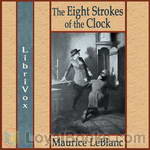 The Eight Strokes of the Clock
The Eight Strokes of the Clock is a collection of eight short stories by Maurice Leblanc. The stories have his most famous creation, Arsène Lupin, gentleman-thief, as main character. The eight stories, even though independent, have a leading thread: Lupin, under the name of Serge Rénine, trying to conquer the heart of a young lady, travels with her, solving eight mysteries on the way. | |
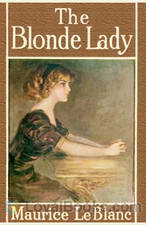 The Blonde Lady
In “The Blonde Lady, being a record of the duel of wits between Arsène Lupin and the English detective” – original title “Arsène Lupin contre Herlock Sholmes” – the gentleman-burglar once more meets his enemy, the English detective Herlock Sholmes. If in the last story of “Arsène Lupin, gentleman-burglar” Sherlock Holmes arrives too late (the name was at a later date changed to Herlock Sholmes in reply to complaints and threats by Conan Doyle regarding copyrights), in the two stories that compose “The Blonde Lady” these two great intellects are bound in opposite directions... | |
 The Teeth of the Tiger
Maurice Leblanc delivers another Arsene Lupin adventure set in World War I. | |
 The Confessions of Arsene Lupin
A collection of nine stories - or confessions - of the celebrated gentleman thief Arsene Lupin | |
 The Tremendous Event
| |
 The Golden Triangle The Return of Arsène Lupin
| |
 The Secret of Sarek
| |
 The Three Eyes
| |
|
The Frontier
| |
By: Albert Einstein (1879-1955) | |
|---|---|
 Relativity: The Special and General Theory
Einstein wrote this book for people who are interested in understanding the Theory of Relativity but aren't experts in scientific and mathematical principles. I'm sure many people have heard about Einstein's Theory of Relativity, but most of them don't really know what it is all about. This book gives them a chance to know more about this very famous theory without the need to take a Physics course first. This book is divided into three parts. The first part explains what special relativity is all about... | |
|
Sidelights on Relativity
Sidelights on Relativity contains ETHER AND THE THEORY OF RELATIVITY, an address delivered on May 5th, 1920, in the University of Leyden; and GEOMETRY AND EXPERIENCE, an expanded form of an address to the Prussian Academy of Sciences in Berlin on January 27th, 1921. (Intro from Project Gutenberg) | |
|
The Meaning of Relativity Four lectures delivered at Princeton University, May, 1921
| |
|
Relativity: The Special and the General Theory A Popular Exposition, 3rd ed.
| |
By: Founding Fathers of the United States | |
|---|---|
 The Constitution of the United States of America, 1787
The Declaration of Independence was signed on July 4, 1776. It announced that the thirteen American colonies, who were at war with Great Britain in the American Revolutionary War, no longer considered themselves part of the British Empire. They now called themselves a new nation, The United States of America. This famous document went on to become a well-known keystone of the human rights movement. However, the newly formed state had no real identity or philosophy and were merely a loose collection of states that had freed themselves from colonial rule... | |
 The Declaration of Independence of the United States of America
Declaration of Independence is the document in which the Thirteen Colonies declared themselves independent of the Kingdom of Great Britain and explained their justifications for doing so. It was ratified by the Continental Congress on July 4, 1776. | |
 Bill of Rights & Amendments to the US Constitution
The Constitution has a total of 27 amendments. The first ten, collectively known as the Bill of Rights, were ratified simultaneously. The following seventeen were ratified separately. | |
By: Edgar Lee Masters (1868-1950) | |
|---|---|
 Spoon River Anthology
Two hundred and twelve residents of a small town tell their stories without fear of recrimination or ridicule. The only difference is that they're all dead! The two hundred and forty-four poems that form the Spoon River Anthology by Edgar Lee Masters is really a series of epitaphs about the citizens of a fictional town called Spoon River and deals with the “plain and simple annals” of small town America. Edgar Lee Masters grew up in a small town in Illinois. His father's financial problems forced the young Masters to abandon ideas of college and take up a job instead... | |
|
Domesday Book
| |
|
Mitch Miller
| |
|
Toward the Gulf
| |
|
Children of the Market Place
| |
|
Songs and Satires
| |
By: Ayn Rand (1905-1982) | |
|---|---|
 Anthem
The title 'Anthem' is derived as an anthem to sense of self and self-governing thoughts. Anthem is a story of Equality 7-2521 who is a young man living in some unspecified future time and place. In this future era freedom and individual rights have been eradicated. The starring character of the novel is an inquisitive street cleaner. He lives in a society where people have lost their knowledge of individualism, to the extreme that people do not know words like 'I' or 'mine'. All the people live and work for their livelihood in collective groups, along with the people with power, namely the 'Councils'... | |