 |
Books Should Be Free Loyal Books Free Public Domain Audiobooks & eBook Downloads |
|
|
|
Books Should Be Free Loyal Books Free Public Domain Audiobooks & eBook Downloads |
|
Books on Politics |
|---|
|
Book type:
Sort by:
View by:
|
By: G. F. (George Frederick) Abbott | |
|---|---|
 Greece and the Allies 1914-1922
| |
By: G. K. Chesterton | |
|---|---|
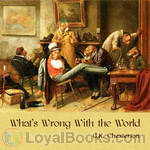 What's Wrong With the World
Gilbert Keith Chesterton (1874–1936) has been called the “prince of paradox.” Time magazine observed of his writing style: “Whenever possible Chesterton made his points with popular sayings, proverbs, allegories—first carefully turning them inside out.” His prolific and diverse output included journalism, philosophy, poetry, biography, Christian apologetics, fantasy and detective fiction. The title of Chesteron’s 1910 collection of essays was inspired by a title given to him two years earlier by The Times newspaper, which had asked a number of authors to write on the topic: “What’s wrong with the world?”... | |
 A Utopia of Usurers
“Now I have said again and again (and I shall continue to say again and again on all the most inappropriate occasions) that we must hit Capitalism, and hit it hard, for the plain and definite reason that it is growing stronger. Most of the excuses which serve the capitalists as masks are, of course, the excuses of hypocrites. They lie when they claim philanthropy; they no more feel any particular love of men than Albu felt an affection for Chinamen. They lie when they say they have reached their position through their own organising ability... | |
By: Georg Jellinek (1851-1911) | |
|---|---|
|
The Declaration of the Rights of Man and of Citizens
| |
By: George Bernard Shaw (1856-1950) | |
|---|---|
 Major Barbara
George Bernard Shaw's Major Barbara focuses on the family of aristocratic Lady Britomart Undershaft and her estranged husband Andrew, a millionaire armaments manufacturer. Their daughters Sarah and Barbara are both engaged to be married, and Lady Britomart decides to ask Andrew for monetary support. Barbara is a Major in the Salvation Army, and agrees to let her father visit the mission in the East End of London where she works. In exchange, she agrees to visit his munitions factory. The conflict between Barbara's philanthropic idealism and her father's hard-headed capitalism clash when he decides he wants to fund the Salvation Army... | |
By: George Bush (1924-) | |
|---|---|
|
State of the Union Address
| |
By: George Frisbie Hoar (1826-1904) | |
|---|---|
|
Autobiography of Seventy Years, Vol. 1-2
| |
By: George S. (George Sewall) Boutwell (1818-1905) | |
|---|---|
|
Reminiscences of Sixty Years in Public Affairs, Vol. 1
| |
|
Reminiscences of Sixty Years in Public Affairs, Vol. 2
| |
By: George W. (George Walker) Bush (1946-) | |
|---|---|
|
State of the Union Address
| |
By: George Washington (1732-1799) | |
|---|---|
|
State of the Union Address
| |
By: George Washington Julian (1817-1899) | |
|---|---|
|
Political Recollections 1840 to 1872
| |
By: George Washington Plunkitt (1842-1924) | |
|---|---|
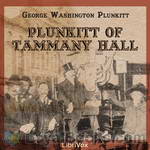 Plunkitt of Tammany Hall
“I seen my opportunities and I took ‘em.”, George Washington Plunkitt of Tamminy Hall. There’s honest graft and dishonest graft according to Plunkitt. Listen to this candid discourse from a 19th century politician, and decide for yourself if things have changed. | |
By: George William Russell (1867-1935) | |
|---|---|
|
The National Being Some Thoughts on an Irish Polity
| |
By: Georgii Valentinovich Plekhanov (1856-1918) | |
|---|---|
|
Anarchism and Socialism
| |
By: Gerald R. Ford (1913-) | |
|---|---|
|
State of the Union Address
| |
By: Gerald Stanley Lee (1862-1944) | |
|---|---|
|
The Ghost in the White House
| |
By: Goldsworthy Lowes Dickinson (1862-1932) | |
|---|---|
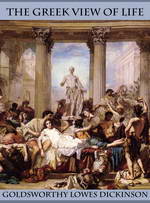 The Greek View of Life
“With the Greek civilisation beauty perished from the world. Never again has it been possible for man to believe that harmony is in fact the truth of all existence.”This elegantly-written work provides a splendid introduction to the Greeks of the classic period: how they thought, wrote, and organised their lives and loves. Although it dates from the 1890s, there is very little about it that has dated. To its author’s credit, the subject of “Greek love” is dealt with in a sane and factual context - despite the judicial assassination of Oscar Wilde going on in the background... | |
By: Grover Cleveland (1837-1908) | |
|---|---|
|
State of the Union Address
| |
By: H. G. Wells (1866-1946) | |
|---|---|
 Ann Veronica
Ann Veronica was a controversial book detailing the development of a naive school girl into a “New Woman”. When it was published, the Spectator described it as a “poisonous book … capable of poisoning the minds of those who read it.” Although it is unlikely to offend modern listeners in this way, this novel addresses many feminist issues that are still relevant today. | |
 A Modern Utopia
H. G. Wells's proposal for social reform was the formation of a world state, a concept that would increasingly preoccupy him throughout the remainder of his life. One of his most ambitious early attempts at portraying a world state was A Modern Utopia (1905). A Modern Utopia was intended as a hybrid between fiction and 'philosophical discussion'. Like most utopists, he has indicated a series of modifications which in his opinion would increase the aggregate of human happiness. Basically, Wells' idea of a perfect world would be if everyone were able to live a happy life... | |
 Anticipations
Wells considered this book one of his most important, a natural follow-up to such works as his Man of the Year Million and The Time Machine. His goal was to get people to think and act in new ways. The book starts with a look at how humans get along socially and how they carry out their business ventures. It then discusses how these elements influence others, such as politics, the world of work, and education. H. G. tried to make clear how the current social order was disintegrating without preparing another to take its place. He then traced the roots of democracy, which in its present state he saw as unworkable. Instead, he proposed a new republic. He also critiqued modern warfare. | |
|
New Worlds For Old A Plain Account of Modern Socialism
| |
|
Washington and the Riddle of Peace
As an observer at the WASHINGTON CONFERENCE FOR THE LIMITATION OF ARMAMENTS held in 1921 and attended by the victorious nations of The Great War, the acclaimed author H. G. Wells wrote 29 short essays that were serialized in the New York World and other newspapers. This book is a collection of those essays. They are not a record or description of the Conference, but the impressions of one visitor. Wells noted that the failed League of Nations was the first American initiative toward an organized world peace, and in its absence “the American mind has produced this second experiment, which has been tried with the loosest of constitutions and the most severely defined and limited of aims... | |
By: H. Rider Haggard (1856-1925) | |
|---|---|
|
The Brethren
Set in the days of the Crusaders, this books tells of a young maiden named Rosamund, and her twin cousins. Godwin is the grey eyed thoughtful man, and Wulf is the blue eyed warrior. They are both knights of England and they are both in love with their fair cousin. But the riddle of the story is which does Rosamund love?The adventure begins when Rosamund is taken from England and carried to the East. The plot thickens as the two young knights follow her in hopes of rescuing her from the Muslim leader, Saladin... | |
By: H. W. (Henry William) Lee (1865-1932) | |
|---|---|
|
Bolshevism: A Curse & Danger to the Workers
| |
By: Harold Joseph Laski (1893-1950) | |
|---|---|
|
Political Thought in England from Locke to Bentham
| |
By: Harry Furniss (1854-1925) | |
|---|---|
|
M. P.'s in Session From Mr. Punch's Parliamentary Portrait Gallery
| |
By: Harry S. Truman (1884-1972) | |
|---|---|
|
State of the Union Address
| |
By: Harvey Jerrold O'Higgins (1876-1929) | |
|---|---|
|
Under the Prophet in Utah; the National Menace of a Political Priestcraft
| |
By: Henrietta Elizabeth Marshall (1867-1941) | |
|---|---|
 This Country of Ours
History made interesting for young readers—This Country of Ours by Henrietta Elizabeth Marshall provides a simple and easy to comprehend way of looking at the history of the United States. Arranged chronologically in seven long chapters, it presents events in a story form, making them memorable and very different from other formats. One of the challenges that writers of history face is about fleshing out the characters and making the bland repetition of dates and dynasties seem relevant to modern day readers... | |
By: Henry Adams (1838-1918) | |
|---|---|
 Democracy - An American Novel
Not until after his death in 1918 was it revealed that Henry Adams was the anonymous author of Democracy, which had been published to great acclaim in 1880. Though the book avoids dates and the characters are fictitious, the setting is no doubt that of Washington in the 1870s, the age of Presidents Grant and Hayes. The young widow, Madeleine Lee, wealthy and independent, is the protagonist, who leaves her New York for Washington to turn her intelligence to politics and to see what makes her country tick... | |
By: Henry C. Northam | |
|---|---|
|
Civil Government for Common Schools
| |
By: Henry Clay (1777-1852) | |
|---|---|
|
Henry Clay's Remarks in House and Senate
| |
By: Henry de Rosenbach Walker (1867-) | |
|---|---|
|
Australasian Democracy
| |
By: Henry Jones Ford (1851-1925) | |
|---|---|
|
The Cleveland Era; a chronicle of the new order in politics
| |
By: Henry Ward Beecher (1813-1887) | |
|---|---|
|
Conflict of Northern and Southern Theories of Man and Society Great Speech, Delivered in New York City
| |
By: Herbert Hoover (1874-1964) | |
|---|---|
|
State of the Union Address
| |
By: Hilaire Belloc (1870-1953) | |
|---|---|
 The Free Press
I propose to discuss in what follows the evil of the great modern Capitalist Press, its function in vitiating and misinforming opinion and in putting power into ignoble hands; its correction by the formation of small independent organs, and the probably increasing effect of these last. (Introduction by Hilaire Belloc) | |
By: Hippolyte Taine (1828-1893) | |
|---|---|
|
The Ancient Regime
| |
|
The Modern Regime, Volume 1
| |
|
The Modern Regime, Volume 2
| |
By: Horace Curzon Plunkett (1854-1932) | |
|---|---|
|
Ireland In The New Century
| |
By: Howard B. (Howard Benjamin) Grose (1851-1939) | |
|---|---|
|
Aliens or Americans?
| |
By: Intercollegiate Peace Association | |
|---|---|
|
Prize Orations of the Intercollegiate Peace Association
| |
By: Iraq Study Group (U.S.) | |
|---|---|
|
The Iraq Study Group Report
| |
By: Ivan S. Turgenev (1818-1883) | |
|---|---|
|
Virgin Soil
| |
By: J. Allen (James Allen) Smith (1860-1926) | |
|---|---|
|
The Spirit of American Government A Study Of The Constitution: Its Origin, Influence And Relation To Democracy
| |
By: J. Ellis Barker (1870-1948) | |
|---|---|
|
British Socialism An Examination of Its Doctrines, Policy, Aims and Practical Proposals
| |
By: J. Hampton (Joseph Hampton) Moore (1864-1950) | |
|---|---|
|
How Members of Congress Are Bribed
| |
By: J. Q. (James Quay) Howard (1836-1912) | |
|---|---|
|
The Life, Public Services and Select Speeches of Rutherford B. Hayes
| |
By: J. T. (James Thompson) McCleary (1853-1924) | |
|---|---|
|
Studies in Civics
| |
By: J. W. (James William) Sullivan (1848-) | |
|---|---|
|
Direct Legislation by the Citizenship through the Initiative and Referendum
| |
By: J. W. (John Wesley) Dafoe (1866-1944) | |
|---|---|
|
Laurier: A Study in Canadian Politics
| |
By: Jack London (1876-1916) | |
|---|---|
 The Iron Heel
A dystopian novel about the terrible oppressions of an American oligarchy at the beginning of the Twentieth Century, and the struggles of a socialist revolutionary movement. (Introduction by Matt Soar) | |
By: James Bryce Bryce (1838-1922) | |
|---|---|
|
Impressions of South Africa
| |
By: James Buchanan (1791-1868) | |
|---|---|
|
State of the Union Address
| |
By: James Hannay (1842-1910) | |
|---|---|
|
Wilmot and Tilley
| |
By: James Harrington (1611-1677) | |
|---|---|
|
The Commonwealth of Oceana
| |
By: James K. (James Knox) Polk (1795-1849) | |
|---|---|
|
State of the Union Address
| |