 |
Books Should Be Free Loyal Books Free Public Domain Audiobooks & eBook Downloads |
|
|
|
Books Should Be Free Loyal Books Free Public Domain Audiobooks & eBook Downloads |
|
Top Authors |
|---|
|
Book type:
Sort by:
|
By: Rex Beach (1877-1949) | |
|---|---|
 Silver Horde
The Silver Horde , is set in Kalvik, a fictionalized community in Bristol Bay, Alaska, and tells the story of a down on his luck gold miner who discovers a greater wealth in Alaska's run of salmon (silver horde) and decides to open a cannery. To accomplish this he must overcome the relentless opposition of the "salmon trust," a fictionalized Alaska Packers' Association, which undercuts his financing, sabotages his equipment, incites a longshoremen's riot and bribes his fishermen to quit. The story line includes a love interest as the protagonist is forced to choose between his fiance, a spoiled banker's daughter, and an earnest roadhouse operator, a woman of "questionable virtue." | |
|
Flowing Gold
Unfairly given a dishonorable discharge from the army, Calvin Gray goes to Dallas, where he manages to win the trust of a jeweler and is able to sell a number of diamonds to the newly oil rich Briskows. He makes friends with the family and helps them adjust to their newly found riches. The Briskows, in turn, help him prove false the charges that caused his dismissal from the army. | |
By: Samuel D. Gordon (1859-1936) | |
|---|---|
|
Quiet Talks on Prayer
An open life, an open hand, open upward, is the pipe line of communication between the heart of God and this poor befooled old world. Our prayer is God’s opportunity to get into the world that would shut Him out. (From the first chapter) | |
By: Royal Baking Powder Company | |
|---|---|
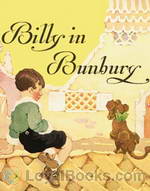 Billy in Bunbury
This 1924 poem/recipe book, designed as promotional material for the Royal Baking Powder Company, is set in the Oz community of Bunbury. Little Billy, who won’t eat, is taken to the delicious kingdom Bunbury by King Hun Bun to help whet his appetite. Meanwhile, the King leaves the boy’s mother with a recipe book for treats, made easy by the use of Price’s Baking Powder. Written by Ruth Plumly Thompson, though neither her name, nor the illustrator’s (Gertrude Kay) appears on the book. | |
By: Garrett P. Serviss (1851-1929) | |
|---|---|
|
Columbus of Space
A classic science fiction adventure in the style of and dedicated to the readers of Jules Verne. An independent scientist discovers the secret of “inter-atomic energy”, and with it builds a craft which carries himself and three friends to Venus, where they discover the dwellers of the dark side, incredible floating cities, and peril at every turn. | |
By: Kate Douglas Wiggins (1856-1923) | |
|---|---|
 Mother Carey’s Chickens
“When Captain Carey went on his long journey into the unknown and uncharted land, the rest of the Careys tried in vain for a few months to be still a family, and did not succeed at all. They clung as closely to one another as ever they could, but there was always a gap in the circle where father had been….. The only thing to do was to remember father's pride and justify it, to recall his care for mother and take his place so far as might be; the only thing for all, as the months went on, was to be what mother called the three Bs -- brave, bright, and busy... | |
By: Robert J. Burdette (1844-1914) | |
|---|---|
 Chimes From A Jester’s Bells
Part I. The Story of Rollo; Mr. Holliday knows all there is to know about raising children, or at least he thinks he does. His attempts to train his son, Rollo, "in the way he should go," are well-meant, but hilariously unsuccessful--or are they? I believe this is a sort of spoof of the “Rollo” series for children, that was written by Jacob Abbot in the mid 19th century. The characters have the same names and the chapters have a little Q&A at the end like the Abbot books, except these are definitely tongue-in-cheek... | |
By: Sarah Knowles Bolton | |
|---|---|
 Lives of Girls Who Became Famous
This book is a collection of short biographies of notable women, including Harriet Beecher Stowe, Louisa May Alcott, Florence Nightingale, and many others. | |
By: Hamlin Garland (1860-1940) | |
|---|---|
|
Son of the Middle Border
In all the region of autobiography, so far as I know it, I do not know quite the like of Mr. Garland's story of his life, and I should rank it with the very greatest of that kind in literature. . . . It is the poet who sees the vast scale of human struggle with nature or the things she will withhold unless they are forced from her by man's tireless toil and mighty mechanism, and in the vision he knows a battle-joy as distinctive of this Son of the Middle Border as his fidelity to the sordid and squalid details of the campaign, or his exultation of the beauty of the West which he has so passionately hated and finally so passionately loves... | |
By: Dolf Wyllarde | |
|---|---|
 The Pathway of the Pioneer
The story of seven girls who have banded themselves together for mutual help and cheer under the name of “Nous Autres.” They represent, collectively, the professions open to women of no deliberate training, though well educated. They are introduced to the reader at one of their weekly gatherings and then the author proceeds to depict the home and business life of each one individually. (From the 1909 back-of-book advertisement) | |
By: Carolyn Steward Taylor | |
|---|---|
|
Werewolf -- Five Pieces
Five stories and essays about werewolves. | |
By: Laurence M. Janifer (1933-2002) | |
|---|---|
|
Supermind
FBI agent Kenneth Malone lives in a world where psionic powers such as telepathy and teleportation exist. He must cope with them as well as an FBI Director who leaves Malone continually confused about what situation he is being asked to handle and what he is expected to do about it. Someone or something is causing confusion in the U.S. Government, Unions, The Mafia, and other sectors of society and Malone has been given the job of finding the source of the confusion. A good story composed of science fiction and slap stick comedy with a bit of romance thrown into the mix. | |
By: Eugene O'Neill | |
|---|---|
 Anna Christie
Eugene O'Neill's drama Anna Christie was first produced on Broadway in 1921 and received the Pulitzer Prize in 1922. It focuses on three main characters: Chris Christopherson, a Swedish captain of a coal barge and longtime seaman, his daughter Anna, who has grown up separated from her father on a Minnesota farm, and Mat Burke, an Irish stoker who works on steamships. At the beginning of the play Chris and Anna are reunited after fifteen years apart. Anna comes to live on her father's coal barge, but hides the secret of her past from him. When she meets Mat after an accident in the fog, they almost immediately fall in love - but Anna finds that forging a new future will not be easy. | |
By: William Carleton (1794-1869) | |
|---|---|
 The Black Prophet - A Tale of Irish Famine
A story about the Irish, just before the onset of the famine of 1847, with all the color and dialogue of a man who lived it. | |
By: Arthur Morrison (1863-1945) | |
|---|---|
 A Child of the Jago
Arthur George Morrison (1 November 1863, Poplar, London - 4 December 1945, Chalfont St Peter, Buckinghamshire) was an English author and journalist known for his realistic novels about London's East End and for his detective stories. Morrison's most famous novel is A Child of the Jago, published in 1896, The novel described in graphic detail living conditions in the East End, including the permeation of violence into everyday life (it was a barely fictionalized account of life in the Old Nichol Street Rookery). (Introduction by Wikipedia and Algy Pug) | |
By: Charlotte Mew (1869-1928) | |
|---|---|
 The Farmer's Bride
The Farmer's Bride is a collection of 28 poems by British modernist writer Charlotte Mew. The original edition was published in 1916; this edition, published in 1921, contains 11 more poems. Mew's poetry is varied in style and content and manifests a strong interest in love, longing, death, and nature. Mew's life was marked by loneliness and depression, and she eventually committed suicide. Her work earned her the admiration of her peers, including Virginia Woolf, who characterized her as "very good and quite unlike anyone else." | |
By: Confucius (551 BCE-479 BCE) | |
|---|---|
 Confucian Analects
The Analects, or Lunyu (simplified Chinese: 论语; traditional Chinese: 論語; pinyin: Lún Yǔ; literally "Classified/Ordered Sayings"), also known as the Analects of Confucius, are considered a record of the words and acts of the central Chinese thinker and philosopher Confucius and his disciples, as well as the discussions they held. Written during the Spring and Autumn Period through the Warring States Period (ca. 475 BC - 221 BC), the Analects is the representative work of Confucianism and continues to have a substantial influence on Chinese and East Asian thought and values today... | |
By: Patanjali | |
|---|---|
 The Yoga Sutras of Patanjali
Yoga sutras by Patanjali is a seminal work in yoga, this book is more about control of mind and the true goal of yoga. The sutras are extremely brief, and the translation in neat English makes it very easy for people to understand the ancient Sanskrit text. It starts with the birth and growth of spiritual man through the control of mind. In all, this is a "all in one" book for yoga philosophy written by the master himself. | |
By: David Garnett (1892-1981) | |
|---|---|
 Lady into Fox
When Sylvia Tebrick, the 24-year-old wife of Richard Tebrick, suddenly turns into a fox while they are out walking in the woods, Mr. Tebrick sends away all the servants in an attempt to keep Sylvia's new nature a secret. Both then struggle to come to terms with the problems the change brings about. | |
By: Harold L. Goodwin (1914-1990) | |
|---|---|
|
Rip Foster Rides the Gray Planet
"Foster, Lieutenant, R. I. P.," blared the voice horn, and five minutes later Rip Foster was off into space on an assignment more exciting than any he had ever imagined. He could hardly believe his ears. Could a green young Planeteer, just through his training, possibly carry out orders like these? Sunny space, what a trick it would be! From the moment Rip boards the space ship Scorpius there is a thrill a minute. He and his nine daring Planeteers must cope with the merciless hazing of the spacemen commanding the ship, and they must outwit the desperate Connies, who threaten to plunge all of space into war... | |
By: Henry Lawson (1867-1922) | |
|---|---|
|
Shame of Going Back
Henry Archibald Hertzberg Lawson was an Australian writer and poet. Along with his contemporary Banjo Paterson, Lawson is among the best-known Australian poets and fiction writers of the colonial period and is often called Australia's "greatest short story writer". | |
By: Harold L. Goodwin (1914-1990) | |
|---|---|
|
Smugglers' Reef
Seventh entry in the Rick Brant Science Mystery Adventure series has Rick and buddy Scott using infrared technology on the trail of smuggling no-goodniks in the vicinity of Spindrift Island, Rick's home and location of his dad's laboratory, off the New Jersey & New York coast. | |
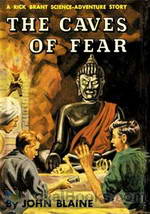 Caves of Fear
Entry in the Rick Brant series by Goodwin under the name John Blaine, which began in 1947. 'Rick and Scotty travel to the Himalayas again, this time to stop nuclear materials from falling into the wrong hands.' says Wikipedia. | |
By: William Hazlitt (1778-1830) | |
|---|---|
 Liber Amoris
Liber Amoris is unlike anything Hazlitt wrote and probably like nothing you've come across before. On the face of it it tells the story of Hazlitt's infatuation with his landlords daughter. Hazlitt was middle aged and she young and pretty, a bit of a coquette from the sound of it. It turned out badly for Hazlitt and the book tells the story of this doomed love. Critics have always been divided about the merit of the piece. Even those who see its merit often feel more comfortable with his polished literary works, and perhaps rightly so... | |
By: Mrs. Henry Wood (1814-1887) | |
|---|---|
 East Lynne
Ellen Wood (1814-1887) was an English novelist, better known as Mrs. Henry Wood. She wrote over 30 novels, many of which (especially East Lynne which was a Victorian best seller and is still sometimes performed as a drama) enjoyed remarkable popularity. Lady Isabel Carlyle, a beautiful and refined young woman, leaves her hard-working but neglectful lawyer-husband and her infant children to elope with an aristocratic suitor. After he deserts her, and she bears their illegitimate child, Lady Isabel disguises herself and takes the position of governess in the household of her husband and his new wife". Summary by Wikipedia | |
By: Isabella L. Bird (1831-1904) | |
|---|---|
|
Unbeaten Tracks in Japan
Isabella Lucy Bird was a 19th century English traveller, writer, and natural historian. She was a sickly child, however, while she was travelling she was almost always healthy. Her first trip, in 1854, took her to America, visiting relatives. Her first book, The Englishwoman in America was published anonymously two years later. Unbeaten Tracks in Japan is compiled of the letters she sent to her sister during her 7 months sojourn in Japan in 1878. Her travels there took her from Edo (now called Tokyo) through the interior - where she was often the first foreigner the locals had met - to Niigata, and from there to Aomori... | |
|
Among the Tibetans
Isabella L. Bird was an English traveller, writer and natural historian. She was travelling in the Far East alone at a time when such endeavours were risky and dangerous even for men and large, better equipped parties. In "Among the Tibetans", Bird describes her tour through Tibet with her usual keen eye: From descriptions of the landscape and flora to the manners, customs and religion of the local people we get a fascinating account of a world long past. | |
By: Dion Clayton Calthrop (1878-1937) | |
|---|---|
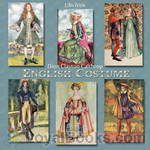 English Costume
The world, if we choose to see it so, is a complicated picture of people dressing and undressing. The history of the world is composed of the chat of a little band of tailors seated cross-legged on their boards; they gossip across the centuries, feeling, as they should, very busy and important. As you will see, I have devoted myself entirely to civil costume—that is, the clothes a man or a woman would wear from choice, and not by reason of an appointment to some ecclesiastical post, or to a military calling, or to the Bar, or the Bench. Such clothes are but symbols of their trades and professions, and have been dealt with by persons who specialize in those professions. | |
By: Charles Alexander Eastman (1858-1939) | |
|---|---|
|
Indian Child Life
The author was raised as an American Indian and describes what it was like to be an Indian boy (the first 7 chapters) and an Indian Girl (the last 7 chapters). This is very different from the slanted way the white man tried to picture them as 'savages' and 'brutes.'Quote: Dear Children:—You will like to know that the man who wrote these true stories is himself one of the people he describes so pleasantly and so lovingly for you. He hopes that when you have finished this book, the Indians will seem to you very real and very friendly... | |
By: Charles Alexander Eastman (1858-1939) | |
|---|---|
|
Indian To-day
Based in part upon the author's own observations and personal knowledge, it was the aim of the book to set forth the status and outlook of the North American Indian. He addressed issues such as Indian schools, health, government policy and agencies, and citizenship in this book. In connection with his writings, Eastman was in steady demand as a lecturer and public speaker with the purpose of interpreting his race to the present age. | |
By: William Henry Davies (1871-1940) | |
|---|---|
|
Foliage: Various Poems
W. H. Davies was a Welsh poet and writer. Davies spent a significant part of his life in the United Kingdom and United States, becoming one of the most popular poets of his time. Davies is usually considered one of the Georgian poets, although much of his work is atypical of the style and themes adopted by others of the genre. | |
By: Joseph Plumb Martin (1760-1850) | |
|---|---|
 A Narrative of a Revolutionary Soldier
Joining the Continental Army as a teenager, Joseph Plumb Martin spent the next eight years fighting in the Revolutionary War as an enlisted man. His memoirs tell in detail his experiences during that time...the bitter cold, hunger, loss of life, long marches, and fear of battle. He also includes tales of fishing, hunting, and other activities...including encounters with a "saucy miss". His narrative reveals much about American life at the time and is one of the fullest and best accounts of the Revolutionary War, presented from a private's point of view.The book has been later republished under the names Private Yankee Doodle and Memoir of a Revolutionary Soldier. | |