 |
Books Should Be Free Loyal Books Free Public Domain Audiobooks & eBook Downloads |
|
|
|
Books Should Be Free Loyal Books Free Public Domain Audiobooks & eBook Downloads |
|
Top Authors |
|---|
|
Book type:
Sort by:
|
By: Susanna Rowson (1762-1824) | |
|---|---|
 Charlotte Temple
Charlotte Temple, a cautionary tale for young women, follows the unfortunate adventures of the eponymous heroine as she is seduced by a dashing soldier, Montraville. Influenced by both her lover and an unruly teacher at her boarding school, she is persuaded to run away to America, where she is eventually abandoned by Montraville after he becomes bored, leaving her alone and pregnant. First published in England in 1791, it went on to become America's bestselling novel, only being ousted by Harriet Beecher Stowe's Uncle Tom's Cabin. | |
By: Jim Kjelgaard (1910-1959) | |
|---|---|
 The Black Fawn
Bud Sloan was an orphan who had been 'sold out' of the orphanage to work on a farm once he'd been old enough to labor. The farm where he was to work was owned by an aging farmer and his wife who had raised a large family and were now left alone. One day, after his chores were done, Bud wandered into the woods nearby and with mouth agape, he noticed a newborn jet black fawn all alone and apparently confused in his new surroundings. Bud resolved that day that this baby fawn was just like himself, an orphan, and would be bound to him in spirit... | |
By: Franz Liszt (1811-1886) | |
|---|---|
|
Life of Chopin
Chopin was a romantic era Polish composer. This work is a memoir by Liszt who knew Chopin both as man and artist. This memoir gives a unique understanding to the psychological character of the compositions of Chopin. It also offers Liszt's insight into some of Chopin's polonaises, especially the grand polonaise in F sharp minor. Liszt explains the strange emotion "ZAL" which is inclosed in his compositions. Then, presents a brief sketch on the lives of other great people in Chopin's circle. After that, Liszt discusses Chopin's fame and early life. Finally, Liszt gives a detailed account on Chopin's sufferings due to ill health and the unfortunate departure of the great composer. | |
By: Westminster Divines (1646) | |
|---|---|
|
The Westminster Confession of Faith
The Westminster Confession of Faith is a Reformed confession of faith, in the Calvinist theological tradition. Although drawn up by the 1646 Westminster Assembly, largely of the Church of England, it became and remains the 'subordinate standard' of doctrine in the Church of Scotland, and has been influential within Presbyterian churches worldwide. | |
By: Martha Summerhayes (1844-1911) | |
|---|---|
|
Vanished Arizona: Recollections of the Army Life of a New England Woman
This is the lively autobiography of Martha Summerhayes, the wife of an officer in the American Army. Here, she tells many stories about life and conditions in different camps and forts in which she lived with her expanding family, people along the way, and Journeys. | |
By: Andrew Carnegie (1835-1919) | |
|---|---|
 James Watt
This biography of the inventor James Watt covers his early years, successes and failures, and legacy. | |
|
Autobiography of Andrew Carnegie
This autobiography of Andrew Carnegie is a very well written and interesting history of one of the most wealthy men in the United states. He was born in Scotland in 1835 and emigrated to America in 1848. Among his many accomplishments and philanthropic works, he was an author, having written, besides this autobiography, Triumphant Democracy (1886; rev. ed. 1893), The Gospel of Wealth, a collection of essays (1900), The Empire of Business (1902), and Problems of To-day (1908)]. Although this autobiography was written in 1919, it was published posthumously in 1920. | |
By: Wassily Kandinsky (1866-1944) | |
|---|---|
|
Concerning the Spiritual in Art
Published in 1911, Kandinsky's book compares the spiritual life of humanity to a pyramid -- the artist has a mission to lead others to the pinnacle with his work. The point of the pyramid is those few, great artists. It is a spiritual pyramid, advancing and ascending slowly even if it sometimes appears immobile. During decadent periods, the soul sinks to the bottom of the pyramid; humanity searches only for external success, ignoring spiritual forces. | |
By: Percy Marks (1891-1956) | |
|---|---|
|
The Plastic Age
The Plastic Age (1924) is a novel by Percy Marks, which tells the story of co-eds at a fictional college called Sanford. With contents that covered or implied hazing, partying, and "petting", the book sold well enough to be the second best-selling novel of 1924. The following year, it was adapted into a film of the same name, starring Clara Bow. | |
By: Leonid Nikolayevich Andreyev (1871-1919) | |
|---|---|
 The Seven Who Were Hanged
"I am very glad that "The Story of the Seven Who Were Hanged" will be read in English. The misfortune of us all is that we know so little, even nothing, about one another—neither about the soul, nor the life, the sufferings, the habits, the inclinations, the aspirations of one another. Literature, which I have the honor to serve, is dear to me just because the noblest task it sets before itself is that of wiping out boundaries and distances."-- Leonid Andreyev, in a letter to Herman Bernstein | |
|
Man Who Found the Truth
An old man, accused of having murdered his family as a young man, spends a lifetime in prison. With brilliant psychological insight so characteristic of Leonid Andreyev's work, we follow this man telling his story about his obsession with truth and lies and his religion of the iron grate, tinged with madness, and not necessarily reliable.. | |
By: Sōseki Natsume (1867-1916) | |
|---|---|
 Botchan
Botchan is the story of a young math teacher from Tokyo whose first assignment takes him to a middle school in the country side. His arrival there is not very lucky: The pupils are bound to test his perseverance and cheerily comments every one of his perceived missteps. In the teacher's room, he soon finds himself in the middle of an intrigue between the jovial "Porcupine" and the fat "Hubbard Squash" on one side, and the effeminate "Red Shirt" and his follower "Clown" on the other. Will Botchan choose the right side in the end? Botchan - with morality as the main theme - is one of the most popular novels in Japan... | |
By: Mildred A. Wirt Benson (1905-2002) | |
|---|---|
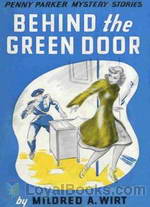 Behind the Green Door
Penny Parker is a teen-aged sleuth and amateur reporter with an uncanny knack for uncovering and solving unusual, sometimes bizarre mysteries. The only daughter of widower Anthony Parker, publisher of the "Riverview Star," Penny has been raised to be self-sufficient, outspoken, innovative, and extraordinarily tenacious. Her cheerful, chatty manner belies a shrewd and keenly observant mind. Penny was the creation of Mildred A. Wirt, who was also the author of the original Nancy Drew series (under the pseudonym Carolyn Keene)... | |
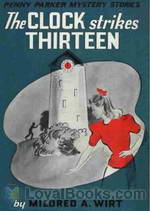 Clock Strikes Thirteen
Penny Parker is a teen-aged sleuth and amateur reporter who has an uncanny knack for uncovering and solving unusual, sometimes bizarre mysteries. The only daughter of widower Anthony Parker, publisher of the "Riverview Star," Penny has been raised to be self-sufficient, outspoken, innovative, and extraordinarily tenacious. Her cheerful, chatty manner belies a shrewd and keenly observant mind. Penny was the creation of Mildred A. Wirt, who was also the author of the original Nancy Drew series (under the pseudonym Carolyn Keene)... | |
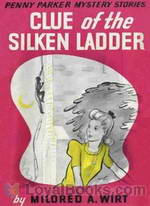 Clue of the Silken Ladder
In THE CLUE OF THE SILKEN LADDER, Penny investigates multiple mysteries. What is the purpose of the singular silken ladder made by the secretive and somewhat sinister old Japanese curio shop owner? How can the "Riverview Star" obtain evidence that a popular troup of spiritualists really are heartless con artists? Last, who is perpetrating the gravity-defying burglaries that have rocked the town ? Meanwhile, the Parker housekeeper, Mrs. Weems, has come into an inheritance and plans to leave Riverview, much to the Parkers' dismay... | |
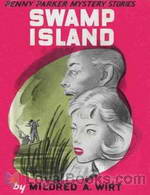 Swamp Island
Late entry in the Penny Parker teen girl mystery series (1939-47) by one of the early ghostwriters (as Carolyn Keene) of Nancy Drew concerns an escaped embezzler, his revenge on the reporter whose articles helped convict him, and a long missing $50 grand. | |
By: August F. Jaccaci | |
|---|---|
 On the Trail of Don Quixote, Being a Record of Rambles in the Ancient Province of La Mancha
On the Trail of Don Quixote is an engaging 1890’s “record of rambles in the Ancient Province of La Mancha” by two artist friends, French author August Jaccaci and Spanish illustrator Daniel Vierge. “Both lovers of the book wherein are recounted the adventures of the good Knight and of his faithful Squire,” as Jaccaci explains, the two men set out to record -Jaccaci in evocative prose, and Vierge in pen and ink drawings - their exploration of the landmarks of Cervantes’ “immortal romance... | |
By: H. C. Bailey (1878-1961) | |
|---|---|
 Colonel Greatheart
This is an unusual story of the English Civil War. There is a good account of the Battle of Newbury, and many historic figures appear: Cromwell (very prominent), Ireton, Prince Rupert, Charles I, Fairfax, and Lambert. The setting for this tale of men and arms is taken from the stirring days of the Bavaliers and the Roundheads, of Puritans and the so-called malignants; but the machines of war are rather in the background, while in the spotlight is a witching woman, a conqueror of hearts and a marker of destinies. The story tells of a woman's ambition that "urges valiant men to perilous deeds". | |
By: John Neihardt (1881-1973) | |
|---|---|
 The Divine Enchantment
When the princess Devanaguy falls into a deep trance-like sleep, she is visited by the god Vishnu: who causes her to fall pregnant with his holy child, Christna.Devanaguy’s sleep is prolonged supernaturally by Vishnu: allowing the god to relate to her his divine secrets through a series of ecstatic visions. Among the mysteries revealed to Devanaguy, she is shown how the gods will shortly powerfully intervene directly in human affairs. When the princess finally re-awakens: she is awestruck by her experiences, and bursts into a spontaneous rhapsody of praise... | |
|
The Song of Hugh Glass
This poem tells a story that begins in 1823 - just after the Leavenworth campaign against the Arikara Indians - and follows an expedition of Major Andrew Henry during a series of arduous journeys over the Trans-Missouri region.The poem focuses upon the relationship between two trappers - Hugh Glass and Jamie - who, after fighting and hunting together, consequently develop a close friendship. The poem revolves around the betrayal of Hugh by Jamie: who leaves Hugh alone "as good as dead" to die by the Missouri... | |
By: Henry Edward Krehbiel (1854-1923) | |
|---|---|
 How to Listen to Music
This book is "not written for professional musicians, but for untaught lovers of the art". It gives broad instruction on composers, styles, instruments, venues - and when to believe the critics. | |
By: Margaret Sanger (1879-1966) | |
|---|---|
 Woman and the New Race
Margaret Sanger was an American sex educator and nurse who became one of the leading birth control activists of her time, having at one point, even served jail time for importing birth control pills, then illegal, into the United States. Woman and the New Race is her treatise on how the control of population size would not only free women from the bondage of forced motherhood, but would elevate all of society. The original fight for birth control was closely tied to the labor movement as well as the Eugenics movement, and her book provides fascinating insight to a mostly-forgotten turbulent battle recently fought in American history. | |
By: Edward Everett Hale (1822-1909) | |
|---|---|
 Christmas Eve and Christmas Day
This is a collection of ten Christmas Stories, some of which have been published before. I have added a little essay, written on the occasion of the first Christmas celebrated by the King of Italy in Rome. | |
|
Man Without A Country And Other Tales
Edward Everett Hale (1822 – 1909) was an American author, historian and Unitarian clergyman. Hale first came to notice as a writer in 1859, when he contributed the short story "My Double and How He Undid Me" to the Atlantic Monthly. He soon published other stories in the same periodical. His best known work was "The Man Without a Country", published in the Atlantic in 1863 and intended to strengthen support in the Civil War for the Union cause in the North. Though the story is set in the early 19th century, it is an allegory about the upheaval of the American Civil War... | |
By: Mary Louisa Molesworth (1839-1921) | |
|---|---|
|
The Palace in the Garden
The Palace in the Garden is the engaging story of three orphans sent to live in the mysterious country cottage of Rosebuds. The inquisitive children piece together the unexpected mystery of the Palace in the garden & all that goes with it. The story has a few twists. This book put me in mind of the Secret Garden.(Introduction by ilianthe) | |
 Five Minutes' Stories
This is a collection of short stories for children. Listeners may wish to have a look at the text at Project Gutenberg to see the many illustrations accompanying each story. | |
By: Philip Melanchthon (1597-1560) | |
|---|---|
|
The Augsburg Confession
The Augsburg Confession is the first and most fundamental Confession of the Lutheran Church. It was composed for a public reading at the Diet of Augsburg on June 25, 1530. Although written by Melanchthon, it was presented as the official answer of the undersigned German princes to the summons of Emperor Charles V. Two copies were presented on the same day, one in German, the other in Latin. This work translates a conflation of the German and Latin texts and was prepared for the Concordia Triglotta of 1921. (Introduction by Jonathan Lange) | |
By: Charles Norris Williamson | |
|---|---|
 The Golden Silence
Trying to get away from an engagement he had got himself into more or less against his will, Stephen Knight travels to Algiers to visit his old friend Nevill. On the Journey there he meets the charming and beautiful Victoria. She is on her way to Algiers to search for her sister, who had disappeared years ago after marrying an Arab nobleman. With the support of his friend, Stephen Knight decides to help the girl - but when she also disappears, the adventure begins... | |
By: Philip Melanchthon (1497-1560) | |
|---|---|
|
A Treatise on the Power and Primacy of the Pope
The Treatise on the Power and Primacy of the Pope (1537) (Latin, Tractatus de Potestate et Primatu Papae), The Tractate for short, is the seventh Lutheran credal document of the Book of Concord. Philip Melanchthon, its author, completed it on February 17, 1537 during the assembly of princes and theologians in Smalcald. | |
By: Agnes von Blomberg Bensly | |
|---|---|
 Our Journey to Sinai
Fortress-walled Saint Catherine's monastery on the Sinai peninsula has been a pilgrimage site since its founding by the Byzantine Emperor Justinian in the 6th century. According to tradition, the monastery sits at the base of the mountain where Moses received the Tablets of the Law. Set in rugged country, accessible in times past only by a many days journey by camel across barren desert, the monastery survived intact through the centuries, and, as a result, became a rich repository of religious history—told through its icons, mosaics, and the books and manuscripts in the monastery library... | |
By: Frank Henderson | |
|---|---|
 Six Years in the Prisons of England
A Merchant talks about daily life inside prisons of England, describes routines and how prisoners are treated. He notes stories of how fellow prisoners came to be in prison, and his ideas about the penal system, its downfalls and ways to improve it. The reader can see similarities to the problems we still have in regarding "criminals" today. (Introduction by Elaine Webb) | |
By: Arthur Griffiths (1838-1908) | |
|---|---|
 The Rome Express
The passengers in the sleeping car of the Rome Express were just woken and informed that they will reach Paris soon, and a general bustle fills the train. Only one passenger cannot be awoken by the porter, no matter how loudly he knocks on the compartment door. At last, when the door is forced open, the occupant of the compartment is found dead - stabbed to the heart! The murderer must be found among the passengers... | |