|
Books Should Be Free Loyal Books Free Public Domain Audiobooks & eBook Downloads |
|
|
|
Books Should Be Free Loyal Books Free Public Domain Audiobooks & eBook Downloads |
|
Top Authors |
|---|
|
Book type:
Sort by:
|
By: Henry van Dyke (1852-1933) | |
|---|---|
 First Christmas Tree
This is a folk tale of how the first tree came into being. It tells of a hero Winfried with his young companion stepping boldly into the pagan right of the passing into winter. He preaches the gospel of Christ and His birth on that night; then from the heavens came a miracle that resulted in the salvation of the people. To celebrate, they brought new life or the Christmas tree into their homes. | |
By: Henry Van Dyke (1852-1933) | |
|---|---|
 The Story of the Other Wise Man
| |
|
The Lost Word A Christmas Legend of Long Ago
| |
|
The Poems of Henry Van Dyke
| |
By: Henry van Dyke (1852-1933) | |
|---|---|
|
Blue Flower
"Sometimes short stories are brought together like parcels in a basket. Sometimes they grow together like blossoms on a bush. Then, of course, they really belong to one another, because they have the same life in them. ...There is such a thought in this book. It is the idea of the search for inward happiness, which all men who are really alive are following, along what various paths, and with what different fortunes! Glimpses of this idea, traces of this search, I thought that I could see in certain tales that were in my mind,—tales of times old and new, of lands near and far away... | |
By: Publius Vergilius Maro (70 BC - 19 AD) | |
|---|---|
 The Aeneid
The Aeneid is a Latin epic written by Virgil in the 1st century BC that tells the legendary story of Aeneas, a Trojan who traveled to Italy, where he became the ancestor of the Romans. The first six of the poem’s twelve books tell the story of Aeneas’ wanderings from Troy to Italy, and the poem’s second half treats the Trojans’ ultimately victorious war upon the Latins, under whose name Aeneas and his Trojan followers are destined to be subsumed. The poem was commissioned from Vergil by the Emperor Augustus to glorify Rome... | |
 The Eclogues
This book of poems, written between 42 en 39 BC, was a bestseller in ancient Rome, and still holds a fascination today. Held to be divinely inspired not only by the Romans themselves, but by the Medieval Catholic church, The Eclogues is one of the most beloved collections of Latin short poetry. | |
By: Anton Chekhov (1860-1904) | |
|---|---|
 The Proposal
The Proposal is a one act comic farce by Anton Chekhov. In Chekhov’s Russia, marriage was a means of economic stability for most people. They married to gain wealth and possessions. In this play, the concept of marriage is being satirized to show the real purpose of marriage – materialistic gain rather than true love. | |
 The Tales of Chekhov
This is the first of thirteen volumes of Anton Chekhov’s short stories, translated by Constance Garnett. Anton Chekhov was a Russian doctor who turned to fiction as a hobby, and quickly blossomed into one of the masters of the short story genre. Though he is arguably best known for his dramatic works, such as The Cherry Orchard, his stories are widely considered to be some of the most perfect examples of short fiction ever written. Constance Black Garnett was an English housewife who taught herself Russian as a hobby, and subsequently introduced the English-speaking world to some of the greatest Russian authors, including Chekhov and Dostoevsky... | |
 The Seagull
The Seagull (Russian: Чайка, Chayka) is the first of what are generally considered to be the four major plays by the Russian dramatist Anton Chekhov. The play was written in 1895 and first produced in 1896. It dramatises the romantic and artistic conflicts between four characters: the ingenue Nina, the fading leading lady Irina Arkadina, her son the experimental playwright Konstantin Treplyov, and the famous middlebrow story writer Trigorin. | |
 The Cherry Orchard
The Cherry Orchard is Russian playwright Anton Chekhov's last play. It premiered at the Moscow Art Theatre 17 January 1904 in a production directed by Constantin Stanislavski. Chekhov intended this play as a comedy and it does contain some elements of farce; however, Stanislavski insisted on directing the play as a tragedy. Since this initial production, directors have had to contend with the dual nature of this play. The play concerns an aristocratic Russian woman and her family as they return to the family's estate (which includes a large and well-known cherry orchard) just before it is auctioned to pay the mortgage... | |
|
Uncle Vanya
Uncle Vanya (subtitled “Scenes From Country Life”) is a tragicomedy by Anton Chekhov. It is set on the failing country estate of a retired professor, Serebrakoff, who returns after a long absence with his beautiful young wife, and throws the household into confusion. Rivalry, unrequited love, illicit romance, and attempted suicide are the result, punctuated throughout by Chekhov’s sad, wistful humor. | |
 The Three Sisters
Three Sisters is a naturalistic play about the decay of the privileged class in Russia and the search for meaning in the modern world. It describes the lives and aspirations of the Prozorov family, the three sisters (Olga, Masha, and Irina) and their brother Andrei. They are a family dissatisfied and frustrated with their present existence. The sisters are refined and cultured young women who grew up in urban Moscow; however for the past eleven years they have been living in a small provincial town... | |
 The Duel
The plot centres around Laevsky, who is living in a small seaside town in the Caucasus after running away with another man's wife, Nadyezhda Fyodorovna, amid dreams of starting a new life.The dreams have come to nothing as Laevsky idles away his life drinking and playing cards, and Nadyezhda begins to have other affairs.Laevsky's scheme to run away again, this time without his mistress, brings him into conflict with the rationalist Von Koren, who believes in Darwinian principles of natural selection and extinction of the weak and useless.Matters come to a head when an outburst from Laevsky leads to a duel. Von Koren is determined to teach Laevksy a lesson.(Introduction by Phil) | |
By: Mary Wollstonecraft (1759-1797) | |
|---|---|
 A Vindication of the Rights of Woman
Regarded as the one of the earliest examples of feminist philosophy, A Vindication of the Rights of Woman is written as a direct response to Charles Maurice de Talleyrand-Périgord, a French politician who delivered a report to the French National Assembly suggesting that women should only receive domestic education and additionally encourages women to stay clear of political affairs. In her treatise, Wollstonecraft avidly criticizes this inadequate perception of women as an inferior sex and attacks social inequality, while also arguing for women’s rights in the hope of redefining their position both in society and in marriage... | |
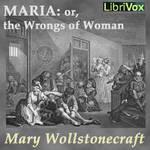 Maria: or, the Wrongs of Woman
Maria: or, The Wrongs of Woman is Mary Wollstonecraft's unfinished novelistic sequel to her revolutionary political treatise A Vindication of the Rights of Woman. It was published posthumously in 1798 by her husband, William Godwin. Maria revolves around the story of a woman imprisoned in an insane asylum by her husband, and focuses on the societal rather than the individual "wrongs of woman". Publicised at the same time as Wollstonecraft's memoirs, both were considered scandalous. Not until the 20th century was the novel considered an important historical and feminist work. | |
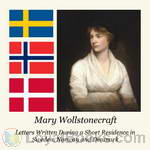 Letters Written During a Short Residence in Sweden, Norway and Denmark
Published in 1796, Letters Written During a Short Residence in Sweden, Norway, and Denmark is a personal travel narrative by the eighteenth-century British feminist writer Mary Wollstonecraft. The twenty-five letters cover a wide range of topics, from sociological reflections on Scandinavia and its peoples to philosophical questions regarding identity. Published by Wollstonecraft's career-long publisher, Joseph Johnson, it was the last work issued during her lifetime. Wollstonecraft undertook her tour of Sweden, Norway, and Denmark in order to retrieve a stolen treasure ship for her lover, Gilbert Imlay... | |
|
Mary: A Fiction
Eliza, Mary's mother, is obsessed with novels, rarely considers anyone but herself, and favours Mary's brother. She neglects her daughter, who educates herself using only books and the natural world. Ignored by her family, Mary devotes much of her time to charity. When her brother suddenly dies, leaving Mary heir to the family's fortune, her mother finally takes an interest in her; she is taught "accomplishments", such as dancing, that will attract suitors. However, Mary's mother soon sickens and requests on her deathbed that Mary wed Charles, a wealthy man she has never met. Stunned and unable to refuse, Mary agrees. Immediately after the ceremony, Charles departs for the Continent. | |
|
Posthumous Works of the Author of A Vindication of the Rights of Woman
| |
|
Mary Wollstonecraft's Original Stories
| |
By: Robert Smythe Hichens (1864-1950) | |
|---|---|
 The Spell of Egypt
The author, a British journalist and novelist, is interested in the feel of the places he visits. He describes at length a visit he has made to Egypt, with emphasis on the emotional response the places generate. | |
 The Return of the Soul
Can the soul of the dead come back to haunt the one who was responsible for its death? What would happen if the responsible one did not believe it could be so, and yet was in love with the returned soul? The Return of the Soul is a horror story of a man who is visited by the returning soul of a deceased, and who has some very perplexing issues to deal with upon that return. (Introduction by Roger Melin) | |
|
Green Carnation
The Green Carnation, first published anonymously in 1894, was a scandalous novel by Robert Hichens whose lead characters are closely based on Oscar Wilde and Lord Alfred Douglas - also known as 'Bosie', whom the author personally knew. It was an instant succès de scandale on both sides of the Atlantic. The book features the characters of 'Esmé Amarinth' (Wilde), and 'Lord Reginald (Reggie) Hastings' (Douglas). The words put in the mouths of the hero and his young friend in the story are mostly gathered from the sayings of their originals... | |
|
The Garden of Allah
| |
|
In the Wilderness
| |
|
The Call of the Blood
| |
|
December Love
| |
|
Tongues of Conscience
Tongues of Conscience (1898) is a collection of five thought-provoking stories where an innocent, but selfish, action leads to horrific consequences. Robert Hichens writes some wonderfully evocative descriptions of nature: from a raw and exposed violent seascape, to the serene and idyllic countryside “…the violets seemed to sing in odours…” , to a train pushing through the white-out of a blizzard. In Sea Change an artist with a dark secret (“…I painted for him in words, the varying colors of waves in different seas… I drowned little Jack in the sea... | |
|
Bella Donna A Novel
| |
|
The Dweller on the Threshold
| |
|
The Woman with the Fan
| |
 Bye-Ways
| |
|
"Fin Tireur" 1905
| |
|
The Desert Drum 1905
| |
|
The Way of Ambition
| |
|
The Prophet of Berkeley Square
| |
|
A Spirit in Prison
| |
|
The Princess And The Jewel Doctor 1905
| |
|
Halima And The Scorpions 1905
| |
|
Desert Air 1905
| |
|
The Figure In The Mirage 1905
| |
|
The Mission Of Mr. Eustace Greyne 1905
| |
|
The Folly Of Eustace 1896
| |
|
The Spinster 1905
| |
|
Smaïn; and Safti's Summer Day 1905
| |
|
The Collaborators 1896
| |
|
Flames
| |
By: Charlton Miner Lewis | |
|---|---|
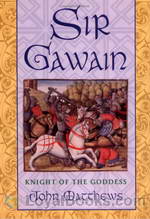 Gawayne and the Green Knight
Published in 1903, Gawayne and the Green Knight is a modern-language retelling of Sir Gawain and the Green Knight, a 14th-century verse romance following a young knight of the Round Table. During Christmas celebrations, a mysterious, entirely green knight presents a challenge to King Arthur’s court: that any may strike the stranger a single blow with his green axe, provided he assent to receiving the same a year later. Gawayne accepts the challenge, and its unexpected outcome leads to a great test of his courage and knighthood. A significant addition to this version is the Lady Elfinhart, whose back-story and romance with Gawayne are tightly interwoven with the plot. | |
By: Robert Benchley (1889-1945) | |
|---|---|
 Love Conquers All
Sixty-three essays on a variety of topics as wide apart as Family Life in America, Opera Synopses, Bigamy, International Finance and many more, Love Conquers All by Robert Benchley strangely enough does not touch upon romance at all! However, these delightful notes provide hours of browsing pleasure for young and old readers alike. Robert Benchley was a well-known humorist and newspaper columnist, radio and television presenter, actor, scriptwriter and broadcaster. He is also credited with creating the first ever television entertainment show and one of his iconic short films, How to Sleep won an Academy Award in 1936... | |
By: Sarah Orne Jewett (1849-1909) | |
|---|---|
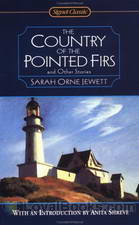 Country of the Pointed Firs
The Country of the Pointed Firs (1896) is considered Jewett’s finest work, described by Henry James as her “beautiful little quantum of achievement.” Despite James’s diminutives, the novel remains a classic. Because it is loosely structured, many critics view the book not as a novel, but a series of sketches; however, its structure is unified through both setting and theme. Jewett herself felt that her strengths as a writer lay not in plot development or dramatic tension, but in character development... | |
 Deephaven
Sarah Orne Jewett is best known for her clean and clear descriptive powers that at once elevate common-place daily events to something remarkable, and lend dignity and grace to the most humble and homely human character. In Deephaven, go with her on vacation to an unforgettable seaside village where time runs slower and small pleasures are intensified. Much space is given to outdoor rambles and sights and events of daily living that draw you into another era. Jewett’s loving and gentle descriptions of the people and life of Deephaven will make you sorry when the book is over, and long to be able to find that village for yourself. | |
 The Gray Mills of Farley
As contemporary today as it was over a century ago, this relatively unsentimental tale of labor relations still packs a punch. | |
|
The Queen's Twin and Other Stories
| |
|
Old Friends and New
| |
|
Betty Leicester A Story For Girls
| |
|
Strangers and Wayfarers
| |
|
The Life of Nancy
| |
By: John Habberton | |
|---|---|
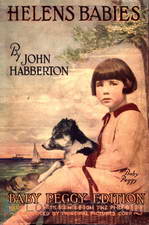 Helen's Babies
Harry Burton, salesman of white-goods, bachelor of twenty-eight leads a charmed existence. A letter from his sister, Helen changes his life forever. She and her husband have been invited for a holiday but they can't find anyone to baby-sit their two toddlers, five-year-old Budge and three-year-old Toddie. Ever the gallant helpful, Harry steps in, foreseeing nothing but a relaxed vacation with lots of books to read and thinks baby-sitting's a breeze. But destiny has other plans. Harry has long adored a lovely lady from afar and hopes to convince her that he is marriage material by displaying his nurturing side... | |
|
All He Knew A Story
| |
By: Benito Pérez Galdós (1843-1920) | |
|---|---|
|
Doña Perfecta
| |
|
Dona Perfecta
| |
|
Heath's Modern Language Series: Mariucha
| |
By: George Alfred Henty | |
|---|---|
|
The Cat of Bubastes
G.A. Henty’s “tale of ancient Egypt” tells the story of Amuba, prince of the Rebu, who is taken captive when his people are conquered by the Egyptians, and then becomes the servant and companion of Chebron, son of the high priest of Osiris. A mystery unfolds as the lads find evidence of a murderous conspiracy within the ranks of the priesthood; but they must then flee for their lives when they unintentionally kill the cat selected as the successor to the Cat of Bubastes, one of the most sacred animals of Egypt. Amuba and Chebron are strong, courageous, and resourceful – but will this be enough to carry them beyond the long reach of the power of Egypt? | |
 Among Malay Pirates and Other Tales of Peril and Adventure
G. A . Henty was a prolific writer of historical fiction for young adults. In this collection of shorter stories we visit Malay pirates, have a couple of tales of India, a shipwreck off the Channel Islands and a bursting dam in California, and finish off escaping from captivity in China | |
 The Dragon and the Raven
During the reign of King Alfred, Danish forces have invaded the English countryside. Although the English try to repulse these attacks, they are overrun by the savagery and sheer numbers of the Danes.One of those deeply touched by these attacks is young Edmund. As a boy, he watched as his father was slain in battle fighting the Danes. Although young, he was intelligent, and noted the mistakes made on the battlefield. As he grew into a man, he put that knowledge into use and created a uniquely trained group of soldiers and built a new, stronger ship called the Dragon... | |
 St. Bartholomew's Eve
Set in the days of the religious wars of Europe, St. Bartholomew’s Eve is the tale of the Huguenot’s desperate fight for freedom of worship in France. As the struggle intensifies the plot thickens, culminating in the dreadful Massacre of St. Bartholomew’s Eve. Henty, “The Boy’s Own Storyteller” weaves the life and adventures of Philip Fletcher and his cousin, Francois DeLaville, into the historical background with thrilling battles, sieges and escapes along the way (not to mention a fair damsel in distress!). | |
 The Tiger of Mysore
During the Indian war with Tippoo Saib, 15 year old Dick Holland and his mother set out from England to find and rescue his father, shipwrecked 6 years earlier, and believed to be held prisoner by the 'Tiger of Mysore'. | |
 At Agincourt - White Hoods of Paris
The story begins in a grim feudal castle in Normandie. The times were troublous, and soon the king compelled Lady Margaret de Villeroy, with her children, to go to Paris as hostages. Guy Aylmer went with her.Paris was turbulent. Soon the guild of the butchers, adopting white hoods as their uniform, seized the city, and besieged the house where our hero and his charges lived. After desperate fighting, the white hoods were beaten and our hero and his charges escaped from the city, and from France. (Summary from the original back cover) | |
 True to the Old Flag
This book tells the story of the American war of Independence from the side of the British. The old flag mentioned in the title is the flag of England. This is a book for young readers, but - as a good book should be - everybody can enjoy it". | |
 St George for England
A tale set in England in the time of Cressy and Pointiers. A child of noble birth whose parents have fallen foul of the current royalty is taken by his dying mother and placed in hiding. He grows up with a bowyer and then apprenticed to an armourer just outside the gates of the City of London, becomes accomplished in arms and joins the campaign in France.A tale of heroism and 14th century viciousness. Great fun. | |
 One Of The 28th - a Tale of Waterloo
A tale of Victorian-style romance, maritime battles and even the penultimate Napoleanic battle - Waterloo. (Introduction by Mike Harris) | |
 On the Irrawaddy, A Story of the First Burmese War(1897)
With the exception of the terrible retreat from Afghanistan, none of England's many little wars have been so fatal--in proportion to the number of those engaged--as our first expedition to Burma. It was undertaken without any due comprehension of the difficulties to be encountered, from the effects of climate and the deficiency of transport; the power, and still more the obstinacy and arrogance of the court of Ava were altogether underrated; and it was considered that our possession of her ports would assuredly bring the enemy, who had wantonly forced the struggle upon us, to submission... | |
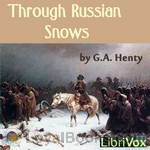 Through Russian Snows
There are few campaigns that, either in point of the immense scale upon which it was undertaken, the completeness of its failure, or the enormous loss of life entailed, appeal to the imagination in so great a degree as that of Napoleon against Russia. Fortunately, we have in the narratives of Sir Robert Wilson, British commissioner with the Russian army, and of Count Segur, who was upon Napoleon's staff, minute descriptions of the events as seen by eye-witnesses, and besides these the campaign has been treated fully by various military writers... | |
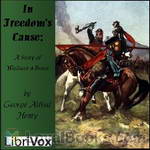 In Freedom's Cause
Another stirring tale from the master of historical fiction set in the time of Robert Bruce and William Wallace and their struggle for Scotland's independence. | |
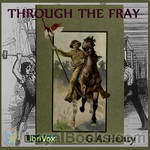 Through the Fray
Ned Sankey is a quick-tempered, strong-willed boy during the Luddite riots in Yorkshire. The happy times at the beginning of the story are soon marred by the death of his father. From there things only get worse. When things take a turn for the worst, how will he respond? | |
By: Andy Adams (1859-1935) | |
|---|---|
 Cattle Brands
Cattle Brands is a collection of 14 entertaining short stories depicting not only the life of cowboys in the wild, wild West, but also the harrowing skirmishes with banditos, thrilling shoot-outs, attempt at and the recapture of stolen chattel from fierce desperados, and much, much more exciting accounts that make one think it all actually happened. | |
 The Log of a Cowboy
The Log of a Cowboy is an account of a five-month drive of 3,000 cattle from Brownsville, Texas, to Montana in 1882 along the Great Western Cattle Trail. Although the book is fiction, it is firmly based on Adams's own experiences on the trail, and it is considered by many to be the best account of cowboy life in literature. Adams was disgusted by the unrealistic cowboy fiction being published in his day; The Log of a Cowboy was his response. It is still in print, and even modern reviewers consider it a compelling classic... | |
 The Outlet
Andy Adams worked as a cowboy on trail drives from Texas for eight years. This is an account of a drive when he was the foreman of a herd of Texas cattle being driven to Montana. Expect the same quality writing as found in other books by Adams. | |
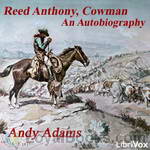 Reed Anthony, Cowman: An Autobiography
Adams breathes life into the story of a Texas cowboy who becomes a wealthy and influential cattleman.. (Introduction by Wikipedia) | |
|
A Texas Matchmaker
| |
|
Wells Brothers The Young Cattle Kings
| |