 |
Books Should Be Free Loyal Books Free Public Domain Audiobooks & eBook Downloads |
|
|
|
Books Should Be Free Loyal Books Free Public Domain Audiobooks & eBook Downloads |
|
Top Authors |
|---|
|
Book type:
Sort by:
|
By: Robert Hugh Benson (1871-1914) | |
|---|---|
 Dawn of All
In a former book, called "Lord of the World," I attempted to sketch the kind of developments a hundred years hence which, I thought, might reasonably be expected if the present lines of what is called "modern thought" were only prolonged far enough; and I was informed repeatedly that the effect of the book was exceedingly depressing and discouraging to optimistic Christians. In the present book I am attempting -- also in parable form -- not in the least to withdraw anything that I said in the former,... | |
By: Elizabeth Inchbald (1753-1821) | |
|---|---|
 A Simple Story
The story could really have been simple: Miss Milner, who is admired for her beauty and charm, could have been a socialite, marry a respectable and good looking man and be happy in the standards of her time. But if it was so, why would there be a book? Miss Milner, beautiful and charming as she is, announces her wish to marry her guardian, a catholic priest. But women in the 18th century do not declare their wishes or speak about their passions, and- after all- he is a catholic priest… And if he finds a way to marry her, is this her road to happiness? | |
By: Bahá’u'lláh | |
|---|---|
 The Persian Hidden Words
Kalimát-i-Maknúnih or The Hidden Words is a book written in Baghdad around 1857 by Bahá’u'lláh, the founder of the Bahá’í Faith. This work is written partly in Arabic and partly in Persian. The Hidden Words is written in the form of a collection of short utterances, 71 in Arabic and 82 in Persian, in which Bahá’u'lláh claims to have taken the basic essence of certain spiritual truths and written them in brief form. Bahá’ís are advised by `Abdu’l-Bahá, the son of Bahá’u'lláh to read them every day and every night and to implement its latent wisdom into their daily lives... | |
By: Lucius Apuleius | |
|---|---|
 Metamorphosis or The Golden Ass
The Metamorphosis, also known as The Golden Ass, is one of the very few novels of the Ancient World that survived to our days; one of the two novels of Roman Literature that we can still read; and the only one preserved in its entirety (the other one being the extremely fragmentary Satyricon). The story of the Metamorphosis, the tale of a man turned into a donkey that goes through many adventures to become a man again, inspired many other similar ones later on. However, more than just the plot, the style of the Golden Ass also made it famous... | |
By: Mary E. Wilkins Freeman (1852-1930) | |
|---|---|
 Evelina's Garden
This is a long short story from 1899, approximately 95 minutes more or less, about a mysterious woman living virtually alone on the outskirts of a small New England town in a mansion with a magnificent garden. (Introduction by BellonaTimes) | |
By: Ida B. Wells-Barnett (1862-1931) | |
|---|---|
|
Southern Horrors: Lynch Law In All Its Phases
Thoroughly appalled and sickened by the rising numbers of white-on-black murders in the South since the beginning of Reconstruction, and by the unwillingness of local, state and federal governments to prosecute those who were responsible, Ida Bell Wells-Barnett wrote Southern Horrors, a pamphlet in which she exposed the horrible reality of lynchings to the rest of the nation and to the world. Wells explained, through case study, how the federal government's failure to intervene allowed Southern states... | |
By: Archibald Lampman (1861-1899) | |
|---|---|
|
Winter Evening
Archibald Lampman was a Canadian poet. "He has been described as 'the Canadian Keats;' and he is perhaps the most outstanding exponent of the Canadian school of nature poets." The Canadian Encyclopedia says that he is "generally considered the finest of Canada's late 19th-century poets in English." Lampman is classed as one of Canada's Confederation Poets, a group which also includes Charles G.D. Roberts, Bliss Carman, and Duncan Campbell Scott. | |
By: R. Austin Freeman (1862-1943) | |
|---|---|
|
Vanishing Man
A young doctor, former student of the legal and medical expert Dr. John Thorndyke, finds himself almost accidentally drawn into a case in which a man has vanished. Perhaps he has died; perhaps not;but the issue is very important because the will that he has left behind is curiously -- annoyingly curiously -- worded. Fortunately, Dr. Thorndyke's rationality combined with his forensic skills, bring the case to a conclusion, while the young doctor meets the love of his life in the Egyptian rooms of the British Museum. ( Nicholas Cifford) | |
By: Roswell Field (1851-1919) | |
|---|---|
 The Romance of an Old Fool
A light-hearted account of a successful middle aged widower who chances to visit the small town in which he grew up to renew old acquaintances and perhaps reflect on his successes since his departure.This visit, however, becomes far more to him than he would have imagined, as he finds that one of his dearest childhood girlfriends had died not long after his departure, and the widower envisions a relationship with none other than her daughter, who he senses to be her mother incarnate. | |
By: Charles Goddard (1879-1951) | |
|---|---|
|
The Perils of Pauline
The Perils of Pauline is one of the first damsel in distress serials. The story is complete with undaunted hero, courageous damsel, unscrupulous villains galore, and other worldly interest. Before getting married, Pauline wants to experience the world and have adventures. When her guardian dies and leaves her an estate in trust of his secretary, adventures suddenly become more hazardous. Pauline charters aeroplanes, meets untrustworthy pirates, braves dangerous China Town, flies in a hot air balloon, adventures in the Wild West, encounters international spies, and escapes many other perils with the aid of her would-be fiancé, Harry, and an Egyptian mummy. | |
By: Charles Goddard and Paul Dicky | |
|---|---|
|
The Ghost Breaker
The Ghost Breaker is a drama and haunted house horror complete with heroes, villains, and a Princess. The Ghost Breaker was originally a screenplay and would later be made a drama film directed by Cecil B. DeMille. | |
By: George du Maurier (1834-1896) | |
|---|---|
 Trilby
Trilby, published in 1894, fits into the gothic horror genre which was undergoing a revival during the Fin de siècle and is one of the most popular novels of its time, perhaps the second best selling novel of the Fin de siècle period after Bram Stoker’s Dracula. The story of the poor artist’s model Trilby O’Ferrall, transformed into a diva under the spell of the evil musical genius Svengali, created a sensation. Soap, songs, dances, toothpaste, and Trilby, Florida were all named for the heroine, and a variety of soft felt hat with an indented crown (worn in the London stage production of a dramatization of the novel) came to be called a trilby... | |
By: Ernest Poole (1880-1950) | |
|---|---|
 The Harbor
The Harbor was written in 1915 by Ernest Poole. The novel is considered by many to be one of Poole’s best efforts even though his book, The Family won a Pulitzer Prize. The Harbor is a fictional account of life on a Brooklyn waterfront through the eyes of Billy as he is growing up. The novel starts with Billy the child, living on the harbor with his father, mother, and sister, Sue. During this time he also meets Eleanor who, at that time, he considers to be strange. She later becomes an important character in the novel... | |
 His Family
The 1910s is historically considered the decade of greatest social change in history. It saw the advent and proliferation of the automobile, electricity, lighting, radio, telephone and cinema. Our present time of change is actually quite tame in comparison, though also breathless. His Family is a tale of a widowed father, working to manage this decade of change as it affects his family in New York City. His Family was the first winner of the Pulitzer Prize for literature in 1919. | |
By: George-Günther Freiherr von Forstner (1882-1940) | |
|---|---|
 The Journal of Submarine Commander Von Forstner
The Journal of Submarine Commander Von Forstner is a graphic account of WWI submarine warfare. Forstner was the commander of German U-boat U-28. His journal, first published 1916, gives a gritty picture of daily life inside a submarine and details several torpedo attacks on Allied shipping. The 1917 translation of Forstner’s journal into English was unquestionably intended to bolster the Allied war effort. In the foreword, the translator states: “Nothing at the present day has aroused such fear as this invisible enemy, nor has anything outraged the civilized world like the tragedies caused by the German submarines... | |
By: May Kellogg Sullivan | |
|---|---|
 A Woman Who Went to Alaska
Alaska has only been a state since 1959, and the breathtaking terrain remains mostly unspoiled and natural. In modern times, many of us have had the pleasure of visiting Alaska via a luxurious cruise ship, where we enjoyed gourmet meals, amazing entertainment, and a climate-controlled environment. It's easy to also book a land package that enables you to see more of the country by train.Imagine what it was like to visit the same wild, untamed countryside in 1899. Instead of boarding a sleek, stylish cruise ship, you travel for weeks on a steamer... | |
By: Bertrand Sinclair (1881-1972) | |
|---|---|
|
The Hidden Places
Hollister, returning home from the war physically scarred but otherwise healthy and intact, finds life difficult among society, and so chooses to roam about a bit seeking a future for himself. He eventually leads himself to a remote area in British Columbia, which begins the tale of the next phase of his life; a life which becomes far richer in totality than he would have imagined in his old unwelcoming haunts. A life among the hidden places. | |
By: Frank Williams (1887-?) | |
|---|---|
 The Harbor of Doubt
Young Code Schofield had lost his schooner May Schofield in an Atlantic gale a few months ago, and now the townspeople on the small island of Grande Mignon off the coast of New Brunswick were beginning to talk suspiciously of the events surrounding that loss. Insurance investigators have been summoned to investigate, friends are alienating themselves from Code, and he finds himsef challenged by even those he's known and trusted his whole life. Does Code Schofield have anything to prove, and if so, to whom, and why? | |
By: Charles F. Dole | |
|---|---|
|
The Coming People
Dole briefly sketches the history of life, and shows how it has a definite direction - toward the survival of the kind and gentle people. It's a challenging, and quite persuasive argument, and also a much needed one in light of the dog-eat-dog theories out there. Dole shows that in our evolving society, our traditional understanding of "survival of the fittest" needs to be updated. A book that was way ahead of its time, yet so suited to it. Some may argue that - since he was writing The Coming People before the first two world wars - that he was obviously wrong... | |
By: Gaius Julius Caesar | |
|---|---|
 Commentaries on the Gallic War
Commentarii de Bello Gallico (English: Commentaries on the Gallic War) is Julius Caesar's firsthand account of the Gallic Wars, written as a third-person narrative. In it Caesar describes the battles and intrigues that took place in the nine years he spent fighting local armies in Gaul that opposed Roman domination.The work has been a mainstay in the teaching of Latin to schoolchildren, its simple, direct prose lending itself to that purpose. It begins with the frequently quoted phrase "Gallia est omnis divisa in partes tres", sometimes quoted as "Omnia Gallia in tres partes divisa est", meaning "All Gaul is divided into three parts". | |
By: Harriet E. Wilson (1825-1900) | |
|---|---|
 Our Nig, or, Sketches from the Life of a Free Black, In A Two-Story White House
Frado is a colored girl, living in the USA a few years before the Civil War. She is abandoned by her own white mother in the house of the Bellmont's- where she is treated badly. This is a sad book, but Frado's cheerfulness and dignity will make you love her until the end. (Introduction by Stav Nisser) | |
By: E. Gordon Browne (1871-1926) | |
|---|---|
 Queen Victoria
This book is about the life of Queen Victoria (1819 to 1901). All nine of her children married into the royal houses of Europe. She became the longest reigning monarch and more. This book is a fascinating read about the woman behind the British Empire. | |
By: Emerson Hough (1857-1923) | |
|---|---|
 The Singing Mouse Stories
The singing mouse tells tales of nature in songs. This book is for those who want to know how the mountains ate up the plains, what the waters said or where the city went. | |
|
Covered Wagon
"Look at 'em come, Jesse! More and more! Must be forty or fifty families." This is an old-fashioned adventure tale set on the Oregon Trail, just before the California Gold Rush. It is the story of a wagon train bound for the west, and the conflict which arises due to of a love triangle. Indian fights, buffalo hunts, dangerous river crossings and other dangers of the trail add to a gripping and entertaining yarn. | |
By: Edward Granville Browne | |
|---|---|
 A year amongst the Persians; impressions as to the life, character, and thought
Edward Granville Browne (1862 – 1926), born in Stouts Hill, Uley, Gloucestershire, England, was a British orientalist who published numerous articles and books of academic value, mainly in the areas of history and literature. His works are respected for their scholarship, uniqueness, and style. He published in areas which few other Western scholars had explored to any sufficient degree. He used a language and style that showed high respect for everybody, even toward those he personally did not view in positive light... | |
By: George Lovell Cary | |
|---|---|
 An Introduction to the Greek of the New Testament
A collection of lessons (primarily in grammar) for New Testament Greek (also known as Koine) collected by a professor at Meadville Theological School of Pennsylvania. There are over 80 short lessons, each covering an aspect of verbs, nouns, etc. | |
By: William Godwin (1756-1836) | |
|---|---|
 Caleb Williams or Things As They Are
The novel describes the downfall of Ferdinando Falkland, a British squire, and his attempts to ruin and destroy the life of Caleb Williams, a poor but ambitious young man that Falkland hires as his personal secretary. Caleb accidentally discovers a terrible secret in his master’s past. Though Caleb promises to be bound to silence, Falkland, irrationally attached (in Godwin’s view) to ideas of social status and inborn virtue, cannot bear that his servant should possibly have power over him, and sets out to use various means–unfair trials, imprisonment, pursuit, to make sure that the information of which Caleb is the bearer will never be revealed... | |
By: Gilbert Parker (1862-1932) | |
|---|---|
 The Right of Way
Charley Steele is a successful and brilliant Canadian lawyer. He has a nagging wife, Kathleen, and a lazy brother-in- law, Billy. In spite of his success, he is disillusioned with his life, drinks too much, and is deeply troubled by his agnosticism which leads to trouble and confusion. When Billy embezzles money, Charley discovers the theft and sets out to make things right. Charley however, ends up in a waterfront saloon where he encounters a barroom brawl and becomes unconscious. Charley loses his memory and ends up in the Canadian Northwoods where he falls in love with a pretty postmistress, Rosalie... | |
 Seats of The Mighty
| |
By: United States Federal Bureau of Investigation | |
|---|---|
 Unidentified Flying Objects
Through the U.S. Freedom of Information Act (FOIA) this series of communications has been de-classified and made public. Most names have been omitted, however much information of the sightings of UFOs in 1947 can be gleaned from these communications which were primarily between the FBI and other U.S. Government and military organizations. | |
By: Sarah Morgan Dawson (1842-1909) | |
|---|---|
 A Confederate Girl's Diary
Sarah Morgan Dawson was a young woman of 20 living in Baton Rouge, Louisiana, when she began this diary. The American Civil War was raging. Though at first the conflict seemed far away, it would eventually be brought home to her in very personal terms. Her family's loyalties were divided. Sarah's father, though he disapproved of secession, declared for the South when Louisiana left the Union. Her eldest brother, who became the family patriarch when his father died in 1861, was for the Union, though he refused to take up arms against his fellow Southerners... | |
By: William Worthington Fowler (1833-1881) | |
|---|---|
|
Woman on the American Frontier
Many books describe the role of men during American history. However, at the same time, women did much: comforted, fought, helped, raised children, and much more. This book is full of mini-biographies of women in many places, and many ages- each chapter telling about a different subject. | |
By: Alfred de Musset (1810-1857) | |
|---|---|
 The Confession of a Child of the Century
In this autobiographic novel, an aging man reflects on his past. We are witness to the relationships he has along the way, his mistakes, and finally- in the most unexpected and honorable way- the sudden developement of his belief in god. | |
By: James C. Philip (1873-1941) | |
|---|---|
|
The Romance of Modern Chemistry
A fascinating look back at the state of the art of chemistry 100 years ago, this book by James C. Philip, PhD, an assistant professor of chemistry at The Imperial College of Science and Technology, Kensington, provides a "description in non-technical language of the diverse and wonderful way which chemical forces are at work, and their manifold application in modern life" in 1910. Professor Philip relates many of the key chemical discoveries of early academic researchers in the context of the practical uses to which these discoveries were applied in the early 20th century. | |
By: Mildred Duff (1860-1932) | |
|---|---|
 The Bible in Its Making - The Most Wonderful Book in the World
One great universal law runs through the realm of nature. Our Saviour gave it in a sentence: 'First the blade, then the ear, after that the full corn in the ear.' It is with the desire to show that the same law rules in another of God's creations — The Bible — that this little volume has been prepared. The Bible has as literally 'grown' as has an oak tree; and probably there is no more likeness between the Bible as we know it to-day and its earliest beginning, than we find between the mighty tree, and the acorn from which it sprang... | |
By: George Edward Moore | |
|---|---|
|
Principia Ethica
George Edward Moore, usually known as G. E. Moore, (1873 – 1958) was a distinguished and influential English philosopher. He was, with Bertrand Russell, Ludwig Wittgenstein, and (before them) Gottlob Frege, one of the founders of the analytic tradition in philosophy. Principia Ethica is one of the standard texts of modern ethics. | |
By: John Casper Branner | |
|---|---|
 A Brief Grammar of the Portuguese Language
Dr. Branner was a recognized authority on the geology of South American republics, especially Brazil, having organized and headed the Stanford Expedition to Brazil in 1911, among others. In 1910 he published this "little book", as the author himself calls it, for the use of English-speaking students who needed a fast and practical way of learning Portuguese. Contrary to the belief of many back then, John C. Branner claims that Brazilian Portuguese isn't "badly spoken Portuguese", and, even though using examples from both Portuguese and Brazilian writers, seems to give more proeminence to Brazilian Portuguese. | |
By: Benjamin Disraeli (1804-1881) | |
|---|---|
|
Henrietta Temple
The Armine family, in particular the young Ferdinand Armine, is in great financial difficulties. Ferdinand's grandfather has burdened the family estate with large debts, which his father did not manage to diminish. Ferdinand himself is not disposed to live with his small income alone, and during his time in Malta with his regiment, he incurs debts of his own. The only thing that can easily pay for his debts and restore the house of Armine now is for Ferdinand to marry well, and the chosen wife for him is his cousin Katherine, the heiress to their grandfather's wealth... | |
By: Romain Rolland (1866-1944) | |
|---|---|
 Pierre and Luce
Pierre and Luce were an unlikely young pair who found themselves in the chaos of Paris during the war; Pierre, the shy, recently conscripted pacifist, and Luce, the free spirited artist in training, and both confused about the things going on around them. Why were these war birds flying overhead? Why these warning sirens, and occasional bombs exploding in the distance? Why did the government leaders, who didn't even know one another, hate and destroy so much? Why did these two delicate young adults find each other now? This story takes place between January 30 and Good Friday, May 29, 1918. (Introduction by Roger Melin) | |
By: Oliver Herford (1863-1935) | |
|---|---|
 This Giddy Globe
Is there a genre called FUN? Yes, and this is it! Insanely humorous geography that will have you rolling on the floor laughing with your sides hurting. | |
|
Kitten's Garden of Verses
The Kitten's Garden of Verses is a book of short poetry, modeled after Robert Louis Stevenson's A Child's Garden of Verses. Of course, the poems in this book are intended for kittens rather than children! | |
By: G. S. Street (1867-1936) | |
|---|---|
|
The Ghosts of Piccadilly
Nothing spooky or supernatural, but a very personal gathering of gossip, letters, and fragments of biography of famous people who have lived in Piccadilly (in London, England) ... and of some of the buildings, now long gone."If any part of any city deserves a book to itself, it is Piccadilly. We shall stand before some house in the hours when the traffic is stilled, and I shall tell of its history, of the men and women who dwelt there, and talked and loved and gambled and lived and died. I shall follow the lines of my temperament and tastes rather than those of completeness and impartiality: it is likely that I shall be voluble about Byron and reticent about Macaulay." (From the preface) | |
By: Grace Isabel Colbron (1869-1943) | |
|---|---|
 The Case of the Golden Bullet
Joseph Muller, quiet mannered detective, tries to solve the mystery of a man who died in his study, by a bullet hole in the chest. But all windows and doors were locked, from the inside. | |
By: William MacLeod Raine (1871-1954) | |
|---|---|
|
Yukon Trail
The Yukon Trail: A Tale of the North (filmed as The Grip of the Yukon in 1928) is an adventure yarn from the prodigious output of William MacLeod Raine, who averaged nearly two western novels a year for some 46 years. Twenty of his novels have been filmed. Though Raine was prolific, he was a slow, careful, conscientious worker, intent on accurate detail, and considered himself a craftsman rather than an artist. (Adapted from Wikipedia) | |
|
Tangled Trails
The aptly titled "Tangled Trails, A Western Detective Story" takes the listener through a web of curious incidents revolving around the murder of a prominent man in Denver. Kirby Lane was quite obviously the guilty party in the murder of his uncle. Lane, among others, had had a falling out with his uncle, the victim James Cunningham. But there were some who believed his nephew to be innocent of the hideous crime. Lane feared the guilty party to be a female bronco rider whom he had befriended, as her presence at the scene of the crime was quite evident, albeit only to him... | |
By: Tobias Smollett (1721-1771) | |
|---|---|
|
Adventures of Roderick Random
I am Roderick Random. This is the contemporary story of my struggle against the adversity of orphan-hood, poverty, press gangs, bloody duels, rival fortune hunters, and the challenge to be well-dressed through it all. In the course of recounting my adventures to you, dear reader, I will give you a front row seat to the characters of English eighteenth century life including highway robbers, womanizing monks, debt-laden gallants, lecherous corrupt officials, effeminate sea captains, bloodthirsty surgeons, and my dear friend Miss Williams, a reformed prostitute... | |
By: William Hanford Edwards | |
|---|---|
 Football Days: Memories of the Game and of the Men behind the Ball
A book reminiscent of the days when football was gaining popularity in America by MHAIJH85 | |
By: Mary Macleod (?/?) | |
|---|---|
 Stories from the Faerie Queene
"The object of this volume is to excite interest in one of the greatest poems of English literature, which for all its greatness is but little read and known--to excite this interest not only in young persons who are not yet able to read "The Faerie Queene," with its archaisms of language, its distant ways and habits of life and thought, its exquisite melodies that only a cultivated ear can catch and appreciate, but also in adults." (From the Author's introduction) | |
By: Anne Catherine Emmerich (1774-1824) | |
|---|---|
|
The Nativity of our Lord Jesus Christ
Anne Catherine Emmerich (1774-1824) was a German Augustinian nun who had visions about Christ's life and death. This book relates her visions regarding the Blessed Virgin Mary, from her marriage to St. Joseph to the events surrounding the birth of Christ.(Introduction by Ann Boulais) | |
By: Annie Besant (1847-1933) | |
|---|---|
|
Annie Besant
In her autobiography, Annie Besant poignantly writes of her search for the truth of what she believed in, leaving Christianity behind to embrace Atheism, and ultimately finding her peace in Theosophy, which she became interested in after meeting Helena Blavatsky. She moved to India to better study Theosophical ideas and this is where she made her home until her death. She was a gifted orator and writer, often speaking and writing on her religious beliefs, as well as women's rights and social reform... | |
|
My Path to Atheism
My Path to Atheism is a remarkable document in many ways, not least that it was written by a woman in Victorian England, not the most open free-thinking of societies, especially for women at that time. It needed a remarkable woman to write such a revolutionary and to 19th century minds, heretical document in a society where the Church had such a stronghold. Besant herself was originally married to a clergyman, but her increasingly anti-religious views and writings led to a legal separation. She went... | |
By: Dorothy Osborne (1627-1695) | |
|---|---|
 Love Letters of Dorothy Osborne
A lively, interesting and important collection of 17th century love-letters written by an English lady, against the background of the Civil War and the Restoration | |
By: Burton E. Stevenson (1872-1962) | |
|---|---|
 That Affair at Elizabeth
A detective novel set in turn-of-the-century New York City, in which a young lawyer plays the sleuth. Packed with plot twists (and the ubiquitous romantic complication, of course). ( | |
By: Burton Egbert Stevenson (1872-1962) | |
|---|---|
|
Gloved Hand
Mr. Lester, a private investigator, and his friend Godfrey are caught up in a strange case that takes them to a large estate in the country where at midnight they witness a mysterious "falling star" that appears to burst into a shower of sparks over two white robed figures standing in the air. There is a young lady in a flowing white dress and many more twists and complications before the mystery is solved. | |
|
Holladay Case
Stevenson's introduction of the protagonist Lester (law clerk with New York firm Graham & Royce) finds him occupying a front row seat in the murder trial of Wall Street multi-millionaire Hiram Holladay. Scandalously, suspicion points very solidly on the banker's loving daughter, Frances. Lester proves himself a useful aide to the firm's senior partner, Mr. Royce, in his attempt to prove the lovely Frances innocent. | |
|
Mystery of the Boule Cabinet
Three men are dead. Killed by a very powerful poison. Their deaths seem to be connected to a very old cabinet purchased in France and a notorious French criminal. What is the link? It is up to the lawyer Lester and the newspaperman Godfrey to pool their talents and solve the mystery. | |
|
American Men of Action
In this book, Burton Egbert Stevenson writes a brief biography of some of the most noteworthy men in American history. He begins at the very beginning of the history of America with Christopher Columbus and proceeds forward with the story of people who made America what it is today by their respective vocations. It is interesting to note that the vast majority of the subjects started in poverty and excelled financially and in stature.He makes something that could be very dull, a very readable and enjoyable book. | |
|
American Men of Mind
“American Men of Mind” is a collection of short biographies of men of note in various disciplines. It is an absorbing collection of short biographies of men who made a difference in American history; most beginning life in very humble circumstances, both in the United States and in foreign countries. Although “men” is mentioned in the title, Mr. Stevenson also relates biographies of several women.This is a most interesting read.(William Tomcho) | |
By: Charles Neville Buck (1879-1930) | |
|---|---|
 The Tyranny of Weakness
Torn between her love for her aging father, a minister steeped in the puritanical values of old New England, and the young Virginian who was born and raised of southern chivalrous tradition, the many and conflicting emotions which stir deep within Conscience Williams envelop this tale of desire, devotion, inner strength, devious treachery, and individuality of spirit. | |
By: Jacob A. Riis (1849-1914) | |
|---|---|
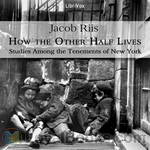 How the Other Half Lives: Studies Among the Tenements of New York
How the Other Half Lives: Studies Among the Tenements of New York (1890) was a pioneering work of photojournalism by Jacob Riis, documenting the squalid living conditions in New York City slums in the 1880s. It served as a basis for future muckraking journalism by exposing the slums to New York City’s upper and middle class. The title of the book is a reference to a phrase of François Rabelais, who wrote in Pantagruel: "one half of the world does not know how the other half lives". | |
By: Rolf Boldrewood (1826-1915) | |
|---|---|
|
Robbery Under Arms
A tale of cattle duffing, horse stealing and bushranging in the New South Wales outback with Captain Starlight.To quote the author "though presented in the guise of fiction, this chronicle of the Marston family must not be set down by the reader as wholly fanciful or exaggerated. Much of the narrative is literally true, as can be verified by official records. A lifelong residence in Australia may be accepted as a guarantee for fidelity as to local colour and descriptive detail." | |
By: Paul Ehrlich (1854-1915) | |
|---|---|
 Histology of the Blood
This is a textbook on the science of blood and bloodwork by (1908) Nobel Prize winner, Dr. Paul Ehrlich. Should appeal to hematologists, phlebotomists, and just plain folks interested in how our bodies work. | |
By: F. Tennyson Jesse (1888-1958) | |
|---|---|
|
The Milky Way
The Milky Way - F. Tennyson Jesse's first novel - began life as a 1913 magazine serial called The Adventures of Viv. In it, poor-but-plucky Cornish painter/model Vivian Lovel recounts events of her twenty-first year: en route from Penzance to London by steamer, she catches a baby dropped over the side of a sinking ship - and decides to keep it. Penniless, however, she "platonically" pairs up with pan-like fellow passenger Peter Whymperis, an actor and aspiring writer, and together they find work with a fifth-rate repertory troupe... | |
By: Sapper (Herman Cyril McNeile) (1888-1937) | |
|---|---|
|
Bulldog Drummond
‘Sapper’, the pseudonym of Colonel. H.C. McNeile M.C. was one of the most popular English writers of thrillers between the two world wars. And Hugh (Bulldog) Drummond was his most popular leading character. This book, the first of the series, is of its time. Opinions are expressed which would not pass muster today and the books are strongly laced with jingoism, racial stereotypes and hostile references to foreigners. Naturally all the villains are masters of disguise and invariably put off murdering the hero until later whist they think of something absolutely beastly. Nevertheless the story is a good one and well told. | |
By: Lord Alfred Tennyson (1809-1892) | |
|---|---|
|
Beauties of Tennyson
A collection of Tennyson's poetry : 1 The Brook - 00:16 2 Song from "Maud" - 1:20 3 A Farewell - 2:34 4 Song from “Maud” - 3:26 5 Break, Break, Break - 4:53 6 From “Locksley Hall”- 5:43 7 Song from “Maud” - 6:43 8 Song from “The Princess” - 7:43 9 Lillian - 8:37 10 Ring out, Wild Bells - 9:52 11 From “The Princess” - 11:27 12 Song From “The Princess” - 12:43 13 From “Enoch Arden” - 13:58 14 From “Enoch Arden” - 15:36 15 The Charge of the Light Brigade- 16:56 16 From “The May Queen” - 18:51 17 Song from “The Princess” - 19:36 18 From “Harold” - 20:14 19 From “The Revenge” - 21:28 (From Sam Stinsson) | |
By: Jacob William Wright | |
|---|---|
 The Long Ago
Short memory of boyhood by a little-known American poet based in Carmel-By-The-Sea, California. | |
By: Mary Elizabeth Braddon (1835-1915) | |
|---|---|
 The Doctor's Wife
This is one of the Victorian “Sensationist” Mary Elizabeth Braddon's many novels (best known among them: “Lady Audley’s Secret”). It is extremely well written, fluid, humorous and, in places, self-mocking: one of the main characters is a Sensation Author. The motifs of the-woman-with-a-secret, adultery, and death are classic “sensationist” material. Yet this is also a self-consciously serious work of literature, taking on various social themes of the day. Specifically, Braddon presents... | |
 Fenton's Quest
This story revolves around Gilbert Fenton, a very talented middle class businessman from London, who falls in love with a beautiful country woman far below his station. He decides to marry her anyway. But is she all that she seems? | |
 Run to Earth
A captivating Victorian “sensation” novel by the author of Lady Audley's Secret, Run to Earth has it all: scoundrels and mercenaries, love and lust, jealousy, intrigue, and suspense. (Introduction by Gail Mattern) | |
 The Lovels of Arden
The novel traces the return of a young Englishwoman from several years of schooling abroad, to find that her life will not take up where she thought it would. Clarissa Lovel faced not only an emotionally and financially bereft father, but her first glimpse at love - and that not from the best vantage point. | |
By: Mary Elizabeth Bradden (1835-1915) | |
|---|---|
 John Marchmont's Legacy
"Like Wuthering Heights, the center of this story is a dramatic love triangle, the setting is a huge English manor. Olivia Marchmont has always "done her duty." However, when she falls in love and her beloved is in love with another woman, the malice of her heart is released in full view. In this dramatic tale, the vivid description of the country is also important- as if nature has a part in it. Unlike many novels, nobody gets what they deserve at the end. Or do they? Read and decide for yourself." | |
By: Mary Elizabeth Braddon (1835-1915) | |
|---|---|
|
Birds of Prey
The first part of the book builds the characters of four con men who become interconnected and attempt their schemes on each other. This book is the first of a two part story, the second part is the book Charlotte's Inheritance. | |
|
Golden Calf
A late 19th Century sensation novel following the young life of Ida Palliser as she searches for fortune and love within England's Gentry Class. Victorian sensation books were often set in ordinary, familiar setting, undermining the perceived adherence to social convention. They exposed the true lives of Victorian England's upper class - lives they tried to keep hidden. | |
|
Henry Dunbar
In this novel by Victorian sensationalist Mary Elizabeth Braddon, Henry Dunbar returns to England after a 30-year exile to India for committing forgery. What follows is an adventure involving murder, deception, the ethical quandaries of guilt and responsibility, and the struggle against the gender and social barriers of the Victorian era. | |
|
Phantom Fortune, A Novel
Lady Maulevrier was once a beautiful socialite, beloved and welcomed in London high society. But her life took a turn for the worse when her husband, whom she married only for his fortune, committed a terrible crime in India. Forty years later, she is taking care of her two granddaughters, Mary and Lesbia. She prefers Lesbia, because of her beauty. Therefore, the relationship between the sisters is tolerable at best. Mary marries the man of her dreams while Lesbia enters London society under the wing of her grandmother's faithful friend... | |
By: Anne MacLanahan Grenfell (1885-1938) | |
|---|---|
 Le Petit Nord
A collection of letters from Anne (MacLanahan) Grenfell, future wife of Sir Wilfred Grenfell, regarding her year of missionary service at the orphanage in St. Anthony, Newfoundland and Labrador, Canada. | |
By: Rick Raphael (1919-1994) | |
|---|---|
 Make Mine Homogenized
Just sixty miles from ground zero in Nevada there lies Circle T Ranch run by Hetty Thompson the owner, Barney Hatfield the farmhand, and Johnny Culpepper the assistant manager. It was just another ordinary ranch until, that is, the two cows and the roster hit the nuclear jackpot.(Introduction by Jeanie1914) | |
By: Frances Sheridan | |
|---|---|
|
Memoirs of Miss Sidney Bidulph
Sidney and Cecilia are best childhood friends who are forced to part for 5 years. In that interval, Sidney Bidulph - an undoubtedly good and dutiful woman - writes to her friend about everything: her marriage, her children, her other friendships and, above all, about her great love for Mr. Faulkland. In an amazing and unforgettable way, this book shows us that the road to happiness is not always clear - and that sometimes doing what seems to be right is not really the right thing to do. With Rachel's lovely reading, we see her - Sidney Bidulph - as she was meant to be, and as she really is. | |
By: Mary Cowden Clarke (1809-1898) | |
|---|---|
 Ophelia, the Rose of Elsinore
This story is from Mary Cowden Clarke’s multi-volume work The Girlhood of Shakespeare’s Heroines, in which she imagined the early lives of characters from Portia to Beatrice to Lady Macbeth. In her revision of Ophelia from Hamlet, she creates a backstory for Shakespeare’s tragic heroine, from her infancy to just before the action of Hamlet begins. | |
By: Langdon Mitchell (1862-1935) | |
|---|---|
 The New York Idea
I find it very hard to classify "The New York Idea" under any of the established rubrics. It is rather too extravagant to rank as a comedy; it is much too serious in its purport, too searching in its character-delineation and too thoughtful in its wit, to be treated as a mere farce. Its title—not, perhaps, a very happy one—is explained in this saying of one of the characters: "Marry for whim and leave the rest to the divorce court—that's the New York idea of marriage." Like all the plays,... | |
By: editor: Frank Munsey | |
|---|---|
|
The Scrap Book Sampler
18 works -- two non-fic articles & one short fiction or poetry each -- from issues March, April, May, June, July, & August 1906 of The Scrap Book, Volume 1, edited by Frank Munsey. As he states in the editorial of the April 1906 issue (Vol 1, Iss 2) this was a sort of supplement to the editor's popular monthly, Munsey's Magazine. The Scrap Book is very like an American version of Punch with many short, often humorous articles interspersed with at least one short story, some poetry, and several longer non-fic pieces. The Scrap Book ran up to 1922. | |
By: Thomas Dowler Murphy (1866-1928) | |
|---|---|
 British Highways And Byways From A Motor Car
In this chronicle of a summer's motoring in Britain I have not attempted a guide-book in any sense, yet the maps, together with the comments on highways, towns, and country, should be of some value even in that capacity. I hope, however, that the book, with its many illustrations and its record of visits to out-of-the way places, may be acceptable to those who may desire to tour Britain by rail or cycle as well as by motor car. Nor may it be entirely uninteresting to those who may not expect to visit the country in person but desire to learn more of it and its people. (Introduction by Thomas Dowler Murphy) | |
By: Neil Boyton, S.J. (1884-1956) | |
|---|---|
 Killgloom Park
Join Angelo Daily and his chums during a fun filled summer at Killgloom Park, a Coney Island, New York amusement park in the 1930's. A runaway tiger! Tracking down a wanted thief! Climbing down a ferris wheel in the middle of the night! These are just a few of the exciting things that happen during this adventurous summer!The author grew up in the world of amusement parks, providing first hand material for two of his boys books – “On the Sands of Coney” and its sequel, this title - “Killgloom Park”... | |
By: Edward S. Ellis (1840-1916) | |
|---|---|
 The Life of Kit Carson
Christopher Carson, or as he was familiarly called, Kit Carson, was a man whose real worth was understood only by those with whom he was associated or who closely studied his character. He was more than hunter, trapper, guide, Indian agent and Colonel in the United States Army....His lot was cast on the extreme western frontier, where, when but a youth, he earned the respect of the tough and frequently lawless men with whom he came in contact. Integrity, bravery, loyalty to friends, marvelous quickness... | |
|
Steam Man of the Prairies
Ethan Hopkins and Mickey McSquizzle-a "Yankee" and an "Irishman"-encounter a colossal, steam-powered man in the American prairies. This steam-man was constructed by Johnny Brainerd, a teenaged boy, who uses the steam-man to carry him in a carriage on various adventures. | |
By: William Jackson | |
|---|---|
 Extracts from The New and Complete Newgate Calendar
Volume One of the New and Complete Newgate Calendar, covering the years 1700 through 1723, relates stories of British trials, the persons accused and the crimes committed. It is primarily based upon contemporary newspaper and pamphlet accounts of these trials. Where the criminal is particularly well known, such as the highwayman, burglar and escape artist Jack Sheppard, other sources were used as well. The readings used here are selected to illustrate different aspects of the eighteenth century criminal world and the British legal system. | |
By: Marie Curie (1867-1934) | |
|---|---|
 Radioactive Substances
Marie Curie, born in Warsaw in 1867, was a French physicist and chemist famous for her work on radioactivity. She was a pioneer in the field of radioactivity and the first person honored with two Nobel Prizes - in physics (1903) and chemistry (1911). The risks of working with strongly radioactive materials were not known at that time, and she eventually died in 1934 from an illness likely caused by radiation poisoning.Radioactive Substances is the thesis of Marie Curie, presented to the Faculté de Sciences de Paris in 1903, and subsequently published in "Chemical News" vol 88, 1903... | |
By: John Addington Symonds (1840-1893) | |
|---|---|
|
A Problem in Modern Ethics
“Society lies under the spell of ancient terrorism and coagulated errors. Science is either wilfully hypocritical or radically misinformed.” John Addington Symonds struck many an heroic note in this courageous (albeit anonymously circulated) essay. He is a worthy Virgil guiding the reader through the Inferno of suffering which emerging medico-legal definitions of the sexually deviant were prepared to inflict on his century and on the one which followed. Symonds pleads for sane human values in... | |
By: Charles Norris Williamson | |
|---|---|
 The Princess Passes
An American heiress nicknamed the Manitou Princess (after her daddy’s richest silver mine) is devastated to find that her fiancé only loves her money, so she does what anyone might do: she bolts for Europe, dons male attire and sets out on a walking tour of the Alps, passing as a teenage boy. Though professing hatred of all men, she soon falls in with a just-jilted English lord, aptly named Monty Lane, who is attempting to walk off a broken heart of his own. The Princess Passes presents the ups and downs of their alpine relationship through the unpenetrating eyes of Lord Lane... | |
By: Amelia Opie (1769-1853) | |
|---|---|
 Adeline Mowbray
Everybody makes mistakes, and everything has a price. This novel describes, according to it's name, the life of Adeline Mowbray, full of everything: sorrow, happiness, falsehood, truth, kindness, and mistakes. This novel is an exploration of the human heart. Be prepaired for a strong and enjoyable read. | |
By: Alfred Dreyfus (1859-1935) | |
|---|---|
 Five Years of My Life 1894-1899
Alfred Dreyfus, a Jewish captain in the French Army was court martialed in 1894 on a trumped up charge of treason and condemned to life imprisonment on Devil’s island, a penal colony off French Guiana. His prison diary, published as Five Years of My Life in 1901 is a heroic tale of survival against daunting odds: isolation, deprivation, torture . . Alfred left behind in Paris his wife Lucie, who, forbidden to join her husband in exile, struggled to protect their two children from the rampant anti-Semitism that swirled about them, while she begged her husband to hold onto life as she tried to clear his name... | |
By: Timothy S. Arthur (1809-1885) | |
|---|---|
 Off-hand Sketches
The reader cannot but smile at some of the phases of life presented in this volume. Yet the smile will, in no case, the author thinks, be at the expense of humanity, good feeling, or virtue. Many of the incidents given, are facts embellished by a few touches of fancy. In all, lessons may be read that some, at least, will do well to lay to heart. | |
By: Joseph Munk (1847-1927) | |
|---|---|
 Arizona Sketches
An introduction to Arizona from approximately a century ago. | |
By: Dame Rose Macaulay (1881-1958) | |
|---|---|
 Mystery at Geneva: An Improbable Tale of Singular Happenings
Henry Beechtree, a newspaper correspondent for the British Bolshevist, is covering the latest otherwise sleepy session of the League of Nations in Geneva, when the newly elected President – a member of the Norwegian delegation – disappears mysteriously, adding some badly needed ‘spice’ to Henry's assignment. (Introduction by Cathy Barratt) | |
By: George Douglas Watson (1845-1924) | |
|---|---|
 Soul Food
A guide for Christians to walk a godly life. Covering various practical and spiritual topics. | |
By: Rex Beach (1877-1949) | |
|---|---|
 The Spoilers
MANUAL OF SURGERY, OXFORD MEDICAL PUBLICATIONSBY ALEXIS THOMSON, F.R.C.S.Ed.PREFACE TO SIXTH EDITION Much has happened since this Manual was last revised, and many surgical lessons have been learned in the hard school of war. Some may yet have to be unlearned, and others have but little bearing on the problems presented to the civilian surgeon. Save in its broadest principles, the surgery of warfare is a thing apart from the general surgery of civil life, and the exhaustive literature now available on every aspect of it makes it unnecessary that it should receive detailed consideration in a manual for students... | |
By: Albertus Magnus (1193-1280) | |
|---|---|
 On Union With God
Surely the most deeply-rooted need of the human soul, its purest aspiration, is for the closest possible union with God. As one turns over the pages of this little work, written by Blessed Albert the Great towards the end of his life, when that great soul had ripened and matured, one feels that here indeed is the ideal of one's hopes. (From the Preface) | |
By: Percy Fitzpatrick | |
|---|---|
 The Outspan: Tales of South Africa
Six poignant short stories reminiscent of life as a transport rider in the Transvaal veld in the days of the gold rush in South Africa at the end of the 19th century. From an early age Fitzpatrick believed that life should be enjoyed to the full and his honest and often moving style of writing leaves one richer for having known him. | |
By: Mary Augusta Ward (1851-1920) | |
|---|---|
 Lady Rose's Daughter
"Julie Le Breton enchants almost everyone around her with her smart, charm, and excellent manners. She almost belongs to the English highest nobility, but just almost… Her parents, 2 aristocrats who ran away from England in order to be together, could never marry - because her mother was married to someone else. Therefore, she is forced to work for the cruel Lady Henry Delafield, who hates her. She has a few good friends, amongst whom are 2 admirers… And that is only the beginning. This is a compelling drama, set mostly in England, among the English aristocracy... | |
By: Louis Joseph Vance (1879-1933) | |
|---|---|
 The Lone Wolf
The Lone Wolf is the first of eight books in a series featuring the jewel thief turned private detective Michael Lanyard. With his identity betrayed and the police on his heels, he must fly from Paris, which is made much more difficult by his self-imposed duty to take care of the beautiful Lucia, who has a dark secret of her own...A large number of movies have been based on the books. | |