 |
Books Should Be Free Loyal Books Free Public Domain Audiobooks & eBook Downloads |
|
|
|
Books Should Be Free Loyal Books Free Public Domain Audiobooks & eBook Downloads |
|
Top Authors |
|---|
|
Book type:
Sort by:
|
By: John Galsworthy (1867-1933) | |
|---|---|
 Studies and Essays: Quality and Others
| |
|
The First and the Last
| |
|
The Dark Flower
| |
|
Complete Plays of John Galsworthy
| |
|
The Little Man
| |
|
The Eldest Son
| |
 Beyond
Gyp, the daughter of ex-Major Charles Claire Winton, at the age of 23 marries Fiorsen, a Swedish violin virtuoso. Her mother, the wife of another man, has been Winton's mistress; she had died when Gyp was born. A highly sensitive child, Gyp has grown up in isolated surroundings with a kind, but very British, father. As she gets older her father tries to introduce her into society. An attack of gout takes him to Wiesbaden for a cure and, as he never goes anywhere without her, she accompanies him... | |
|
The Fugitive
| |
|
Windows
| |
|
Images from Works of John Galsworthy
| |
|
Strife
| |
|
The Burning Spear
| |
|
A Bit O' Love
| |
|
Six Short Plays
| |
|
Loyalties
| |
|
Skin Game
A small play in three acts. A kind of comic tragedy. The plot tells the story of the interaction between two very different families in rural England just after the end of the First World War. Squire Hillcrist lives in the manor house where his family has lived for generations. He has a daughter, Jill, who is in her late teens; and a wife, Amy, as well as servants and retainers. He is "old money", although his finances are at a bit of low ebb. The other family is the "nouveau riche" Hornblowers,... | |
|
Villa Rubein, and other stories
| |
|
The Freelands
| |
|
The Island Pharisees
| |
|
The Patrician
| |
|
Studies and Essays: Censorship and Art
| |
|
Another Sheaf
| |
|
Tatterdemalion
| |
|
Joy
| |
|
The Foundations
| |
|
Saint's Progress
| |
|
The Pigeon
| |
|
The Little Dream
| |
|
The Mob
| |
|
Inn of Tranquillity
| |
|
Studies and Essays: Concerning Letters
| |
|
Plays : Third Series
| |
|
Plays : Fifth Series
| |
|
Plays : First Series
| |
|
Plays : Second Series
| |
|
Plays : Fourth Series
| |
By: William Butler Yeats (1865-1939) | |
|---|---|
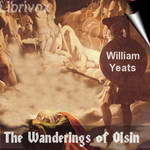 The Wanderings of Oisín
This narrative poem is composed in three parts, and consists of a dialogue between the aged Irish hero Oisín and St. Patrick. Oisín relates his three-hundred year sojourn in the immortal isles of Faerie. In the isles, Oisín married the beautiful Sidhe Niamh: together they traveled, feasted, and quested. At last Oisín succumbs to the temptation to return and visit the lands of mortal men: inadvertently slipping from his faerie horse, his body touches the ground and instantly puts on the flesh of a decrepit old man. Oisín describes various islands and what he did there: contrasting his noble deeds with the degenerate weakness of the present generation. | |
By: Dorothy L. Sayers (1893-1957) | |
|---|---|
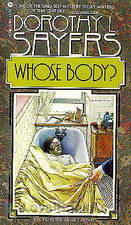 Whose Body?
The first novel in her renowned series of detective fiction, Sayers introduces Lord Peter Wimsey, a bon vivant gentleman, whose hobby of playing detective is put to the test, as he is launched into his first official crime investigation. The mystery begins when the body of an unidentified man has been found in the bathtub of local architect Mr. Thipps. Adding to the peculiarity of the situation is the fact that the corpse is stark naked except for a pair of expensive pince-nez glasses. Due to the incriminating circumstances of the murder, the official investigator suspects Thipps to be the perpetrator of the bizarre murder... | |
By: Kurt Vonnegut (1922-2007) | |
|---|---|
 2 B R 0 2 B
In this chilling short-story by a master of the craft, Kurt Vonnegut creates a fictional world of the future where life and death are no longer matters of individual choice or destiny. The title refers to the famous quote from Hamlet, “To be or not to be....” with “0” being pronounced as “naught.” It also refers to the eternal dilemma of life and death that face every human being at some point in their lives. Written in 1962 it is set in some unspecified time in the future, when earth has become a Utopia... | |
|
The Big Trip Up Yonder
| |
By: Henry Wadsworth Longfellow (1807-1882) | |
|---|---|
 Henry Wadsworth Longfellow Collection Vol. 001
A collection to celebrate Henry Wadsworth Longfellow’s 200th birthday, on 27th February, 2007. | |
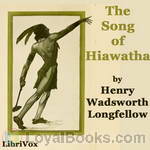 Hiawatha
I sing the Song of Hiawatha,Brave of heart and strong of arm.Daughter’s son of old Nokomis,Fathered by the harsh West Wind. With its regular, beating rhythm, the Song of Hiawatha has often been parodied, but in truth, it is a powerful, emotional epic; a hero’s life, his loves and suffering. The legends and traditions of the North American Indian swirl together through the tale like a mountain stream, tumbling white over the rocks, and caressing the mossy tree roots. | |
|
Evangeline
Evangeline is one of Longfellow’s most popular poems and was once a great favorite with the American people. For many years almost every school child studied this poem during the middle school years. Although the decline of the reputation of the once-idolized poet has also brought neglect to this classic, it is still a very touching and expertly written work of art. It is based upon the tragic expulsion of the French settlers from Acadia (located in the Canadian maritime provinces) during the French & Indian War (1754-1763)... | |
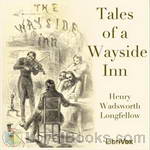 Tales of a Wayside Inn
Mostly a collection of story-telling poems told by a group of friends in a tavern late one night. "Tales" includes the famous Paul Revere's ride, together with poems of many tales, countries and styles. | |
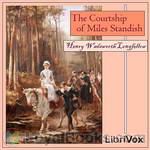 The Courtship of Miles Standish
During the late nineteenth century and until the middle of the twentieth, many elementary classrooms in America featured (along with a Gilbert Stuart portrait of Washington) a black-and-white print of a group of New England pilgrims on their way to church, the men carrying their muskets. Every school child at that time was intimately acquainted with the story of the Mayflower and the Plymouth colony in Massachusetts. Among the historical figures, one of the best known was Captain Miles Standish, the military commander of the little “army,” which consisted of a bare handful of men, who repeatedly defeated many times their number of hostile Indians... | |
|
The Wreck of the Hesperus
| |
|
The Golden Legend
| |
|
Hyperion
| |
|
The Song of Hiawatha An Epic Poem
| |
 The Story of Hiawatha Adapted from Longfellow
| |
|
The Children's Longfellow Told in Prose
| |
|
The Children's Own Longfellow
| |
|
Evangeline with Notes and Plan of Study
| |
By: William E. B. Du Bois (1868-1963) | |
|---|---|
 The Souls of Black Folk
“Few books make history and fewer still become the foundational texts for the movements and struggles of an entire people....” One such great work was The Souls of Black Folk by William EB Du Bois. Published in 1903, it is a powerful and hard-hitting view of sociology, race and American history. It became the cornerstone of the civil rights movement and when Du Bois attended the first National Negro Conference in 1909, he was already well-known as a proponent of full and unconditional equality for African Americans... | |
By: Gustave Flaubert (1821-1880) | |
|---|---|
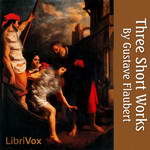 Three Short Works
Here is a collection of strikingly different pieces by Flaubert: a prose poem in the voices of Death, Satan and Nero; the trials and apotheosis of a medieval saint; and the life of a selfless maid in 19th century France. Each exhibits the vigorous exactness, and the mixture of realism and romanticism, for which Flaubert is renowned. | |
|
Salammbô
After completing the famous Mme Bovary, Flaubert put all his efforts into researching the Punic Wars and completed the lesser known Salammbô. In this volume, Flaubert describes in detail the Mercenary Revolt and the fight of the Mercenaries against the all-powerful Carthage, the theft of the magical Zaimph and the love and hate between the Carthaginian princess Salammbô and the fiercest leader of the Mercenaries, Matho. | |
|
Sentimental Education, Volume II The History of a Young Man
| |
|
Madame Bovary A Tale of Provincial Life
| |
|
A Simple Soul
| |
|
Sentimental Education Vol 1
| |