 |
Books Should Be Free Loyal Books Free Public Domain Audiobooks & eBook Downloads |
|
|
|
Books Should Be Free Loyal Books Free Public Domain Audiobooks & eBook Downloads |
|
Fiction |
|---|
|
Book type:
Sort by:
View by:
|
By: Jessie Graham Flower (-1931) | |
|---|---|
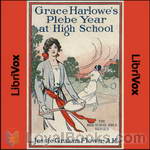 Grace Harlowe's Plebe Year at High School
This delightful book tells about a group of smart youths who get up to some wonderful adventures together – and save one another from troubles. The unofficial leader of the group is Grace Harlowe, the title character. When Anne Pierson comes to the class at the beginning of the year, they decide to take her under their wing. Anne has a lot of troubles at home, but will true friends make her happy? | |
 Grace Harlowe's First Year at Overton College
Set after the Grace Harlowe High School series, Grace and her friends Miriam and Anne start a new chapter of their lives as Freshmen at Overton College. After various trials and tribulations they earn the respect of the elder classes and become valued members of the school. (Introduction by BumbleVee) | |
 Grace Harlowe's Sophomore Year at High School
Being a good and loyal friend is not easy, and Grace learns it the hard way. But, as in all children's books, good triumphs over evil. | |
|
Grace Harlowe's Senior Year at High School; or, The Parting of the Ways
The four series follow Grace Harlowe and her friends through high school, college, abroad during World War I, and on adventures around America. In The High School Girls Series, Grace attends Oakdale High School with friends Anne Pierson, Nora O'Malley, and Jessica Bright. The four promote fair play and virtue while winning over troubled girls like Miriam Nesbit and Eleanor Savell, playing basketball, and founding sorority Phi Sigma Tau. The group becomes friends with boys in their acquaintance: David Nesbit, Tom Gray, Hippy Wingate, and Reddy Brooks, forming "The Eight Originals." | |
|
Grace Harlowe's Second Year at Overton College
The four series follow Grace Harlowe and her friends through high school, college, abroad during World War I, and on adventures around America. In The High School Girls Series, Grace attends Oakdale High School with friends Anne Pierson, Nora O'Malley, and Jessica Bright. The four promote fair play and virtue while winning over troubled girls like Miriam Nesbit and Eleanor Savell, playing basketball, and founding sorority Phi Sigma Tau. The group becomes friends with boys in their acquaintance: David Nesbit, Tom Gray, Hippy Wingate, and Reddy Brooks, forming "The Eight Originals." | |
|
Grace Harlowe's Third Year at Overton College
The four series follow Grace Harlowe and her friends through high school, college, abroad during World War I, and on adventures around America. In The High School Girls Series, Grace attends Oakdale High School with friends Anne Pierson, Nora O'Malley, and Jessica Bright. The four promote fair play and virtue while winning over troubled girls like Miriam Nesbit and Eleanor Savell, playing basketball, and founding sorority Phi Sigma Tau. The group becomes friends with boys in their acquaintance: David Nesbit, Tom Gray, Hippy Wingate, and Reddy Brooks, forming "The Eight Originals." | |
By: Edward Bellamy (1850-1898) | |
|---|---|
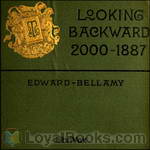 Looking Backward: 2000-1887
Looking Backward: 2000-1887 is a utopian novel by Edward Bellamy, first published in 1888. It was the third largest bestseller of its time, after Uncle Tom’s Cabin and Ben-Hur: A Tale of the Christ.The book tells the story of Julian West, a young American who, towards the end of the 19th century, falls into a deep, hypnosis-induced sleep and wakes up more than a century later. He finds himself in the same location (Boston, Massachusetts) but in a totally changed world: It is the year 2000 and, while he was sleeping, the U... | |
By: Timothy S. Arthur (1809-1885) | |
|---|---|
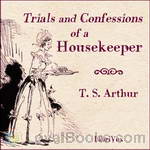 Trials and Confessions of a Housekeeper
Is housekeeping such a trial? Mrs. Smith thinks so and confesses all in this merry account of her escapades and near disasters! | |
By: Chesterton, G. K. | |
|---|---|
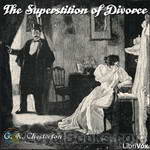 The Superstition of Divorce
This short book was written in 1920, and in it Chesterton, with his usual wit and incisive logic, presents a series of articles defending marriage and indicating the weaknesses in divorce. He did this 16 year before the first Christian denomination in the world allowed it’s members to divorce. Till then Christendom was unanimous in standing against it. Chesterton saw clearly the trends of this time, and delivered this defense. | |
By: Eleanor Gates (1875-1951) | |
|---|---|
 The Poor Little Rich Girl
The Poor Little Rich Girl is a children’s fantasy about a little girl named Gwendolyn who is lonely and longs for a friend. But she is isolated by rich parents who ignore her and left to the care of servants who are indifferent. Her nanny’s carelessness with some medicine plunges Gwendolyn into a bewildering world in which metaphors literally come to life. | |
By: Eleanor Gates (1875-1951) | |
|---|---|
|
Biography of a Prairie Girl
This book is a wonderful way to learn about how the prairies were years ago, but you will hardly feel you are learning because you will be caught up with the 'little girl', living with her as she grows up far away from any large city. Very well written, in this book you live, worry, and rejoice, along with the little girl. Whether it is through a prairie fire, raising some interesting and queer pet, having fun at some big prairie-time event, or worming her way out of trouble, the little girl continues to grow, until at the end, you leave, not a little girl, but a young lady stepping into womanhood. | |
By: Phaedrus (c. 15 BC - c. AD 50) | |
|---|---|
 The Fables of Phaedrus
The fable is a small narrative, in prose or verse, which has as its main characteristic the aim of conveying a moral lesson (the “moral”), implicitly or, more normally, explicitly expressed. Even though the modern concept of fable is that it should have animals or inanimated objects as characters – an idea supported by the works of famous fabulists such as Aesop and La Fontaine – Phaedrus, the most important Latin fabulist, is innovative in his writing. Although many of his fables do depict animals or objects assuming speech, he also has many short stories about men, writing narratives that seem to the modern eye more like short tales than fables... | |
By: James Baikie | |
|---|---|
 Peeps at Many Lands: Ancient Egypt
Written primarily for children, James Baikie’s ‘peep’ at ancient Egypt is a really well done, historical account of the ways of that fascinating land so many years ago. It has stood well the test of time, being both well researched and well written. It’s a fun book for everyone, and families especially will enjoy listening together. | |
By: Thomas Bailey Aldrich (1836-1907) | |
|---|---|
 The Stillwater Tragedy
Thomas Bailey Aldrich was an American poet, novelist and editor. Of his many books of poetry and fiction, he may be best known for his semi-autobiographical novel, The Story of a Bad Boy and his collection of short stories, Majorie Daw and Other People. The Stillwater Tragedy which was published in 1880 is set in a small New England manufacturing town whose tranquility is disturbed first by the murder of one of its prominent citizens followed soon thereafter by a general strike of all the trades-unions. As the story develops, Richard Shackford, the murdered man’s nephew, finds himself inextricably caught up in both these events. | |
 The Story of a Bad Boy
Thomas Bailey Aldrich was a child when his father moved to New Orleans from Portsmouth, New Hampshire. After 10 years, Aldrich was sent back to Portsmouth to prepare for college. This period of his life is partly described in his semi-autobiographical novel The Story of a Bad Boy (1870), in which "Tom Bailey" is the juvenile hero. Critics have said that this novel contains the first realistic depiction of childhood in American fiction and prepared the ground for Adventures of Huckleberry Finn. Aldrich went on to associate with many of the literati of his time in New York City, and was editor of the Atlantic Monthly in the 1880's... | |
By: Ernest Thompson Seton | |
|---|---|
 The Biography of a Grizzly
I first read this little book when I was in the fifth grade, and now more than fifty years later, I still find it fascinating. Ernest Thompson Seton was a man with a concern for nature her creatures and an excellent story teller. I could almost feel Wahb, the great grizzly’s pain and frustration as he tried to avoid contact with humans and just be left alone to carry out his bear business. Listening to this audio book will be an hour and a half well spent.Summary by Mike Vendetti, Narrator. | |
By: Lafcadio Hearn (1850-1904) | |
|---|---|
 In Ghostly Japan
This collection of 14 stories collected by Lafcadio Hearn, contains Japanese ghost stories, but also several non-fiction pieces. Hearn tries to give a glimpse into the customs of the Japanese, by giving examples of Buddhist Proverbs and explaining the use of incense and the nation wide fascination with poetry. Furthermore, he has again translated several hair-rising ghost stories, like "A Passional Karma" about the truly undying love of a young couple. | |
 Kwaidan: Stories and Studies of Strange Things
Most of the following Kwaidan, or Weird Tales, have been taken from old Japanese books,— such as the Yaso-Kidan, Bukkyo-Hyakkwa-Zensho, Kokon-Chomonshu, Tama-Sudare, and Hyaku-Monogatari. Some of the stories may have had a Chinese origin: the very remarkable "Dream of Akinosuke," for example, is certainly from a Chinese source. But the story-teller, in every case, has so recolored and reshaped his borrowing as to naturalize it… One queer tale, "Yuki-Onna," was told me by a farmer of Chofu, Nishitama-gori, in Musashi province, as a legend of his native village... | |
 Kottō : being Japanese curios, with sundry cobwebs
Kottō contains 20 Japanese stories, collected from different sources and translated by Lafcadio Hearn. The types of stories in this collection are widespread: There are old ghost stories Hearn is best known for (The Legend of Yurei-Daki), his own observations and musings (Pathological), as well as the translation of 'A Woman's Diary', a touching account of the life of the poorer classes in Tokyo, written at the end of the 19th century. | |
By: Harry Bates, Editor | |
|---|---|
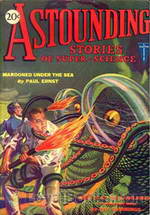 Astounding Stories of Super-Science, September 1930
This is a collection of short science fiction stories by various writers, circa 1930. Writers include Paul Ernst, Miles Breuer, Ray Cummings, Sewell Wright, and others. | |
By: Chretien de Troyes | |
|---|---|
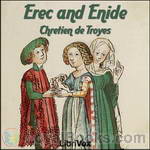 Erec and Enide
A medieval romance in which Erec goes through many trials until he is sure of Enide’s loyalty and true love | |
By: Richard Marsh | |
|---|---|
 The Beetle
A story about a mysterious oriental figure who pursues a British politician to London, where he wreaks havoc with his powers of hypnosis and shape-shifting, Marsh’s novel is of a piece with other sensational turn-of-the-century fictions such as Stoker’s Dracula, George du Maurier’s Trilby, and Sax Rohmer’s Fu Manchu novels. Like Dracula and many of the sensation novels pioneered by Wilkie Collins and others in the 1860s, The Beetle is narrated from the perspectives of multiple characters,... | |
By: British Parliament | |
|---|---|
 The Riot Act
The Riot Act was passed by the British Parliament in 1714, the first year of the reign of George I, and came into effect in August 1715. This was a time of widespread social disturbance, as the preamble describes; the Act sought to put an end to this. A group of twelve or more people, “being unlawfully, riotously and tumultuously assembled”, would be read a proclamation; they must disperse within an hour, on pain of death. The same fate would befall anyone preventing the reading of the proclamation, or damaging buildings while on a riot... | |
By: Anton Chekhov (1860-1904) | |
|---|---|
|
Schoolmaster and Other Stories
Anton Chekhov, perhaps better known as a world famous classical playwright for works such as "Uncle Vanya" and "The Cherry Orchard" was also a prolific short story writer. "The Schoolmaster and Other Stories" is one of several of his collections. It's a compilation of 30 short stories. Some bizarre, some comical but all very interesting. | |
By: United States Arms Control and Disarmament Agency | |
|---|---|
 Worldwide Effects of Nuclear War: Some Perspectives
This is a concise yet thorough explanation of what might happen to our world in the aftermath of a nuclear war. The myriad of potential effects will be global and wide-spread, and the potentials are glazed over in this short work. | |
By: Abbie Farwell Brown | |
|---|---|
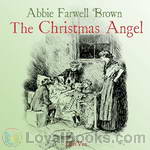 The Christmas Angel
Disagreeable old Miss Terry spends her Christmas Eve getting rid of toys from her childhood toy box. One by one she tosses them onto the sidewalk in front of her house, then secretly watches the little scenes that occur, which seem to confirm her belief that true Christmas spirit does not exist. Then the Angel from her childhood Christmas tree appears to show Miss Terry that she has not yet witnessed the final act of each of those little dramas...Living Age magazine in 1910 observed of The Christmas... | |
By: Octavus Roy Cohen (1891-1959) | |
|---|---|
 Midnight
The crime seemed to have lost itself in the sleety cold of the December midnight upon which it was committed. The trails were not blind–there were simply no trails. The circumstances baffled explanation–a lone woman entering an empty taxicab; a run to a distant point in the city; the discovery of the woman’s disappearance, and in her stead the sight of the dead body of a prominent society man–that, and the further blind information that the suit-case which the woman had carried was the property of the man whose body was huddled horribly in the taxicab. | |
By: William Henry Giles Kingston | |
|---|---|
 Stories of Animal Sagacity
300+ short stories of how smart and savvy various individual animals have been seen to be, and in most cases a little moral is drawn from the story. | |
By: Jerome K. Jerome (1859-1927) | |
|---|---|
 Second Thoughts Of An Idle Fellow
A second volume of humorous essays on various subjects, following the success of Idle thoughts Of An Idle Fellow. | |
 Diary of a Pilgrimage
A possibly fictionalised account by the comic novelist Jerome K. Jerome of a trip to Germany that he undertook with a friend in order to see the famous Passion Play at Oberammergau. The journey takes in London, Dover, Ostend, Cologne, Munich, Oberau, Oberammergau and then back to London via Heidelberg. As one might expect from the author of 'Three Men in a Boat', much goes wrong along the way, including seasickness, strange food, stranger beds, misleading guidebooks, bewildering train timetables, and numerous cultural and linguistic misunderstandings. | |
By: Edwin L. Arnold | |
|---|---|
 Gulliver of Mars
This escapist novel, first published in 1905 as Lieutenant Gullivar Jones: His Vacation, follows the exploits of American Navy Lieutenant Gulliver Jones, a bold, if slightly hapless, hero who is magically transported to Mars; where he almost outwits his enemies, almost gets the girl, and almost saves the day. Somewhat of a literary and chronological bridge between H.G. Wells and Edgar Rice Burroughs, Jones’ adventures provide an evocative mix of satire and sword-and-planet adventure. | |
By: H. De Vere Stacpoole (1863-1951) | |
|---|---|
 The Blue Lagoon
Two shipwrecked children grow up on a South Pacific island. This beautiful story of adventure and innocent love was H.D. Stacpoole’s most popular work.Parents who may have seen the Hollywood film need not be anxious about the book's suitability for kids -- the author's treatment of adolescent sexuality is almost mystical and very mild. The story of The Blue Lagoon (1908) continues in The Garden of God (1923) and The Gates of Morning (1925). A ship’s doctor, Henry De Vere Stacpoole (1863–1951) published over 90 works of fiction, poetry, autobiography, and translation. | |