 |
Books Should Be Free Loyal Books Free Public Domain Audiobooks & eBook Downloads |
|
|
|
Books Should Be Free Loyal Books Free Public Domain Audiobooks & eBook Downloads |
|
Humorous Books |
|---|
|
Book type:
Sort by:
View by:
|
By: Booth Tarkington | |
|---|---|
 Seventeen
A Tale of Youth and Summer Time and the Baxter Family Especially William | |
 Gentle Julia
Penrod for girls in the form of Florence, the bratty younger cousin of luminous Julia Atwater, enlivens this romantic comedy set in Tarkington's Indiana of the early 20th Century. | |
 Penrod
Join Penrod Schofield and his wistful dog Duke, in a hilarious romp through turn of the century Indianapolis, chronicling his life, loves, and mostly the trouble he gets into. | |
By: Gideon Wurdz (b. 1875) | |
|---|---|
 The Foolish Dictionary
“The Foolish Dictionary” was written by “Gideon Wurdz” and was published in 1904. According to the beginning of the book, it is “An exhausting work of reference to un-certain English words, their origin, meaning, legitimate and illegitimate use…” This a a short but amusing dictionary which “redefines” words in some interesting ways. Funny and sometimes bizarre observations are sprinkled throughout. In keeping with the policy to read, rather than attempt to rewrite, books – even those with offensive content – nothing has been omitted... | |
By: Alphonse Daudet (1840-1897) | |
|---|---|
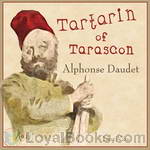 Tartarin of Tarascon
It tells the burlesque adventures of Tartarin, a local hero of Tarascon, a small town in southern France, whose invented adventures and reputation as a swashbuckler finally force him to travel to a very prosaic Algiers in search of lions. Instead of finding a romantic, mysterious Oriental fantasy land, he finds a sordid world suspended between Europe and the Middle East. And worst of all, there are no lions left. | |
By: Irwin S. Cobb (1876-1944) | |
|---|---|
 Europe Revised
Irwin Cobb’s humorous Europe Revised is a travelogue and comedy almost in the style of Mark Twain. The dedication says it best, “To My Small DaughterWho bade me shed a tear at the tomb of Napoleon, which I was very glad to do, because when I got there my feet certainly were hurting me.” | |
By: W. S. Gilbert (1836-1911) | |
|---|---|
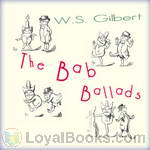 The Bab Ballads
The Bab Ballads are a collection of light verse by W. S. Gilbert, illustrated with his own comic drawings. Gilbert wrote the Ballads before he became famous for his comic opera librettos with Arthur Sullivan. In writing the Bab Ballads, Gilbert developed his unique “topsy-turvy” style, where the humour was derived by setting up a ridiculous premise and working out its logical consequences, however absurd. The Ballads also reveal Gilbert’s cynical and satirical approach to humour. They became famous on their own, as well as being a source for plot elements, characters and songs that Gilbert would recycle in the Gilbert and Sullivan operas... | |
By: P. G. Wodehouse (1881-1975) | |
|---|---|
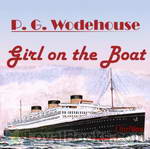 The Girl on the Boat
Also published as "Three Men and a Maid". The maid of the title is red-haired, dog-loving Wilhelmina "Billie" Bennet, and the three men are Bream Mortimer, a long-time friend and admirer of Billie, Eustace Hignett, a lily-livered poet who is engaged to Billie at the opening of the tale, and Sam Marlowe, Eustace's dashing cousin, who falls for Billie at first sight. All four find themselves on an ocean liner headed for England together, along with a capable young woman called Jane Hubbard who is smitten with Eustace, and typically Wodehousian romantic shenanigans ensue. (Introduction by wikipedia) | |
 Little Nugget
Mrs Nesta Ford, in her London hotel room, reveals to her new friend Lord Mountry that she hopes to take her son Ogden on a yachting trip proposed by Mountry, despite her ex-husband having won custody of the boy. As Mountry leaves, Cynthia Drassilis arrives with Ogden, whom she has led away from his father's country house. Mrs Ford rewards Cynthia, but soon Mr Ford's secretary, a Mr Minnick, arrives to recover the stolen child. Cynthia tries to bribe his colleague, Mrs Sheridan, but to no avail, as she believes Nesta's influence has spoiled the boy... | |
By: Joseph Jacobs (1854-1916) | |
|---|---|
|
Indian Fairy Tales
This book is a fine collection of Indian fairy tales, some are folklore, some are from the Jataka tales, and some from panchatantra. | |
By: Frederick Marryat (1792-1848) | |
|---|---|
|
Snarleyyow
This is a quite amusing nautical tale of the British Navy of the around the year 1700. While, as with much early 'humor', it is somewhat heavy-handed, the sympathies of the author are clear and good, and cruelty is often averted by good fortune or background characters. First published under the title 'The Dog Fiend', the primary characters are an evil captain of a cutter and his dog. The dog seems indestructible, as is the poor cabin boy who is the butt of the captain's ill humor, and who often is chewed on by the dog... | |
By: Edna Ferber (1885-1968) | |
|---|---|
 Dawn O'Hara, The Girl Who Laughed
Dawn O’Hara, the Girl Who Laughed was Edna Ferber’s first novel. Dawn, a newspaperwoman working in New York, finds herself back home in Michigan on doctor’s orders. Years of living in boarding-houses and working to pay for the care of her brilliant but mentally ill husband, Peter Orme, have taken their toll. At twenty-eight, Dawn feels like an old woman with no future. But, the loving care of her sister Norah and her family along with the attentions of the handsome German doctor, Ernst Von Gerhard, slowly bring Dawn back to life... | |
|
Buttered Side Down
"And so," the story writers used to say, "they lived happily ever after." Um-m-m—maybe. After the glamour had worn off, and the glass slippers were worn out, did the Prince never find Cinderella's manner redolent of the kitchen hearth; and was it never necessary that he remind her to be more careful of her finger-nails and grammar? After Puss in Boots had won wealth and a wife for his young master did not that gentleman often fume with chagrin because the neighbors, perhaps, refused to call on the lady of the former poor miller's son? It is a great risk to take with one's book-children... | |
By: Edwin F. Benson (1867-1940) | |
|---|---|
 Miss Mapp
E. F. Benson’s Mapp and Lucia series, consists of six novels and three short stories. The novels are: Queen Lucia, Lucia in London, Miss Mapp (including the short story The Male Impersonator), Mapp and Lucia, Lucia’s Progress (published as The Worshipful Lucia in the U.S.) and Trouble for Lucia. Most of these works are set in the fictional village of “Tilling”, which is based on the village of Rye, Sussex, England. “Mallards”, the house with the garden room inhabited by Miss Mapp, and later by Lucia, is based on Lamb House, Benson’s own home in Rye. Earlier, the house was the Sussex home of writer Henry James. | |
By: Henry Fielding (1707-1754) | |
|---|---|
 The History of Tom Jones, A Foundling
Tom Jones is considered one of the first prose works describable as a novel. The novel is divided into 18 smaller books. Tom Jones is a foundling discovered on the property of a very kind, wealthy landowner, Squire Allworthy. Tom grows into a vigorous and lusty, yet honest and kind-hearted, youth. He develops affection for his neighbor’s daughter, Sophia Western. On one hand, their love reflects the romantic comedy genre popular in 18th-century Britain. However, Tom’s status as a bastard causes Sophia’s father and Allworthy to oppose their love; this criticism of class friction in society acted as a biting social commentary... | |
|
An Apology for the Life of Mrs. Shamela Andrews
An Apology for the Life of Mrs. Shamela Andrews, or simply Shamela, as it is more commonly known, is a satirical novel written by Henry Fielding and first published in April 1741 under the name of Mr. Conny Keyber. Fielding never owned to writing the work, but it is widely considered to be his. It is a direct attack on the then-popular novel Pamela (November 1740) by Fielding's contemporary and rival Samuel Richardson and is composed, like Pamela, in epistolary form. Shamela is written as a shocking revelation of the true events which took place in the life of Pamela Andrews, the main heroine of Pamela... | |
By: Irvin S. Cobb (1876-1944) | |
|---|---|
 Cobb's Anatomy
Irvin Shrewsbury Cobb was born on June 23, 1876. At seventeen years of age, he began writing for the Paducah Daily News, his hometown paper. At nineteen he became the managing editor; up to that point, our nation’s youngest. He worked as a columnist, a humorist and an author. But ‘horror,’ and ’short stories,’ are not why he is remembered. He is remembered because he was, and still is, funny. And although he is now dead–he died March 11, 1944–this work “Cobb’s Anatomy,” among others, has left an indelible mark upon mankind: a smile. | |
 One Third Off
Irvin Shrewsbury Cobb (June 23, 1876–March 11, 1944) was an American author, humorist, and columnist who lived in New York and wrote over 60 books and 300 short stories. Cobb has been described as “having a round shape, bushy eyebrows, full lips, and a triple chin. He always had a cigar in his mouth.” This book is a hilarious account of Cobb’s attempts at weight-loss. | |
 J. Poindexter, Colored
This comic novel relates the first-person adventures in New York City of Jefferson Poindexter, personal assistant to Cobb's famous Judge Priest, while the judge is vacationing abroad. (Introduction by Grant Hurlock) | |
By: William Dean Howells (1837-1920) | |
|---|---|
 Five O'Clock Tea
A light-hearted romantic comedy in twelve short scenes, set during a tea party in the home of Mrs. Amy Somers, a widow who is courted by the ingenuous and delightful Mr. Willis Campbell. | |
By: Carl Sandburg (1878-1967) | |
|---|---|
 Rootabaga Stories
Carl Sandburg is beloved by generations of children for his Rootabaga Stories and Rootabaga Pigeons (which is not in the public domain), a series of whimsical, sometimes melancholy stories he originally created for his own daughters. The Rootabaga Stories were born of Sandburg’s desire for “American fairy tales” to match American childhood. He felt that the European stories involving royalty and knights were inappropriate, and so populated his stories with animals, skyscrapers, trains, corn fairies, and other colorful characters. | |
By: Georgette Heyer | |
|---|---|
 The Black Moth
Jack Carstares, oldest son of the Earl Wyncham, has been disgraced by his brother. Gone for six years, living the life a highwayman he meets the woman he will fall in love with. Saving her from being kidnapped by a dastardly blackguard he is injured and must stay with her family until he is able to return to his life…will she discovery his true identity? Will he be able to leave her when the time comes? Mystery and humor follow this intriguing cast of characters until the very end. (Summary by Terra Mendoza) | |
By: Robert Barr (1850-1912) | |
|---|---|
 The Triumphs of Eugene Valmont
Short stories by a colleague of Jerome K. Jerome, and friend of Sir Arthur Conan Doyle. Barr probably wrote the first parody of Sherlock Holmes (included in this collection). He co-edited “The Idler” with Jerome. [written by Czechchris] | |
|
In a Steamer Chair and Other Stories
Thirteen short stories by one of the most famous writers in his day. Robert Barr was a British Canadian short story writer and novelist, born in Glasgow, Scotland. In London of the 1890s Barr became a more prolific author - publishing a book a year - and was familiar with many of the best selling authors of his day, including Bret Harte and Stephen Crane. Most of his literary output was of the crime genre, then quite in vogue. When Arthur Conan Doyle's Sherlock Holmes stories were becoming well known,... | |
By: Christopher Morley (1890-1957) | |
|---|---|
|
Mince Pie
Mince Pie is a compilation of humorous sketches, poetry, and essays written by Christopher Morley. Morley sets the tone in the preface: "If one asks what excuse there can be for prolonging the existence of these trifles, my answer is that there is no excuse. But a copy on the bedside shelf may possibly pave the way to easy slumber. Only a mind "debauched by learning" (in Doctor Johnson's phrase) will scrutinize them too anxiously." | |
By: Nikolai Vasilievich Gogol | |
|---|---|
 Dead Souls
Dead Souls by Nikolai Gogol, Russian writer, was first published in 1842, and is one of the most prominent works of 19th-century Russian literature. Gogol himself saw it as an “epic poem in prose”, and within the book as a “novel in verse”. Despite supposedly completing the trilogy’s second part, Gogol destroyed it shortly before his death. Although the novel ends in mid-sentence (like Sterne’s Sentimental Journey), it is usually regarded as complete in the extant form. In Russia before the emancipation of the serfs in 1861, landowners were entitled to own serfs to farm their land... | |
By: Charlotte Perkins Gilman (1860-1935) | |
|---|---|
 Herland
Herland is a utopian novel from 1915, written by feminist Charlotte Perkins Gilman. The book describes an isolated society comprised entirely of Aryan women who reproduce via parthenogenesis (asexual reproduction). The result is an ideal social order, free of war, conflict and domination. It first appeared as a serial in Perkin’s monthly magazine Forerunner. | |
By: Peter Newell (1862-1924) | |
|---|---|
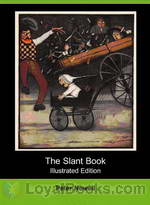 The Slant Book
The Slant Book is literally the shape of a parallelogram, with the spine of the book running down one side. When opened, facing pages form a “V” shape. All the pictures on the slanted recto pages show a way-too-precocious infant in a carriage [the "go-cart" of yesteryear] racing downhill who has somehow gotten away from his nanny, gleefully creating havoc all along the way! The facing verso pages contain two stanzas of commentary on the charming –if alarming!– illustrations. This book pioneered the “special format” children’s literature of today, such as pop-up books or cutout books like Eric Carle’s The Very Hungry Caterpillar... | |
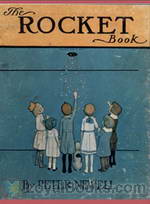 The Rocket Book
The Rocket Book begins when the son of a building superintendent sets a match to a rocket he discovered in the basement. Suddenly, the rocket blasts its way up through apartment after apartment in a high-rise, disrupting and transforming the humdrum goings-on of twenty families till it is finally stopped cold by something in the attic. An elliptical hole is punched in each of the book’s pages and illustrations to signify where the rocket passed through every apartment! As in all of Newell’s books, the verse on the verso-page provides commentary on the recto-page illustration... | |
By: Irwin Leslie Gordon (1888-1954) | |
|---|---|
 Who Was Who: 5000 BC – 1914
A short, humorous biography of famous people from 5000 BC to 1914. — S. McGaughey From the Introduction, “The editor begs leave to inform the public that only persons who can produce proper evidence of their demise will be admitted to Who Was Who. Press Agent notices or complimentary comments are absolutely excluded, and those offering to pay for the insertion of names will be prosecuted. As persons become eligible they will be included without solicitation, while the pages will be expurgated of others should good luck warrant.” | |
By: Robert Williams Wood (1868-1955) | |
|---|---|
 How to Tell the Birds from the Flowers
How do you tell apart a parrot from a carrot? A plover from a clover? A bay from a jay? Although there are several ways of differentiating, R. W. Wood’s use of pun and rhyme is one of the most entertaining! | |
By: Albert Bigelow Pain | |
|---|---|
 The Boys' Life of Mark Twain
Albert Bigelow Paine was Samuel Langhorne Clemens’ (Mark Twain’s) biographer. He lived with Twain, collecting ideas and material for a biography, for a few years before Twain’s death in 1910. Six years later Paine published this “story of a man who made the world laugh and love him.” For those who have read or listened to Mark Twain’s works, Paine’s work is an invaluable resource to better understand Twain, the stories behind his stories and his life with those he loved and with whom he worked. | |
By: Earl Derr Biggers (1884-1933) | |
|---|---|
|
Seven Keys to Baldpate
Dime-store novelist William Magee has gone to Baldpate Inn to do a little soul-searching in an attempt to write a serious work. Thinking he will be alone and uninterrupted, Magee arrives at the inn in the dead of winter. But he discovers that there are six other keys to Baldpate Inn, and the holders of those keys enliven his stay with bribery, shootings and plenty of mystery. | |
By: George Pope Morris (1802-1864) | |
|---|---|
|
Will Nobody Marry Me?
In addition to his publishing and editorial work, Morris was popular as a poet and songwriter; especially well-known was his poem-turned-song "Woodman, Spare that Tree!" His songs in particular were popular enough that Graham's Magazine in Philadelphia promised Morris $50, sight unseen, for any work he wanted to publish in the periodical. | |
By: Tobias Smollett | |
|---|---|
 The Expedition of Humphry Clinker
The Expedition of Humphry Clinker was the last of the picaresque novels of Tobias Smollett, and is considered by many to be his best and funniest work. Published in London on 17 June 1771, it is an epistolary novel, presented in the form of letters written by six different characters: Matthew Bramble, a Welsh Squire; his sister Tabitha; their niece and nephew, Jery and Lydia Melford; Tabitha’s maid Winifred Jenkins; and Lydia’s suitor, Wilson. Much of the comedy arises from differences in the descriptions of the same events by different participants... | |
By: Richard Harding Davis (1864-1916) | |
|---|---|
 The Princess Aline
Morton Carlton, an easy-going, rich young artist, has never taken the concepts of love and marriage all that seriously -- until by accident a copy of an English illustrated paper falls into his hands, which contains a photograph of the young Princess Aline of Hohenwald. Instantly, Carlton is captivated by the princess, and decides that he must meet her. But how to get close to a princess, who lives in a small German duchy well protected by guards and etiquette? Carlton decides to travel to Europe and try his luck... | |
 My Buried Treasure
"This is a true story of a search for buried treasure. The only part that is not true is the name of the man with whom I searched for the treasure. Unless I keep his name out of it he will not let me write the story, and, as it was his expedition and as my share of the treasure is only what I can make by writing the story, I must write as he dictates. I think the story should be told, because our experience was unique, and might be of benefit to others. And, besides, I need the money." (From the text) | |
By: James Stephens | |
|---|---|
|
There is a Tavern in the Town
The soul of Irish wit is captured in this unique tale of a barstool philosopher, the concluding story from 'Here Are Ladies' by James Stephens. (Introduction by iremonger) | |
By: Anton Chekhov (1860-1904) | |
|---|---|
|
Kashtanka
"Kashtanka," a shaggy-dog story penned by Anton Chekhov in seven parts and first published in 1887, relates the experiences of its eponymous heroine, a fox-faced, reddish dachshund-mix, whose name means 'little chestnut.' After her detestation of music causes her to become separated from the carpenter with whose family she had been living, Kashtanka finds herself taken up by an unusual vaudevillian and goes to live among an assortment of other intelligent animals, each of whom is observed with the characteristic empathy and humor that stamp Chekhov's work. | |
By: Jerome K. Jerome (1859-1927) | |
|---|---|
 Second Thoughts Of An Idle Fellow
A second volume of humorous essays on various subjects, following the success of Idle thoughts Of An Idle Fellow. | |
 Diary of a Pilgrimage
A possibly fictionalised account by the comic novelist Jerome K. Jerome of a trip to Germany that he undertook with a friend in order to see the famous Passion Play at Oberammergau. The journey takes in London, Dover, Ostend, Cologne, Munich, Oberau, Oberammergau and then back to London via Heidelberg. As one might expect from the author of 'Three Men in a Boat', much goes wrong along the way, including seasickness, strange food, stranger beds, misleading guidebooks, bewildering train timetables, and numerous cultural and linguistic misunderstandings. | |
By: P. T. Barnum (1810-1891) | |
|---|---|
 The Humbugs of the World
P. T. Barnum exposes some of the chief humbugs of the world with his usual entertaining style. He looks at medicine and quacks, ghosts, witchcraft, religious humbugs, money manias, adventurers, personal reminiscences, and much more. | |
By: Carolyn Wells (1862-1942) | |
|---|---|
 The Jingle Book
A collection of silly poetry and limericks for children. | |
By: Daisy Ashford (1881-1972) | |
|---|---|
 The Young Visiters, or Mr. Salteena's Plan
The Young Visiters is a comic romance novella that parodies upper class society of late Victorian England. Social climber Alfred Salteena introduces his young lady friend Ethel to a genuine gentleman named Bernard and, to his irritation, they hit it off. But Bernard helps Alfred in his plan to become a gentleman, which, Alfred hopes, will help him win back Ethel. | |
By: Ring Lardner (1885-1933) | |
|---|---|
 Gullible's Travels, Etc.
Humorous stories of social climbing in America's "classless" society. | |
By: Dorothy Quigley | |
|---|---|
 What Dress Makes of Us
A wickedly funny book of advice on women’s dress. However old, fat or plain you are, Dorothy Quigley will tell you what not to wear. | |
By: Helen Rowland (1875-1950) | |
|---|---|
 A Guide to Men: Being Encore Reflections of a Bachelor Girl
A series of occasionally witty one-liners, poems and considerations on the subject of Men, Women and their Conjunction. By turns tender, bland, sexist (in both directions!) and funny. | |
By: Henry W. Lucy (1845-1924) | |
|---|---|
 Faces and Places
Faces and Places is a collection of articles on nineteenth century travel, events and personalities by the British journalist Henry Lucy, who wrote for the Daily News, a London newspaper. His open letter To Those About to Become Journalists rings as true today as when it was written.The first article, “Fred” Burnaby, includes a lively account of a balloon trip, while Night and Day on the Cars in Canada and Easter on Les Avants relate Lucy’s experiences of rail travel at that time. Other travel tales (A Night on a Mountain, Mosquitoes and Monaco, and Oysters and Arcachon) provide an insight into the Victorian Englishman’s attitude to Europe... | |
By: Thomas Love Peacock | |
|---|---|
 Nightmare Abbey
Deep in the fens of the British coast sits the gloomy mansion that goes by the name Nightmare Abbey. It is inhabited by persons of very low opinion of the human race, and in fact they pride themselves in the depths of their detestation. Others of its denizens believe the ultimate exercise and product of the human mind ought to be chaos. Now let the young master of the house get snared by the wiles of a beautiful young lady. And for good measure, toss in another beautiful young lady. Now Scythrop... | |
By: Max Beerbohm (1872-1956) | |
|---|---|
 Zuleika Dobson
‘A wickedly funny 1911 satire on undergraduate life in Edwardian Oxford’ in which the entire student body of Oxford university including the young, handsome aristocrat the Duke of Dorset falls hopelessly in love with Zuleika who is visiting her grandfather, the warden of Judas college, and ultimately commit mass suicide at the end of ‘Eights Week’ | |
By: Max Beerbohm (1872-1956) | |
|---|---|
|
Seven Men
In order to liven up the literary history of Great Britain in the 1890s (as if Oscar Wilde, Stevenson, Kipling, Hardy, etc., were not lively enough) Max Beerbohm wrote short biographies of six imaginary writers. Though their works of course no longer exist, he leaves the impression that the literary world is really none the poorer. It is, of course, the six men themselves (Beerbohm himself is the seventh man of the title) who are worth our attention. ( Nicholas Clifford) Note that the Gutenberg edition of Seven Men is incomplete, but the missing sections may be found separately James Pethel http://www.gutenberg.org/ebooks/759 E.V. Laider http://www.gutenberg.org/ebooks/761 | |
|
Happy Hypocrite: A Fairy Tale For Tired Men
Sir Henry Maximilian "Max" Beerbohm was an English essayist, parodist, and caricaturist. The Happy Hypocrite: A Fairy Tale for Tired Men is a short story with moral implications. Beerbohm's tale is a lighter, more humorous version of Oscar Wilde's classic tale of moral degeneration, The Picture of Dorian Gray. The Happy Hypocrite tells the story of a man who deceives a woman with a mask in order to marry her. | |
By: Edward Phillips Oppenheim (1866-1946) | |
|---|---|
 An Amiable Charlatan
An Englishman is enjoying his dinner at Stephano's, at which he is a regular diner. A man enters quickly, sits at his table, starts eating his food, and hands him a packet underneath the table! So begins Paul Walmsley's acquaintance - and adventures - with American adventurer Joseph H. Parker and his lovely daughter, Eve. (Intro by TriciaG)Note that there is an alternate reading of section 8. Both are excellent renditions, so enjoy either or both of them. | |
By: Thornton W. Burgess (1874-1965) | |
|---|---|
 The Adventures of Mr. Mocker
When an innocent blue jay starts talking in his sleep, it’s up to him to find out what’s going on in this fun, naturalistic, Southern-style children’s story. | |
By: F. Anstey (1856-1934) | |
|---|---|
 Vice Versa
Set in Victorian times, the novel concerns business man Paul Bultitude and his son Dick. Dick is about to leave home for a boarding school which is ruled by the cane wielding headmaster Dr. Grimstone. Bultitude, seeing his son's fear of going to the school, foolishly says that schooldays are the best years of a boy's life, and how he wished that he was the one so doing. At this point, thanks to a handy magic stone brought by an uncle from India which grants the possessor one wish, they are now on even terms... | |
By: Anstey, F. (1856-1934) | |
|---|---|
 The Black Poodle and Other Tales
This is a collection of ten humorous short stories | |
By: F. Anstey (1856-1934) | |
|---|---|
|
Baboo Jabberjee, B.A.
Another delightful example of an English writer poking fun at his countrymen, or maybe all races' reactions to someone from a diferent background. A series of adventures of a well educated foreigner in London which originally appeared weekly in Punch, sometimes with illustrations, dealing with the difficulties of fully understanding a different culture. The hero's perfect English reminds one of a quote from "My Fair Lady" ..."His English is too good, he said, "that clearly indicates that he is Foreign. Whereas other people are instructed in their native language English people aren't." | |
|
Talking Horse And Other Stories
A collection of short stories by famed humorist and Punch magazine staff member, F. Anstey, pseudonym for Thomas Anstey Guthrie. They range from humorous and whimsical to haunting and thought-provoking. | |
|
Tinted Venus
When a young newly engaged man finds himself bound for an amusement garden with an old flame, not his fiancee, it is not surprising that he still feels some attraction for her. When they escape the heat of the dance floor to walk among the trees in the garden, it is not surprising that they should come upon a statue of a woman of uncommon beauty, with the smallest hands. When the young man attempts to demonstrate that his absent fiancee has hands even smaller than this immortalized stone woman, it is surprising when the engagement ring he is carrying fits easily on the stone finger, but does not easily come off... | |
|
In Brief Authority
Satiric comedy from 1915 about a nouveau riche British family and their nanny who get whisked off to Maerchenland ('the land of Fairy Tales') one evening in a car drawn by storks. The matron of the family, a thorough snob, is crowned Queen of the country by mistake. She is quick to accept her new position and is determined to introduce British social niceties in her realm. And this really is the land of Fairy Tales, with gnomes, giants, a dragon, magic, a fairy godmother and more. Trouble quickly starts to brew as the royal couple and their son introduce things like capitalism and golf... | |
By: Herbert George Jenkins (1876-1923) | |
|---|---|
 Adventures of Bindle
Jenkins' most popular fictional creation was Mr. Joseph Bindle, who first appeared in a humorous novel in 1916 and in a number of sequels. In the preface to the books, T. P. O'Connor said that "Bindle is the greatest Cockney that has come into being through the medium of literature since Dickens wrote Pickwick Papers". The stories are based on the comedic drama of life at work, at home and all the adventures that take place along the way. | |
By: Barton Wood Currie | |
|---|---|
 Officer 666
Bored with his life as a wealthy businessman's only son, Travers Gladwin learns of a plot by a renowned art burglar to rob his house, so rather than thwart the planned burglary, he borrows a police uniform from a friend and decides to confront the robber by posing as an officer. When the burglar arrives at the house, he tries to pass himself off as Travers Gladwin. From there, things only get more complicated, including the arrival of the burglar's girlfriend who believes that her beau is the wealthy man's son. Comical and timely, the book was made into a movie multiple times, each hugely successful. | |
By: Edward Streeter (1891-1976) | |
|---|---|
 Dere Mable
Bill is in training camp, preparing to go off to World War I. This book is a collection of love letters written to his sweetheart, Mable. The letters are humorous, mis-spelled, and have many stories of life in an army camp – all from Bill’s unique perspective. | |
By: Oliver Wendell Holmes | |
|---|---|
 The One-Hoss Shay
This is a small collection of whimsical poems by the American physician and author Oliver Wendell Holmes, Sr. "The Deacon's Masterpiece" describes the "logical" outcome of building an object (in this case, a two-wheeled carriage called a shay) that has no weak points. The economic term "one hoss shay," referring to a certain model of depreciation, derives its name from this poem. "How the Old Horse Won the Bet" is a lighthearted look at a horse race. Finally, "The Broomstick Train" is a wonderfully Halloween-y explanation of how an electric tram really works. | |
By: Harry Leon Wilson (1867-1939) | |
|---|---|
 Merton of the Movies
Merton of the Movies is a comedy that centers around Merton Gill, an aspiring dramatic artist from Simsbury, Illinois who makes his way to Hollywood to become a serious actor. How could Merton fail in attaining his dreams after finishing a correspondence course from the General Film Production Company of Stebbinsville, Arkansas, certifying him to be a competent screen actor? Harry Leon Wilson, the author, was a very popular humor writer in the first decades of the 20th century. This book was made into film several times, the last in 1947 starring Red Skelton. | |
By: John A. Joyce | |
|---|---|
 Shakspere: Personal Recollections
Recording of Shakspere: Personal Recollections, by John A. Joyce.A fictitious account of a "friend" of William Shakespeare, who accompanies him from his birth to his death and beyond, chronicling Shakespeare's life, adventures, speeches, and impromptu bursts of poetry. | |
By: Clarence Day, Jr. (1874-1935) | |
|---|---|
 This Simian World
Clarence Day, Jr., best known for his work Life with Father, presents a satirical speculation on how the world might be different if we apes had not risen to prominence, but rather one of the other species had become dominant in our place. | |
By: George Ade (1866-1944) | |
|---|---|
 Fables in Slang
While a columnist for The Chicago Record humorist George Ade penned numerous “fables” which were subsequently collected into books. Fables in Slang is the first of these collections. It contains 26 satirical stories that lampoon phrenologists, idealists, snobs, fanatics and other ignorant fools of the day, most of which still wander through our modern lives. Jean Shepherd considered Ade a predecessor who made writers like James Thurber, Mike Royko, and himself possible. Fables in Slang was first published in 1899 by Herbert S. Stone and Company. | |
By: Sara Ware Bassett (1872-1968) | |
|---|---|
 Flood Tide
Willie Spence may have been a bit eccentric by most standards, but he had a knack for creating gadgets in his small workshop at his home on Cape Cod. Whenever he was 'ketched' by an 'idee' he had to see it to completion, and always did. His small cottage on the Cape had become a labyrinth of string and wires tacked here and there so as to make life a bit challenging for his housekeeper Celestina. But she and most everyone else among the coastal towns and villages loved the old man for all his eccentricities as Willie spent his waning years just waiting for his ship to come in. | |
By: Richard Brinsley Sheridan (1751-1816) | |
|---|---|
|
School For Scandal
Richard Brinsley Sheridan's comedy was first performed in 1777 and focuses on the intrigues and scandals of the British upper classes. Lady Sneerwell wants to marry Charles Surface, while Joseph Surface wants to marry Maria, an heiress and ward of Sir Peter Teazle. Maria, however, prefers Charles over Joseph. In order to detach her from Charles, Lady Sneerwell and Joseph spread rumors about an affair between Charles and Lady Teazle, Sir Peter's new young wife. Meanwhile, Sir Oliver Surface, newly returned from the East Indies, assumes various disguises to test his nephews' characters. Misunderstandings, mistaken identities, gossip, and bad behavior abound in this uproarious comedy. | |
By: A. A. Milne (1882-1956) | |
|---|---|
|
Happy Days
Although best known for his Winnie the Pooh stories, A.A. Milne spent years as an editor at the English humor magazine Punch. These sprightly essays were chosen from the hundreds he wrote during that period. As usual, they are funny, wry, and poke fun at almost all of our human foibles. There are 6 short one act plays that he wrote to demonstrate the 6 allowable plots for amateur playwrights and they are absolutely hilarious. The other topics run the gamut from dogs to dates. | |
By: Rudolf Erich Raspe (1737-1794) | |
|---|---|
 The Surprising Adventures of Baron Munchausen
The stories about Münchhausen were first collected and published by an anonymous author in 1781. An English version was published in London in 1785, by Rudolf Erich Raspe, as Baron Munchhausen's Narrative of his Marvellous Travels and Campaigns in Russia, also called The Surprising Adventures of Baron Munchhausen. It is not clear how much of the story material derives from the Baron himself; however, it is known that the majority of the stories are based on folktales that have been in circulation for many centuries before Münchhausen's birth. | |
By: Richard Barnum | |
|---|---|
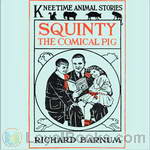 Squinty the Comical Pig
"This comical children's tale about the funny adventures of a funny pig written by an unknown author. The publisher has hired authors to write children's tales, and gave them "house names". The "name" of the author who wrote this tale is Richard Barnum. It became very successful, the most well known of Richard Barnum's tales. So, if you want to laugh a little, even if you are not a child, read this book". | |
By: Oliver Herford (1863-1935) | |
|---|---|
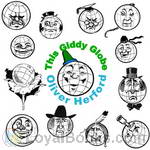 This Giddy Globe
Is there a genre called FUN? Yes, and this is it! Insanely humorous geography that will have you rolling on the floor laughing with your sides hurting. | |
By: Timothy S. Arthur (1809-1885) | |
|---|---|
 Off-hand Sketches
The reader cannot but smile at some of the phases of life presented in this volume. Yet the smile will, in no case, the author thinks, be at the expense of humanity, good feeling, or virtue. Many of the incidents given, are facts embellished by a few touches of fancy. In all, lessons may be read that some, at least, will do well to lay to heart. | |
By: John Leighton (1822-1912) | |
|---|---|
|
Christmas Comes but Once a Year
A Christmas tale of John Brown's ghastly family (suburban snobs), Captain Bonaventure de Camp and his equally awful brood (a dubious crew), and poor Soavo Spohf, organist of St. Stiff the Martyr, gifted in musical ability but not blessed in looks or love. No-one could call this a great work of literature, but it definitely raises a few chuckles and it also offers a fascinating glimpse into Christmas festivities and social mores in well-to-do households in the mid-19th century. (Introduction by Ruth Golding) | |
By: Charles James Lever (1806-1872) | |
|---|---|
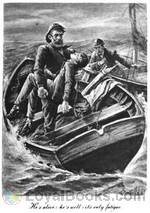 Fortunes of Glencore
| |
By: Caroline Lockhart (1871-1962) | |
|---|---|
|
Dude Wrangler
Spoiled, handsome, 24 year old Easterner meets pretty, no-nonsense gal from Wyoming, is instantly smitten and does a sea-change to try and impress her in this genial romantic comedy. | |
By: Anne Wales Abbott ed. (1808-1908) | |
|---|---|
 Autumn Leaves, Original Pieces in Prose and Verse
The pieces gathered into this volume were, with two exceptions, written for the entertainment of a private circle, without any view to publication. The editor would express her thanks to the writers, who, at her solicitation, have allowed them to be printed. They are published with the hope of aiding a work of charity,—the establishment of an Agency for the benefit of the poor in Cambridge,—to which the proceeds of the sale will be devoted. | |
By: James T. Fields (1817-1881) | |
|---|---|
|
The Owl Critic
James Thomas Fields was an American publisher, editor, and poet. At the age of 14, Fields took a job at the Old Corner Bookstore in Boston. His first published poetry was included in the Portsmouth Journal in 1837 but he drew more attention when, on September 13, 1838, he delivered his “Anniversary Poem” to the Boston Mercantile Library Association. | |
By: Noah Lott | |
|---|---|
|
The Silly Syclopedia
A Terrible Thing in the Form of a Literary Torpedo which is Launched for HILARIOUS PURPOSES ONLY. Inaccurate in Every Particular Containing Copious Etymological Derivations and Other Useless Things by Noah Lott (an ex-relative of Noah Webster) | |
By: Robert J. Burdette (1844-1914) | |
|---|---|
 Chimes From A Jester’s Bells
Part I. The Story of Rollo; Mr. Holliday knows all there is to know about raising children, or at least he thinks he does. His attempts to train his son, Rollo, "in the way he should go," are well-meant, but hilariously unsuccessful--or are they? I believe this is a sort of spoof of the “Rollo” series for children, that was written by Jacob Abbot in the mid 19th century. The characters have the same names and the chapters have a little Q&A at the end like the Abbot books, except these are definitely tongue-in-cheek... | |
By: Mary Roberts Rinehart (1876-1958) | |
|---|---|
|
Oh, Well, You Know How Women Are and Isn't That Just Like a Man!
This warm, affectionate duet of essays by two of the early twentieth century's most popular writers is a bit dated but still entertaining. | |
By: Ellis Parker Butler (1869-1937) | |
|---|---|
|
Cheerful Smugglers
Saving for the baby's education: how can a young family be disciplined so as to regularly put money in the pig (bank)? Why, put a tariff on all items coming into the house, just like the U.S. Government does/did for items coming into the country! But the devil is in the details; what about taxing items brought in by visitors? Is the housemaid herself a taxable item? What items really are 'necessaries' versus luxuries? When visitors arrive these guests stoop to either 'smuggling' in their luggage items to avoid having to pay up to 30% of the value, or wear only what they came dressed in... | |
By: Ada Leverson (1862-1933) | |
|---|---|
|
Love's Shadow
The first in a trilogy of books known together as 'The Little Ottleys', this is a sparkling social comedy set in Edwardian London. Ada Leverson was a great friend and staunch supporter of Oscar Wilde and shared his love for sharp, witty writing. Like Wilde, her work is characterised by a wonderful ear for dialogue and deft characterization. 'Love's Shadow' introduces us to Bruce and Edith Ottley and their friends, who are to all appearances living the bright and carefree lives of the well-to-do. But there are cracks appearing in the facade... | |
|
Tenterhooks
The second of the 'Little Ottleys' trilogy, an Edwardian comedy of manners. Several years have passed since the events in 'Love's Shadow', but Bruce Ottley is as difficult and irksome as ever. His beautiful wife Edith continues to gently manage his foibles, and regards him with a fond tolerance. But then she meets the enchanting - and very handsome - Aylmer Ross. The attraction between them is undeniable, and Edith's quiet serenity is shattered. Could this spell the end for the Ottley's marriage?... | |
By: Robert Henry Newell (1836-1901) | |
|---|---|
|
The Orpheus C. Kerr Papers
These are a collection of humorous "letters" written by a fictional character to a relation in the north during the Civil War. They were published regularly in the New York Mercury Sunday newspaper for the four years of the war. In the letters, Newell pokes fun at northern generals, politicians, and has hard things to say about southerners. Although Newell is rarely serious, I imagine the letters reflect the bitterness and frustration of many northerners at the time. (Introduction by Margaret) | |
By: Edward Eggleston (1837-1902) | |
|---|---|
|
Hoosier Schoolmaster
"Want to be a school-master, do you? You? Well, what would you do in Flat Crick deestrick, I'd like to know? Why, the boys have driv off the last two, and licked the one afore them like blazes. You might teach a summer school, when nothin' but children come. But I 'low it takes a right smart man to be school-master in Flat Crick in the winter. They'd pitch you out of doors, sonny, neck and heels, afore Christmas." | |
By: Joseph Crosby Lincoln (1870-1944) | |
|---|---|
|
Cape Cod Stories
This book (eleven short stories) was also published under the title of “The Old Home House”. Joseph Crosby Lincoln (1870 – 1944) was an American author of novels, poems, and short stories, many set in a fictionalized Cape Cod. Lincoln's work frequently appeared in popular magazines such as the Saturday Evening Post and The Delineator.... Lincoln claimed that he was satisfied "spinning yarns" that made readers feel good about themselves and their neighbors. Two of his stories have been adapted to film... | |
By: Robert Copland (fl. 1515) | |
|---|---|
|
Jyl of Breyntfords Testament
Introduction - This is a collection of ten comic pieces from the 16th century and earlier, as compiled and edited by Frederick Furnivall for private circulation in 1871. Only the first is by Copland. (Introduction by Grant Hurlock) | |
By: William S. Gilbert (1836-1911) | |
|---|---|
 The Pirates of Penzance
The Pirates of Penzance; or, The Slave of Duty is a comic opera in two acts, with music by Arthur Sullivan and libretto by W. S. Gilbert. The story concerns Frederic, who, having completed his 21st year, is released from his apprenticeship to a band of tender-hearted pirates. He meets Mabel, the daughter of Major-General Stanley, and the two young people fall instantly in love. Frederic finds out, however, that he was born on 29 February, and so, technically, he only has a birthday each leap year... | |
By: Thomas A. Janvier (1849-1913) | |
|---|---|
|
Uncle Of An Angel
In what I have read so far this book appears to be a humorous character study on two levels. That between the uncle and niece and that of polite society in the 19th century. Anything can happen. I for one want to find out what will happen!! | |
By: Norman Lindsay (1879-1969) | |
|---|---|
 The Magic Pudding
Bunyip Bluegum the koala sets out on his travels taking only a walking stick. At about lunchtime, feeling more than slightly peckish, he meets Bill Barnacle the sailor and Sam Sawnoff the penguin who are eating a pudding. The pudding is a magic one which, no matter how much you eat it, always reforms into a whole pudding again. He is called Albert, has thin arms and legs and is a bad-tempered, ill-mannered so-and-so into the bargain. His only pleasure is being eaten. The book is divided into four "slices" instead of chapters. (Introduction by Wikipedia) | |
By: Various | |
|---|---|
|
Little Masterpieces of American Wit and Humor Vol 1
Volume 1 of a ten volume collection of amusing tales, observations and anecdotes by America's greatest wordsmiths. This work includes selections by such household favorites as Mark Twain, Oliver Wendell Holmes, Benjamin Franklin and Washington Irving. | |
By: Dorothy Scarborough (1878-1935) | |
|---|---|
|
Humorous Ghost Stories
Includes: An introduction by Dorothy Scarborough -- The Canterville ghost / by Oscar Wilde -- The ghost-extinguisher / by Gelett Burgess -- "Dey ain't no ghosts" / by Ellis Parker Butler -- The transferred ghost / by Frank R. Stockton -- The mummy's foot / Théophile Gautier -- The rival ghosts / Brander Matthews -- The water ghost of Harrowby Hall / by John Kendrick Bangs -- Back from that bourne / Anonymous -- The ghost-ship / by Richard Middleton -- The transplanted ghost / by Wallace Irwin --... | |
By: Barry Pain (1824-1928) | |
|---|---|
|
If Winter Don't
Barry Pain's parody takes a sharp knife to ASM Hutchinson's best selling novel 'If Winter Comes'.We follow the professional and marital decline of long suffering (and loving it), Luke Sharper, as his marriage to Mabel flounders while his love for Jona flourishes. It could only end in tears.....Or could it? ( | |
By: Henry Austin Dobson (1840-1921) | |
|---|---|
|
"You Bid Me Try"
Henry Austin Dobson, commonly Austin Dobson, was an English poet and essayist. His official career was uneventful, but as a poet and biographer he was distinguished. Those who study his work are struck by its maturity.It was about 1864 that he turned his attention to writing original prose and verse, and some of his earliest work was his best. It was not until 1868 that the appearance of St Paul’s, a magazine edited by Anthony Trollope, gave Harry Dobson an opportunity and an audience; and during the next six years he contributed some of his favourite poems, including “Tu Quoque,” “A Gentleman of the Old School,” “A Dialogue from Plato,” and “Une Marquise... | |
By: Donald Ogden Stewart | |
|---|---|
 Perfect Behavior
A humorous guide to manners and etiquette for ladies and gentlemen in a social "crises," published in 1922. (Introduction by Samanem) | |
By: Don Marquis (1878-1937) | |
|---|---|
|
Danny's Own Story
Danny is the proverbial basket-on-the-doorstep baby, found by Hank and Elmira Walters, a childless couple who welcome him into their home because they need a new topic over which to bicker. Bicker they do, and fight just as often, from the day they attempt to settle on a name, to the day eighteen years later, when Danny and Hank come to blows and Danny leaves home in company with Dr. Kirby, bottler and supplier of the miracle elixir, Siwash Indian Sagraw. For years Danny wanders aimlessly--from Illinois to Indiana to Ohio, back to Illinois, then into Tennessee and points south--sometimes in company with Dr... | |
By: W. S. Gilbert (d 1911) | |
|---|---|
|
More Bab Ballads
This is a subset of the first twelve poems from the second collection of Gilbert’s “Bab Ballads” – light verses poking fun at the life and people of his time in Gilbert’s unique “topsy-turvey” style. The epitaph on his memorial on the Victoria Embankment in London is “HIS FOE WAS FOLLY AND HIS WEAPON WIT”, an epitaph amply exemplified in these verses. | |