 |
Books Should Be Free Loyal Books Free Public Domain Audiobooks & eBook Downloads |
|
|
|
Books Should Be Free Loyal Books Free Public Domain Audiobooks & eBook Downloads |
|
Literature |
|---|
|
Book type:
Sort by:
View by:
|
By: Edna Ferber (1865-1968) | |
|---|---|
 Buttered Side Down
"And so," the story writers used to say, "they lived happily ever after." Um-m-m—maybe. After the glamour had worn off, and the glass slippers were worn out, did the Prince never find Cinderella's manner redolent of the kitchen hearth; and was it never necessary that he remind her to be more careful of her finger-nails and grammar? After Puss in Boots had won wealth and a wife for his young master did not that gentleman often fume with chagrin because the neighbors, perhaps, refused to call on the lady of the former poor miller's son? It is a great risk to take with one's book-children... | |
 Emma McChesney and Company
This is the final volume in the trilogy following the smart, stylish, divorced and independent businesswoman Emma McChesney in her career from stenographer, then drummer (traveling salesman) to owner of her own company. (The first was Roast Beef, Medium and the second Personality Plus). Edna Ferber first gained success with these stories and later went on to write Show Boat, Giant and other well known books. First published in 1915, Emma's son, Jock, has moved to Chicago with his new wife. Emma decides to sell in South America and proves she has not lost her magic touch... | |
By: Edwin F. Benson (1867-1940) | |
|---|---|
 Miss Mapp
E. F. Benson’s Mapp and Lucia series, consists of six novels and three short stories. The novels are: Queen Lucia, Lucia in London, Miss Mapp (including the short story The Male Impersonator), Mapp and Lucia, Lucia’s Progress (published as The Worshipful Lucia in the U.S.) and Trouble for Lucia. Most of these works are set in the fictional village of “Tilling”, which is based on the village of Rye, Sussex, England. “Mallards”, the house with the garden room inhabited by Miss Mapp, and later by Lucia, is based on Lamb House, Benson’s own home in Rye. Earlier, the house was the Sussex home of writer Henry James. | |
By: George Sand (1804-1876) | |
|---|---|
 The Devil's Pool
George Sand (the pen name of Amantine-Lucile-Aurore Dupin 1804-1876) is famous for flaunting the conventions of behavour expected of women of her standing in France at the time and for her numerous romantic liaisons including her long standing affair with Frédéric Chopin. The Devil’s Pool (published in 1846 as La Mare au Diable) is one of several short pastoral novels drawn from her childhood experiences in the rural French region of Berri. It tells the story of a young widower, Germain, who, at the insistence of his father-in-law, sets out to remarry so that he will have someone to help raise his three young children. Summary written by the reader. | |
 The Devil's Pool
| |
|
The George Sand-Gustave Flaubert Letters
| |
By: Anna Maynard Barbour (d. 1941) | |
|---|---|
 That Mainwaring Affair
As wealthy financier, Hugh Mainwaring dictates his last will and testament to his private secretary, it would be impossible for him to imagine the shocking chain of events that he is about to set into motion. This best-selling mystery novel was first published in 1901 and remains an entertaining mix of detective work, courtroom drama and family intrigue. | |
 At the Time Appointed
"Those who remember that excellent detective story, That Mainwaring Affair will expect to find plenty of mystery and exciting incidents in A. Maynard Barbour's latest novel, called At the Time Appointed, and they will realize their expectations.The author has a certain way of forecasting events and making people utter prophetic words, all bound to find their fulfillment somewhere before the last chapter is ended, that is eminently characteristic of one who delights in the knitting and raveling of the intricate plots which are a prime necessity in a detective story... | |
By: Ethel Sybil Turner | |
|---|---|
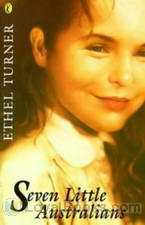 Seven Little Australians
This is the story of seven incorrigible children living near Sydney in the 1880’s with their military-man father, and a stepmother who is scarcely older than the oldest child of the family. A favourite amongst generations of children for over a century, this story tells of the cheeky exploits of Meg, Pip, Judy, Bunty, Nell, Baby, and The General (who is the real baby of the family), as well as providing a fascinating insight into Australian family life in a bygone era. | |
|
In the Mist of the Mountains
| |
By: Henry Fielding (1707-1754) | |
|---|---|
 The History of Tom Jones, A Foundling
Tom Jones is considered one of the first prose works describable as a novel. The novel is divided into 18 smaller books. Tom Jones is a foundling discovered on the property of a very kind, wealthy landowner, Squire Allworthy. Tom grows into a vigorous and lusty, yet honest and kind-hearted, youth. He develops affection for his neighbor’s daughter, Sophia Western. On one hand, their love reflects the romantic comedy genre popular in 18th-century Britain. However, Tom’s status as a bastard causes Sophia’s father and Allworthy to oppose their love; this criticism of class friction in society acted as a biting social commentary... | |
 Joseph Andrews
Joseph Andrews ... was the first published full-length novel of the English author and magistrate Henry Fielding, and indeed among the first novels in the English language. Published in 1742 and defined by Fielding as a ‘comic romance,’ it is the story of a good-natured footman's adventures on the road home from London with his friend and mentor, the absent-minded parson Abraham Adams. | |
|
Journey from this World to the Next
The narrator dies in the first sentence. Through relating his travels in the afterlife, Henry Fielding, author of Tom Jones and Joseph Andrews, gently satirizes life here on earth. | |
 The History of the Life of the Late Mr. Jonathan Wild the Great
This novel is sometimes thought of as [Fielding's] first because he almost certainly began composing it before he wrote Shamela and Joseph Andrews. It is a satire of Walpole that draws a parallel between Walpole and Jonathan Wild, the infamous gang leader and highwayman. He implicitly compares the Whig party in Parliament with a gang of thieves being run by Walpole, whose constant desire to be a “Great Man” (a common epithet for Walpole) should culminate only in the antithesis of greatness: being hanged. | |
|
Journal of a Voyage to Lisbon
Sailing voyage from England to Portugal in the mid Eighteenth Century, by one of the premier humorists, satirists, novelists and playwrights of his age. It was to be his last work, as his failing health proved unable to persevere much longer after the voyage. | |
|
An Apology for the Life of Mrs. Shamela Andrews
An Apology for the Life of Mrs. Shamela Andrews, or simply Shamela, as it is more commonly known, is a satirical novel written by Henry Fielding and first published in April 1741 under the name of Mr. Conny Keyber. Fielding never owned to writing the work, but it is widely considered to be his. It is a direct attack on the then-popular novel Pamela (November 1740) by Fielding's contemporary and rival Samuel Richardson and is composed, like Pamela, in epistolary form. Shamela is written as a shocking revelation of the true events which took place in the life of Pamela Andrews, the main heroine of Pamela... | |
|
Amelia (Vol. 1)
This is the first volume of a three volume novel. In this novel, Amelia marries William Booth against her mother's desires, and the two must move to London. Fielding explores the issues of married life such as infidelity and whether women's intelligence is equal to men's. | |
|
The Works of Henry Fielding Edited by George Saintsbury in 12 Volumes $p Volume 12
| |
By: Thomas de Quincey (1785-1859) | |
|---|---|
 Miscellaneous Essays
The Hunter Thompson of the 19th Century, de Quincey is best known for his Confessions of an English Opium Eater (an activity shared with his hero, Samuel Coleridge, much to Wordsworth’s dismay). However, de Quincey’s literary genius is best captured in his essays, and, according to Wikipedia: His immediate influence extended to Edgar Allan Poe, Fitz Hugh Ludlow and Charles Baudelaire, but even major 20th century writers such as Jorge Luis Borges admired and claimed to be partly influenced by his work. | |
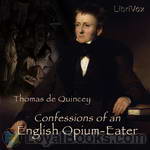 Confessions of an English Opium-Eater
“Thou hast the keys of Paradise, O just, subtle, and mighty Opium!” Though apparently presenting the reader with a collage of poignant memories, temporal digressions and random anecdotes, the Confessions is a work of immense sophistication and certainly one of the most impressive and influential of all autobiographies. The work is of great appeal to the contemporary reader, displaying a nervous (postmodern?) self-awareness, a spiralling obsession with the enigmas of its own composition and significance... | |