 |
Books Should Be Free Loyal Books Free Public Domain Audiobooks & eBook Downloads |
|
|
|
Books Should Be Free Loyal Books Free Public Domain Audiobooks & eBook Downloads |
|
Philosophy Books |
|---|
Book type:
Sort by:
View by:
|
By: BS Murthy | |
|---|---|
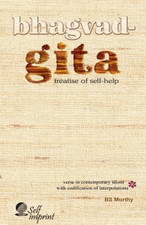 Bhagvad-Gita: Treatise of Self-help
The spiritual ethos and the philosophical outlook that the Bhagvad - Gita postulates paves the way for the liberation of man, who, as Rousseau said, ‘being born free, is everywhere in chains’. But equally it is a mirror of human psychology, which enables man to discern his debilities for appropriate redressal. All the same, the boon of an oral tradition that kept it alive for over two millennia became its bane with the proliferation of interpolations therein. Besides muddying its pristine philosophy, these insertions affect the sequential conformity and structural economy of the grand discourse... | |
By: John Dewey (1859-1952) | |
|---|---|
 Essays in Experimental Logic
In this early collection of formative essays, acclaimed American philosopher John Dewey argues that the idealistic, realistic, and analytic schools of philosophy fail to take into account the pragmatic and experimental nature of experience - common to science and practical experience, but alien to the abstract theorizing of coherentist and correspondence theories of logic. Here we find the essential groundwork for the mature naturalistic and process-oriented metaphysics that Dewey would elaborate in his later mature works such as Experience and Nature and Logic: The Theory of Inquiry... | |
By: Hugh Black (1868-1953) | |
|---|---|
|
Friendship
The idea, so common in the ancient writers, is not all a poetic conceit, that the soul of a man is only a fragment of a larger whole, and goes out in search of other souls in which it will find its true completion. We walk among worlds unrealized, until we have learned the secret of love. We know this, and in our sincerest moments admit this, even though we are seeking to fill up our lives with other ambitions and other hopes. In spite of the vulgar materialism of our day, we do feel that the spiritual side of life is the most important, and brings the only true joy... | |
By: Auguste Comte (1798-1857) | |
|---|---|
|
General View of Positivism
Auguste Comte was from France and published this book in French in 1844. He made a very great impact on the sciences and claims to have “discovered the principal laws of Sociology." Comte says Reason has become habituated to revolt but that doesn’t mean it will always retain its revolutionary character. He discusses Science, the trade-unions, Proletariat workers, Communists, Capitalists, Republicans, the role of woman in society, the elevation of Social Feeling over Self-love, and the Catholic Church in this book... | |
By: John Dewey (1859-1952) | |
|---|---|
|
Human Nature And Conduct - Part 1, The Place of Habit in Conduct
John Dewey, an early 20th Century American philosopher, psychologist, educational theorist saw Social Psychology as much a physical science as Biology and Chemistry. This project encompasses Part 1 of 4 of his book Human Nature and Conduct. Dewey's uses the word "HABIT" as a specialized catch-all word to describe how a person and his/her objective environment interact. This interaction is the basis for moral judgement. Dewey writes: "All habits are demands for certain kinds of activity; and they constitute the self.” In other places he also asserts that "Habits are Will." - Summary by William Jones, Soloist | |
By: Charles Babbage (1791-1871) | |
|---|---|
|
Passages from the Life of a Philosopher
Some men write their lives to save themselves from ennui, careless of the amount they inflict on their readers. Others write their personal history, lest some kind friend should survive them, and, in showing off his own talent, unwittingly show them up. Others, again, write their own life from a different motive—from fear that the vampires of literature might make it their prey. I have frequently had applications to write my life, both from my countrymen and from foreigners. Some caterers for the public offered to pay me for it... | |
By: Caroline Kane Mills Everett (1867-1921) | |
|---|---|
|
Privilege of Pain
We have seen that as mankind rises in the scale of civilization the body becomes increasingly less important. Nevertheless, I wish it to be clearly understood, that I do not maintain that it is preferable to be ill than well, but only that each state has its own peculiar privileges, which are rarely interchangeable. Health and sickness are merely different roads to achievement. The earth requires rain as well as sunshine; we need both tears and laughter; navvies are necessary and so are philosophers... | |
By: Friedrich Nietzsche (1844-1900) | |
|---|---|
|
Birth of Tragedy
In this famous early work of German philosopher Friedrich Nietzsche, he investigates the artistic characteristics of Apollonian and Dionysian characteristics in Greek art, specifically in Greek tragedy as it evolved. Then he applies his conclusions about Greek tragedy to the state of modern art, especially modern German art and specifically to the operas of Richard Wagner. | |
By: Robert G. Ingersoll (1833-1899) | |
|---|---|
|
Ingersoll on ABRAHAM LINCOLN, from the Works of Robert G. Ingersoll, Volume 3, Lecture 3
Col. Ingersoll begins his popular lecture series on famous persons as follows: "It is hard to overstate the debt we owe to the men and women of genius. Take from our world what they have given, and all the niches would be empty, all the walls naked—meaning and connection would fall from words of poetry and fiction, music would go back to common air, and all the forms of subtle and enchanting Art would lose proportion and become the unmeaning waste and shattered spoil of thoughtless Chance." One... | |
By: George J. Holyoake (1817-1905) | |
|---|---|
|
English Secularism
What is Secularism? "Secularism espouses the cause of the world versus theology; of the secular and temporal versus the sacred and ecclesiastical. Secularism claims that religion ought never to be anything but a private affair; it denies the right of any kind of church to be associated with the public life of a nation, and proposes to supersede the official influence which religious institutions still exercise in both hemispheres." George Holyoake was an English freethinker and one of the last persons in England to be convicted and jailed for blasphemy. He coined the term "secularism" while being an editor for the secularist newspaper "The Reasoner". | |
By: Friedrich Nietzsche (1844-1900) | |
|---|---|
|
Complete Works of Friedrich Nietzsche: Volume 3
Volume 3 of the complete works contains several short critical introductory essays, five lectures under the heading "On the Future of our Educational Institutions," and finally an essay by the author entitled "Homer and Classical Philology." As always, Nietzsche believes in the importance of classical thought. | |
By: Frances Evelyn (Daisy) Greville (1861-1938) | |
|---|---|
|
Woman and the War
It is not without serious reflection that I have collected these thoughts in war time to offer in book form to those who may care to read and ponder them. They were written for the most part on the spur of vital moments, when some of the tendencies of the evil times through which we are living seemed to call for immediate protest. I have felt more strongly than ever in the past two years that we are in danger of accepting as something outside the pale of criticism the judgments of those who lead, and sometimes mislead us... | |
By: Maximilian Schele De Vere (1820-1898) | |
|---|---|
|
Modern Magic
M. Schele de Vere was born in Sweden in 1820 and studied language in Germany before eventually becoming a professor of modern language at the University of Virginia in 1844 where he would teach for more than 50 years. During his time as a professor, he would write many books, mostly focusing on language. One of his last works, being first published in 1873, "Modern Magic" instead focuses on the occult. From the preface: "The main purpose of our existence on earth—aside from the sacred and paramount... | |
By: Baba Premanand Bharati (1857-1914) | |
|---|---|
|
Sree Krishna, The Lord of Love
I beg to present this my humble work to the English reader. It is the history of the Universe from its birth to its dissolution. I have explained the science of creation, its making and its mechanism. In doing so I have drawn my information from the recorded facts in the Sacred Books of the Root Race of mankind. Some facts and explanations are herein furnished for the first time in any modern language. This book embodies true Hinduism. | |