 |
Books Should Be Free Loyal Books Free Public Domain Audiobooks & eBook Downloads |
|
|
|
Books Should Be Free Loyal Books Free Public Domain Audiobooks & eBook Downloads |
|
Top Authors |
|---|
|
Book type:
Sort by:
|
By: Nagarjuna | |
|---|---|
 She-rab Dong-bu (The Tree of Wisdom)
The She-rab Dong-bu (Tree of Wisdom) is a metrical translation in Tibetan of a Sanscrit ethical work entitled Prajnya Danda, written by Nagarjuna who flourished in the fourth century of the Buddhist era (about 100 B.C.), The Tibetan version was probably made about the 11th century of our era but the exact date has not been determined. It is included in the Ten-gyur, ངོ་ section, volume གོ་, beginning at leaf 165. The Tibetan translator describes it as the second volume but I cannot say whether the remainder of the work has been preserved in Tibetan – the Sanscrit original is apparently lost. | |
By: General Sir John Miller Adye (1819-1900) | |
|---|---|
 Indian Frontier Policy, an Historical Sketch
“The subject of our policy on the North-West frontier of India is one of great importance, as affecting the general welfare of our Eastern Empire, and is specially interesting at the present time, when military operations on a considerable scale are being conducted against a combination of the independent tribes along the frontier. It must be understood that the present condition of affairs is no mere sudden outbreak on the part of our turbulent neighbours. Its causes lie far deeper, and are the consequences of events in bygone years”. (From the author’s Preface, 1897). | |
By: Leander Stillwell (1843-1934) | |
|---|---|
 The Story of a Common Soldier of Army Life in the Civil War, 1861-1865
Leander Stillwell was an 18-year-old Illinois farm boy, living with his family in a log cabin, when the U.S. Civil War broke out. Stillwell felt a duty “to help save the Nation;” but, as with many other young men, his Patriotism was tinged with bravura: “the idea of staying at home and turning over senseless clods on the farm with the cannon thundering so close at hand . . . was simply intolerable.” Stillwell volunteered for the 61st Illinois Infantry in January 1861. His youthful enthusiasm for the soldier’s life was soon tempered at Shiloh, where he first “saw a gun fired in anger,” and “saw a man die a violent death... | |
By: Saint Patrick (d. 461 or 493) | |
|---|---|
 Collected Works of Saint Patrick
St. Patrick’s Breastplate – This prayer is attributed to St. Patrick and his diciples. It is written with some celtic pagan elements, but is definitely a Christian prayer asking God for protection through daily life. A Letter to the Soldiers of Coroticus – Patrick writes this letter to excommunicate the soldiers of Coroticus’ army who pillaged villages in Ireland and forced many Christian converts into slavery. Confession – A short autobiography by St. Patrick who tells of being abducted... | |
By: Roald Amundsen (1872-1928) | |
|---|---|
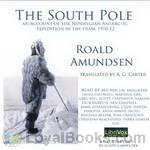 The South Pole; an account of the Norwegian Antarctic expedition in the Fram, 1910-12
In contrast to Scott’s South Pole expedition, Amundsen’s expedition benefited from good equipment, appropriate clothing, and a fundamentally different primary task (Amundsen did no surveying on his route south and is known to have taken only two photographs) Amundsen had a better understanding of dogs and their handling, and he used of skis more effectively. He pioneered an entirely new route to the Pole and they returned. In Amundsen’s own words: “Victory awaits him who has everything in order — luck, people call it... | |
 The South Pole; an account of the Norwegian antarctic expedition in the "Fram," 1910-1912 — Volume 1
| |
By: U. Waldo Cutler | |
|---|---|
 Stories of King Arthur and His Knights
Stories of King Arthur and His Knights. Retold from Malory’s “Morte dArthur”. | |
By: E.E. “Doc” Smith (1890-1965) | |
|---|---|
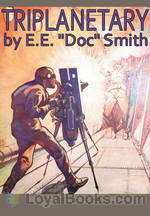 Triplanetary
“Doc” E.E. Smith pretty much invented the space opera genre, and Triplanetary is a good and well-known example. Physics, time, and politics never stand in the way of a plot that gallops ahead without letup. Having earned a PhD in chemical engineering, it’s understandable that the heroes of Smith’s story are all scientists. He didn’t want to be constrained by the limits of known science, however, so in his hands the electromagnetic spectrum becomes a raw material to be molded into ever-more amazing and lethal forms, and the speed of light is no bar to traveling through the interstellar void... | |
By: Donald McGibney | |
|---|---|
 32 Caliber
The recent interest that's being generated in the pulp fiction writers of the 1920s has lead to many of the books of that genre being resurrected and read once again. For modern-day readers, these represent what are now called “airport-lounge reads” and ideal for those few hours that you have to kill waiting in an airport or railway station, while traveling or on holiday, when you don't want anything too heavy to weigh you down! Pulp fiction, so called because the books were generally printed on cheaper paper made from recycled wood pulp, had certain characteristics... | |
By: Heinrich Heine (1797-1856) | |
|---|---|
|
The Prose Writings of Heinrich Heine
| |
|
Atta Troll
| |
By: Thomas Wentworth Higginson | |
|---|---|
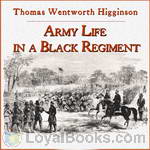 Army Life in a Black Regiment
These pages record some of the adventures of the First South Carolina Volunteers, the first slave regiment mustered into the service of the United States during the late civil war. It was, indeed, the first colored regiment of any kind so mustered, except a portion of the troops raised by Major-General Butler at New Orleans. These scarcely belonged to the same class, however, being recruited from the free colored population of that city, a comparatively self-reliant and educated race. (From the text) | |
|
Black Rebellion Five Slave Revolts
| |
|
Women and the Alphabet A Series of Essays
| |
|
Henry Wadsworth Longfellow
| |
By: Thomas Wentworth Higginson (1823-1911) | |
|---|---|
 Tales of the Enchanted Islands of the Atlantic
The sea has always been, by the mystery of its horizon, the fury of its storms, and the variableness of the atmosphere above it, the foreordained land of romance. In all ages and with all sea-going races there has always been something especially fascinating about an island amid the ocean. It's very existence has for all explorers an air of magic. The order of the tales in the present work follows roughly the order of development, giving first the legends which kept near the European shore, and then those which, like St... | |
By: Thomas Wentworth Higginson (1823-1911) | |
|---|---|
|
Malbone: an Oldport Romance
| |
|
Oldport Days
| |
|
The Sympathy of Religions
| |
By: Booker T. Washington (1856-1915) | |
|---|---|
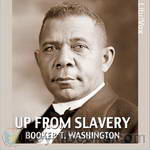 Up From Slavery
Up From Slavery is the 1901 autobiography of Booker T. Washington detailing his slow and steady rise from a slave child during the Civil War, to the difficulties and obstacles he overcame to get an education at the new Hampton University, to his work establishing vocational schools—most notably the Tuskegee Institute in Alabama—to help black people and other disadvantaged minorities learn useful, marketable skills and work to pull themselves, as a race, up by the bootstraps. He reflects on the generosity of both teachers and philanthropists who helped in educating blacks and native Americans... | |
|
Tuskegee & Its People: Their Ideals and Achievements
| |